
Free visual inspection and a written scope of work before any mitigation begins - photos, moisture readings, and drying logs go in your claim file
The scope we write is the scope we bill. Anything new gets shown to you, in writing, before we touch it.
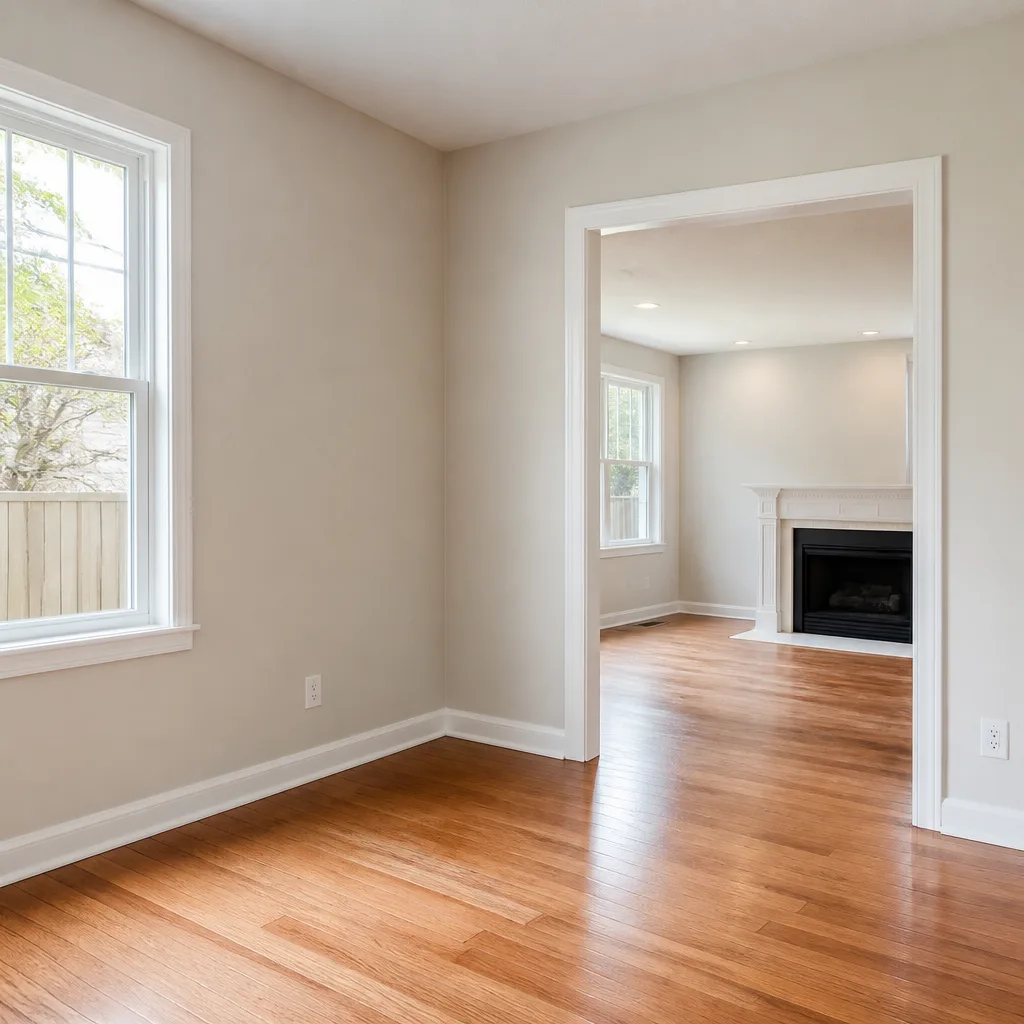
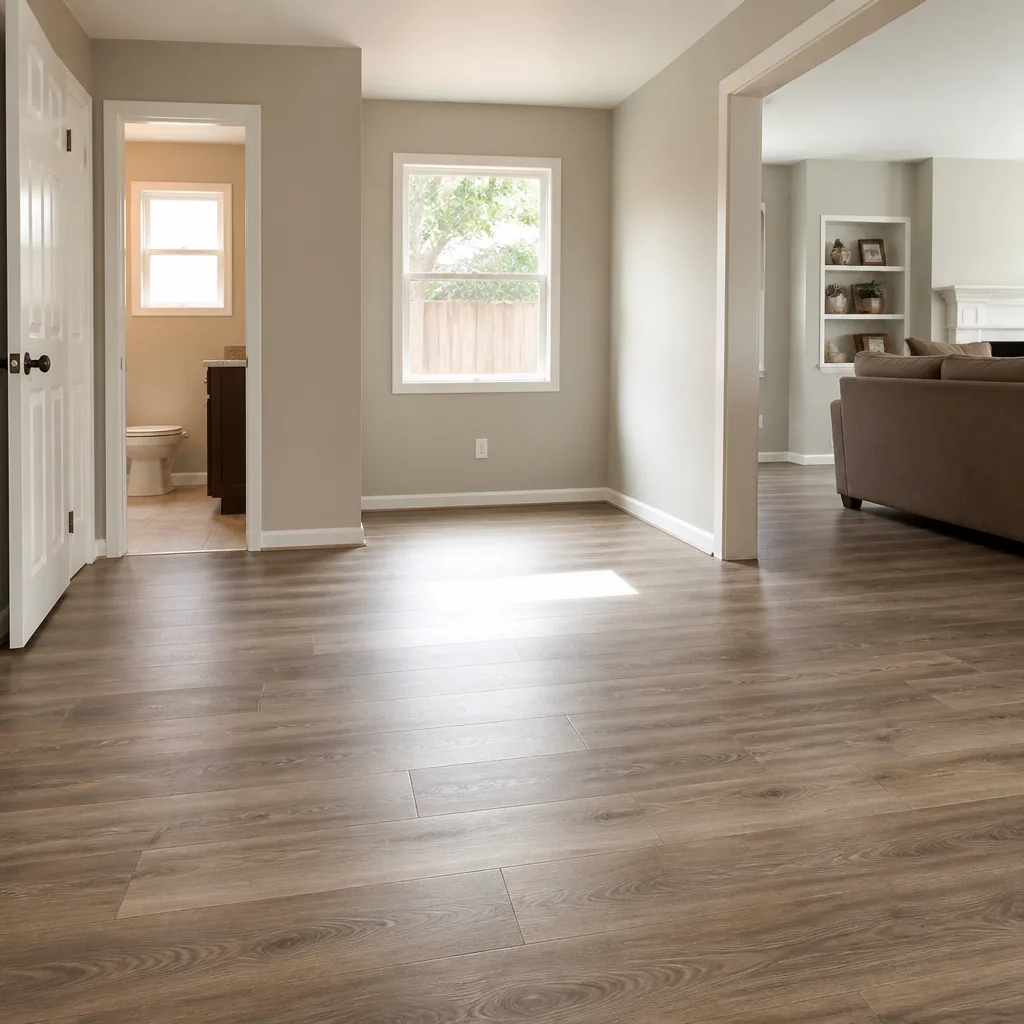

 Before
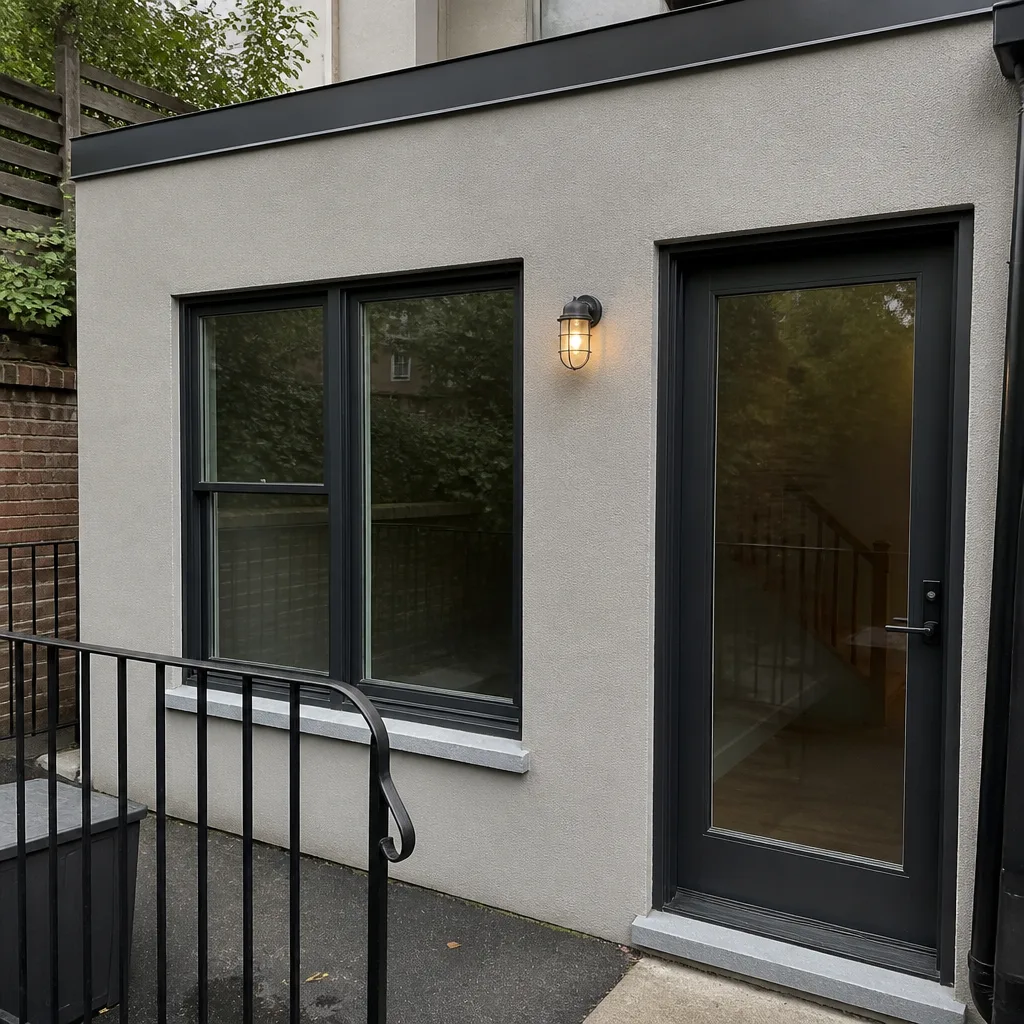 After
After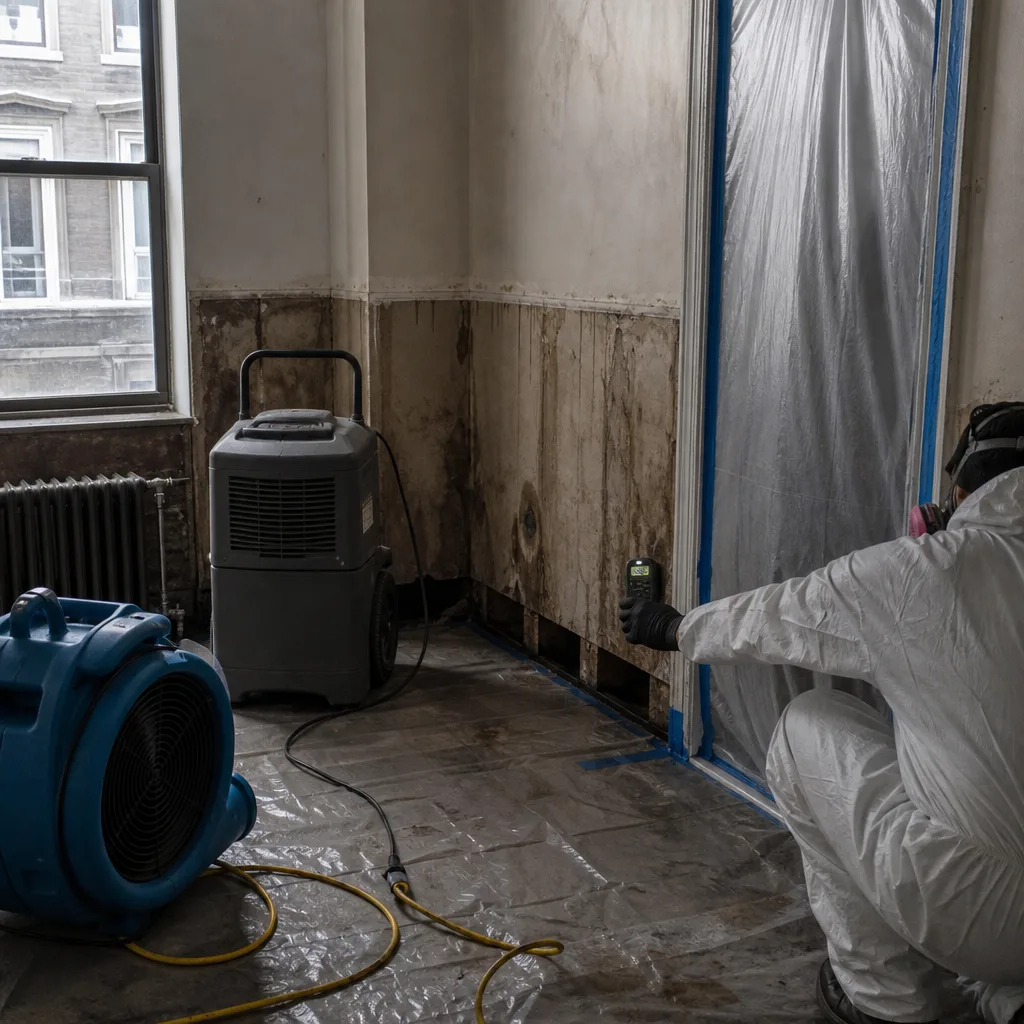 Before
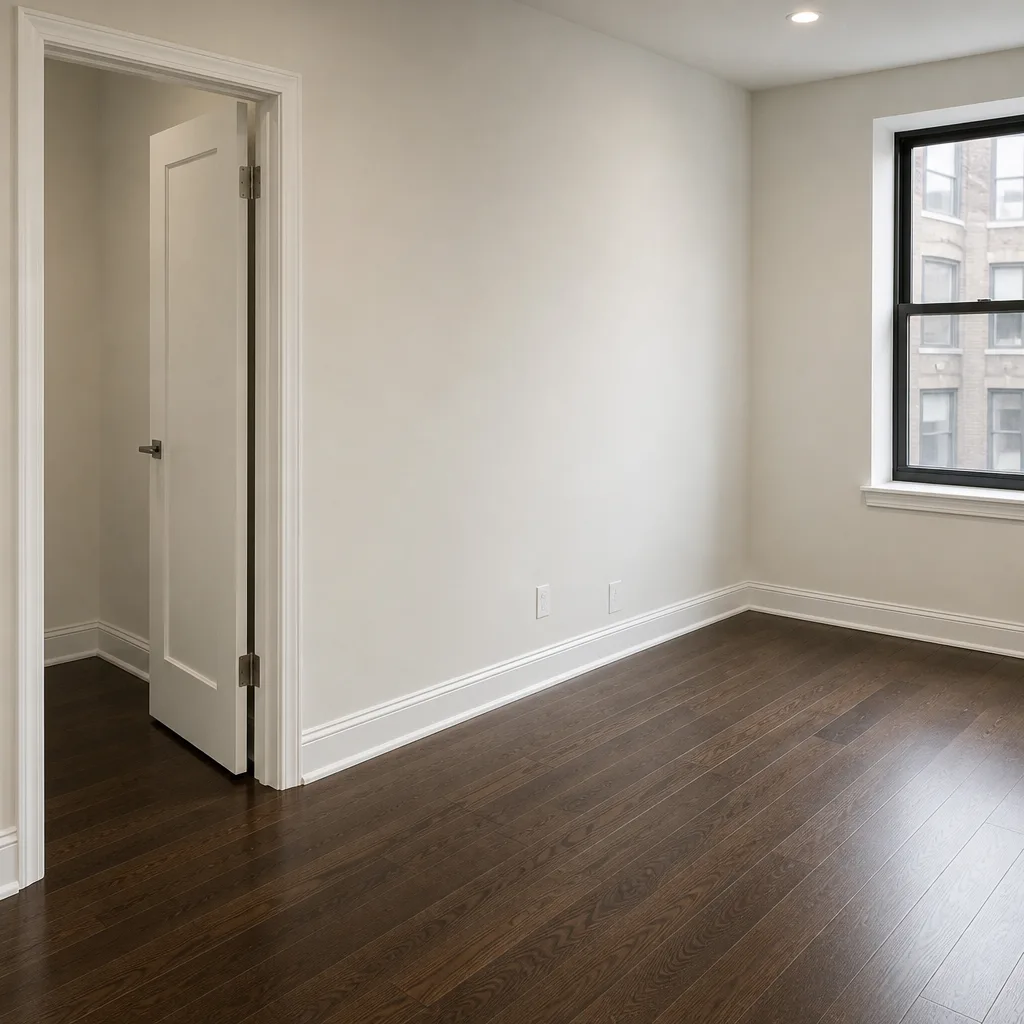 After
After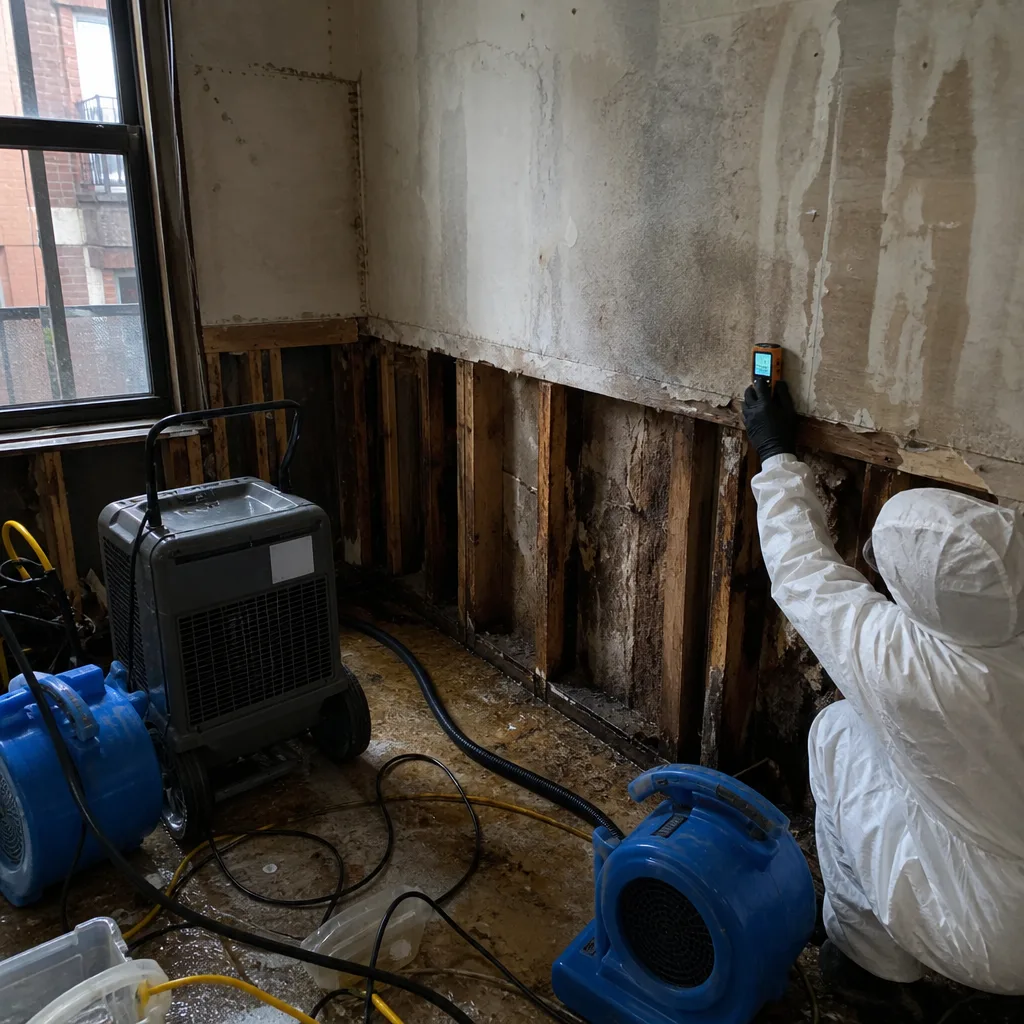 Before
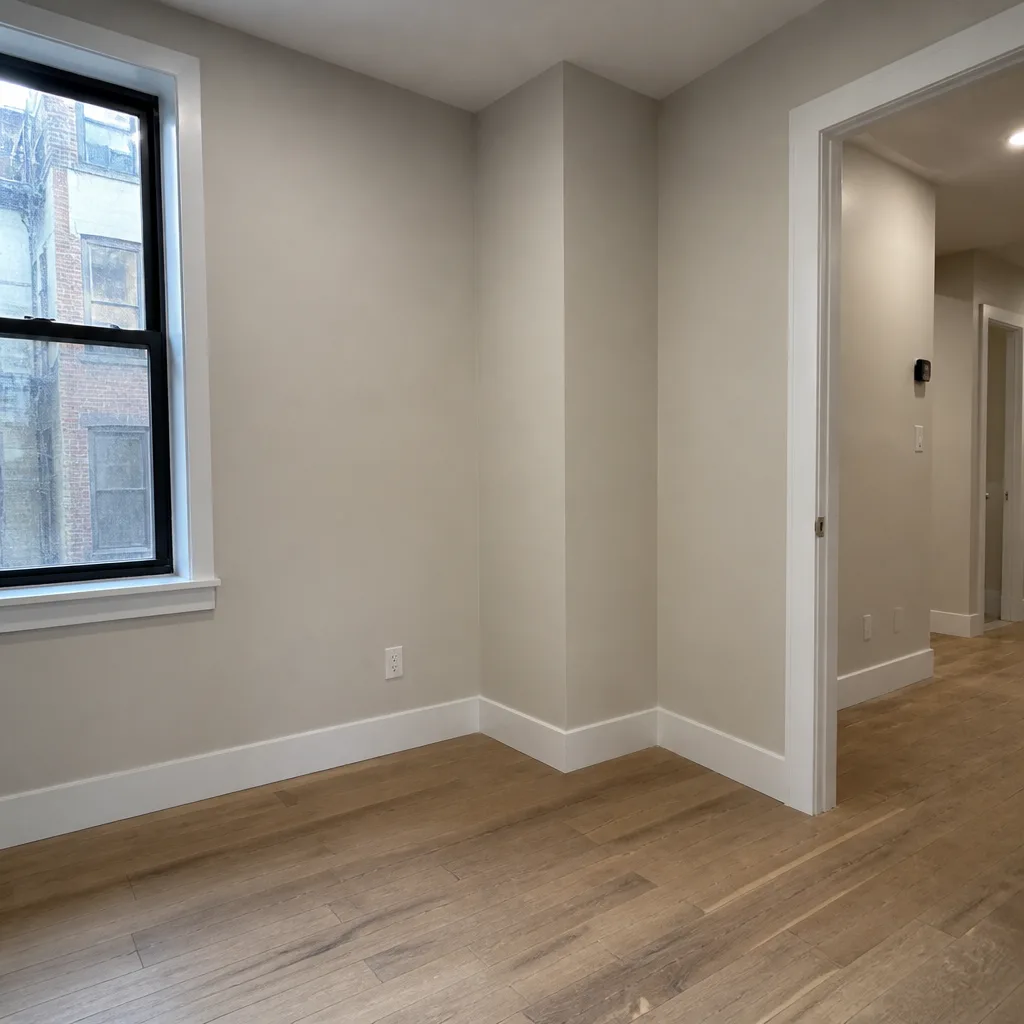 After
After24/7 Emergency Mold Remediation in Upper West Side
Mold remediation in Upper West Side costs somewhere between $1,800 and $6,500 for a typical pre-war co-op bathroom or kitchen, and closer to $10,000-plus when containment and asbestos abatement get pulled into the scope. We answer the phone live at (607) 350-1550 at three in the morning, and Wade Ferris himself will walk you through the first thirty minutes before his crew arrives. In a pre-war building, the clock starts the moment water hits horsehair plaster, because that material wicks moisture into wall cavities and feeds mold inside 48 to 72 hours. Getting a HEPA scrubber running and moisture mapping started on day one is the difference between a contained bathroom job and a multi-room abatement with DEP involvement.
Understanding Mold Remediation Severity in Upper West Side Properties
Mold severity breaks into three rough tiers, and Upper West Side’s housing stock pushes almost every call into the harder two. Tier one is surface colonization: visible spots on bathroom ceiling plaster or behind a radiator, usually under 10 square feet, no structural moisture source. Tier two is water-fed growth inside walls or floors, fed by a leaking riser, failed grout, or a roof penetration, where the mold you see is maybe a third of what is actually there. Tier three is what we run into constantly in Riverside Drive and West End Avenue co-ops: Category 3 water from a broken cast-iron waste riser, saturated horsehair-and-plaster assemblies, mold colonies inside original pipe chases, and friable asbestos wrapping the very pipes you need to access. At tier three you are not doing “cleanup”; you are doing contained abatement with air scrubbing, daily moisture logs, clearance testing, and in many buildings, NYC DEP notification plus an asbestos survey before anyone cuts a wall.
The pre-war construction matters here more than any other neighborhood in the city. Original plaster is alkaline, which actually resists mold growth on its face, but the wood lath behind it and the organic horsehair binder become a mold buffet once saturated. So you can have a wall that looks fine and a cavity behind it running 90-percent relative humidity for weeks. That is why we moisture-map every affected room, not just the visible patch, and why Wade hands you the full daily readings log at the end of the job. Nobody else does that. In most Upper West Side buildings we serve, it is the only way to prove the source is actually gone.
Why Upper West Side Property Owners Choose Wade’s Restoration
- Wade answers his own phone, 24/7. Not an answering service. Not a call center. The owner’s name is on the truck and his number is on the contract, and he will be the one showing up to your building on a Saturday to take follow-up moisture readings.
- 45-minute response commitment inside the county. For active water-fed mold situations on the Upper West Side, Wade heads out immediately. The sooner containment starts, the smaller the job.
- IICRC-certified crews, AMRT and WRT codes applied. The Applied Microbial Remediation Technician and Water Restoration Technician certifications are the industry standards, and Wade’s team carries them. They matter when a co-op board asks who is doing the work.
- Free visual inspection, in writing. You get a straight assessment of what is surface mold, what is water-fed, and what needs testing before anything happens. No charge for the look, period.
- Direct insurance billing and adjuster coordination. Wade deals with the adjuster directly. You are not the one relaying messages between a co-op board, a HO-6 carrier, and a master policy desk.
- One team from containment to reconstruction. Same crew, same moisture map, same scope. Mold remediation on the Upper West Side falls apart when the remediator hands off to a separate drywall crew who has never seen the original plaster detail. That does not happen here.
Our Mold Remediation Process
Inspection, Assessment & Testing
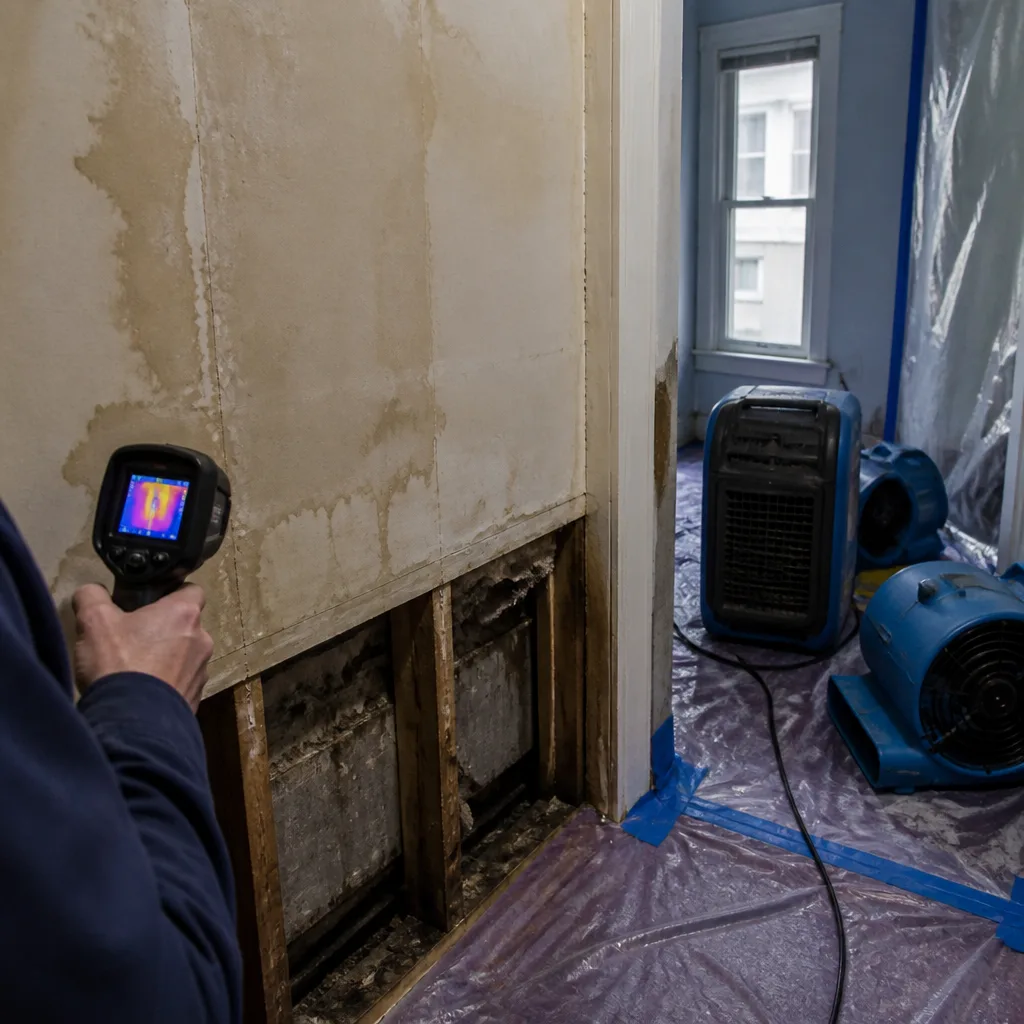
We start with thermal imaging and moisture mapping across every affected room, not just the visible mold. In pre-war Upper West Side buildings, this means checking adjacent pipe chases, shared walls, and the ceiling cavity below the unit above. If black mold is suspected, we recommend lab testing before touch anything. If steam riser insulation is in play, we flag it for asbestos survey before a single wall cut.
Containment & Source Stabilization
HEPA air scrubbers go up first, with negative air pressure established in the affected area. We stop the water source, whether that is a leaking riser, a roof penetration, or a failed fixture. In a Riverside Drive co-op with chronic wind-driven masonry infiltration, source-stabilization can mean coordinating tuckpointing before interior remediation makes sense.
Drying & Dehumidification
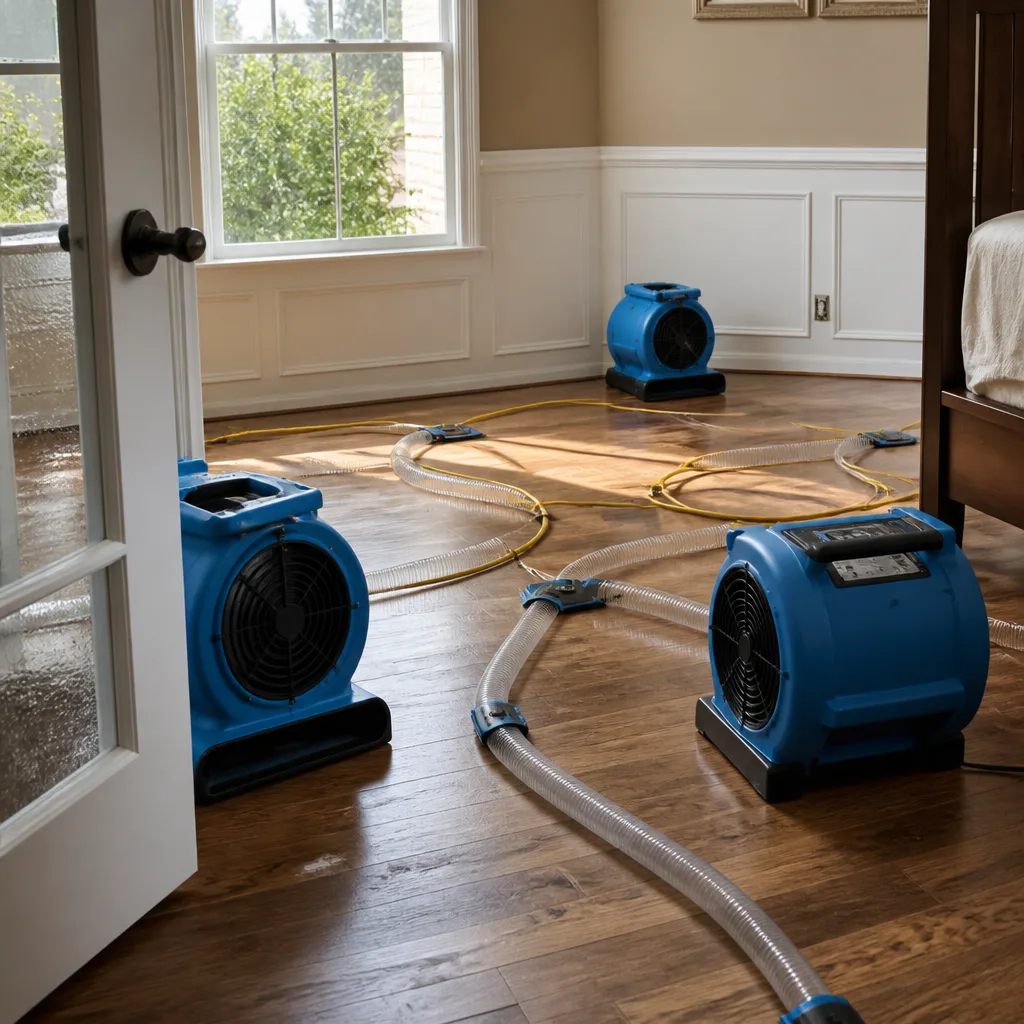
We run Dri-Eaz dehumidifiers and XPOWER air movers inside the containment area, checking moisture content daily. Horsehair plaster dries slowly. We do not rush it. Wade logs every reading and hands you the full sheet at the finish, so you know the cavities are actually dry, not just the surface.
Cleaning, Antimicrobial Treatment & Removal
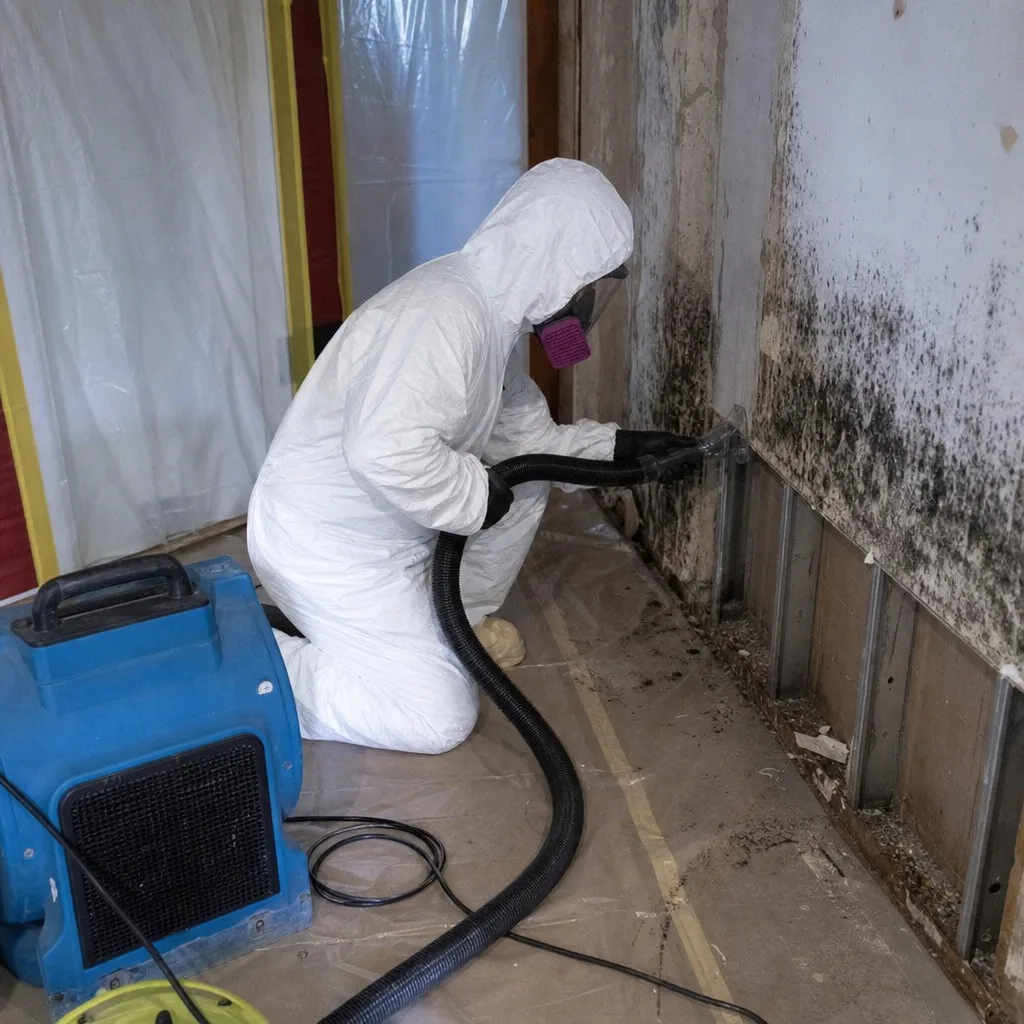
Mold-impacted plaster, lath, and insulation are removed under containment. Remaining structural lumber and masonry get antimicrobial treatment. If original pipe insulation tests positive for asbestos, we have already shifted the sequence: no further wall work until a licensed NYC asbestos contractor clears the area.
Moisture & Humidity Control
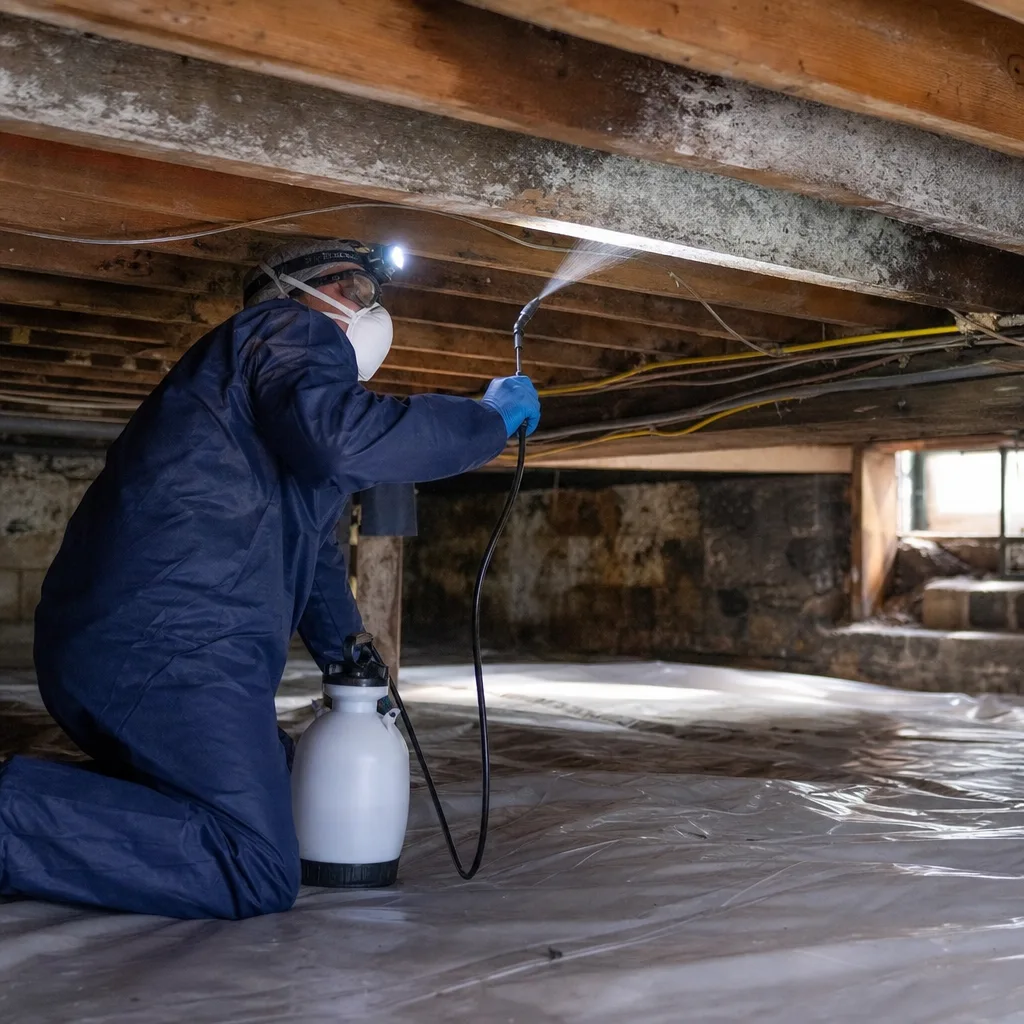
This is the step most remediators skip, and it is the one that matters most in Upper West Side pre-war buildings. Crawl spaces and cellar-level storage rooms with no modern waterproofing membrane need source-level humidity control, not just a dehumidifier running for a week. We assess whether ongoing dehumidification, ventilation, or vapor barrier work is needed so mold does not come back in three months.
Repairs, Restoration & Clearance
Rebuilding starts only after the containment area passes visual clearance and, where required, post-remediation air sampling. In landmarked buildings on Central Park West and Riverside Drive, we match original plaster profiles and materials per LPC requirements. You get a written scope before any reconstruction begins, and the 90-Day Done Right Promise covers the work.
Need Emergency Mold Remediation in Upper West Side Now?
Crews minutes away, answering live 24 hours a day. The sooner we start, the less it costs.
Working With Your Insurance Company
Mold claims on the Upper West Side are rarely simple. In a co-op, you have the building’s master policy, the affected shareholder’s HO-6 policy, and sometimes the unit that caused the loss, all governed by a proprietary lease that is different for every building. Wade has been dealing with those three-way disputes since 2007. From the first hour, he documents everything an adjuster needs: photos of the affected rooms before anything moves, moisture readings with timestamps, the daily drying logs, and a line-item scope that separates remediation from reconstruction. Then he talks to the adjuster directly, so you are not the one trying to explain to a claims desk why a landmarked Riverside Drive building needs LPC-compliant plaster matching instead of a standard drywall patch. It is the single biggest reason homeowners call us after a bad experience with a national chain.
What We Provide Your Insurer
- Thorough documentation of the loss
- Photos of all damage, room by room
- Moisture readings and drying logs
- A detailed, line-item scope of work
- Direct coordination with your carrier
Built for Upper West Side’s Loss Calendar
Mold on the Upper West Side follows the weather, but the pre-war plumbing adds its own schedule. January deep freezes burst uninsulated supply lines in exterior-facing kitchens and bathrooms, and the water finds the lath-and-plaster before anyone notices the ceiling stain. March and April bring the thaw, and with it, basement and cellar seepage in those century-old masonry foundations with no waterproofing membrane. Summer humidity off the Hudson pushes basement and cellar relative humidity past 70 percent through June, July, and August, which is when we get the calls about musty storage rooms and mold creeping up the first-floor baseboards. Fall nor’easters hammer the west-facing facades on Riverside Drive with wind-driven rain that enters through masonry cracks you cannot see from the street, saturating interior plaster behind the crown molding. If your building has had a steam riser repair in the last year, check the wall cavities around the riser. That is where we find the mold nobody knew was growing.
Mold Remediation Across Upper West Side’s Neighborhoods
The Upper West Side is not one housing stock; it is a patchwork of building types that change how we approach mold. Riverside Drive, from 72nd up to the 100s, is almost all pre-war co-ops with landmark protection and west-facing walls that take the brunt of Hudson River storms. Mold calls there almost always involve wind-driven masonry infiltration behind original plaster, and the fix requires a sequenced approach that includes exterior source work. West End Avenue has some of the oldest large co-ops in the neighborhood, many from the 1910s, where cast-iron risers are at the end of their service life. On West End Avenue, our crew responded to a 1912 co-op where a failed cast-iron supply riser had sent Category 3 water cascading through original horsehair-and-plaster walls. Using moisture mapping and Dri-Eaz dehumidifiers, we found hidden saturation behind intact plaster, but cutting into a shared wall revealed original pipe insulation testing positive for friable asbestos. Our scope shifted to containment and DEP notification coordination, with a licensed asbestos contractor clearing the area before structural drying could be completed.
The Central Park West corridor is landmarked almost continuously, and the co-op boards there run tight ships. When mold appears in a CPW building, the board wants paperwork before the crew parks the truck. We provide a written scope, insurance documentation, and a protocol that anticipates LPC material requirements, which keeps the project moving instead of stalling in committee. Broadway between 72nd and 96th is a mix of older co-ops and a few post-war rental towers where the construction is more forgiving but the basements are shared and cluttered. And the low 70s side streets, between Amsterdam and Columbus, are filled with townhouses and small co-ops where crawl spaces run tight and humidity control becomes the long-term solution rather than just the immediate remediation.
In all of it, one pattern holds: this is older construction, and mold in a shared wall is never just your unit’s problem. The pipe chases in these buildings connect floors, and moisture moves through them like a highway. Treating the visible mold without mapping the chase is how you end up paying for remediation twice.
Specialized Mold Remediation Services We Offer in Upper West Side
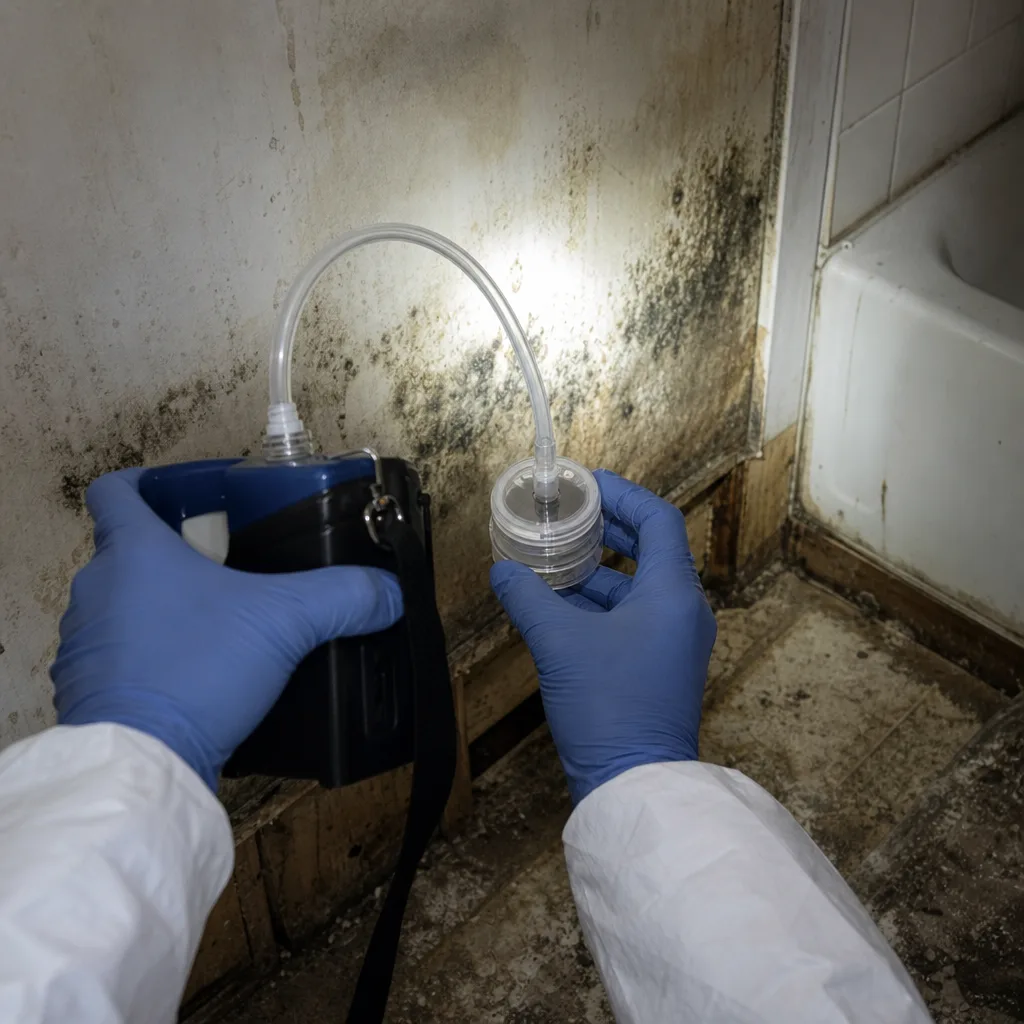
Mold Inspection & Testing
Before anything gets torn out, you need to know what you are dealing with. We inspect visually, run moisture mapping, and take air or surface samples when the situation calls for it. In an Upper West Side co-op, this step is especially important because the answer often is not just “mold”; it is “mold behind a wall that contains original asbestos-wrapped riser insulation.” If black mold is suspected, lab testing identifies the species and informs the containment protocol. You get the results and a straight recommendation, not a scare pitch.
Mold Removal
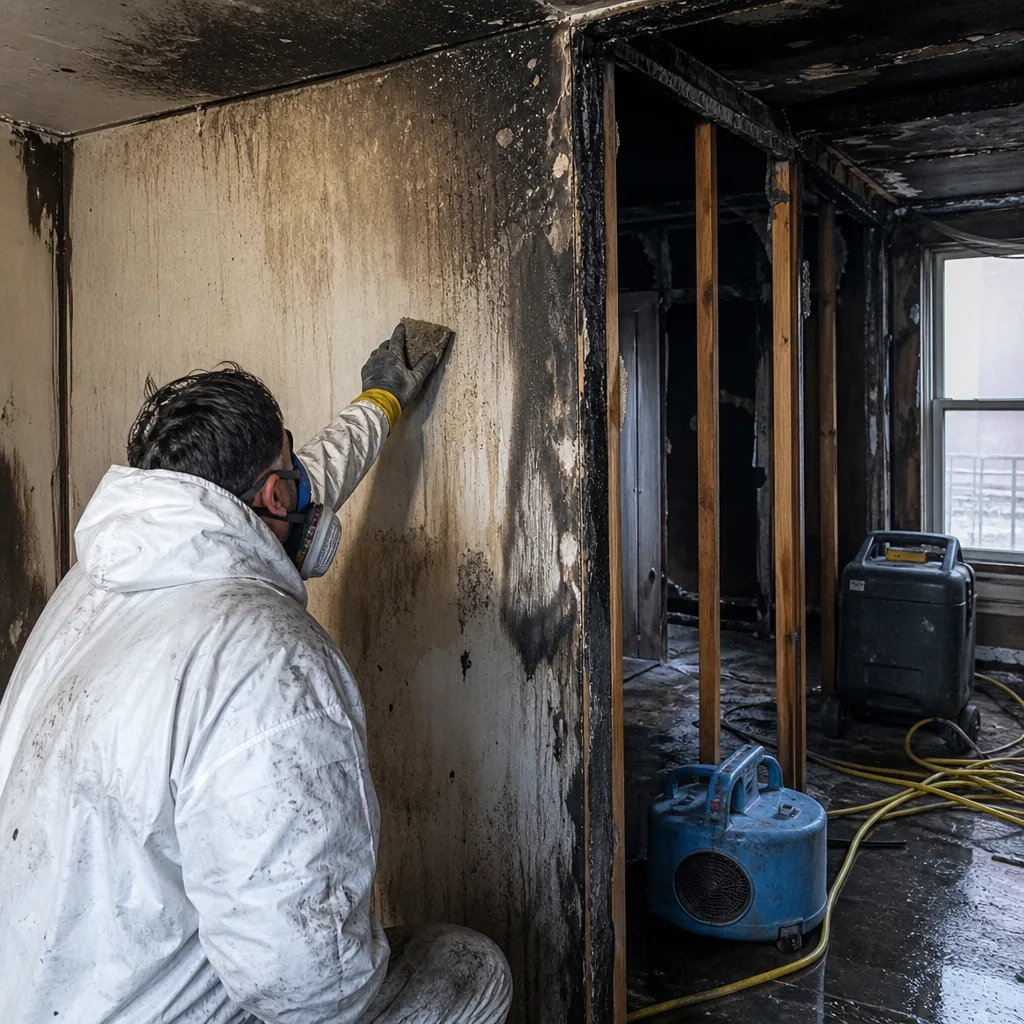
Removal means physical extraction of mold-impacted material under containment, followed by antimicrobial treatment of the remaining structure. In most Upper West Side buildings, that means removing saturated plaster and lath, not wiping down drywall. The process is controlled, air-scrubbed, and documented. And it is covered by the 90-Day Done Right Promise, in writing.
Black Mold Remediation
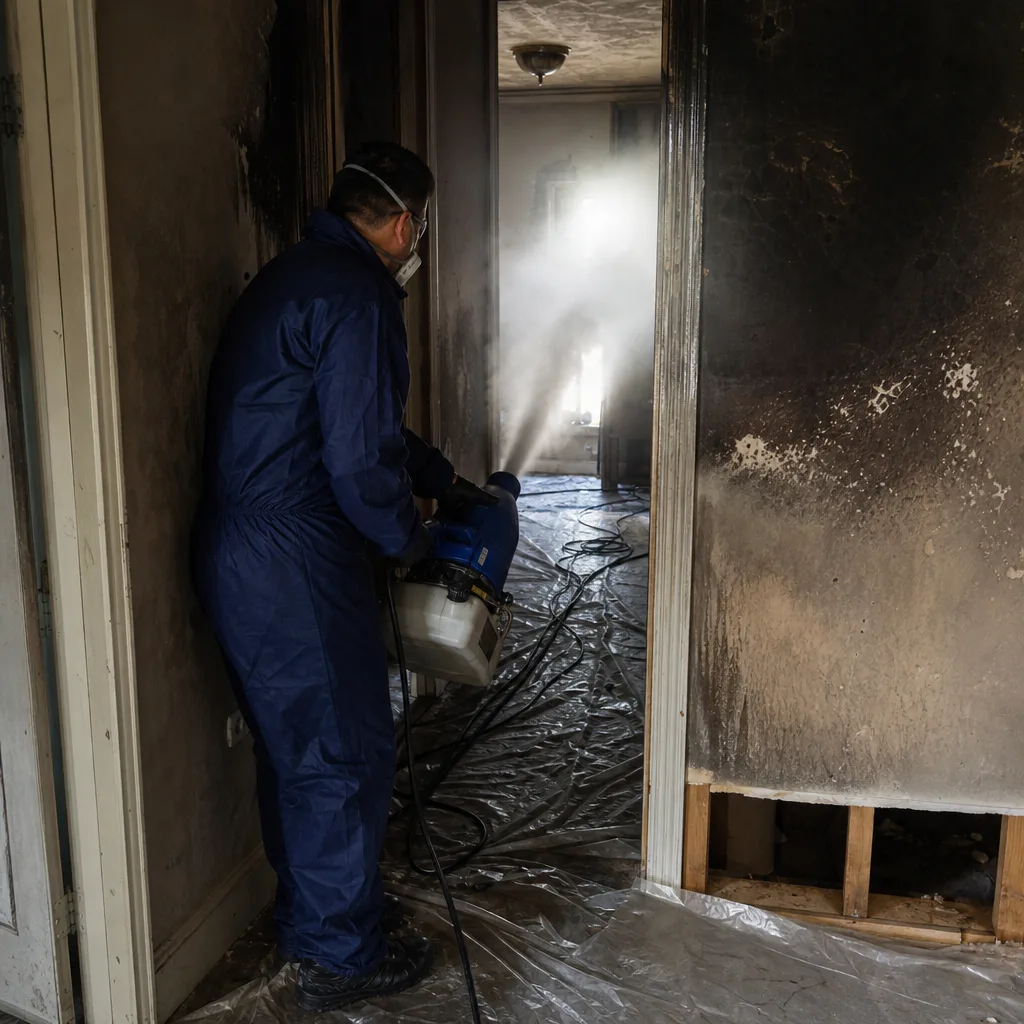
Black mold, or Stachybotrys, gets the headlines and the panic, and in a pre-war co-op the panic is justified when it is growing inside a wall cavity that also contains friable asbestos. We treat it with full containment, HEPA air scrubbing, proper PPE, and where testing confirms it, a protocol that protects everyone in the building. You do not cut into that wall without the right sequence, and we will not do it for you.
Air Quality Restoration
After the visible mold is gone, the air needs to be clean. We run HEPA air scrubbers throughout the process and perform post-remediation air sampling in many Upper West Side jobs, especially where a co-op board or insurer requires clearance testing. The goal is simple: the apartment should smell and test like mold was never there. In a pre-war building with shared ventilation risers, this step matters more than in a detached house, because your neighbor’s air is partially your air.
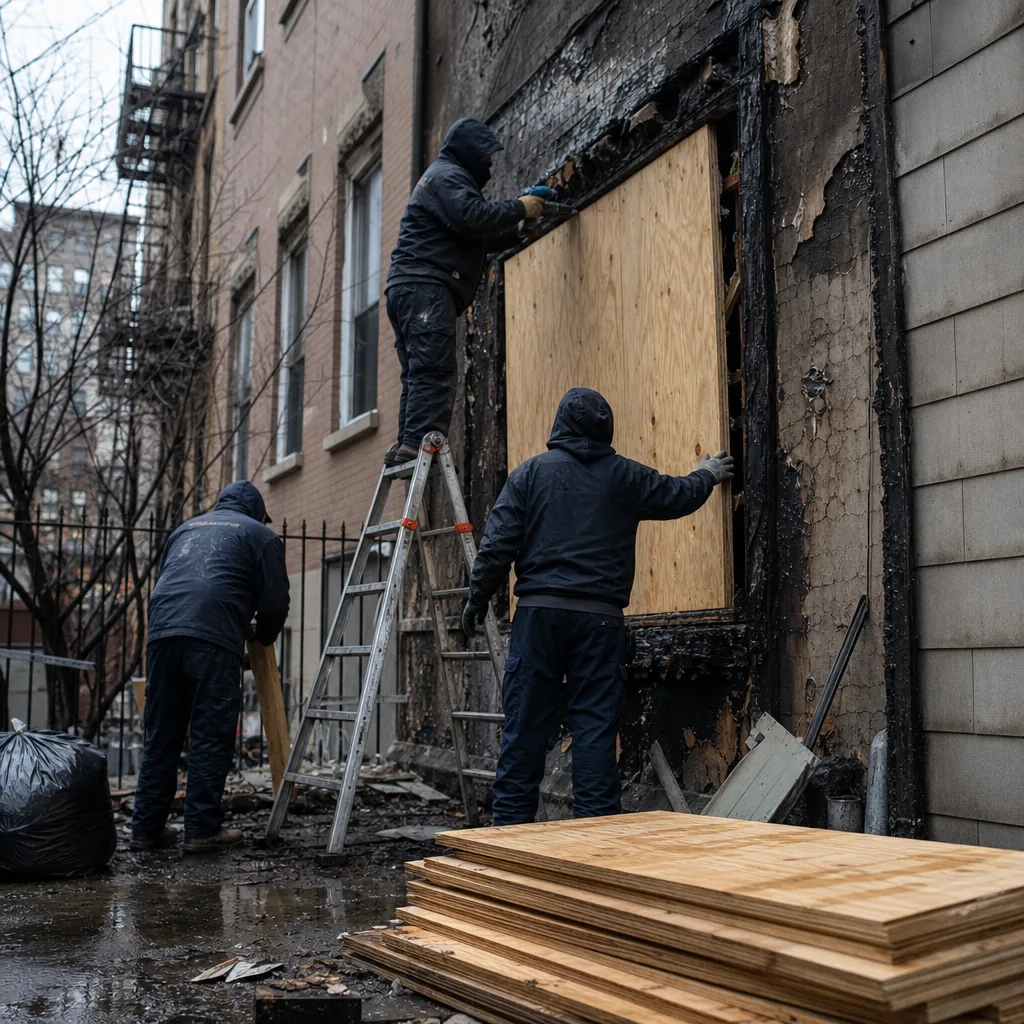
Crawl Space Treatment
Cellar-level and crawl-space mold in Upper West Side buildings usually traces back to masonry foundation seepage and poor ventilation. These spaces were built in an era before vapor barriers and waterproofing membranes, and the Hudson-side humidity makes them damp all summer. We treat the mold, then address the moisture source: sealing, ventilation improvements, or ongoing dehumidification depending on what the building’s structure allows.
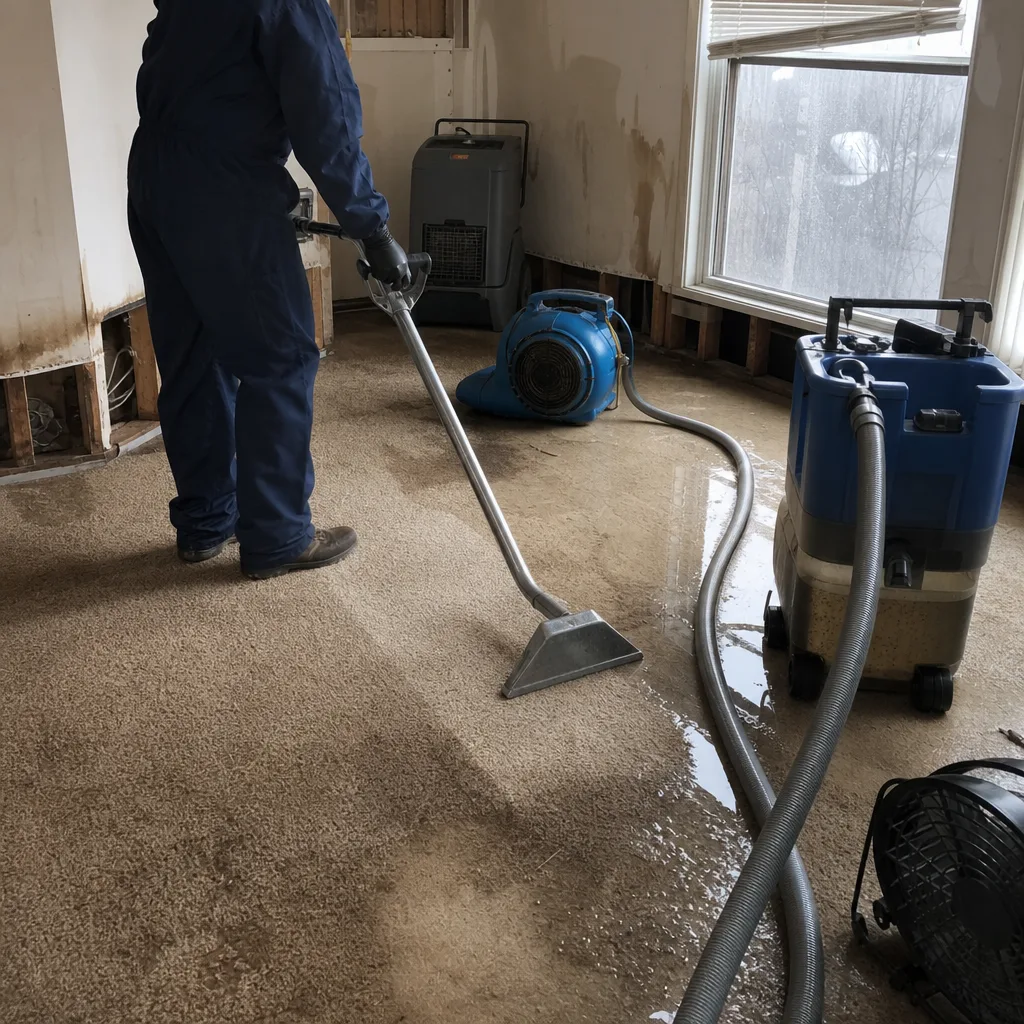
What happens when you call
- 1
A real person answersNo phone trees - you reach a local pro.
- 2
You get an upfront price rangeHonest numbers before anyone is dispatched.
- 3
A background-checked tech heads outLicensed & insured, dispatched right away.
- 4
You approve before work beginsNothing starts until you say go.
Mold Remediation Costs in Upper West Side, NY
You should know the numbers before anyone shows up. For a contained bathroom or closet mold job in an Upper West Side co-op, expect $1,800 to $3,500, assuming no asbestos involvement and no major structural removal. A kitchen or larger room with water-fed mold inside walls runs $3,500 to $6,500. When the job involves cutting into a shared wall with friable asbestos on the riser, DEP notification, and a licensed asbestos abatement subcontractor, the total often lands between $8,000 and $14,000, and the timeline stretches as the asbestos clearance dictates. If a Landmarks Preservation Commission review is required for replacement materials on Riverside Drive or Central Park West, add permitting time and possibly a few thousand in millwork or plaster matching. Is it covered? Often yes, if the mold resulted from a covered water event and the policy includes mold remediation as a covered peril, but co-op HO-6 policies vary widely. Wade reads your policy with you and talks to the adjuster directly. The free visual inspection gets you a firm written scope, not a phone estimate, before you commit to anything. Call (607) 350-1550 and Wade will come look, no charge.
We Also Serve Cities Near Upper West Side
Wade’s Restoration covers Upper West Side and the surrounding boroughs and neighborhoods, including Mold Remediation in Lower Manhattan, the Financial District, Astoria, and Midtown Manhattan. If you are in one of those areas and dealing with water-fed mold behind old plaster, same team, same live answer, same free inspection.
Upper West Side Mold Remediation Questions, Answered
How fast can Wade get to an Upper West Side building with active mold?
Usually inside 45 minutes, because the crew is dispatched from the New York City office and serves Upper West Side locally. If there is an active water source feeding the mold, Wade heads out immediately. Call (607) 350-1550 and he will tell you what to do in the meantime.
Why does mold remediation in an Upper West Side pre-war co-op often halt before walls are opened?
Because the original pipe insulation inside shared walls is almost always friable asbestos, and cutting into that wall triggers DEP notification and an asbestos abatement. Anyone who just starts cutting is creating a regulated hazard, and the job stops anyway. Doing the survey first is the only sane order, and it is what we do every time.
How do you handle mold remediation in a landmarked Riverside Drive building where replacement plaster must match original?
We sequence the work so the LPC material review runs parallel to the remediation, not after it. We document the original plaster profile before removal, then rebuild with matching lime-based plaster or appropriate period materials. The co-op board gets a written scope that includes the LPC requirement, so the project does not stall at the finish line.
Will my insurance cover mold remediation in an Upper West Side co-op?
Depends on the HO-6 policy language and whether the mold traces to a covered water event. Many policies cover remediation when it is part of a covered loss, but co-op carriers differ, and the master policy may also be involved. Wade reads the policy with you and talks to the adjuster directly, so you are not arguing with a claims desk alone.
Do I really need full remediation, or can someone just clean the visible mold?
If there is no active water source and the mold is surface-level, a contained cleaning may be enough. If the mold is water-fed, especially in a pre-war wall, surface cleaning is cosmetic. The moisture source keeps feeding the growth, and it comes back. That is why we moisture-map before we recommend anything.
Mold appeared on a wall shared with a neighbor’s unit. Who is responsible for remediation in a co-op?
In an Upper West Side co-op, the proprietary lease and the building’s alteration agreement govern shared-wall situations, and responsibility often splits between the shareholder and the corporation depending on where the source is. We document the loss and the scope in writing, which helps when the board or the neighbor’s carrier needs to be brought in. Wade has navigated these disputes since 2007 and will tell you straight what the building documents actually say.
Can mold spread from a West End Avenue basement leak into upper floors through original cast-iron riser chases?
Yes, and it does. The chases around original risers act as vertical channels, and moisture plus warm air moves upward through them. Mold spores in the basement can travel to upper floors through those same pathways. That is why basement mold remediation in these buildings should include an inspection of the riser chases above the affected area.
What is the difference between Category 1 and Category 3 water when mold remediation starts in an Upper West Side co-op?
Category 1 is clean water from a supply line or radiator. Category 3 is heavily contaminated water from a waste riser, sewer backup, or outside flooding. Category 3 water carries pathogens, and any mold it feeds needs full containment and antimicrobial treatment, not just drying. In pre-war buildings, a failed cast-iron waste riser is almost always Category 3.
What should I do in the first 30 minutes after discovering mold in my Upper West Side apartment?
Shut off the water source if you can find it, clear the area, and do not disturb the mold. Do not cut into any wall that might contain riser insulation. Call (607) 350-1550. Wade will walk you through the immediate steps and head to your building. Fast action keeps a contained problem from becoming a multi-floor abatement.
Serving Upper West Side, NY - Our Local Coverage Area
We’re based in the Upper West Side area and know this community well. Use the map below to see our service coverage - if you’re nearby, we can almost certainly help.
Mold Remediation in Upper West Side, Done Right
This is not a drywall-and-paint neighborhood, and mold remediation here is not a drywall-and-paint job. The pre-war co-ops of Upper West Side demand a specific sequence: moisture mapping before cutting, asbestos survey before opening, Landmarks documentation before rebuilding, and daily moisture logs until the cavity is actually dry. Wade Ferris has been doing this work since 2007, and he puts his name on every job. His cell number is on the contract. The 90-Day Done Right Promise is on the contract too, in writing. If it is not done right, he makes it right. Call (607) 350-1550 for a free visual inspection and a straight written scope. Wade will be there himself.
Written by Wade Ferris, Owner at Wade’s Restoration, serving Upper West Side, NY with mold remediation, water damage restoration, and reconstruction since 2007.