
Free visual inspection and a written scope of work before any mitigation begins - photos, moisture readings, and drying logs go in your claim file
The scope we write is the scope we bill. Anything new gets shown to you, in writing, before we touch it.
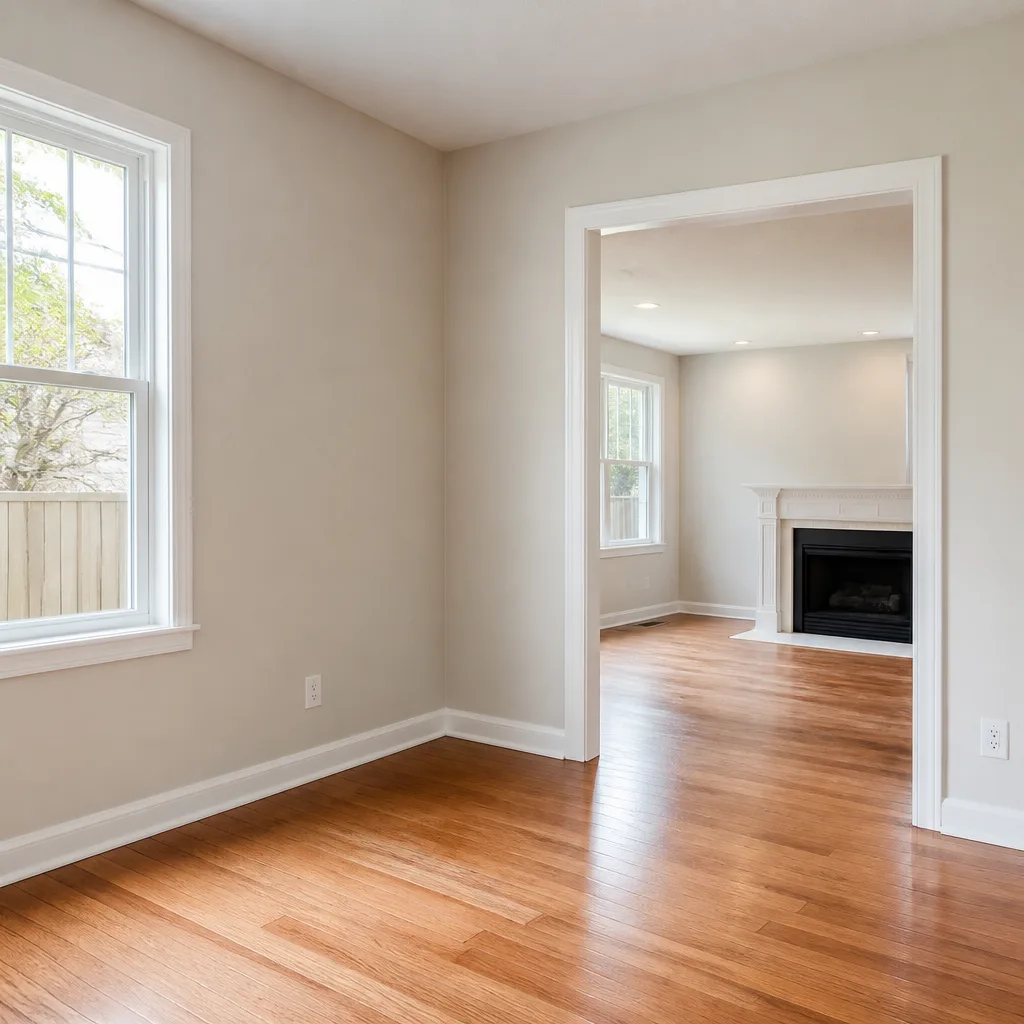
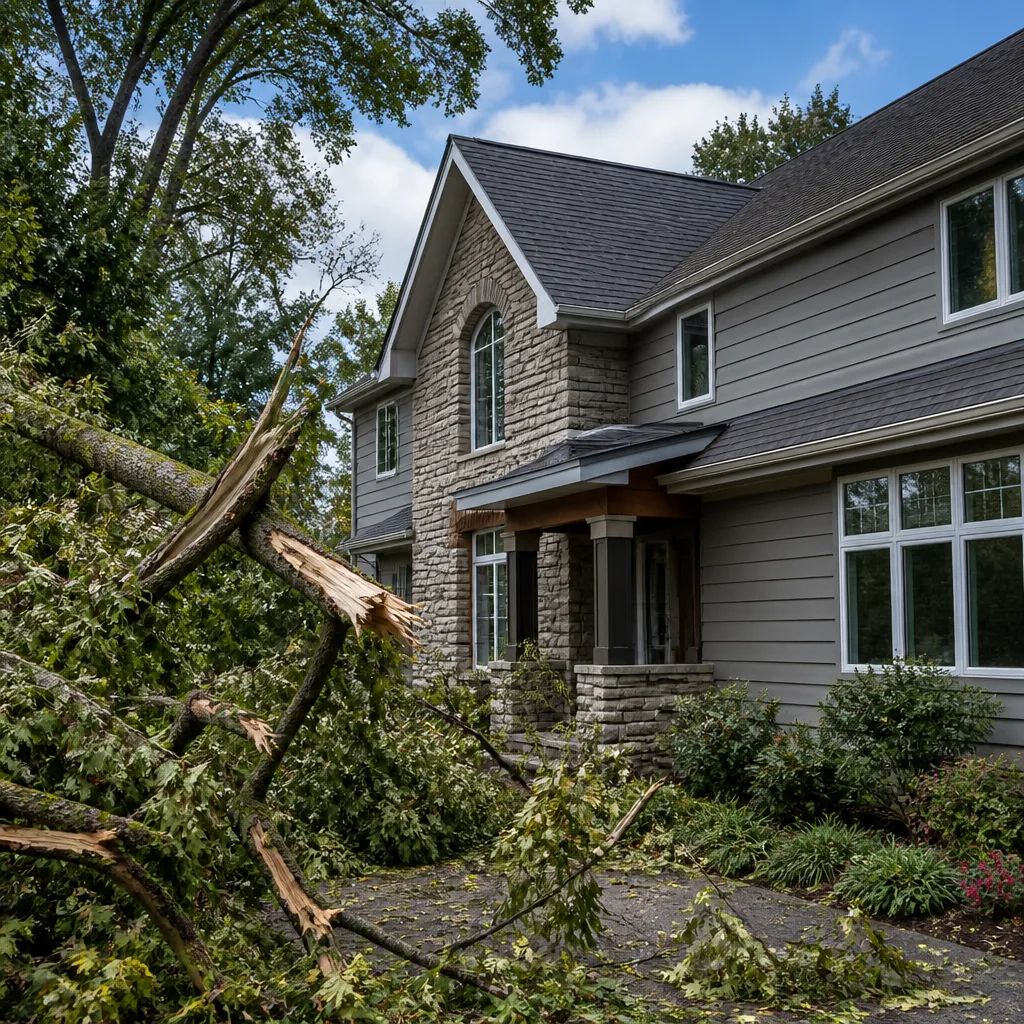
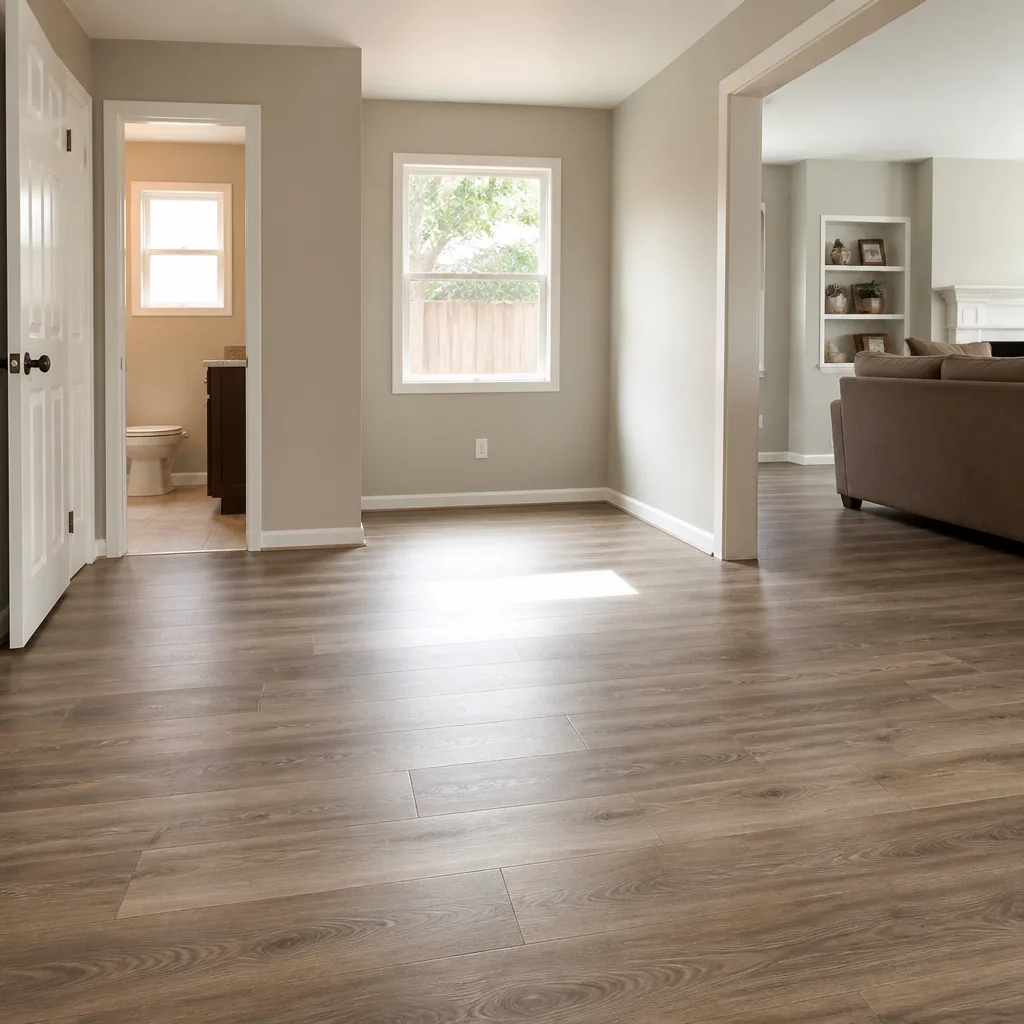

 Before
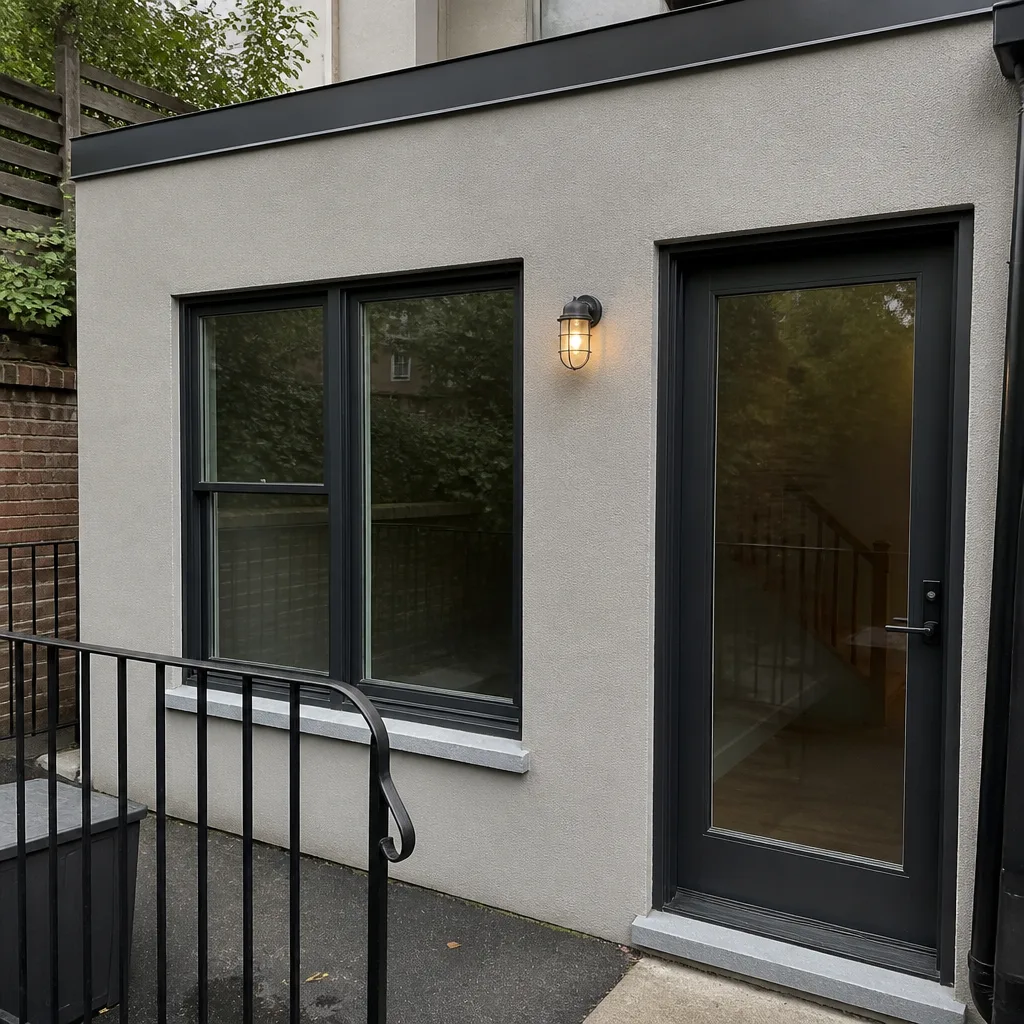 After
After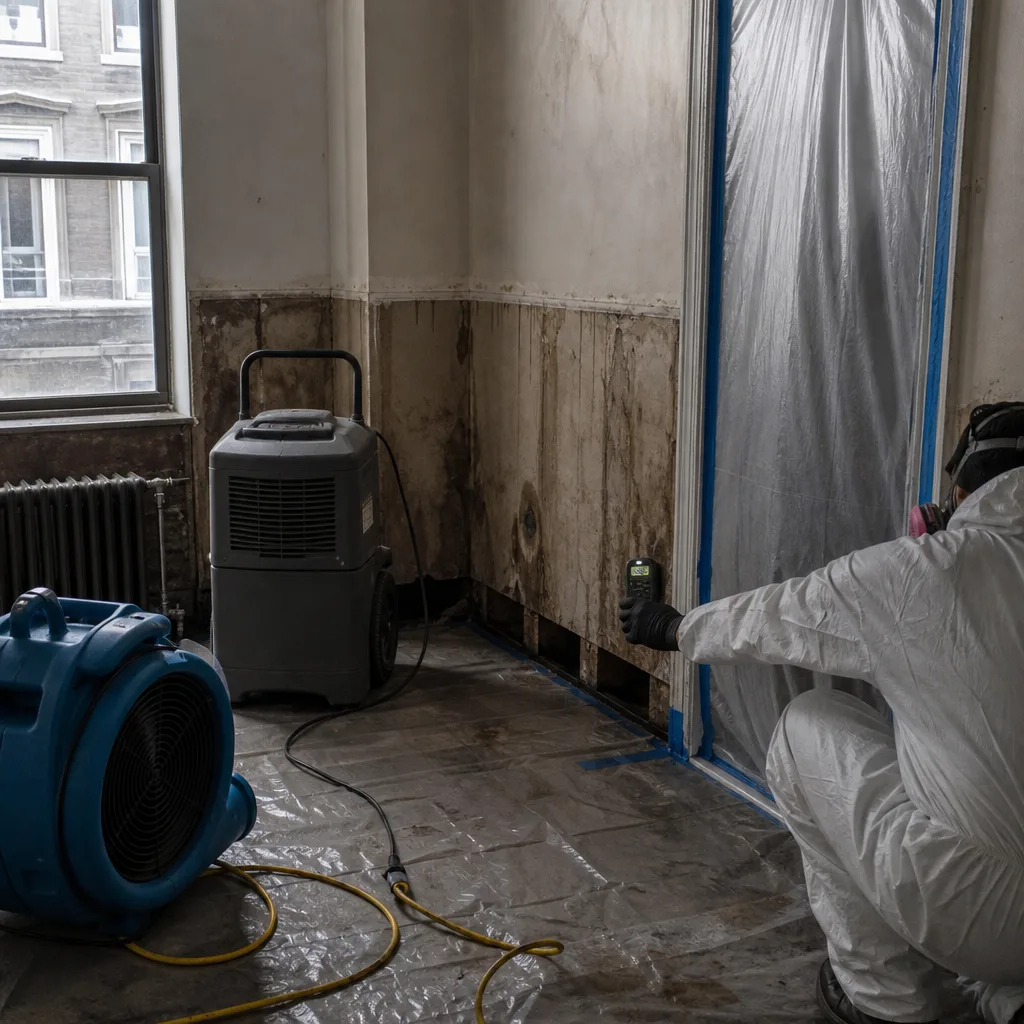 Before
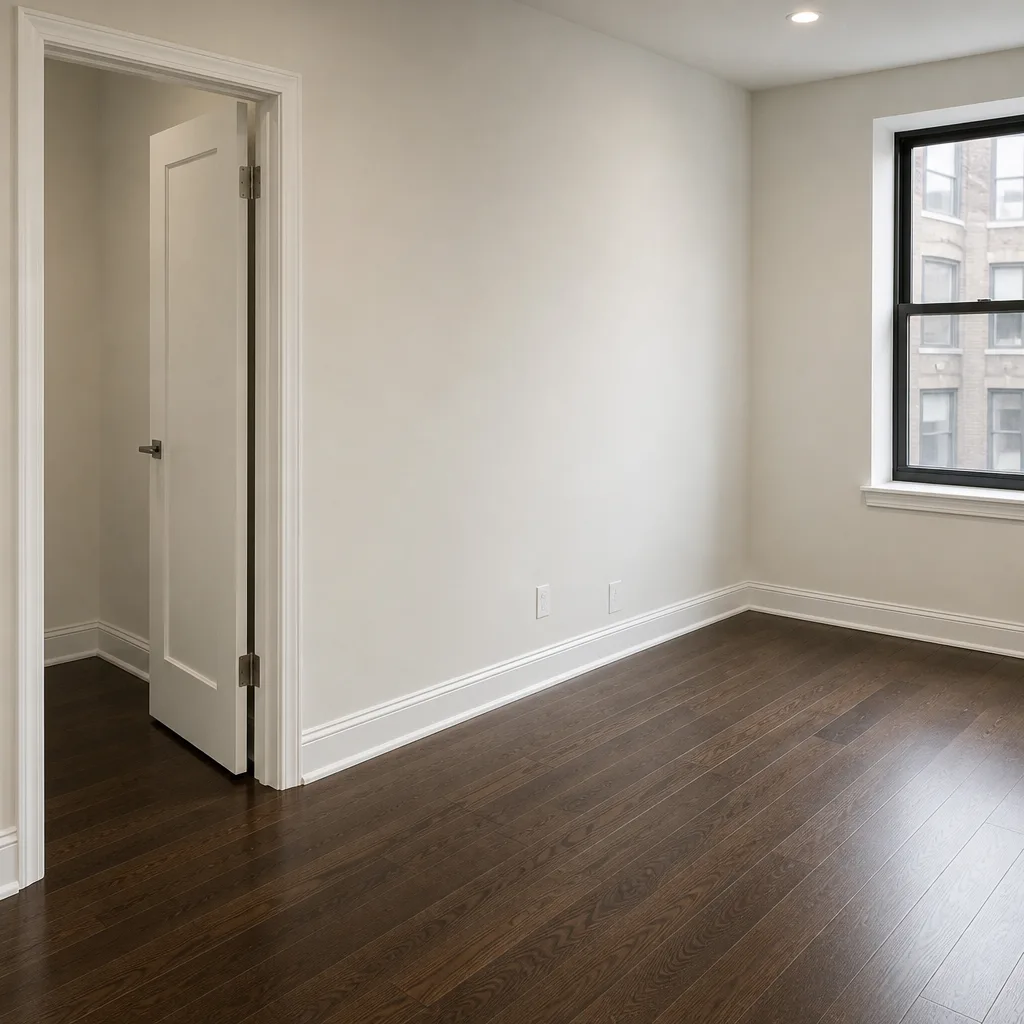 After
After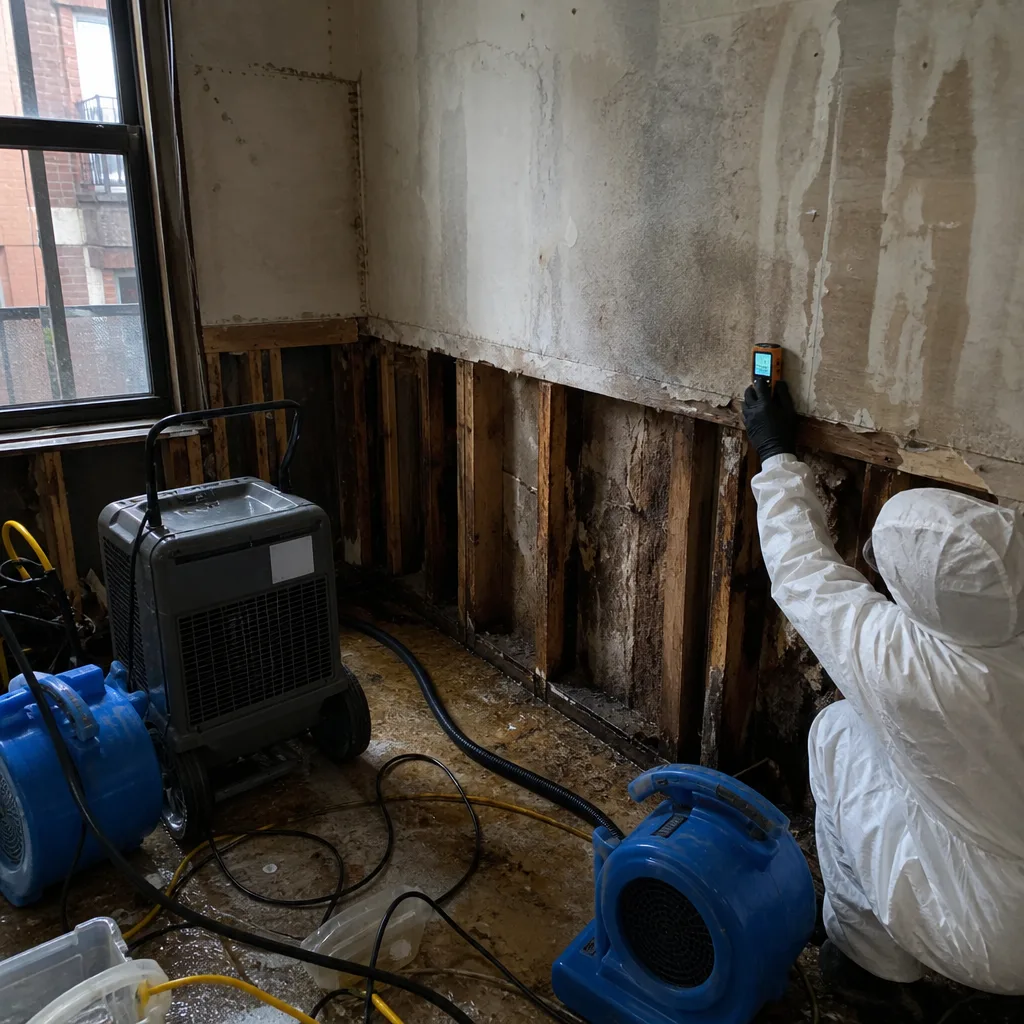 Before
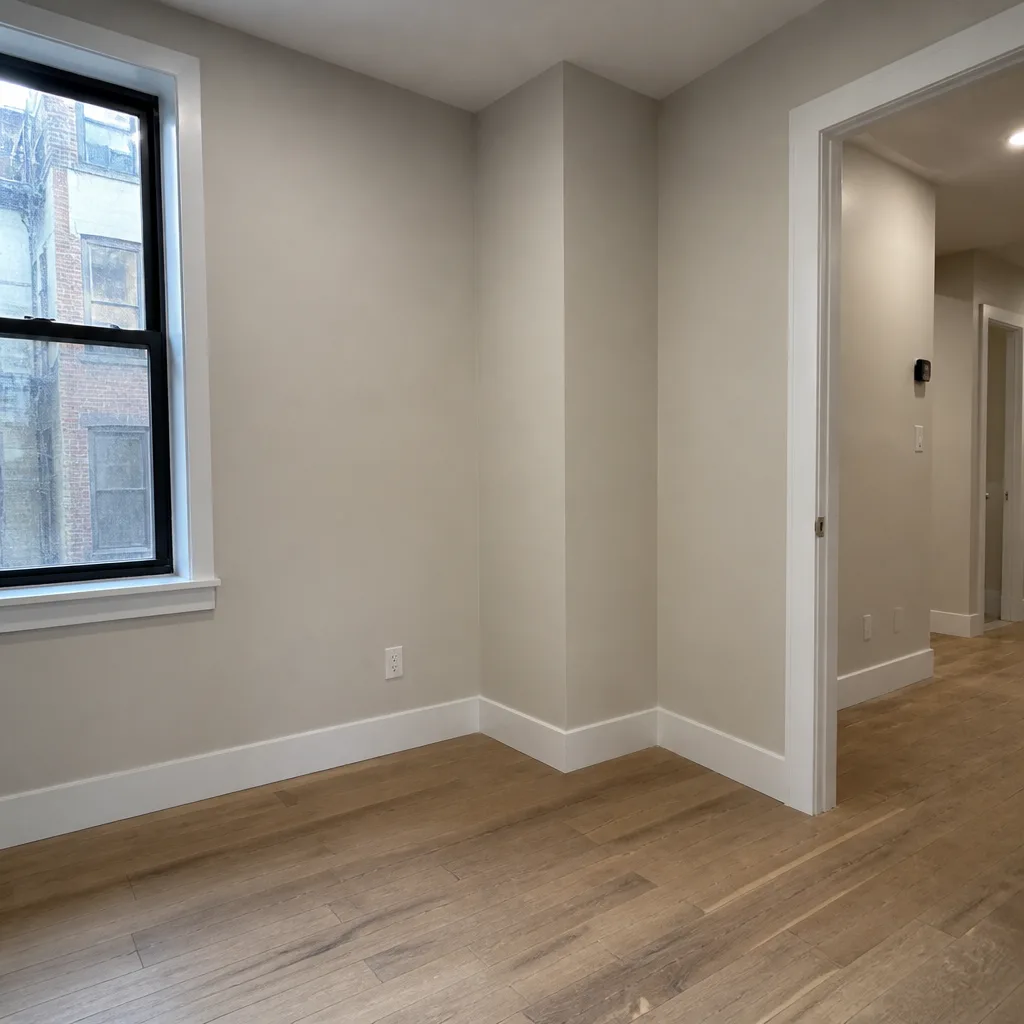 After
After24/7 Emergency Mold Remediation in Financial District
Mold remediation in Financial District typically runs $2,800-$7,500 for a contained high-rise unit treatment, and in FiDi it usually means saltwater-driven Category 3 water loss, not a damp bathroom. That changes the whole job. If you’re on the 30th floor of a converted tower off Water Street or near 70 Pine and you smell that musty, sour odor behind a baseboard, call (607) 350-1550 right now. Wade Ferris answers his own phone at 2 a.m., and he can have his crew on site inside the hour. The first 48 hours after water intrusion are when you either stop mold or you watch it colonize wall cavities, pipe chases, and sub-basement mechanical rooms. Don’t wait. Every hour counts.
Understanding Mold Remediation Severity in Financial District Properties
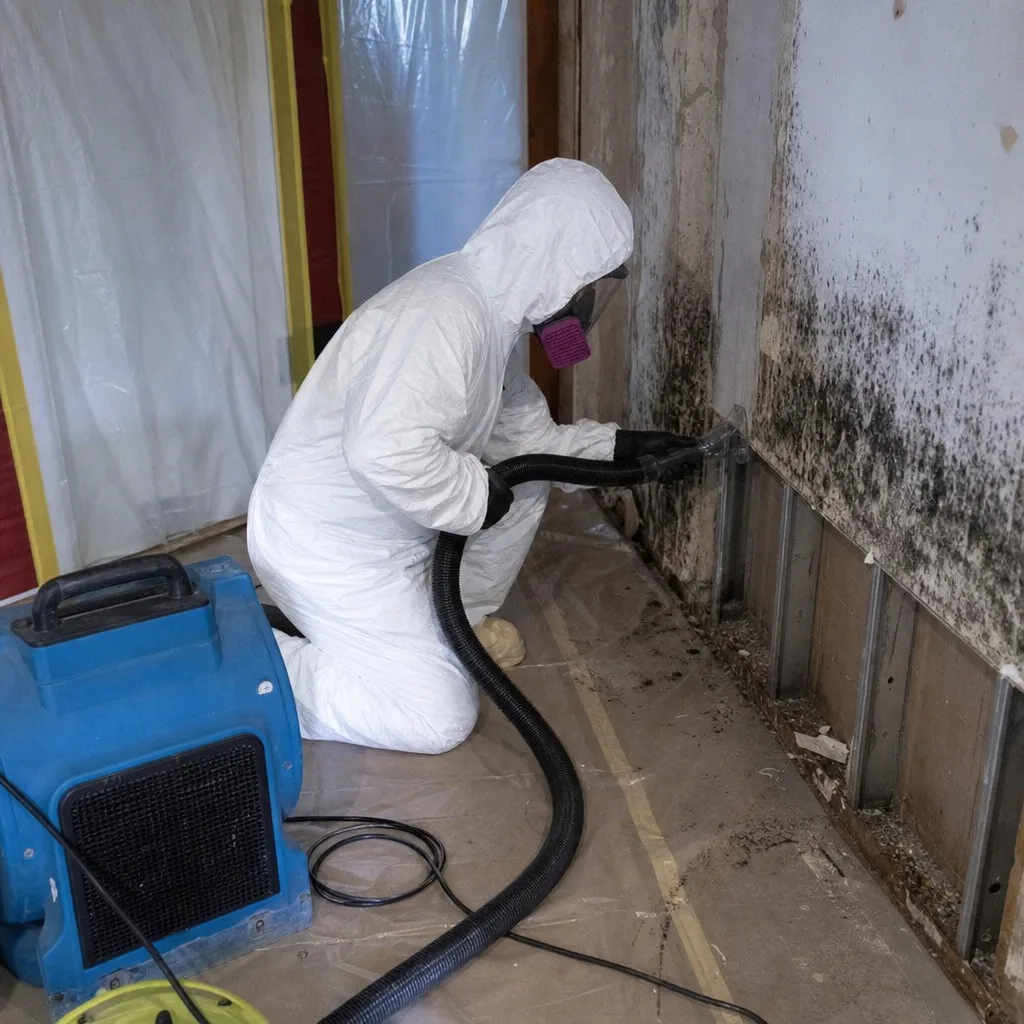
Mold severity in FiDi breaks down differently than anywhere else in Manhattan. In a converted office tower like 20 Exchange Place, the mold that matters most isn’t the surface stuff on drywall-it’s what’s hiding in non-standard pipe chases, behind retrofit framing, and in sub-basement rooms that sat below the surge line during Sandy. Those retrofitted skyscrapers, built between 1920 and 1965, have plumbing routed through floors and wall cavities in ways no residential architect ever intended. When a Con Edison vault floods or a fire-suppression line lets go, water doesn’t follow gravity the way it does in a brownstone. It travels horizontally through chases, pools behind columns, and saturates fireproofing that never fully dries. Standard containment doesn’t cut it. We run aggressive negative-air containment with HEPA air scrubbers, moisture-map every affected cavity, and we don’t sign off until a third-party clearance test comes back clean. That’s the bar in FiDi.
Why Financial District Property Owners Choose Wade’s Restoration
- 45-minute response commitment. Wade and his crew are minutes from Wall Street, Water Street, and Battery Park. He heads out the moment you hang up-not after a call center triages you.
- A real person answers, 24/7. No voicemail, no answering service. Wade’s cell rings, and he picks up. Even at 3 a.m. on a Sunday.
- IICRC-certified crews. WRT, FSRT, and AMRT certifications on every job. This matters more in FiDi, where saltwater intrusion demands protocols most firms never learned.
- Free visual inspection. Before you spend a dollar on remediation, Wade walks the space, finds the moisture source, and tells you honestly what needs doing. No charge for that.
- Direct insurance billing and adjuster coordination. Wade talks to your carrier so you don’t have to be the messenger between two sides.
- One team from first cut to final paint. We do the remediation, the drying, and the reconstruction. You never get handed off to a subcontractor you’ve never met.
Our Mold Remediation Process
Inspection & Assessment
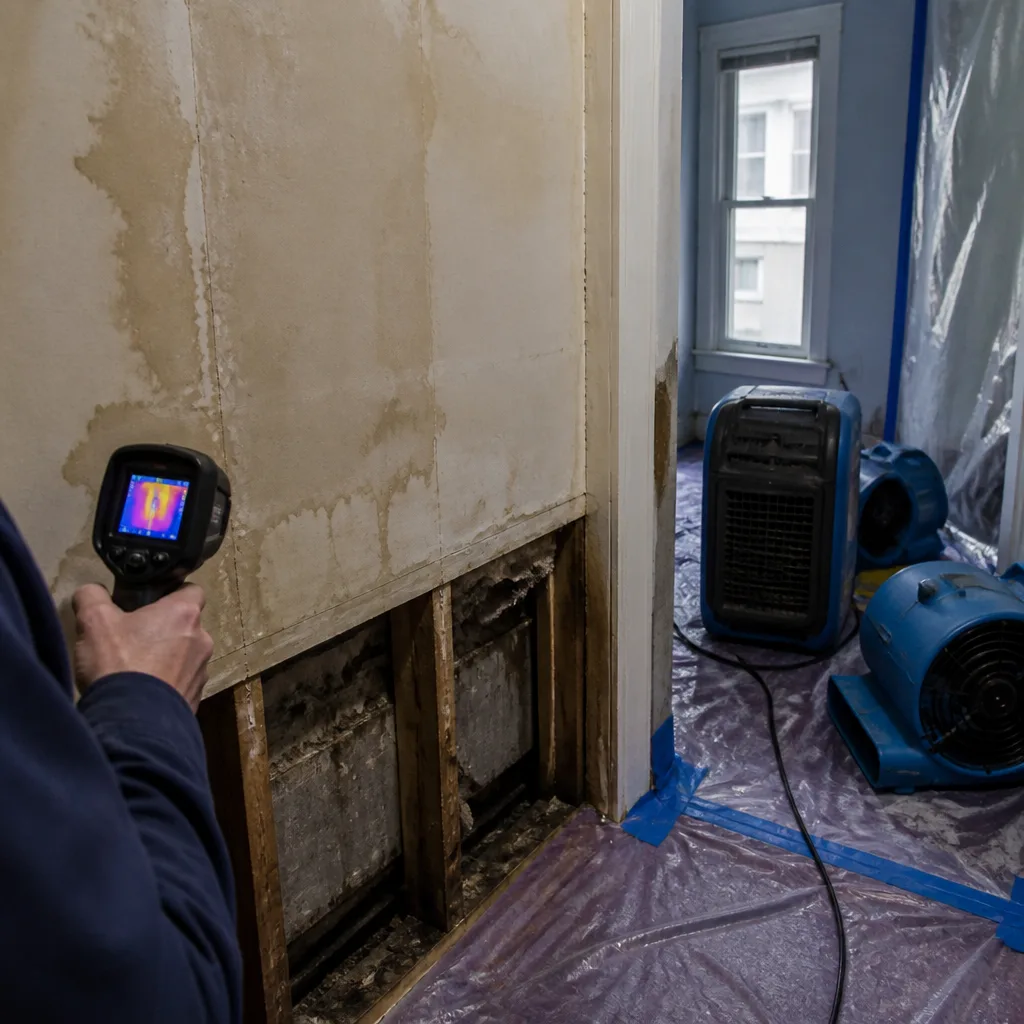
We start with a full visual inspection, thermal imaging, and hygrometer readings in every affected room. In FiDi, that includes checking sub-basement mechanical rooms and pipe chases, not just living spaces.
Containment & Source Correction
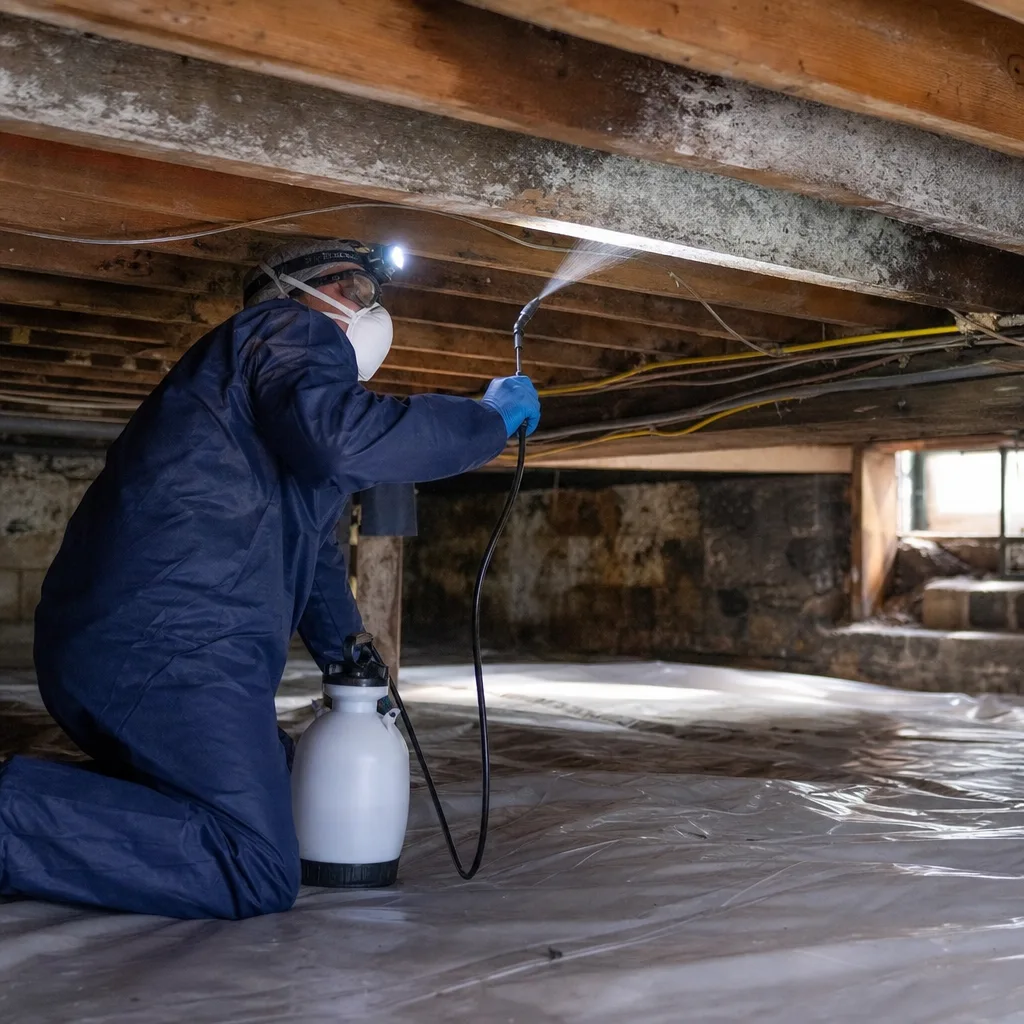
Before we touch mold, we find what’s feeding it. Leaking supply lines, failed fire-suppression systems, or residual saltwater intrusion from a past surge event. Then we seal the affected area with 6-mil poly and negative air pressure so spores never reach neighboring units.
Extraction & Water Removal
If standing water is present-common after vault floods or Category 3 events-we extract with truck-mounted and portable units. Saltwater extraction is a different animal: it leaves behind chlorides that corrode metals and re-moisten drywall through vapor pressure.
Drying & Dehumidification
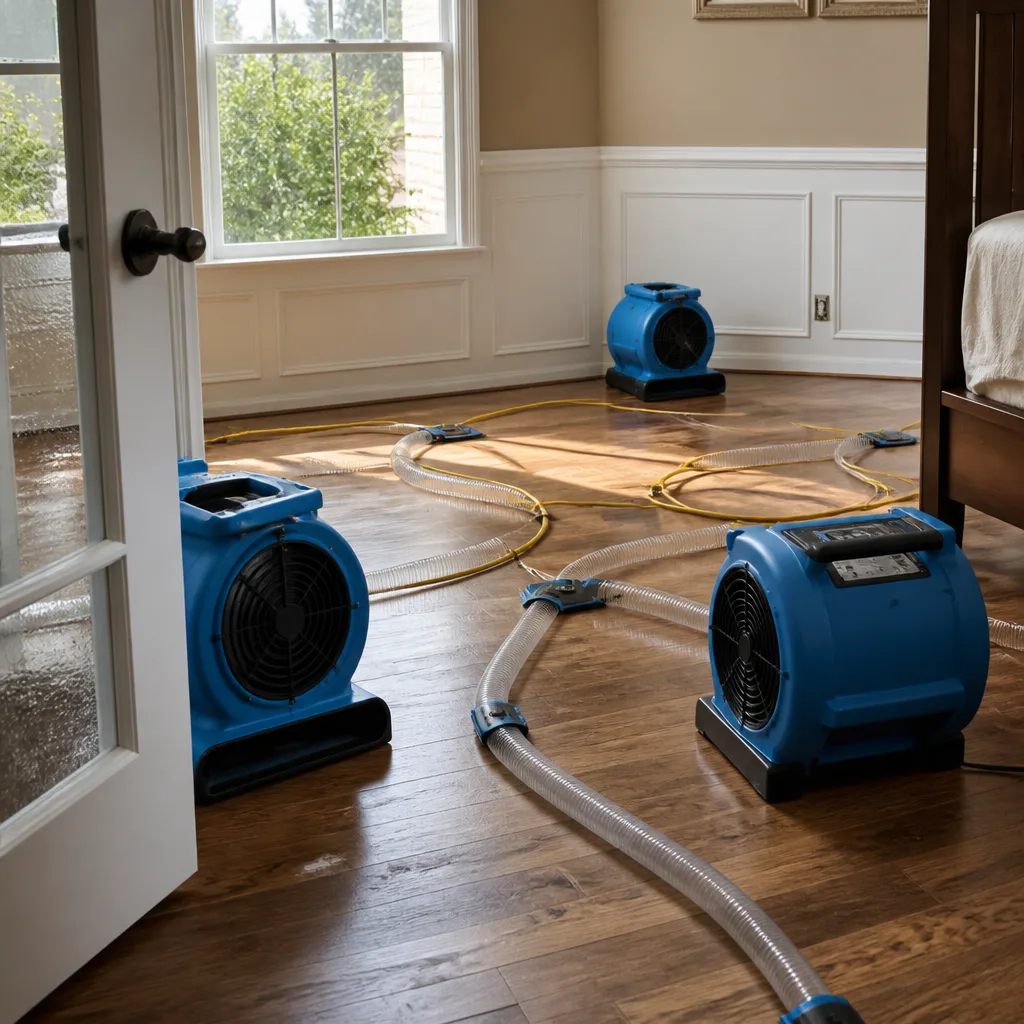
Dri-Eaz dehumidifiers and XPOWER air movers run continuously, with daily moisture readings logged and handed to you at the end. In FiDi’s humid river air, drying takes longer than in Midtown. We account for that.
Cleaning, Antimicrobial Treatment & Specialty Saltwater Protocol
HEPA vacuuming and anti-fungal application over every affected surface. For saltwater jobs, we use extended antimicrobial protocols and aggressive drywall tear-out criteria-because salt-impregnated drywall will re-grow mold months after a standard freshwater treatment would have closed the file.
Clearance Testing & Repairs
Independent clearance testing confirms the space is safe before we put anything back. Then we handle reconstruction, matching the high-end finishes FiDi buildings are known for.
Need Emergency Mold Remediation in Financial District Now?
Crews minutes away, answering live 24 hours a day. The sooner we start, the less it costs.
Working With Your Insurance Company
In FiDi, mold claims almost always trace back to a covered water event: a burst pipe, a failed fire-suppression line, a Con Ed vault flood. That means the remediation itself is often covered, but only if the documentation is airtight from day one. We provide photo documentation of every affected room, daily moisture readings, and a line-item scope of work that your adjuster can actually process. Wade talks directly to your carrier-not through you. That saves weeks of back-and-forth and prevents denials based on incomplete paperwork.
What We Provide Your Insurer
- Thorough documentation of the loss
- Photos of all damage, room by room
- Moisture readings and drying logs
- A detailed, line-item scope of work
- Direct coordination with your carrier
Built for Financial District’s Loss Calendar
Mold in FiDi follows a different calendar than the rest of the city. Nor’easters from September through April push brackish water into sub-basements from the Hudson and East River sides simultaneously-the same pincer effect that made Sandy so devastating here. Summer thunderstorms overwhelm aging drainage and send water down elevator shafts and mechanical chases. Winter deep freezes pop supply lines in uninsulated sections of pre-war towers. And through it all, the river air keeps relative humidity high enough that any trapped moisture becomes active growth within 48 hours. That’s why Wade’s crew treats every FiDi water event as a potential mold event, even when the visible water is gone within a day. We dry to building science standards, not just to the touch.
Mold Remediation Across Financial District’s Neighborhoods
Along Water Street and South Street, we see the worst of the saltwater intrusion cases-sub-basements that took on Harbor surge water and were never properly remediated. Those buildings need extended antimicrobial protocols and full pack-outs of mechanical rooms. Up by Maiden Lane and John Street, retrofitted office towers from the 1920s and 1930s hide mold behind original marble lobbies and converted elevator shafts, where pipe routing was patched together over decades. Over near Broadway and Cedar, the older stock from the 1900s through the 1920s has cast-iron and lead piping that fails quietly, leaking for weeks before anyone notices a smell. And in residential conversions around 70 Pine and 20 Exchange Place, we regularly find hidden reservoirs in fireproofing and rigid insulation that moisture mapping alone misses unless the tech knows how retrofits were framed. Same neighborhood, different buildings, different failure patterns. That’s why we never send a crew without local knowledge.
Specialized Mold Remediation Services We Offer in Financial District
Mold Inspection & Testing
In FiDi, a visual inspection isn’t enough. We supplement with thermal imaging and moisture mapping to find hidden colonies inside wall cavities, behind built-in millwork, and in the non-standard pipe chases common in converted office towers. If you’re buying or selling a unit in a pre-war conversion, a pre-purchase mold assessment can save you a six-figure surprise.
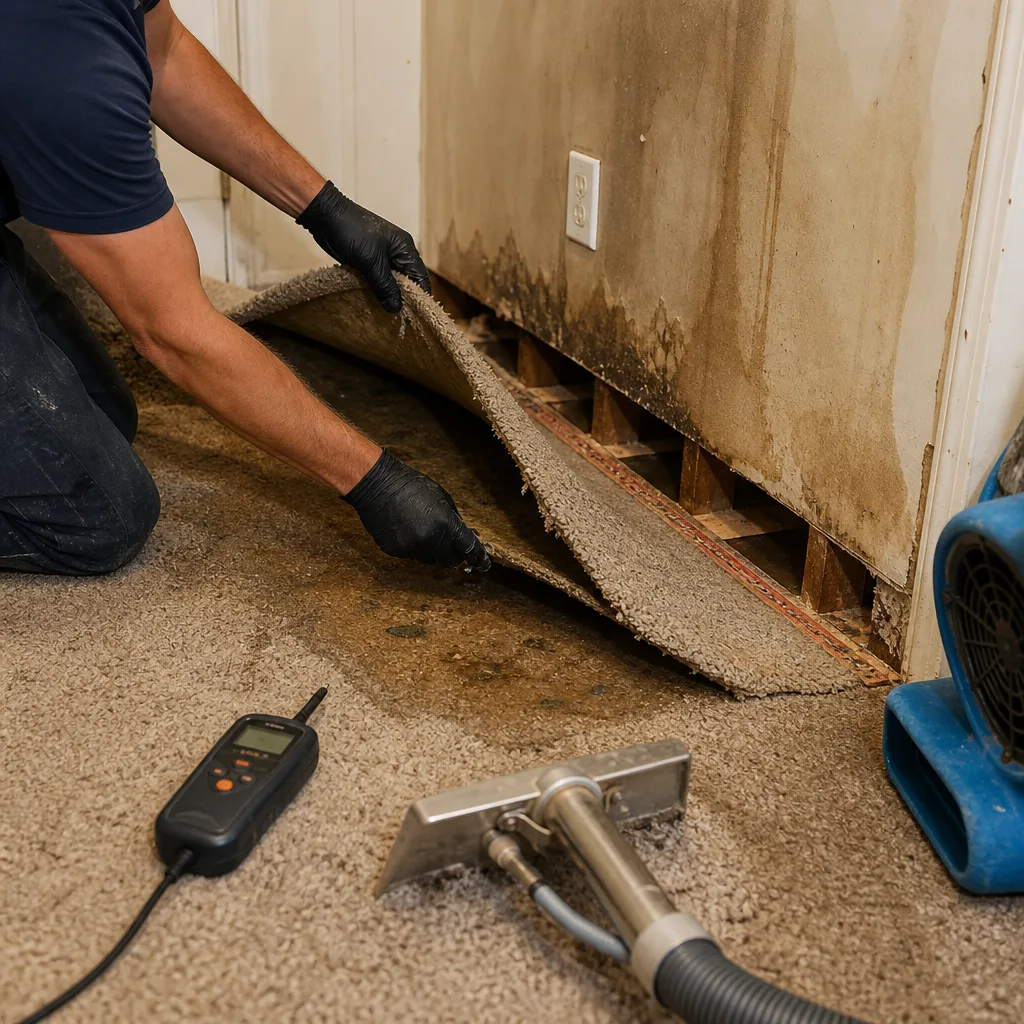
Black Mold Remediation
Stachybotrys-what people call black mold-thrives on the cellulose in drywall and fireproofing that got soaked with saltwater. FiDi’s post-Sandy and post-nor’easter conditions create the exact environment it loves. We run full containment, HEPA filtration, and aggressive removal of affected materials, then treat the underlying framing before replacing anything.
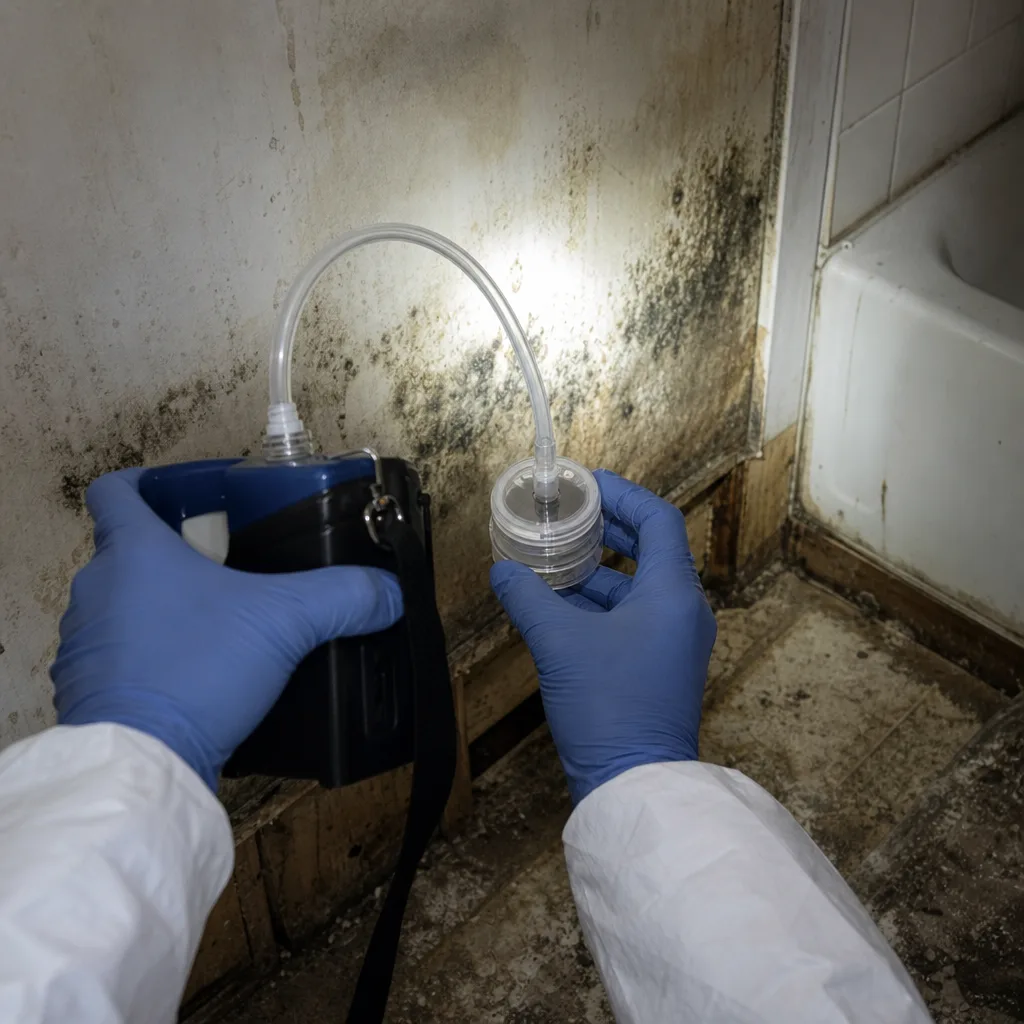
Moisture & Humidity Control
Even after mold is removed, FiDi’s river air and sub-basement structural conditions keep pushing moisture back in. We install and calibrate dehumidification systems, address ventilation deficiencies in mechanically vented towers, and recommend ongoing monitoring for units that sit at or below grade.
Air Quality Restoration
After remediation, the job isn’t done until the air is clean. We run HEPA scrubbers during the project and arrange independent clearance testing afterward. In high-rise FiDi buildings, negative air pressure between floors matters: we monitor it so spores never migrate to your neighbor’s unit.
Crawl Space Treatment
Not every FiDi building has a conventional crawl space, but sub-basements beneath the sidewalk line serve the same role. These spaces trap humidity, harbor old pipe leaks, and rarely get airflow. We treat them with the same containment and drying standards as occupied floors.
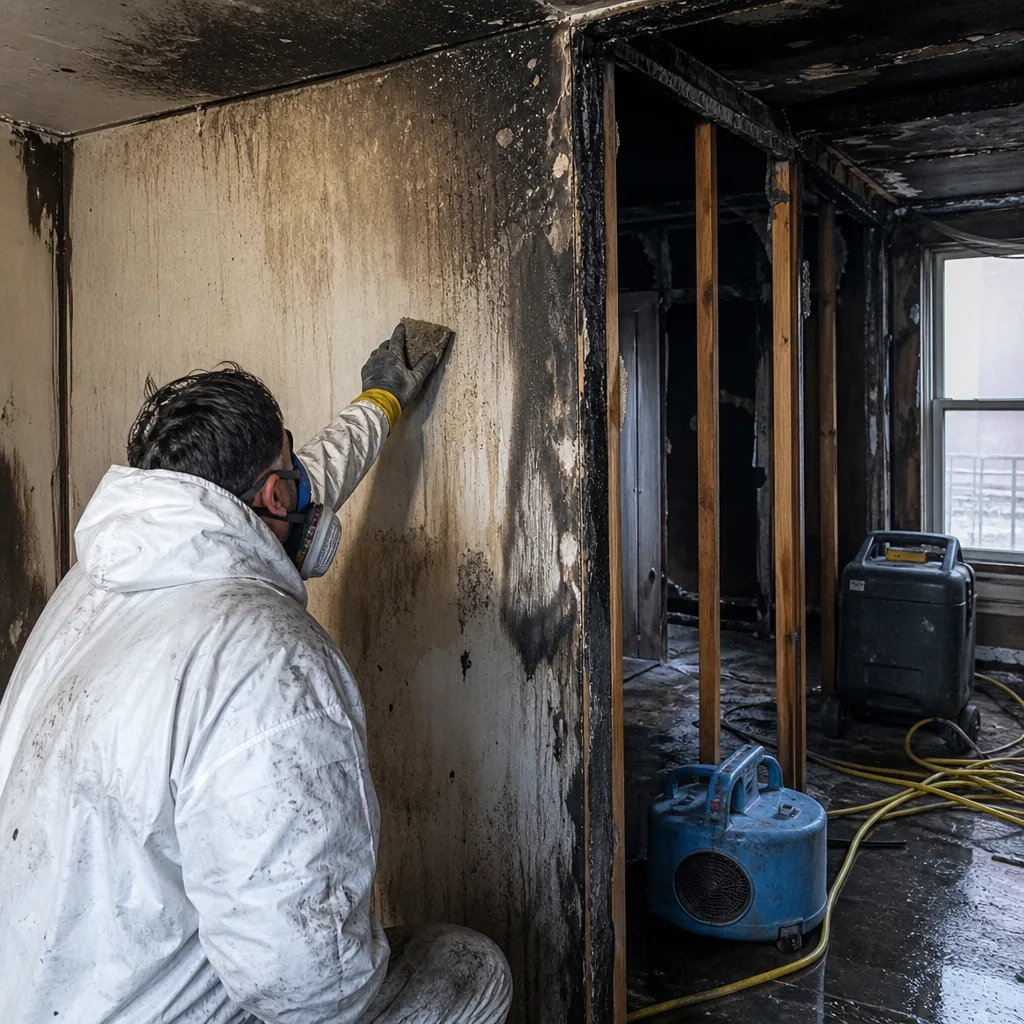
What happens when you call
- 1
A real person answersNo phone trees - you reach a local pro.
- 2
You get an upfront price rangeHonest numbers before anyone is dispatched.
- 3
A background-checked tech heads outLicensed & insured, dispatched right away.
- 4
You approve before work beginsNothing starts until you say go.
Mold Remediation Costs in Financial District, NY
A contained mold remediation in a FiDi unit typically runs $2,800-$7,500 depending on square footage and depth of intrusion. Sub-basement pack-outs in converted towers with Category 3 water damage run higher-$7,500-$18,000-because of the labor and disposal involved. Black mold remediation inside wall cavities in pre-war conversions generally falls between $3,500 and $9,000. Moisture and humidity control systems run $900-$2,800 installed. What moves the price: whether Con Ed clearance delays stall your job, how many hidden reservoirs we find, and whether your building’s co-op or condo board requires advance approval. Insurance covers most of it when the mold traces to a covered water event. The free inspection is the cleanest path to a firm number. Call (607) 350-1550 and Wade will walk the space himself.
We Also Serve Cities Near Financial District
Wade’s Restoration answers live and heads out fast across FiDi and the surrounding boroughs. We serve Financial District, Lower Manhattan, Astoria, Midtown Manhattan, and Long Island City. If you’re just across the bridge or a few stops uptown, the same 45-minute commitment applies.
Serving Financial District, NY - Our Local Coverage Area
We’re based in the Financial District area and know this community well. Use the map below to see our service coverage - if you’re nearby, we can almost certainly help.
Financial District Mold Remediation Questions, Answered
How does saltwater from a Hurricane Sandy-type surge change the mold remediation scope in Financial District buildings?
Saltwater changes everything. Salt draws moisture out of the air through vapor pressure, so salt-impregnated drywall and fireproofing stay wet long after freshwater would have dried. That means we remove more material, treat every remaining surface with extended antimicrobial protocols, and run longer drying cycles. Standard freshwater drying logs don’t work here-we use moisture readings and daily logs calibrated for saltwater intrusion. If you had surge water in your unit and a previous contractor only surface-treated it, call for a free second opinion.
Why do we have to wait for Con Edison before mold remediation can start in a FiDi sub-basement?
Con Edison owns the high-voltage vaults beneath many Financial District blocks. After a flood, they must de-energize and clear those vaults before anyone works in the affected sub-basement. That clearance can take 72 hours or more. We can’t change that, and any contractor who says otherwise is cutting a corner that could get someone killed. We stage our equipment, coordinate with building management, and start the moment Con Ed gives the green light.
Does mold grow faster in Financial District buildings because of the river air?
Yes. The constant humidity off the Hudson and East River keeps interior relative humidity higher year-round than in inland Manhattan. In a sub-basement that sits below the waterline, moisture never really leaves. Once spores have a wet surface, active growth starts within 48 hours. That’s why we treat every water intrusion in FiDi as an active mold risk from hour one.
Can you remediate mold in a converted office tower without shutting down neighboring units?
Usually, yes. We use negative air pressure containment to seal the affected area, so spores can’t migrate through shared walls, open stairwells, or elevator shafts. In high-rise conversions, that means neighbors stay in their units while we work. It requires more equipment and more monitoring than a single-family home, but it’s a standard part of how we handle FiDi molds.
What is Category 3 water and why does it matter for mold in FiDi?
Category 3 is grossly contaminated water-seawater, sewage, river surge. FiDi storm surge is Category 3 by definition. It’s full of bacteria, dissolved organics, and salt. When it soaks building materials, the mold and microbial risk multiplies. You don’t just dry it and move on. You remove saturated materials, treat surfaces, and document everything. That’s the playbook Wade’s crew runs on every FiDi saltwater job.
How fast can you actually get here in Financial District?
Wade commits to 45 minutes from call to arrival anywhere in FiDi, including Water Street, Maiden Lane, and Battery Park. Crews are based minutes away, not across a bridge. Call (607) 350-1550 and you’ll be on the phone with Wade himself, not a call center.
Will insurance cover mold remediation in Financial District?
Most of the time, yes-when the mold traces to a covered water event like a burst pipe, a failed fire-suppression line, or a documented flood. Saltwater intrusion from a named storm is generally covered. The key is documentation. We provide photos, moisture logs, and a line-item scope your adjuster can process. Wade talks to the adjuster directly so you never have to translate between two sides.
What should I do in the first 30 minutes after I find mold in my FiDi unit?
Don’t disturb it. Don’t wipe it, don’t paint over it, don’t run a fan. Agitating mold sends spores airborne, spreading the problem through your unit and possibly into neighboring ones. Turn off the HVAC if you can, close the door to the affected room, and call (607) 350-1550. Wade will tell you over the phone whether you need a same-day visit or a scheduled inspection.
Written by Wade Ferris, Owner at Wade’s Restoration, serving Financial District and the surrounding boroughs since 2007.