
Free visual inspection and a written scope of work before any mitigation begins - photos, moisture readings, and drying logs go in your claim file
The scope we write is the scope we bill. Anything new gets shown to you, in writing, before we touch it.
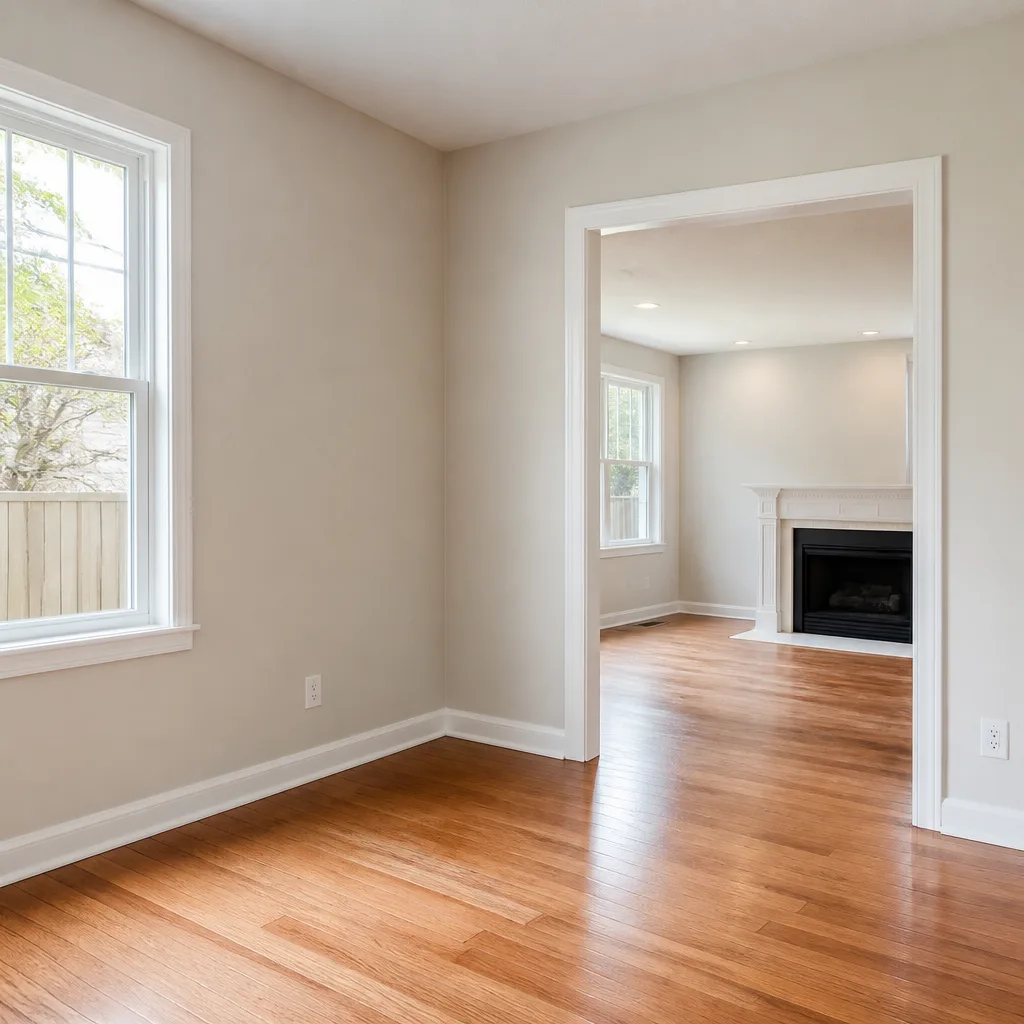
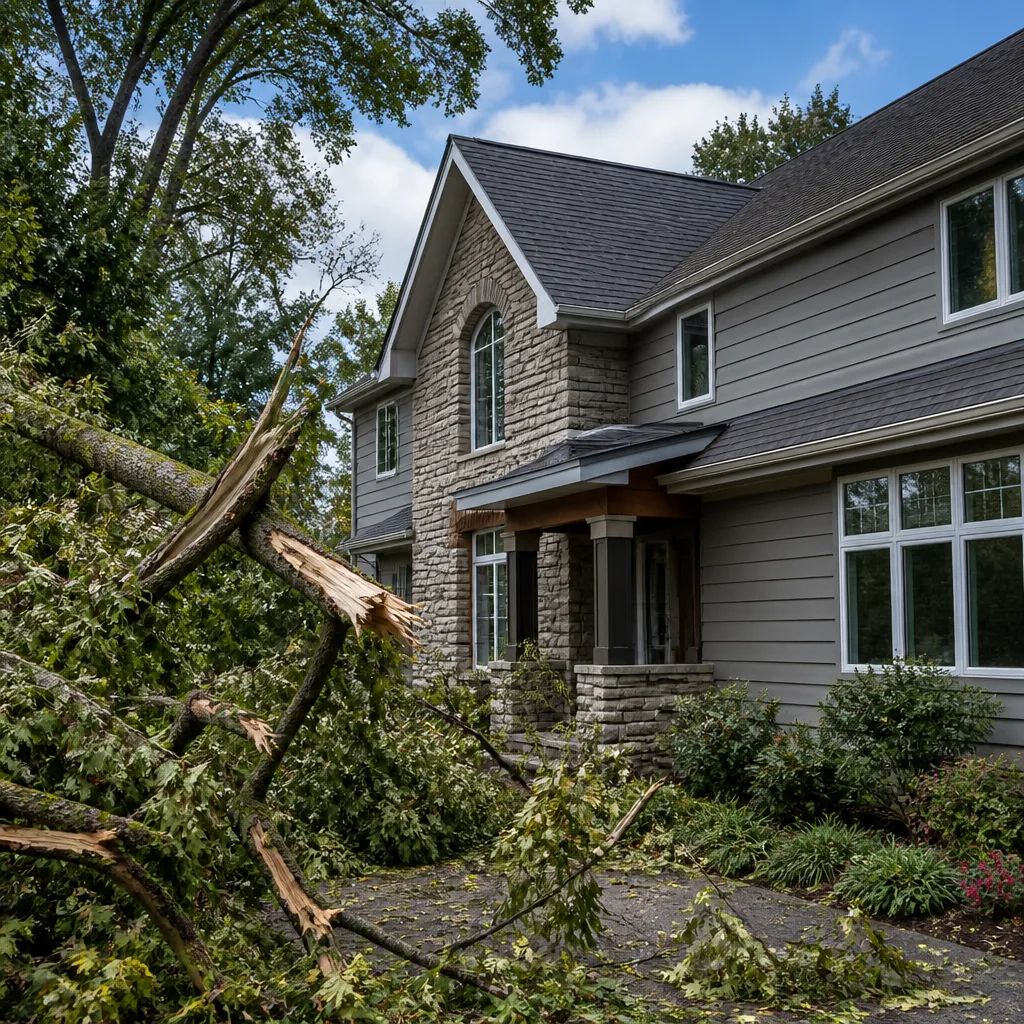

 Before
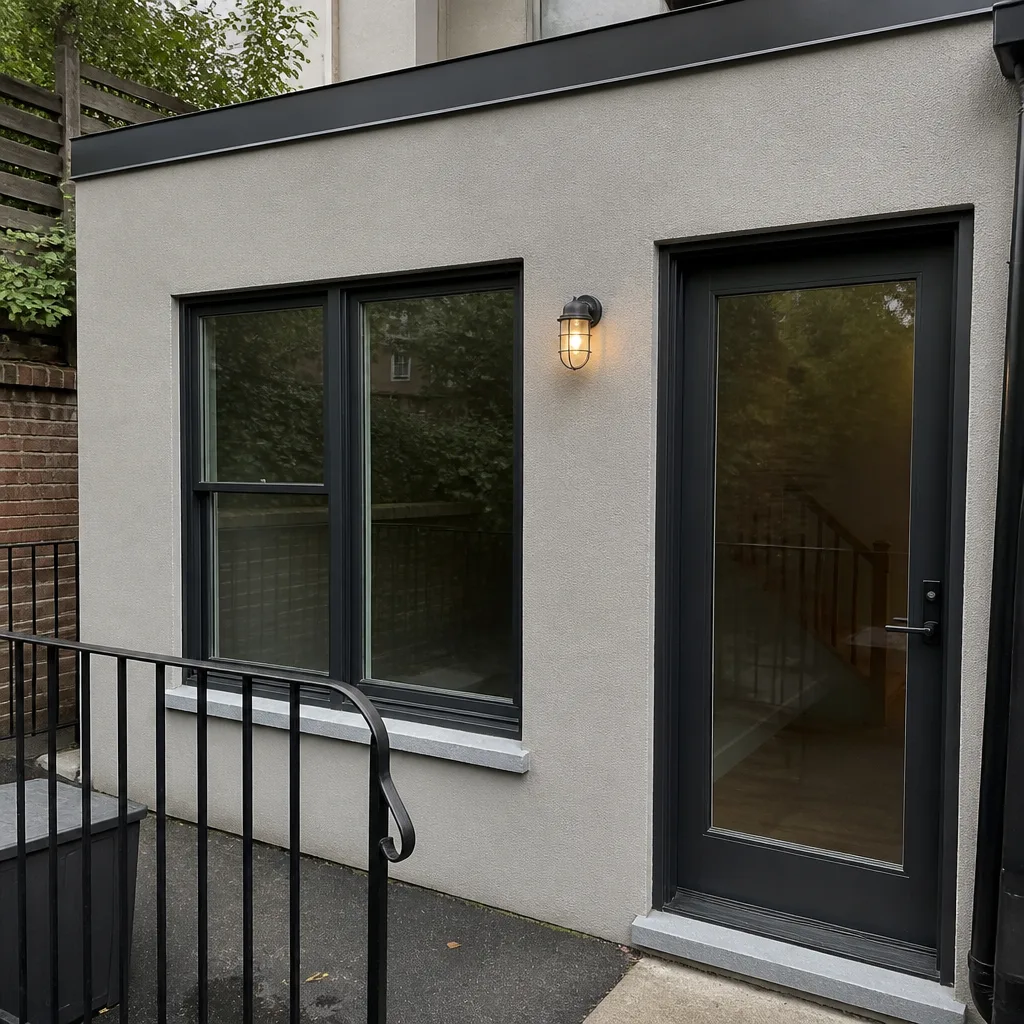 After
After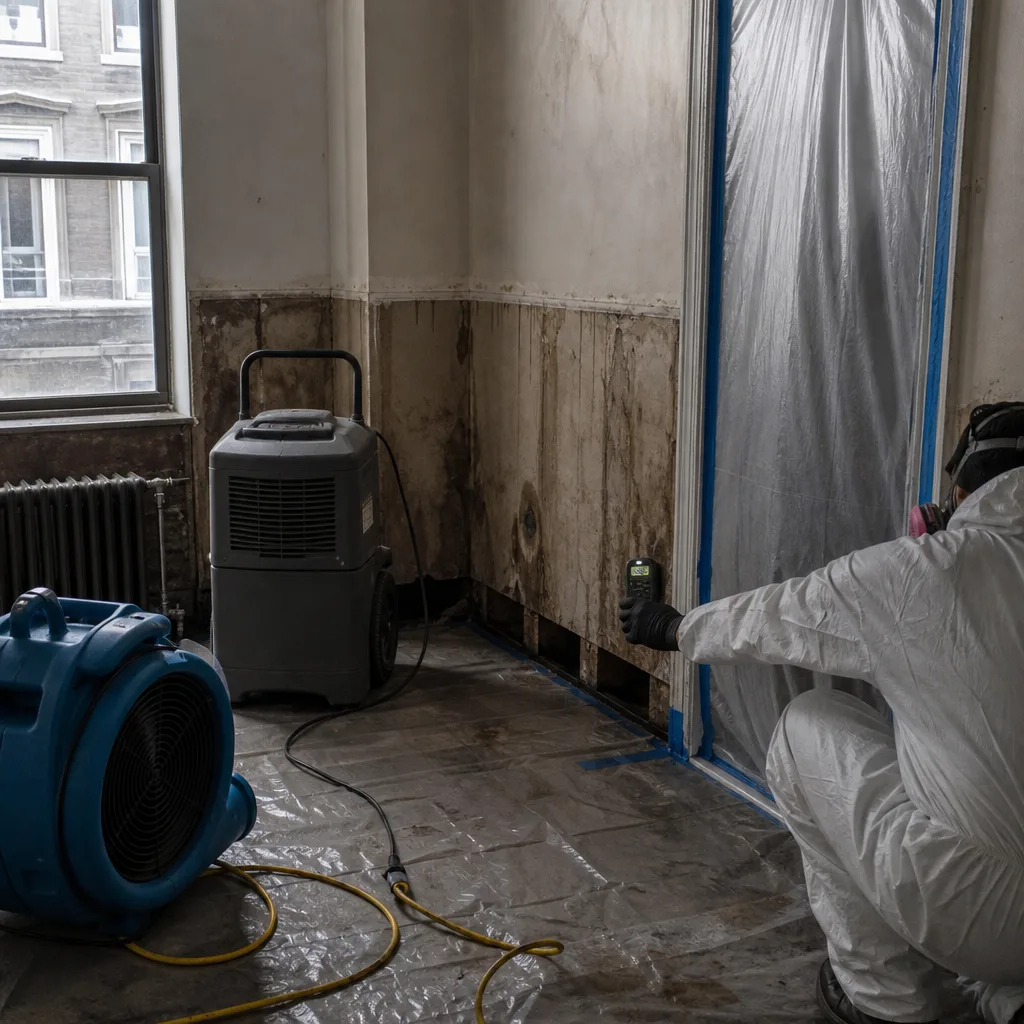 Before
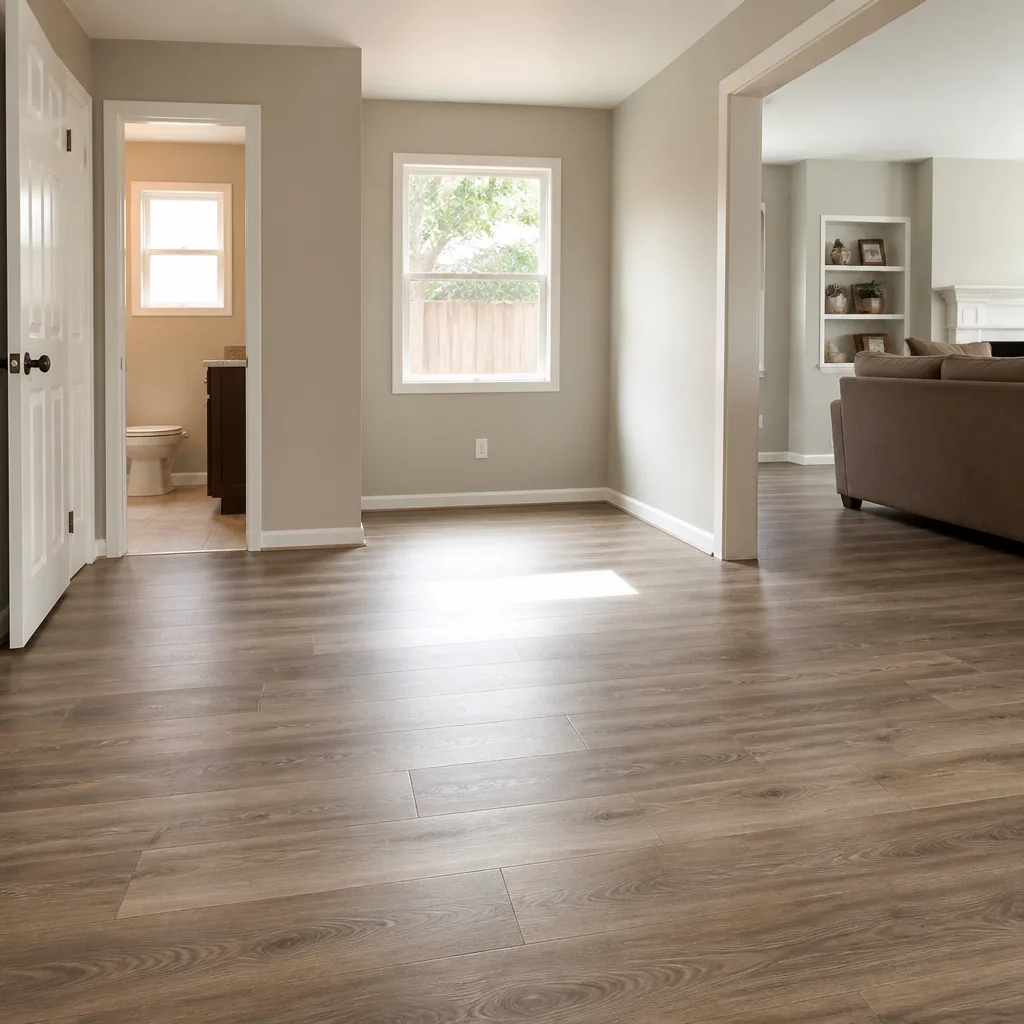
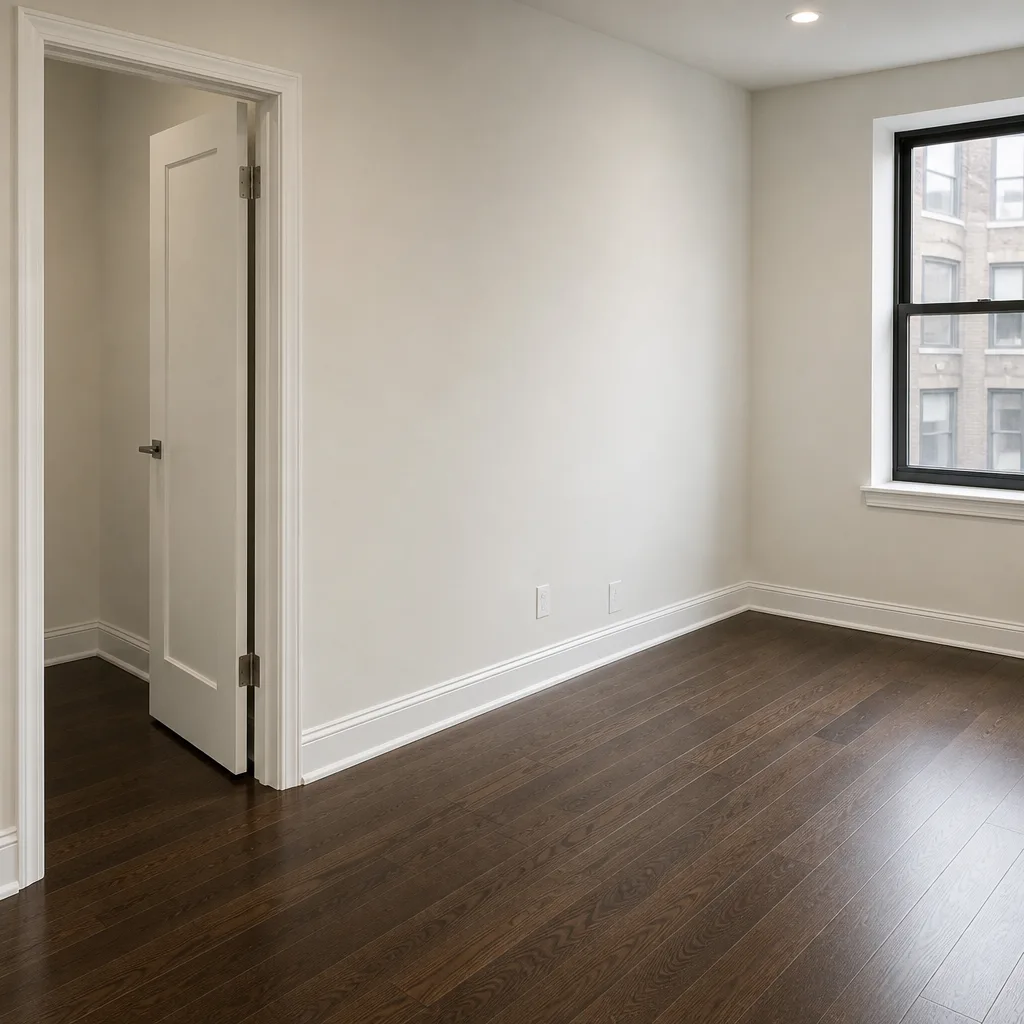 After
After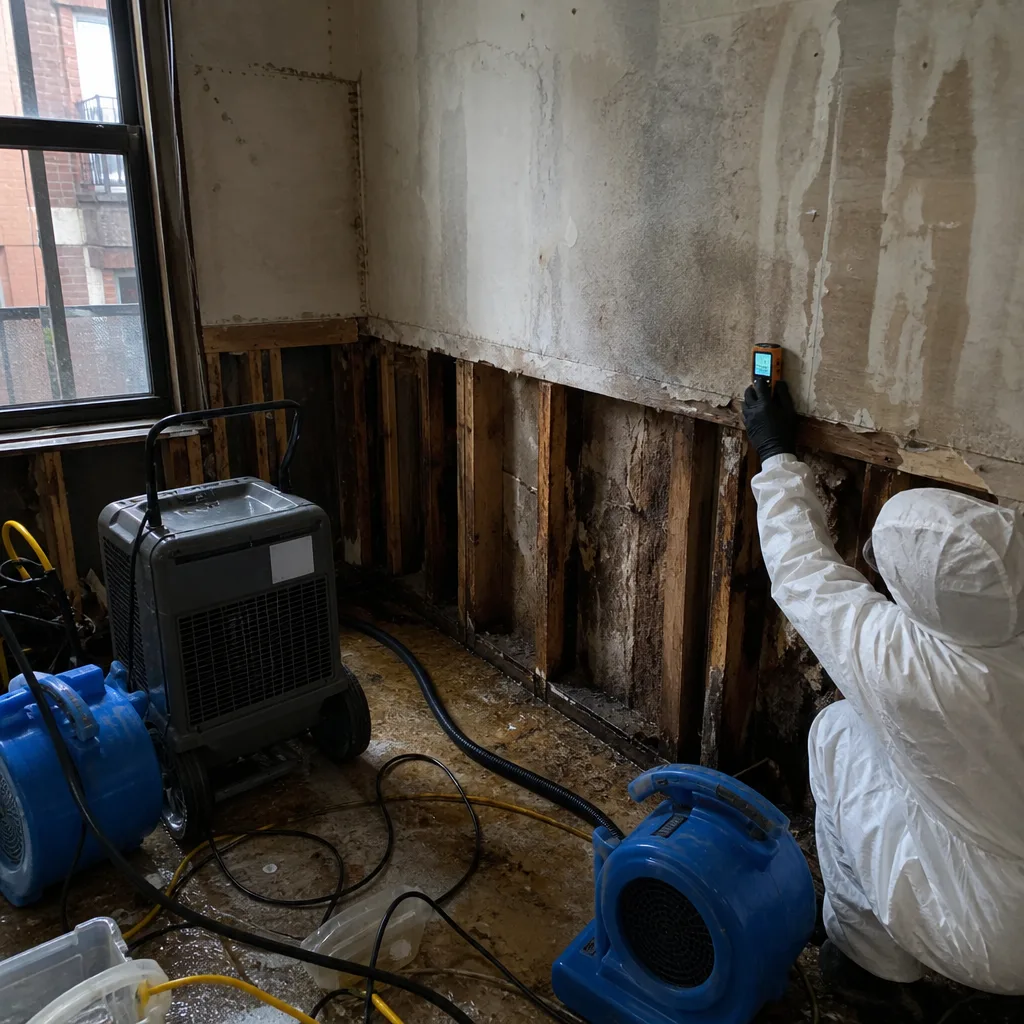 Before
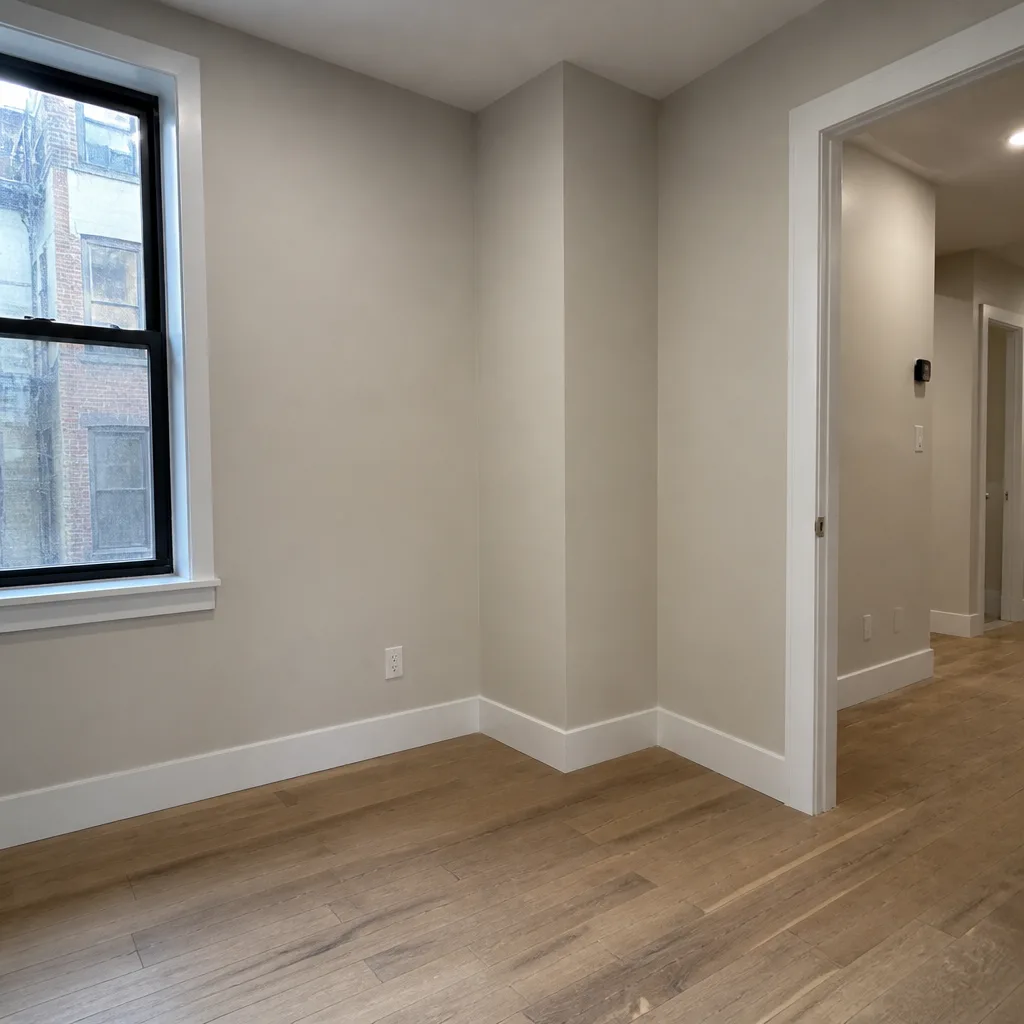 After
After24/7 Emergency Mold Remediation in Midtown Manhattan
Mold remediation in Midtown Manhattan typically runs $1,800 to $6,500 for a contained single-room job, and most commercial and co-op losses require coordinated freight-elevator scheduling plus a Certificate of Insurance before a crew can even enter the building. If you’ve just found mold behind a kitchen cabinet in a pre-war co-op on East 72nd, or water has been sitting in a sub-basement storage room on West 48th since yesterday’s storm, call (607) 350-1550 right now. Wade Ferris answers his own phone, and he’ll have a crew in front of your building inside the hour.
We do not send you to a call center. You get Wade. The first hour matters because mold colonies double every 24 to 48 hours in the warm, humid cavities inside Midtown Manhattan’s lath-and-plaster walls and steel studs. Every hour of delay expands the containment zone and the bill.
Understanding Mold Remediation Severity in Midtown Manhattan Properties
Not all mold is a demolition job. In Midtown Manhattan, the severity usually follows the building type. A 1920s Art Deco high-rise on Fifth Avenue with original plaster over lath and cast-iron steam risers hides mold differently than a mid-century concrete tower in Turtle Bay. Plaster wicks moisture laterally. Steel studs carry it vertically. In a pre-war co-op, a toilet supply leak on the 14th floor can travel through the wall cavity and show up as mold behind baseboards on the 12th, two floors down. That is why we do not spot-treat mold in Midtown without moisture mapping and a full cavity inspection first.
We classify every job by water source and extent. Clean water from a supply line is one thing. Water that has traveled through elevator shafts, freight corridors, or a Con Ed steam-main failure carries contaminant loads that change the whole remediation protocol. Containment, negative air, air scrubbing, and third-party clearance testing slide in when you hit Category 2 or 3. In Midtown, we assume Category 3 until proven otherwise, because so many buildings share walls, risers, and sub-basements with decades of unknown history.
A brief safety note: mold remediation in pre-war Midtown buildings frequently disturbs asbestos-wrapped pipe insulation and lead paint. Do not open up walls yourself. The dust you release is a bigger health problem than the mold you’re chasing. Call a licensed, IICRC-trained crew.
Why Midtown Manhattan Property Owners Choose Wade’s Restoration
- 45-minute response commitment to Midtown Manhattan - when you call, Wade heads out. Not a dispatcher, not a subcontractor.
- A real person answers, 24/7 - no automated routing tree, no voicemail, no “your call is important to us.”
- IICRC-certified crews - WRT, ASD, and AMRT credentials on every mold job, plus RIA and IFA affiliation. The industry’s actual standard, not a sales script.
- Free visual inspection for Midtown Manhattan properties - no trip charge inside the county, no charge to look and tell you straight.
- Direct insurance billing and adjuster coordination - Wade talks to your carrier, not the other way around. Photo documentation starts before any equipment comes off the truck.
- One team from extraction to reconstruction - the same people who contain the mold rebuild the wall. No hand-offs to a crew you have never met.
Our Mold Remediation Process
Inspection & Assessment
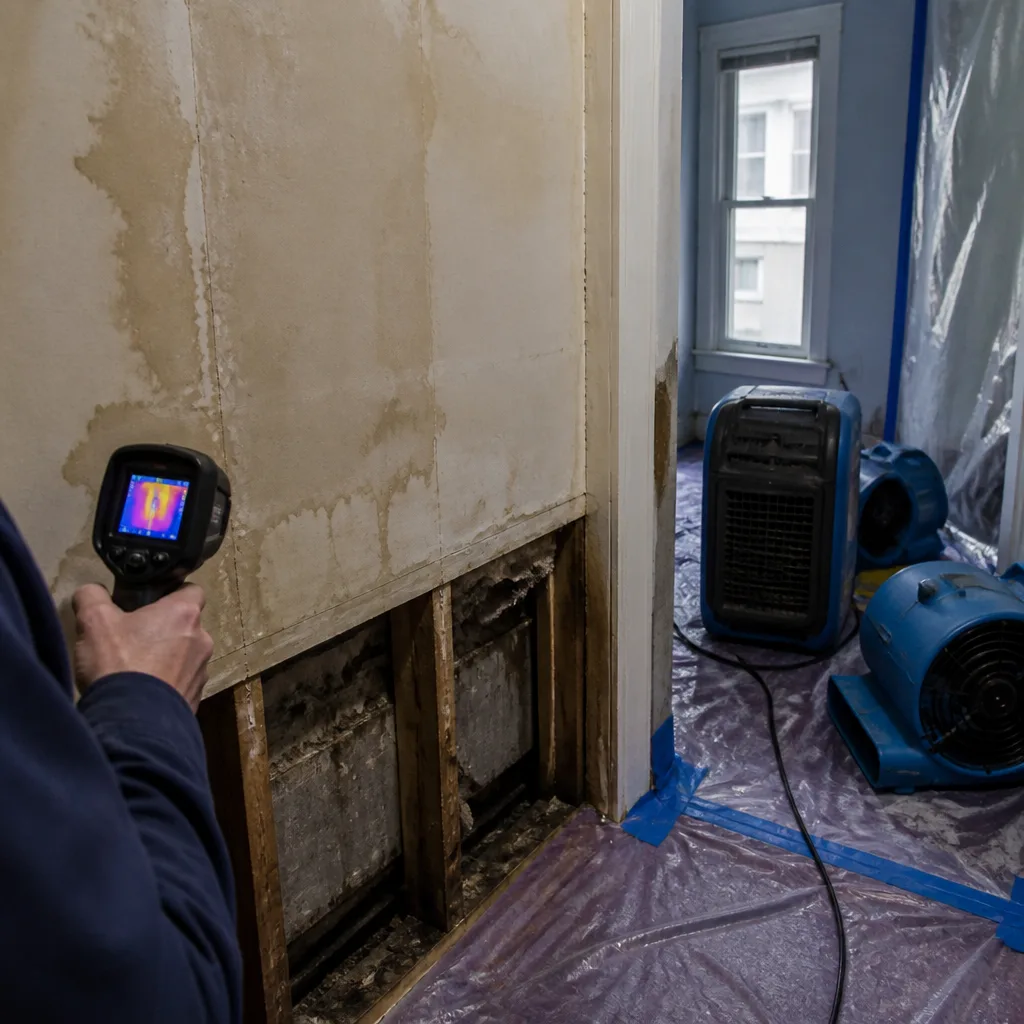
We start with thermal imaging and moisture meters on every surface, including the wall cavity behind the visible mold. In Midtown pre-war buildings, we check for asbestos pipe wrap and lead paint before we touch a wall. You get a written scope with photographs before any equipment comes in.
Containment & Stabilization
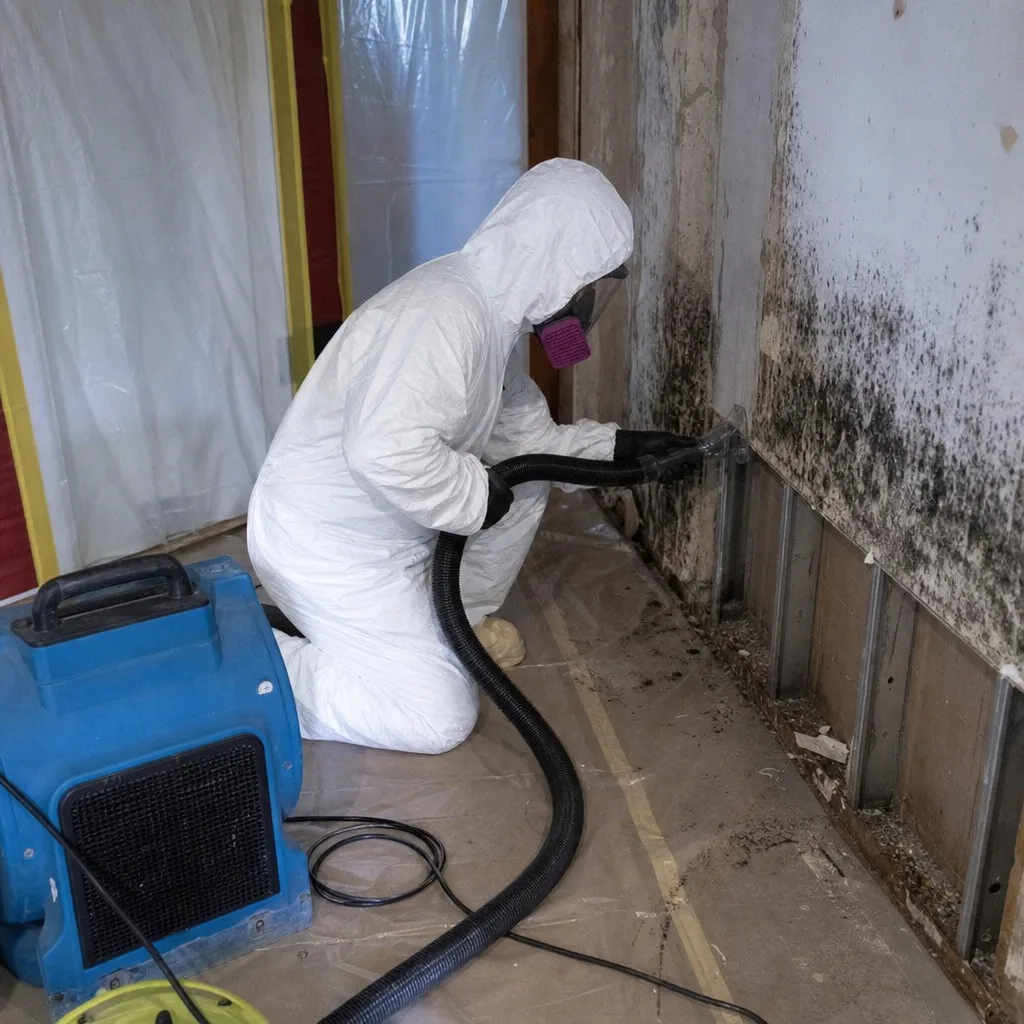
We build full containment with 6-mil poly and negative air pressure using HEPA-filtered air scrubbers. The goal is to keep mold spores from spreading through the building’s shared air paths. In Midtown high-rises, that means sealing off vents, elevator shaft openings, and pipe chases, not just a doorway.
Drying & Dehumidification
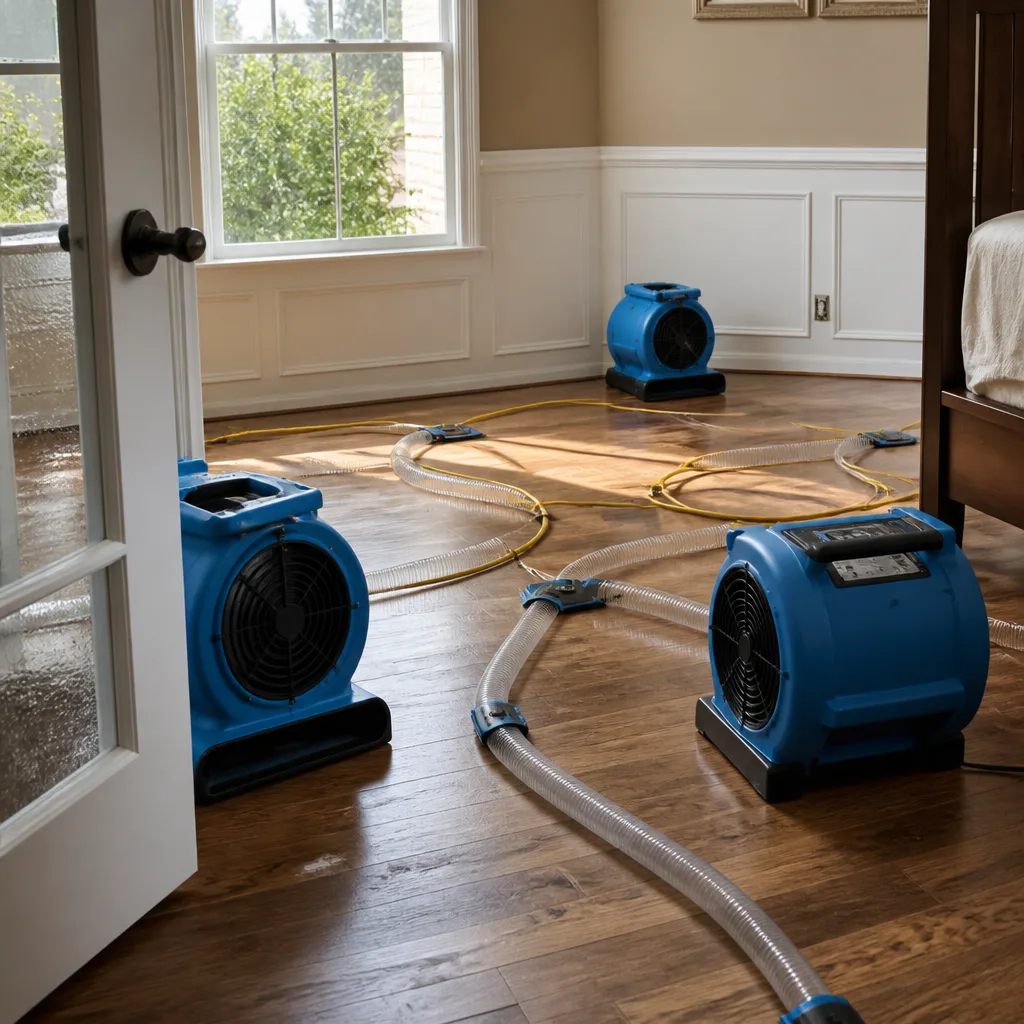
We run Phoenix desiccant units and XPOWER air movers matched to the cubic footage, and we take moisture readings every single day. You get the full log at the end. We dry to the original moisture content of the material, not a guess.
Cleaning & Sanitization
All affected surfaces get HEPA vacuuming, wire brushing or soda blasting where appropriate, and EPA-registered antimicrobial treatment. We do not fog a room and call it done. We clean what can be saved and remove what cannot.
Air Quality Restoration
We run HEPA-filtered negative air continuously through the job, then conduct post-remediation air sampling. Third-party clearance testing is standard on Midtown jobs where multiple parties or insurance carriers are involved. You get a number, not a promise.
Repairs & Restoration
Wade’s own crew rebuilds the wall, paints to match, and re-installs trim. In pre-war co-ops, that often means re-creating plaster crown molding or matching a historic wood floor. We do not patch and walk.
Need Emergency Mold Remediation in Midtown Manhattan Now?
Crews minutes away, answering live 24 hours a day. The sooner we start, the less it costs.
Working With Your Insurance Company
We have handled more Midtown Manhattan claims than we can count. The pattern is the same: a pipe lets go on a Friday night, water runs down a wall cavity, and by Monday there is mold. Your carrier wants a documented scope, a moisture log, and a clear line between water damage and mold remediation. We give them all of it from the first hour. Wade handles adjuster calls directly, so you are not the person stuck relaying numbers between two parties. If the adjuster wants to visit, we meet them at the building and walk the loss together. You get a straight answer about what is covered and what is not, before any work starts.
What We Provide Your Insurer
- Thorough documentation of the loss
- Photos of all damage, room by room
- Moisture readings and drying logs
- A detailed, line-item scope of work
- Direct coordination with your carrier
Built for Midtown Manhattan’s Loss Calendar
Midtown Manhattan’s mold problems follow the seasons, and they do not look like the mold problems in Queens or Nassau County. January and February deep freezes burst supply lines inside exterior-facing wall cavities on the north and west sides of towers along Sixth Avenue and Broadway. The pipe cracks behind a bathroom vanity on East 44th, nobody sees it for two days, and mold starts in the wall cavity before the first drip reaches the floor. Spring thaw sends meltwater into sub-basements where 1920s foundation walls have never been waterproofed. Summer thunderstorms overwhelm aging roof drains on mid-century towers in the Villages, and the overflow pours down mechanical chases for hours. And every nor’easter through the fall drives horizontal rain into glass curtain-wall facades on the west 40s and 50s, wetting the back side of the drywall where mold grows in the dark.
One thing that does not change: standing water inside a Midtown Manhattan building is always worse than it looks, because so much of the building is vertical. A leak on the 32nd floor becomes a mold problem on the 29th. We design our drying plans for the whole stack, not just the point of loss.
Mold Remediation Across Midtown Manhattan’s Neighborhoods
We work the entirety of Midtown Manhattan, from the Garment District to Turtle Bay, and from the Upper East Side’s pre-war co-op rows down through the glass towers around Grand Central. In the Theater District and Hell’s Kitchen, we are usually dealing with older walk-ups and converted lofts where original wood joists meet decades of small leaks, and the mold is behind the plaster, not on it. In the Financial District side streets off Water Street, it is sub-basements and mechanical rooms, often with Con Ed steam infrastructure in the same space. Around Murray Hill and Kips Bay, mid-century white-brick buildings hide mold behind steel studs and under vinyl flooring, which means the containment zone is bigger than an apartment, because the building’s venting and elevator shafts move spores across floors faster than any single-family house ever will.
We have run mold remediation in co-ops on East 52nd, commercial kitchens on West 38th, pre-war rental apartments off Columbus Circle, and a 40-story concrete office tower near Madison Square Park. Every building has its own freight window, its own COI requirements, and its own managing agent. We schedule around all three.
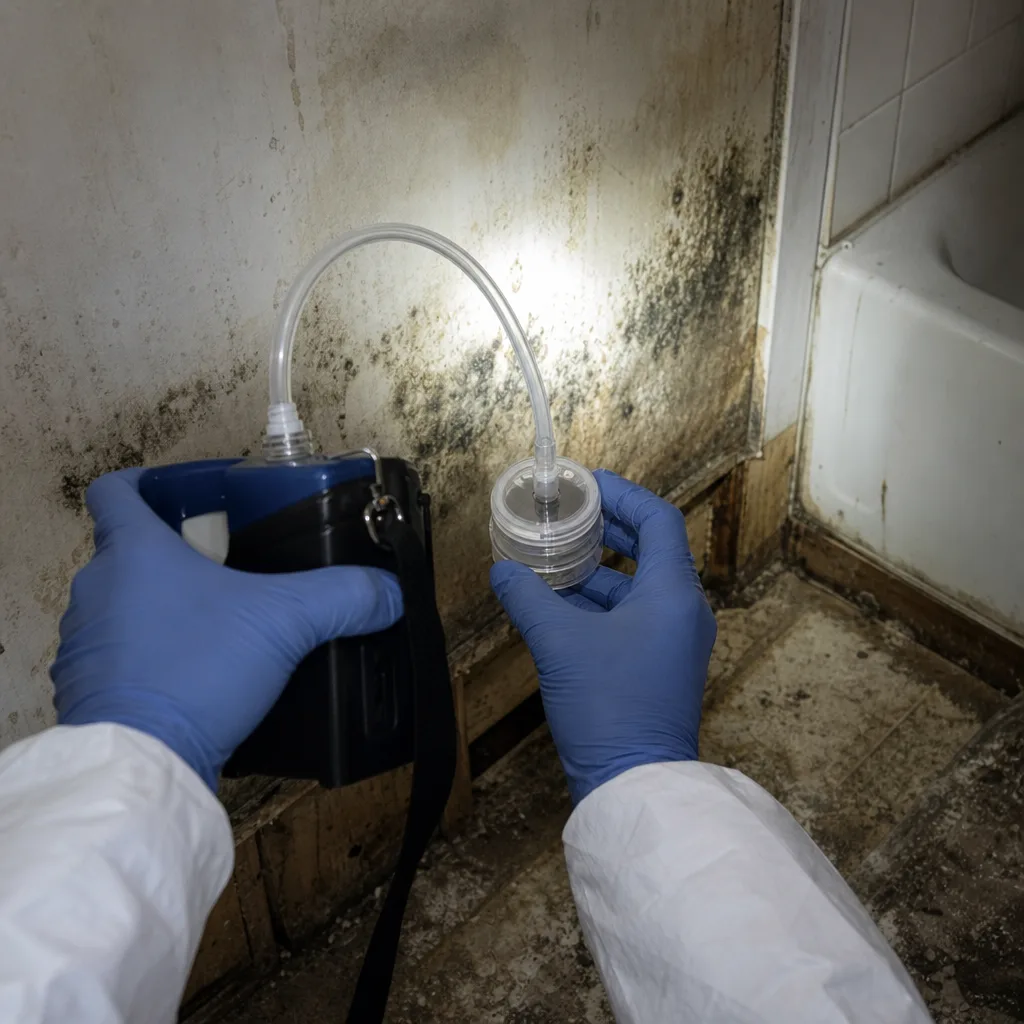
Specialized Mold Remediation Services We Offer in Midtown Manhattan
Moisture & Humidity Control
Most Midtown mold problems are not one-and-done. The building’s steam risers stay damp all winter. The bathroom vent from 20 apartments feeds into a shared stack. We install and verify dehumidification that actually holds the lower dew point, and we check it with real psychrometric readings, not a guess. If the building’s stack effect keeps pulling humid air into your unit, we tell you.
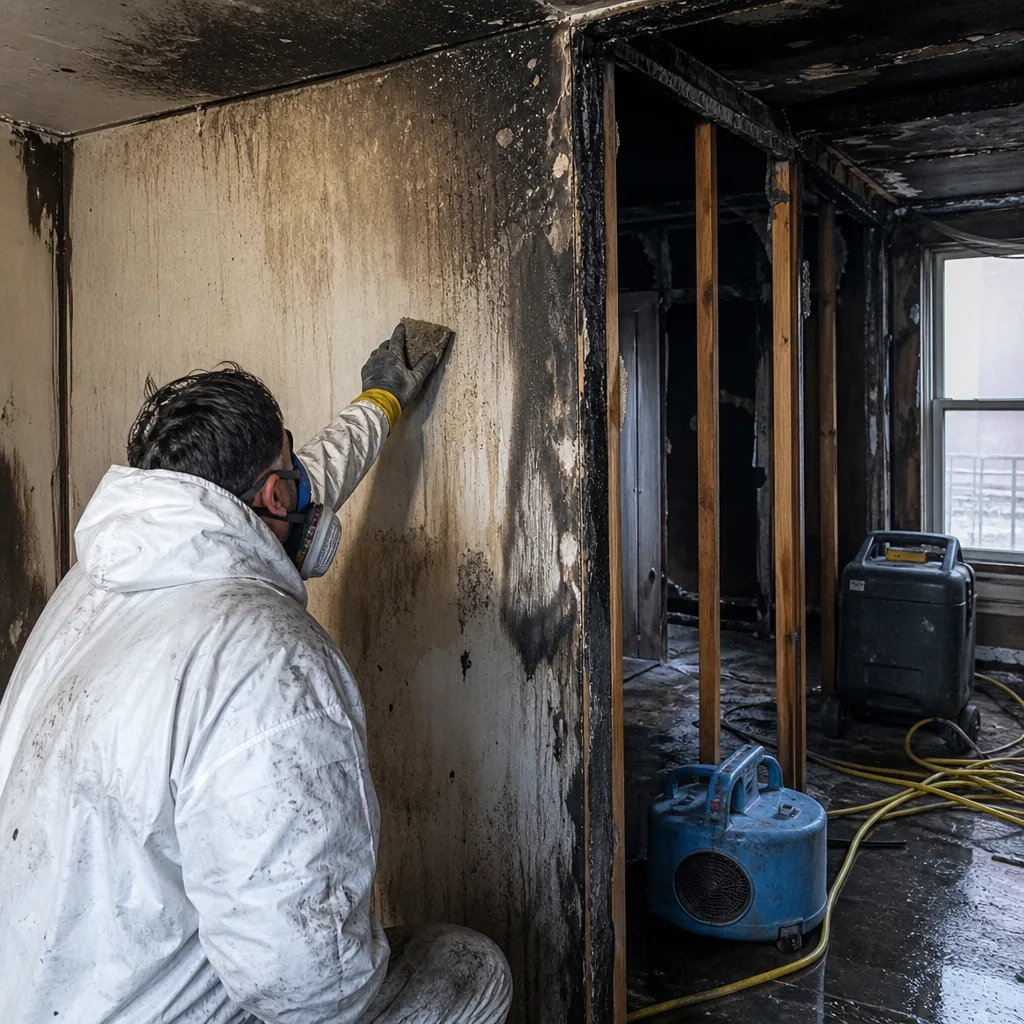
Mold Inspection & Testing
Before anyone tears open a wall in a Midtown Manhattan pre-war building, you need to know if asbestos is behind it. We test for mold, moisture, asbestos, and lead as the job requires. You get a report that a managing agent, co-op board, or insurance adjuster can actually use. That report tells you what is mold, what is old water staining, and what can be cleaned in place.
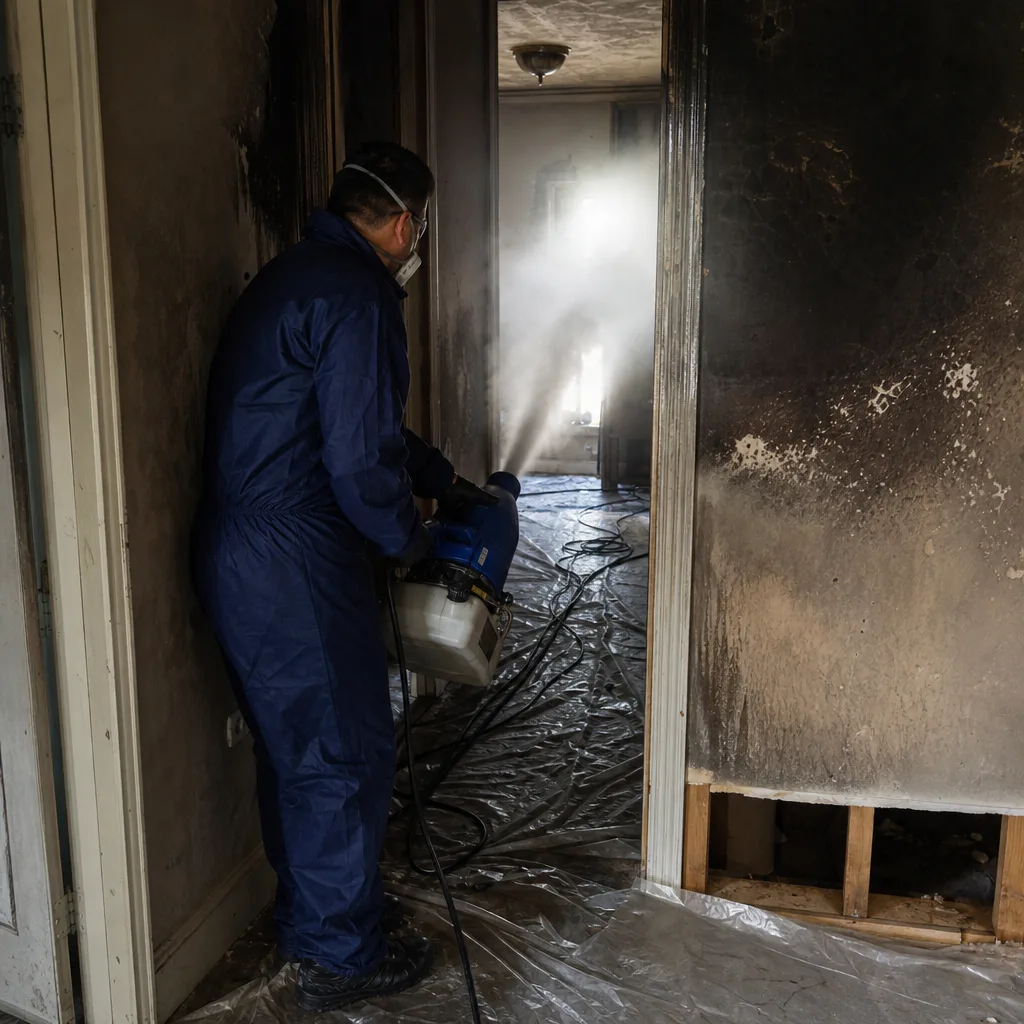
Containment & Air Quality Restoration
In a Midtown high-rise, the air you do not see is the air you share with 40 other units. Full containment with negative air pressure and HEPA-scrubbed exhaust is not optional on structural mold removal in these buildings. It is the only way to keep the building’s air system from spreading spores to floors that were never wet.
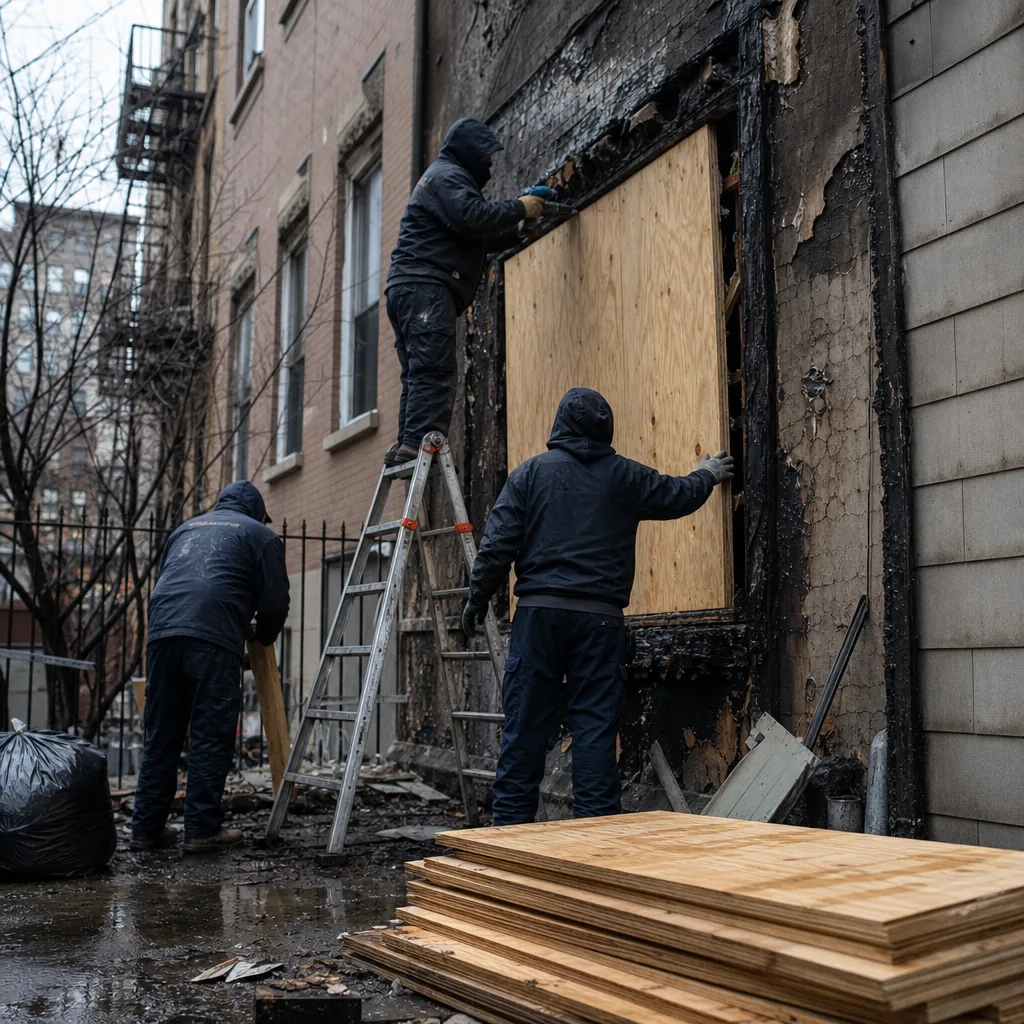
Mold Removal
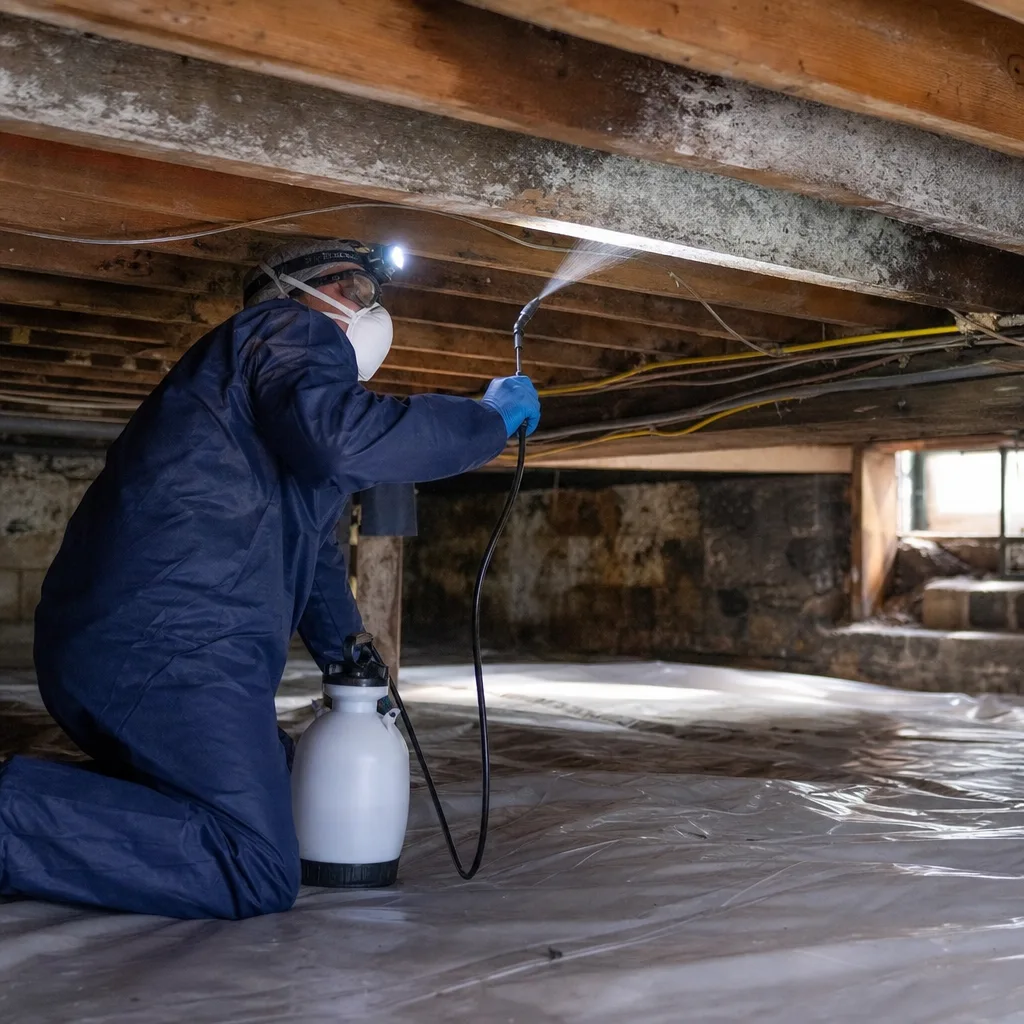
We remove mold from behind plaster, inside wall cavities, under flooring, above dropped ceilings, and inside mechanical closets. The goal is to remove the colonized material, not to paint over it. In Midtown, that frequently means we remove original lath and plaster, save the crown molding, and rebuild the wall flat enough to take new plaster.
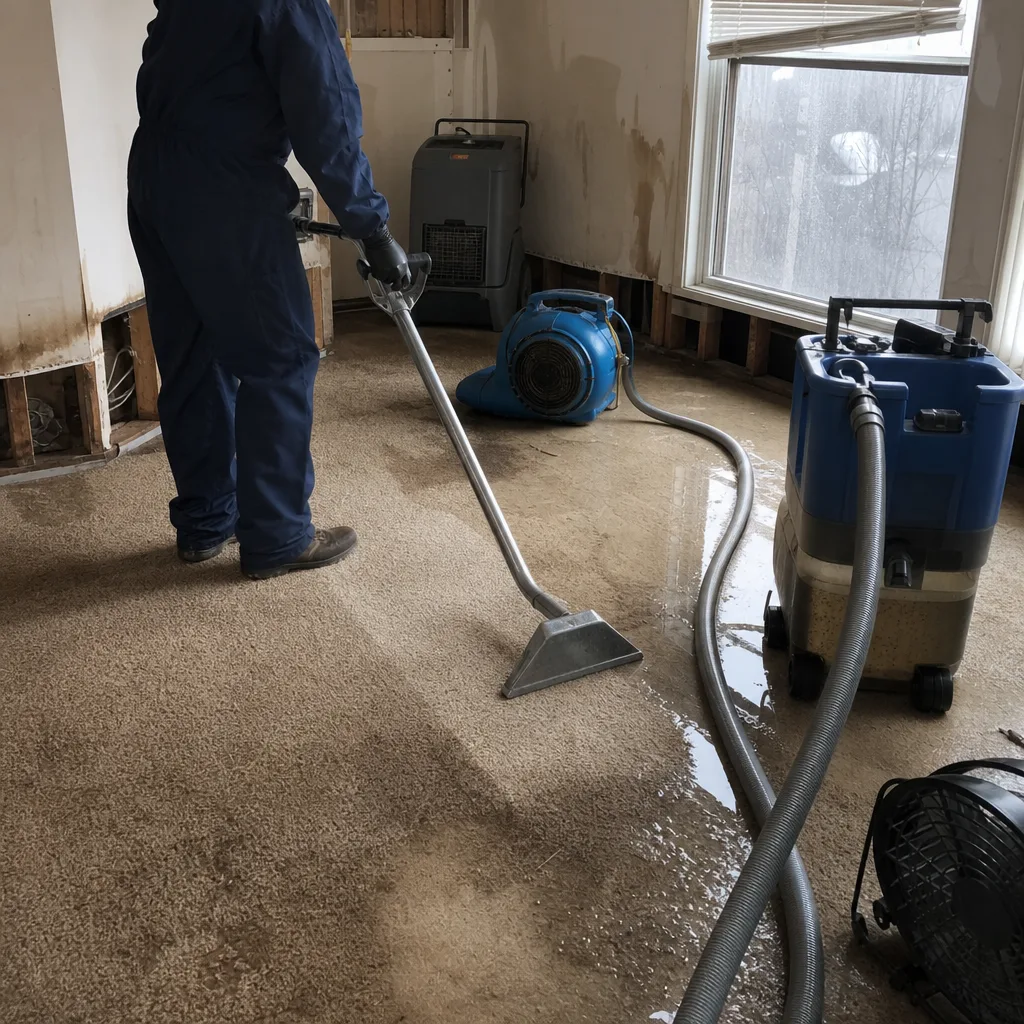
Black Mold Remediation
Stachybotrys likes cellulose and constant moisture. In Midtown Manhattan, the prime habitat is the inside of a wall cavity that has been wet for weeks from a slow supply-line leak nobody saw. We contain, remove, HEPA-vacuum, and clear test the space. We do not scare you with the name. We just handle it.
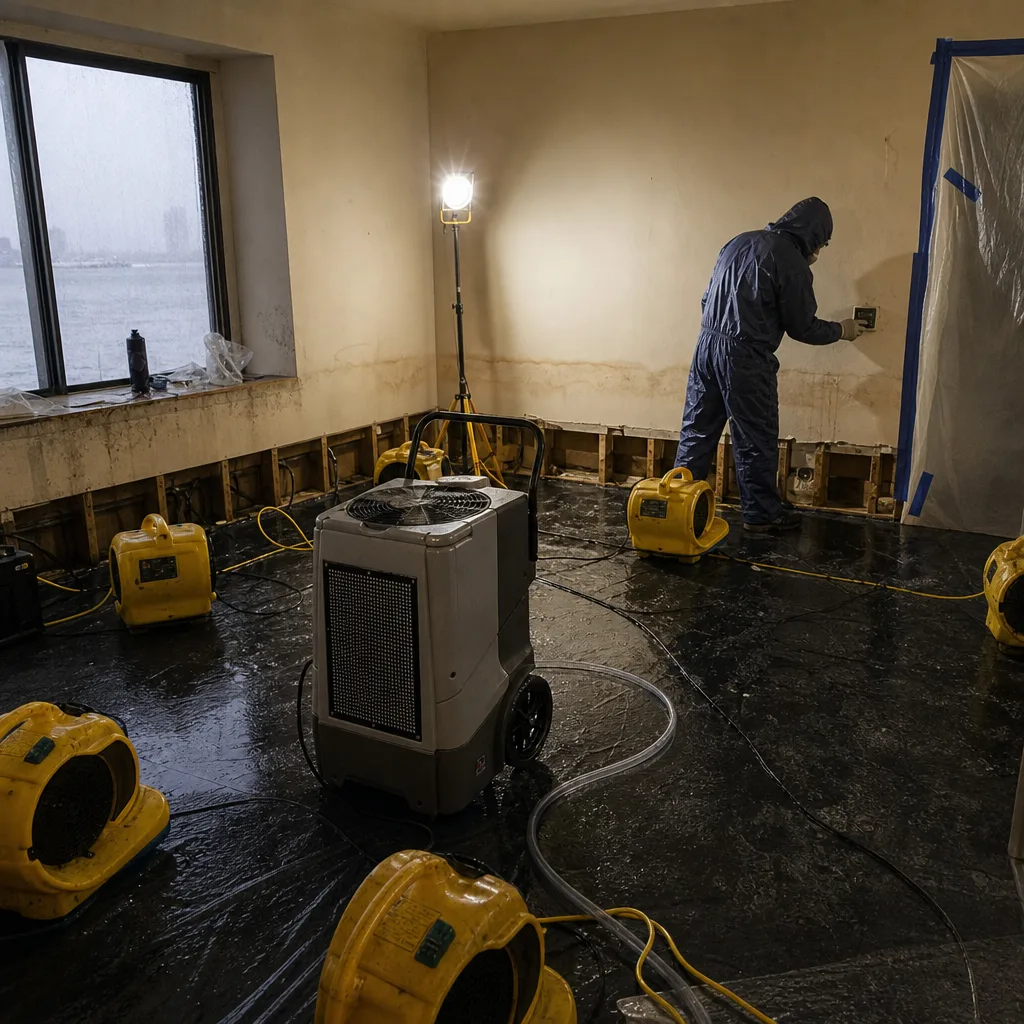
Crawl Space Treatment
Midtown Manhattan does not have suburban crawl spaces, but it has the vertical equivalent: pipe chases, utility chases, and sub-basement storage rooms under concrete slabs. These spaces trap moisture against walls that never dry out. We treat them the same way we would a crawl space, with moisture control, antimicrobial application, and drying to a real standard.
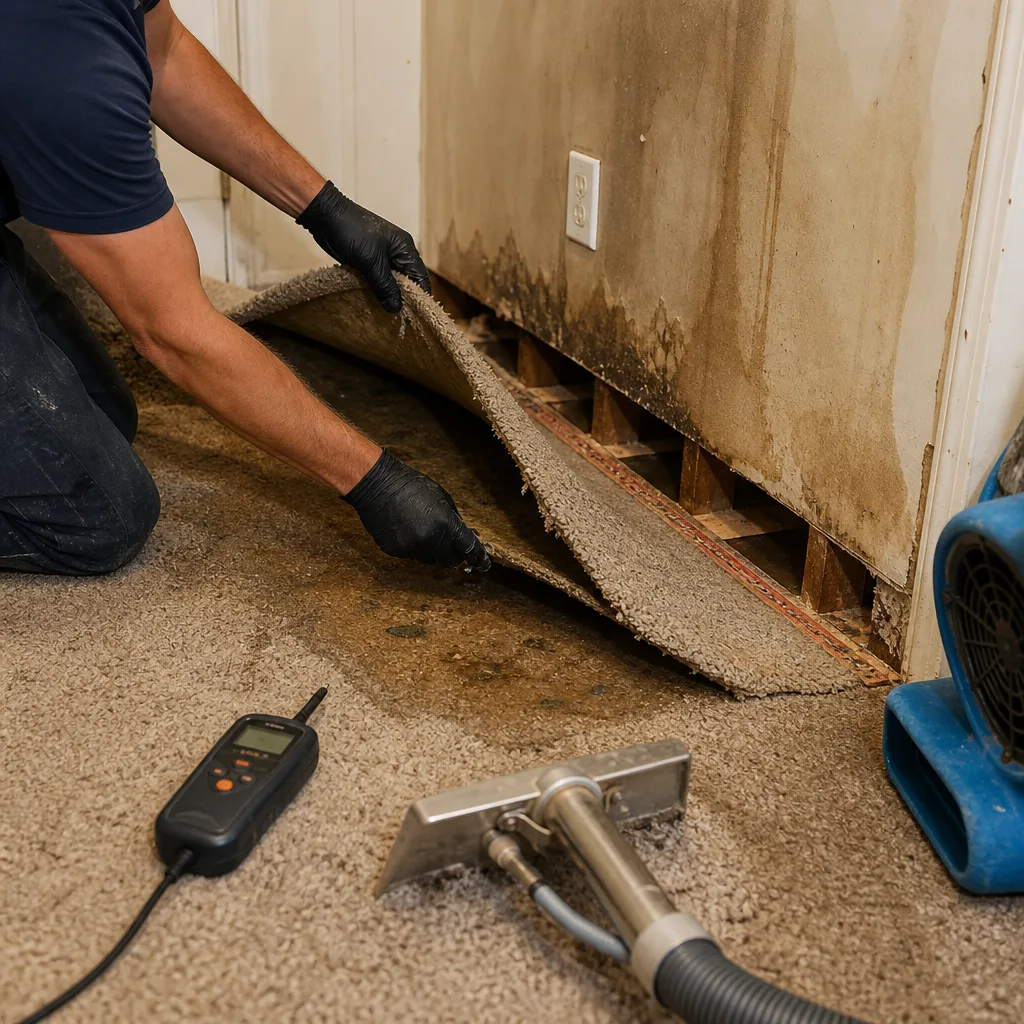
What happens when you call
- 1
A real person answersNo phone trees - you reach a local pro.
- 2
You get an upfront price rangeHonest numbers before anyone is dispatched.
- 3
A background-checked tech heads outLicensed & insured, dispatched right away.
- 4
You approve before work beginsNothing starts until you say go.
Mold Remediation Costs in Midtown Manhattan, NY
In Midtown Manhattan, a contained one-room mold remediation with full negative air and post-remediation clearance testing typically runs $1,800 to $4,500. A larger job, say a sub-basement storage area affected by a steam-main failure with asbestos debris removal, runs $8,000 to $20,000 once you factor in asbestos abatement, freight-elevator scheduling, and multi-day containment. A full-floor mold loss from a burst pipe in a rooftop mechanical room that sends water down 20 stories can hit $30,000 to $80,000, especially when co-op boards and managing agents require third-party air testing and written clearance before units can be reoccupied. The price moves with the square footage of contained space, the presence of asbestos or lead, the building’s freight window constraints, and the number of parties involved in the claim. Call (607) 350-1550 for a free visual inspection and a firm, written scope. No charge for that in Midtown Manhattan.
We Also Serve Cities Near Midtown Manhattan
Wade’s Restoration works throughout Lower Manhattan, the Financial District, Astoria, and Long Island City. If you manage properties in Midtown Manhattan and the adjacent boroughs, one call to (607) 350-1550 covers all of it. Same crew, same standards, same Wade.
Serving Midtown Manhattan, NY - Our Local Coverage Area
We’re based in the Midtown Manhattan area and know this community well. Use the map below to see our service coverage - if you’re nearby, we can almost certainly help.
Midtown Manhattan Mold Remediation Questions, Answered
Why does mold remediation in a Midtown pre-war building always trigger asbestos and lead testing before we can start removing drywall?
Because Midtown Manhattan’s pre-war stock, from the 1920s through the 1940s, is full of asbestos-wrapped cast-iron steam risers and lead paint. Federal and city regulations require testing before you disturb a wall or ceiling that might contain either one. If a crew skips that test and tears open a wall, they can release asbestos fibers and lead dust into the building’s shared air. Our Mold Remediation team tests first, and the report goes to your managing agent and adjuster before any demo starts.
How do you handle mold remediation when the source is a pipe burst in a rooftop mechanical room that sent water down 20 floors before anyone noticed?
We start with the building’s vertical pathways: the pipe chases, elevator shafts, and interior wall cavities that carried the water down. Moisture mapping runs across every affected floor, not just the floor where the water was first seen. Containment is usually per-floor in these losses, with air scrubbers staged in the shaft. We dry the stack, because if we only dry the visible loss floor, the mold comes back on the floor below. Call (607) 350-1550 and Wade will walk the building with you to map the full run.
What does ‘Category 3 water’ mean in a Midtown sub-basement after a Con Ed steam-main failure, and why can’t we just dry it out?
Category 3 water is grossly contaminated: sewage, heavy sediment, or in this case, hot water and debris from a failed district steam main that has carried asbestos and street-level contaminants into your sub-basement. You cannot just dry that space because the porous materials in it, plaster, wood, stored cardboard, are now contaminated. The contaminated material has to come out, the space gets antimicrobial treatment, and drying starts only after the removal and cleaning are complete. Midtown Manhattan sits on the world’s largest district steam network. This failure mode exists here and almost nowhere else in the country.
Why does a mold job in a glass curtain-wall tower on the west 40s often involve façade sealing instead of roof repairs?
Because in the steel-and-glass towers that dominate the west 40s and 50s, the water usually comes in through the façade, not the roof. Nor’easters drive horizontal rain against glass curtain-wall panels, and the gaskets and sealant joints age out. Rain gets behind the panel, runs down the inside of the exterior wall, and soaks the drywall and insulation at several floors at once. We still dry the interior, but if the façade leak is not sealed, the mold simply comes back next storm. We coordinate that sealing with your building engineer or façade contractor so the interior work sticks.
Can you restore mold-damaged original plaster ceilings in a pre-war Midtown co-op, or do they have to be replaced?
Depends on how much of the plaster key has been lost and how long the ceiling was wet. If the mold is surface-level and the plaster is still solid, we can HEPA-vacuum, treat, and re-skim. If the lath and plaster key have failed and the ceiling is bowed or crumbling, the affected section has to come out. We match the existing profile, including crown molding and medallion work, so the patch does not announce itself. In a 1930s Art Deco high-rise on West 57th, we rebuilt a plaster ceiling in a storage room after a steam-main failure, matched the original lime finish, and the building’s co-op board accepted it without question.
How fast can someone actually get to my Midtown Manhattan building right now?
Wade’s team is dispatched from New York City and serves Midtown Manhattan locally. Most calls get a crew on-site inside 45 minutes. The real variable is building access: your freight elevator window. Many Midtown buildings only allow restoration equipment through the freight entrance between 6 and 8 a.m. or after 10 p.m. We schedule around that. If your building has a live person on the loading dock and a COI in place, we can start containment the same hour. Call (607) 350-1550 now.
Will insurance cover mold remediation in a Midtown Manhattan co-op or condo?
Usually yes, if the mold is the result of a covered water loss, say a burst pipe or storm-driven façade intrusion, and the policy includes mold coverage or a mold sublimit. The carrier needs proof that the water loss happened, that you mitigated promptly, and that the mold is not a pre-existing maintenance issue. We document from hour one with photos and moisture logs, and Wade talks to the adjuster directly so the claim does not stall on missing paperwork. We have handled dozens of Midtown Manhattan claims that other companies walked away from.
What should I do in the first 30 minutes after I find mold in my Midtown Manhattan apartment or office?
Do not open the wall. Do not spray bleach. Do not run a fan, which just spreads spores. Call (607) 350-1550 and tell Wade what you see and where the water came from. If there is active water, shut the supply valve if you can do so safely. If the leak is behind a wall or coming from above, get the building super and the neighbor upstairs in the loop. Take photos. Then let us get eyes on it before anyone starts tearing anything out. The first call is free, and so is the visual inspection in Midtown Manhattan.
Written by Wade Ferris, Owner at Wade’s Restoration, serving Midtown Manhattan and the surrounding boroughs since 2007.