
Free visual inspection and a written scope of work before any mitigation begins - photos, moisture readings, and drying logs go in your claim file
The scope we write is the scope we bill. Anything new gets shown to you, in writing, before we touch it.



 Before
 After
After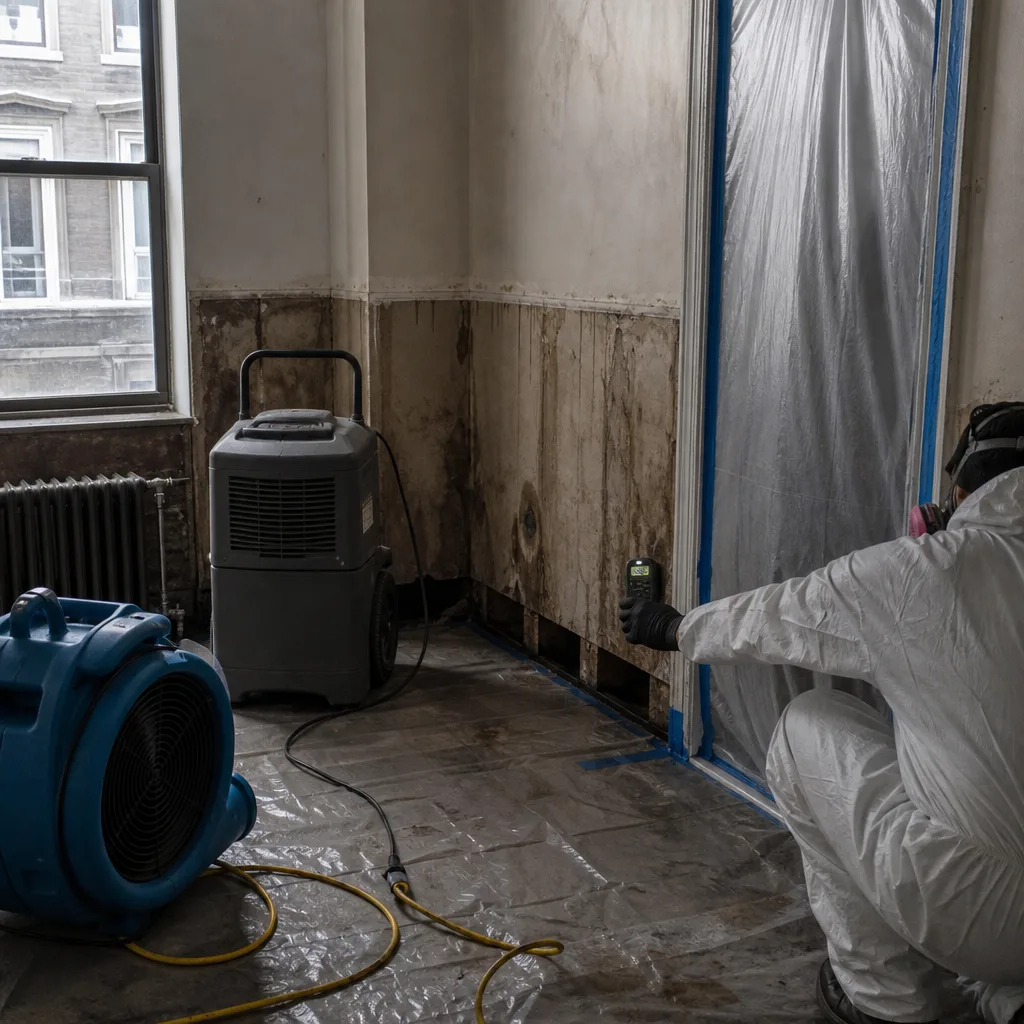 Before
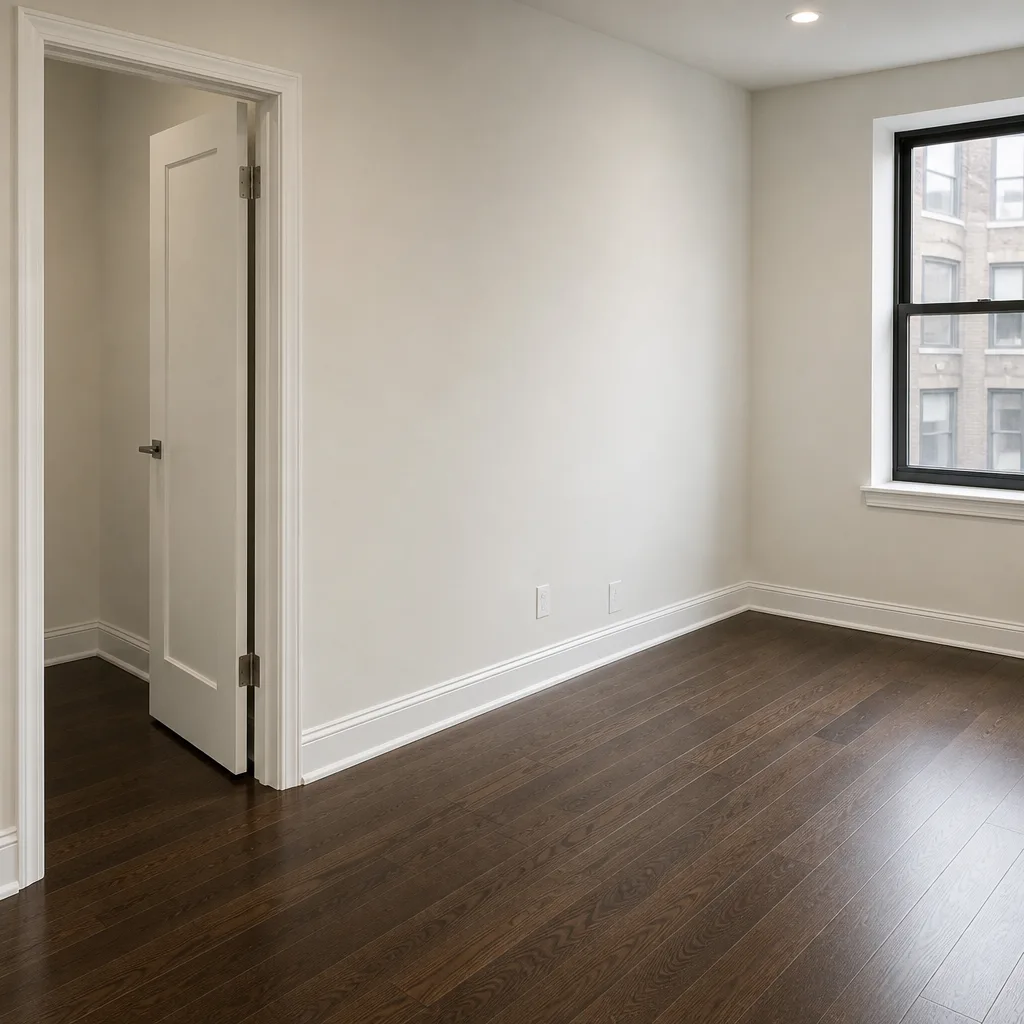 After
After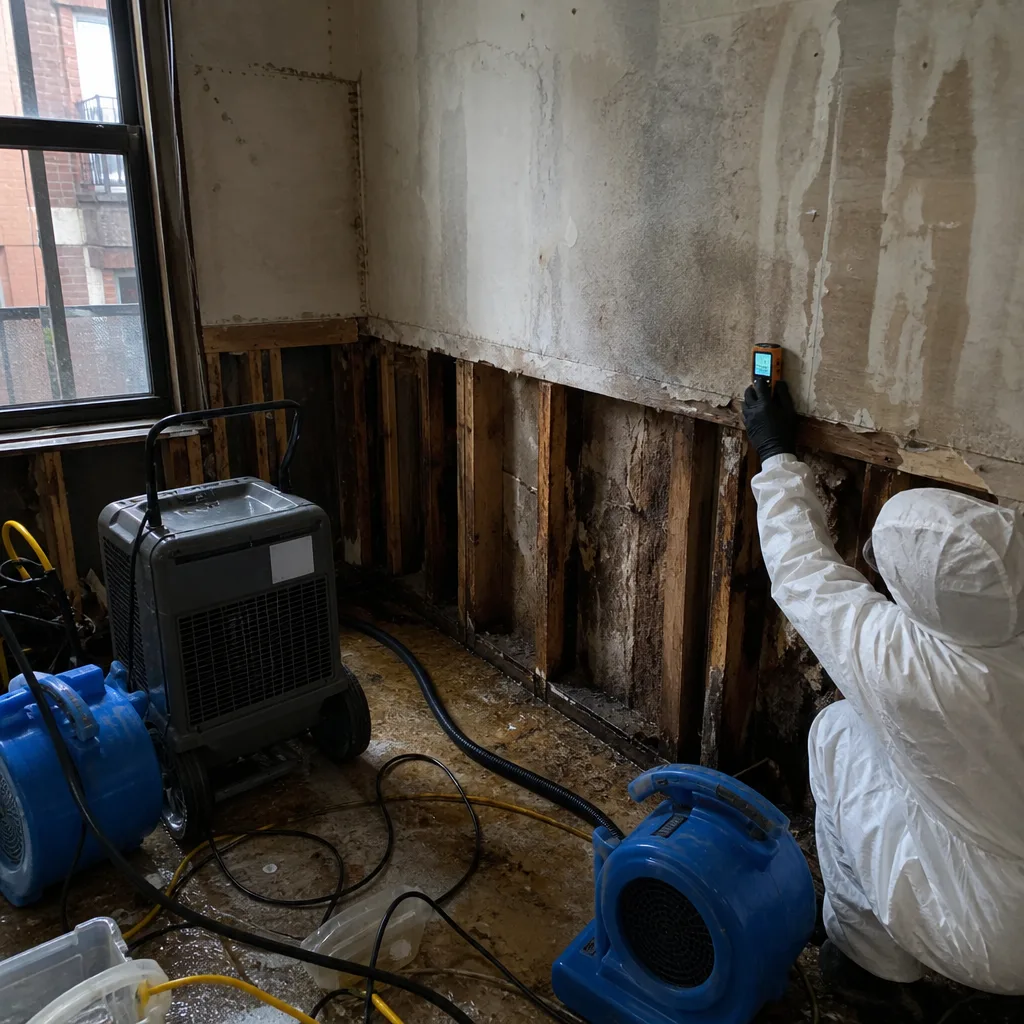 Before
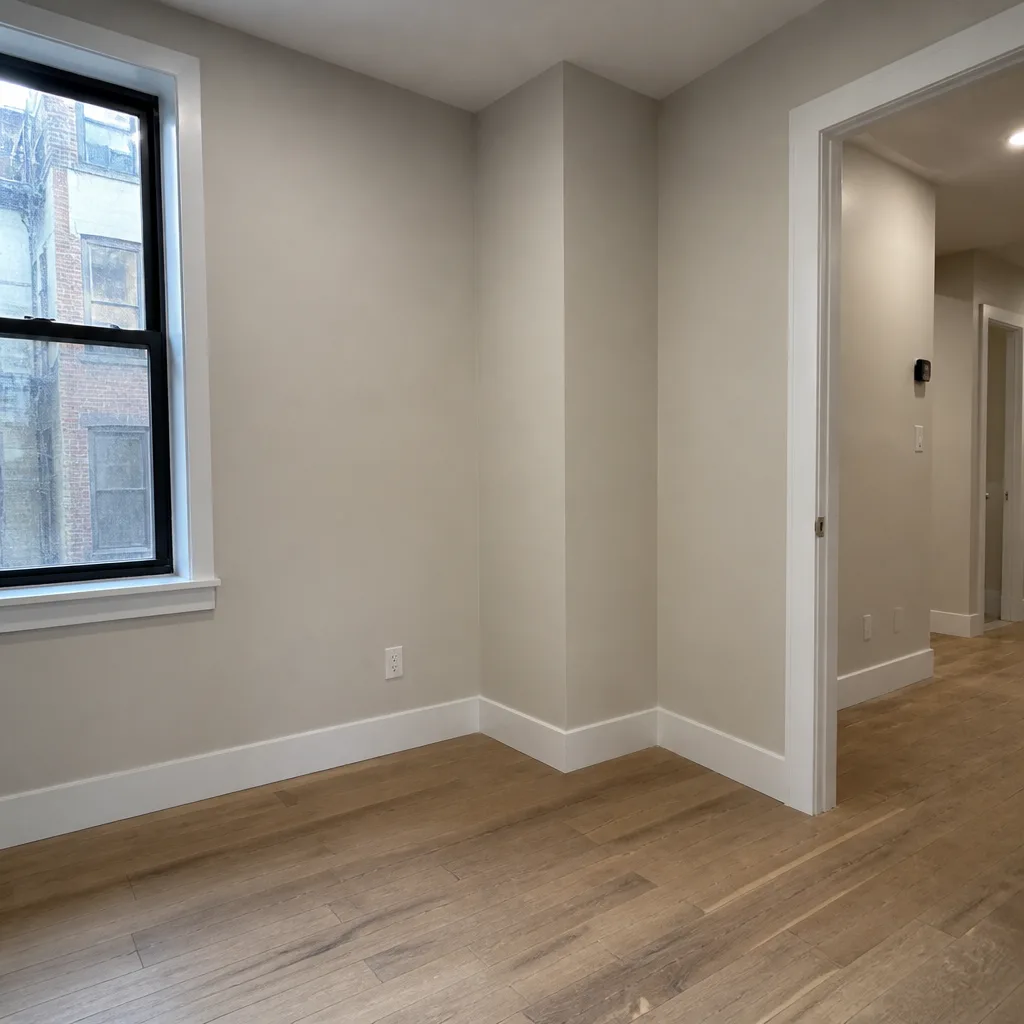 After
After24/7 Emergency Sewage Cleanup in Midtown Manhattan
A backed-up sewage line in a Midtown Manhattan high-rise is not a wait-until-morning problem. Black water moves fast, and in a 30-story tower it moves down. Wade’s Restoration answers live 24 hours a day, and crews can be inside your Midtown Manhattan building within the hour. Call (607) 350-1550 now. The first hour determines whether you’re dealing with a contained overflow or a cascading contamination event across multiple floors and neighboring units. We provide a free visual inspection, document everything from the first minute, and start extraction immediately. In Midtown Manhattan’s pre-war buildings with original plaster and cast-iron risers, sewage from a single toilet overflow on the 20th floor can reach occupied apartments three floors down before you even notice the smell. That’s why we don’t schedule sewage work for next week. We head out now.
Understanding Sewage Cleanup Severity in Midtown Manhattan Properties
Sewage cleanup is Category 3 water work. That means the water contains pathogenic, toxigenic, or other harmful agents, and every surface it touches needs either removal or full sanitization with an EPA-registered antimicrobial. In a suburban house, that’s usually a basement sump failure or a single toilet backup. In Midtown Manhattan, the stakes are different. Your building stock runs from 1920s and 1930s Art Deco high-rises with original plaster ceilings and cast-iron steam-heat risers to mid-century concrete towers and modern glass curtain-wall structures. In the pre-war buildings, black water travels through chases and wall cavities lined with asbestos pipe insulation. So before any contaminated drywall comes out, Midtown Manhattan regulations almost always trigger asbestos and lead testing. That’s not a delay tactic, it’s the law here, and a crew that skips it gets a stop-work order. Meanwhile, moisture wicks into plaster, lath, and structural wood. Mold can start in 24 to 48 hours. The severity of a sewage loss in Midtown Manhattan isn’t just about how much water, it’s about where that water traveled and what it touched on the way down.
Why Midtown Manhattan Property Owners Choose Wade’s Restoration
- 45-minute response commitment. Wade’s crew is already in Midtown Manhattan. We’re not coming from another borough or a regional call center. The owner answers his own phone and can have extraction running inside the hour.
- Live answer, 24/7. When you call (607) 350-1550 at 3 a.m. with sewage backing up into a Midtown Manhattan apartment, a real person picks up. No voicemail, no answering service, no callback in the morning.
- IICRC-certified crews. Our technicians hold WRT and AMRT certifications. That matters for sewage work, because antimicrobial treatment and containment protocols aren’t something you improvise in a 15-story pre-war building.
- Free visual inspection. Before any work starts, we walk the loss with you and tell you exactly what needs to happen. The inspection costs you nothing.
- Direct insurance billing. We send the scope, photos, and drying logs straight to your carrier. You’re not stuck relaying information between us and your adjuster.
- One team from extraction to reconstruction. We don’t hand you off to a subcontractor after the sewage is out. The same crew that extracts the black water rebuilds the walls, floors, and ceilings.
Our Sewage Cleanup Process
Inspection & Assessment
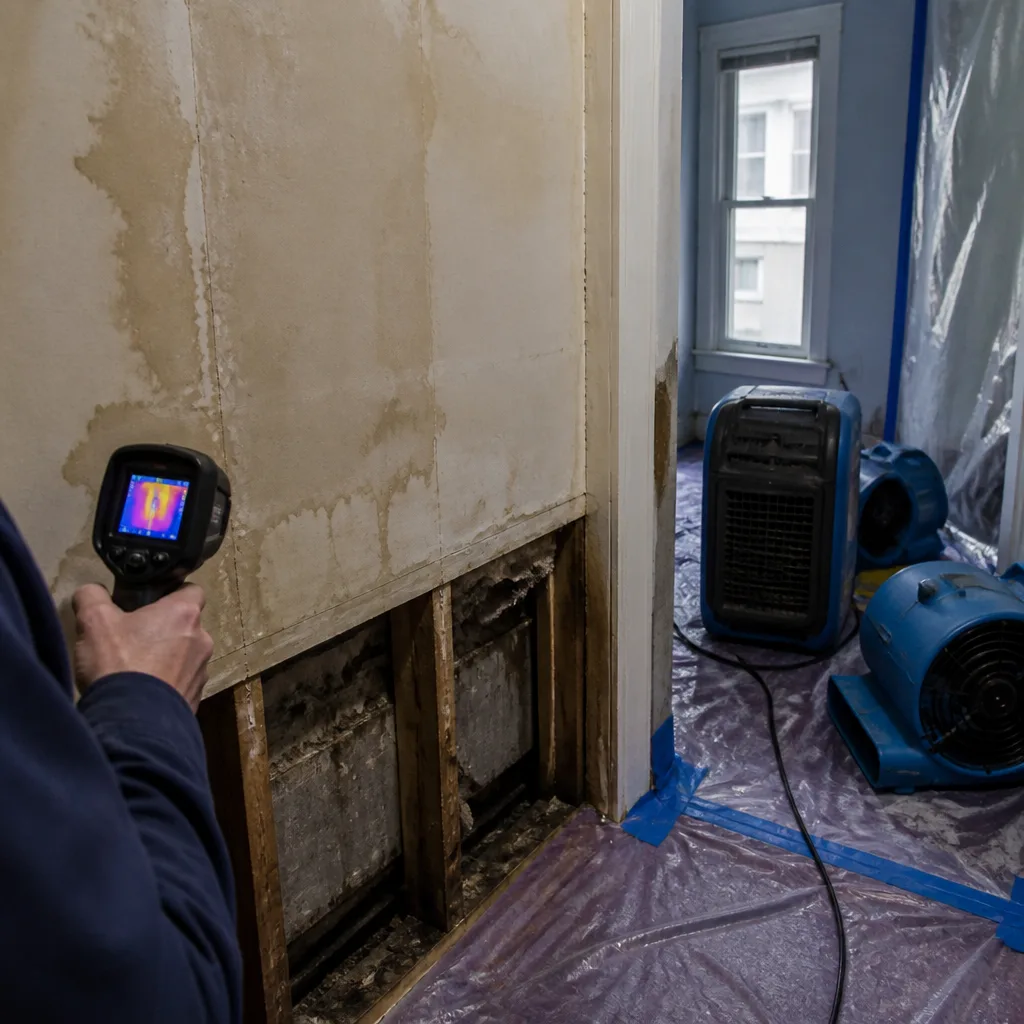
We arrive, walk the affected floors, and map the travel path of the water. With a Phoenix thermal imaging camera, we trace moisture through walls, under flooring, and into riser chases. You get a clear picture of what’s contaminated and what’s not, before any demo starts.
Extraction & Stabilization
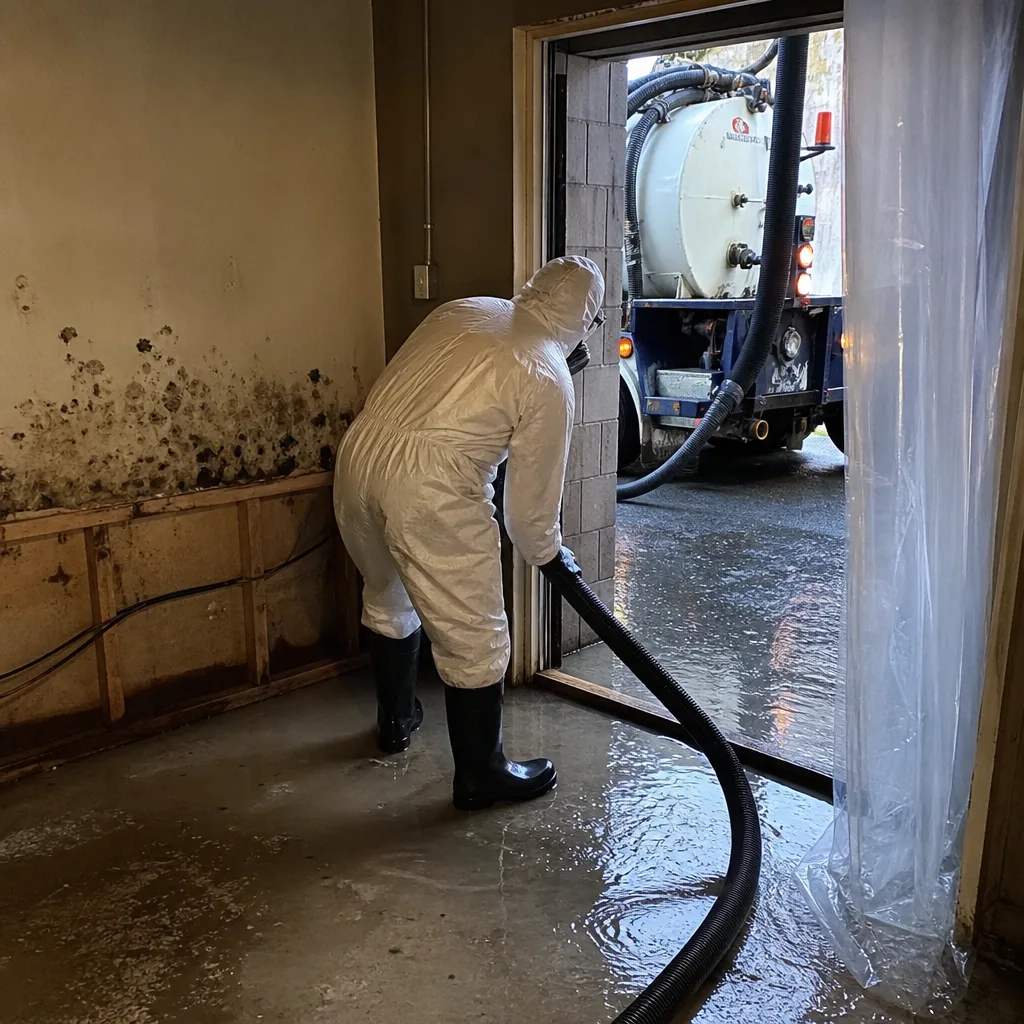
We pull standing black water using truck-mounted and portable extraction units. In a Midtown Manhattan building, that means processing equipment through the freight elevator in the building’s designated window. We stabilize the loss immediately to stop further spread.
Drying & Dehumidification
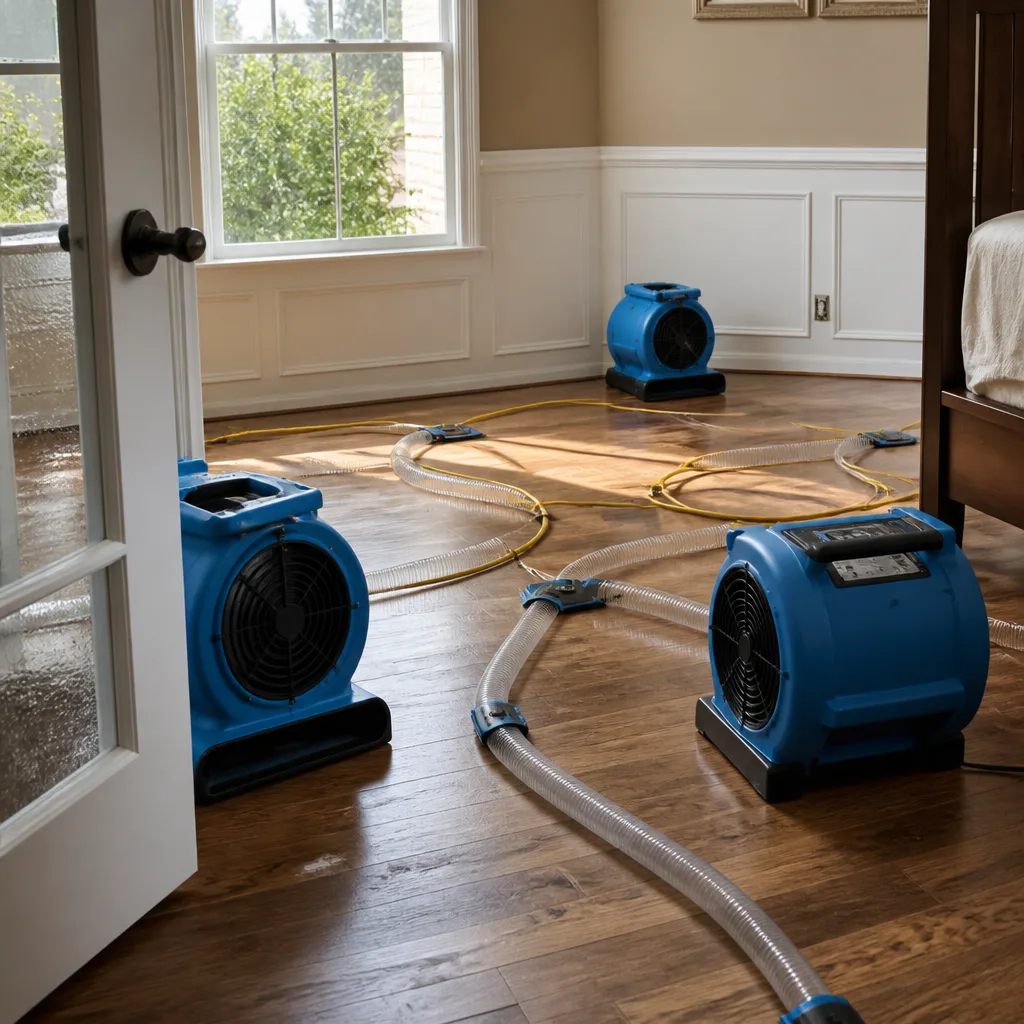
Dri-Eaz dehumidifiers and B-Air air movers run constantly while we take moisture readings every single day. You get the full drying log when the job ends. That level of documentation is standard for us, not an upgrade.
Cleaning & Sanitization
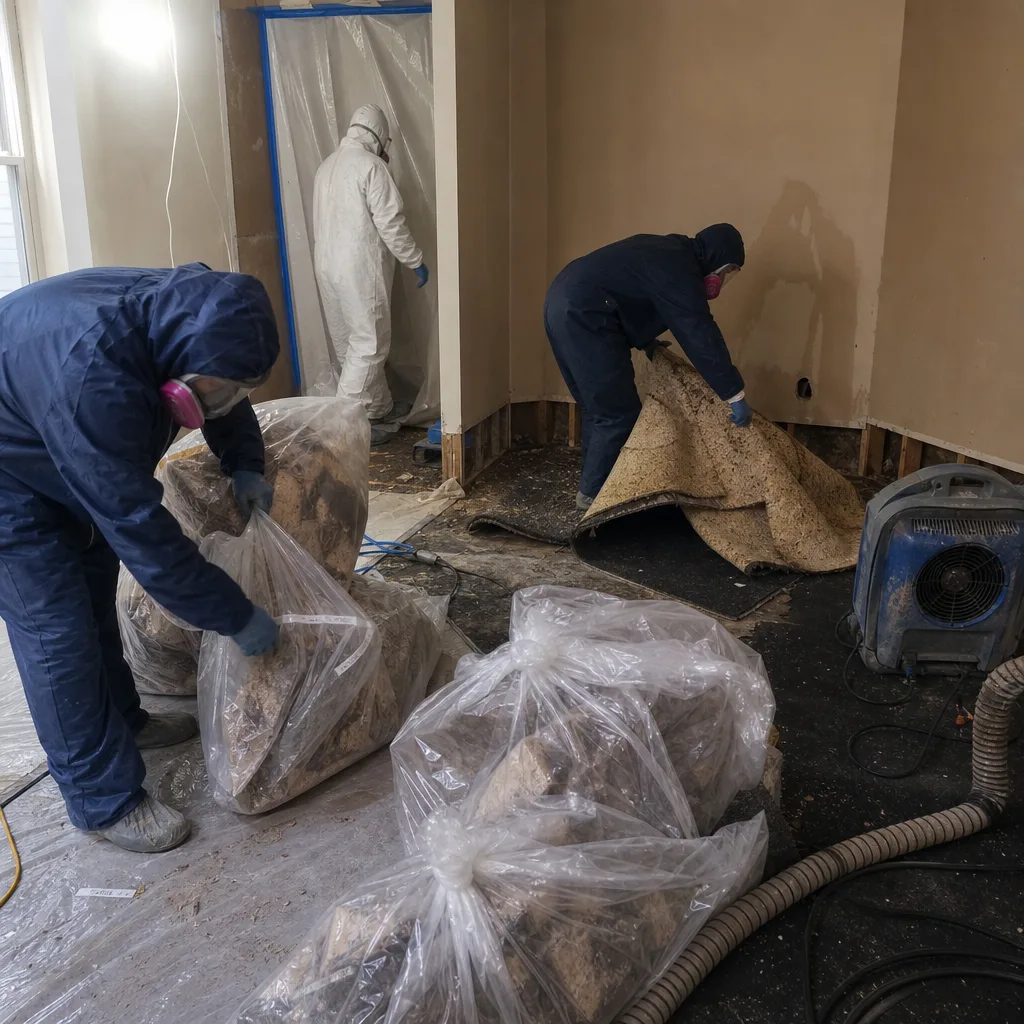
Every affected surface gets treated with an EPA-registered antimicrobial. Contaminated porous materials, drywall, carpet, insulation, come out. Hard surfaces get scrubbed and disinfected. We follow IICRC S500 standards for Category 3 water.
Asbestos & Lead Compliance
In Midtown Manhattan’s pre-war stock, sewage contamination in plaster walls and cast-iron chases almost always requires asbestos and lead testing before contaminated material gets removed. We coordinate with licensed abatement teams and the building’s managing LLC to keep the job moving.
Repairs & Restoration
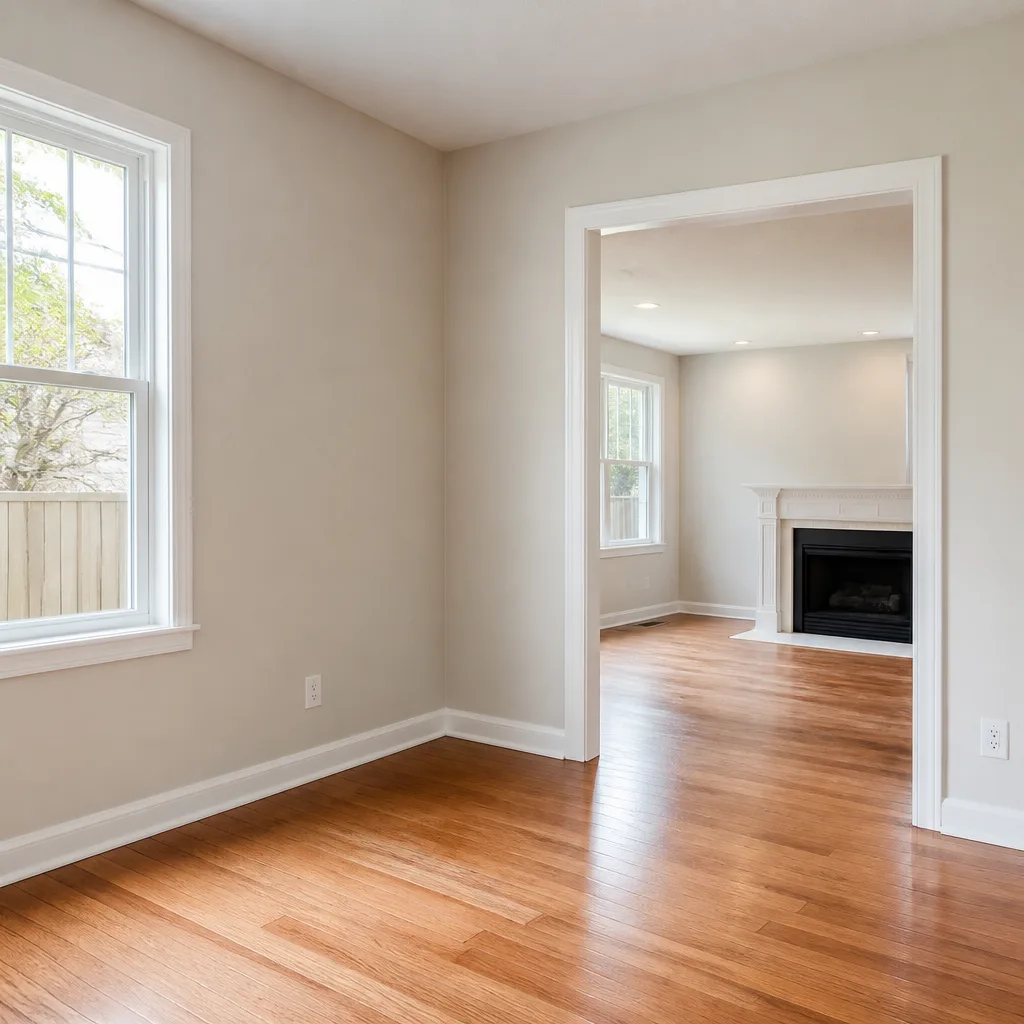
Once the affected areas are dry, sanitized, and cleared, we rebuild. Plaster repair, drywall, trim, paint, flooring. The same Wade’s Restoration crew that extracted the sewage puts your unit back the way it was, and the 90-Day Done Right Promise applies to the entire scope in writing.
Need Emergency Sewage Cleanup in Midtown Manhattan Now?
Crews minutes away, answering live 24 hours a day. The sooner we start, the less it costs.
Working With Your Insurance Company
Sewage backups in Midtown Manhattan create complicated claims. A single toilet overflow in a co-op can involve three separate insurance policies: yours, the unit owner above, and the building’s master policy. Wade Ferris deals with adjusters directly. He documents everything from the first hour, writes a line-item scope of work that carriers accept, and talks to your adjuster so you don’t have to. We’ve handled multi-party claims in Midtown Manhattan buildings where three adjusters are fighting over who pays. We don’t take sides. We document the loss, dry the building, and give every adjuster the same clear record of what happened and what it took to fix it. That transparency keeps claims moving.
What We Provide Your Insurer
- Thorough documentation of the loss
- Photos of all damage, room by room
- Moisture readings and drying logs
- A detailed, line-item scope of work
- Direct coordination with your carrier
Built for Midtown Manhattan’s Loss Calendar
Midtown Manhattan’s sewage and water losses have a rhythm. January and February are the worst months for frozen pipes in rooftop mechanical rooms perched atop 40 to 60-story buildings. When a supply line bursts in a mechanical penthouse, water cascades down through elevator shafts, electrical rooms, and interior walls for hours before reaching occupied floors. Sewage lines in older pre-war buildings also crack under the stress of freeze-thaw cycles, and snowmelt mixed with street-level flooding pushes stormwater into aging sewer laterals. Spring brings heavy rain that overwhelms the city’s combined sewer system, forcing sewage back up through floor drains in sub-basements. Summer thunderstorms do it faster, flash-flooding low-lying Midtown Manhattan intersections and pushing black water into building basements and mechanical rooms. Fall nor’easters drive horizontal rain against glass curtain-wall facades, which can infiltrate wall cavities and find drain lines. Every season in Midtown Manhattan has a pathway for sewage to get inside a building.
Sewage Cleanup Across Midtown Manhattan’s Neighborhoods
We serve every block in Midtown Manhattan, and each corridor has its own building types and loss patterns. Around Rockefeller Center and the Radio City area, the 1930s limestone and Art Deco towers have original cast-iron risers and plaster ceilings that wick Category 3 water aggressively. A sewage backup on one floor there rarely stays on one floor. In the Garment District, the mix of pre-war loft buildings and mid-century concrete structures means chases and pipeways are tighter, and water often travels along beam pockets and floor plates instead of through wall cavities. Over by Grand Central and the Lexington Avenue corridor, the building stock includes some of the oldest in Midtown Manhattan, with steam risers and original plumbing that predate modern building codes. A toilet overflow on East 52nd Street behaves differently than one on West 39th. Along the west 40s and 50s, the glass curtain-wall towers have different vulnerabilities, storm-driven water intrusion through facade seals can migrate behind walls and reach drain stacks. Wade’s crew knows these buildings. He’s run extraction in pre-war co-ops on Park Avenue and in concrete towers on Sixth Avenue. The building type dictates the drying plan, and we’ve seen most of them.
Specialized Sewage Cleanup Services We Offer in Midtown Manhattan
Sewage Backup Cleanup
A backed-up floor drain in a Midtown Manhattan sub-basement or a clogged main line affecting multiple units requires fast extraction and full Category 3 protocols. We find the extent of contamination, remove it, sanitize, and dry. This is the bread-and-butter emergency we handle weekly in Midtown Manhattan.
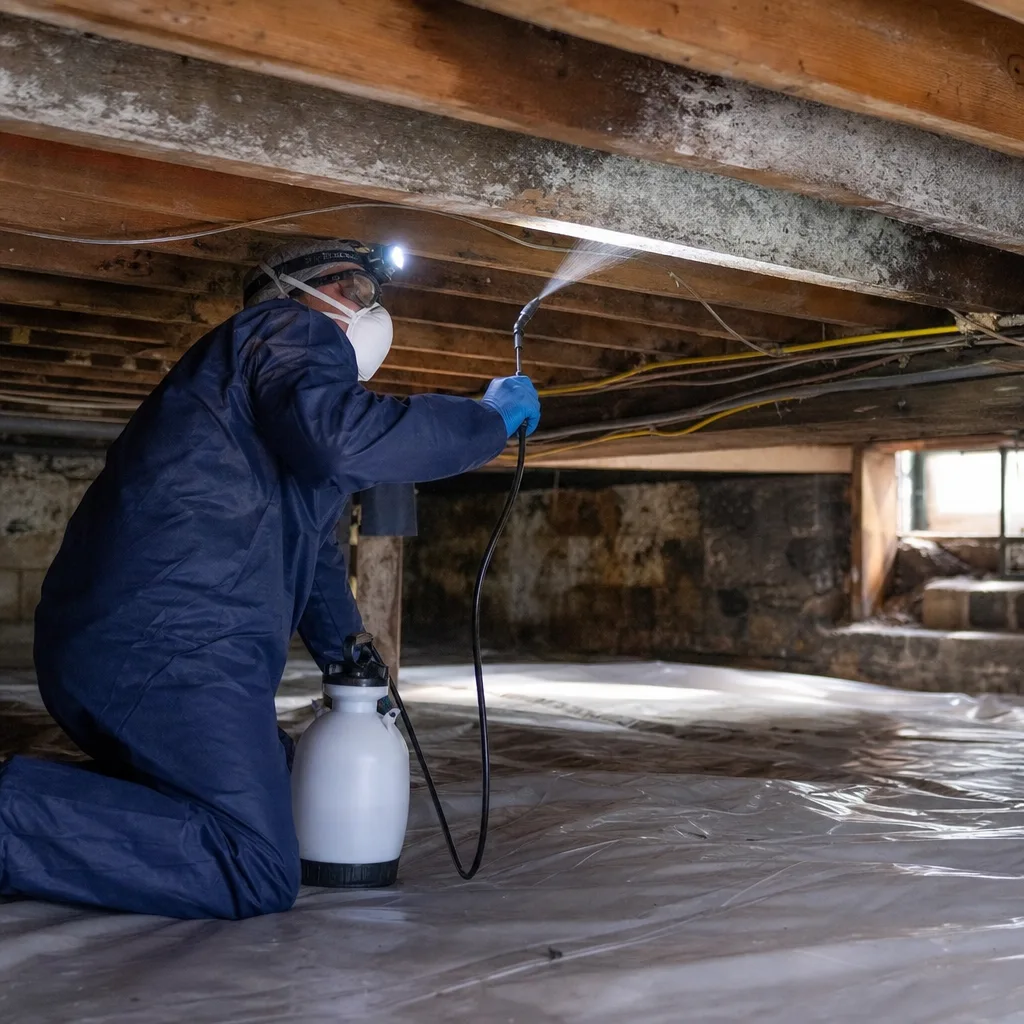
Black Water Extraction
Black water means sewage, and it cannot be treated like ordinary floodwater. In Midtown Manhattan’s sub-basements, where Con Edison steam infrastructure shares space with sewer lines, black water extraction often means dealing with contaminated water and debris in tight, mechanical spaces. We bring the right pumps and disposal protocols. Call (607) 350-1550 for immediate extraction.
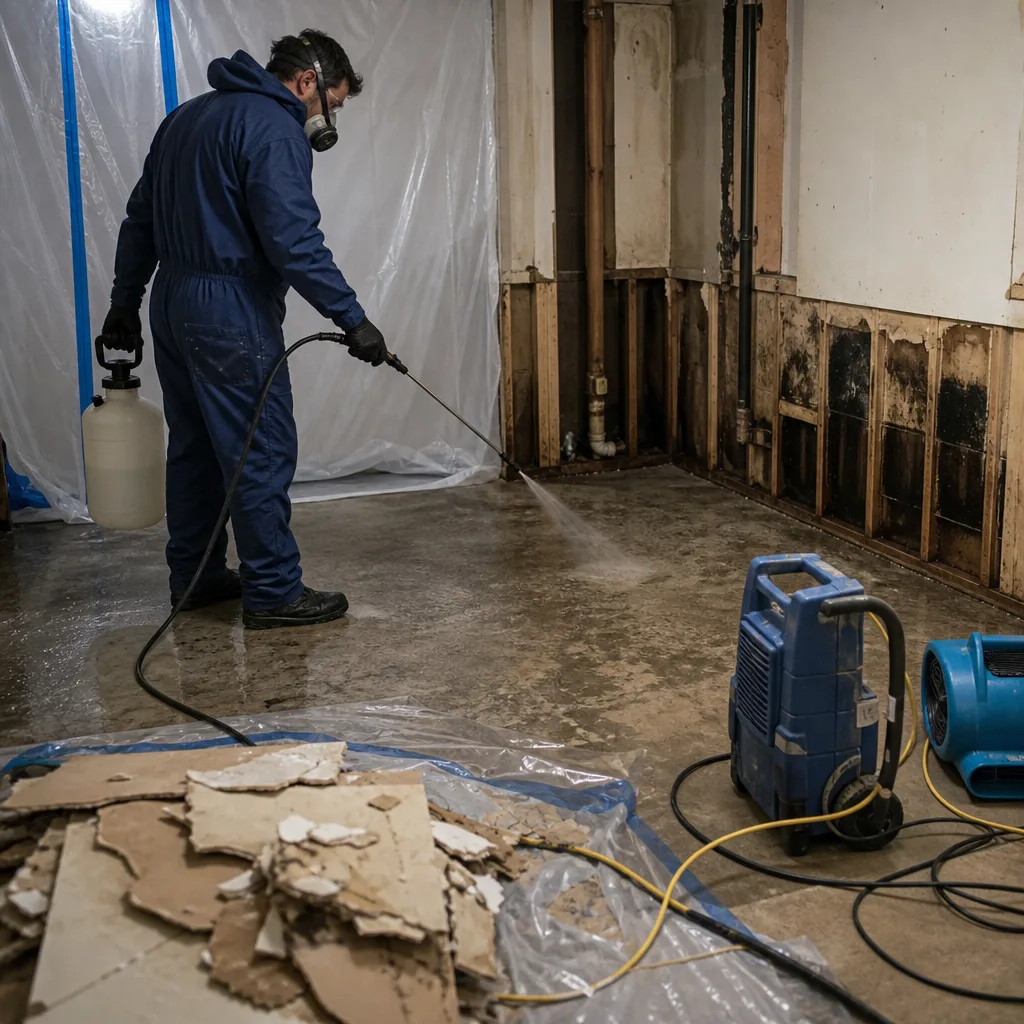
Sanitization & Disinfection
Extraction alone doesn’t make a Midtown Manhattan apartment safe after a sewage event. We apply EPA-registered antimicrobials, remove contaminated porous materials, and verify the environment meets post-remediation standards before anyone moves back in. We also hand you the written drying and sanitization logs at job’s end.
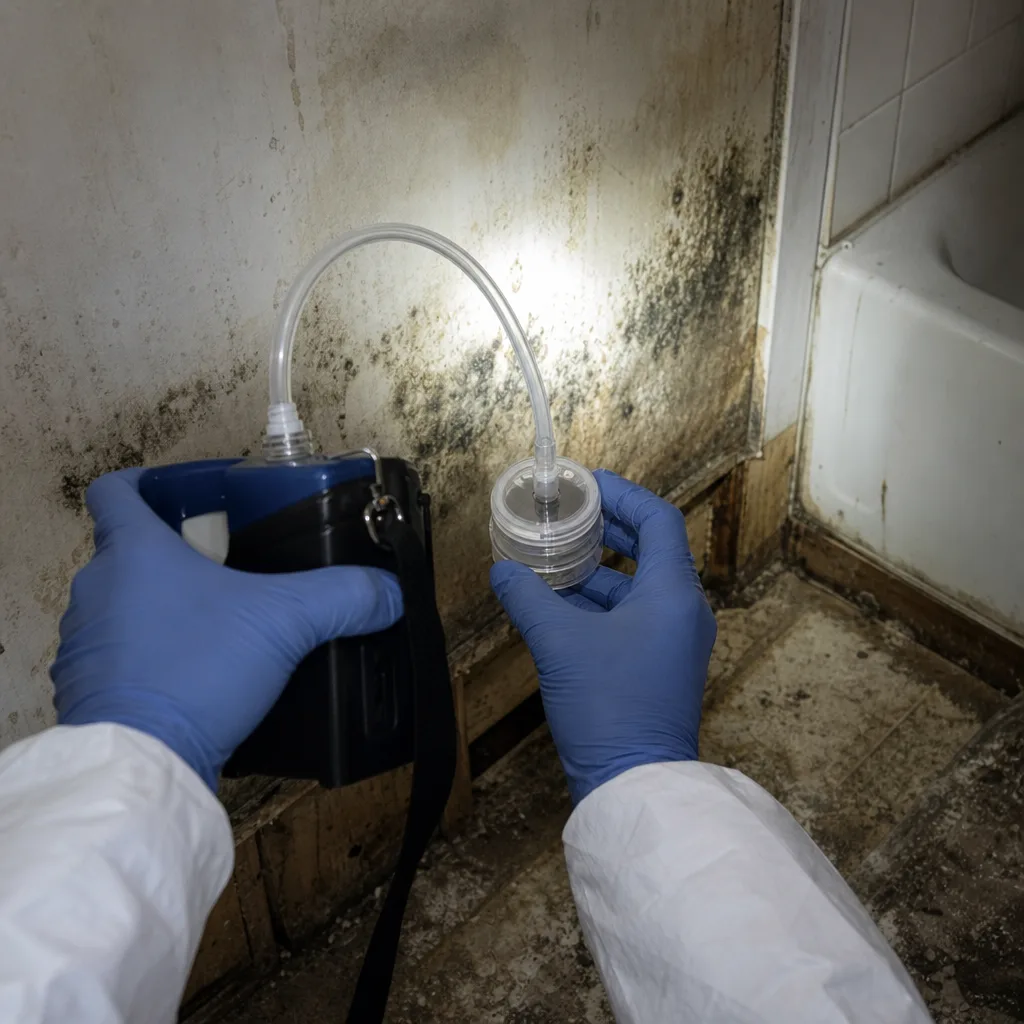
Toilet Overflow Cleanup
In a high-rise, a toilet overflow on an upper floor is a vertical flooding event. We trace the water’s path down through ceilings, riser chases, and wall cavities, not just at the overflow point. The same overflow that looks minor in the bathroom can have saturated the unit below within an hour.
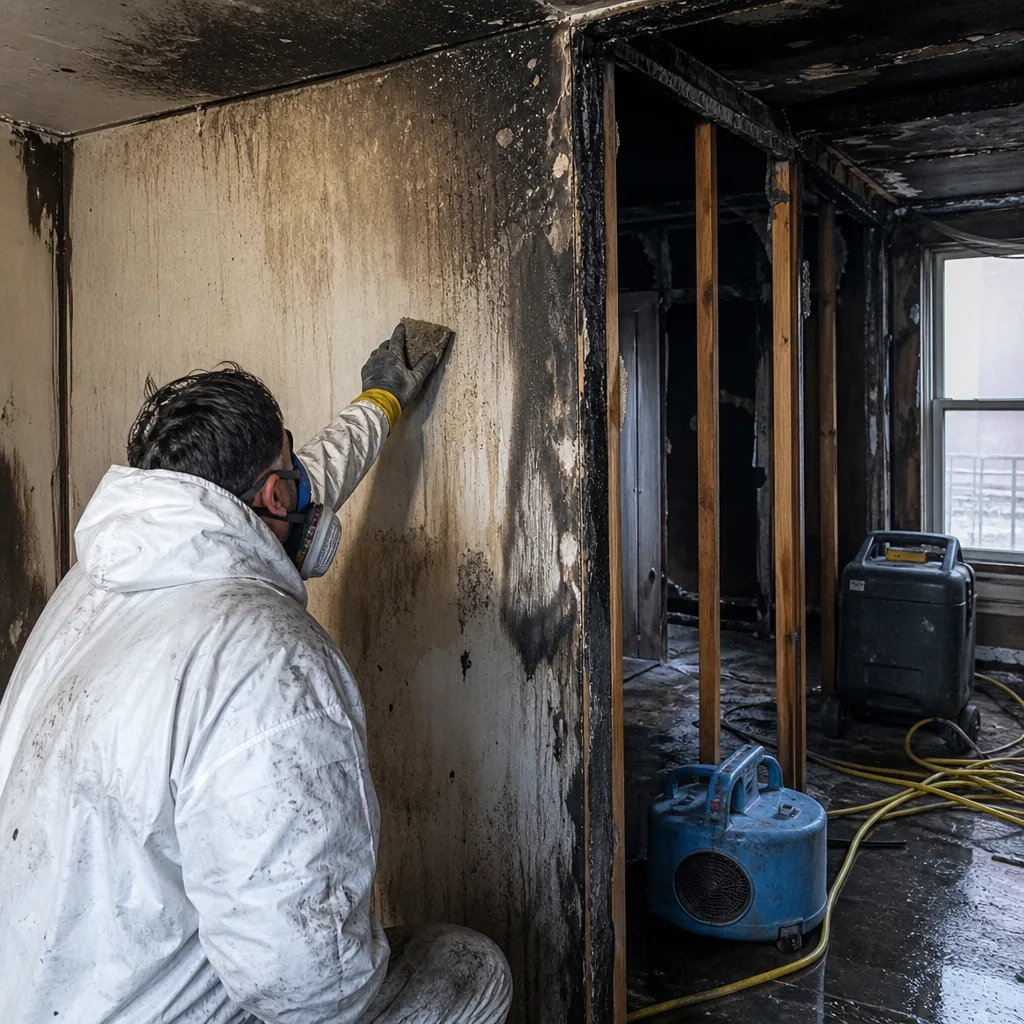
Septic Failure Cleanup
Less common in Midtown Manhattan proper, but some older buildings and adjacent low-rise structures still have private septic systems or holding tanks. A failing tank backing into a building requires full Category 3 protocols, and we handle the extraction, sanitization, and restoration of affected areas.
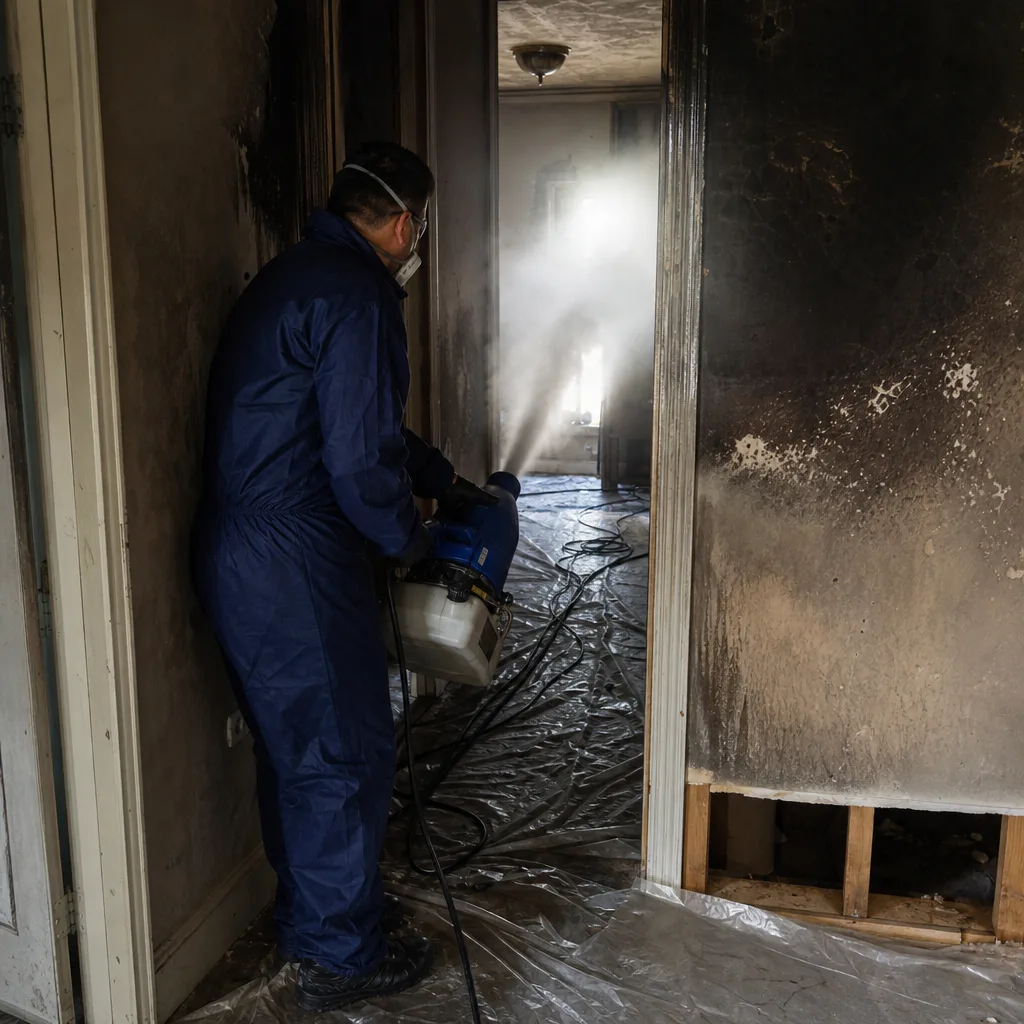
What happens when you call
- 1
A real person answersNo phone trees - you reach a local pro.
- 2
You get an upfront price rangeHonest numbers before anyone is dispatched.
- 3
A background-checked tech heads outLicensed & insured, dispatched right away.
- 4
You approve before work beginsNothing starts until you say go.
Sewage Cleanup Costs in Midtown Manhattan, NY
Sewage cleanup in Midtown Manhattan runs higher than in the outer boroughs, and the reasons are structural. Basic black water extraction and sanitization for a contained toilet overflow in a single Midtown Manhattan unit typically runs $2,500 to $5,500. A sewage backup affecting multiple floors or requiring asbestos abatement before contaminated material can be removed runs $12,000 to $35,000 or more. A Con Edison steam main event that pushes contaminated debris into a building sub-basement is a different animal entirely, often $50,000+ when hazardous material handling and multi-party coordination are included. What moves the price: the number of floors affected, whether asbestos testing triggers abatement, freight elevator scheduling costs, and the extent of plaster and finish work afterward. Most Midtown Manhattan sewage losses are covered by insurance, minus your deductible. We provide a free visual inspection and a written line-item scope before any work begins. No surprises, no phone-quote bait. Call (607) 350-1550 and we’ll walk the loss with you.
We Also Serve Cities Near Midtown Manhattan
Wade’s Restoration handles sewage cleanup across the Manhattan core and nearby. We serve Lower Manhattan, the Financial District, Astoria, and Long Island City with the same 45-minute response commitment and owner-level accountability. If you’re managing a building near Midtown Manhattan, call (607) 350-1550.
Serving Midtown Manhattan, NY - Our Local Coverage Area
We’re based in the Midtown Manhattan area and know this community well. Use the map below to see our service coverage - if you’re nearby, we can almost certainly help.
Midtown Manhattan Sewage Cleanup Questions, Answered
How does sewage cleanup in a Midtown Manhattan high-rise differ from a suburban house when a toilet overflows on the 20th floor?
In a suburban house, a toilet overflow stays on that floor and maybe the ceiling below. In a Midtown Manhattan high-rise, black water from the 20th floor travels down through original plaster ceilings, cast-iron riser chases, and wall cavities, often saturating three to five occupied floors before extraction starts. The cleanup involves vertical containment across multiple apartments, coordination with the building’s managing LLC, and frequently asbestos testing when pre-war chase linings are disturbed. Call (607) 350-1550 for a free inspection.
What happens when a Con Edison steam main failure pushes debris into my Midtown building’s sub-basement?
Steam main failures beneath Midtown Manhattan can force hot, wet, asbestos-contaminated debris into sub-basements through cracks, floor drains, and utility penetrations. This is Category 3 water and hazardous material simultaneously. The cleanup requires sewage protocols plus asbestos containment and abatement coordination, and it’s a damage type that simply doesn’t exist outside Manhattan. Wade’s Restoration has managed these events in Midtown Manhattan buildings and works directly with the building’s insurance carrier and Con Edison’s claims process.
Can your crew extract sewage from a high-rise without using the passenger elevator?
Yes. We never bring sewage-contaminated equipment through a passenger elevator. Midtown Manhattan buildings require contractors to use the freight elevator during designated windows, often 6 to 8 a.m. or after 10 p.m., and we schedule all extraction equipment for those windows. We also secure the Certificate of Insurance naming the building’s managing LLC before the crew arrives, so they aren’t turned away at the freight entrance. That preparation is the difference between starting at 10 p.m. and starting tomorrow.
How quickly can mold start after a sewage backup in a Midtown pre-war apartment with plaster walls?
Mold can start within 24 to 48 hours in a warm, humid Midtown Manhattan apartment, especially in pre-war buildings where plaster and lath hold moisture against wood framing. Sewage adds nutrients that accelerate microbial growth. That’s why we respond within 45 minutes, start extraction immediately, and run Dri-Eaz dehumidifiers and B-Air air movers around the clock while taking daily moisture readings. The faster the building dries, the less mold remediation you’ll need.
Does my Midtown co-op board need to approve your sewage cleanup equipment before you bring it up?
Usually yes. Most Midtown Manhattan co-ops and condos require contractors to submit a Certificate of Insurance naming the building’s managing LLC, and many have written rules about which elevator, which hours, and which equipment access points are allowed. Wade’s team handles this paperwork before the crew arrives. We’ve worked with boards across Midtown Manhattan, and we know how to get equipment up without triggering a board approval bottleneck on the night of the loss.
How fast can someone actually get to my Midtown Manhattan building?
We commit to 45 minutes from your call to having a crew on site. Wade answers his own phone, and his team is based in the New York City area serving Midtown Manhattan locally. If you call (607) 350-1550 at any hour, a real person answers and a crew heads out. For sewage, the fastest possible start is the cheapest possible outcome.
Will my insurance cover sewage cleanup in a Midtown Manhattan building?
Most homeowner and commercial policies cover sewage cleanup when the backup is sudden and accidental, though coverage depends on the source and your specific policy language. In Midtown Manhattan buildings, a loss may involve multiple policies, yours, the building’s master policy, and a neighbor’s. We document everything, bill insurance directly, and coordinate with all adjusters involved. If you want to know where you stand, call for a free inspection and we’ll help you sort the claim.
What should I do in the first 30 minutes after a sewage backup in Midtown Manhattan?
Stop using all water in the affected unit, shut off electrical power to affected areas if it’s safe to do so, and keep people and pets away from the contaminated area. Do not attempt to clean it yourself. Then call (607) 350-1550. We’ll walk you through immediate steps and get a crew moving. Fast action limits how many floors and units the sewage reaches in a Midtown Manhattan high-rise.
Written by Wade Ferris, Owner at Wade’s Restoration, serving Midtown Manhattan and the surrounding NYC area since 2007.