
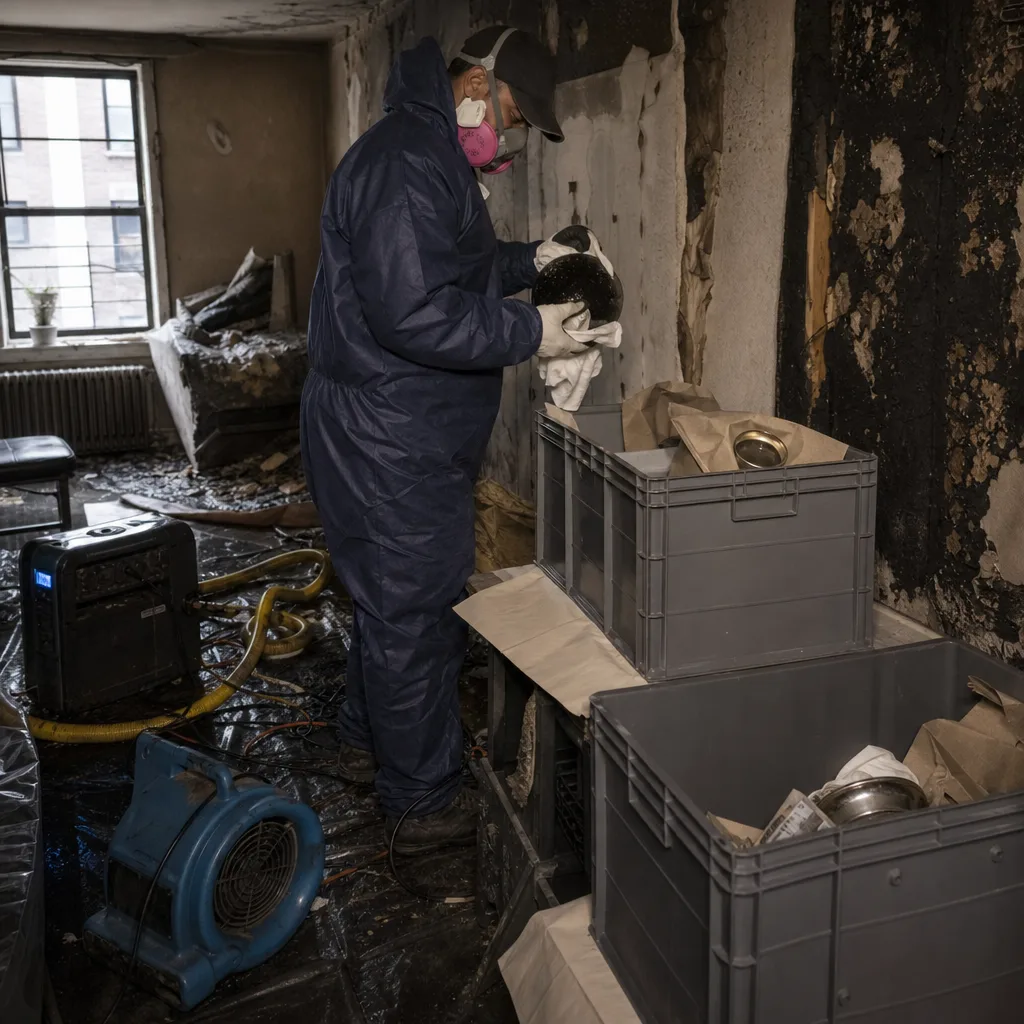
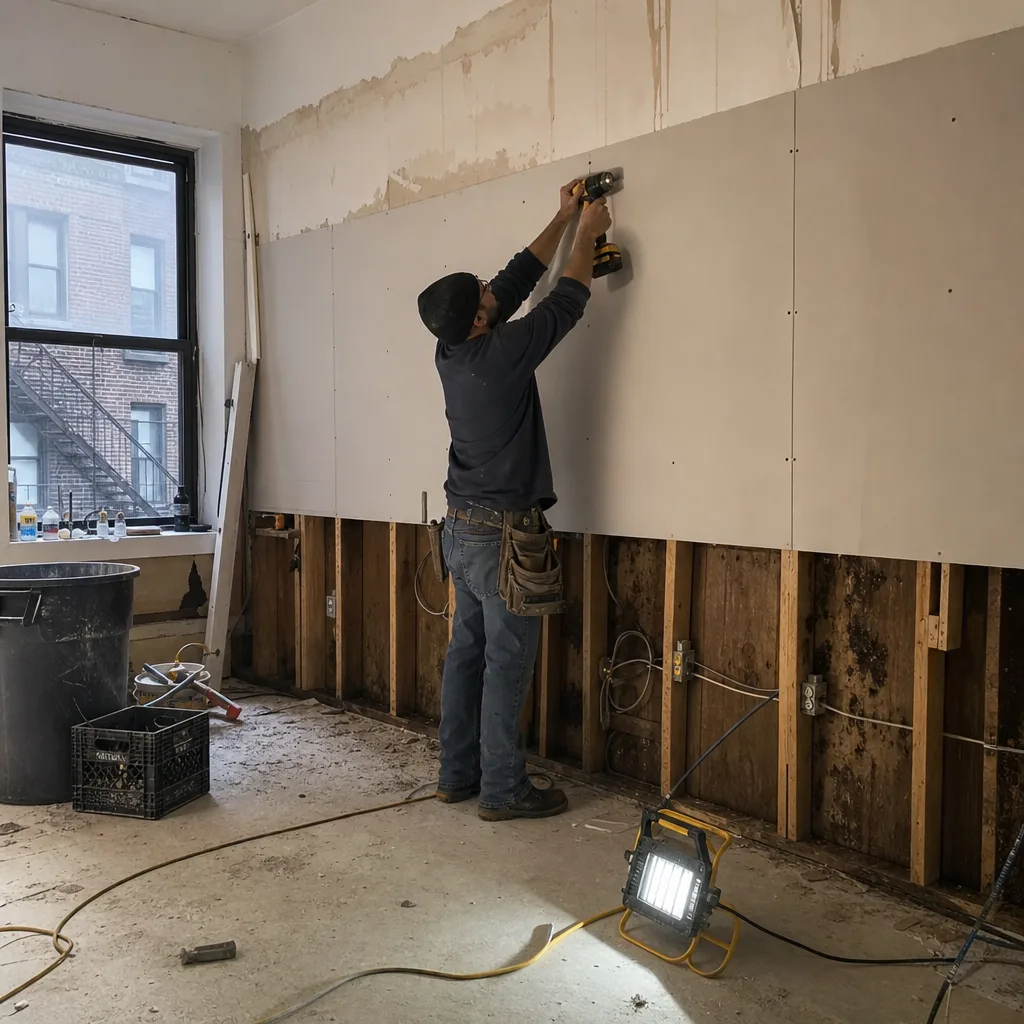
Free visual inspection and a written scope of work before any mitigation begins - photos, moisture readings, and drying logs go in your claim file
The scope we write is the scope we bill. Anything new gets shown to you, in writing, before we touch it.
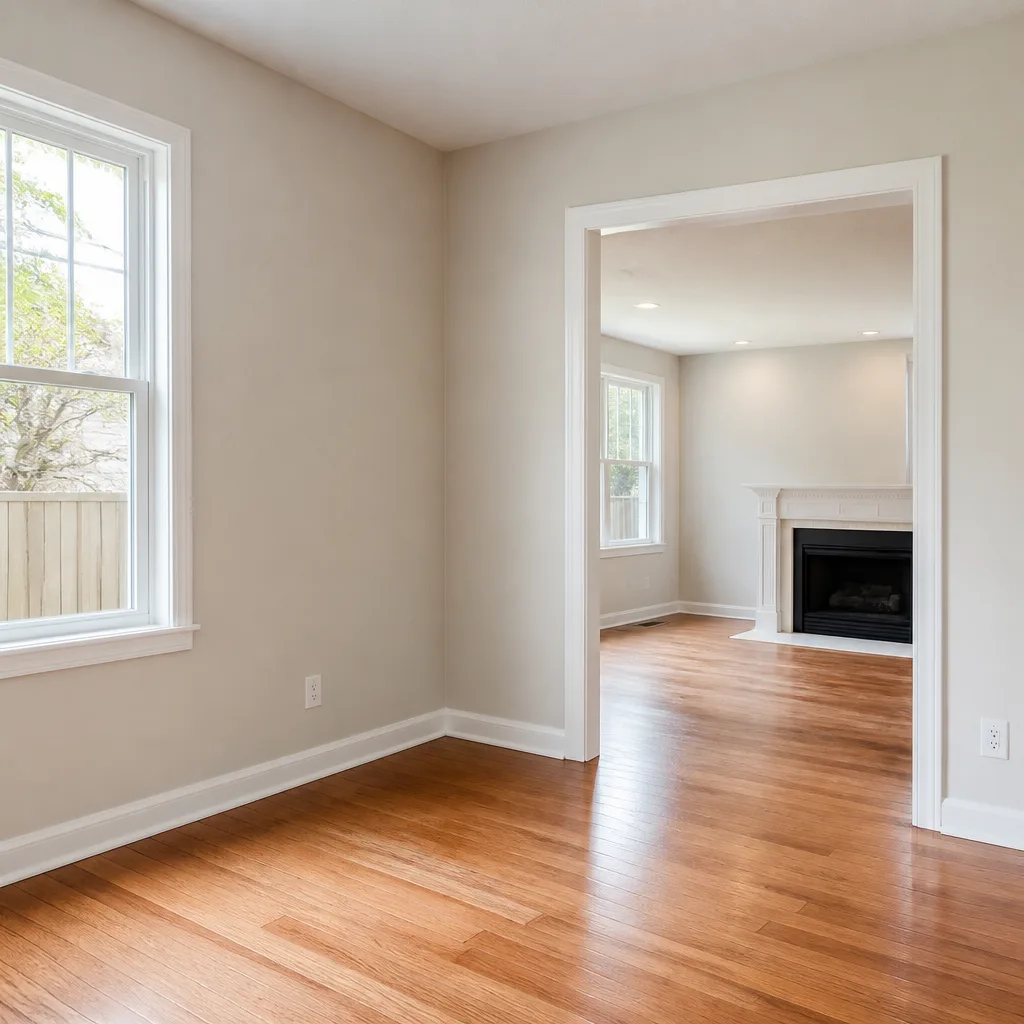
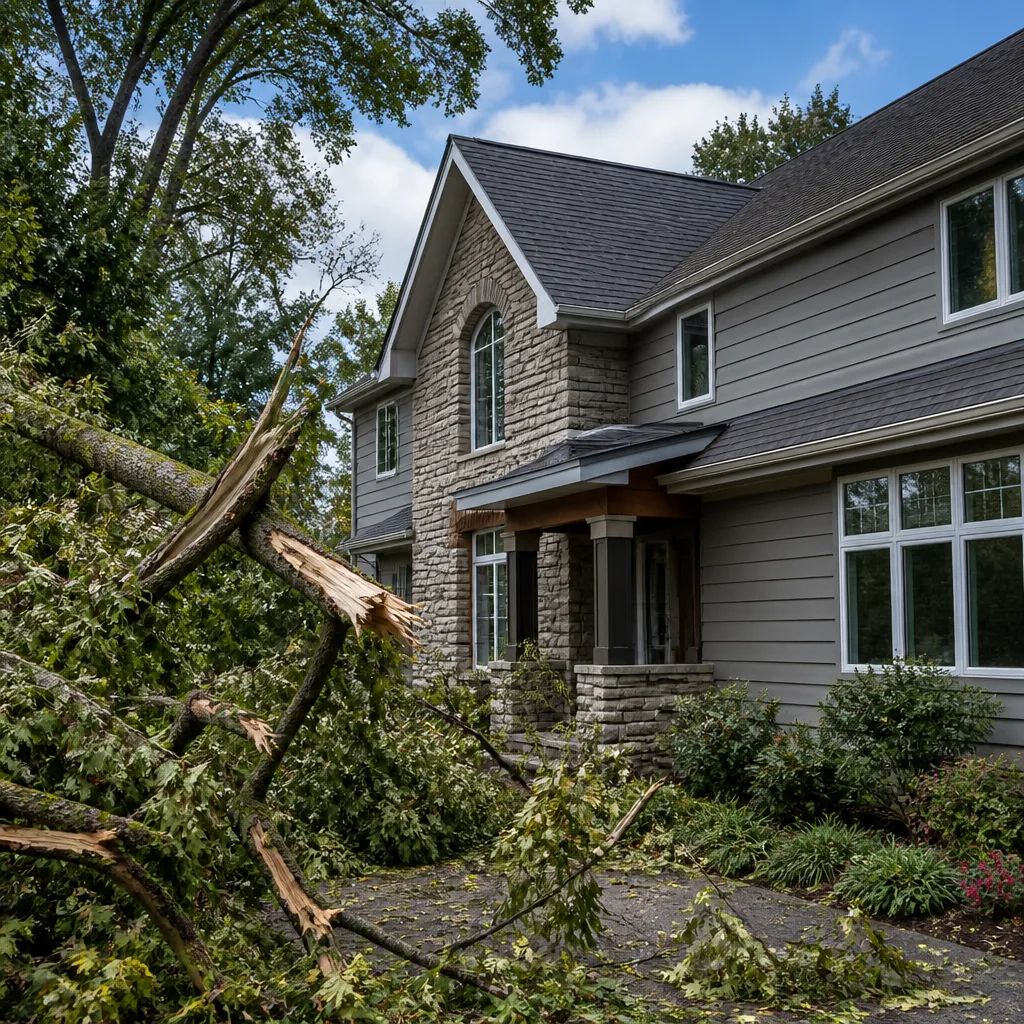
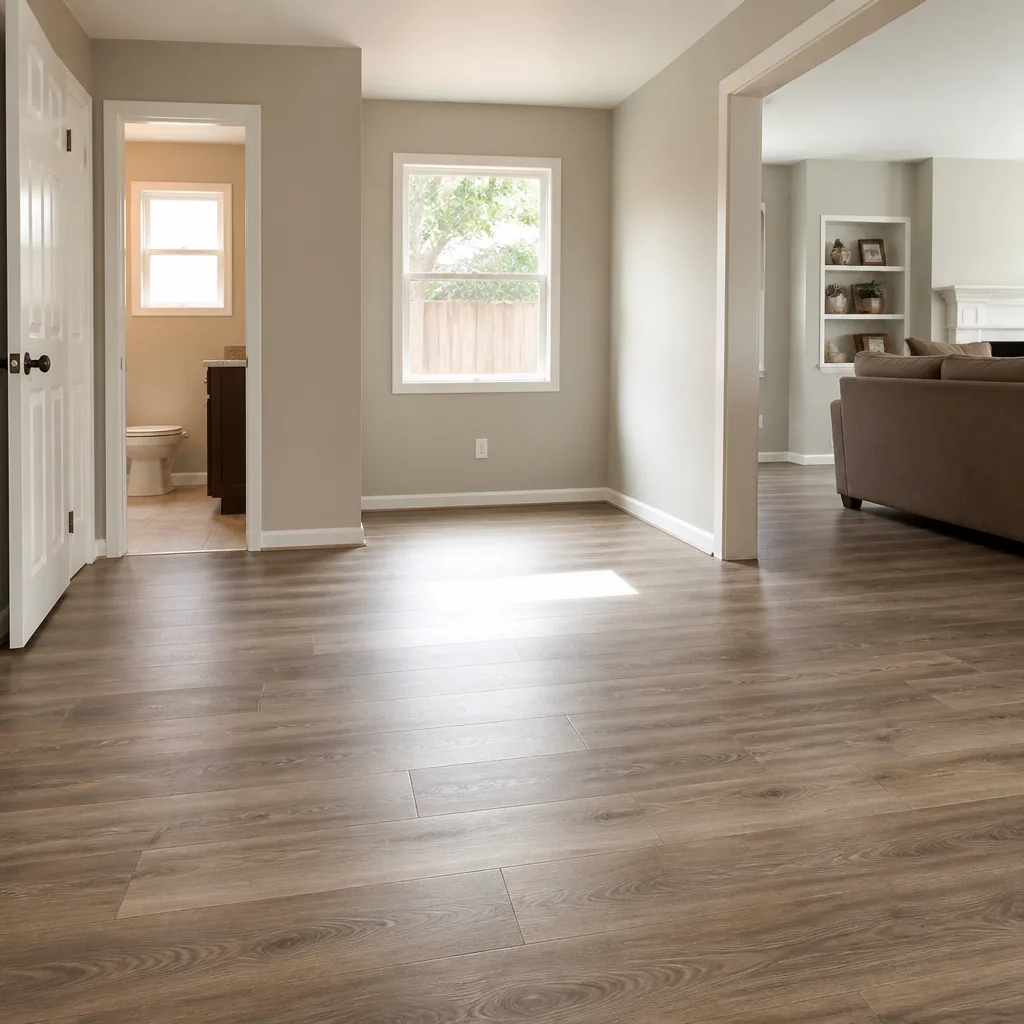

 Before
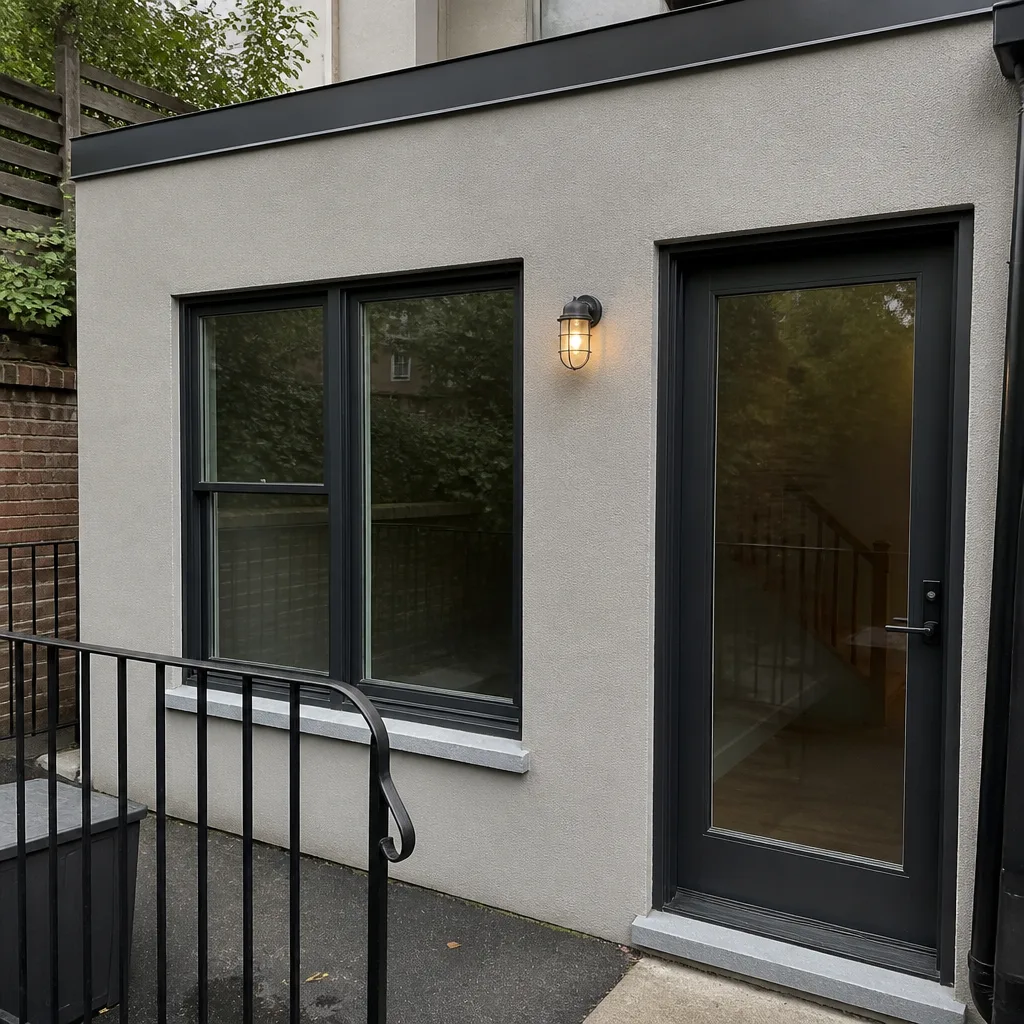 After
After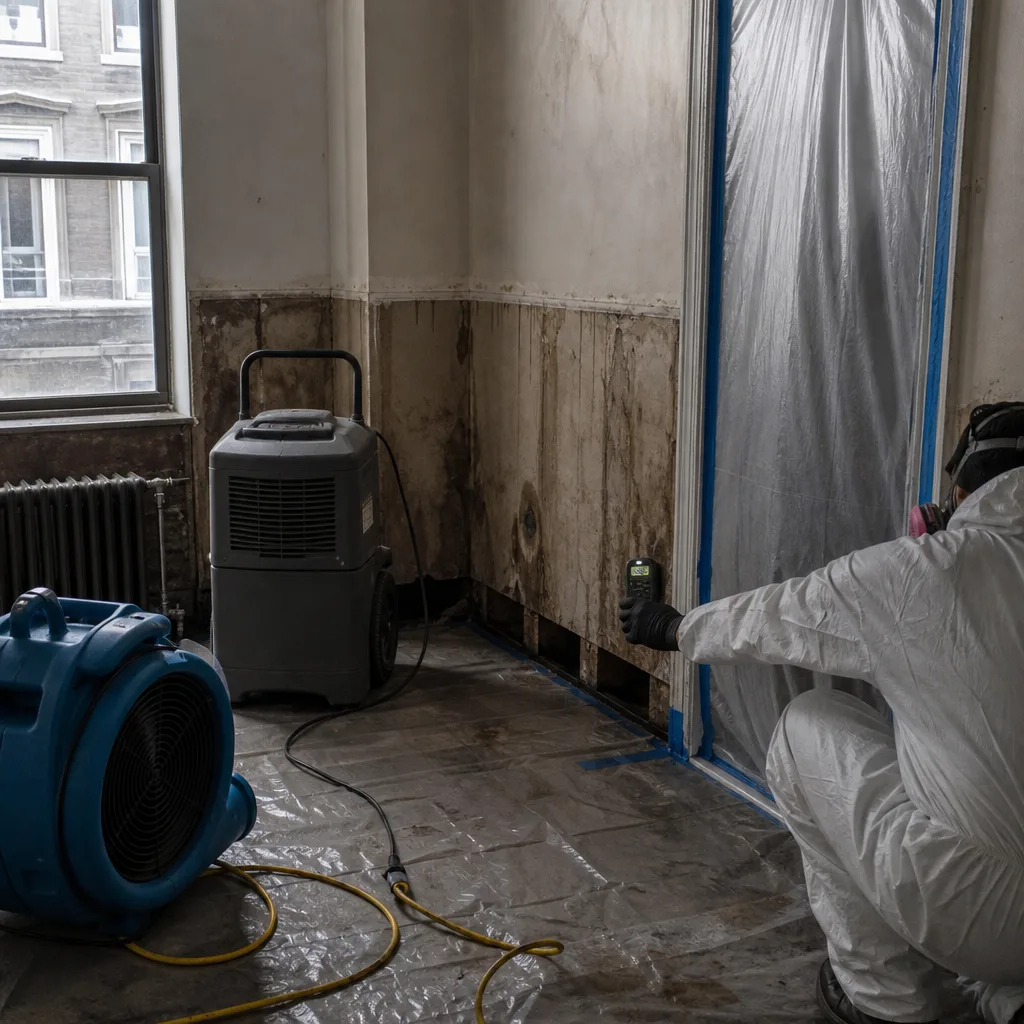 Before
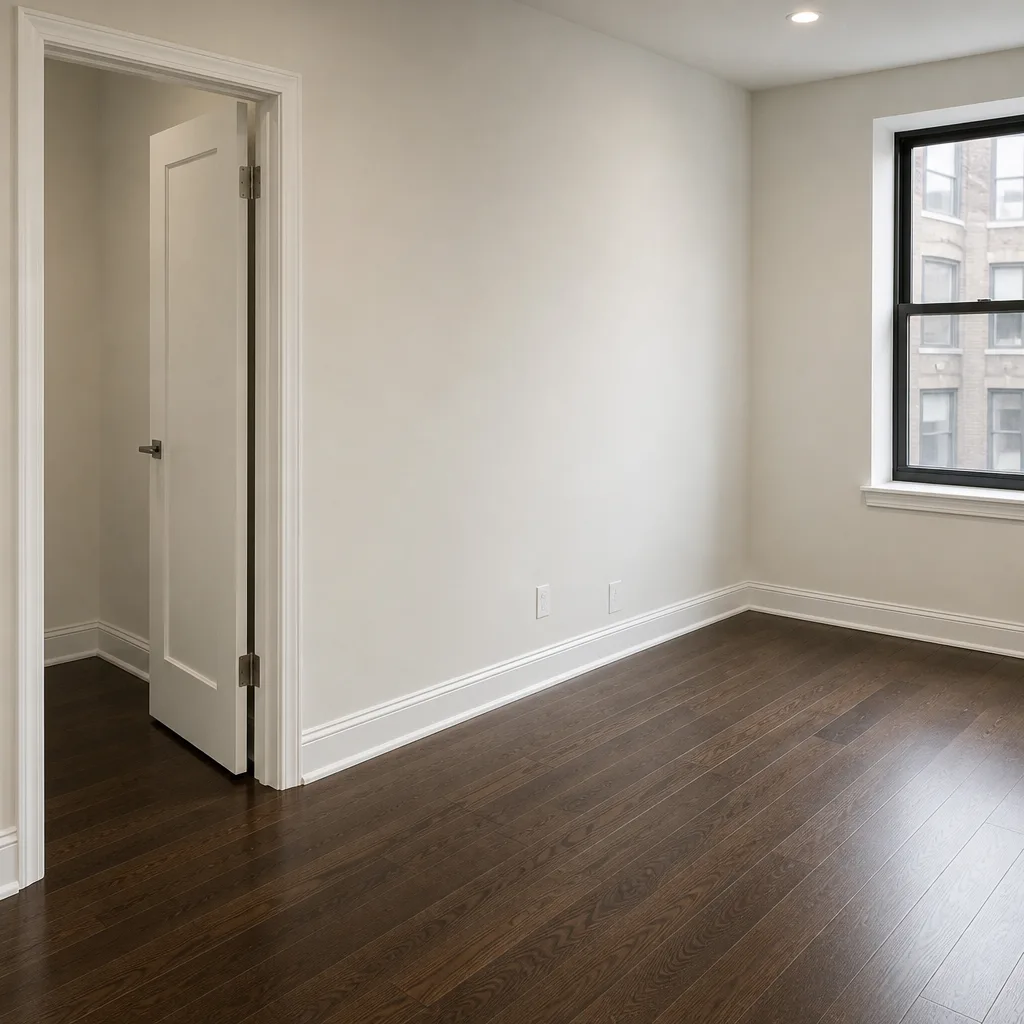 After
After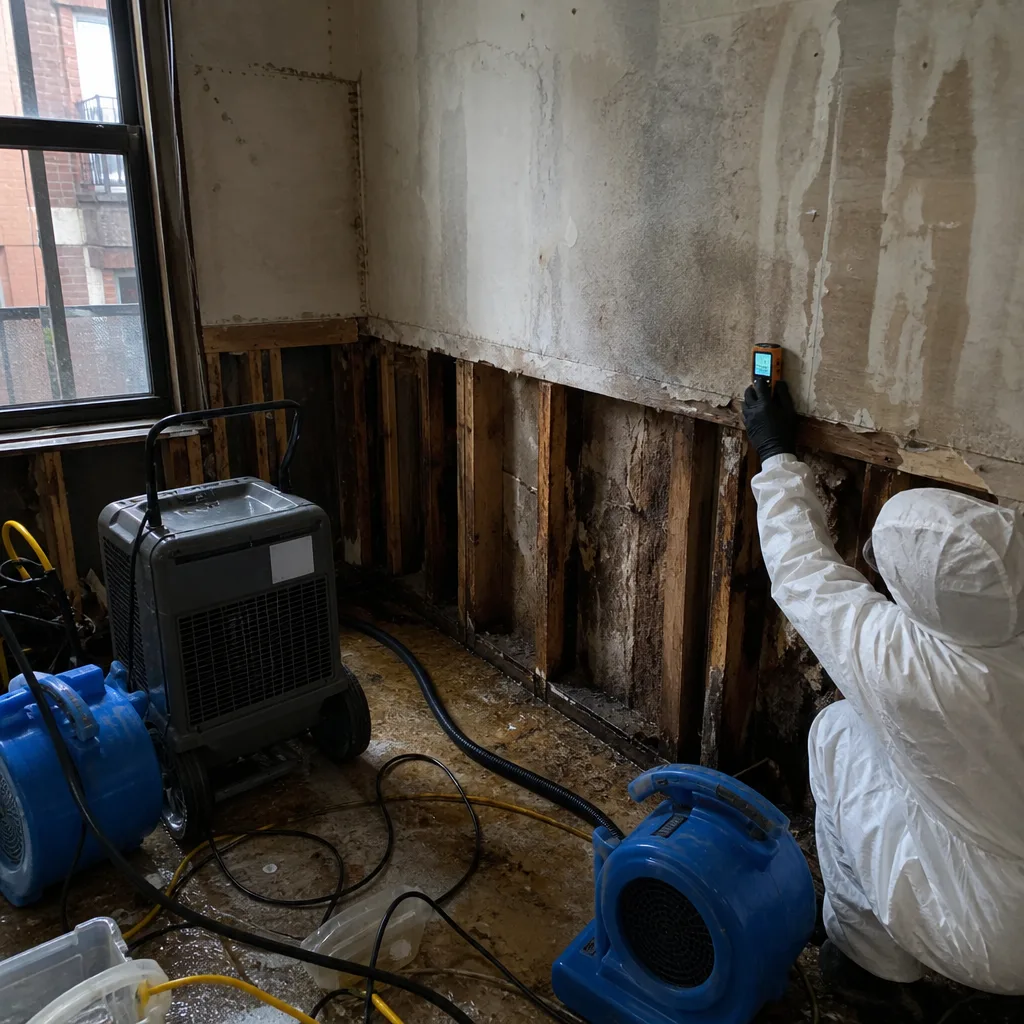 Before
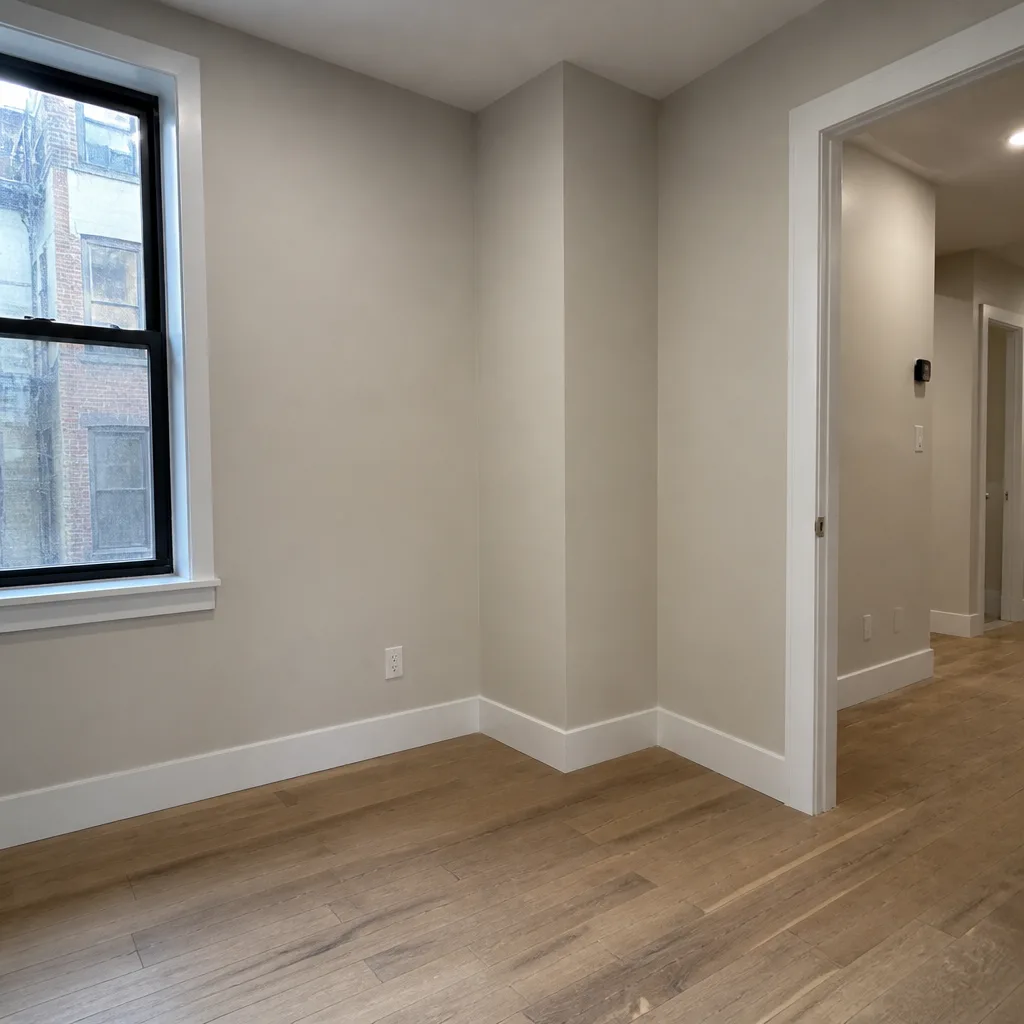 After
After24/7 Emergency Reconstruction & Cleanup in Midtown Manhattan
When a pipe bursts on the 37th floor of a Midtown Manhattan tower, you don’t have hours to wait for a callback. You need a crew that can get through the freight elevator, get past the building manager, and start drying before water reaches the floors below. Wade’s Restoration answers live around the clock and can have a team rolling toward Midtown Manhattan within the hour. Call (607) 350-1550 now, and Wade will walk you through the first thirty minutes himself, even if it’s 2 a.m. The first hour in a vertical building is everything: every minute of delay sends water further down elevator shafts, through chase walls, into occupied apartments and offices that were dry an hour ago. We know Midtown Manhattan’s buildings because we work in them constantly. We know the freight elevator windows, the Certificate of Insurance requirements, the asbestos testing triggers. That local knowledge is the difference between one wet apartment and twelve floors of cascading damage.
Understanding Reconstruction & Cleanup Severity in Midtown Manhattan Properties
Reconstruction and cleanup in Midtown Manhattan splits along two fault lines most people never think about until they’re standing in a wet hallway. First: what type of water are you dealing with? Category 1 is clean water from a supply line. Category 2 is gray water from a failed appliance or a radiator system, the stuff that has run through a pre-war cast-iron riser that hasn’t been fully drained since Eisenhower was president. Category 3 is black water: sewage, storm surge, district steam condensate from Con Edison mains, or anything that has passed through sixty floors of building cavities. Second: how old is the building you’re standing in? If it’s a 1920s Art Deco tower near Grand Central, any cut you make in plaster triggers mandatory testing for asbestos and lead before repairs can proceed. That’s not bureaucracy. That’s Midtown Manhattan reality. We do moisture mapping, structural drying, contaminant containment, and full reconstruction in buildings where the original plaster is ninety years old and the pipe behind it has been leaking behind the wall since before the current tenant signed their lease. You need a crew that knows both the water and the building. That’s us.
Why Midtown Manhattan Property Owners Choose Wade’s Restoration
- 45-minute response commitment in Midtown Manhattan. Wade dispatches from the brand’s New York City office, which means our crews are already in the borough when you call, not driving in from Long Island.
- A real person answers, 24/7. Not a chatbot, not a call center in another state. Wade Ferris answers his own phone. At 3 a.m., you get him, not hold music.
- IICRC-certified crews. Our people carry WRT, FSRT, and AMRT certifications. That means water restoration, fire and smoke restoration, and mold remediation, each handled to the industry’s highest standard.
- Free visual inspection. If you’re not sure how bad it is, we come out at no charge inside our own county, look at it, and tell you straight. No trip charge, no pressure.
- Direct insurance billing. We invoice your carrier directly when possible, and Wade talks to adjusters himself so you never have to play middleman between two sides.
- One team from first response to final paint. We don’t extract and then hand you to a subcontractor. The same crew that dries your walls rebuilds them. That matters when you’re six weeks into a claim and tired of new faces.
Our Reconstruction & Cleanup Process
Inspection & Assessment
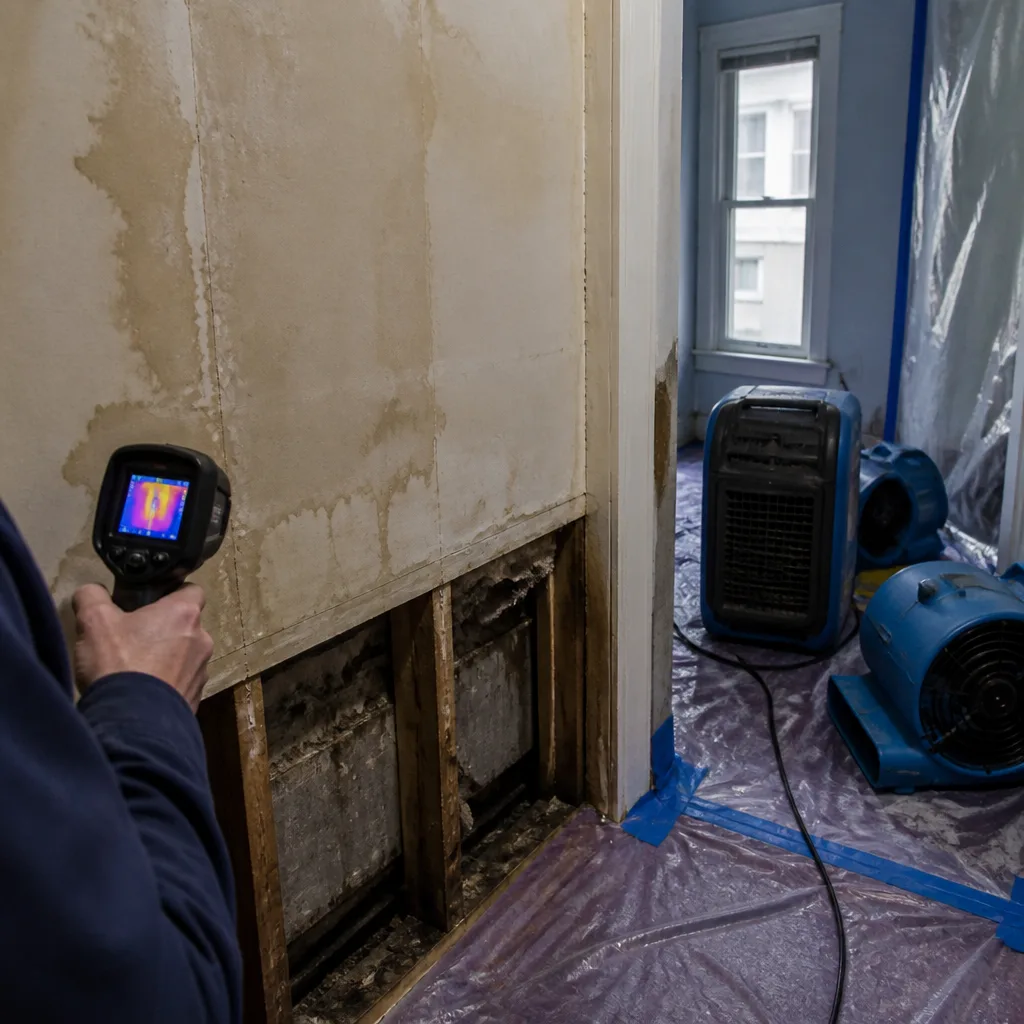
We arrive, we walk every affected space, and we document everything with photos and moisture meters. In a Midtown Manhattan high-rise, that often means walking all floors below the source, not just where you saw water. We map the full extent before anything moves.
Extraction & Stabilization
Standing water comes out first. In a pre-war building with original parquet, that means careful weighted extraction, not just ripping up everything. We stabilize the area to stop active water migration and protect undamaged rooms from secondary spread.
Drying & Dehumidification
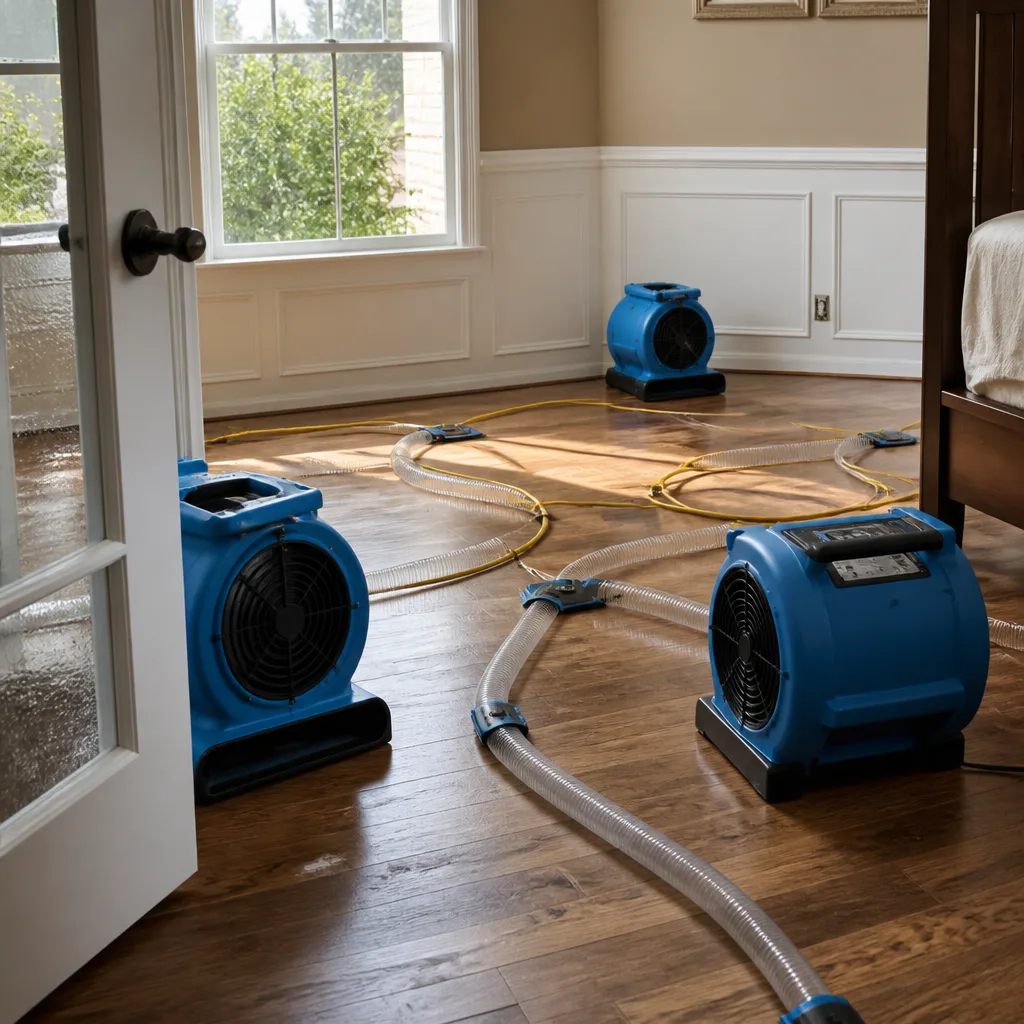
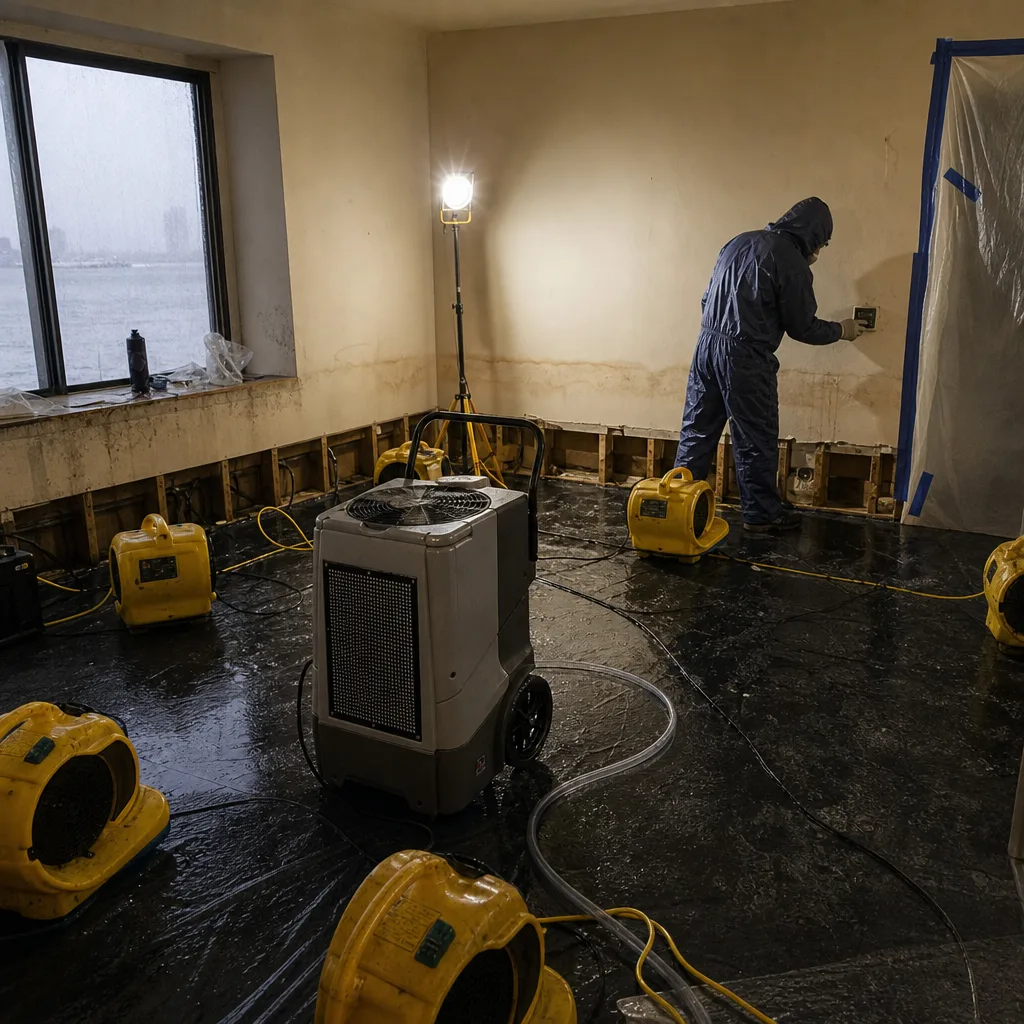
Industrial air movers, desiccant dehumidifiers, and low-grain refrigerant units go in. But in Midtown Manhattan, every piece of equipment has to be scheduled through the freight elevator, often between 6 and 8 a.m. We coordinate that. We also log daily moisture readings until materials hit their dry standard.
Cleaning & Sanitization
If water touched occupied spaces, we clean and apply antimicrobial treatments where appropriate. For Category 3 water, that means containment, HEPA air scrubbing, and careful disposal. We treat a Midtown co-op hallway like a hospital corridor, because your neighbors are walking through it.
Asbestos & Lead Clearance
Before any demolition in a pre-war Midtown Manhattan building, we coordinate the required testing. If abatement is needed, we sequence it so the project doesn’t stall for a month. This is the step most restoration outfits don’t even mention until it’s already delaying your move-in date.
Repairs & Reconstruction
We rebuild to match the building. That means original plaster profiles, pre-war baseboards, custom-matched millwork where possible. We don’t slap in Home Depot stock and call it done. In a 1929 co-op, the repair has to look like it was always there.
Need Emergency Reconstruction & Cleanup in Midtown Manhattan Now?
Crews minutes away, answering live 24 hours a day. The sooner we start, the less it costs.
Working With Your Insurance Company
Wade has been doing this since 2007, and he’s learned one thing the hard way: claims die in the dark. The ones that fail are the ones where nobody wrote down what happened, nobody photographed the wet plaster before it was torn out, and nobody gave the adjuster a reason to approve the full scope. So we document from the first hour. We photograph every affected room before we move a single piece of equipment. We hand your adjuster a line-item scope that matches what they actually see, not what they’re hoping to see. Wade talks to adjusters directly. He’s IICRC-certified and RIA-affiliated, and he knows how restoration scopes read to the people who approve them. When the building’s managing LLC and the co-op board and your unit’s carrier all have different questions, Wade is the one on the phone sorting it out. You’re not the relay.
What We Provide Your Insurer
- Thorough documentation of the loss
- Photos of all damage, room by room
- Moisture readings and drying logs
- A detailed, line-item scope of work
- Direct coordination with your carrier
Built for Midtown Manhattan’s Loss Calendar
Midtown Manhattan has a loss calendar unlike any other zip code in the country. January and February send deep freezes into rooftop mechanical rooms perched forty and fifty stories up. Those rooms hold water lines and radiators that serve entire towers, and when one lets go during a freeze-thaw cycle, the water doesn’t just leak down one wall. It follows elevator shafts and chase walls for hours before anyone on an occupied floor sees a wet ceiling. Spring brings the nor’easters that drive horizontal rain against the glass curtain walls of the west 40s and 50s, and that water finds its way into spandrel panels and window gaskets. Summer means thunderstorm flash flooding that overwhelms rooftop drains and sends water pouring down interior stairwells. Fall is maintenance season, when co-op boards discover what went wrong all year. Every season produces a different version of the same urgent call. We’re staffed and stocked for all of them, and our New York City office means we’re not commuting from another county when your ceiling gives way.
Reconstruction & Cleanup Across Midtown Manhattan’s Neighborhoods
Midtown Manhattan isn’t one neighborhood. It’s a string of them, each with its own building stock and its own failure patterns. Around Rockefeller Center and the east 50s, you’re looking at 1930s Art Deco towers with limestone facades, cast-iron risers, and plaster ceilings that predate World War II. Any water event in those buildings means asbestos testing before we cut a single wall. The Garment District west of Seventh Avenue has loft buildings converted to residential use, where original timber floors meet modern plumbing retrofits that don’t always sit tight. Murray Hill runs heavy on 1940s and 1950s high-rises, solid construction but aging riser systems that fail during polar-vortex winters. Over near Times Square and the theater district, you have hotels and office towers where a single plumbing event can hit occupied guest rooms directly below active commercial space. And in Turtle Bay and the east 40s, the Con Edison district steam network runs under the streets, and steam-main failures have blown manhole covers and driven hot condensate into building sub-basements. We know these buildings. We know the freight elevator rules at each one. And we know which streets have the narrowest rigging access, because we’ve worked them all.
Specialized Reconstruction & Cleanup Services We Offer in Midtown Manhattan
Full-Service Reconstruction
When the water is out and the walls are dry, the real work often begins. We rebuild Midtown Manhattan apartments and offices from studs to finish, matching original plaster profiles, millwork, and flooring where the building’s character demands it. In a pre-war co-op, that’s not a remodel. That’s restoration. We work with your building’s architect and the co-op board’s requirements from day one.
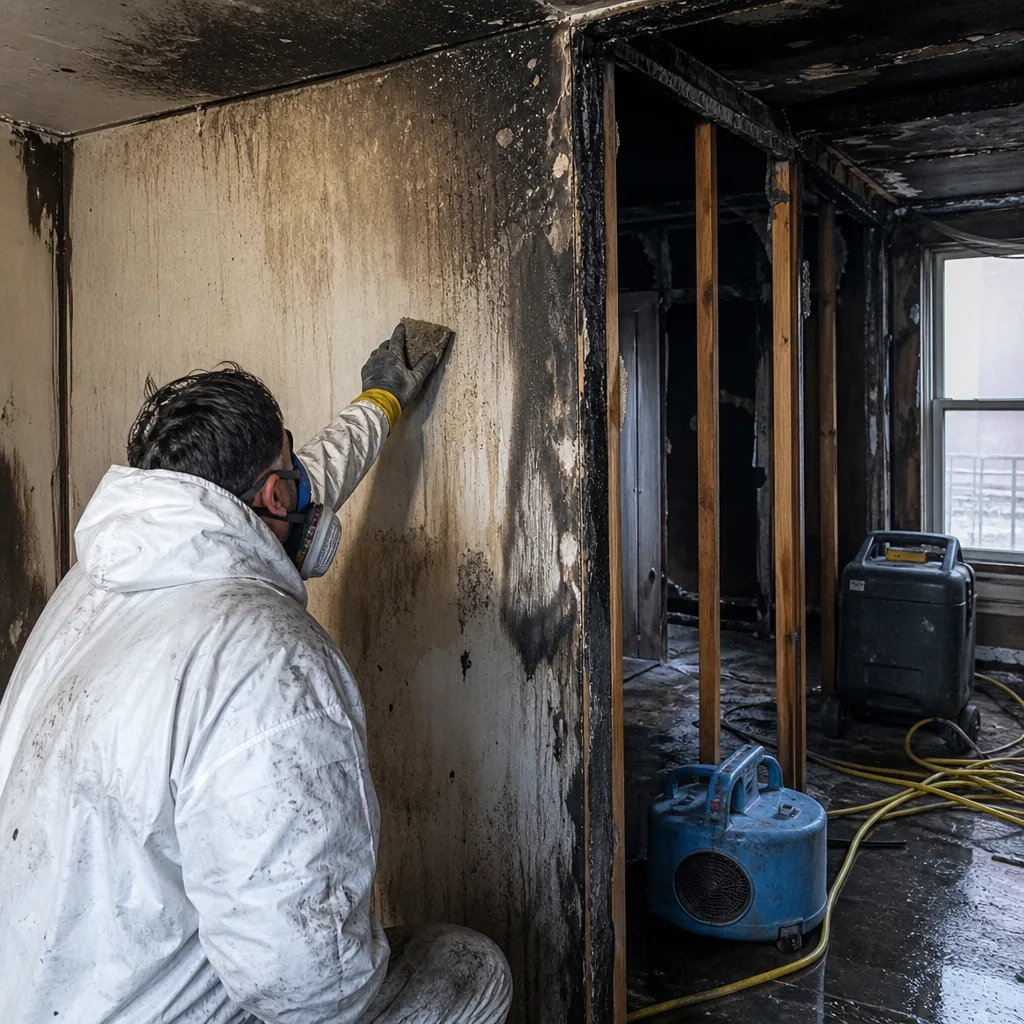
Drywall & Flooring Repair
Midtown Manhattan buildings hold every flooring type ever installed: original herringbone parquet, mid-century terrazzo, wall-to-wall carpet over concrete, engineered wood over plywood subfloor. We match what’s there, not what’s cheapest. Drywall in pre-war towers often sits over plaster and lath, which means patching has to be done right or the seam telegraphes through the paint in six months.
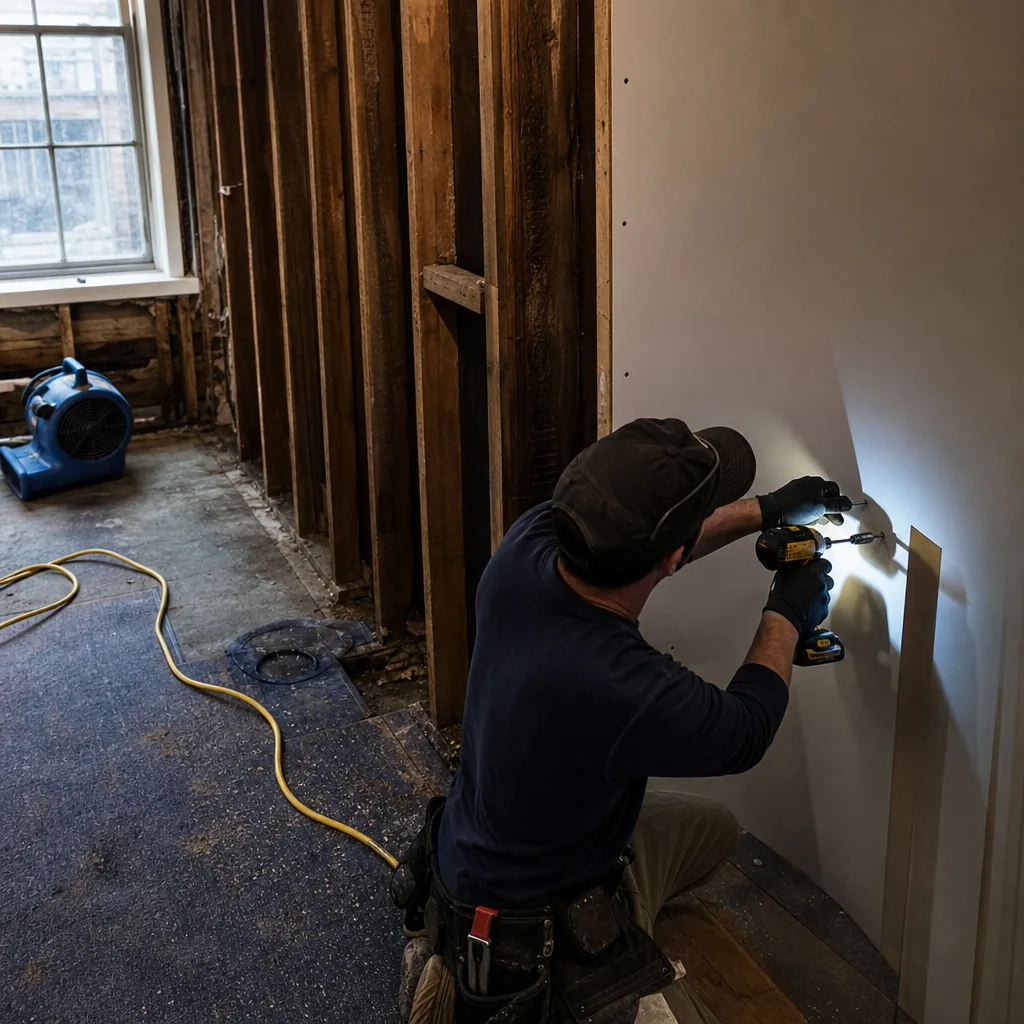
Contents Restoration & Pack-Out
When a burst pipe floods a 40th-floor apartment, the contents don’t wait around. We do pack-outs to secure your furniture, clothing, artwork, and documents. We inventory everything, photo-document it, pack it, and store it if needed. Then we clean and restore what can be saved, from upholstery to rugs. We also handle the claim documentation on every item, which is exactly what a Midtown co-op owner needs when their contents coverage comes into play.
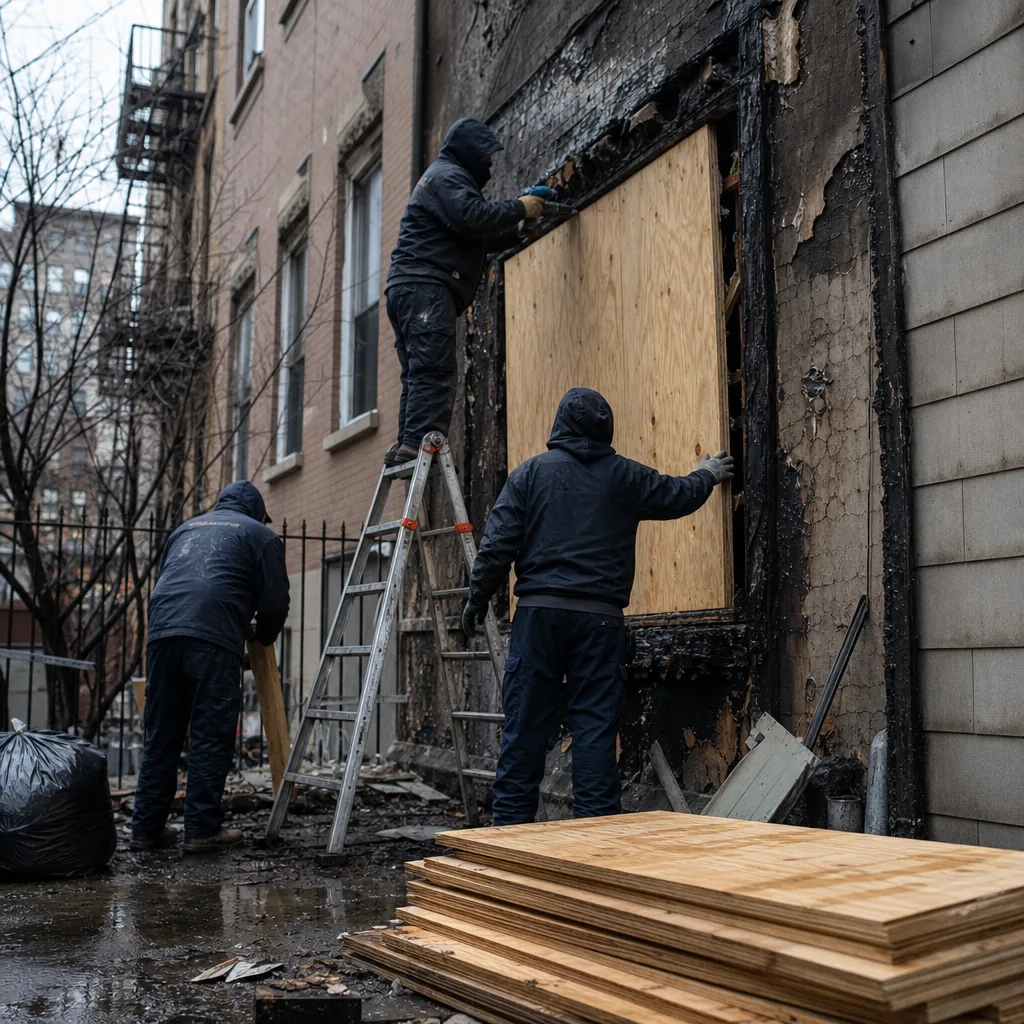
Carpet & Upholstery Cleaning
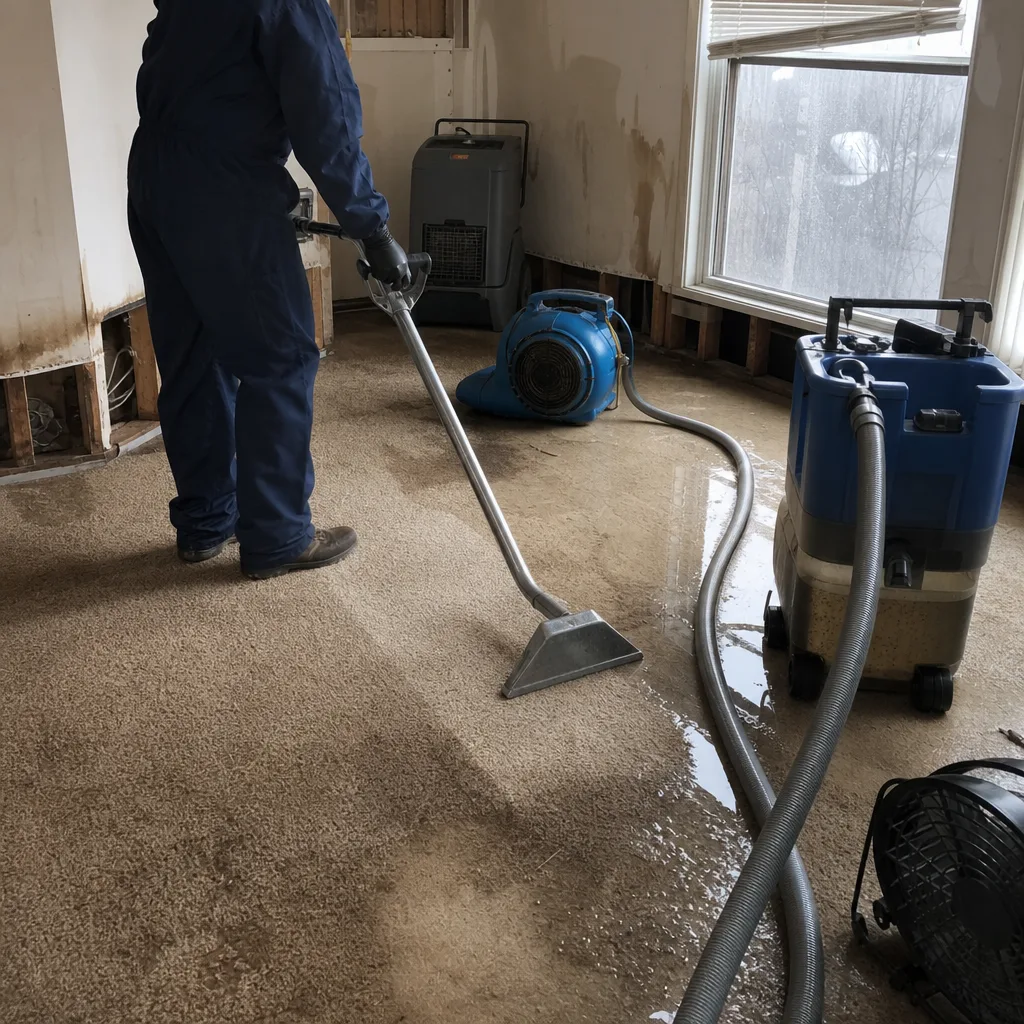
Post-water carpet and upholstery in Midtown Manhattan has a specific challenge: soot from street-level turbine exhaust, indoor air pollution from older steam systems, and decades of embedded dust in pre-war air shafts. We run professional-grade extraction and low-moisture cleaning with Dri-Eaz and XPOWER equipment, and we’re honest about when a carpet is past saving. Sometimes the right call is replacement, not cleaning.
Post-Construction Cleanup
If you’ve just finished a renovation in a Midtown Manhattan tower, the dust isn’t cosmetic. It’s fine construction debris that gets into your HVAC returns and circulates for weeks. We do HEPA-filtered post-construction cleanup that removes drywall dust, sawdust, and adhesive residue from every surface, including inside duct runs where most crews never look.
What happens when you call
- 1
A real person answersNo phone trees - you reach a local pro.
- 2
You get an upfront price rangeHonest numbers before anyone is dispatched.
- 3
A background-checked tech heads outLicensed & insured, dispatched right away.
- 4
You approve before work beginsNothing starts until you say go.
Reconstruction & Cleanup Costs in Midtown Manhattan, NY
Reconstruction and cleanup in Midtown Manhattan runs on a different price curve than any surrounding borough. A straight water extraction and dry-out of a single apartment in a mid-century tower typically runs $2,500 to $5,500. A full apartment reconstruction after a Category 2 loss, including asbestos testing, plaster repair, paint, and flooring, commonly lands between $18,000 and $55,000 depending on square footage and finish grade. Contents pack-out and restoration typically runs $3,000 to $15,000 depending on volume. Post-construction cleanup of a two-bedroom unit runs $900 to $2,200. What moves the price most in Midtown Manhattan is not the drying. It’s the building. Freight elevator windows, Certificate of Insurance requirements, asbestos and lead clearance, co-op board approvals, and custom millwork matching all add time and cost that a suburban job never carries. The way to a firm number is a free visual inspection, which we’ll schedule inside our own county at no trip charge. Call (607) 350-1550 and we’ll give you a written scope before any work begins.
We Also Serve Cities Near Midtown Manhattan
We work throughout Midtown Manhattan and the surrounding areas, including Lower Manhattan, the Financial District, Astoria, and Long Island City. If you’re in a high-rise or a converted industrial building in any of these neighborhoods, the same crew and the same local knowledge apply. We answer live, and we show up.
Midtown Manhattan Reconstruction & Cleanup Questions, Answered
Do I need asbestos testing before demolition in a Midtown Manhattan co-op built in 1929?
Yes, almost certainly. In any pre-war Midtown Manhattan building constructed before the early 1980s, the original plaster, pipe insulation, and floor adhesives can contain asbestos, and the building’s managing agent will require testing before any demolition or drying work disturbs those materials. We coordinate that testing as part of our scope so it doesn’t stall your project. Call (607) 350-1550 and we’ll tell you what your specific building will require.
Can your crew use the passenger elevators to bring drying equipment to a 40th-floor apartment?
No. Passenger elevators are for people. Midtown Manhattan buildings require all equipment, including air movers, dehumidifiers, and HEPA scrubbers, to travel on the freight elevator during dedicated windows, typically 6 to 8 a.m. or after 10 p.m. We schedule all equipment movement through those windows and coordinate with the building’s staff so you’re not standing in a lobby at midnight arguing with a freight operator.
How does a burst sprinkler on the 30th floor of a Midtown office tower affect tenants below?
Water from an activated sprinkler follows the path of least resistance: elevator shafts, plumbing chases, electrical conduits, and interior wall cavities. It can travel 10 to 30 floors down before it expresses as a wet ceiling or a stained wall. By the time you see it, the water has already passed through dozens of unoccupied cavities. That’s why we moisture-map every floor below the source, not just the floor where the sprinkler went off. The full extent is rarely visible from the surface.
What is the difference between Category 2 and Category 3 water in a Midtown high-rise?
Category 2 is gray water: contaminated but not sewage. Think failed appliances, radiator blowdown, or water that has sat for hours in a high-rise drainage system. Category 3 is black water: sewage, district steam condensate, or anything that has touched human waste or exterior floodwater. The difference determines containment, disposal, and which materials can be saved. Category 3 requires full containment and more aggressive tear-out. Category 2 can often be dried and cleaned. We test and classify on site.
Can you document my Midtown co-op water loss for a claim against the building’s insurance?
Yes, and you want us to. In a co-op or condo, your unit’s damage may be covered by the building’s master policy, not just your own walls-in policy, and proving that requires documentation of the source, the path, and the extent. We photograph everything, log daily moisture readings, and work directly with both the building’s adjuster and your carrier. If the damage originated in a common riser or a rooftop mechanical room, we build the paper trail that assigns responsibility where it belongs. Call (607) 350-1550 and we’ll start documenting from the first hour.
How fast can you actually get to a Midtown Manhattan apartment when a pipe bursts?
Our crews are dispatched from the brand’s New York City office, so we’re not commuting from New Jersey or Long Island. In most Midtown Manhattan locations, we can have a team on site within 45 minutes of your call. Freight elevator access still applies, but Wade can assess the situation, stop the active water source if possible, and start documentation before equipment even gets upstairs. Call (607) 350-1550 immediately, and the clock starts.
Can I stay in my Midtown apartment while reconstruction is happening?
It depends on the category of water, the extent of the tear-out, and whether your building has working negative-air containment. For small Category 1 drying jobs, many people stay. For Category 3 events or large-scale reconstruction, we recommend temporary relocation, and we’ll document that recommendation for your insurer. Your safety and air quality come first, and we’ll tell you straight what’s livable and what’s not.
What should I do in the first 30 minutes after a water loss in Midtown Manhattan?
Call (607) 350-1550 first. Then shut off the water source if you know where the shutoff is and can reach it safely. Don’t enter any flooded area if electrical panels, outlets, or wiring may be under water. Move small personal items away from the wet zone if you can do so without risk. And don’t start ripping out wet drywall yourself. In a pre-war building, that material may need asbestos testing before it’s disturbed. Wade will walk you through it on the phone while the crew is already on the way.
Serving Midtown Manhattan, NY - Our Local Coverage Area
We’re based in the Midtown Manhattan area and know this community well. Use the map below to see our service coverage - if you’re nearby, we can almost certainly help.
Contact Wade’s Restoration
If you’re standing in a wet apartment, a smoke-damaged office, or a building that just failed an inspection, call Wade Ferris. He answers his own phone. He’ll tell you straight what you’re dealing with and what it will take to fix it. We’re insured and bonded, IICRC-certified, and we’ve been making damaged buildings whole again since 2007. Our Reconstruction & Cleanup team handles everything from first extraction to final coat of paint. Call (607) 350-1550 for a free estimate, a free second opinion on any written estimate, or just to ask a question. No pressure, no games. In Midtown Manhattan, when something goes wrong, you want a neighbor on the other end of the line. Wade is that neighbor.
Written by Wade Ferris, Owner at Wade’s Restoration, serving Midtown Manhattan since our founding in 2007.