
Free visual inspection and a written scope of work before any mitigation begins - photos, moisture readings, and drying logs go in your claim file
The scope we write is the scope we bill. Anything new gets shown to you, in writing, before we touch it.
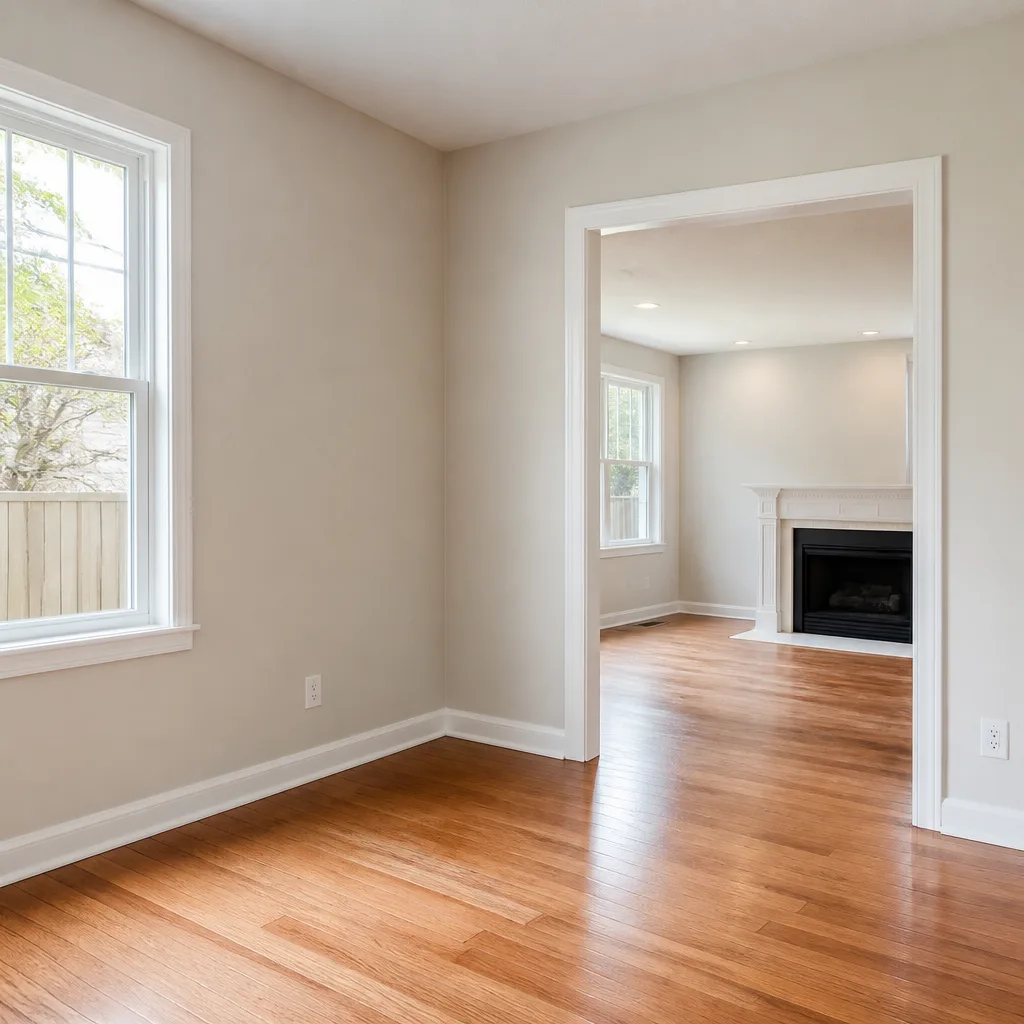
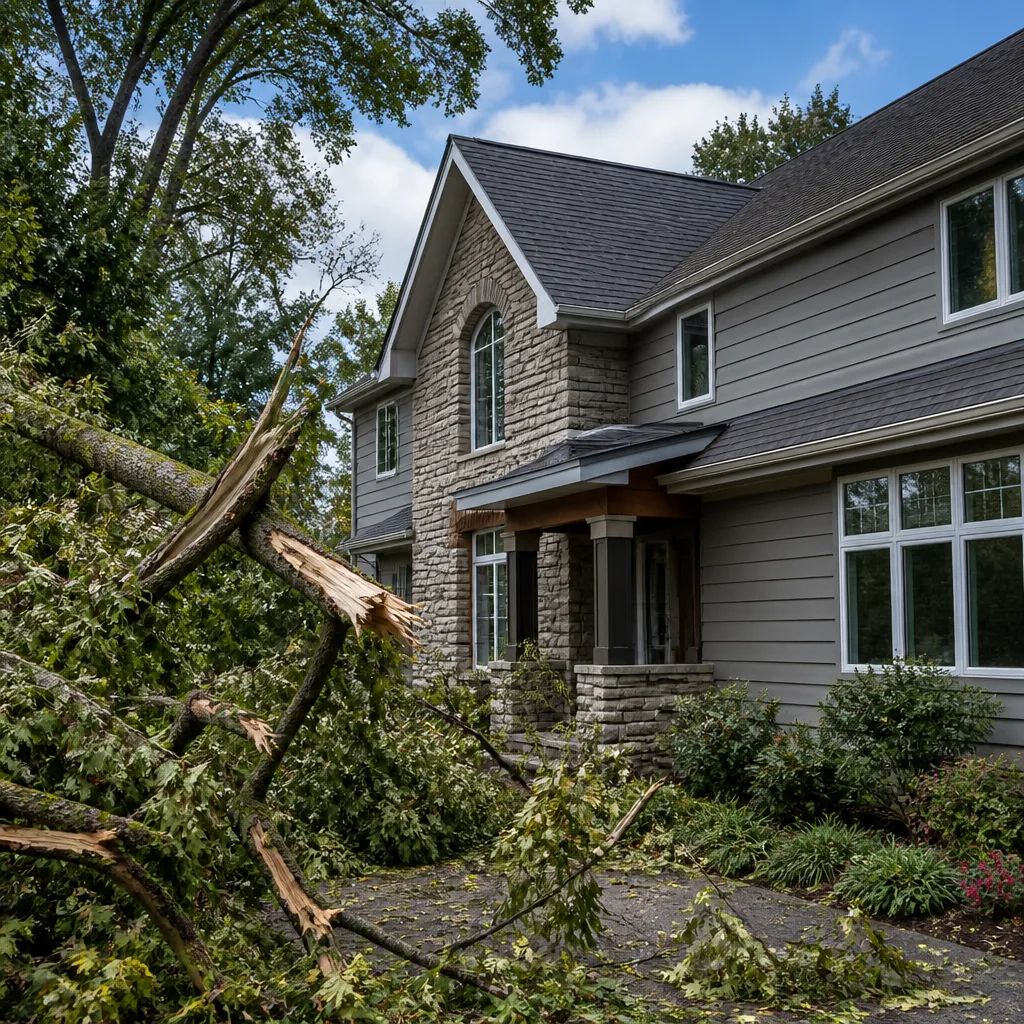
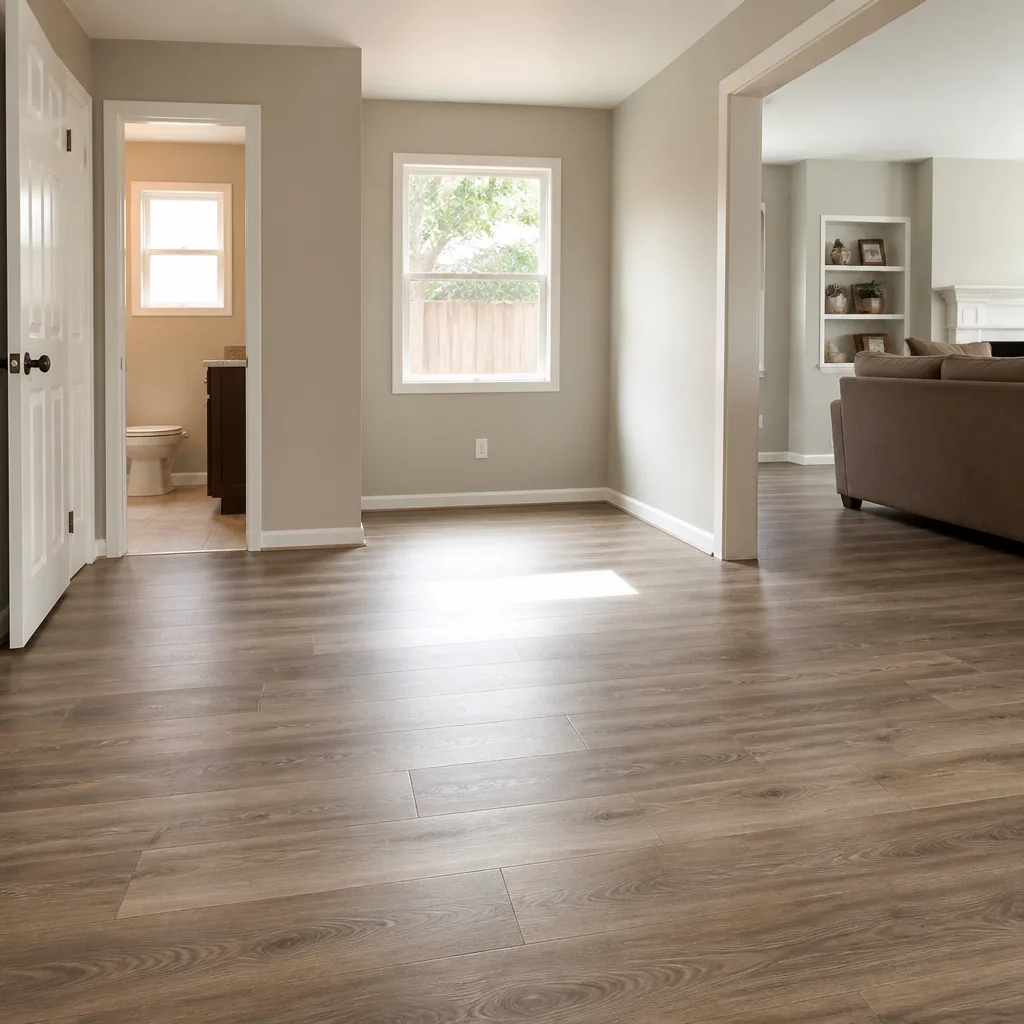

 Before
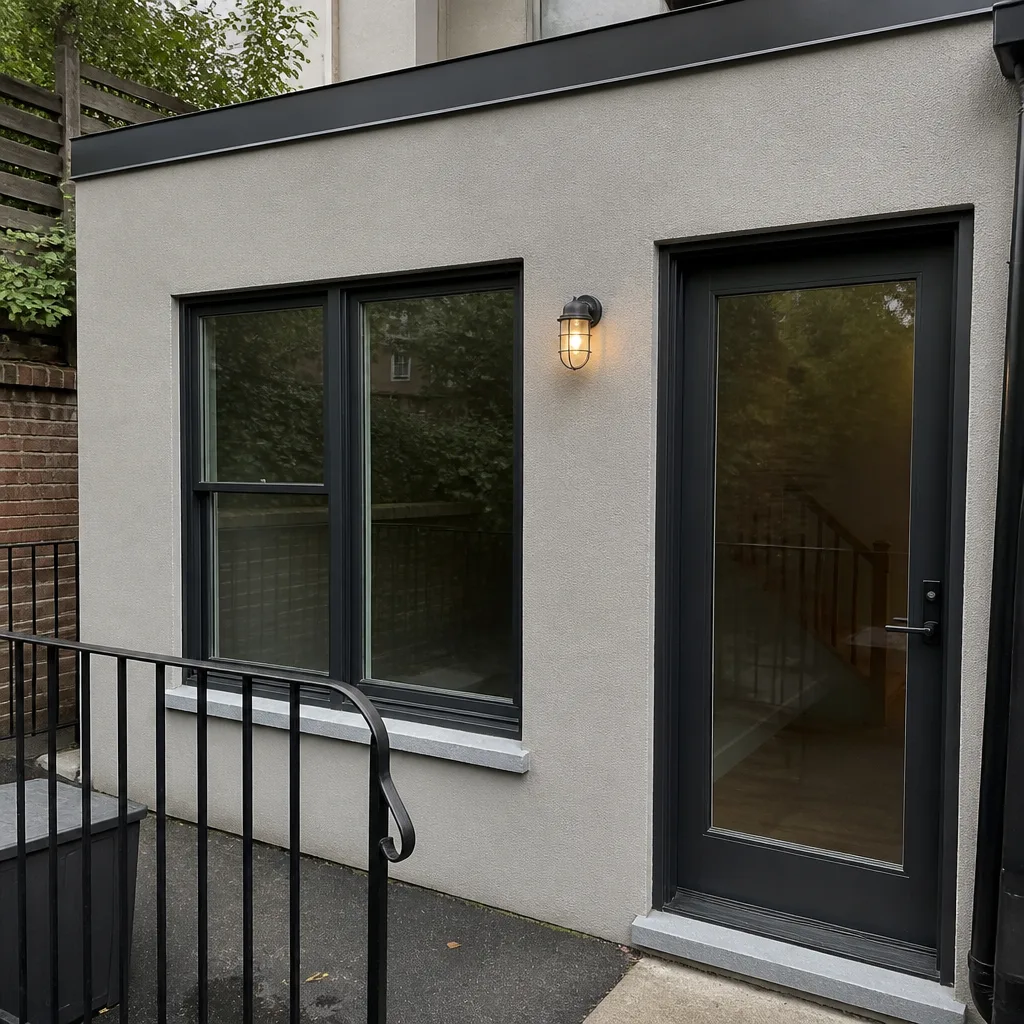 After
After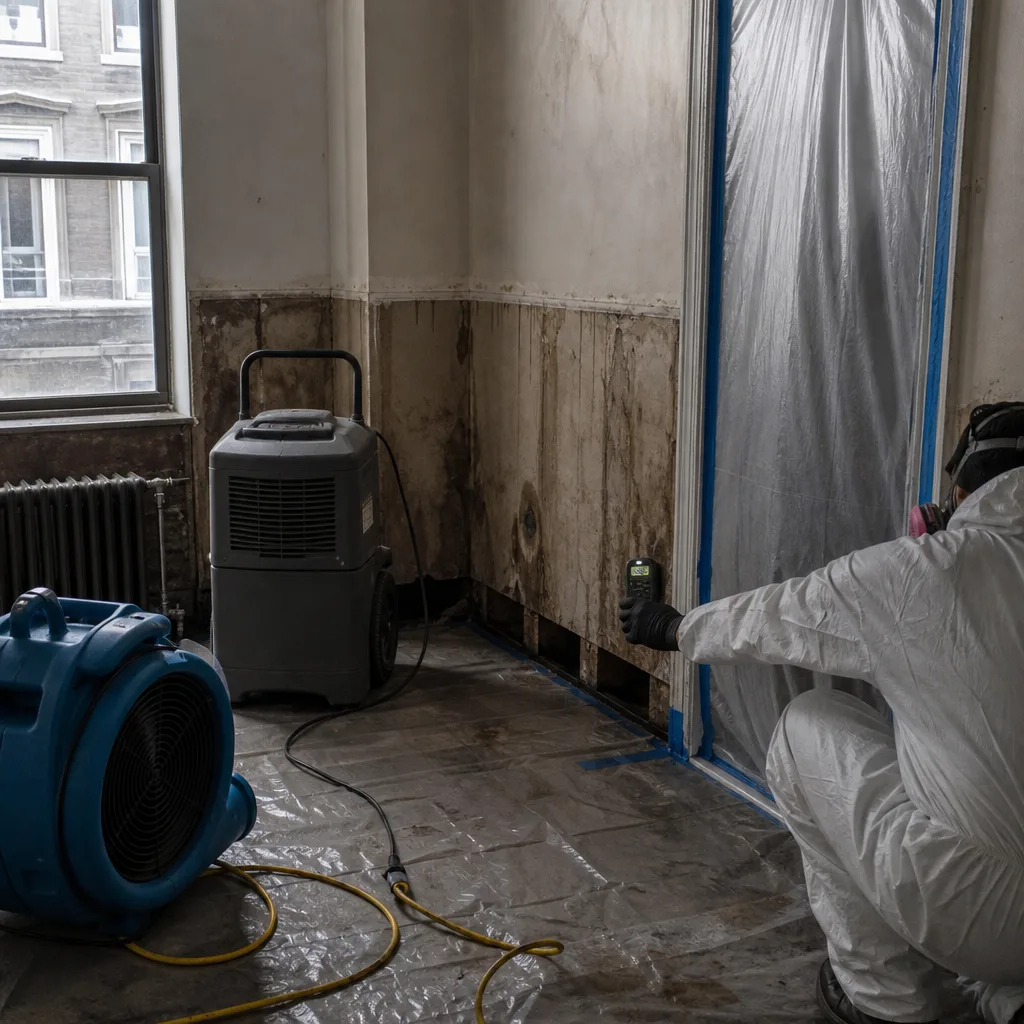 Before
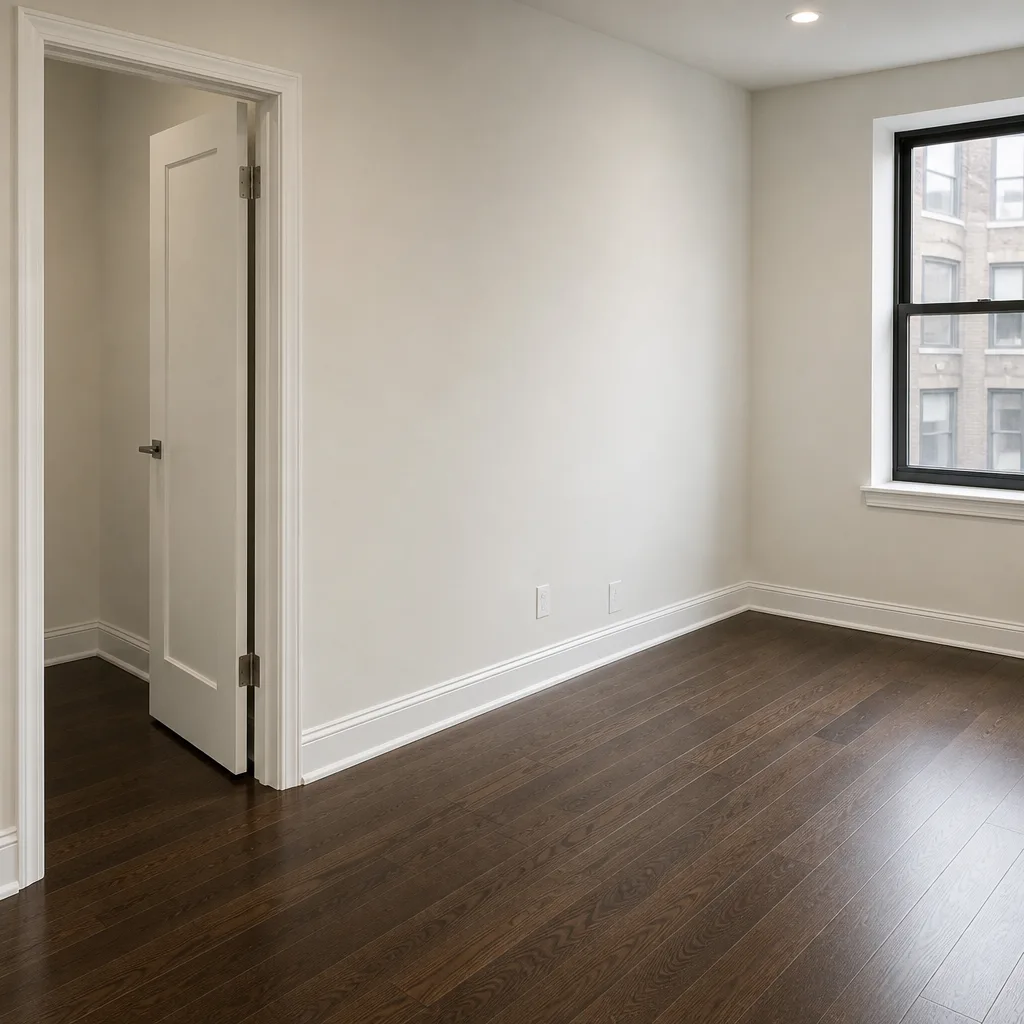 After
After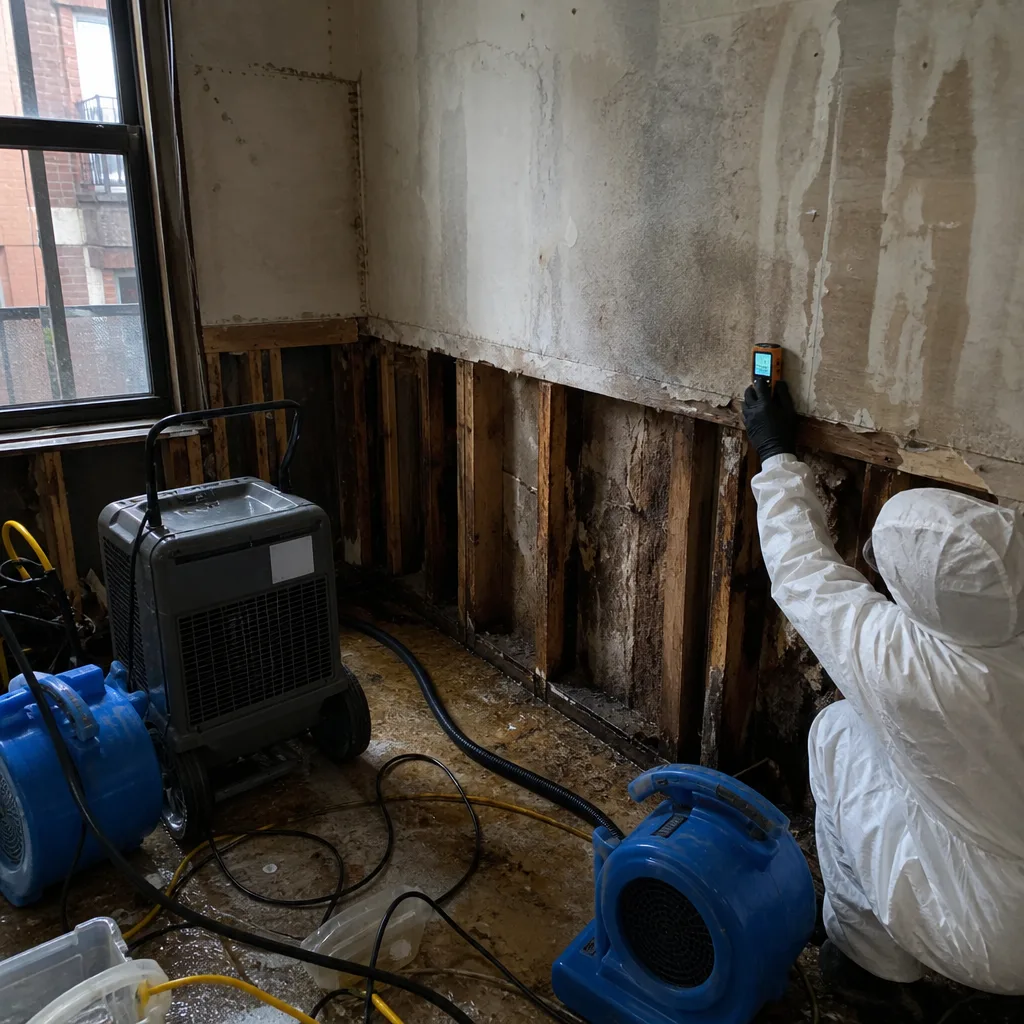 Before
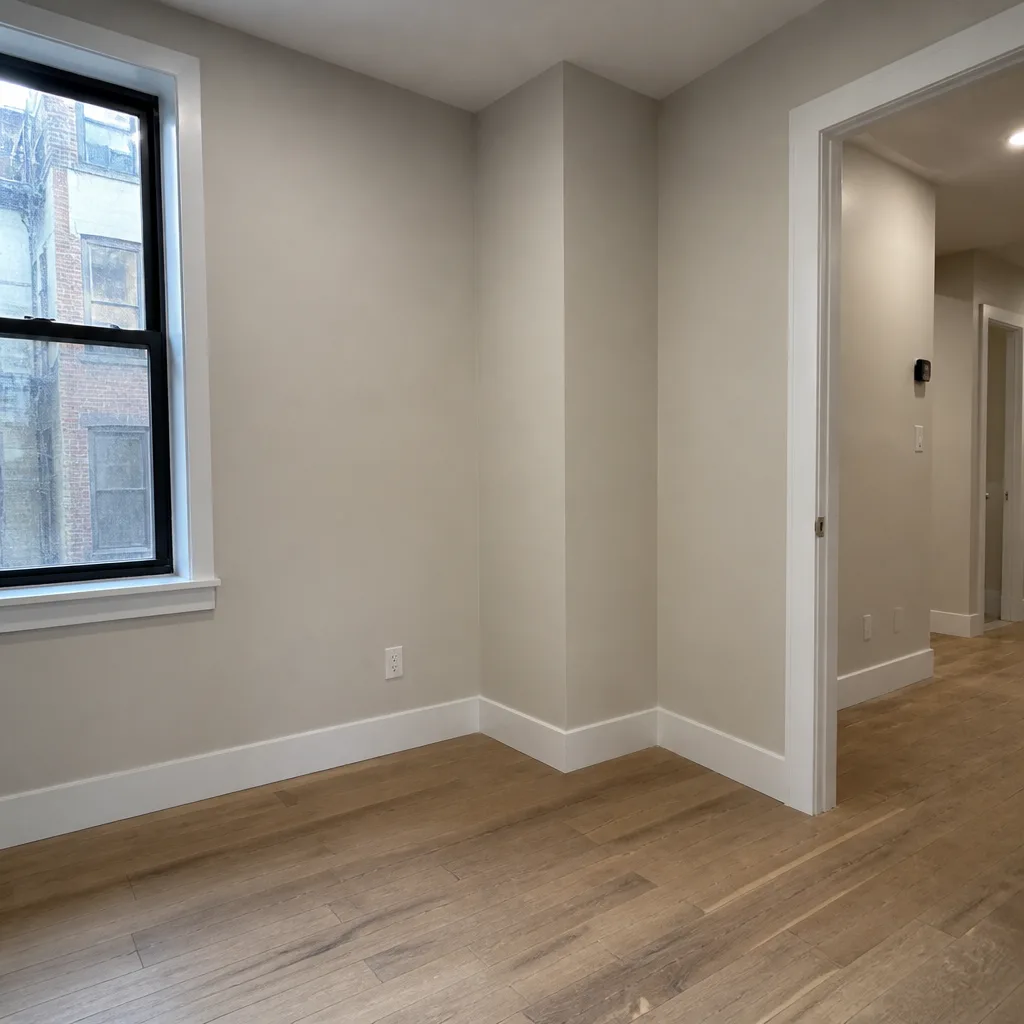 After
After24/7 Emergency Mold Remediation in Long Island City
Mold remediation in Long Island City typically costs $1,800-$6,500 for a standard contained removal, and a real person answers our phone 24 hours a day at (607) 350-1550. We head out fast because mold doubles its footprint roughly every 48 hours once it finds moisture and warmth. If you’ve spotted black staining along a baseboard, smelled that musty basement odor, or had a pipe let go inside a wall, call now. Wade answers his own phone, and he’ll tell you straight whether you need full remediation or just targeted cleanup. In Long Island City, with the East River and Newtown Creek pressing against below-grade spaces, waiting is the most expensive option.
Understanding Mold Remediation Severity in Long Island City Properties
Not all mold jobs are equal. A clean-water leak from a supply line inside a post-2010 Court Square tower is a Category 1 event with straightforward drying. But Long Island City’s western edge sits in FEMA flood zones AE along the East River and Newtown Creek, a federally designated EPA Superfund site. When that water gets in, we’re not talking clean water anymore. We’re talking Category 3 contamination: sewage, creek backflow, industrial runoff. That means full containment with negative air pressure, HEPA air scrubbers running throughout, antimicrobial application under IICRC S520 protocols, and clearance testing before anyone moves back in. The early-1900s brick warehouses converted to lofts add their own wrinkle: unreinforced masonry cavities hold moisture that standard moisture meters miss. We map those cavities with penetrating meters and thermal imaging before we ever declare a space dry. Skimp on that step and mold returns within weeks.
Why Long Island City Property Owners Choose Wade’s Restoration
- 45-minute response commitment: Wade is on the road fast when you call; in Long Island City traffic, that means he plans routes around the Queensboro Bridge approach and the Pulaski Bridge bottleneck, not against them.
- 24/7 live answer, always a person: No voicemail, no answering service. Wade’s cell rings in his hand at 2 a.m. and he picks up.
- IICRC-certified crews: We work to WRT, FSRT, and AMRT standards, which matters when your LIC crawl space has Category 3 water in it.
- Free visual inspection: Wade comes out, looks, and tells you what’s actually going on. No charge for that.
- Direct insurance billing: We handle your carrier so you’re not relaying messages between two sides. Wade deals with the adjuster directly.
- One team from extraction to reconstruction: Same crew, same accountability from first cut to final coat of paint.
Our Mold Remediation Process
Inspection & Assessment
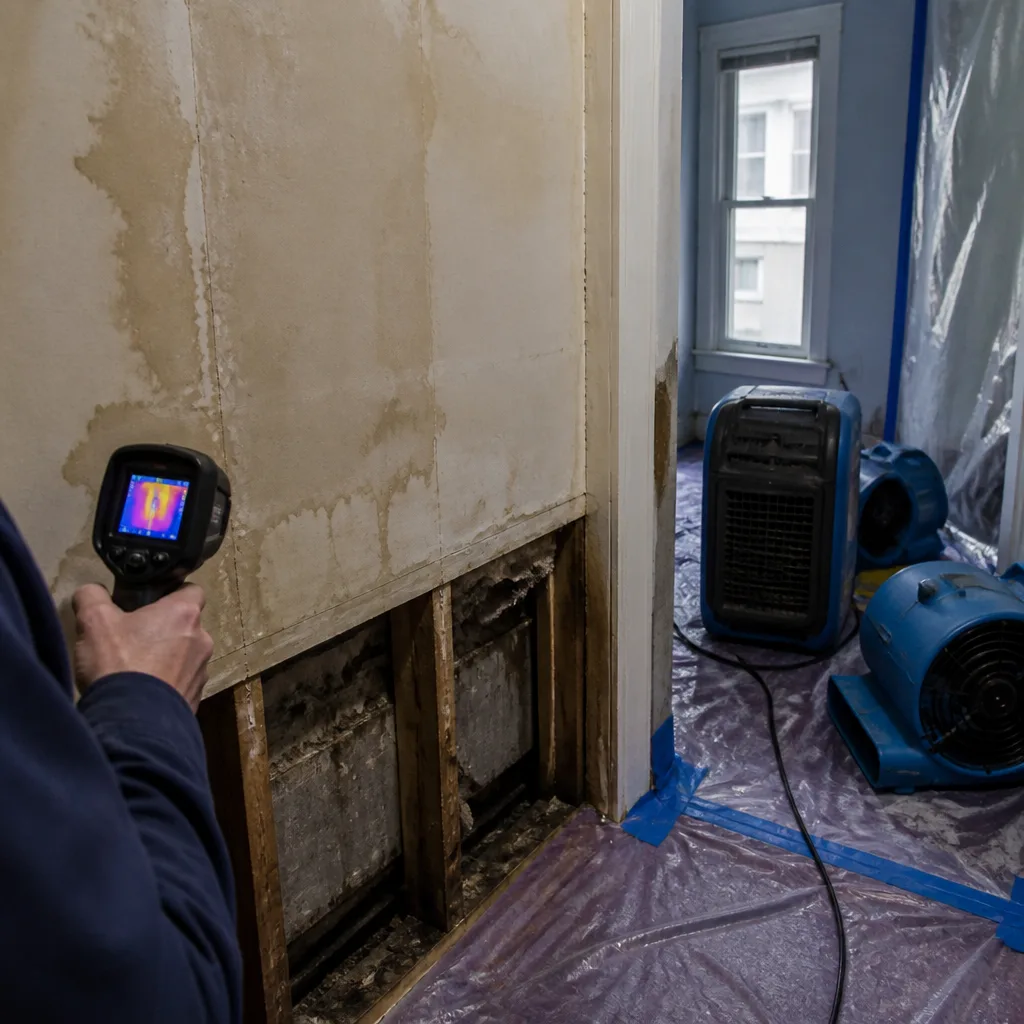
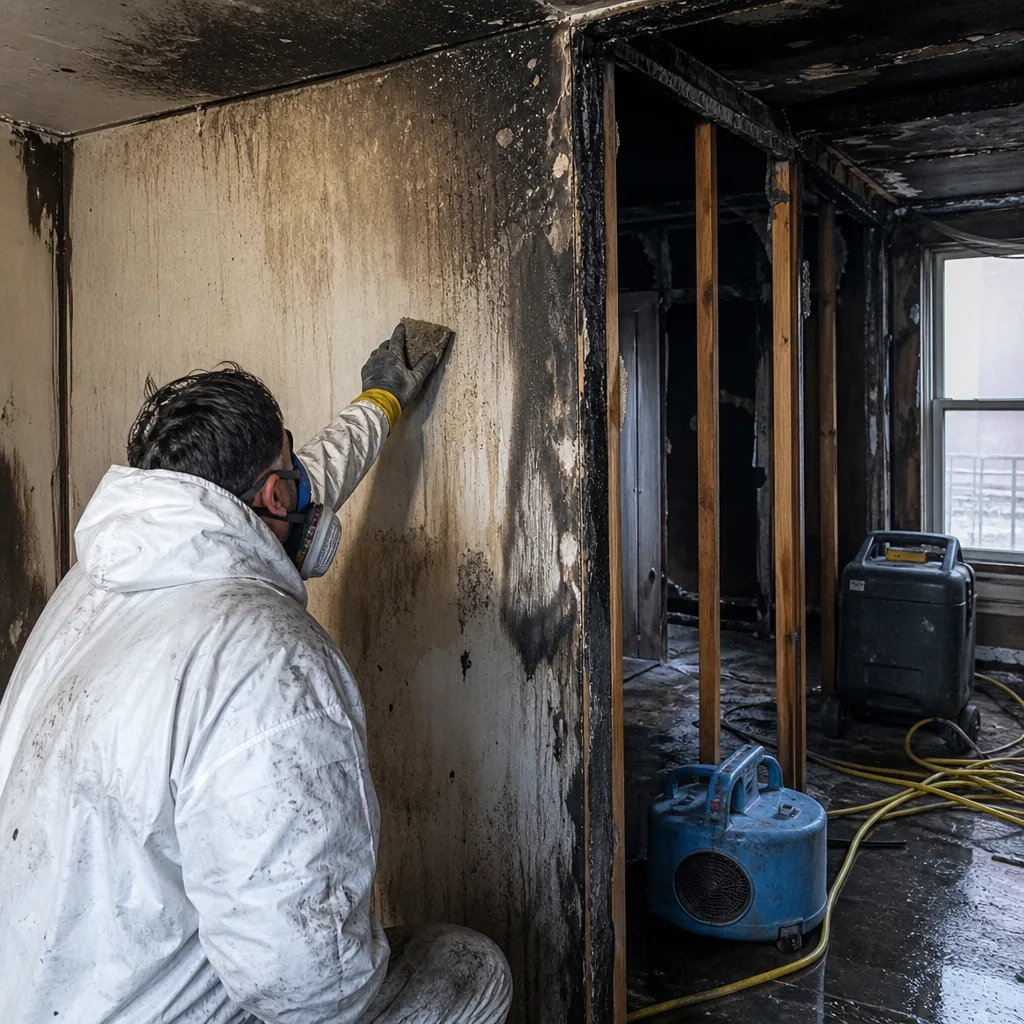
We start with a full walkthrough. Thermal imaging finds moisture behind walls and under floors. Penetrating meters check masonry cavities in those old warehouse conversions. You get a written scope of work before anything gets cut open.
Containment & Stabilization
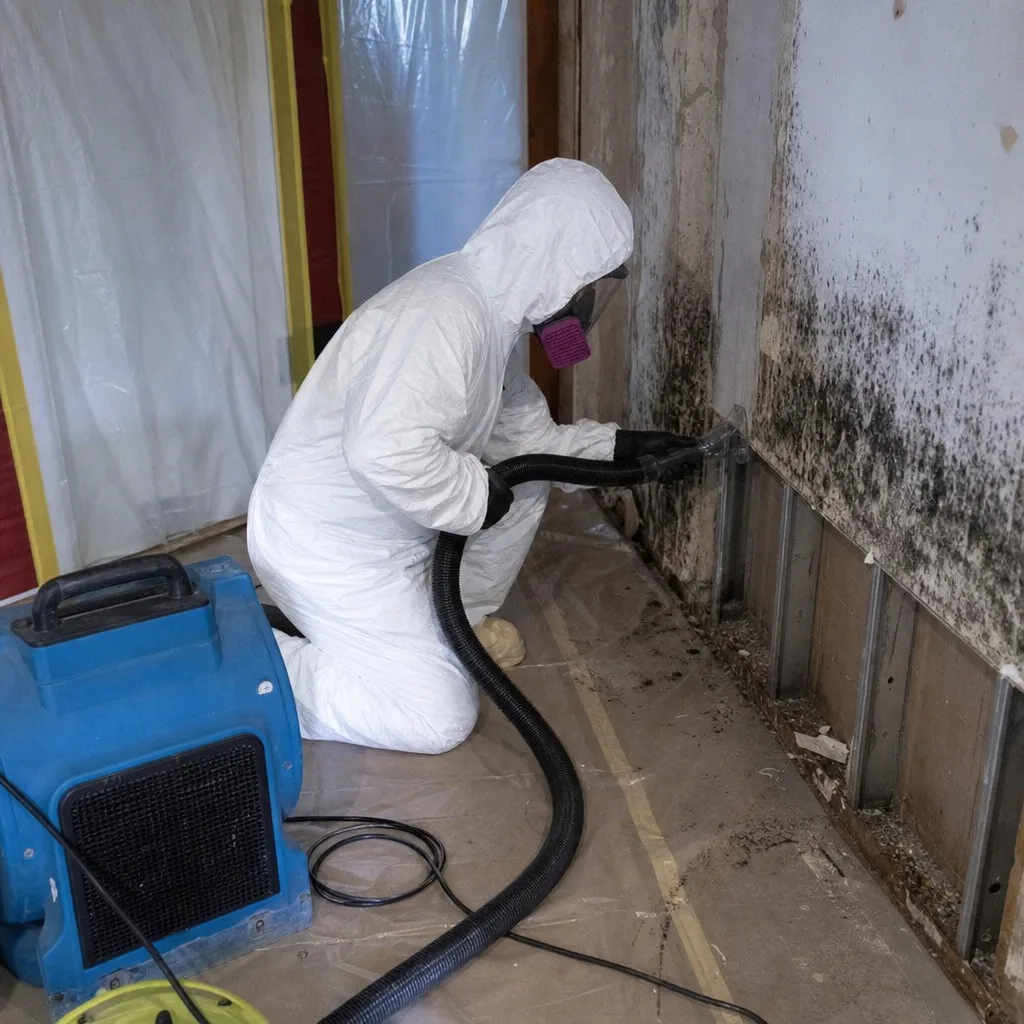
Negative air pressure, 6-mil poly barriers, HEPA scrubbers. We seal the affected area so spores don’t spread through your ductwork while we work. For Category 3 jobs, this step is non-negotiable.
Drying & Dehumidification
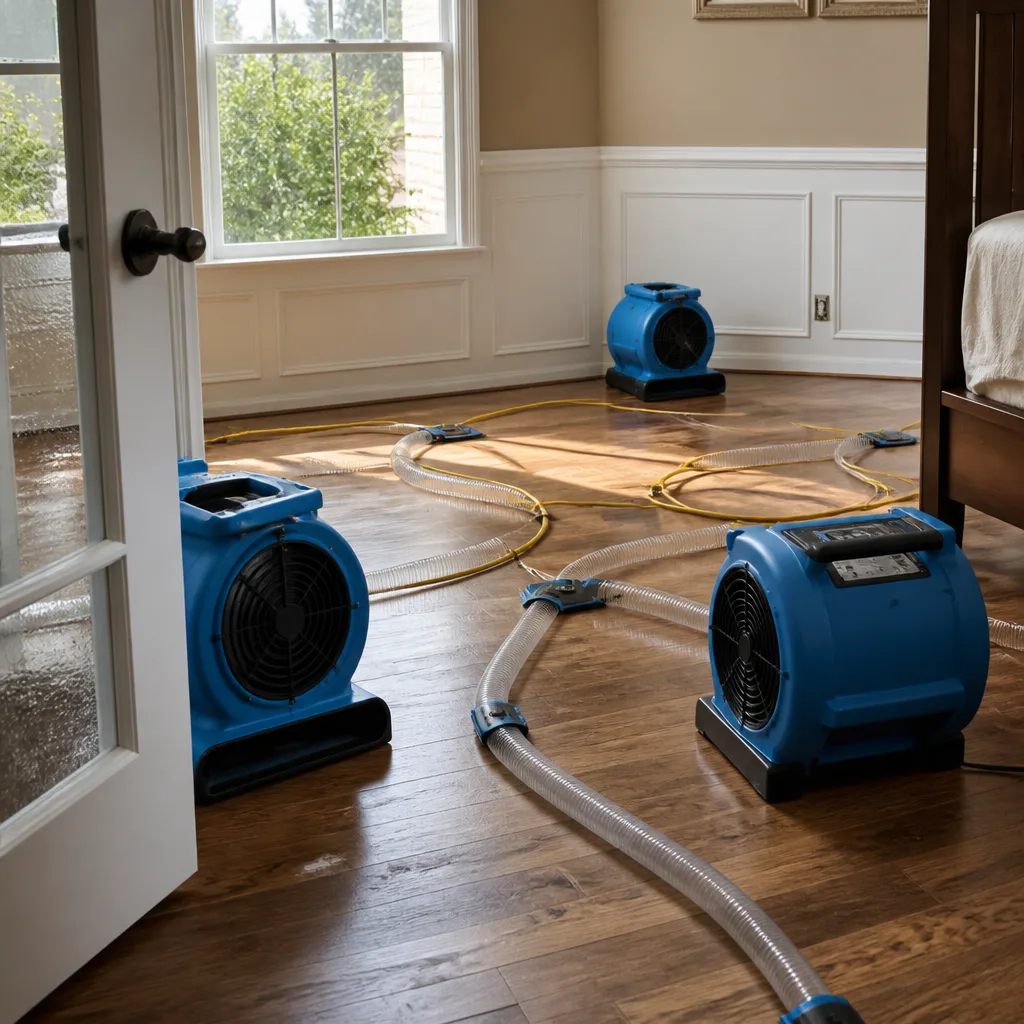
Dri-Eaz dehumidifiers and XPOWER air movers run around the clock. Hygrometers track humidity daily. You get the full moisture log at the end, because nobody else in this trade hands one over.
Cleaning & Sanitization
HEPA vacuuming of all surfaces, antimicrobial treatment per IICRC protocols, and disposal of contaminated materials in sealed bags. We document every step with photos.
Crawl Space & Cavity Treatment
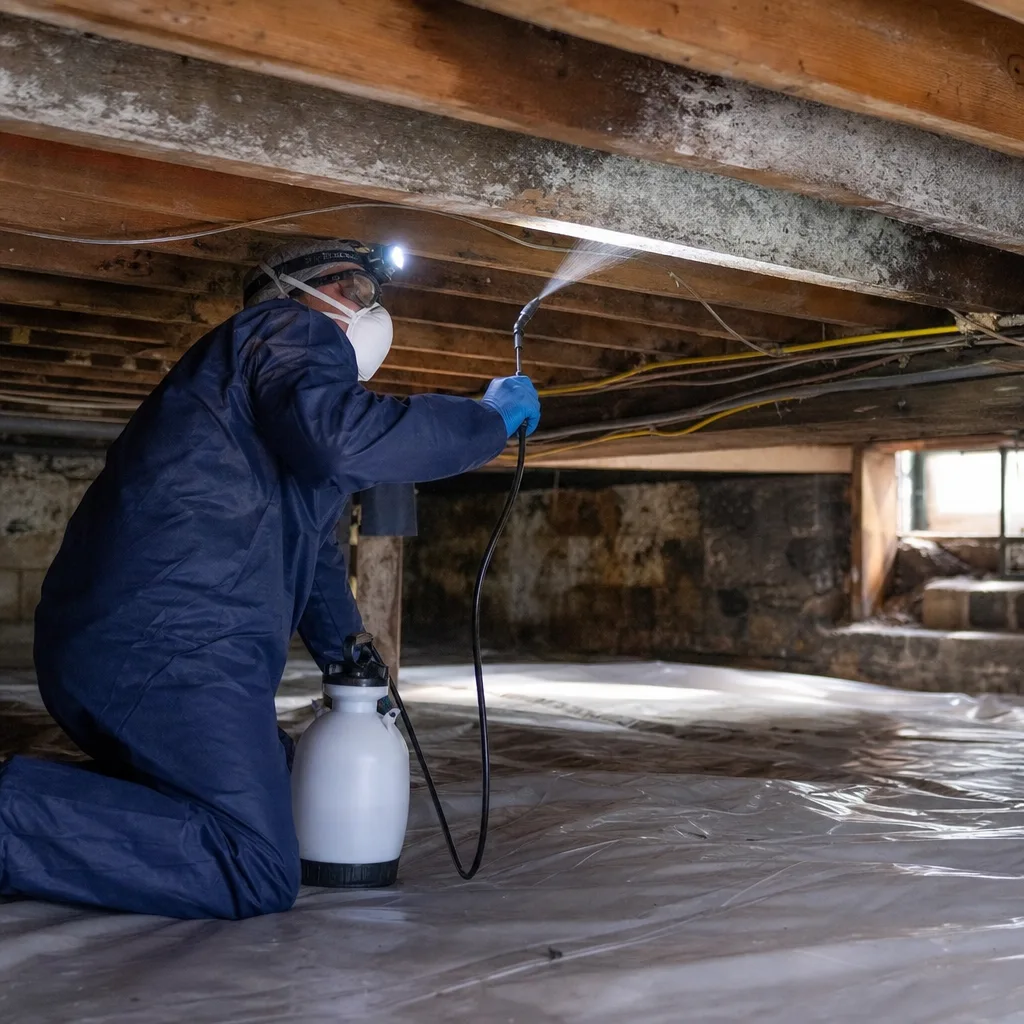
In Long Island City, hidden spaces are where mold hides. We treat crawl spaces, wall cavities, and that unreinforced brick everyone forgets about. If it’s a Superfund-adjacent job, we follow hazmat containment standards.
Repairs & Restoration
From drywall to trim to full reconstruction, the same crew finishes what they started. And it’s covered by the 90-Day Done Right Promise, in writing.
Need Emergency Mold Remediation in Long Island City Now?
Crews minutes away, answering live 24 hours a day. The sooner we start, the less it costs.
Working With Your Insurance Company
Mold claims get scrutinized harder than almost anything else. The carrier’s first question is always the same: was this sudden and accidental, or did it fester? That’s why we document from hour one. Photos of the source, moisture readings taken daily, a line-item scope that matches industry estimating software, and direct adjuster communication so there’s no telephone game between you and your carrier. If the mold came from a covered peril like a burst pipe or storm surge, remediation is often covered. If it came from neglect or long-term seepage, it usually isn’t. Wade will tell you which bucket you’re in before you spend a dollar. And if you already have an estimate from another contractor, get a free second opinion from us. No charge for that.
What We Provide Your Insurer
- Thorough documentation of the loss
- Photos of all damage, room by room
- Moisture readings and drying logs
- A detailed, line-item scope of work
- Direct coordination with your carrier
Built for Long Island City’s Loss Calendar
Long Island City’s mold season doesn’t follow a neat calendar. January deep freezes burst supply lines in pre-war walkups along Vernon Boulevard, sending water through four floors before anyone notices. Spring thaw and heavy rain push the East River higher, and with Newtown Creek tidally influenced, below-grade spaces in the northern industrial corridor back up with contaminated water. Summer thunderstorms dump inches in an hour, overwhelming combined sewers and sending runoff into basements that have never flooded before. September nor’easters drive wind-driven rain into those glass-curtain-wall towers at Hunters Point South, where facade joints fail and water cascades into parking garages. Every season has a mold trigger here. Our Mold Remediation team has run all of them.
Mold Remediation Across Long Island City’s Neighborhoods
Court Square’s glass towers bring a specific failure pattern: envelope leaks from facade joints, water running down inside wall cavities, and mold developing behind drywall in buildings under ten years old. Hunters Point’s waterfront blocks, especially near Gantry Plaza State Park, sit in the flood plain and take on storm surge that leaves our Storm & Disaster Restoration in Long Island City dealing with Category 3 residue in below-grade mechanical rooms. Over by the Vernon Boulevard corridor, the 1920s brick walkups have cast iron drain lines that crack with age, leaking sewage water into walls and floors. And in the converted warehouse lofts north of Queens Plaza, a single pipe failure can saturate thousands of square feet of open floor plate before detection because the plumbing runs across massive spans without logical shutoff points. Each area needs a different playbook. We work all of them, and we know the parking and alleyway access constraints of every block before we arrive.
Specialized Mold Remediation Services We Offer in Long Island City
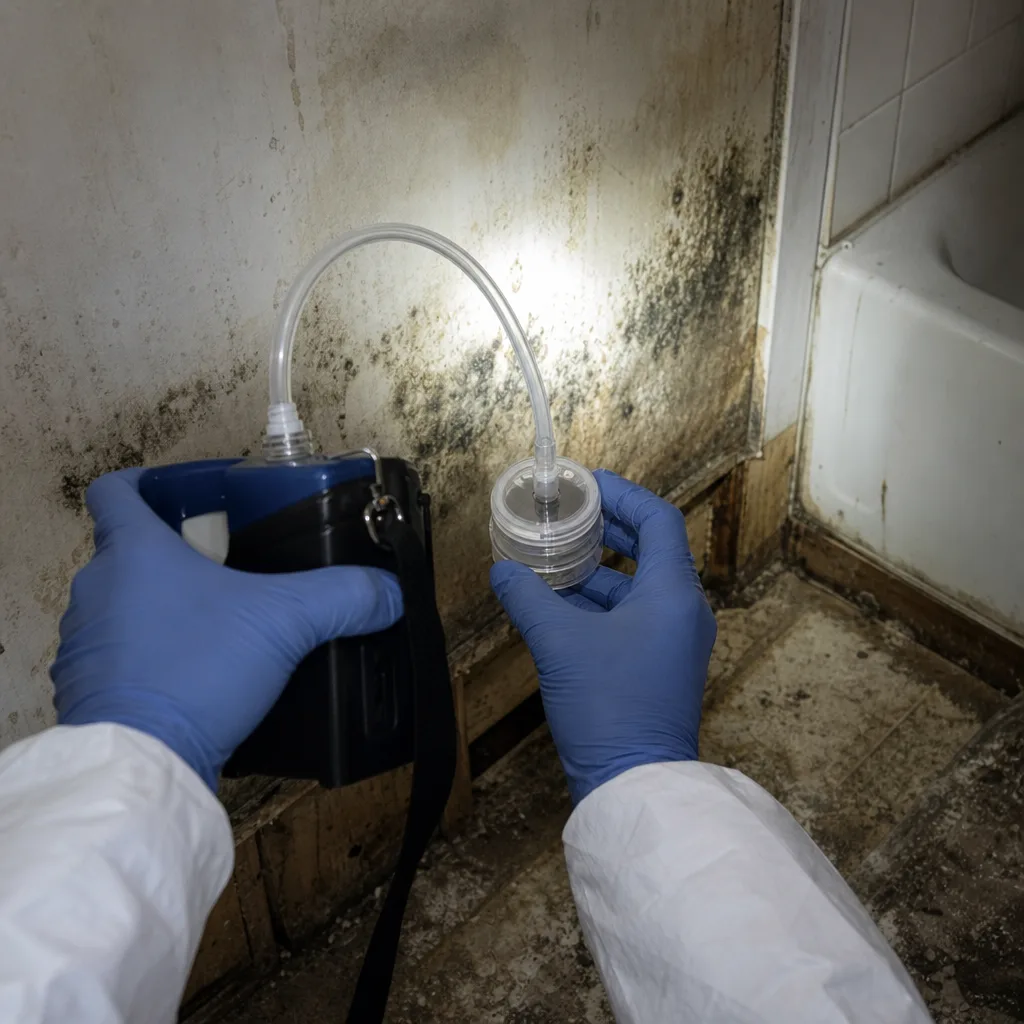
Mold Inspection & Testing
A visual inspection catches what’s visible. Testing catches what’s not. We take air and surface samples, send them to an independent lab, and interpret the results against what we find on site. For Long Island City apartments where a neighbor’s leak migrated through a party wall, inspection pinpoints the source before we cut anything.
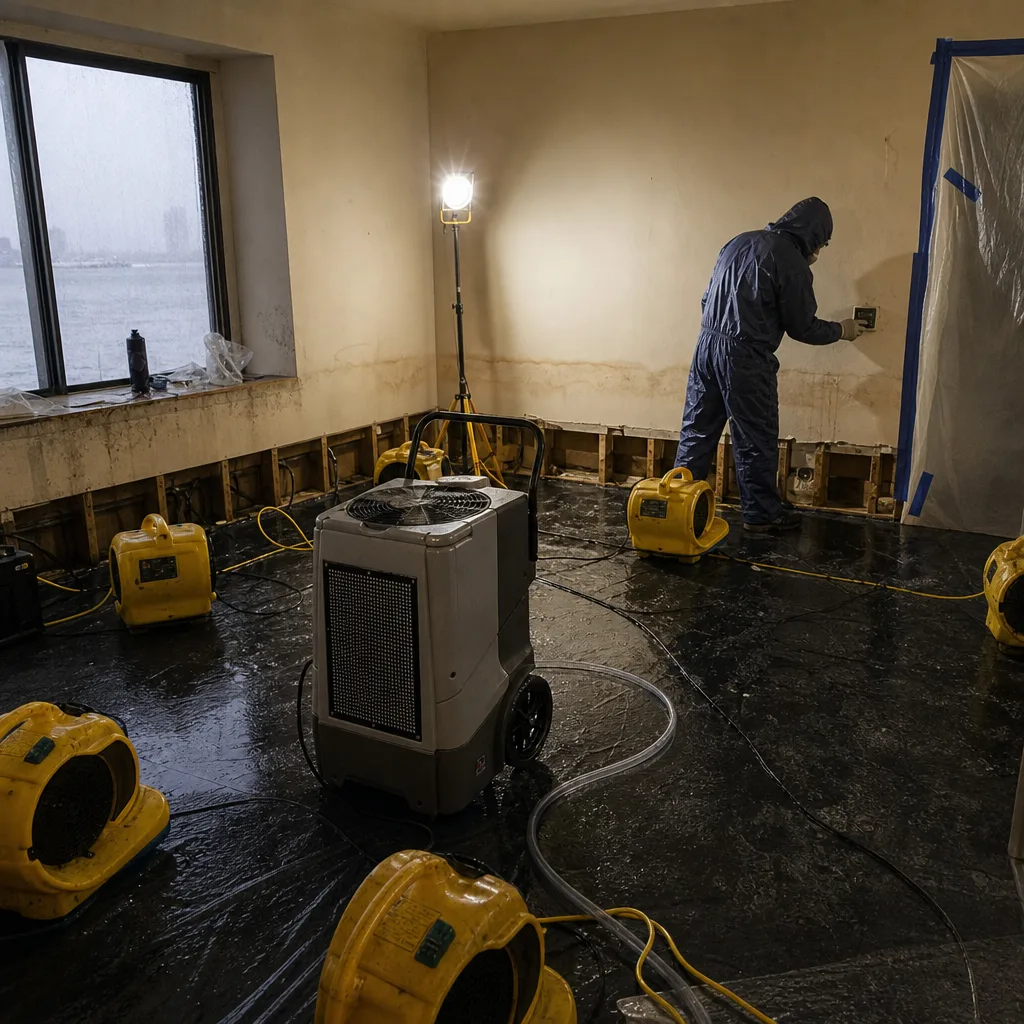
Mold Removal
Physical removal of contaminated materials: drywall, insulation, carpet, trim. We work under containment so spores don’t spread. For the early-1900s brick lofts around Court Square, we also treat the masonry substrate itself, because mold grows into porous brick as easily as paper-faced drywall.
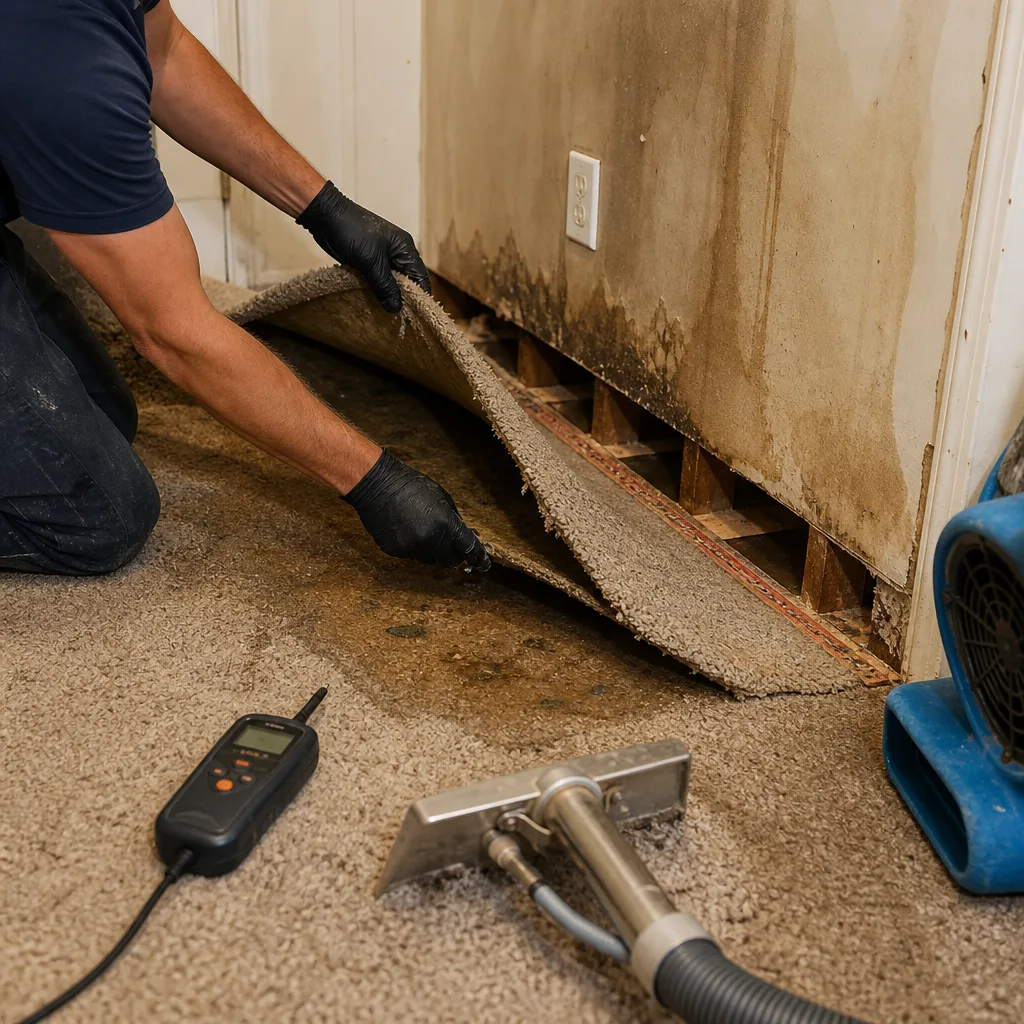
Black Mold Remediation
Stachybotrys, the black mold everyone worries about, thrives on constant moisture. It shows up most often in Long Island City below-grade spaces after Category 3 intrusions. Full containment, HEPA filtration, antimicrobial application, and clearance testing are standard. We don’t cut corners on black mold work.
Air Quality Restoration
Mold spores ride your HVAC system. After remediation, we run HEPA scrubbers through the affected space and clean affected ductwork so you’re not breathing residual spores for months. A third-party clearance test confirms the air is back to normal.
Crawl Space Treatment
Crawl spaces in row houses and older buildings around Long Island City trap humidity year-round. We seal, dehumidify, and treat these spaces to prevent mold from coming back. In flood-adjacent blocks, we also install moisture barriers and evaluate drainage so the next nor’easter doesn’t recreate the problem.
Moisture & Humidity Control
Mold needs moisture. Control it and you control the mold. We measure humidity levels, identify moisture sources, and recommend fixes: dehumidifiers, ventilation, vapor barriers, drainage corrections. This is prevention work, and it’s the smartest money you can spend after a remediation job.
What happens when you call
- 1
A real person answersNo phone trees - you reach a local pro.
- 2
You get an upfront price rangeHonest numbers before anyone is dispatched.
- 3
A background-checked tech heads outLicensed & insured, dispatched right away.
- 4
You approve before work beginsNothing starts until you say go.
Mold Remediation Costs in Long Island City, NY
A contained mold remediation in Long Island City runs $1,800-$4,500 for a small affected area like a closet or single wall. A crawl space or full room runs $3,500-$6,500. Black mold jobs with confirmed Category 3 sources run $5,000-$12,000 depending on containment needs and how much material comes out. What moves the price: square footage of affected material, whether you need full containment versus local, clearance testing requirements, and whether structural drying is needed after the remediation. Insurance covers mold when it results from a covered event like a burst pipe, but not from slow seepage or neglect. We always provide a written scope before work starts, and a free visual inspection before the scope. Call (607) 350-1550 and Wade will come out and tell you exactly where you stand. No trip charge inside our service area.
We Also Serve Cities Near Long Island City
Our Long Island City crews also handle mold remediation in Long Island City and the surrounding neighborhoods, including Astoria, where the housing stock and moisture patterns follow a similar pre-war cadence. If you’re just across the Pulaski Bridge or up by Queensbridge, give us a call.
Long Island City Mold Remediation Questions, Answered
Is mold from a Newtown Creek sewer backup in Long Island City treated differently than mold from a clean water leak?
Yes, very differently. Newtown Creek backup is Category 3 water: sewage, industrial runoff, and creek backflow loaded with pathogens. Biohazard & Crime Scene Cleanup in Long Island City requires full hazmat protocol: containment with negative air, workers in protective gear, antimicrobial treatment per IICRC standards, and clearance testing before re-occupancy. A clean-water leak gets standard mold removal. Confusing the two is the most dangerous mistake a contractor can make in Long Island City.
Why do converted warehouse lofts in Long Island City keep failing mold clearance tests after remediation?
Because the masonry cavities in those early-1900s brick buildings hold moisture that standard surface meters miss. A contractor who doesn’t use penetrating meters and thermal imaging will declare the space dry when water still sits inside the unreinforced brick. Mold regrows within weeks. We map those cavities with Dri-Eaz penetrating meters before we sign off on any Long Island City loft job.
How fast do you respond to mold in a Hunters Point high-rise where window leaks have already spread to lower floors?
We answer live, 24/7, and Wade aims to be on site within 45 minutes anywhere in Long Island City. For high-rise jobs, we coordinate building access and freight elevator scheduling immediately, because the mold spreads downward through wall cavities and every day adds square footage. Call (607) 350-1550 and Wade will tell you when he can be at your building.
Do I need to vacate my Long Island City apartment during black mold remediation in a crawl space?
Sometimes, especially when the crawl space opens into living areas and the mold is Stachybotrys or another toxigenic species. If we can contain the crawl space completely with negative air and HEPA filtration, you can often stay. If the mold has spread into floor joists or wall cavities, vacating during the active removal phase is safer. We’ll tell you straight which situation you’re in.
After a nor’easter floods my below-grade garage in Long Island City, can I just dry it out with fans?
No. If that garage is in the FEMA flood zone near the East River, the water that came in is Category 3: contaminated with sewage, creek water, and whatever the storm picked up. Fans will spread contaminated moisture deeper into walls and structure. You need extraction, containment, antimicrobial treatment, and structural drying with professional equipment. Fans alone create the perfect environment for mold blooms.
How much does mold remediation cost in Long Island City compared to Astoria or other Queens neighborhoods?
Long Island City tends to run slightly higher than Astoria or Sunnyside because of access issues (freight elevators, narrow loading zones, parking restrictions) and the higher percentage of Category 3 jobs. Expect $1,800-$6,500 for typical remediation, with Superfund-adjacent or high-rise jobs at the upper end. We always give a written scope before starting, so you know the number before we cut anything.
How long does mold remediation take in a Long Island City apartment?
A contained single-room job typically runs 2-4 days. A full crawl space or multi-room job runs 5-10 days, including drying time. Category 3 jobs with clearance testing add a day or two. High-rise jobs with elevator scheduling can add waiting time, but the actual work is usually done within a week. We’ll give you a timeline when we hand you the scope.
What should I do in the first 30 minutes after discovering mold in Long Island City?
Stop the water source if you can do so safely. Shut off the affected area if possible, so spores don’t spread through your HVAC. Take photos. Then call us at (607) 350-1550. Don’t spray bleach on it. Don’t scrub it. Don’t run fans. Those actions spread spores and make remediation harder. The first call is the one that saves you money.
Serving Long Island City, NY - Our Local Coverage Area
We’re based in the Long Island City area and know this community well. Use the map below to see our service coverage - if you’re nearby, we can almost certainly help.
Get Honest Mold Remediation Help in Long Island City
Wade Ferris has been doing restoration work since 2007, and he answers his own phone. Every job gets a written scope before work starts, daily moisture readings handed to you at the end, and direct adjuster communication so you never get stuck in the middle. The 90-Day Done Right Promise means if it’s not done right, we make it right. In writing. Senior and veteran discounts apply. Free second opinions on any written estimate. No trip charge inside the service area. Ask anyone on your street about the guy who showed up at midnight and actually fixed the problem. Then call (607) 350-1550.
Written by Wade Ferris, Owner at Wade’s Restoration, serving Long Island City with mold remediation and water damage restoration since 2007. Wade’s crews work across Queens with IICRC-certified protocols, daily moisture documentation, and the 90-Day Done Right Promise on every job.