
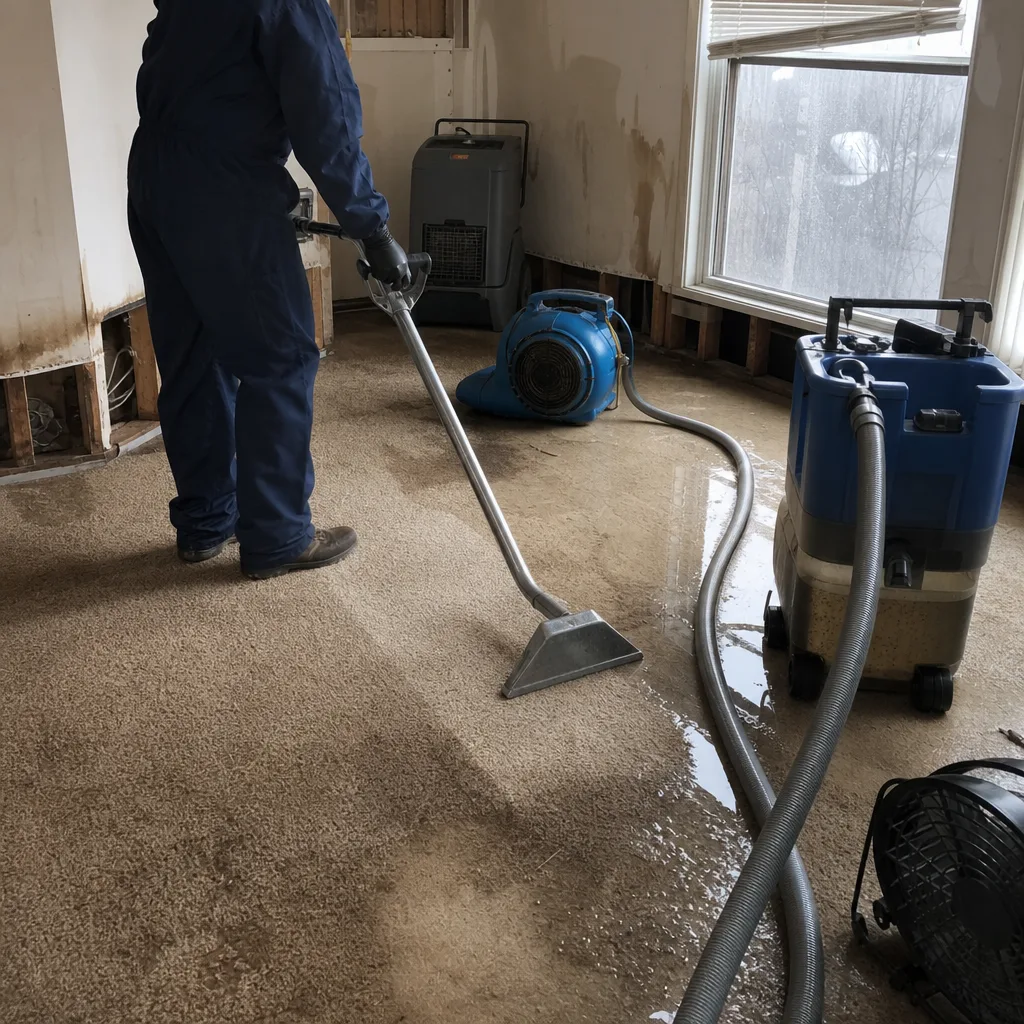
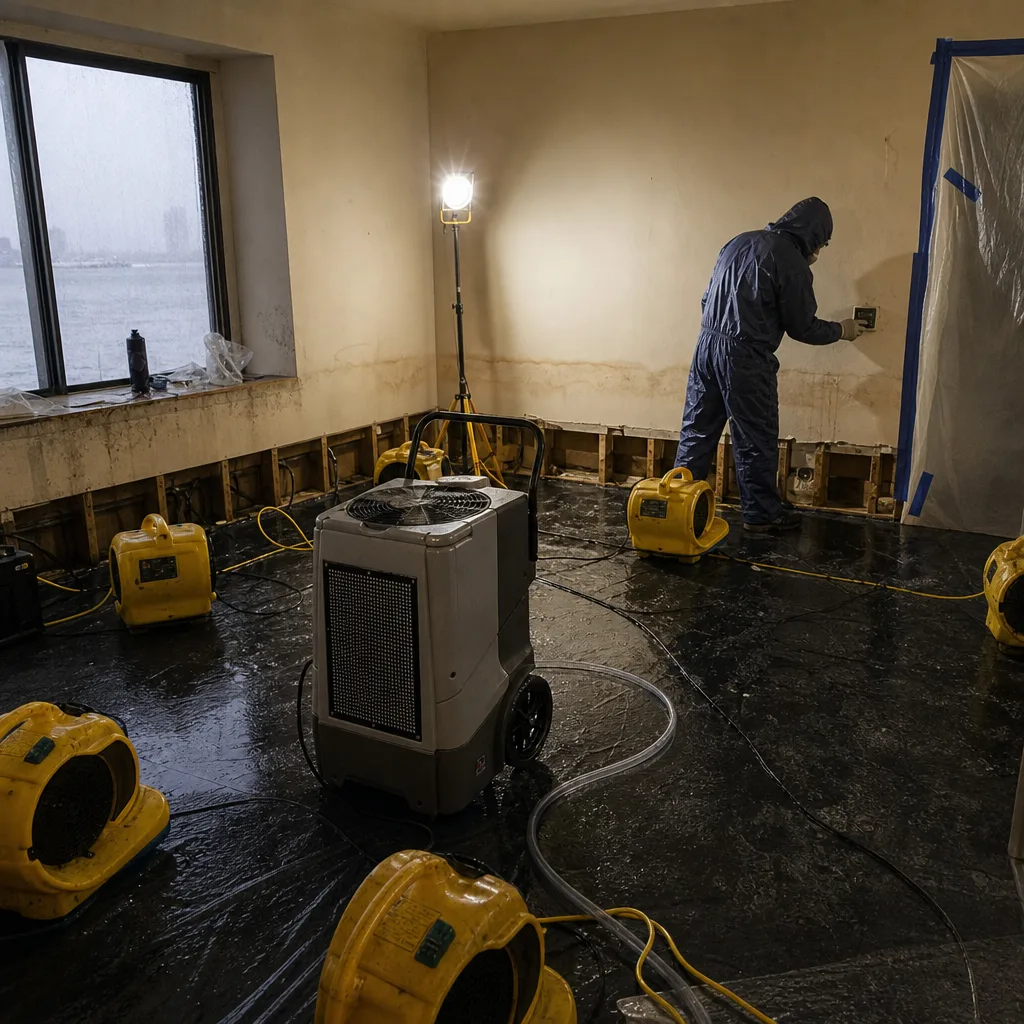
Free visual inspection and a written scope of work before any mitigation begins - photos, moisture readings, and drying logs go in your claim file
The scope we write is the scope we bill. Anything new gets shown to you, in writing, before we touch it.
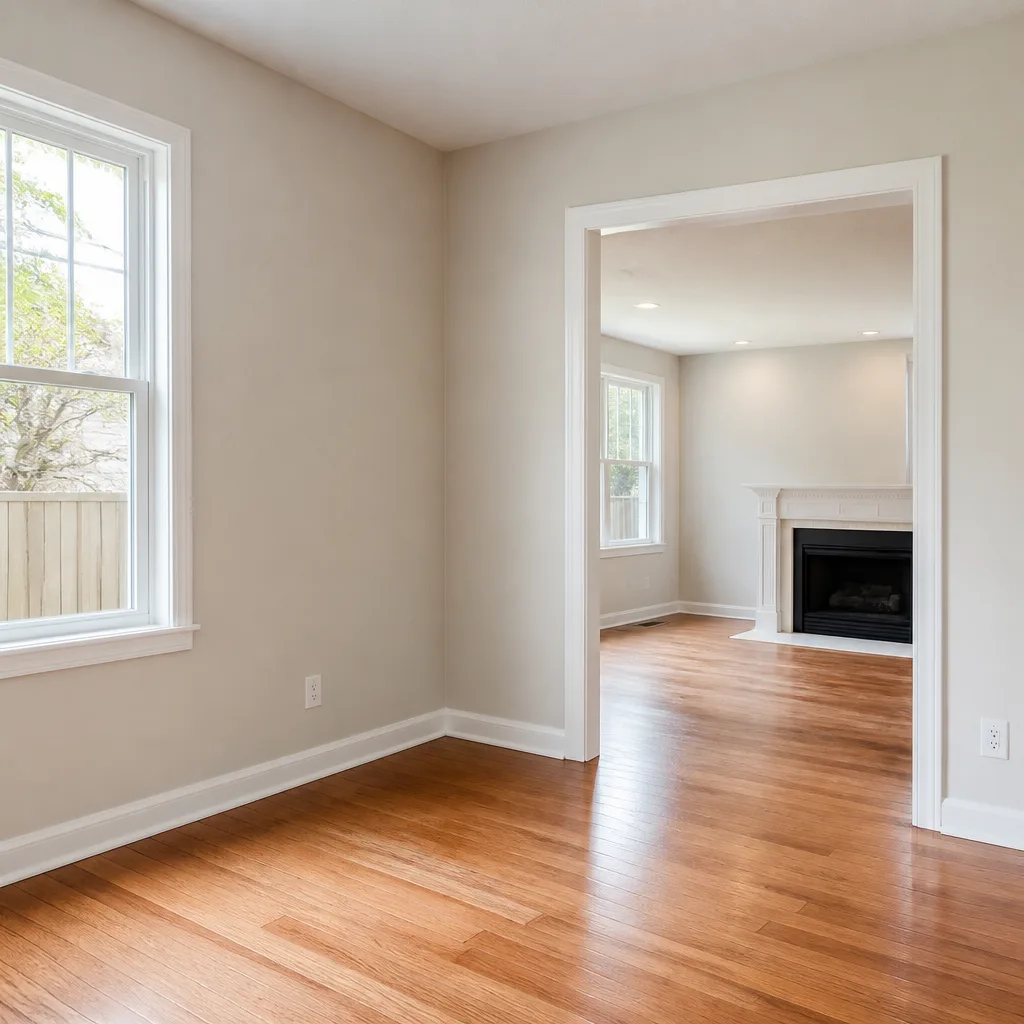
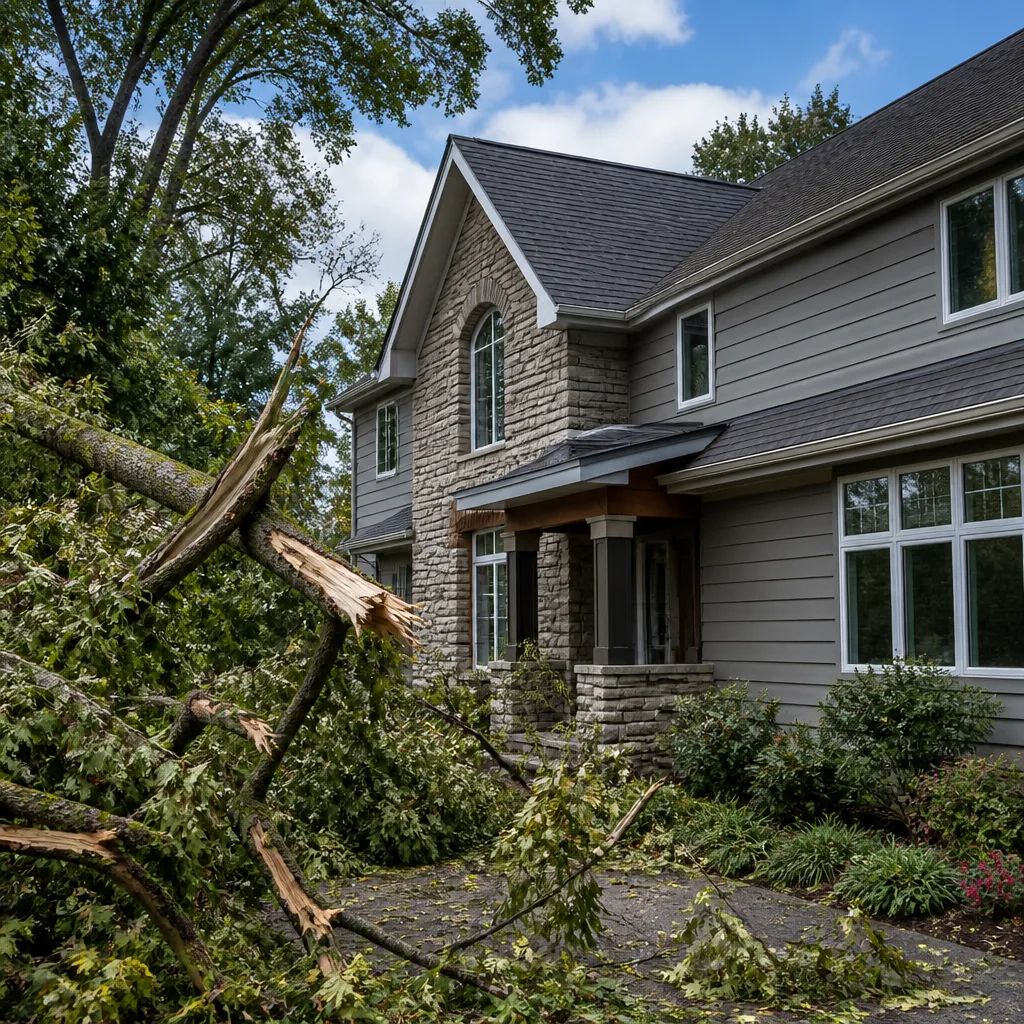
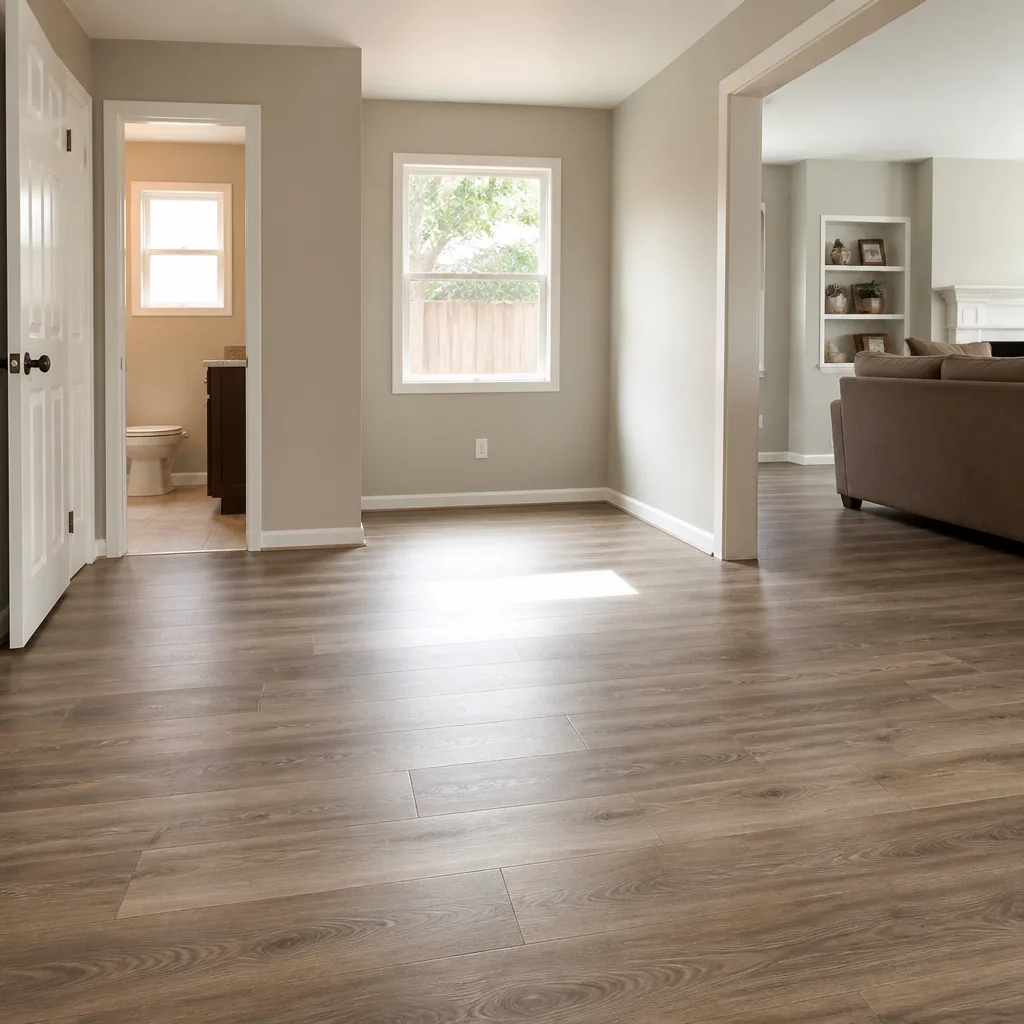
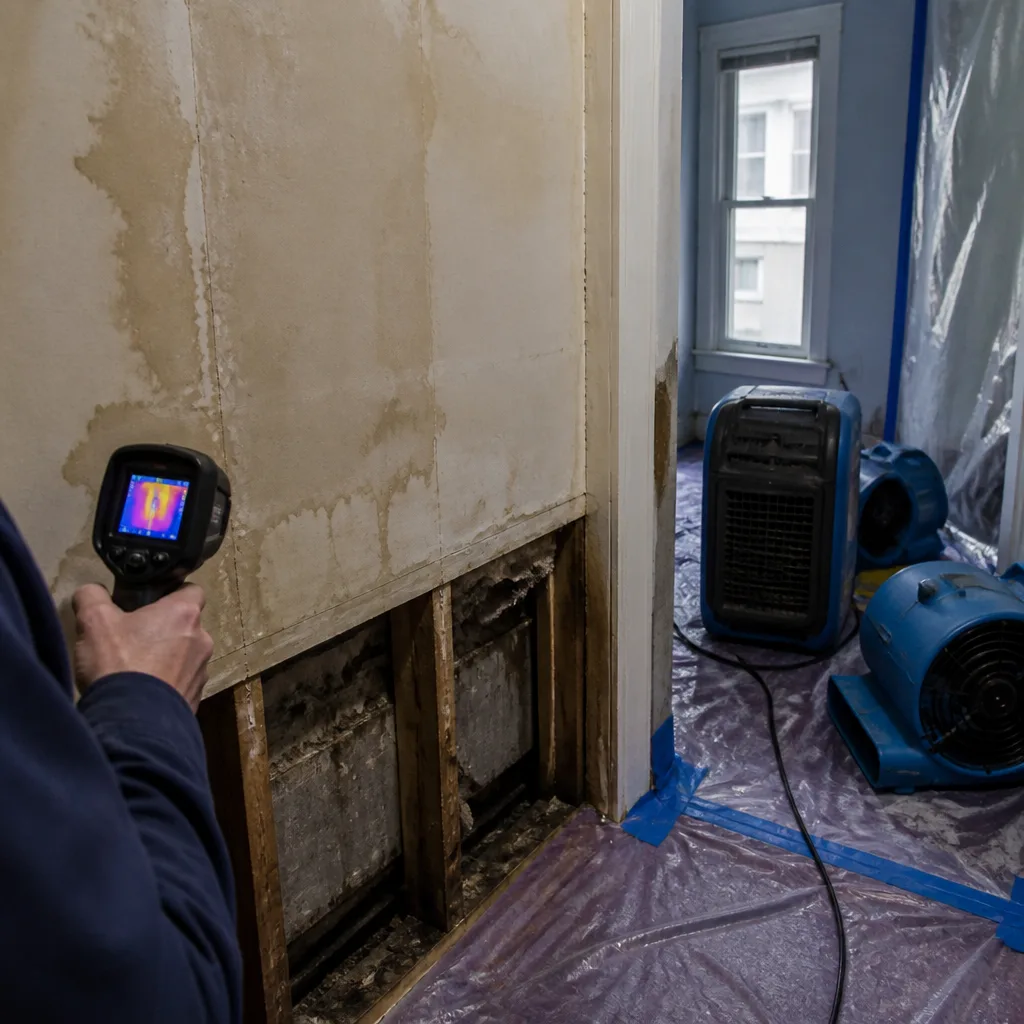 Before
 After
After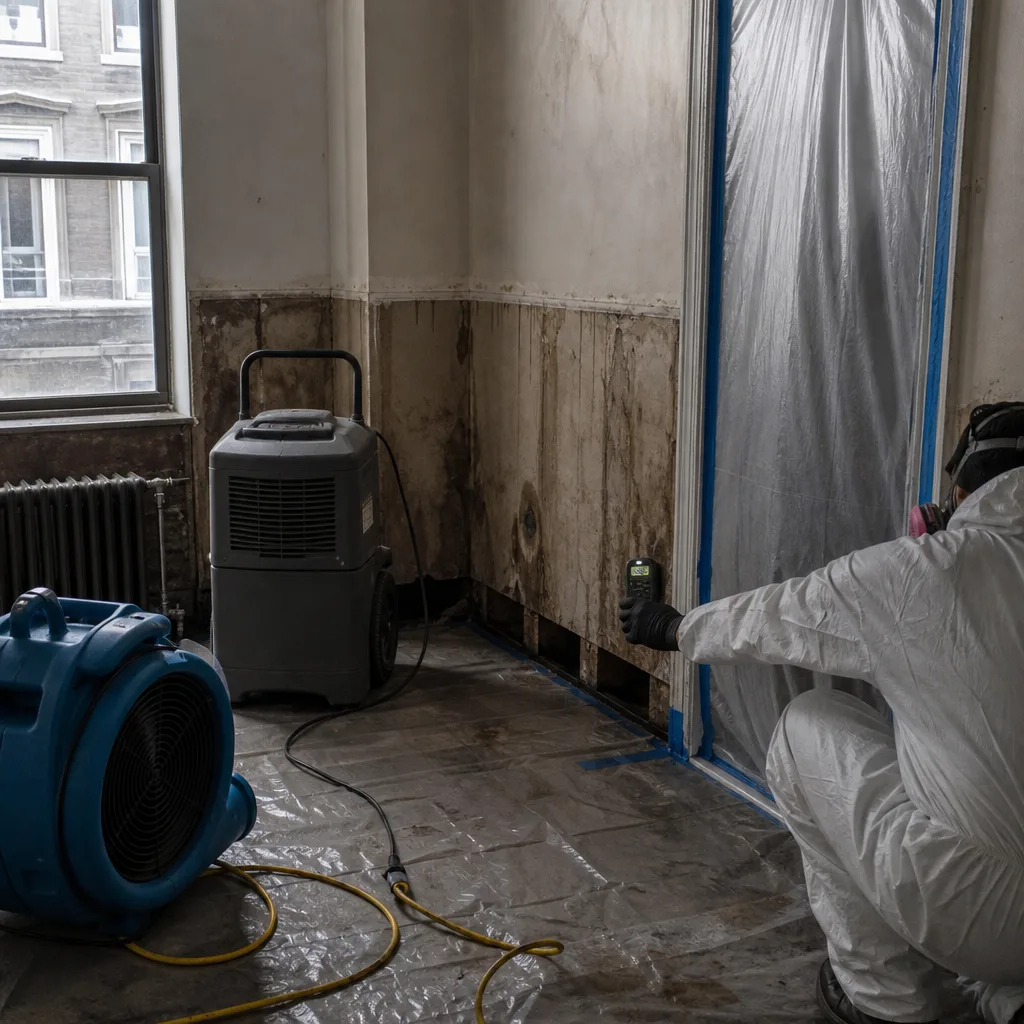 Before
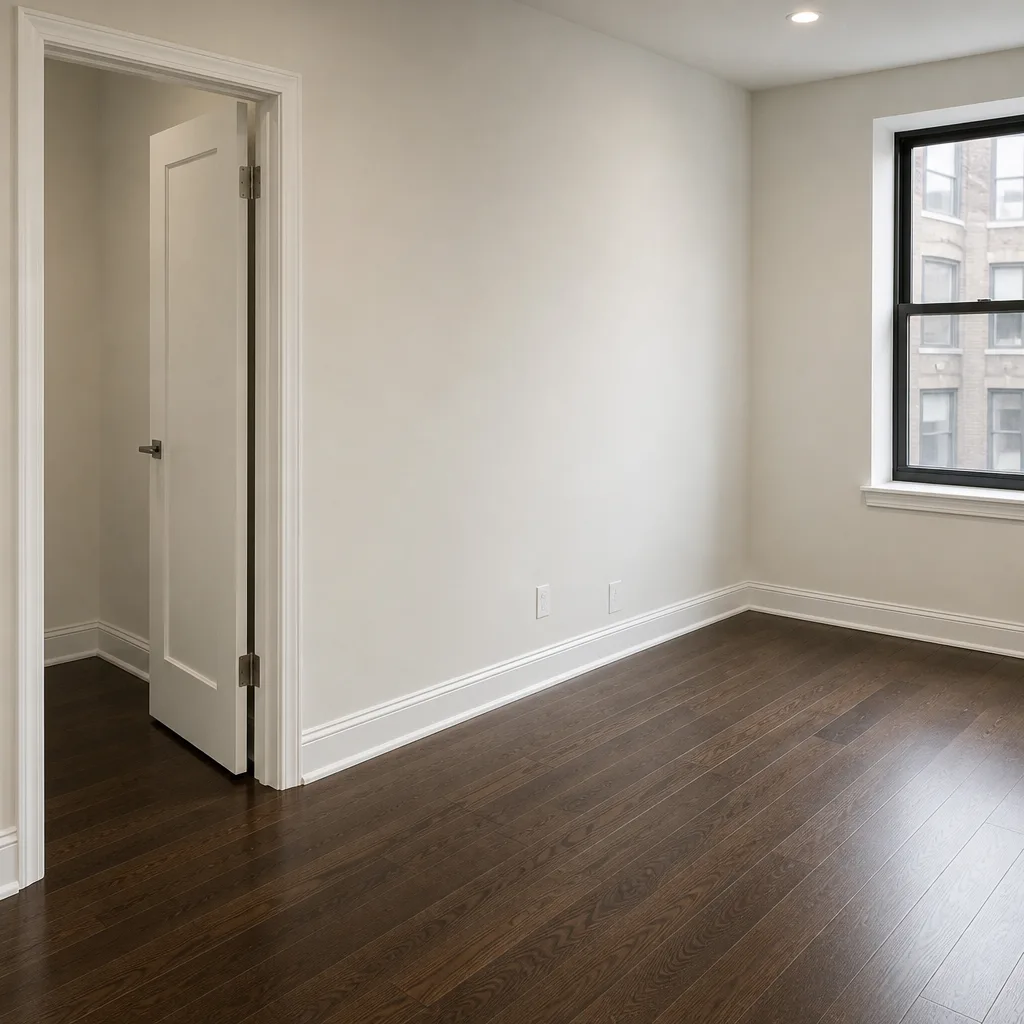 After
After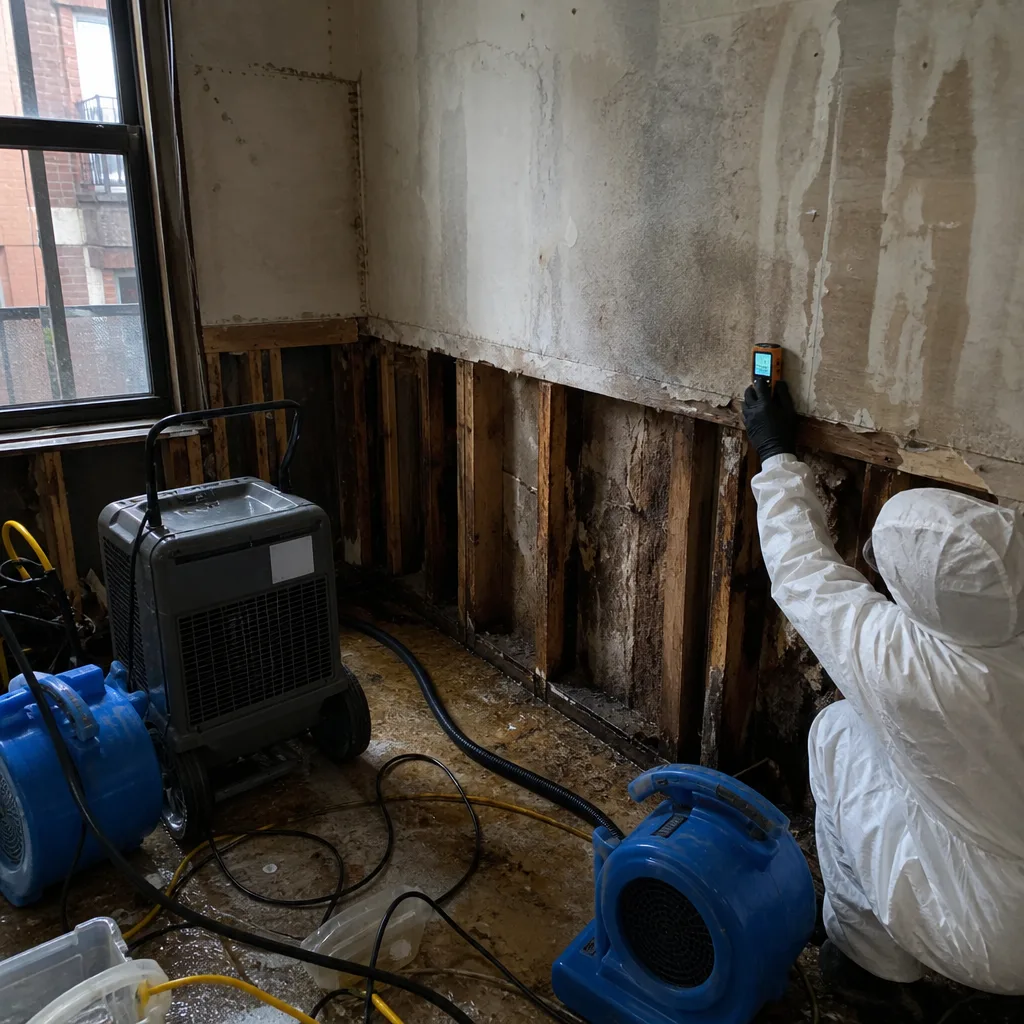 Before
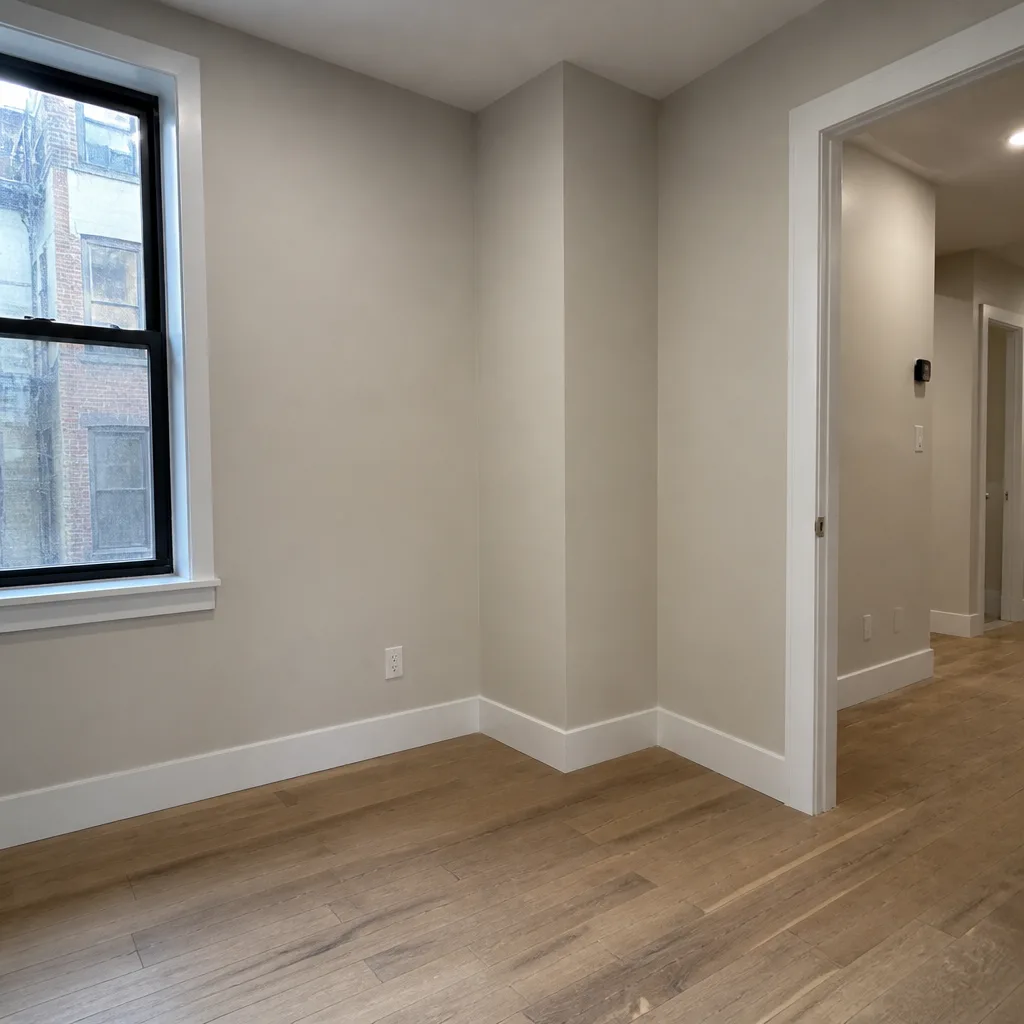 After
After24/7 Emergency Water Damage Restoration in Upper West Side
Water damage restoration in Upper West Side typically costs between $2,400 and $11,000 depending on how far the water traveled and what it touched, and emergency extraction usually starts inside the hour when you call (607) 350-1550. Wade’s Restoration answers live around the clock, no answering service, no callback queue. Wade himself picks up the phone at 3 a.m. and heads to your building with extraction equipment running. In a pre-war co-op on West End Avenue or Central Park West, the first hour matters more than almost anywhere else in the city: water moving through horsehair plaster and original wood lath wicks sideways and downward fast, and every minute it sits in a shared wall cavity increases the chance that a one-unit leak becomes a ten-floor co-op claim. Call now and Wade will give you a straight read on what you’re dealing with before any equipment comes off the truck. Free visual inspection, every time.
Understanding Water Damage Restoration Severity in Upper West Side Properties
Not all water is the same problem, and Upper West Side buildings make the differences sharper than modern construction does. Category 1 water comes from a clean supply line: a burst radiator feed, a failed toilet supply, an overfilled tub. It’s the easiest to dry and restore, provided you get to it before it sits. Category 2 is gray water: washing machine discharge, sink overflows, or clean water that’s sat long enough to grow bacteria. Category 3 is black water: sewage, river backflow, or standing water that’s been contaminated. In a pre-war UWS co-op, the categories shift fast because original plaster walls and 100-year-old pipe chases hold moisture longer than drywall ever does. Moisture mapping with thermal imaging and penetrating meters tells us where water is actually sitting, not just where it stained. Structural drying then targets specific wall cavities, ceiling bays, and floor systems, using refrigerant dehumidifiers and high-heat Phoenix axial air movers to pull water out of materials that were never designed for modern drying equipment. The building stock here, brick and limestone towers built between 1900 and 1940, demands plaster knowledge that drywall-only crews simply don’t have.
Why Upper West Side Property Owners Choose Wade’s Restoration
- Wade answers his own phone. No dispatch center, no triage script. You reach the owner, and the owner reaches your building.
- IICRC-certified crews on every job. WRT and ASD certifications cover water damage and applied structural drying. Not a subcontractor, not a rotating crew of strangers.
- Extraction running inside the hour. Wade keeps equipment staged for Upper West Side response, and he knows which buildings have freight elevator restrictions and tight stairwell clearances.
- Free visual inspection and written scope. You’ll know what the job costs before we start, not after we open your wall.
- Direct insurance billing and adjuster coordination. We document from the first hour and talk to your carrier so you don’t have to relay information between two sides.
- One team from extraction to reconstruction. The same people who pull the water out are the ones who restore your plaster, floors, and trim. No handoffs, no gaps in responsibility.
Our Water Damage Restoration Process
Inspection & Assessment
We arrive with thermal imaging cameras, penetrating moisture meters, and hygrometers. In a UWS pre-war apartment, the first question is whether the water source is isolated or still active, and whether the affected wall cavity contains original riser insulation that needs asbestos survey sign-off before we open anything.
Extraction & Stabilization
Standing water comes out fast using truck-mounted and portable Dri-Eaz extraction units. We stabilize the unit to stop water migration, set containment if needed, and begin mapping moisture spread through walls, floors, and ceilings.
Drying & Dehumidification
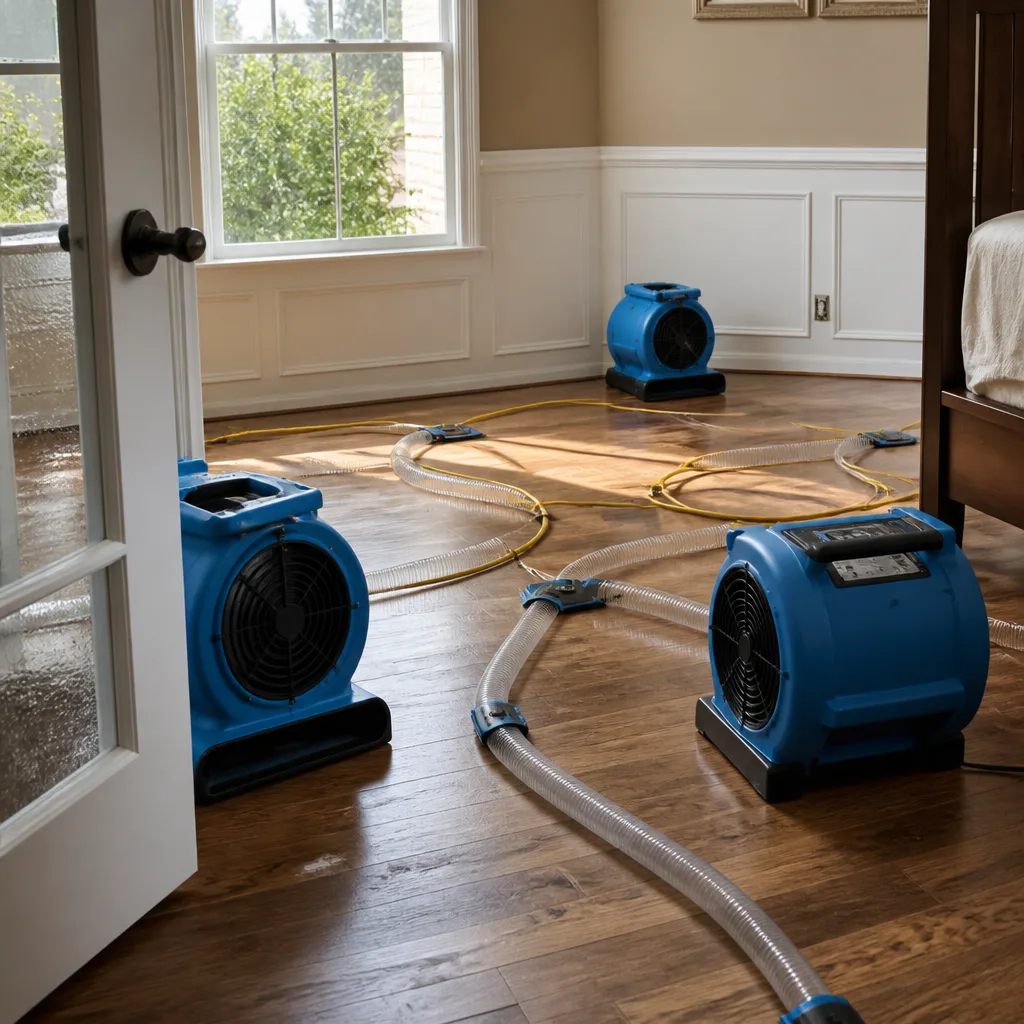
Phoenix and Dri-Eaz dehumidifiers paired with high-velocity air movers dry structural cavities, not just surfaces. In horsehair plaster, drying must be aggressive but controlled-too fast and the lime finish delaminates. We take moisture readings every single day and hand you the full log at job’s end.
Cleaning & Sanitization
Category 2 and 3 water require antimicrobial application and surface sanitization. We treat affected framing, plaster, and subfloor material to prevent mold colonization, using EPA-registered products appropriate for occupied residential units.
Asbestos & Lead-Paint Coordination
This is the step most restoration companies skip, and in Upper West Side it’s non-negotiable. If riser walls, pipe chases, or original plaster will be opened, we coordinate the required asbestos survey and NYC DEP notification. If lead paint protocols apply, we follow them. No shortcuts, because a stop-work order costs you weeks.
Repairs & Restoration
Plaster matching, lime finish work, original oak floor drying and refinishing, trim restoration. We restore to pre-loss condition using materials and methods consistent with your building’s construction. The 90-Day Done Right Promise covers the work in writing. If it’s not done right, Wade makes it right.
Need Emergency Water Damage Restoration in Upper West Side Now?
Crews minutes away, answering live 24 hours a day. The sooner we start, the less it costs.
Working With Your Insurance Company
Water damage claims in Upper West Side co-ops get complicated fast because three policies often sit in the same room: the co-op corporation’s master policy, the affected shareholder’s HO-6 policy, and the policy of whichever unit caused the loss. We deal with that so you don’t have to sit on hold with three adjusters. From the first hour, we document everything: photos room by room, moisture readings with time and date stamps, daily drying logs, and a line-item scope of work that stands up to adjuster scrutiny. Wade talks to your adjuster directly. When the adjuster has a question about whether that wall cavity actually needed to be opened, he gets an answer from the person who took the moisture readings, not from a receptionist. That direct line is why our claims proceed without the back-and-forth that stalls restoration for weeks.
What We Provide Your Insurer
- Thorough documentation of the loss
- Photos of all damage, room by room
- Moisture readings and drying logs
- A detailed, line-item scope of work
- Direct coordination with your carrier
Built for Upper West Side’s Loss Calendar
Upper West Side water damage has a rhythm, and if you’ve lived here long enough you’ve heard it: the January deep freeze that bursts supply lines in uninsulated exterior walls, the March nor’easter that drives rain through west-facing brick on Riverside Drive, the July thunderstorm that overflows the roof drain and sends water down original cast-iron stacks into a dozen units at once. Pre-war co-ops have original galvanized riser pipes that have been corroding since the Lincoln administration’s grandchildren were alive, and they fail on a schedule nobody can predict. When they do, water follows the path of least resistance: down the inside of walls, behind original picture rail, through ceiling rosettes, and into the unit below. Winter freeze-ups on Broadway and West End Avenue generate the most urgent calls because steam heat keeps apartments warm but does nothing for risers running through unheated exterior wall cavities. The pattern matters because restoration has to start within hours, not days, before water sitting in century-old plaster and lath colonizes with mold or delaminates original lime finishes.
Water Damage Restoration Across Upper West Side’s Neighborhoods
The Upper West Side runs from 59th Street to 110th Street between Central Park and the Hudson River, and the buildings change character block by block. Along Riverside Drive and West End Avenue, we’re typically working in grand 1920s co-ops with original plaster crown moldings, herringbone oak floors, and steam risers embedded in shared walls. Those buildings have freight elevator schedules, service entrances on the side street, and superintendents who know every valve in the basement. Further east, toward Central Park West and Columbus Avenue, the buildings are often older turn-of-the-century limestone and brownstone walk-ups with narrow stairwells and no elevator at all, meaning every piece of drying equipment goes up five flights by hand. The Morningside Heights edge near 110th Street has a mix of pre-war elevator buildings and institutional housing where pipe chases run in odd configurations. Around Lincoln Square and the 60s, newer high-rises built after 1960 present the opposite problem: modern drywall construction and clean access, but also modern plumbing that fails differently, often at fixture connections rather than in riser walls. The point is that response routes, equipment staging, and access planning all change depending on which block you’re on. Wade knows which buildings have 24-hour doormen, which need superintendent coordination for basement shutoffs, and which have freight elevators that require a scheduled window.
Specialized Water Damage Restoration Services We Offer in Upper West Side
Burst Pipe Restoration
Burst supply lines and failed steam risers are the single most common water damage cause in Upper West Side pre-war buildings. A split galvanized riser behind a bathroom wall can send water through ten floors in under an hour. We stop the source, extract, and dry the full vertical stack, coordinating with the co-op’s plumber and, when the riser wall must be opened, the asbestos surveyor.
Ceiling & Roof Leak Water Damage
West-facing Riverside Drive buildings take nor’easter rain head-on, and wind-driven water penetrates masonry long before any interior stain appears. What looks like a plumbing leak is often chronic masonry infiltration. We use moisture mapping to trace the actual source, dry the saturated plaster, and coordinate with your roofer or facade contractor so the fix lasts. Repeated extractions without source repair is how mold blooms start.
Emergency Water Extraction
Standing water in a UWS co-op apartment means water is already heading down to the unit below you. Our extraction crews run Dri-Eaz portable units and truck-mounted systems configured for tight pre-war stairwells and freight elevator access. We extract first, map the spread second, and start structural drying immediately. No waiting for adjusters, no equipment delays.
Basement Water Removal
Many UWS pre-war buildings have cellar levels with original masonry foundations and no modern waterproofing membrane. Summer humidity off the Hudson plus nor’easter groundwater means these basements flood chronically. We remove the water, dry the space, and document conditions for the co-op board’s insurance claim. We’ll also tell you honestly whether the building needs waterproofing, not just water removal.
What happens when you call
- 1
A real person answersNo phone trees - you reach a local pro.
- 2
You get an upfront price rangeHonest numbers before anyone is dispatched.
- 3
A background-checked tech heads outLicensed & insured, dispatched right away.
- 4
You approve before work beginsNothing starts until you say go.
Water Damage Restoration Costs in Upper West Side, NY
Expect water damage restoration in Upper West Side to run $2,400 to $11,000 for most residential losses, with the biggest variables being how many floors the water traveled, whether plaster must be matched, and whether asbestos survey and DEP notification protocols are triggered. A single-unit Category 1 loss with fast response and no wall opening might sit at the low end. A Category 2 steam-riser failure affecting five units with plaster restoration, asbestos coordination, and original floor drying could reach the high end or beyond. Ceiling and roof leak damage on Riverside Drive buildings often lands in the $3,500 to $7,500 range once you factor in plaster repair and repainting. Emergency water extraction alone typically costs $700 to $2,000 depending on standing water volume and access difficulty. Insurance covers most of these costs when the cause is sudden and accidental, but gradual masonry infiltration claims get denied more often. We’ll give you a free visual inspection and a written scope before any work starts, so you know exactly where you stand. Call (607) 350-1550 and Wade will walk you through it.
We Also Serve Cities Near Upper West Side
Wade’s Restoration handles water damage restoration across the metro. If you’re in Lower Manhattan, the Financial District, Astoria, or Midtown Manhattan, the same crew and the same 45-minute response commitment apply. Same live answer, same owner on site, same written scope before work starts. Call (607) 350-1550 and you’ll reach Wade.
Serving Upper West Side, NY - Our Local Coverage Area
We’re based in the Upper West Side area and know this community well. Use the map below to see our service coverage - if you’re nearby, we can almost certainly help.
Upper West Side Water Damage Restoration Questions, Answered
Why can’t you just open the wall behind my Upper West Side radiator to dry the riser?
Because the original insulation wrapped around those riser pipes tests positive for friable asbestos in most UWS pre-war buildings, and opening that wall without a DEP-notification asbestos abatement in place triggers a stop-work order and exposes everyone in the unit to airborne fibers. The sequence has to be: asbestos survey first, then containment, then wall opening, then drying. We coordinate that whole sequence so your restoration doesn’t stall for weeks.
Who pays when a burst pipe in a co-op apartment floods the 10 floors below?
The answer depends on your building’s proprietary lease, not on standard condo law. Typically the co-op’s master policy covers the building damage, each shareholder’s HO-6 policy covers their own unit improvements, and the causing unit’s policy may be liable for deductibles or gaps. Wade’s Restoration documents everything so each carrier gets exactly what they need, and Wade talks to the adjusters directly so you don’t have to negotiate three policies at once.
My pre-war plaster walls feel damp but show no stain. How do you find the source in a Riverside Drive building?
Wind-driven rain on west-facing masonry penetrates brick long before any interior staining appears, so we use thermal imaging and penetrating moisture meters to map where the water is actually sitting, then trace it back to the exfiltration point. In Riverside Drive buildings this is usually chronic masonry infiltration, not a plumbing leak. We find the source, document it for your co-op board, and dry the plaster before mold colonizes.
Can you dry the original oak floors in my landmarked West End Avenue co-op without sanding them?
Yes. We use Injectidry panel systems and low-heat structural drying that pull water out through the top surface without requiring sanding or refinishing. Original herringbone and parquet floors in landmarked West End Avenue co-ops can often be saved if extraction starts within hours. Daily moisture readings tell us exactly when the floor is dry and stable again.
How fast can mold start in a flooded pre-war co-op basement after a nor’easter?
Mold colonization can begin within 24 to 48 hours in a saturated UWS cellar, especially in summer when Hudson River humidity rises and century-old masonry foundations have no waterproofing membrane. That’s why we treat emergency basement water removal as a mitigation call, not a routine extraction. We set drying equipment the same day, take daily readings, and hand you the log showing the space reached dry standard.
How fast can you actually get to an Upper West Side address?
Wade keeps extraction equipment staged for UWS response and typically has crews on site within 45 minutes. He’s on the road himself, not dispatching from a call center. Freight elevator buildings or fifth-floor walk-ups add a few minutes to staging, but the extraction usually starts inside the hour when you call (607) 350-1550.
Does insurance cover water damage restoration in a co-op apartment?
Sudden and accidental losses like burst pipes and overflow events are typically covered by the relevant policy, whether master or HO-6. Gradual issues like chronic masonry infiltration or long-term seepage get denied more often. We document everything from the first hour and talk directly to your adjuster, which is the best way to maximize what your claim covers.
What should I do in the first 30 minutes after a pipe bursts in my Upper West Side apartment?
Shut off the water at the nearest valve or the building’s main, move valuables off the floor, and call (607) 350-1550. Don’t use a wet-vac on standing water if you don’t know the category, and don’t open walls yourself. The faster extraction starts, the less likely you are to need major plaster replacement or floor work. Wade answers live and can be on the road within minutes.
Written by Wade Ferris, Owner at Wade’s Restoration, serving Upper West Side for over 29 years. Ask anyone on your street. To wade is what you do through a flooded basement at two in the morning, and it happens to be his name.