
Free visual inspection and a written scope of work before any mitigation begins - photos, moisture readings, and drying logs go in your claim file
The scope we write is the scope we bill. Anything new gets shown to you, in writing, before we touch it.
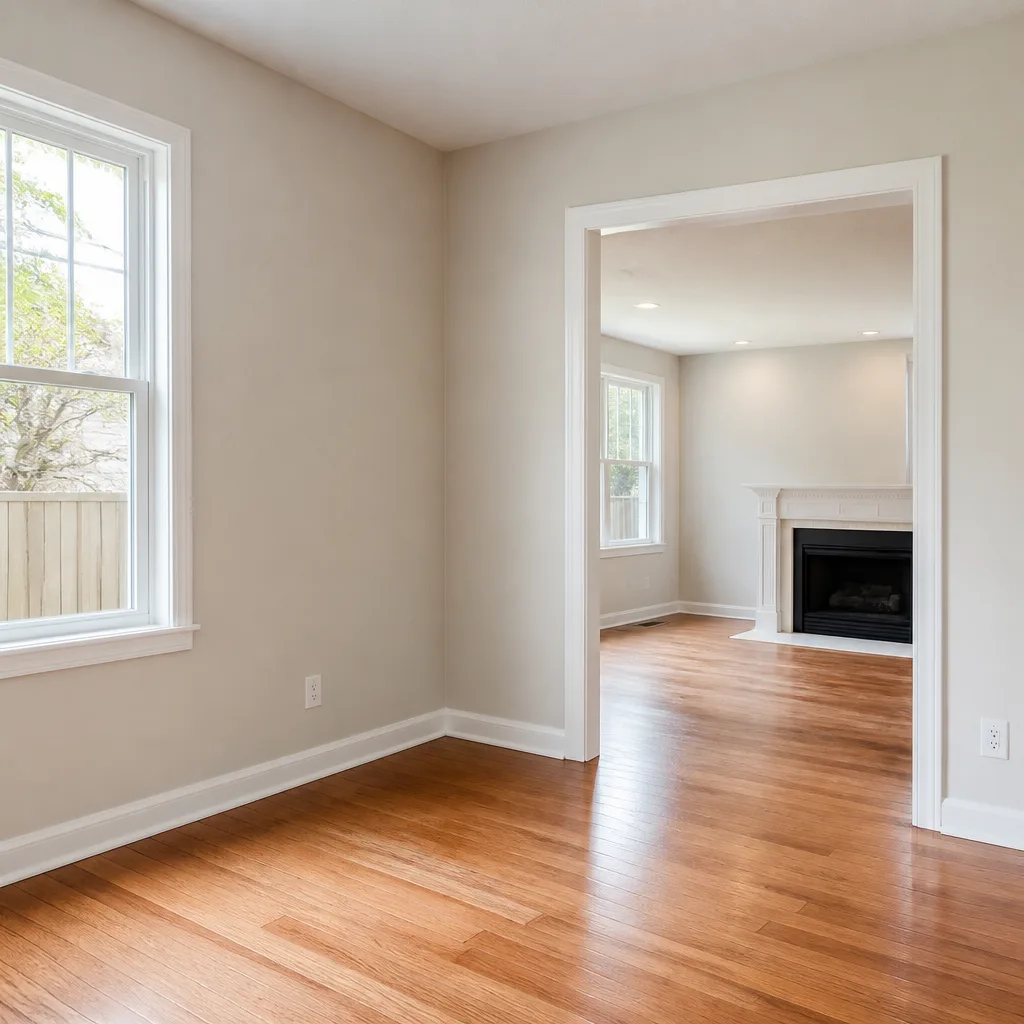
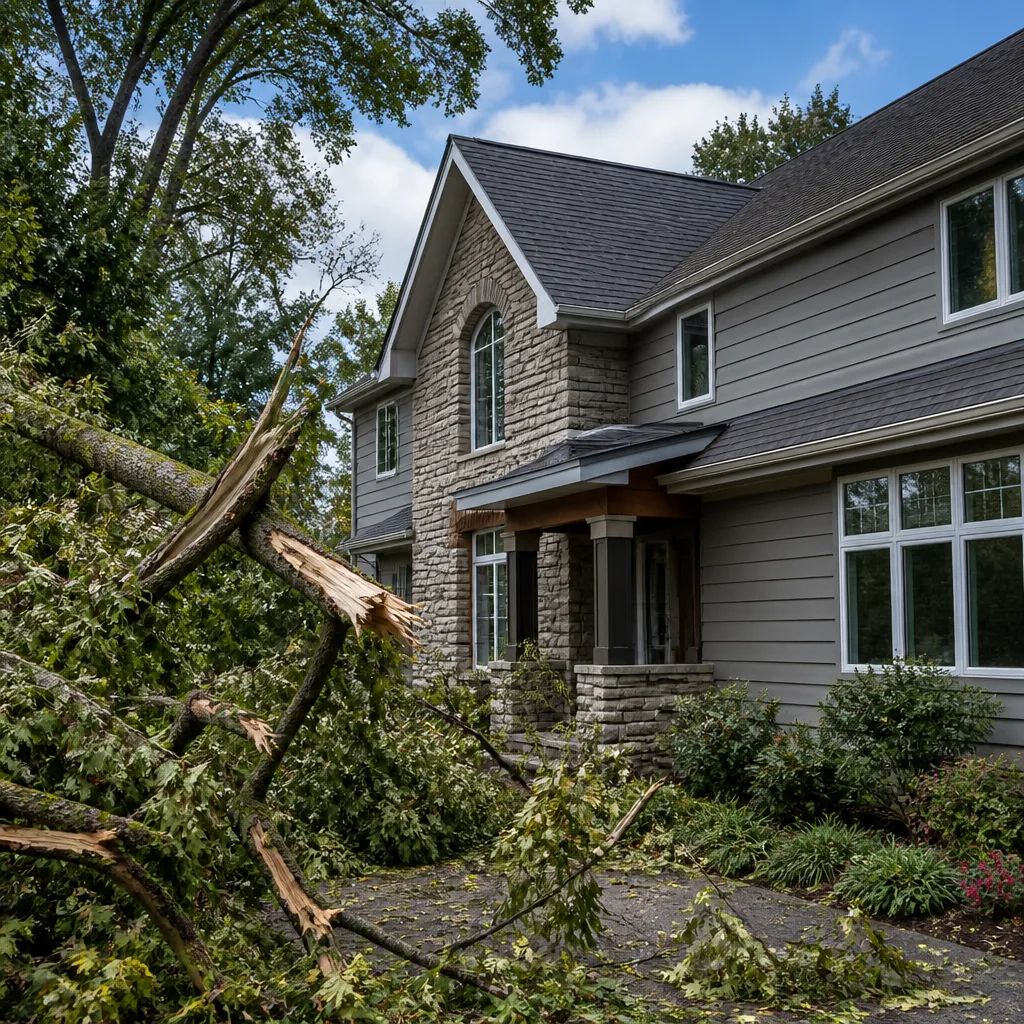
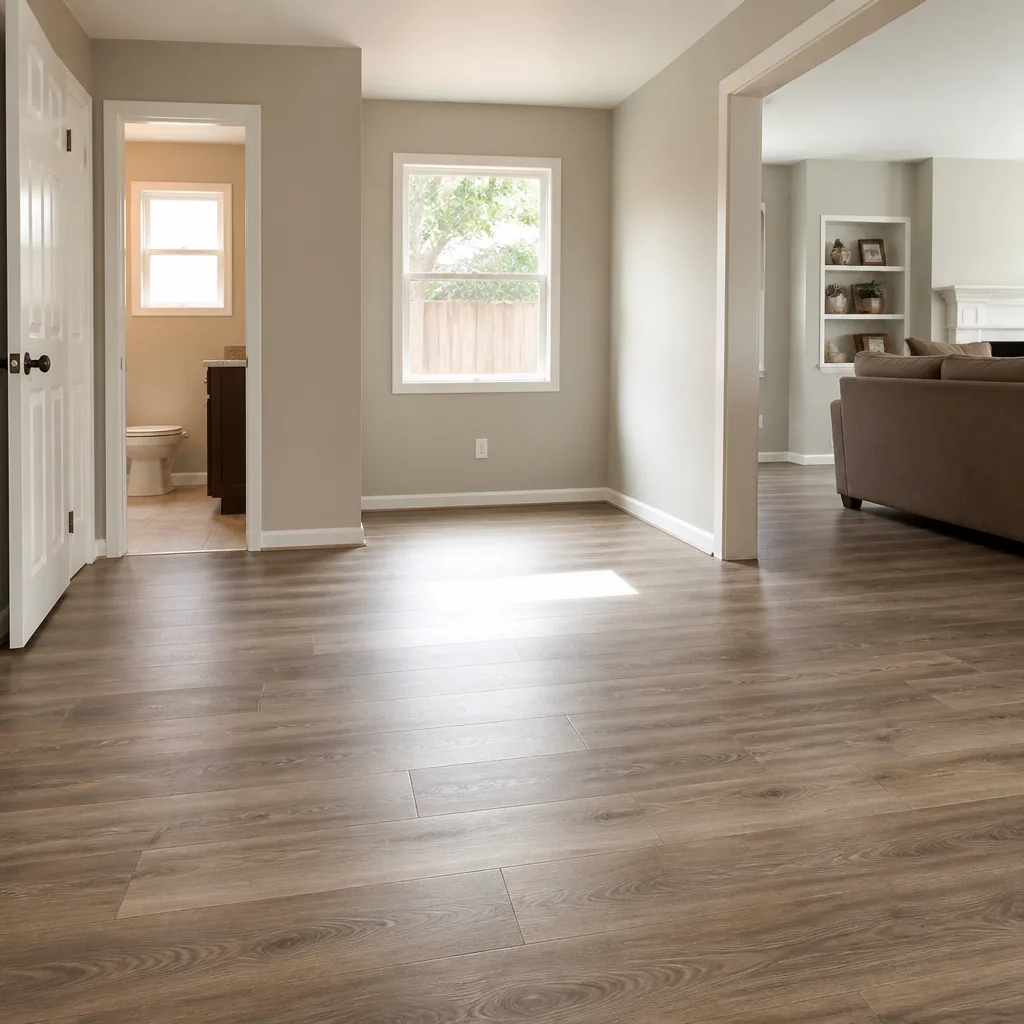
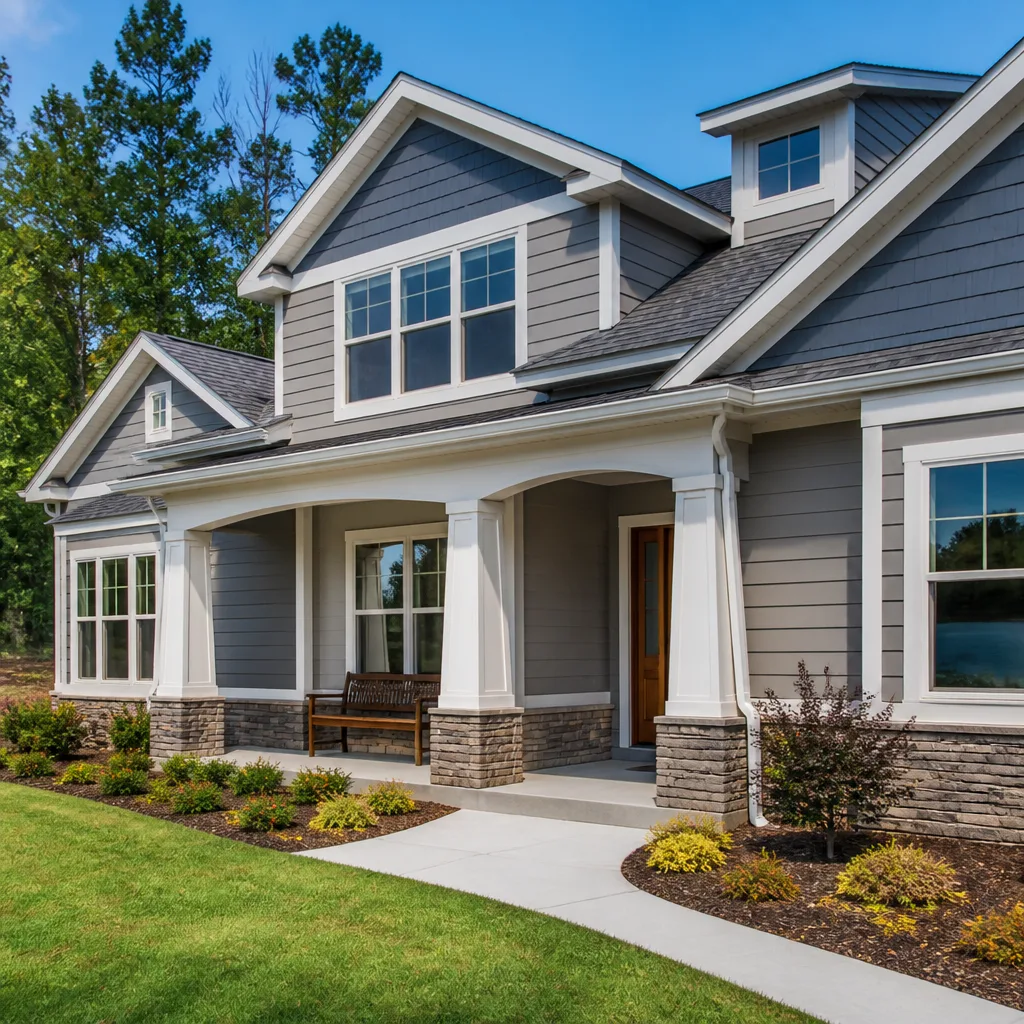
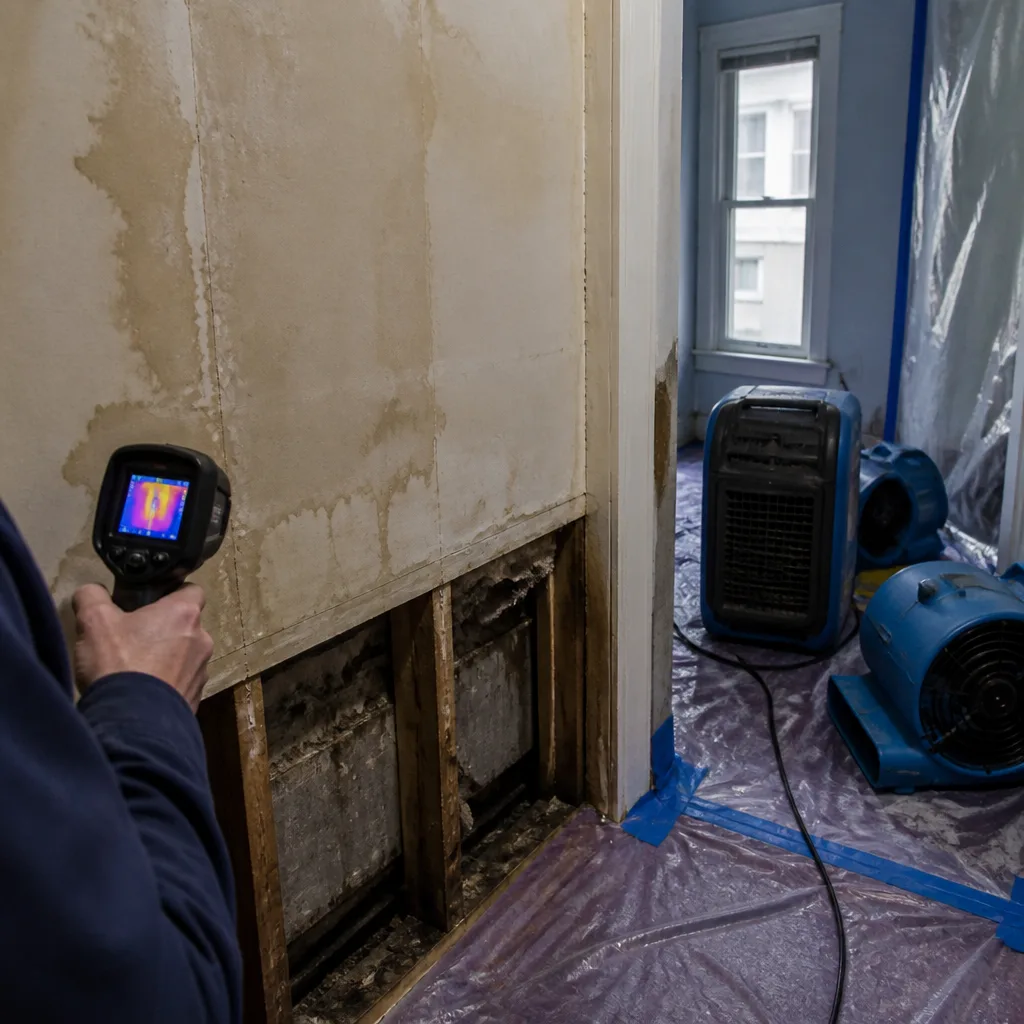 Before
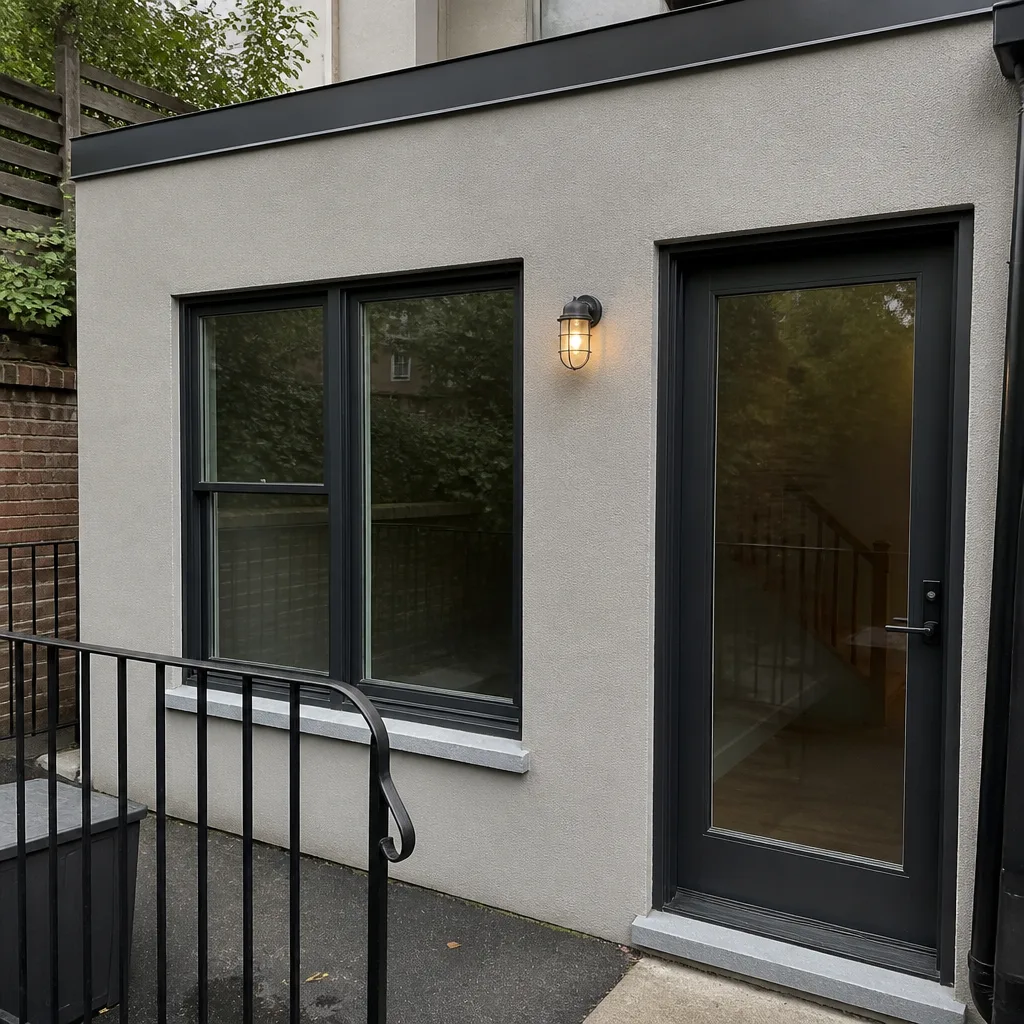 After
After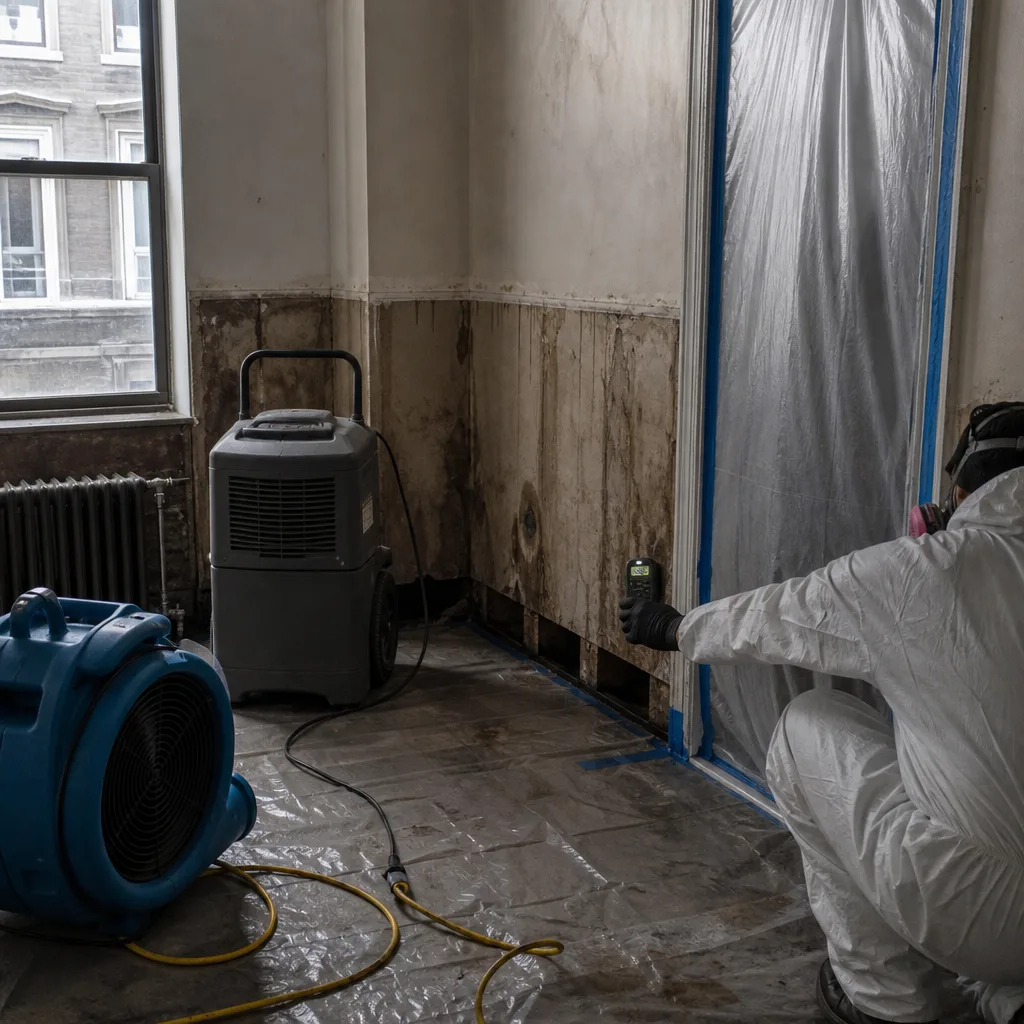 Before
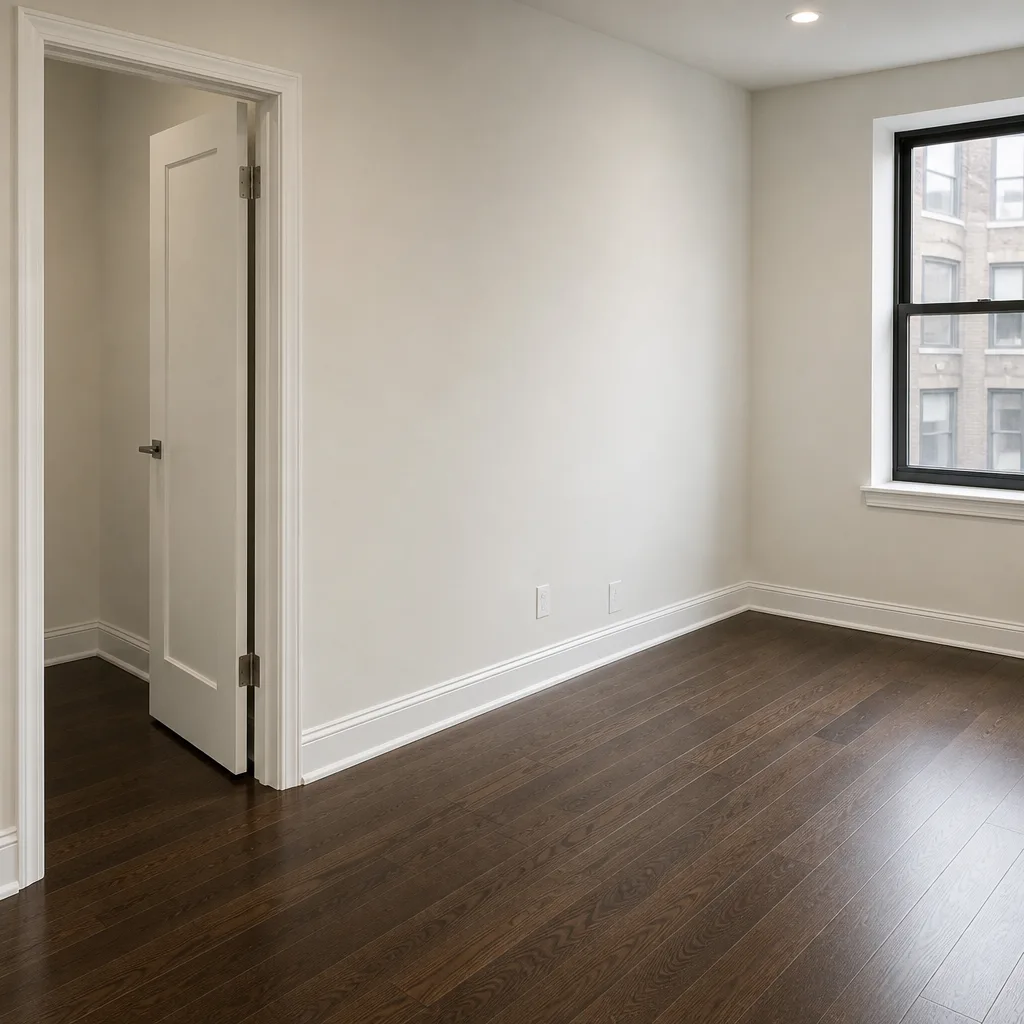 After
After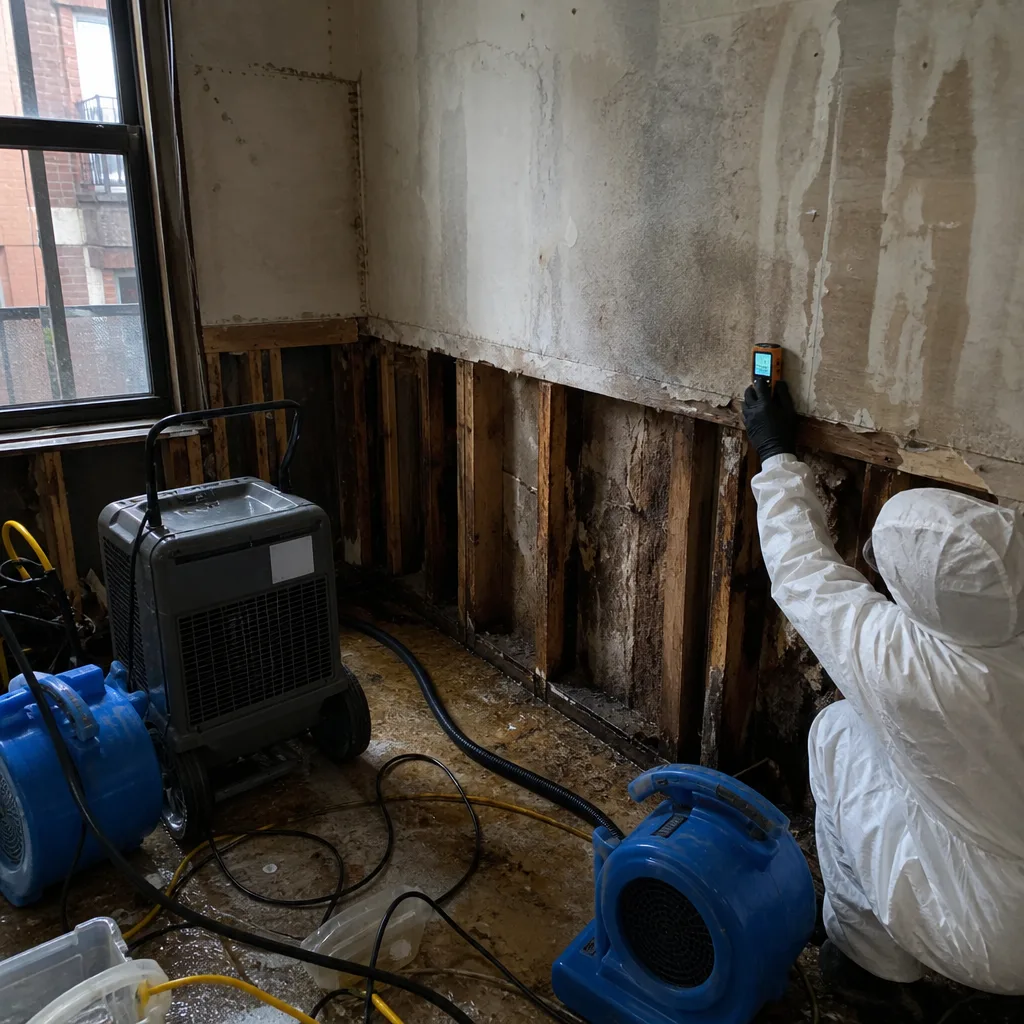 Before
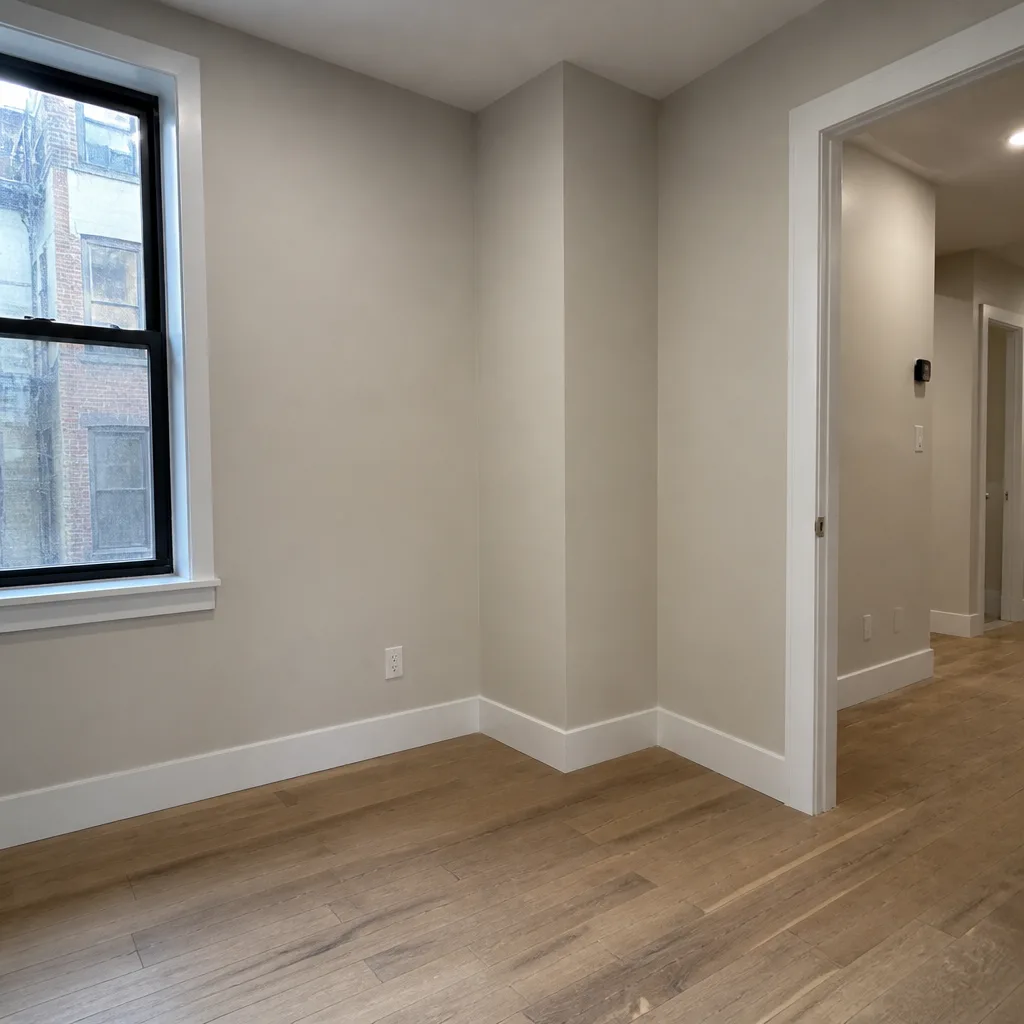 After
After24/7 Emergency Storm & Disaster Restoration in Lower Manhattan
Storm damage in Lower Manhattan doesn’t wait for business hours, and neither do we. A nor’easter pushing harbor water into a Battery Park City sub-basement at 2 a.m. or a wind-driven branch through a FiDi loft window on a Sunday afternoon: we answer live, every time, and Wade heads out himself. Call (607) 350-1550 the moment you see water, broken glass, or roof damage. The first hour decides whether you’re drying drywall or replacing it. Our crews are minutes from the Financial District, Battery Park City, and the Seaport, with extraction equipment ready to run inside the hour. Free visual inspection, no trip charge in our own county, and a written scope before any work starts.
Understanding Storm & Disaster Restoration Severity in Lower Manhattan Properties
Storm and disaster restoration in Lower Manhattan breaks into three clean tiers, and the difference matters to your wallet and your timeline. Tier one is clean rainwater intrusion from a window or roof breach: Category 1 water, which we can usually dry in place with air movers and dehumidifiers without removing drywall. Tier two is Category 2 water, meaning significant contamination from ground contact or building system backflow. Tier three is what Lower Manhattan knows too well: Category 3 water. That’s harbor water, sewage, and street runoff mixed together, pushing into sub-basements, elevator pits, and below-grade storage. Category 3 requires containment, antimicrobial treatment, and often pack-out and disposal of porous materials. In the converted commercial lofts around Pearl Street and Water Street, the field-adapted plumbing and HVAC from office-to-residential conversions create dead air zones that standard drying protocols miss. That’s why we run thermal imaging and moisture mapping on every job, and why we log readings daily instead of guessing.
Why Lower Manhattan Property Owners Choose Wade’s Restoration
- 45-minute response commitment: If you’re in Lower Manhattan and call with active water, Wade is on the road within the hour, usually faster.
- 24/7 live answer: A real person picks up the phone. Wade answers his own cell. No voicemail, no answering service, no call center.
- IICRC-certified crews: Our people hold WRT, FSRT, and AMRT certifications, so the drying plan we write is based on actual standards, not guesses.
- Free visual inspection: We look, we measure, we write the scope. You don’t pay for the assessment, and you see the plan before you sign.
- Direct insurance billing: We document everything from hour one and bill your carrier directly, so you’re not the middleman on your own claim.
- One team, start to finish: The same crew that extracts the water is the crew that hangs the drywall. No handoffs, no strangers showing up mid-job.
Our Storm & Disaster Restoration Process
Inspection & Assessment
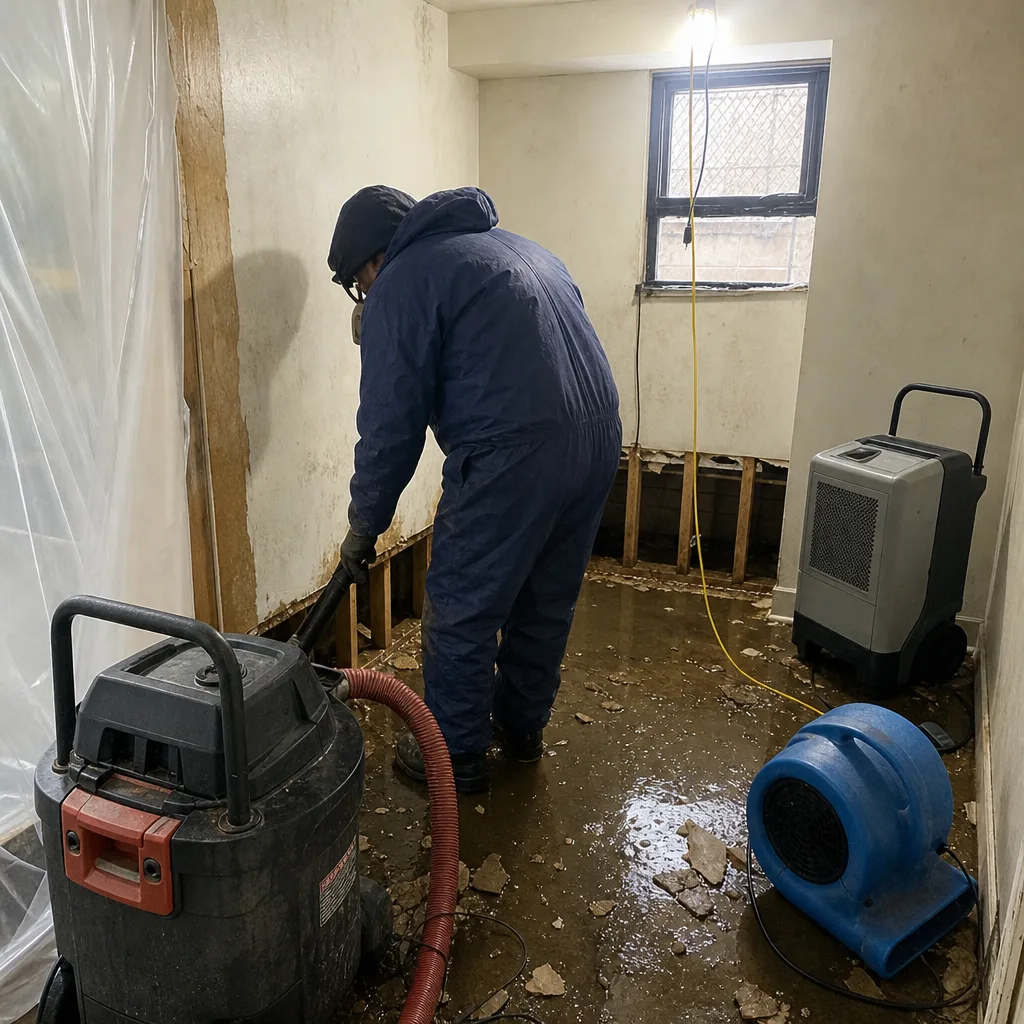
We arrive, we walk the space with you, and we map every affected surface with moisture meters and thermal imaging. You get the findings in writing before any equipment comes off the truck.
Extraction & Stabilization
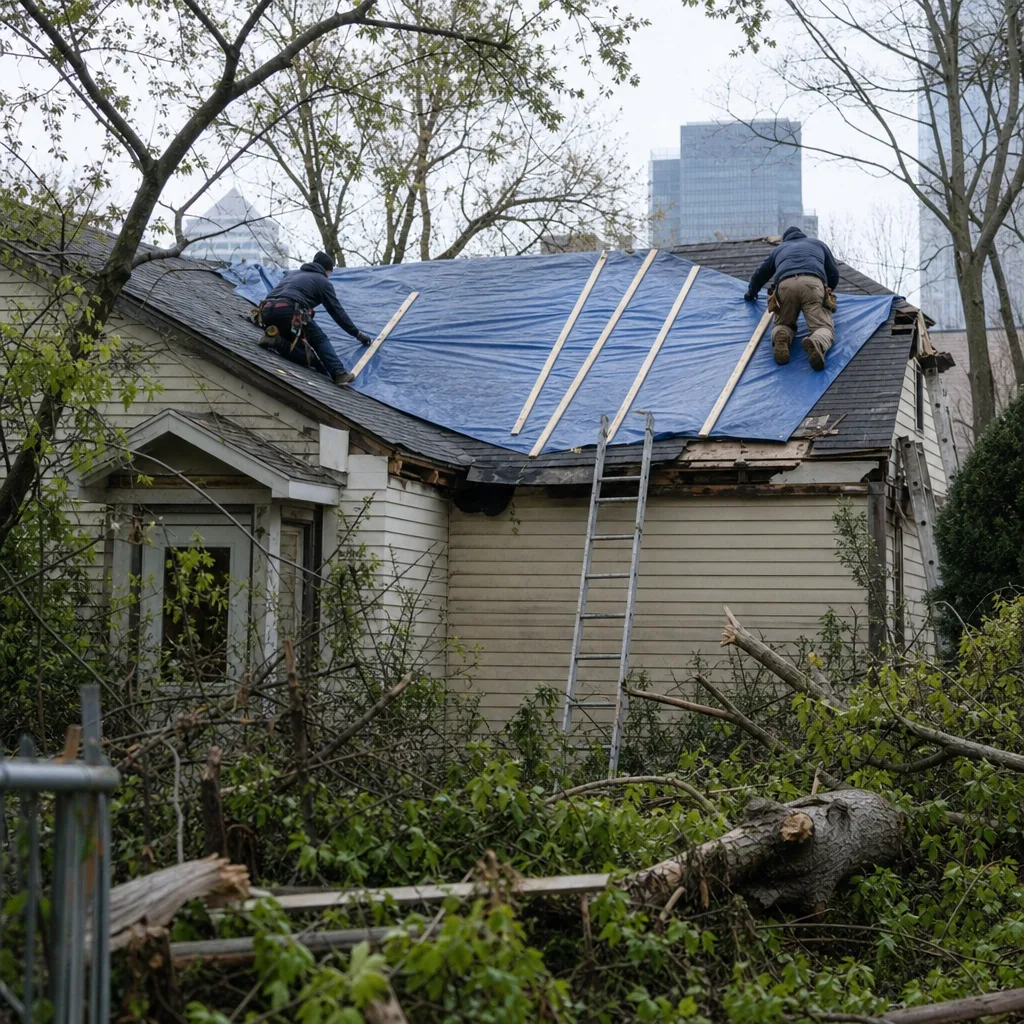
For flood jobs, we run truck-mounted and portable extractors immediately. For wind and storm damage, we board up openings and tarp roofs to stop additional water from coming in while we work.
Drying & Dehumidification
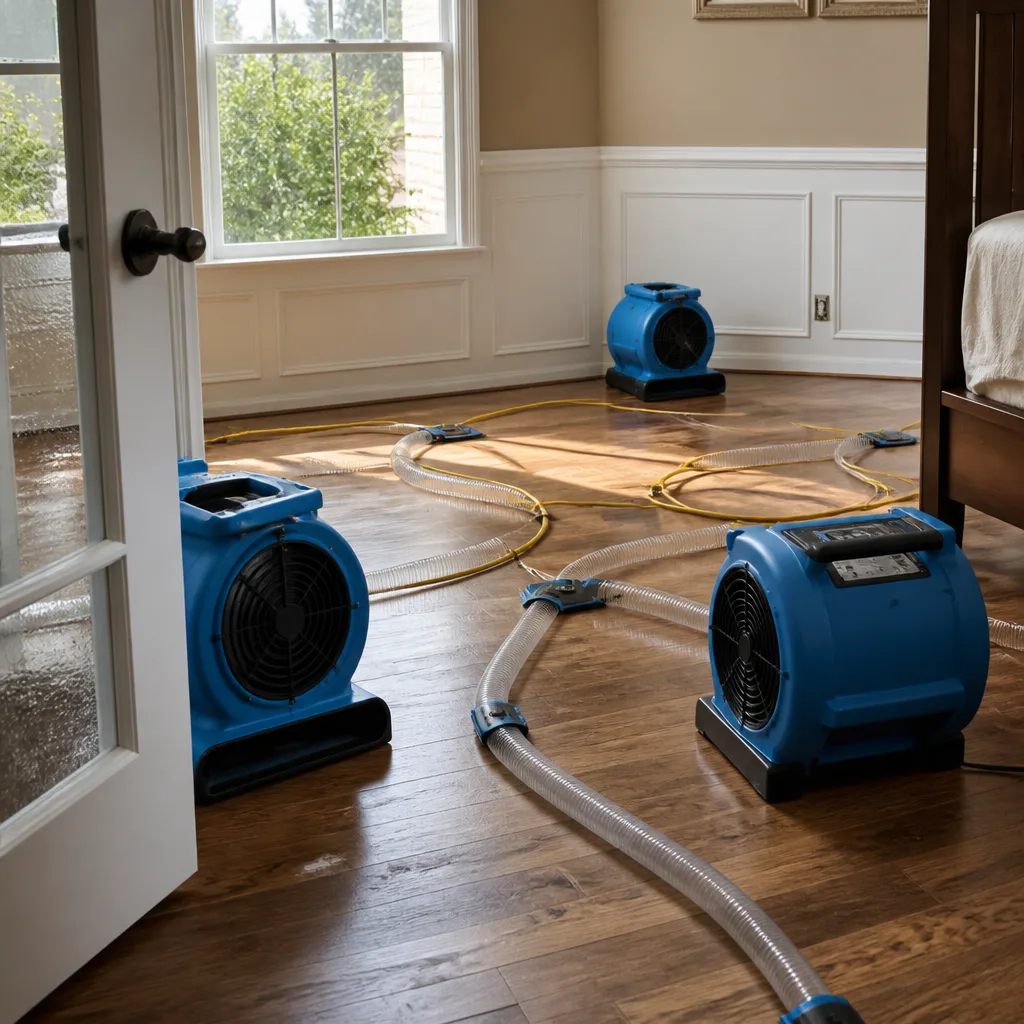
We set Dri-Eaz and Phoenix dehumidifiers with XPOWER air movers, then we come back daily to log readings. In Battery Park City’s landfill-foundation buildings, we keep monitoring longer because fill stays saturated for weeks.
Cleaning & Sanitization
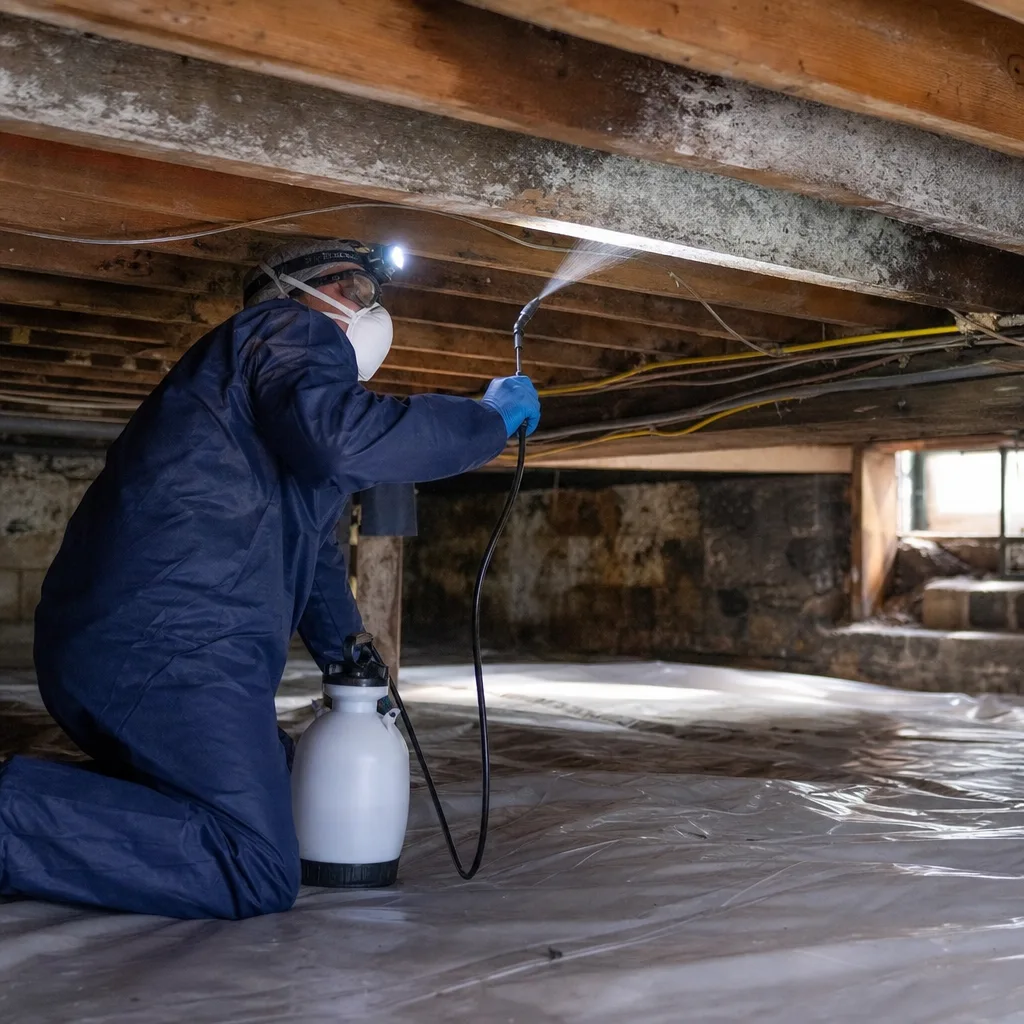
Category 3 water means antimicrobial treatment on every surface the water touched. We set containment with HEPA air scrubbers during the process so spores and contaminants don’t migrate to unaffected rooms.
Specialty Storm Treatment
Lower Manhattan gets saltwater. We flush surfaces to remove chloride residue, treat corrosion-prone metal in elevator pits and electrical rooms, and document everything for your insurer.
Repairs & Restoration
Once the space tests dry to standard, we rebuild: drywall, trim, flooring, paint. The same crew that extracted the water handles the reconstruction, with your 90-Day Done Right Promise in writing.
Need Emergency Storm & Disaster Restoration in Lower Manhattan Now?
Crews minutes away, answering live 24 hours a day. The sooner we start, the less it costs.
Working With Your Insurance Company
Storm damage claims in Lower Manhattan are complicated by the age and construction of the buildings. Pre-war masonry towers with converted residential lofts, Battery Park City high-rises on river fill, commercial sub-basements below the water table: the adjuster needs documentation that speaks to what actually happened, not a generic water damage report. We handle that. From the first hour, we photograph everything, log moisture readings daily, and write a line-item scope of work that matches the real condition of the building. Wade communicates with your adjuster directly, so you don’t spend your week relaying messages between us and your carrier.
What We Provide Your Insurer
- Thorough documentation of the loss
- Photos of all damage, room by room
- Moisture readings and drying logs
- A detailed, line-item scope of work
- Direct coordination with your carrier
Built for Lower Manhattan’s Loss Calendar
Lower Manhattan’s storm calendar runs hot and cold, and the buildings know it. January and February bring deep freezes that burst supply lines in converted FiDi lofts where plumbing runs through unheated cores built a century ago. March and April deliver spring thaw and heavy rain; combined with the near-sea-level elevation, that means groundwater intrusion in sub-basements and seepage through foundation walls in Battery Park City. July and August thunderstorms dump inches of rain in an hour, overwhelming roof drains and flooding low-lying mechanical rooms near Whitehall Street and the Battery. Then come the nor’easters, pushing storm surge into the Financial District, flooding elevator pits and electrical vaults that sit below the harbor’s water table. Every season has a signature loss here, and our crews are set up for all of them.
Storm & Disaster Restoration Across Lower Manhattan’s Neighborhoods
Battery Park City carries the strangest water profile in the borough. Built on compacted river fill, its towers hold groundwater against below-grade walls for weeks after a surge recedes, so our drying timelines run longer and include temporary sump augmentation when the foundation weep won’t stop. The Financial District is mostly converted commercial stock: old masonry buildings with sub-basements below the water table and HVAC systems that were never designed for residential humidity loads. Jobs near Wall Street and Broad Street usually involve elevator pit water and electrical room salt damage. The Seaport area around Fulton and Front Streets mixes landmark brick buildings with newer residential conversions, and we’ve seen chronic low-level tidal flooding there even without named storms. TriBeCa’s edge properties, along West Street and the West Side Highway, face wind-driven rain and roof membrane failures on converted industrial buildings with wide floor plates that are hard to dry efficiently. We run routes down West Street, Broadway, and Water Street daily, so a call from any of these neighborhoods gets a fast response.
Specialized Storm & Disaster Restoration Services We Offer in Lower Manhattan
Flood Damage Restoration
Lower Manhattan floods differently than anywhere else in the city. Storm surge in the Financial District and Battery Park City pushes Category 3 saltwater into sub-basements, elevator pits, and mechanical rooms, and the salt leaves corrosion behind long after the water is gone. We extract, flush surfaces to remove chlorides, set drying equipment sized for the building’s actual vapor load, and run antimicrobial treatment on every affected surface. More on our Storm & Disaster Restoration capabilities.
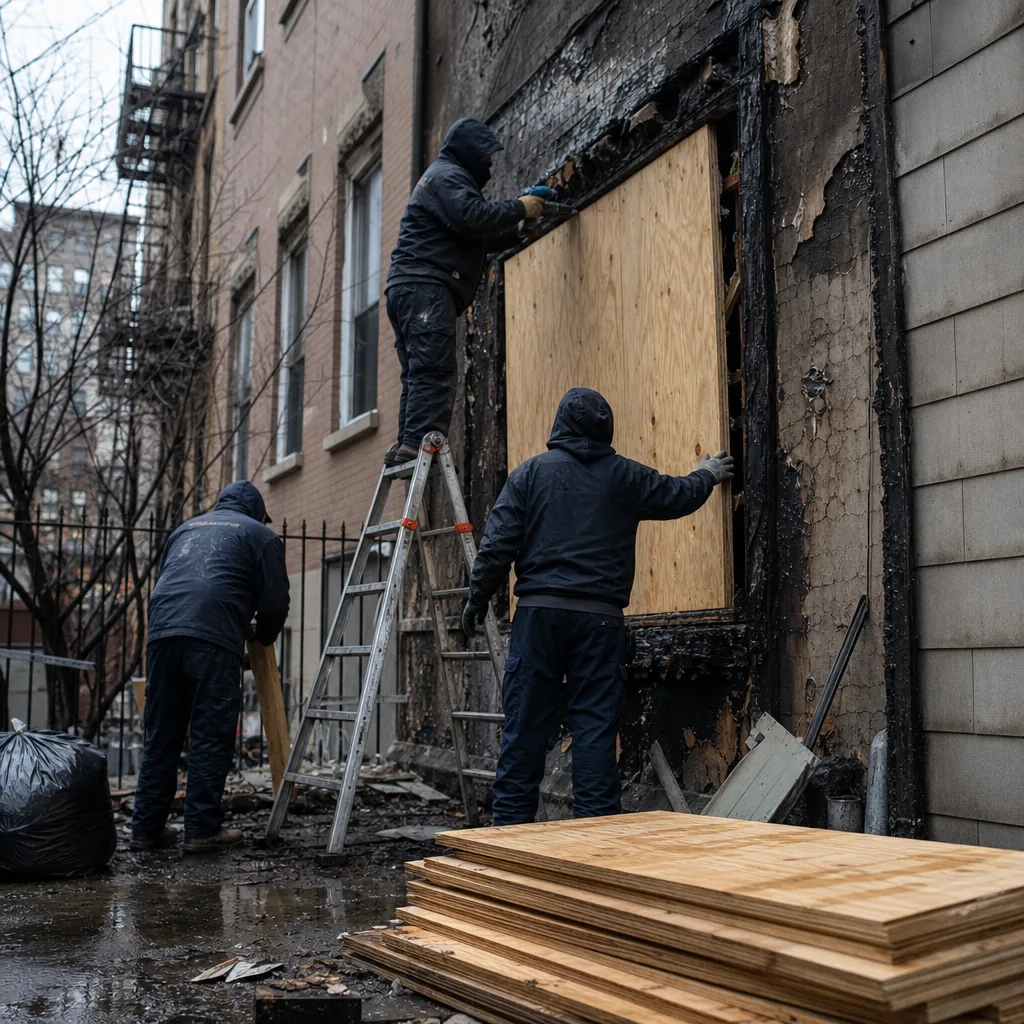
Storm Damage Cleanup
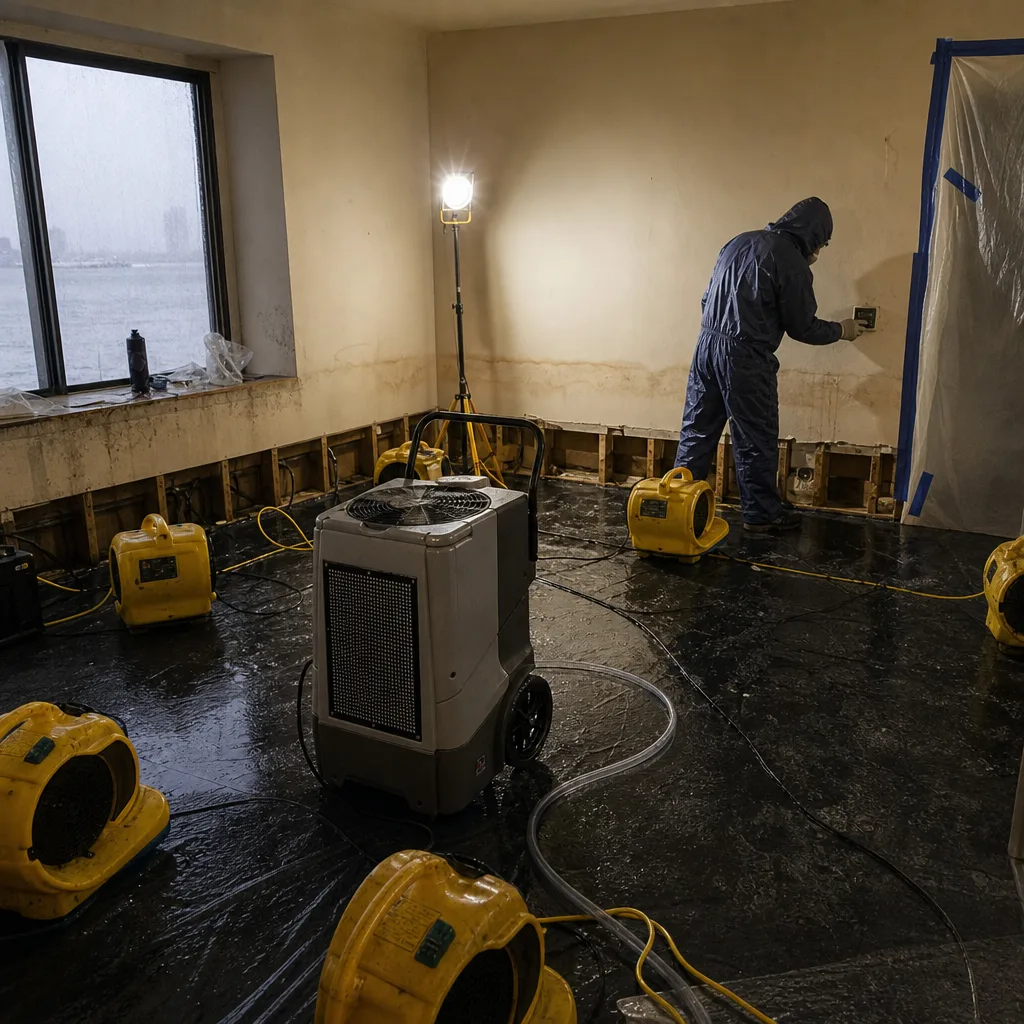
Wind-driven debris, broken glass from office tower facades, and waterlogged drywall from roof leaks are common after a nor’easter hits Lower Manhattan. We remove damaged materials, set containment, and dry the structure so you’re not living with a mold clock running. The team at Lower Manhattan knows which buildings to expect damage in based on exposure, and we pre-stage equipment before heavy weather when the forecast warrants it.
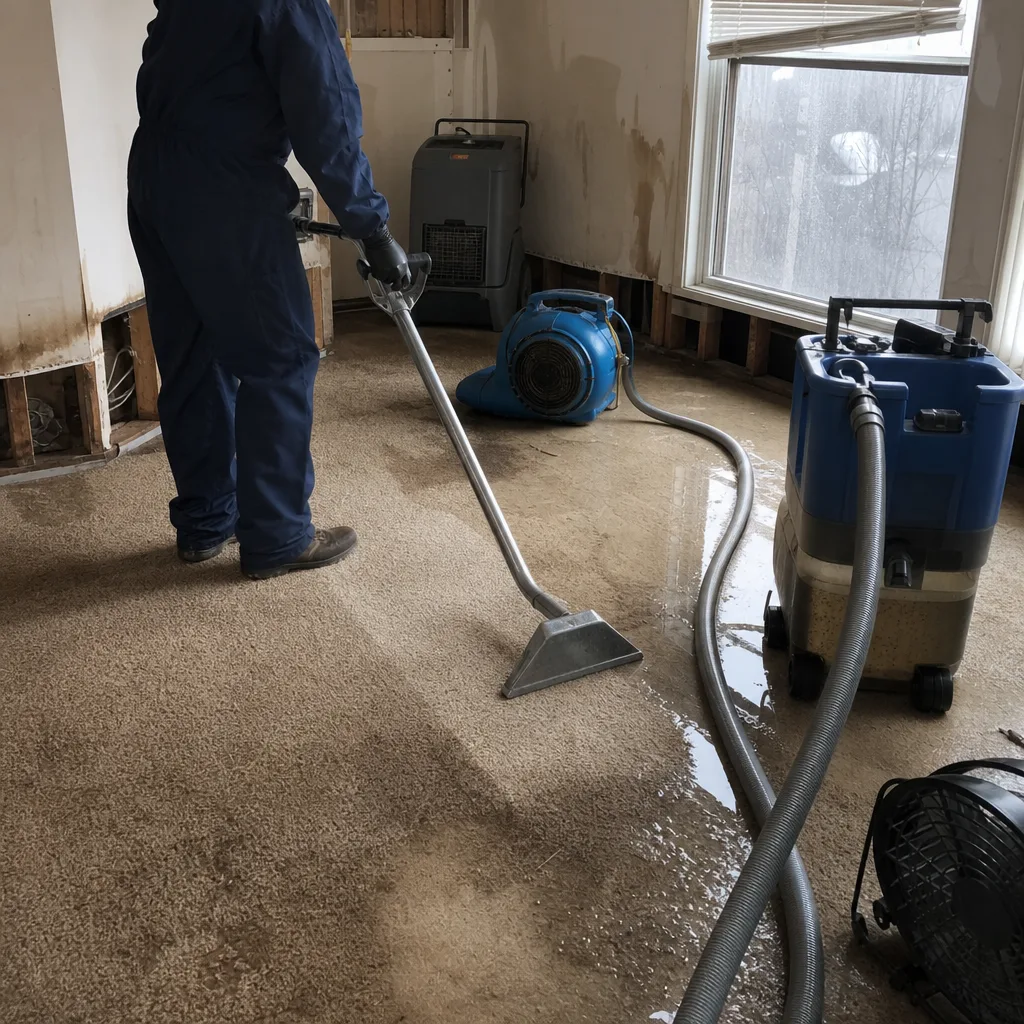
Emergency Board-Up
Broken windows and blown-out entry doors in Lower Manhattan are urgent for two reasons: weather keeps coming in, and street-level access in a dense downtown means security matters. We board up openings with plywood, seal roof penetrations, and secure the space so you can leave the property without worrying about more damage or unwanted entry.
Roof Tarping
Commercial and residential roofs in the Financial District take wind loads off the harbor that most of the city never sees. When membrane or flashing fails, we tarp the affected area same-day, tie it down for high wind, and photograph everything for your insurer. Then we write the full repair scope.
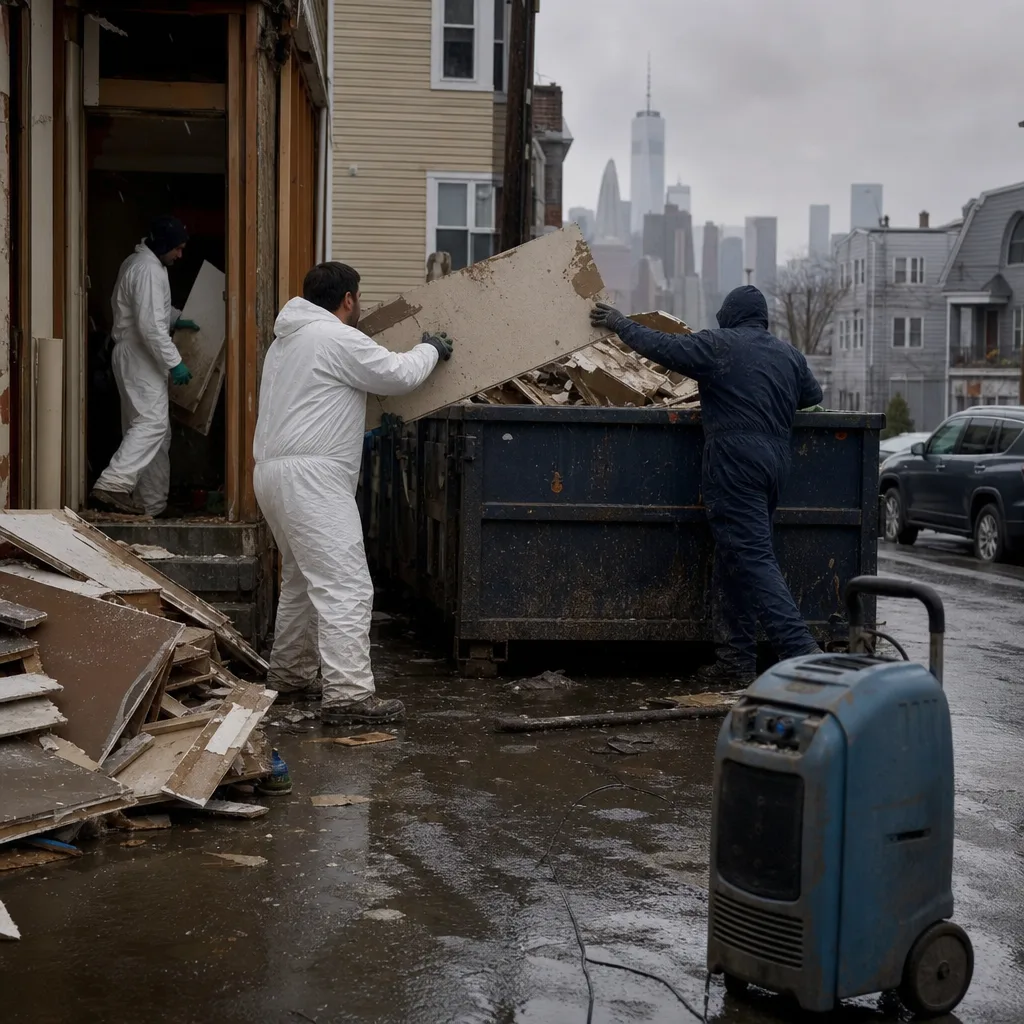
Debris Removal
After a storm, Lower Manhattan sidewalks and rooftops carry a mix of building materials, glass, and soaked contents. We haul it all, separate what’s salvageable, and document the disposal for your claim. No hidden dump fees, no surprise charges.
What happens when you call
- 1
A real person answersNo phone trees - you reach a local pro.
- 2
You get an upfront price rangeHonest numbers before anyone is dispatched.
- 3
A background-checked tech heads outLicensed & insured, dispatched right away.
- 4
You approve before work beginsNothing starts until you say go.
Storm & Disaster Restoration Costs in Lower Manhattan, NY
Flood damage restoration in Lower Manhattan typically runs $3,500 to $12,000 for a contained sub-basement or loft intrusion, depending on the square footage and water category. Roof tarping and emergency board-up usually run $400 to $1,800, depending on access and materials. Full restoration after a storm surge, including pack-out, drying, antimicrobial treatment, and reconstruction, runs $15,000 to $60,000 or more for larger converted-commercial lofts and below-grade spaces. What moves the price: water category, how long the water sat, whether saltwater corrosion requires electrical or mechanical work, and whether your building’s fill keeps wicking water after the surface is dry. Most of our Lower Manhattan jobs are insurance-covered, especially surge events, and we bill your carrier directly. The fastest path to a firm number is a free visual inspection and a written scope. Call Wade for that estimate at (607) 350-1550.
We Also Serve Cities Near Lower Manhattan
We run storm and disaster jobs throughout the Financial District, Astoria, Midtown Manhattan, and Long Island City. If your building is anywhere in that radius, we’re already in the area most days.
Lower Manhattan Storm & Disaster Restoration Questions, Answered
Why does my Battery Park City building still have water seeping into the sub-basement days after the street flooding is gone?
Battery Park City sits on compacted river fill from the 1970s World Trade Center excavation, and that fill stays saturated for weeks after a surge recedes. You’re seeing hydrostatic pressure pushing groundwater through below-grade walls, not leftover flood water. The fix is extended monitoring, temporary sump augmentation, and sometimes targeted waterproofing at the wall-to-slab joint. We keep drying equipment on-site longer here than in other neighborhoods because the standard 72-hour drywall reading doesn’t tell you what the fill is doing behind the wall.
My Financial District loft was converted from an office and flooded - can you dry the internal walls without ripping out the original masonry?
Usually yes, but the answer depends on what the walls are built of and how long the water sat. Converted commercial lofts in the Financial District often have original masonry behind newer drywall, and the HVAC returns from the office conversion often don’t reach sub-basement or interior rooms. We dry the masonry with specialized techniques while containing dust and moisture so the drywall doesn’t become a mold source. In some cases we remove the drywall face to expose masonry for direct drying, then rebuild with materials that breathe better in that environment.
How do you handle saltwater flooding in an elevator pit under the Financial District?
Saltwater is a different animal than freshwater in an elevator pit. We extract, then flush the pit and surrounding equipment with corrosion-inhibiting agents. Salt residue left behind keeps eating at metal, so a standard extraction without flushing guarantees future failures. We also document the pit’s condition and the salt levels for your insurer, because elevator repairs after surge events are often a significant line item on the claim. If you call us in Lower Manhattan with pit water, we send someone who knows what salt does to hydraulic and traction equipment.
Do I need board-up and roof tarping before you can start flood cleanup in Lower Manhattan?
Not always, but if the building envelope is open, board-up and tarping come first. You can’t dry a space while rain and wind keep coming in. We handle the emergency securing at the same visit as the initial assessment, then we start extraction and drying. The board-up and tarping are covered by insurance in most Lower Manhattan claims because they’re necessary to protect the property from further damage.
How is restoring a flooded converted loft in the Financial District different from a brownstone flood uptown?
Converted Financial District lofts were designed as offices, not homes. Plumbing and HVAC were retrofitted during the conversion, often with non-standard layouts and air returns that don’t reach sub-basements or interior cores. That means moisture pockets form in dead air zones, and standard drying protocols leave you with mold bloom days after sign-off. We moisture-map the entire space, identify the dead zones, and size drying equipment for what the building actually is, not what a cookie-cutter estimate says. Lower Manhattan converted lofts also have masonry construction that holds water differently than brownstone wood framing.
How fast can you actually get to my building in Lower Manhattan?
If you call us with active water in Lower Manhattan, we commit to a 45-minute response. Wade answers his own phone and heads out directly. We keep crews staged near the Financial District and Battery Park City during storm season, so a nor’easter or surge event doesn’t leave you waiting on a regional dispatch queue.
Will my insurance cover saltwater flood damage in Lower Manhattan?
Most Lower Manhattan buildings carry flood insurance through NFIP or private carriers because of the coastal exposure, and storm surge claims are typically covered under flood policies. Wind-driven rain and roof damage are often covered under standard property policies. We document from hour one, photograph everything, and coordinate directly with your adjuster. The key is accurate categorization of the water source, because that determines which policy responds. We write the scope accordingly.
What should I do in the first 30 minutes after I find water in my Lower Manhattan property?
Call us first: (607) 350-1550. Then, if it’s safe, turn off power to the affected area, especially if water is near electrical panels. Don’t enter standing water if you’re unsure whether it’s electrified. Move what you can lift without risk, but don’t spend 30 minutes hauling furniture when we’ll be there to help. The priority is getting extraction running. Saltwater and sewage water get worse every hour they sit, and in Lower Manhattan’s converted buildings, the damage spreads through old construction joints faster than you’d think.
Serving Lower Manhattan, NY - Our Local Coverage Area
We’re based in the Lower Manhattan area and know this community well. Use the map below to see our service coverage - if you’re nearby, we can almost certainly help.
Get a Free Storm Damage Assessment in Lower Manhattan
If you’ve got water, wind damage, or a roof leak in Lower Manhattan, call us now. Wade answers his own phone, day or night, and he will be there himself. The assessment is free, the scope is written before any work starts, and your 90-Day Done Right Promise is in writing on every job. Call (607) 350-1550. If it’s storm damage, the first hour matters; don’t spend it waiting on a call center.
Written by Wade Ferris, Owner at Wade’s Restoration, serving Lower Manhattan and the surrounding area since 2007.