
Free visual inspection and a written scope of work before any mitigation begins - photos, moisture readings, and drying logs go in your claim file
The scope we write is the scope we bill. Anything new gets shown to you, in writing, before we touch it.
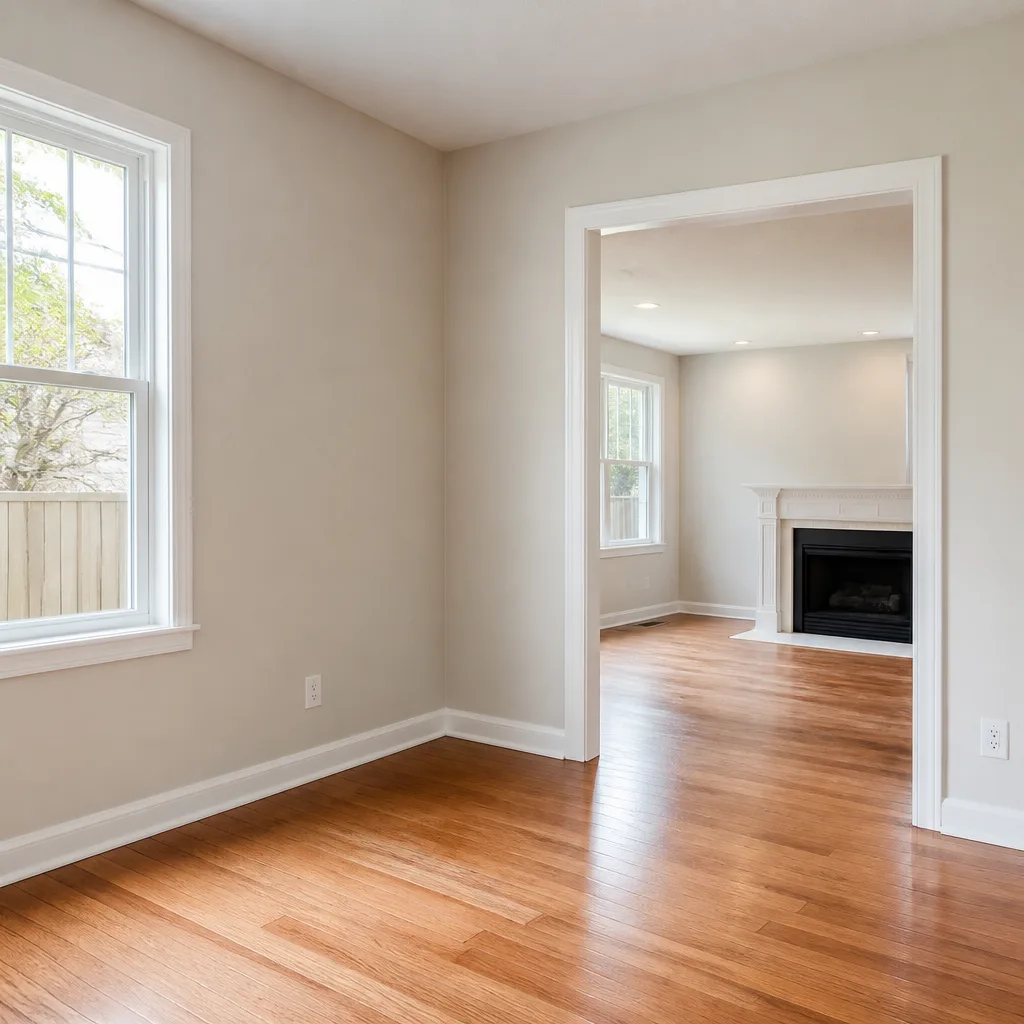
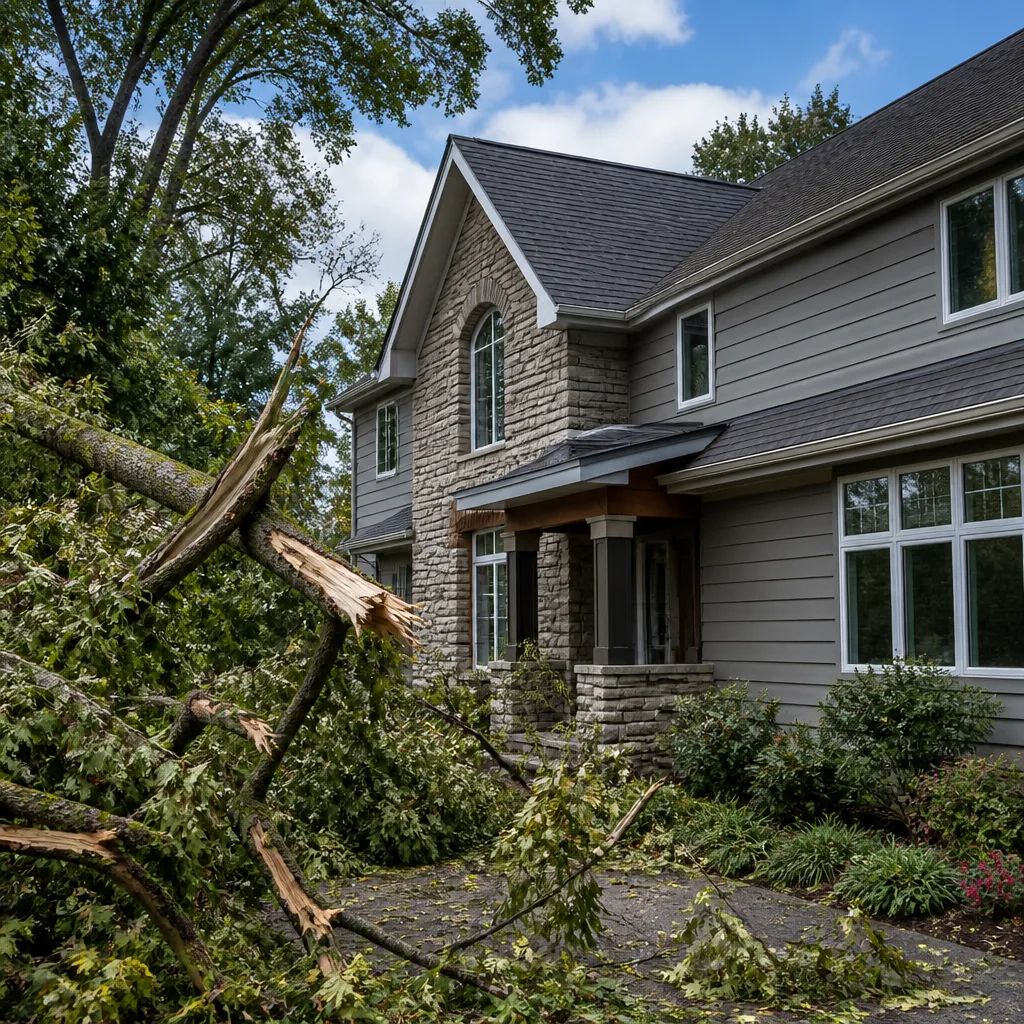


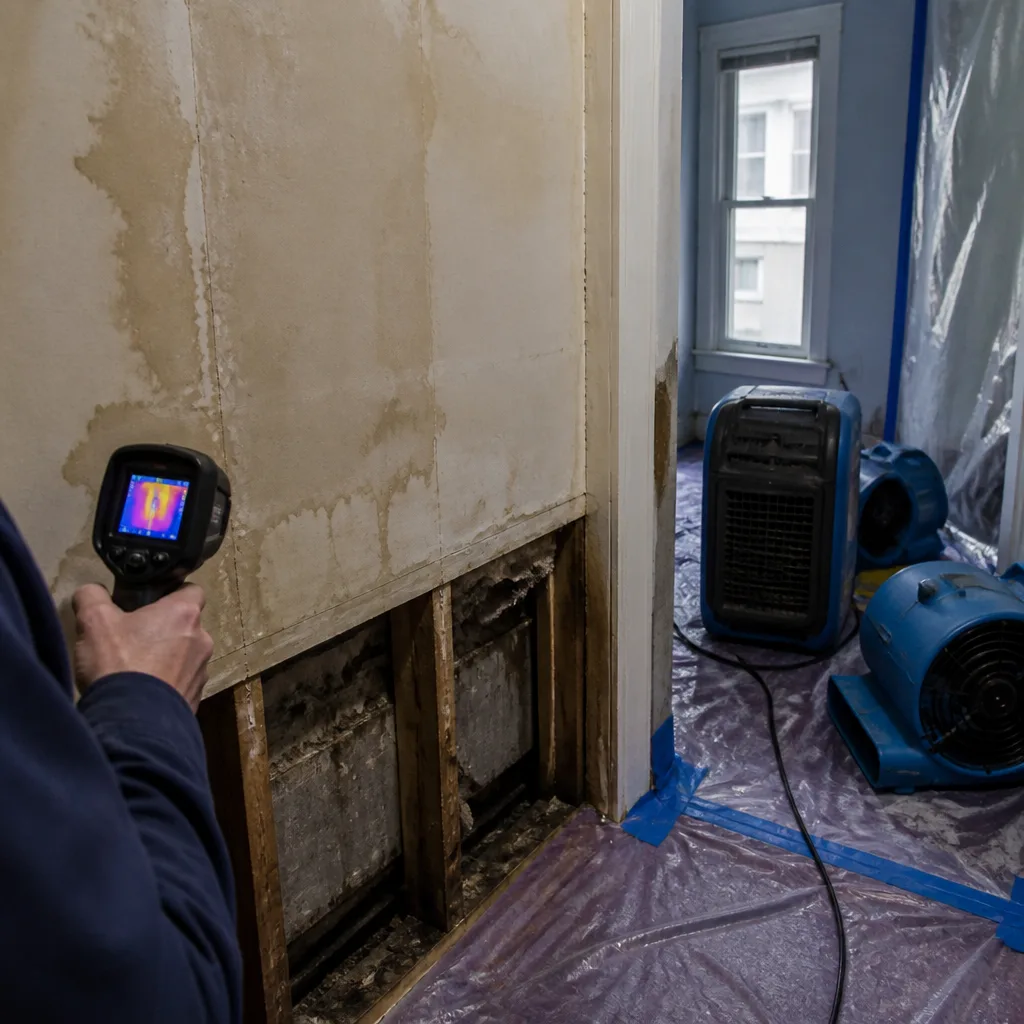 Before
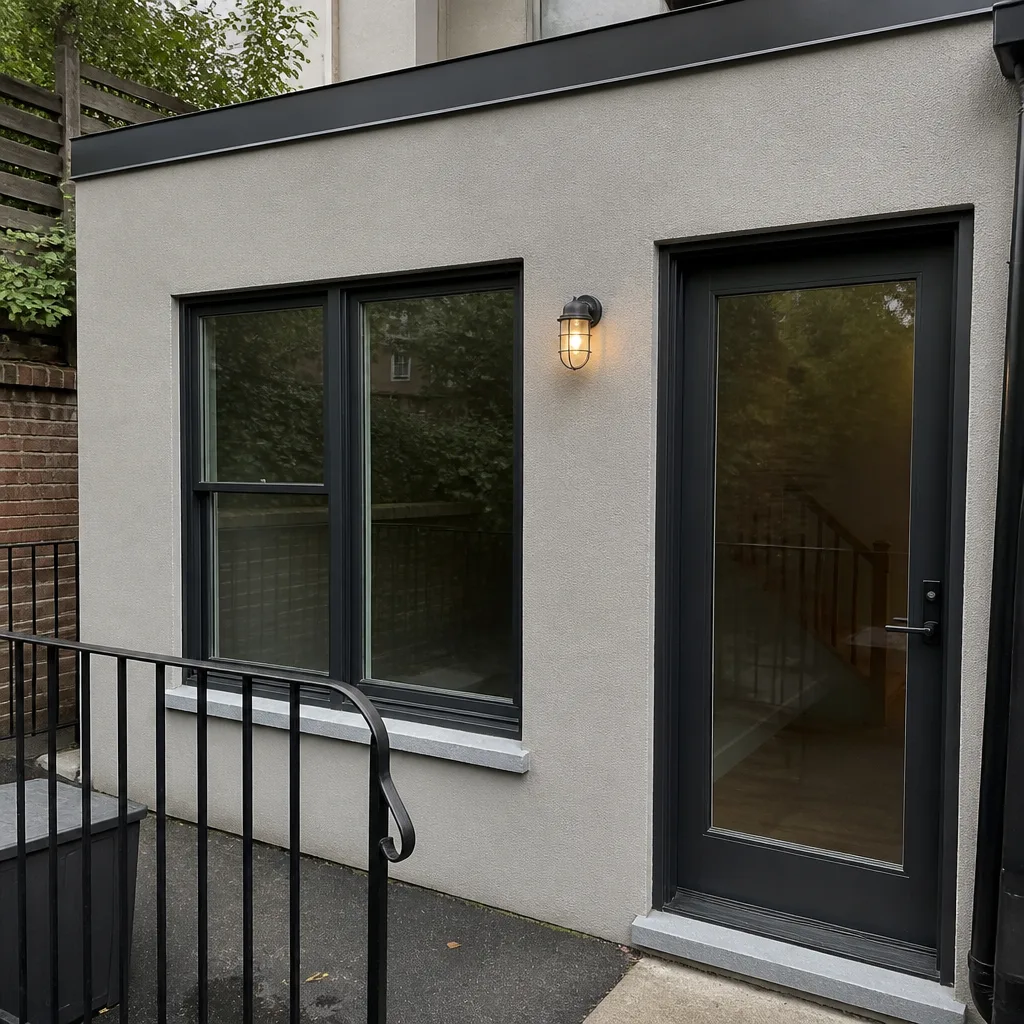 After
After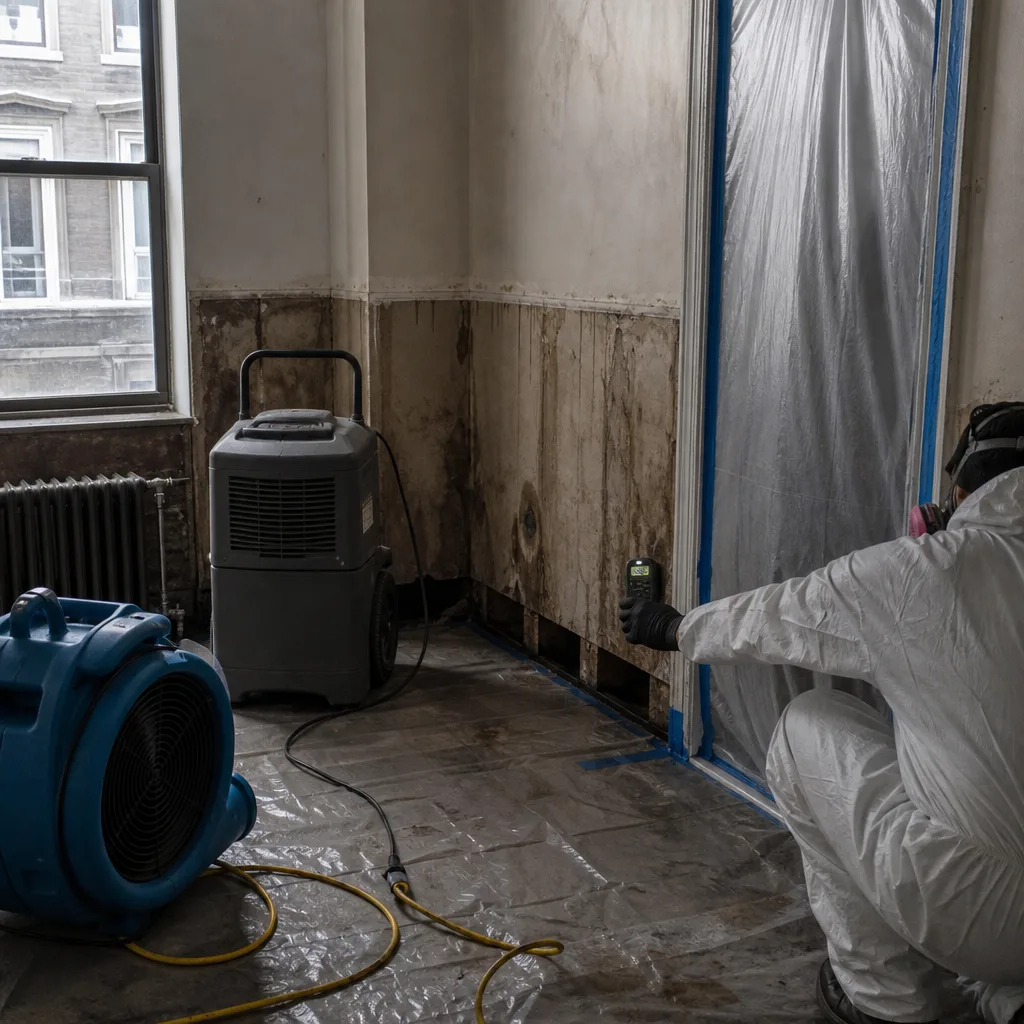 Before
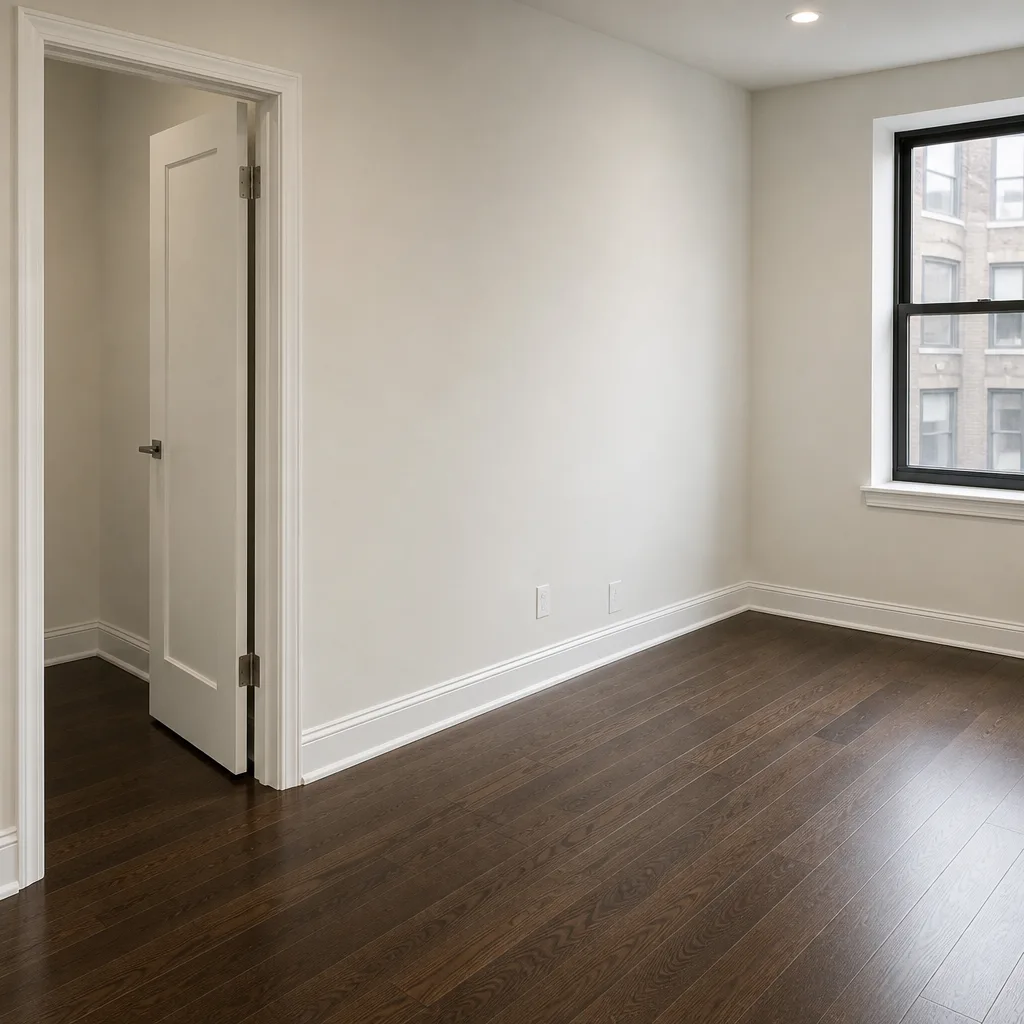 After
After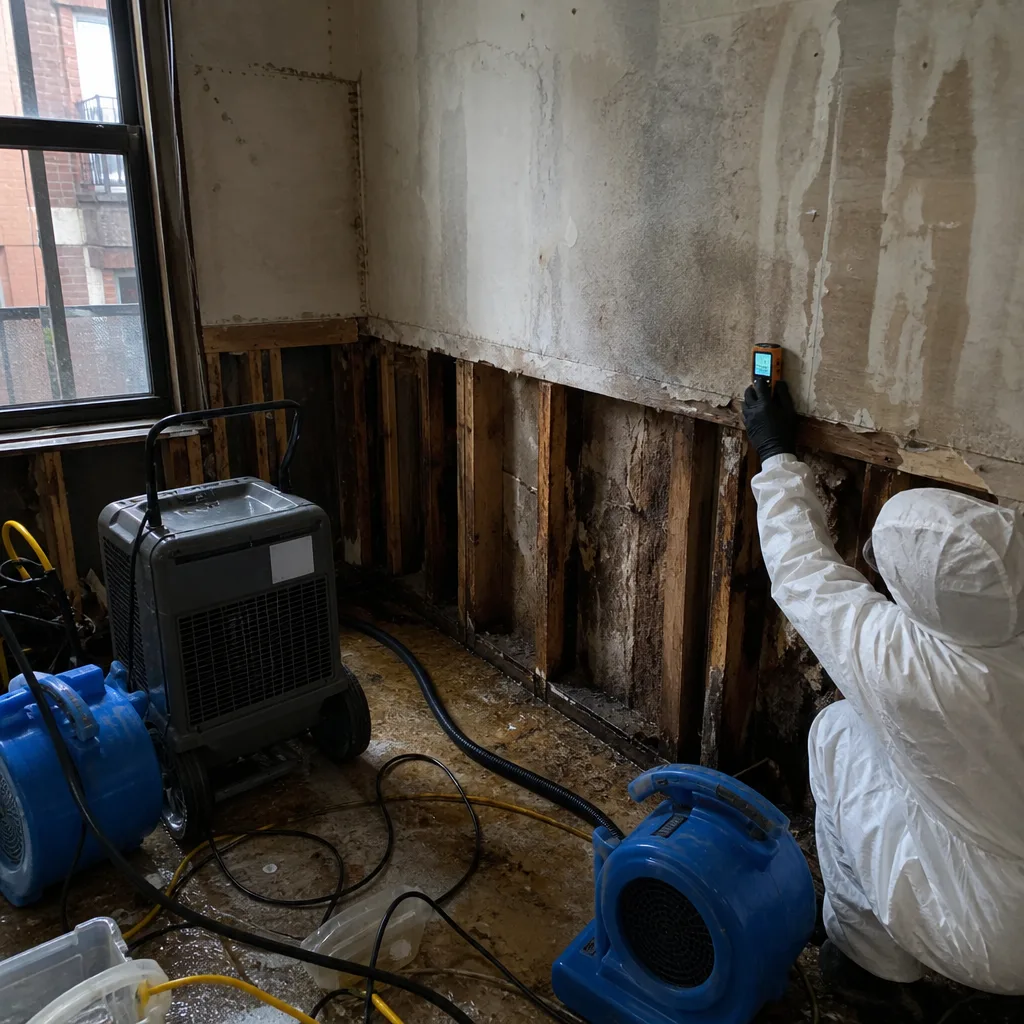 Before
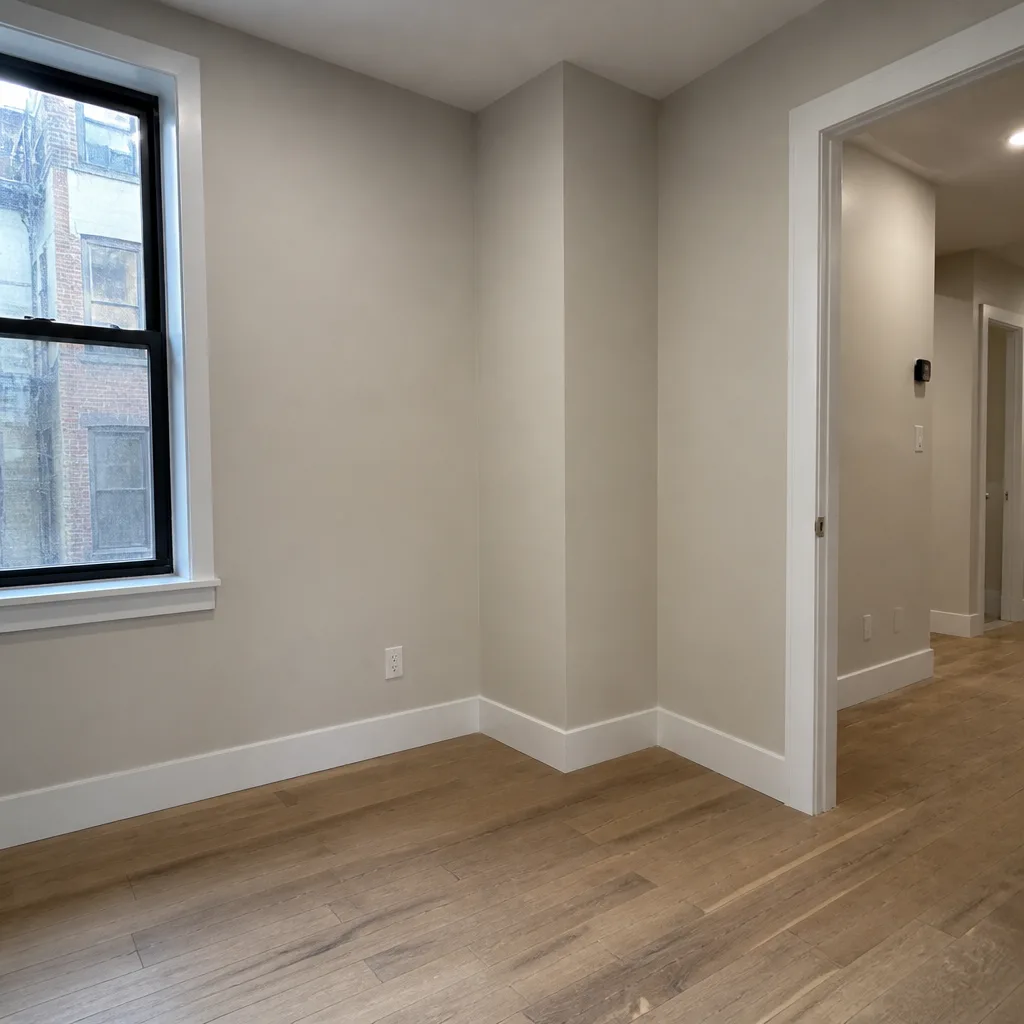 After
After24/7 Emergency Storm & Disaster Restoration in Hoboken
When a storm hits Hoboken, the damage doesn’t wait for business hours, and neither do we. Storm & Disaster Restoration in Hoboken means being ready for the rain that overwhelms the sewers, the wind that takes down a tree into a rowhouse wall, and the surge that pushes river water up through floor drains. We answer live, 24 hours a day. You call (607) 350-1550, a real person picks up, and Wade’s crew heads out to your block, not into a voicemail queue. The first hour after water gets in determines whether you’re drying for days or gutting to the studs for weeks.
The urgency isn’t theater. Water from a Hoboken sewer backup is Category 3 black water, and it’s already moving through your building’s cavities by the time you see it pooling. Every hour it sits, it wicks deeper into century-old brick and finished basement drywall. Call early, and we’re usually on scene inside the hour with extraction running. Call late, and the same job costs more and takes longer. That’s not a sales line. It’s just how water behaves in old masonry.
Understanding Storm & Disaster Restoration Severity in Hoboken Properties
Hoboken’s building stock makes severity assessment different here than almost anywhere else in the region. Most of the buildings we enter are 4 to 6 story brick rowhouses and brownstones built between the 1880s and 1920s. That matters because brick wicks moisture. Water doesn’t just sit on the surface; it climbs into the masonry and re-releases humidity into the wall cavity for weeks after the floodwater is gone. A building that looks dry to the touch can still be keeping a 75 percent relative humidity pocket alive behind the baseboard.
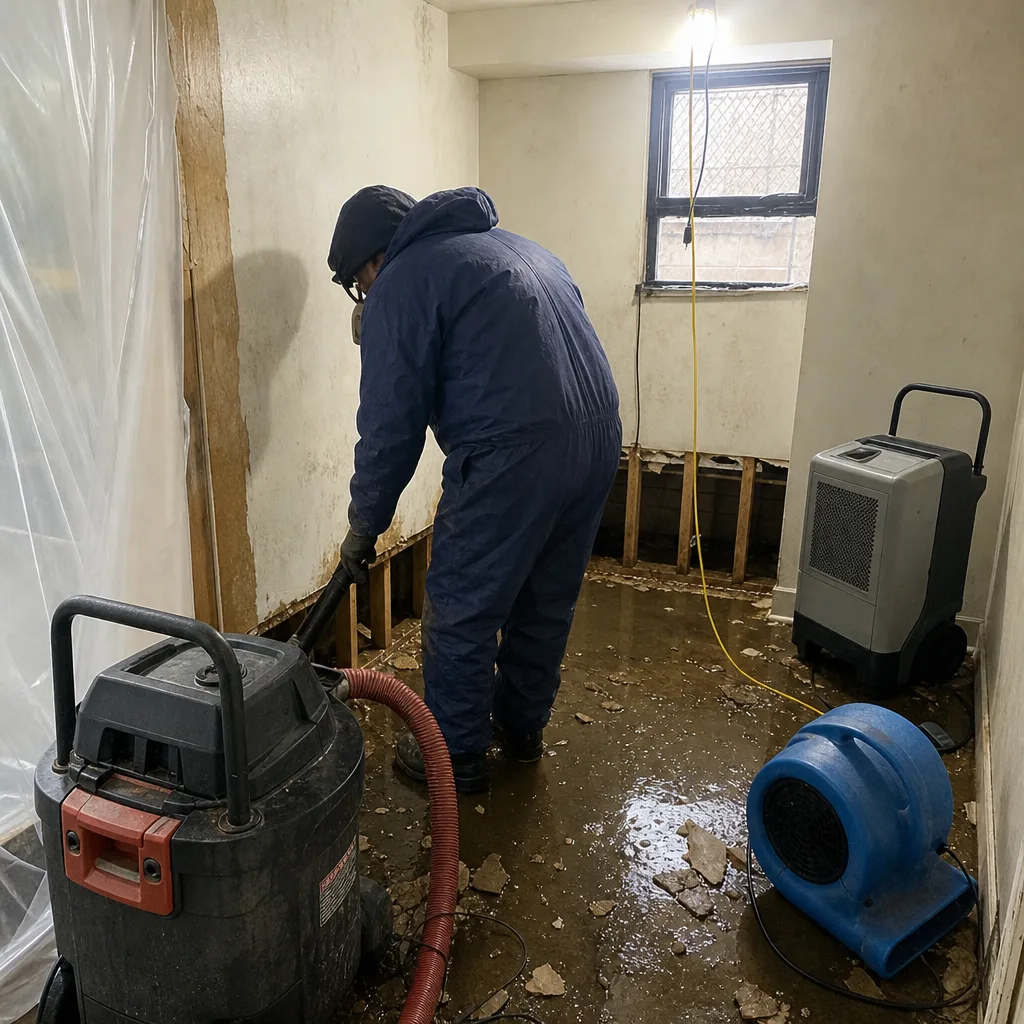
We classify water by category on every job. Category 1 is clean water from a burst supply line. Category 2 has some contamination. Category 3, what Hoboken sees most often in a storm, is grossly contaminated black water carrying sewage, river sediment, and whatever the combined sewer system picked up on its way to your floor drain. You don’t dry Category 3. You cut it out, bag it, and treat what remains. The difference between drying and gutting is the difference between a few days of fans and a full containment-and-rebuild project. Moisture mapping with our Dri-Eaz and Phoenix equipment tells us which path you’re on within the first hour.
Why Hoboken Property Owners Choose Wade’s Restoration
- 45-minute response commitment: When you call from Hoboken, we’re not coming from another state. Wade heads out from the metro office, and he’s been inside Hoboken rowhouses hundreds of times.
- 24/7 live answer, never an automated system: You get a person. Often you get Wade himself, who answers his own phone at two in the morning because that’s when Hoboken basements flood.
- IICRC-certified crews: Our techs hold WRT, FSRT, and AMRT certifications, so the drying plan, fire damage work, and mold remediation are done to the industry standard, not a guess.
- Free visual inspection: Before any work starts, we walk the damage with you and tell you what we’d do and why. You don’t pay for that. Ever.
- Direct insurance billing: We bill your carrier directly and handle the adjuster conversation, so you’re not the one relaying moisture readings back and forth.
- One team from extraction to reconstruction: It’s Wade’s crew the whole way through, not three subcontractors who never talk to each other. The people who tear out your basement are the people who rebuild it.
Our Storm & Disaster Restoration Process
Inspection & Assessment
We arrive, walk the property, and take moisture readings with hygrometers and thermal imaging. We check the address against the post-Sandy FEMA flood maps, because a building below 4th Street in an AE zone has a history that changes everything about how we scope the job. You get a written scope before work starts.
Extraction and Stabilization
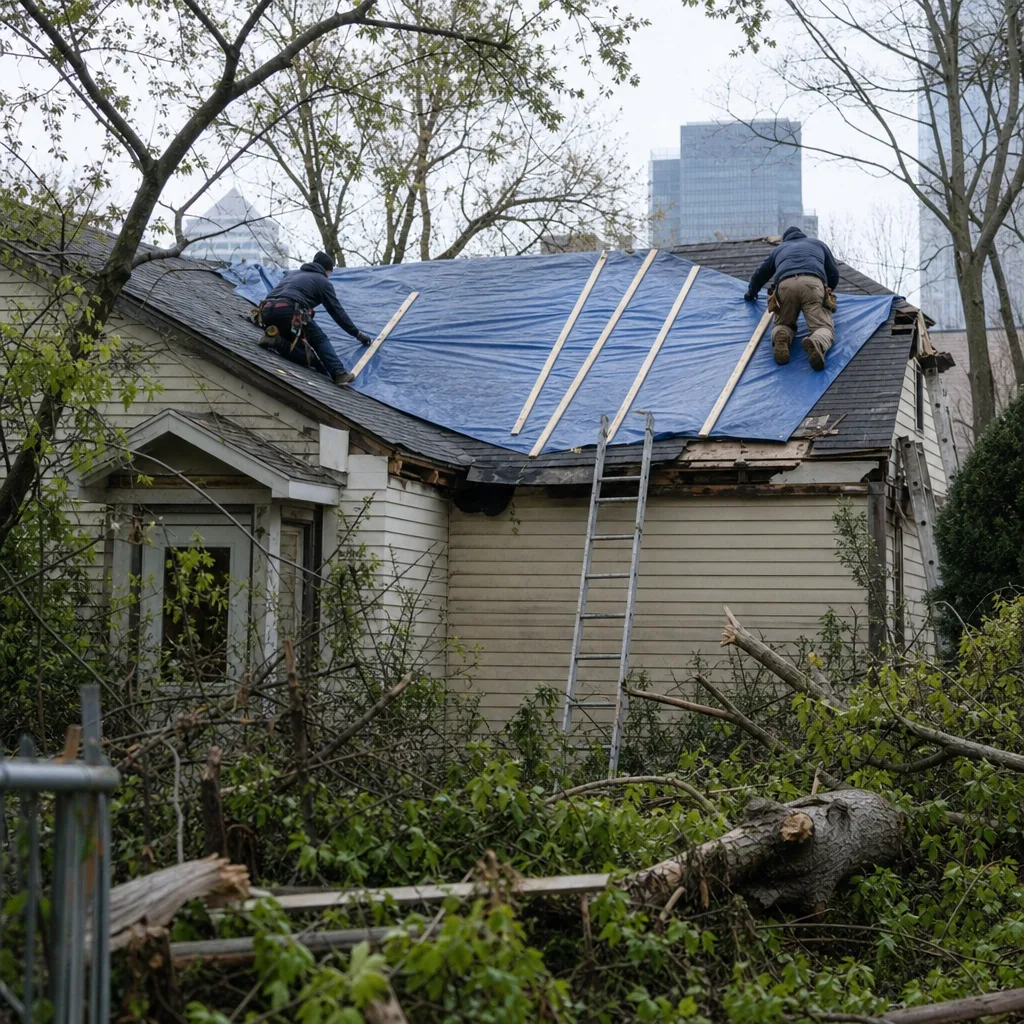
Standing water comes out first. Our truck-mounted extractors and XPOWER pumps move thousands of gallons per hour. If there’s structural compromise or a broken window or door, we board up and tarp now. A Hoboken rowhouse with a hole in the wall invites weather, street access, and more damage.
Drying & Dehumidification
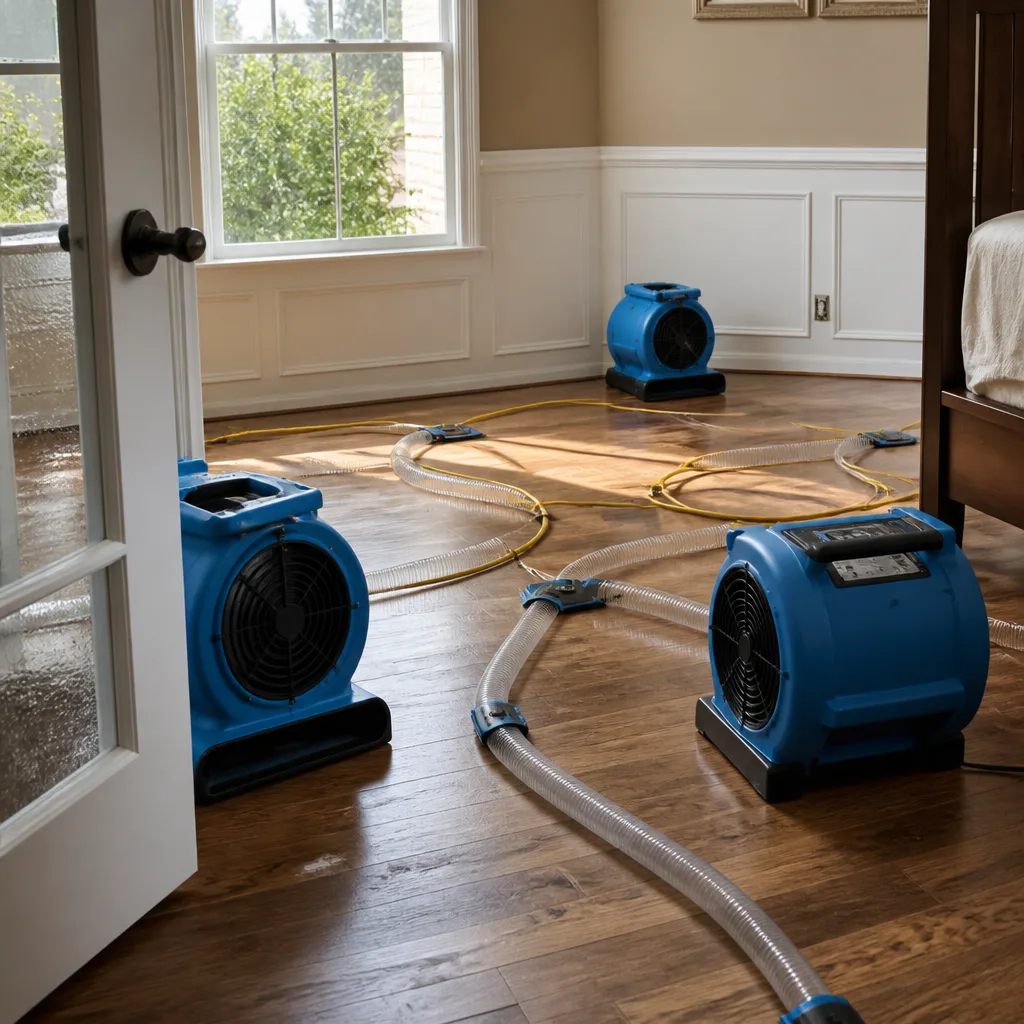
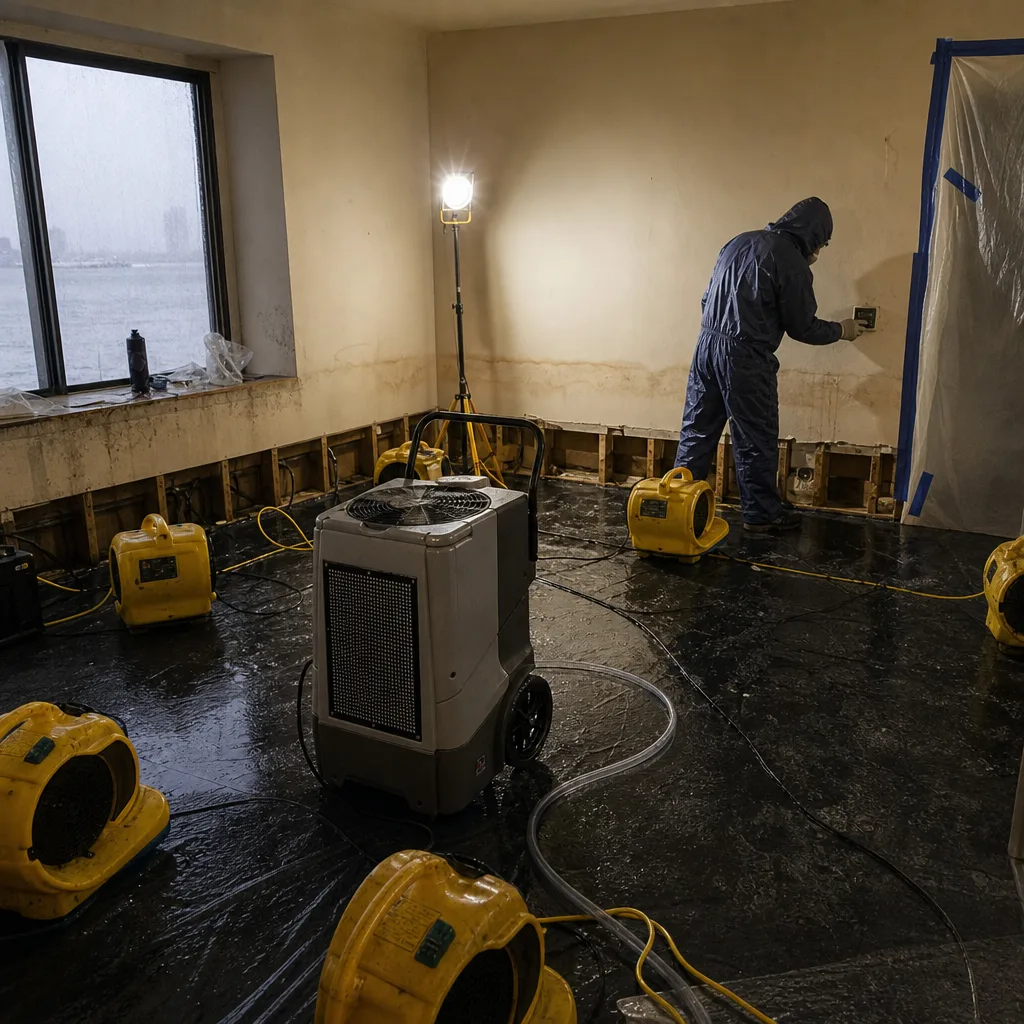
We place air movers and dehumidifiers strategically, not just scattered around. In century-old brick, we’re managing the masonry’s moisture release as much as the air. Daily readings get logged, and you get the full moisture log at the end of the job. Almost nobody in this trade hands over the logs. Wade does.
Cleaning & Sanitization
Every Category 3 flood surface gets antimicrobial treatment. Contaminated materials are bagged and removed through proper pathways, not dragged through your living room. HEPA air scrubbers run during the whole process to keep spores from spreading through party walls.
Storm-Specific Treatment
Wind damage gets structural assessment before cosmetic repairs. Roof tarping is temp work that keeps water out; we also check framing and sheathing for hidden compromise. Debris removal includes separation of hazardous material, because Hoboken storm debris isn’t always just branches. It’s whatever the flood carried in.
Repairs & Restoration
Once the space is dry and the scope is clear, we rebuild. Drywall, flooring, trim, paint. Like a remodel, done in writing with a firm price. The 90-Day Done Right Promise covers the work: if it’s not done right, Wade comes back and makes it right. That’s stamped on every contract.
Need Emergency Storm & Disaster Restoration in Hoboken Now?
Crews minutes away, answering live 24 hours a day. The sooner we start, the less it costs.
Working With Your Insurance Company
Insurance is in the room on nearly every Hoboken storm damage job, whether it’s a homeowners policy, a landlord policy, or a FEMA flood claim. The difference between a covered loss and a denied one is documentation that starts in the first hour, not after the fact. We take photos room by room before we touch anything, we log moisture readings every single day, and we write a line-item scope that speaks the adjuster’s language.
Wade talks to your adjuster directly. You’re not the middleman carrying messages between two sides who don’t know each other. When the adjuster calls with a question about a drying log or a containment decision, they talk to someone who was standing in your basement holding the hygrometer that morning.
What We Provide Your Insurer
- Thorough documentation of the loss
- Photos of all damage, room by room
- Moisture readings and drying logs
- A detailed, line-item scope of work
- Direct coordination with your carrier
Built for Hoboken’s Loss Calendar
Hoboken doesn’t have one storm season. It has a rolling calendar of water intrusion patterns that repeat every year. January deep freezes burst supply lines in vacant upper-floor units of century-old rowhouses, and the water cascades down through four floors before anyone notices. Spring thaw brings basement seepage as the water table rises against foundations that predate modern waterproofing. Summer convective storms are the most dangerous: they dump an inch of rain in an hour, the combined sewer system backs up, and Category 3 water pushes up through floor drains across the Washington Street corridor and the low blocks near the Hoboken Terminal. Then comes fall Nor’easter season, which combines heavy rain with sustained wind that tests old roofs, parapets, and window lintels.
Any restoration company in Hoboken that treats all these as “water damage” is missing the point. A January pipe burst in a vacant unit is usually Category 1 water from a supply line, and drying is often possible. An August thunderstorm backup is Category 3 black water, and drying it without gutting will grow mold inside your walls before the month is out. Knowing which kind of loss you have, in your building, in your flood zone, is the whole job. Storm & Disaster Restoration is what Wade’s has done since 2007, and it’s why we check the FEMA map before we quote anything.
Storm & Disaster Restoration Across Hoboken’s Neighborhoods
The terrain and building density change block by block in Hoboken, and the damage patterns change with them. Down by the Hoboken Terminal and along Observer Highway, the low elevation means even a moderate storm surge can push river water into basements and ground-floor commercial spaces. These buildings are some of the most flood-claim-dense in the whole city, and the repeated exposure means the drywall cavities often hold multiple generations of old flood damage that was never fully remediated.
Along Washington Street, the commercial row sees basement floods from combined sewer backups during heavy rainfall, but the buildings are busy, occupied, and the work often has to happen around business hours. That’s why we can work nights when the bakery or the barber shop is closed. Over near Church Square Park, the residential brownstones are old, dense, and connected by party walls, which means moisture and mold spores don’t respect property lines. Containment during any demo is non-negotiable there, because your neighbor’s wall is your wall. Up on the west side near the Palisades, the elevation rises, but surface runoff and wind exposure pick up, especially on the upper floors and rooftops.
Zoning matters too. The 07030 ZIP covers most of the city, with the southwest corner in 07086, and every block sits inside or near a FEMA flood zone designation that changed dramatically after Sandy. We serve all of it, and we know which blocks flood first, because we’ve been pulling water out of them for years.
Specialized Storm & Disaster Restoration Services We Offer in Hoboken
Flood Damage Restoration
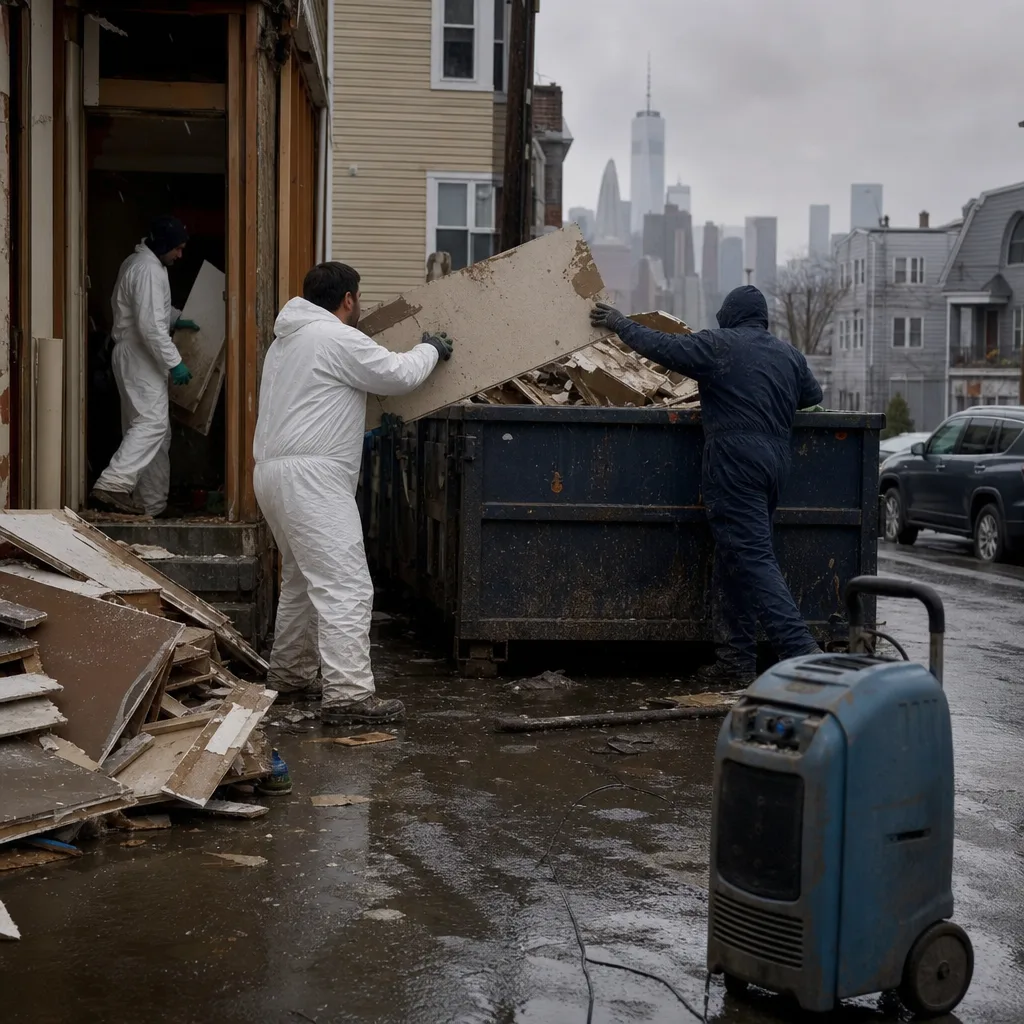
This is the core of what we do in Hoboken, and it’s almost never simple. Floodwater from a sewer backup or storm surge is Category 3 black water, and it requires gutting, not drying. We cut damaged drywall back to the studs, remove saturated flooring and insulation, and treat the framing with antimicrobial agents before any drying begins. The first 24 hours decide whether you’re dealing with a few hundred square feet of damage or a full basement rebuild, and we move fast.
Storm Damage Cleanup
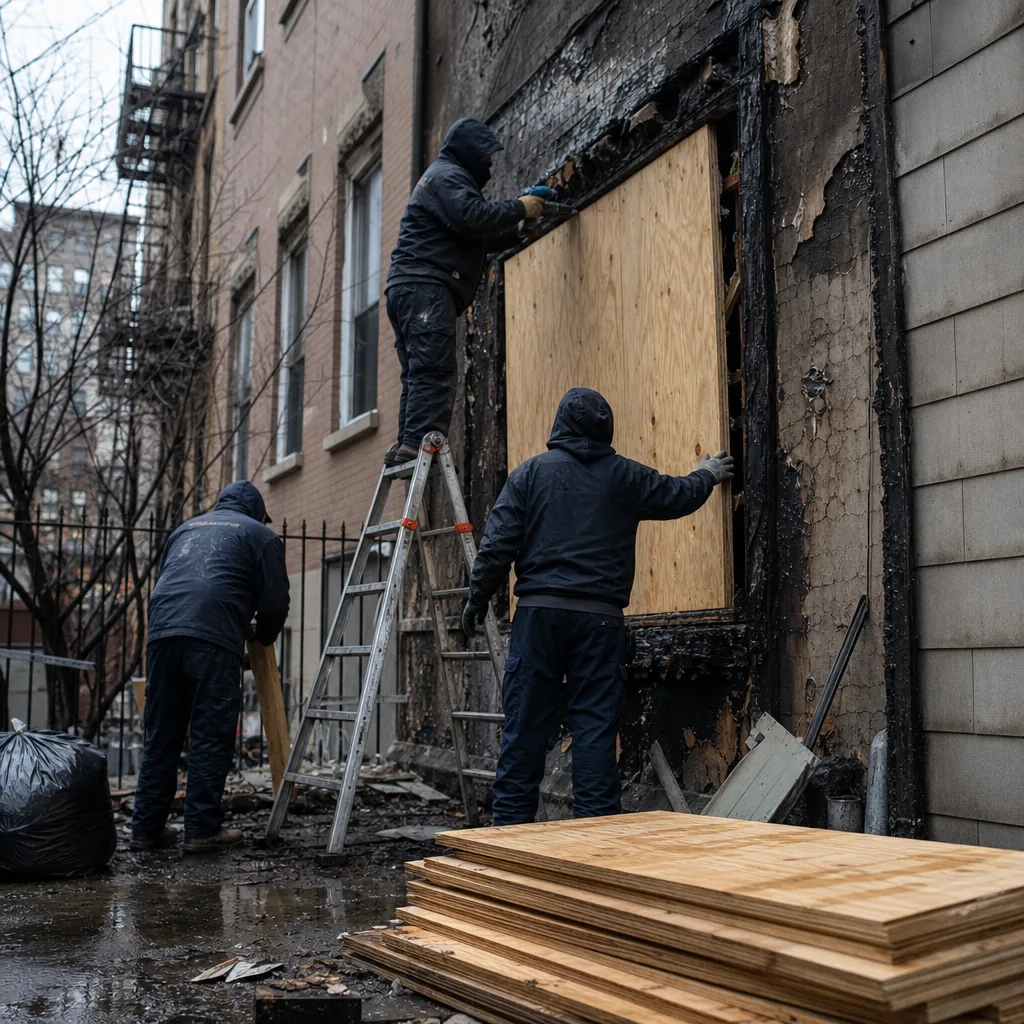
After the water recedes and the wind dies down, someone still has to remove what the storm left behind. That includes water-soaked debris, damaged building materials, and whatever the flood carried in from the street. In Hoboken, that can mean sewage-contaminated contents from a basement apartment or a downed tree limb resting against a rowhouse facade. We handle the removal, the sanitization, and the documentation for your claim.
Emergency Board-Up
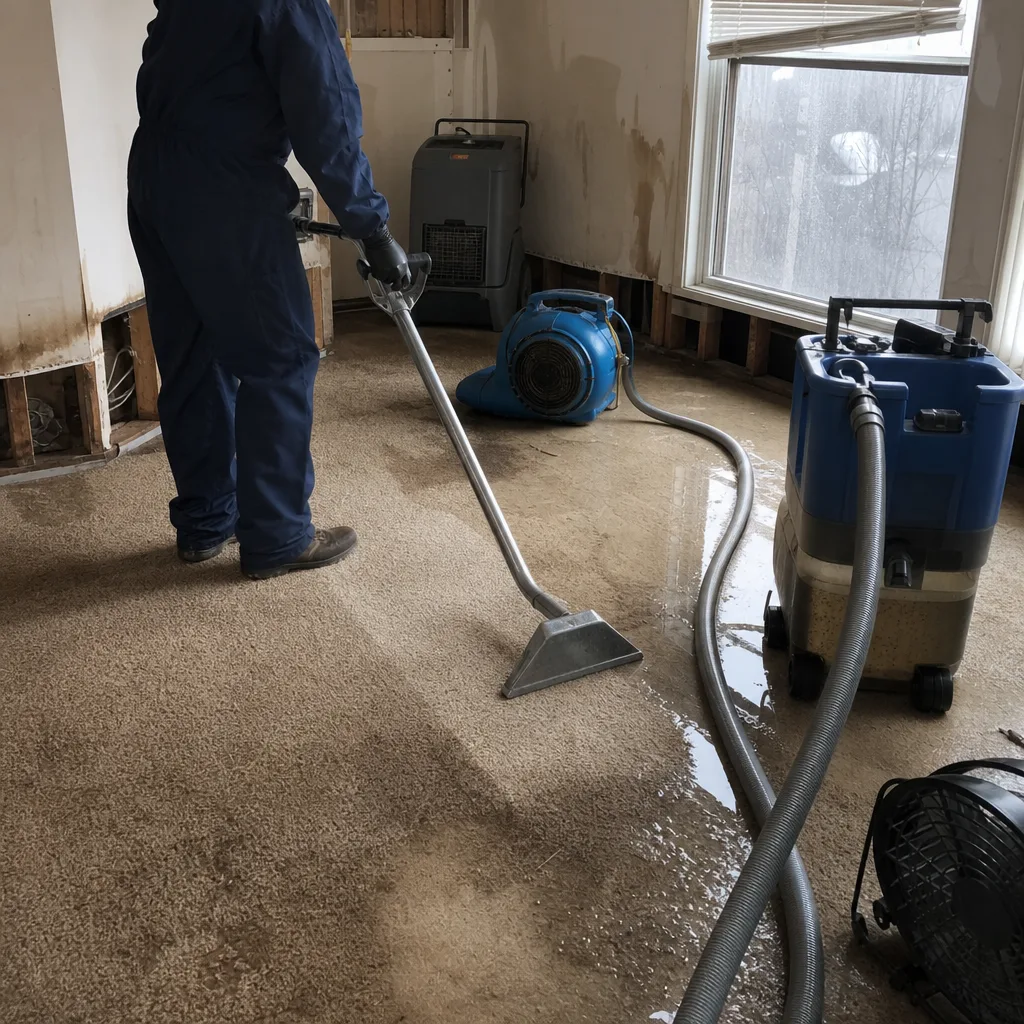
A broken window on the ground floor of a Hoboken rowhouse is an open invitation to weather, street access, and further damage. We board up and secure openings the same night, not a day later. Temp board-up buys the time needed to order proper replacement materials, and it keeps your insurance claim from growing. It’s not permanent work, but it needs to be done properly to hold until the permanent repair happens.
What happens when you call
- 1
A real person answersNo phone trees - you reach a local pro.
- 2
You get an upfront price rangeHonest numbers before anyone is dispatched.
- 3
A background-checked tech heads outLicensed & insured, dispatched right away.
- 4
You approve before work beginsNothing starts until you say go.
Storm & Disaster Restoration Costs in Hoboken, NJ
Hoboken pricing runs higher than the Jersey suburbs because the access is harder. Parking is tight, basements are often below grade with narrow stair entries, and material haul-out from a four-story walk-up is labor-intensive. A straightforward Category 1 water dry-out in a Hoboken basement typically runs $2,500 to $5,500. A Category 3 sewage backup requiring full gut-out, containment, and rebuild of a finished basement in a brownstone runs $12,000 to $35,000, sometimes more depending on the square footage and how much custom millwork or built-in finish was destroyed. Emergency board-up runs $400 to $1,200 depending on the scope, and roof tarping runs $500 to $2,000 depending on roof pitch and access.
The price moves on four things: water category, square footage, how long the water sat before we arrived, and whether the building is in a post-Sandy AE flood zone that requires additional documentation and possibly a permit. Insurance-covered losses follow your policy; out-of-pocket work gets a written scope and a firm price before we start. The free visual inspection is how you get a real number instead of a phone estimate. Call (607) 350-1550 and we’ll tell you exactly what we’d do and what it costs.
We Also Serve Cities Near Hoboken
Our crews serve the wider Hudson County area, including Union City, Weehawken, Jersey City, and North Bergen. If you’re in one of those towns and need storm damage work, the same live answer and the same urgency apply. The response times are a little longer than inside Hoboken, but the process and the documentation discipline are identical. If you’re in Hoboken proper, we’re usually minutes away, not scheduling for a two-day window.
Hoboken Storm & Disaster Restoration Questions, Answered
How do I know if my Hoboken basement flood is Category 3 water?
If the water came up through a floor drain during or right after a heavy rain, it’s almost certainly Category 3 black water. Hoboken’s combined sewer system means stormwater and sewage are the same pipes, and when the system backs up, what comes out of your drain is contaminated. If it came from a burst supply line and never mixed with sewer or groundwater, it might be Category 1. We classify it during the free inspection, but until then, treat any drain backup as Category 3 and keep people and pets out of the water. Call (607) 350-1550 and we’ll confirm with testing and moisture mapping.
Why does my Hoboken rowhouse basement keep getting mold after every flood cleanup?
Because it was likely dried, not gutted. In century-old brick rowhouses, floodwater wicks into the masonry and re-releases moisture for weeks. If the drywall wasn’t cut back to the studs and the cavity wasn’t treated and dried, mold regrows inside the wall even when the surface looks clean. Many Hoboken buildings below 4th Street have multiple generations of failed repairs hiding behind the same wall. The fix is a full cut-back, antimicrobial treatment, containment during demo, and documented drying to pre-loss condition. Anything short of that is a temporary pause, not a repair.
Do I need a permit for storm damage repairs in Hoboken?
It depends on the scope. Cosmetic repairs and emergency stabilization like board-up and tarping typically don’t require a permit. Structural repairs, electrical work, and any reconstruction that changes the building envelope often do, and Hoboken’s post-Sandy flood zone regulations add documentation requirements for work in AE and VE zones. We handle permit coordination when the job requires it, and we’ll tell you during the inspection whether your repair path triggers the permit office. That conversation is part of the free visual inspection.
How quickly does mold start after a Hoboken basement flood?
Mold colonization typically starts within 24 to 48 hours on wet organic materials like drywall paper and wood framing. In a Hoboken basement with Category 3 water and no containment, that timeline is often accelerated because the water is carrying nutrients and the building’s brick walls hold humidity. The damage may not be visible for a week or more, but the spores are active inside the wall cavity by day two. That’s why the first 24 hours matter more than any other factor in preventing a mold remediation job on top of a flood restoration job.
What should I document for my FEMA flood insurance claim after a Hoboken storm?
Photograph everything before anything is moved: standing water levels, water lines on walls, damaged contents, the point of entry like the floor drain or window well. Note the date and time the water appeared. Keep receipts for any mitigation work you pay for out of pocket. Then let us take over. We document room by room with photos, moisture readings, and a line-item scope that speaks the FEMA adjuster’s language, and Wade communicates with the adjuster directly so you’re not the one stuck translating between two sides. That documentation alone has saved Hoboken homeowners thousands on claims that would otherwise have been underpaid.
How fast can someone actually get to my Hoboken rowhouse?
Inside Hoboken, we’re usually on scene within 45 minutes to an hour of your call. The metro office coordinates dispatch, and crews are stationed to serve Hoboken directly. In a city where parking is tight and basements flood fast, that hour between the water arriving and extraction starting is the decision window. We answer live, 24 hours a day, so you’ll never wait on hold while water keeps rising. Call (607) 350-1550 and Wade or his crew heads out.
Can we stay in the home during the restoration work?
Depends on the category and the scope. A Category 1 water dry-out in one part of the house often allows you to stay, with containment separating the work area. A Category 3 sewage backup changes that: the contamination risk means you should stay out of the affected area, and in a smaller Hoboken brownstone unit, that often means staying elsewhere for a few nights. We’ll tell you straight, based on the water category, the air quality readings, and the containment we’re putting up. Your safety comes before convenience, always.
What should I do in the first 30 minutes after water shows up in my Hoboken basement?
First, keep people and pets out of the water, especially if it came up through a floor drain, because it’s likely Category 3. Second, kill the power to the affected area if you can do so without standing in water or touching a wet panel. Third, call (607) 350-1550. Don’t run a shop vac on sewage water, don’t cut into walls yourself to “see how far it went” without containment, and don’t wait until morning. What you do in the first 30 minutes can save or cost you thousands depending on whether you get extraction running before the water wicks into brick and drywall.
Serving Hoboken, NJ - Our Local Coverage Area
We’re based in the Hoboken area and know this community well. Use the map below to see our service coverage - if you’re nearby, we can almost certainly help.
Storm & Disaster Restoration in Hoboken: What Actually Happens on Our Jobs
Hoboken’s bowl-shaped geography and combined sewer system mean a one-inch-per-hour rain event can push Category 3 black water up through floor drains into basements across the Washington Street corridor. This is a recurring, sewage-contaminated flood pattern that separates Hoboken Storm & Disaster Restoration work from nearly every neighboring city. Jersey City and Union City have different topography, different sewer infrastructure, and different flood patterns. Hoboken floods from below, regularly, and that changes the entire technical approach: you’re not just drying a wet floor, you’re remediating a recurring sewage exposure in a building made of moisture-wicking brick. The buildings below 4th Street in post-Sandy AE flood zones have flooded so many times that drywall cavities often contain multiple generations of remediated and re-grown mold colonies behind walls that were never fully gutted the first or second time. Experienced restoration techs in Hoboken know to check the address against the post-Sandy FEMA flood maps before quoting a job, because a rowhouse on a low block near the Terminal has a flood history that a house up on the Palisades slope simply doesn’t have.
When a summer convective storm dumped over an inch of rain in an hour, our crew responded to a four-story brick rowhouse near the Hoboken Terminal where black water had backed up through the floor drain and soaked a finished basement. We ran moisture mapping with our Dri-Eaz equipment, established containment, and found pre-existing mold behind the drywall from prior floods. So we cut it back to the studs, performed antimicrobial treatment, and installed drying logs to document every moisture reading until the space reached pre-loss condition. That’s the job. It’s not dramatic. It’s thorough. And it’s the only way to stop a Hoboken basement from becoming a recurring mold farm.
We also see failure modes that are uniquely local. Assuming a basement flood is Category 1 water when Hoboken’s combined sewer backups almost always make it Category 3 black water means drying instead of gutting, which creates a hidden mold colony that will be your problem again in six months. Not establishing containment during post-flood demolition in century-old brick rowhouses allows cross-contamination through connected party walls, so the spores in your neighbor’s apartment become your problem too. Quoting a job without checking the FEMA flood zone means under-scoping the work and under-documenting the claim. These are avoidable mistakes, and we’ve seen all of them enough times to know they’re not rare. They’re the default in a city where the water problem predates everyone currently living in the building.
If you’re in Hoboken and you’ve got water where it shouldn’t be, call the number that a real person answers: (607) 350-1550. We’ll walk the damage with you, tell you what you’re actually dealing with, and put a written scope in your hand before any work starts. The first inspection is free, and the first hour matters most.
Written by Wade Ferris, Owner at Wade’s Restoration, serving Hoboken and Hudson County since 2007.