
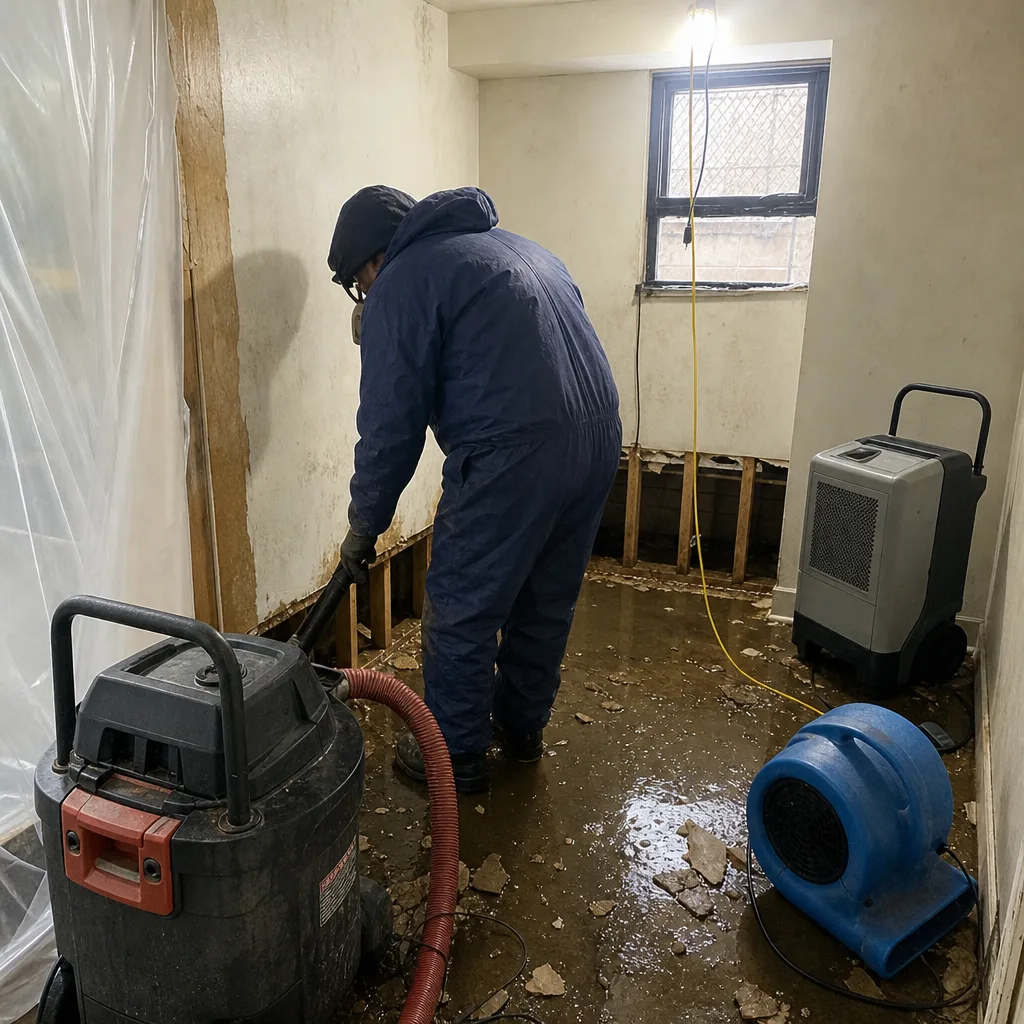
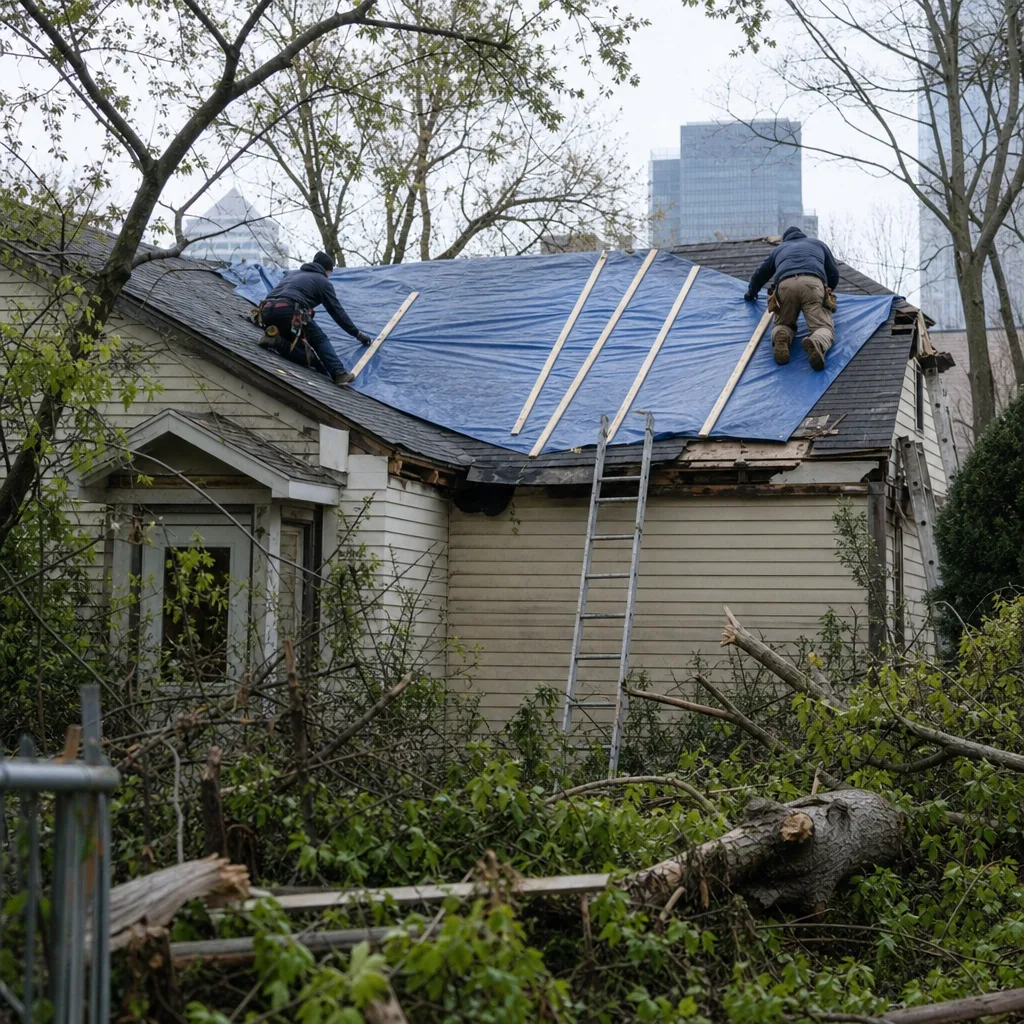
Free visual inspection and a written scope of work before any mitigation begins - photos, moisture readings, and drying logs go in your claim file
The scope we write is the scope we bill. Anything new gets shown to you, in writing, before we touch it.
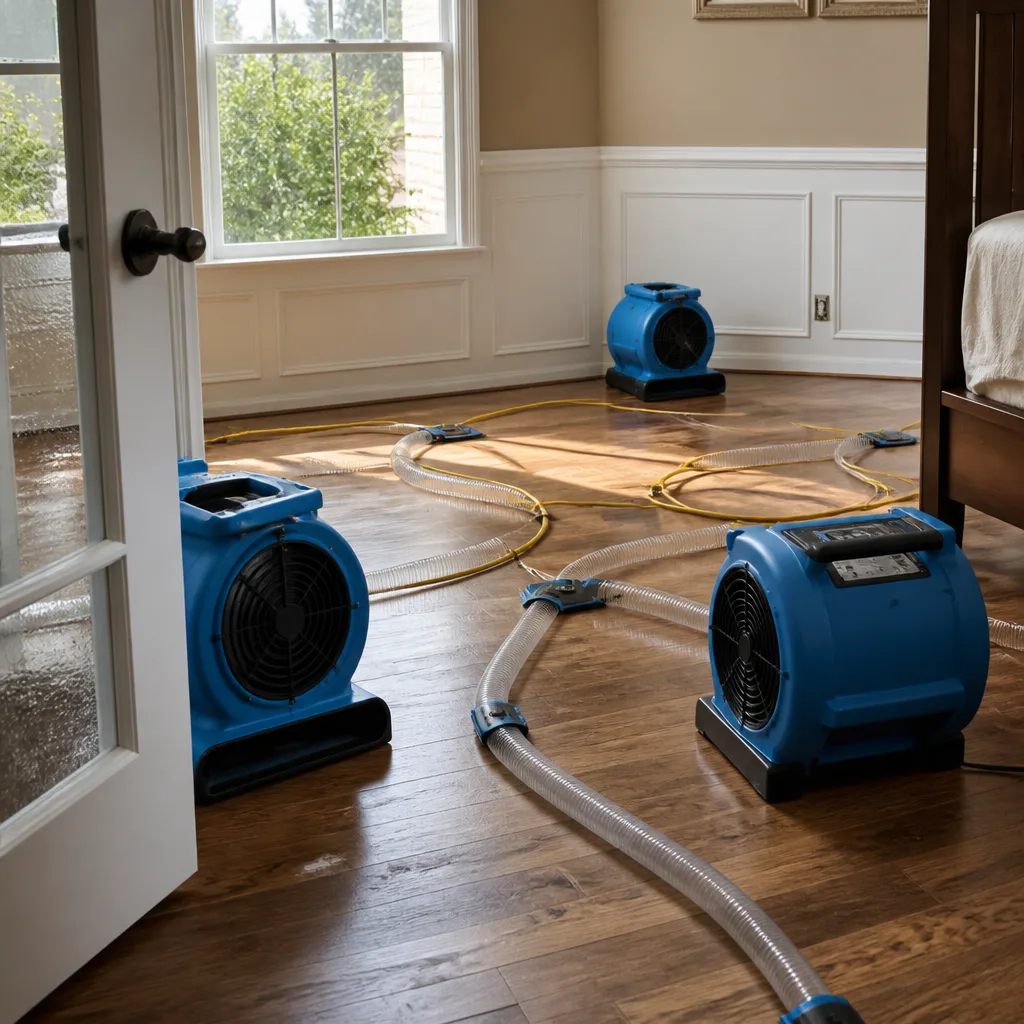
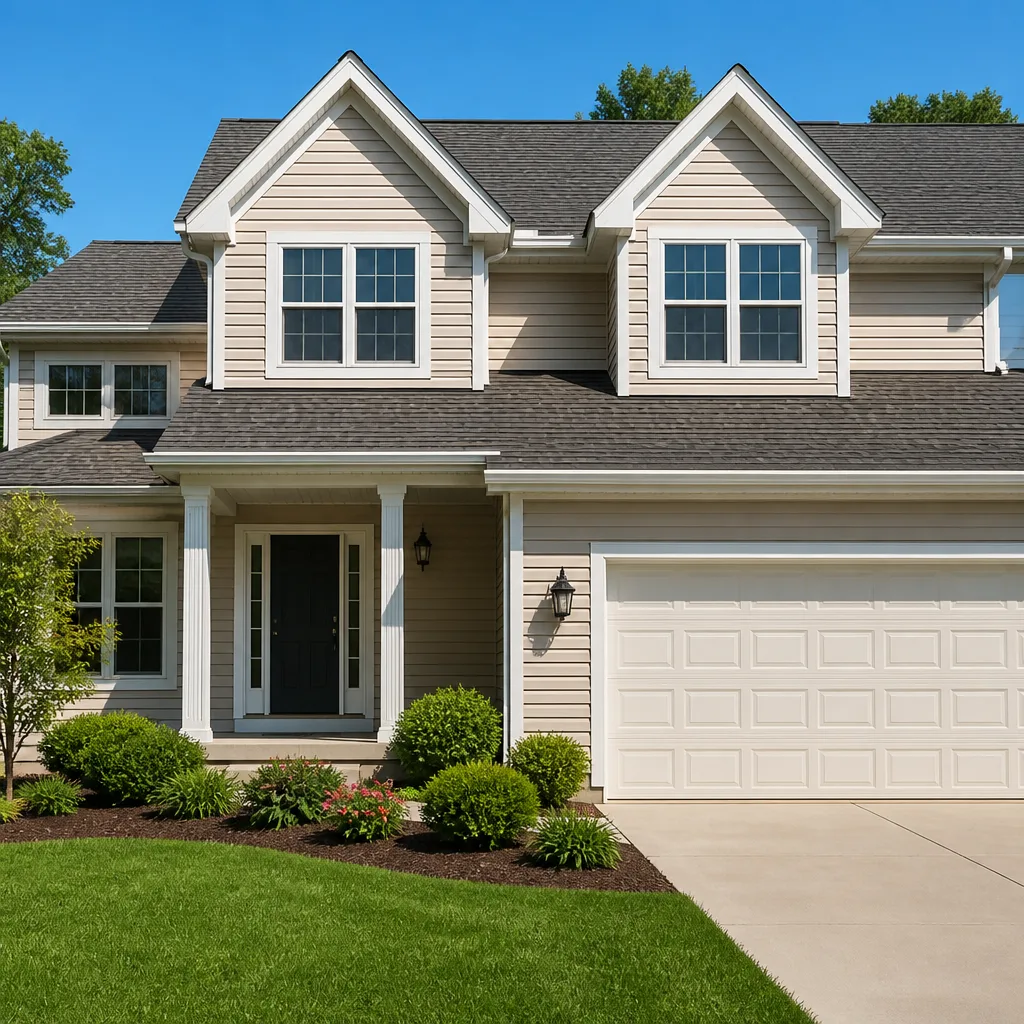
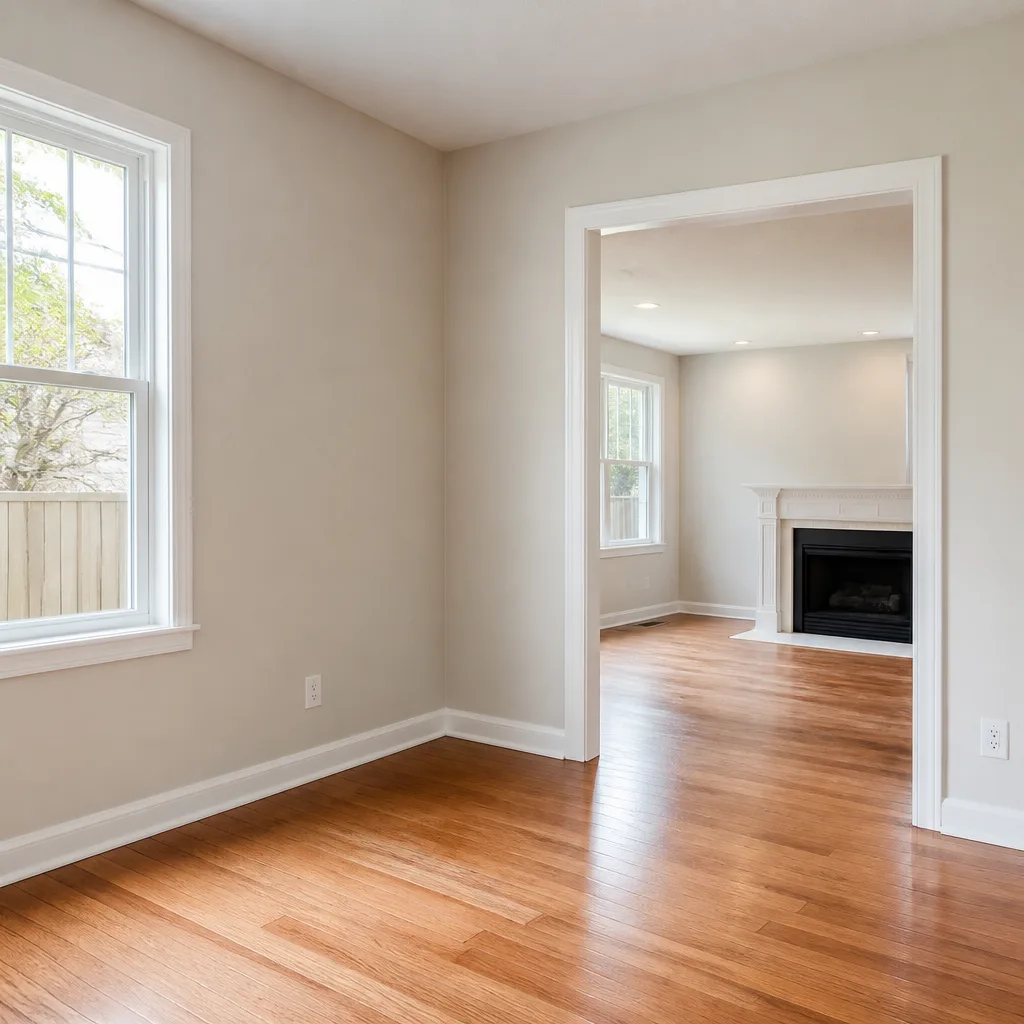
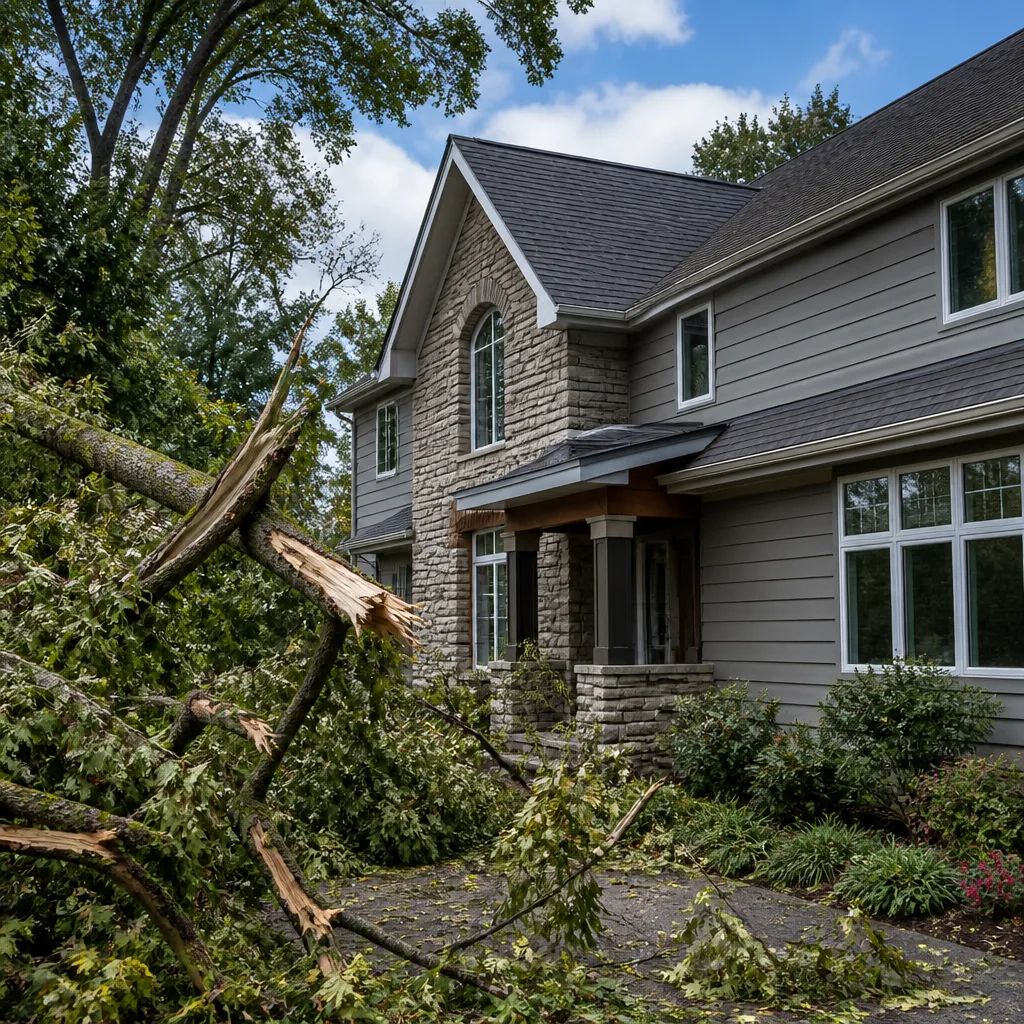
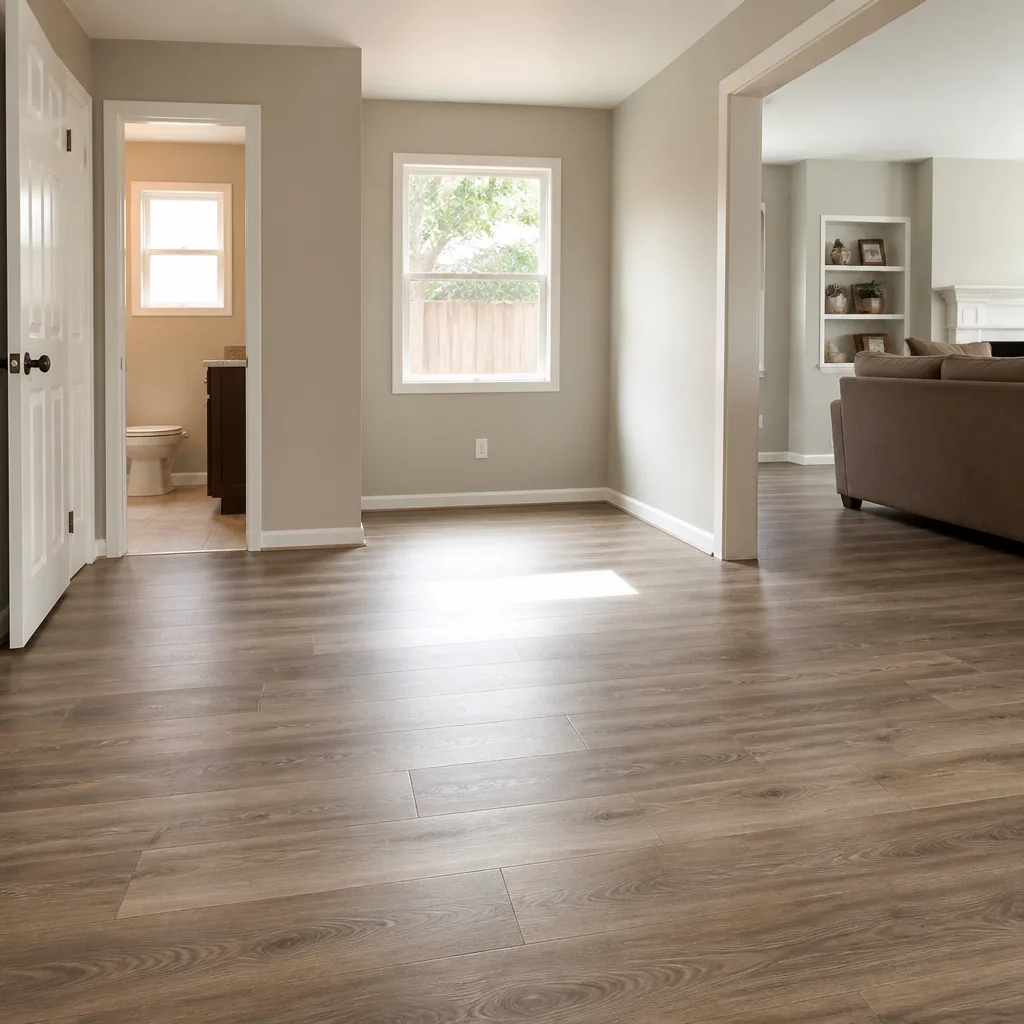

 Before
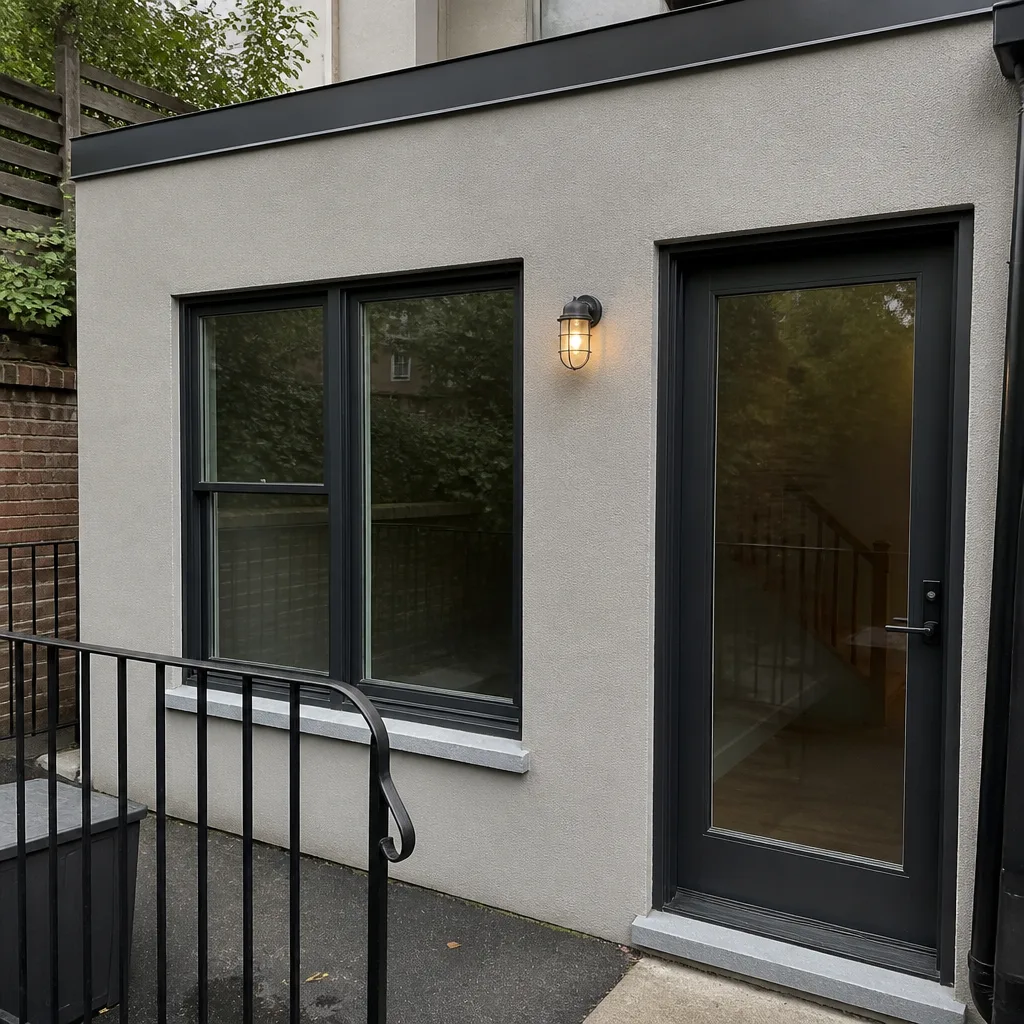 After
After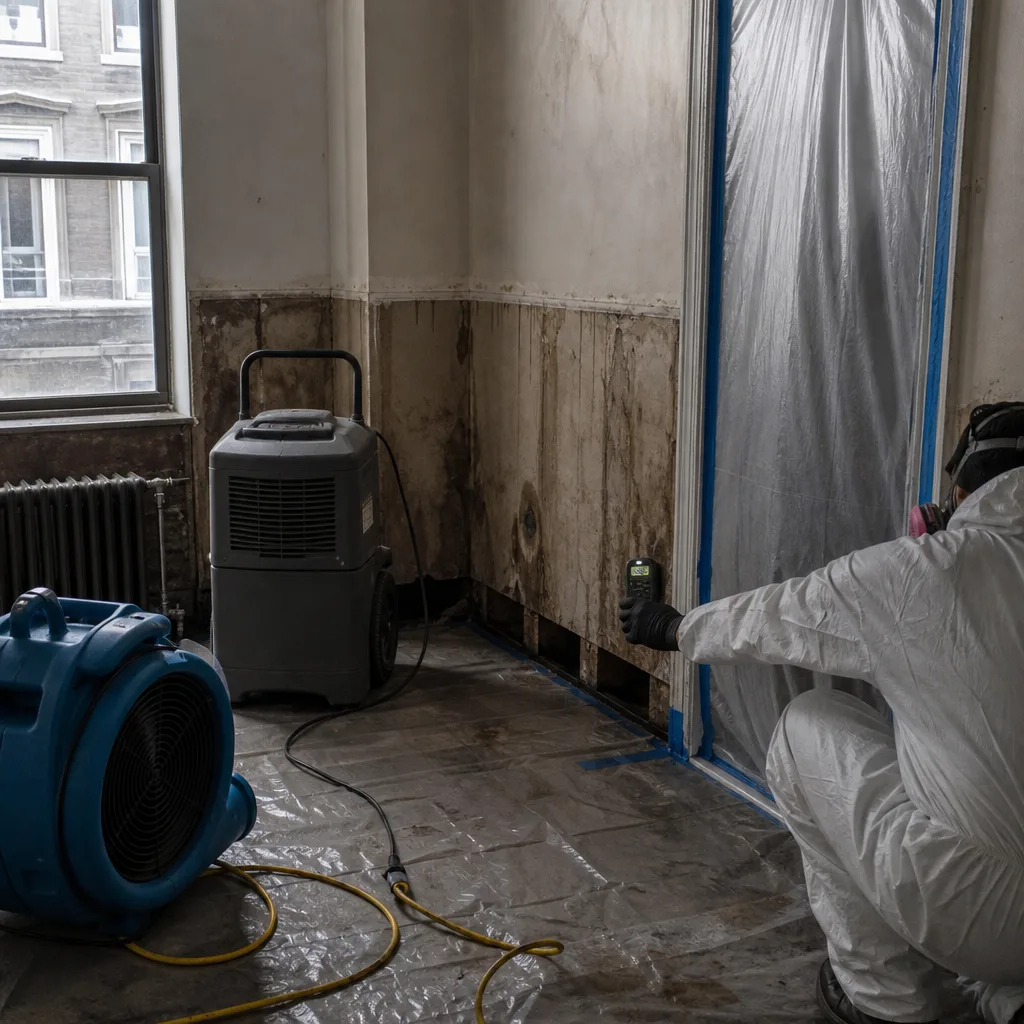 Before
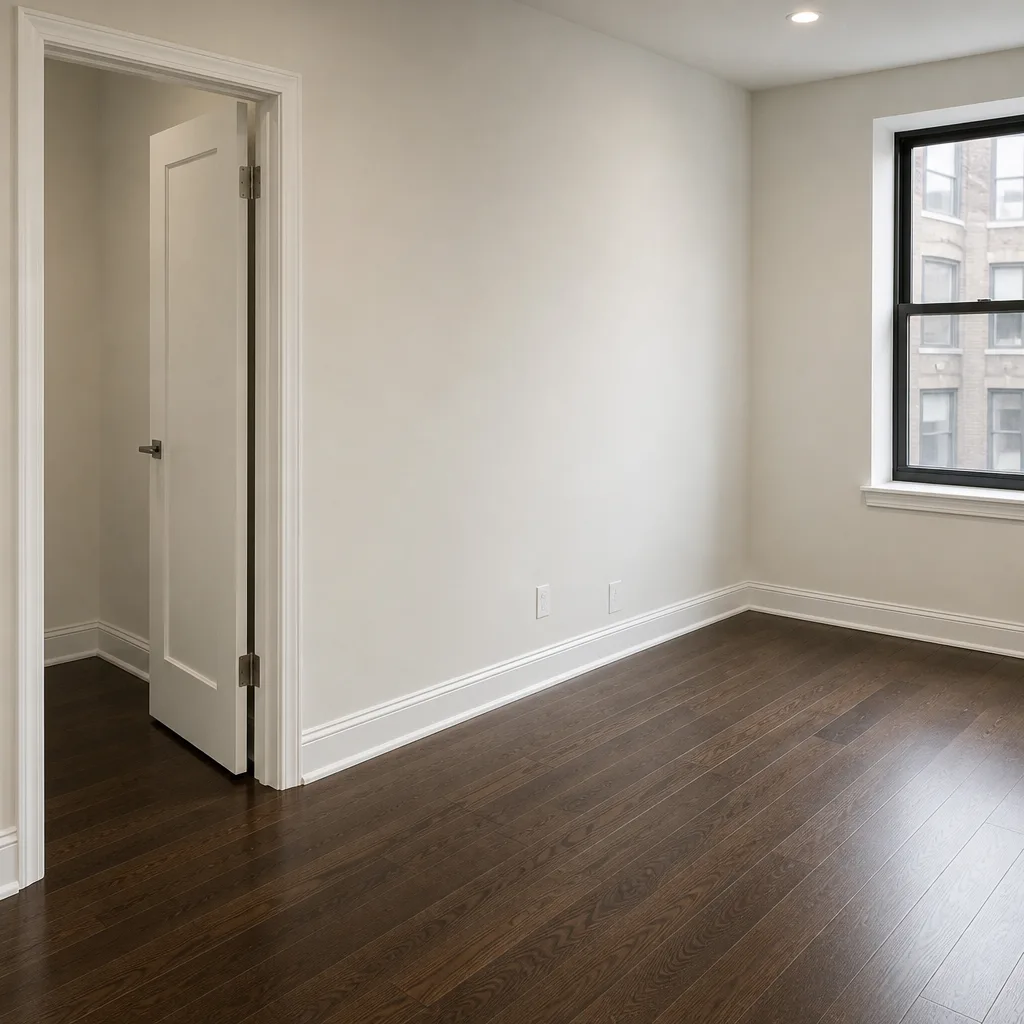 After
After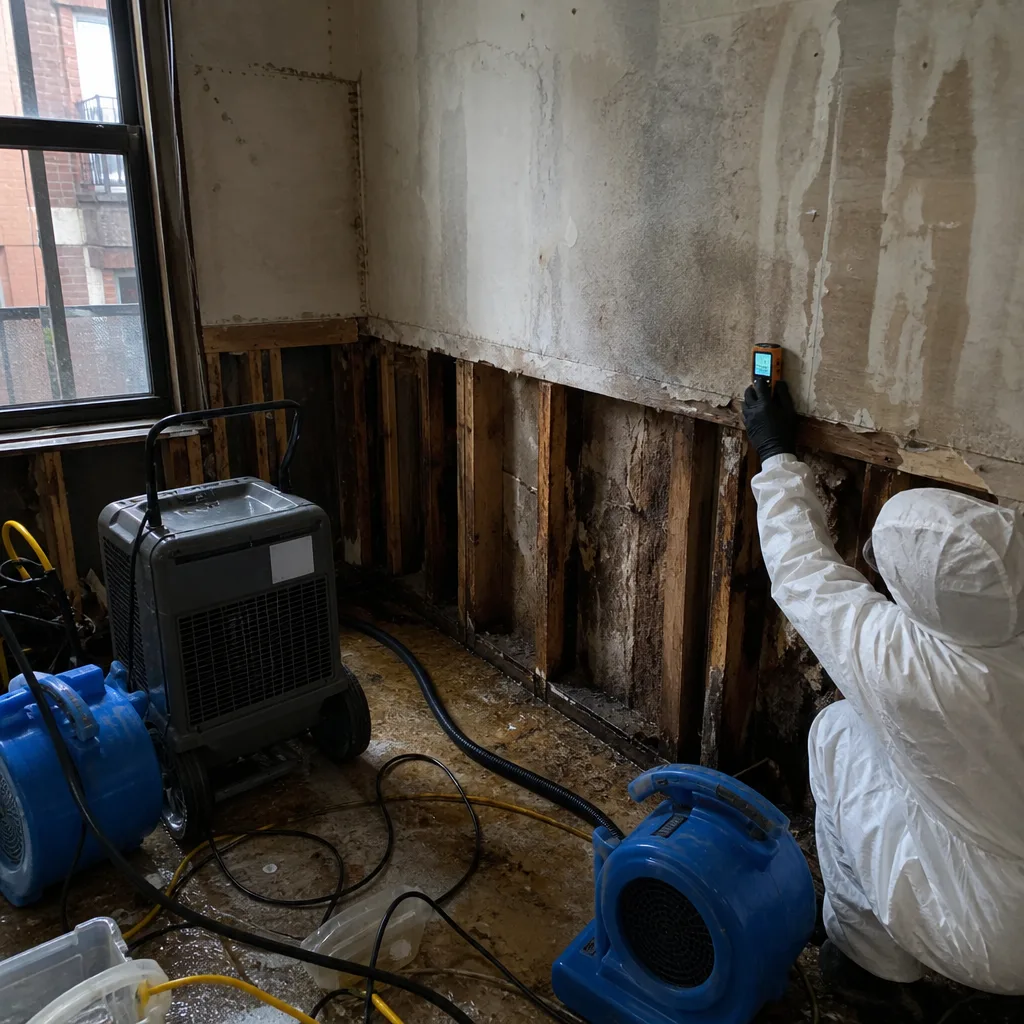 Before
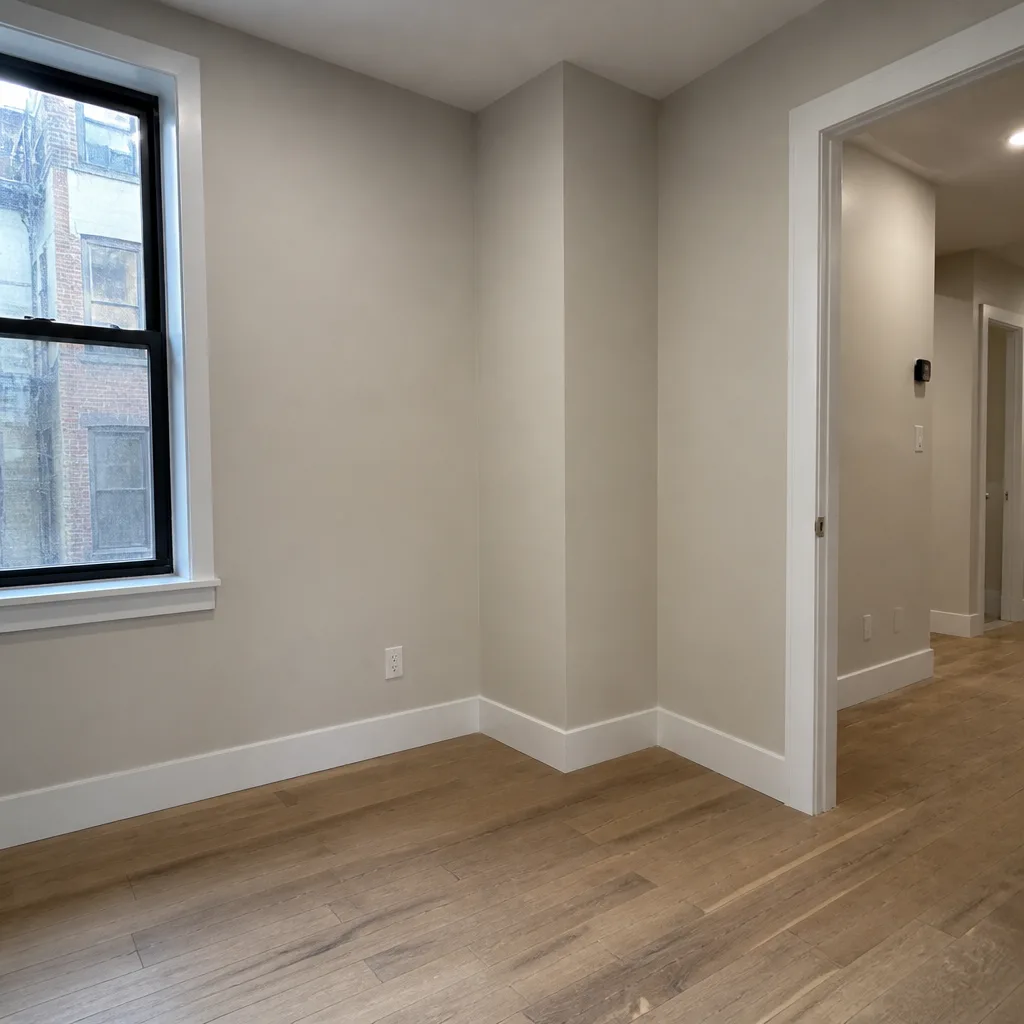 After
After24/7 Emergency Storm & Disaster Restoration in Union City
Storm damage in Union City moves fast. A nor’easter drives water through the Palisades cliff-face foundations, a downed tree takes out a third-floor window on Palisade Avenue, or a backed-up cast-iron stack floods three apartments in a six-story tenement off Bergenline Avenue. We answer the phone at (607) 350-1550 around the clock, and a crew can be on-site inside Union City within about 45 minutes. The first hour matters more than most people realize: water soaks into plaster-over-lath walls, runs down through floor cavities, and finds its way into the units below. Call now, and Wade heads out himself.
Understanding Storm & Disaster Restoration Severity in Union City Properties
Storm damage in Union City rarely stays contained to one room, and almost never to one apartment. The housing stock here runs dense: 3-to-6-story brick tenements and attached row houses built between 1900 and 1940, with original plaster walls, cast-iron drain stacks, and galvanized supply lines that have been failing for years. When a storm forces Category 3 water, the kind carrying sewage or street runoff, into a basement or lower unit, it migrates through shared joist bays and chases down wall cavities. We classify water by category and class before we touch a thing. Category 1 is clean supply water. Category 2 has contaminants. Category 3 is grossly contaminated, storm surge and sewer backup. Most storm flood events in Union City are Category 2 or 3, and they demand containment, antimicrobial cleaning, and structural drying, not just a mop and fans. Moisture mapping with thermal imaging shows us where the water actually traveled, which in these old buildings is rarely where the puddle ended up.
Why Union City Property Owners Choose Wade’s Restoration
- 45-minute response commitment. We have crews staged for the Union City area, and we do not make people wait through a call center queue. Wade answers live.
- 24/7 live answer, always a real person. No automated system, no voicemail at 2 a.m. Calling (607) 350-1550 gets a human being who can start moving equipment.
- IICRC-certified crews, WRT and ASD trained. Water damage and applied structural drying are not guesswork. Our people hold IICRC certifications in water restoration, applied structural drying, and fire and smoke restoration.
- Free visual inspection. We will assess the damage on-site at no charge and give you a written scope before any work begins.
- Direct insurance billing. We handle the adjuster communication and paperwork, so you are not stuck relaying details back and forth.
- One team from extraction to reconstruction. We do not hand you off to a subcontractor after the drying. The same crew runs the whole job, which matters in buildings where access is already a headache.
Our Storm & Disaster Restoration Process
Inspection & Assessment
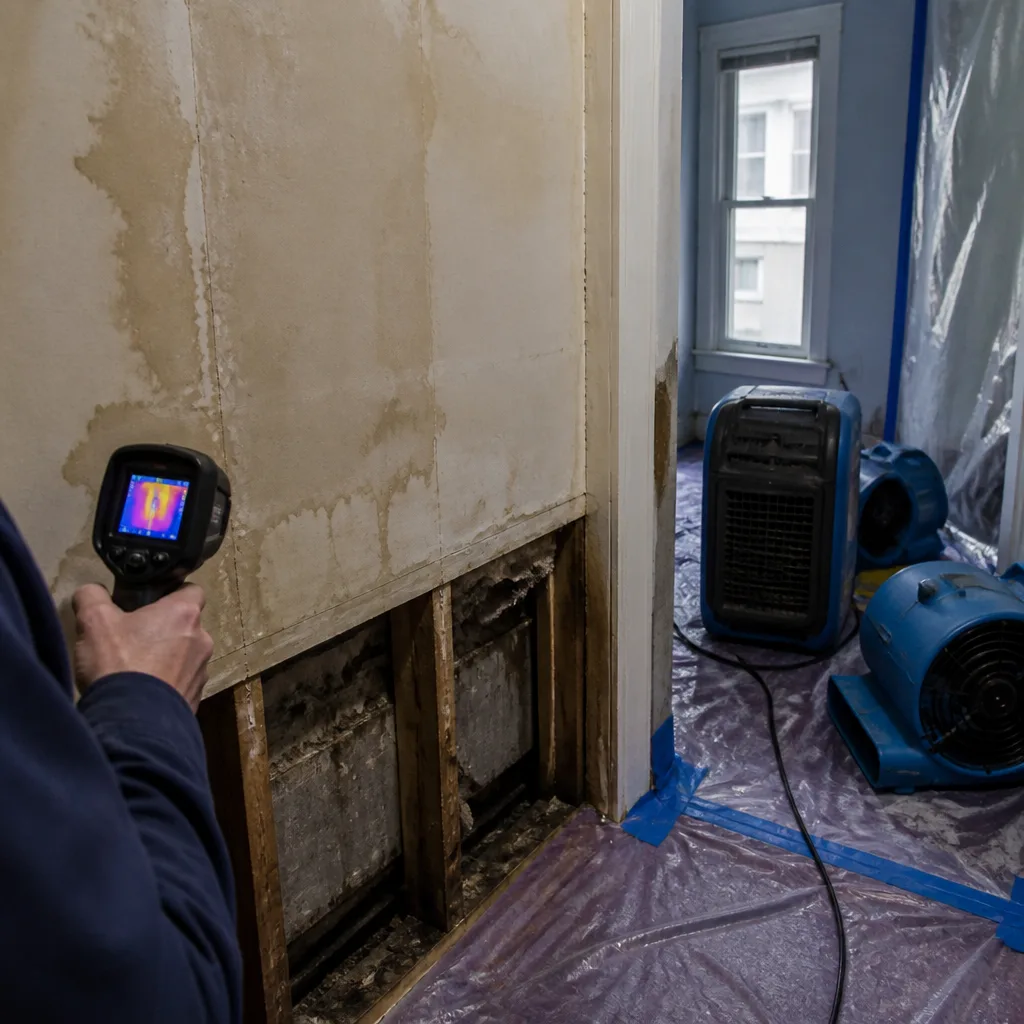
We start with a full visual and moisture assessment. In Union City tenements, that means checking not just the flooded unit but the walls, floors, and ceiling cavities of adjacent units. We use thermal imaging and hygrometers to map where water has actually moved.
Extraction & Stabilization
We remove standing water with truck-mounted and portable extractors, then stabilize the structure. That often means emergency board-up or roof tarping first if storm damage has opened the building envelope. In tight Union City streets, we hand-carry equipment up stairs when there is no freight elevator.
Drying & Dehumidification
We set Dri-Eaz and Phoenix dehumidifiers and air movers to dry the structure to pre-loss moisture levels. Daily readings go into a log you keep. In old brick buildings with plaster walls, drying takes patience. We do not rush it and we do not hide the numbers from you.
Cleaning & Sanitization
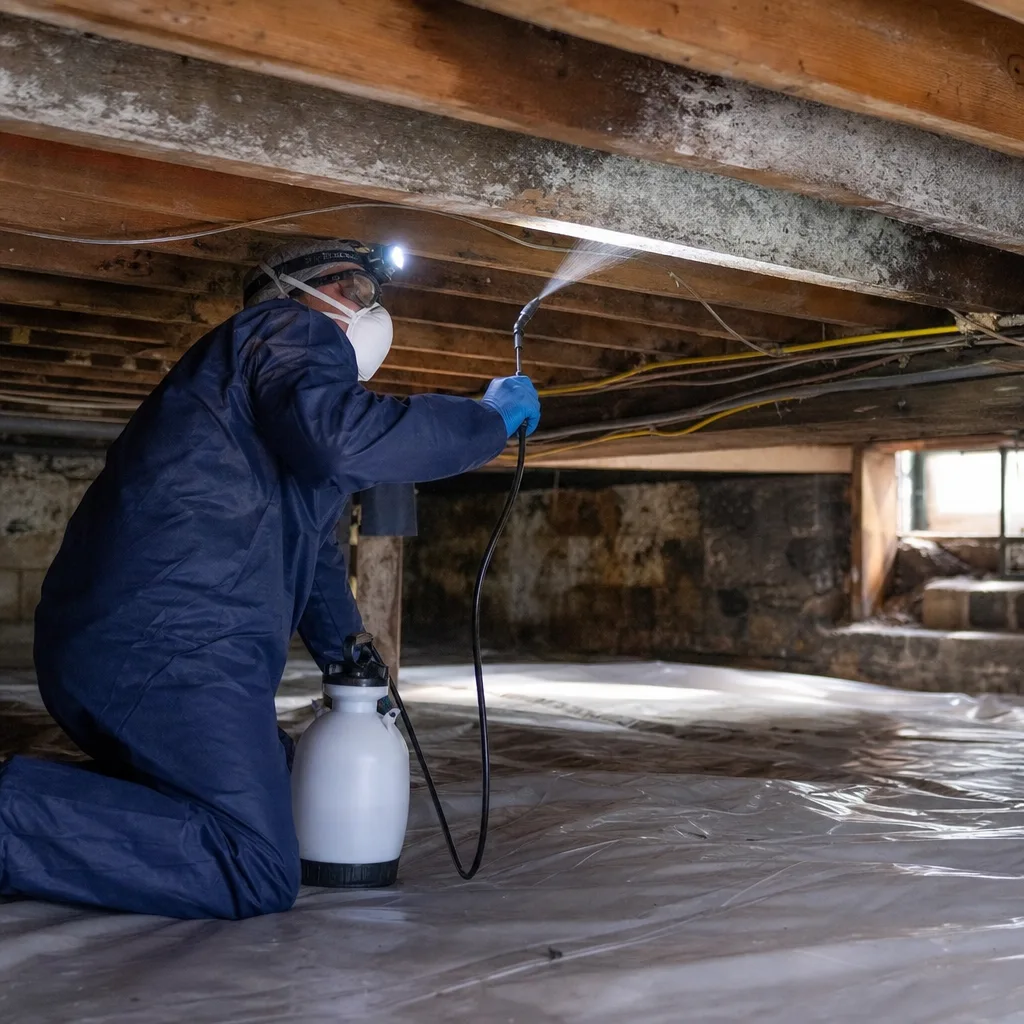
Category 2 and 3 water require antimicrobial cleaning and, in many cases, HEPA air scrubbing. We set containment barriers so the work does not spread contaminants through the building. In pre-1978 Union City buildings, this is also where lead and asbestos protocols come in.
Specialty Treatment for Storm Damage
Storm work in Union City often requires targeted foundation sealing, drainage checks, and multi-unit moisture verification. We test the basement walls for hydrostatic pressure issues on Palisades-edge properties, because storm seepage will come back if the foundation is not addressed.
Repairs & Restoration
After drying and cleaning, we rebuild. Drywall, plaster, flooring, trim, paint. If the cast-iron stack failed or a supply line burst, we coordinate the plumbing repair and then restore the affected units to pre-loss condition.
Need Emergency Storm & Disaster Restoration in Union City Now?
Crews minutes away, answering live 24 hours a day. The sooner we start, the less it costs.
Working With Your Insurance Company
You should not have to spend your nights on the phone with an adjuster while water is still standing in your apartment. We document everything from the first hour: photos of every affected room, moisture readings, drying logs, and a line-item scope of work. We deal with your carrier directly, so you are not stuck as the middleman. Our estimates use industry-standard pricing, which means fewer delays and fewer fights over what gets covered. If your adjuster has questions, we answer them. If they need more documentation, we send it. That is the whole job, not a premium add-on.
What We Provide Your Insurer
- Thorough documentation of the loss
- Photos of all damage, room by room
- Moisture readings and drying logs
- A detailed, line-item scope of work
- Direct coordination with your carrier
Built for Union City’s Loss Calendar
Union City’s storm season is not a season. It is a year-round reality with different failure points each quarter. January and February bring deep freezes that burst galvanized supply lines inside uninsulated exterior walls. Those leaks run behind plaster for days before they show up as a stain on a ceiling below. March and April saturate the Palisades escarpment, and basement hydrostatic pressure builds until water pushes through foundation cracks. Summer thunderstorms overwhelm the combined sewer system, backing storm runoff up cast-iron stacks into garden-level and first-floor units. September through November is nor’easter country, with wind-driven rain that finds every open window, every cracked parapet, every missing roof shingle on a 1920s flat-roof tenement. The buildings are old enough that each of these events tends to expose a pre-existing condition: a cracked stack, a failed vent boot, a foundation wall that has been seeping for a decade. That is what makes Union City storm restoration different. It is almost never a single isolated cause.
Storm & Disaster Restoration Across Union City’s Neighborhoods
We work every part of Union City, and the response pattern shifts block by block. Around Bergenline Avenue, the commercial corridor runs dense with street-level storefronts under apartments, so a roof leak or parapet failure on the third floor quickly becomes a ceiling collapse concern for the business below. Up near the Palisade Avenue side, the buildings sit closest to the escarpment edge, and basement water intrusion after heavy rain is the most common call we get. The neighborhoods around New York Avenue and 43rd Street have a mix of four- and five-story walk-ups with narrow stairwells, which means our crew is hand-carrying dehumidifiers and air movers up dark staircases more often than not. Below Kennedy Boulevard, you find more subdivided garden-level units, and those take on water from both the street runoff and the building’s own failing plumbing. Every section of Union City has its own access headaches, and we have been through every one of them. The zip codes 07087 and 07086 cover most of the city, and our response times are built around the reality of double-parked streets and no-parking zones.
Specialized Storm & Disaster Restoration Services We Offer in Union City
Our Storm & Disaster Restoration team handles the full sequence from first response to final coat of paint. Here is what that looks like in Union City specifically.
Flood Damage Restoration
Storm flooding in Union City means one of three things: basement seepage through Palisades cliff-face foundations, sewer and storm drain backup through aging cast-iron stacks, or wind-driven rain intrusion through the building envelope. We handle all three. We extract, dry, sanitize, and restore, and we test the foundation for hydrostatic pressure so the next nor’easter does not send the same water back in. In multi-unit buildings, we coordinate with the landlord, the neighbors, and the insurance carriers for all affected units at once.
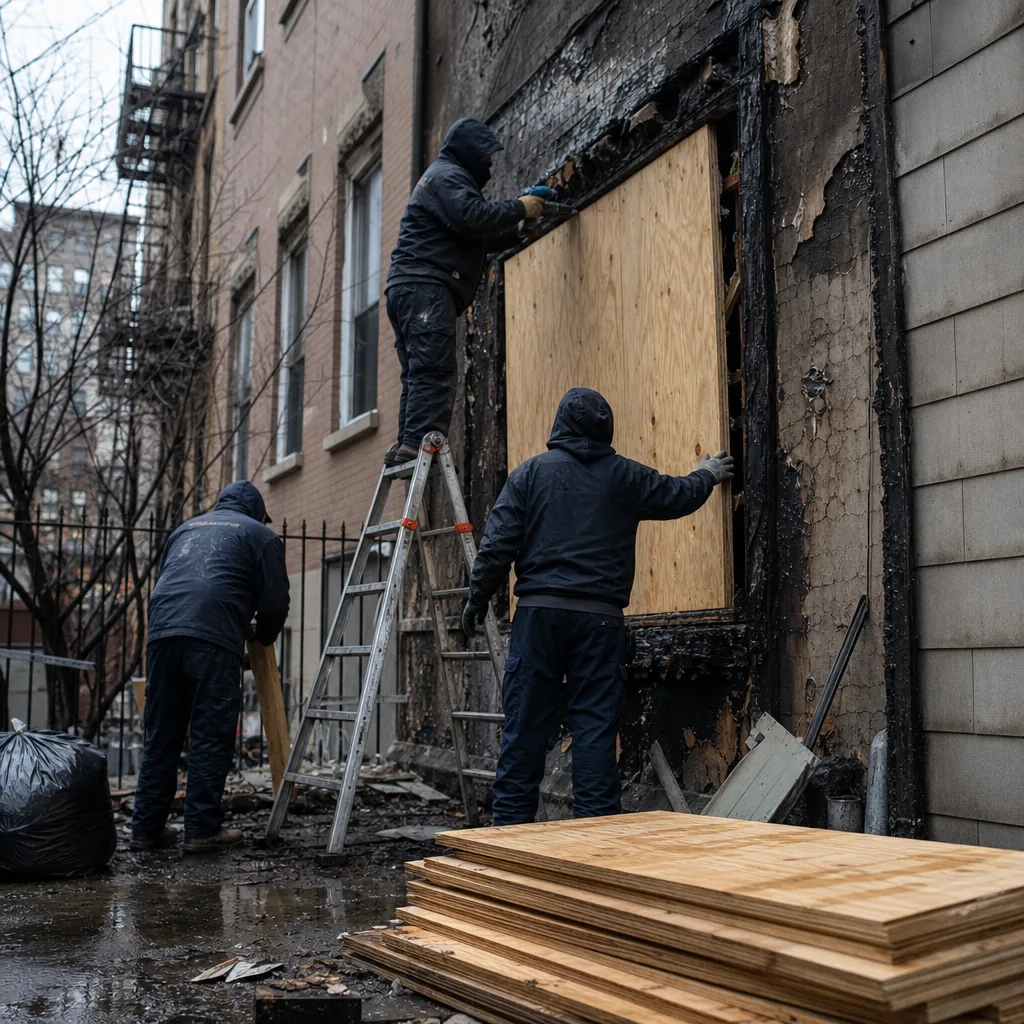
Emergency Board-Up
When a tree limb or wind gust takes out a window in a Union City row house, that opening becomes a security problem and a water problem. We board up openings with plywood and proper fasteners, cut to fit the odd window sizes you find in pre-war buildings. We can be on-site fast, usually within an hour, and we secure the opening properly so it does not become an invitation to a break-in. Emergency board-up buys you time to deal with the full repair without the property sitting exposed.
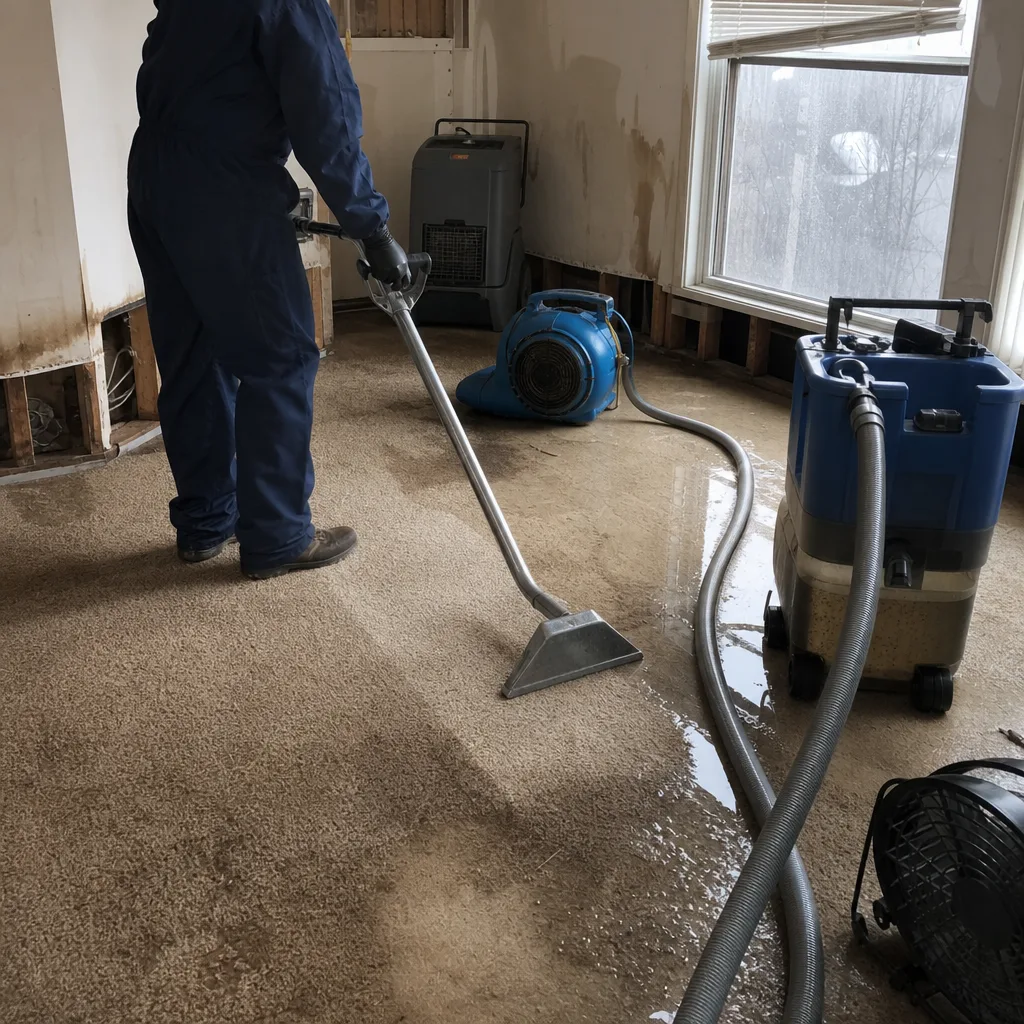
Storm Damage Cleanup
Debris removal, water extraction, mud and silt cleanup, and structural drying all fall under storm cleanup. In Union City’s tight streets, debris often blocks doorways and sidewalks, and city code requires prompt removal. We handle the hauling and disposal, salvaging what can be saved and documenting what cannot for the insurance claim. We also manage lead paint protocols where old plaster and trim have been disturbed.
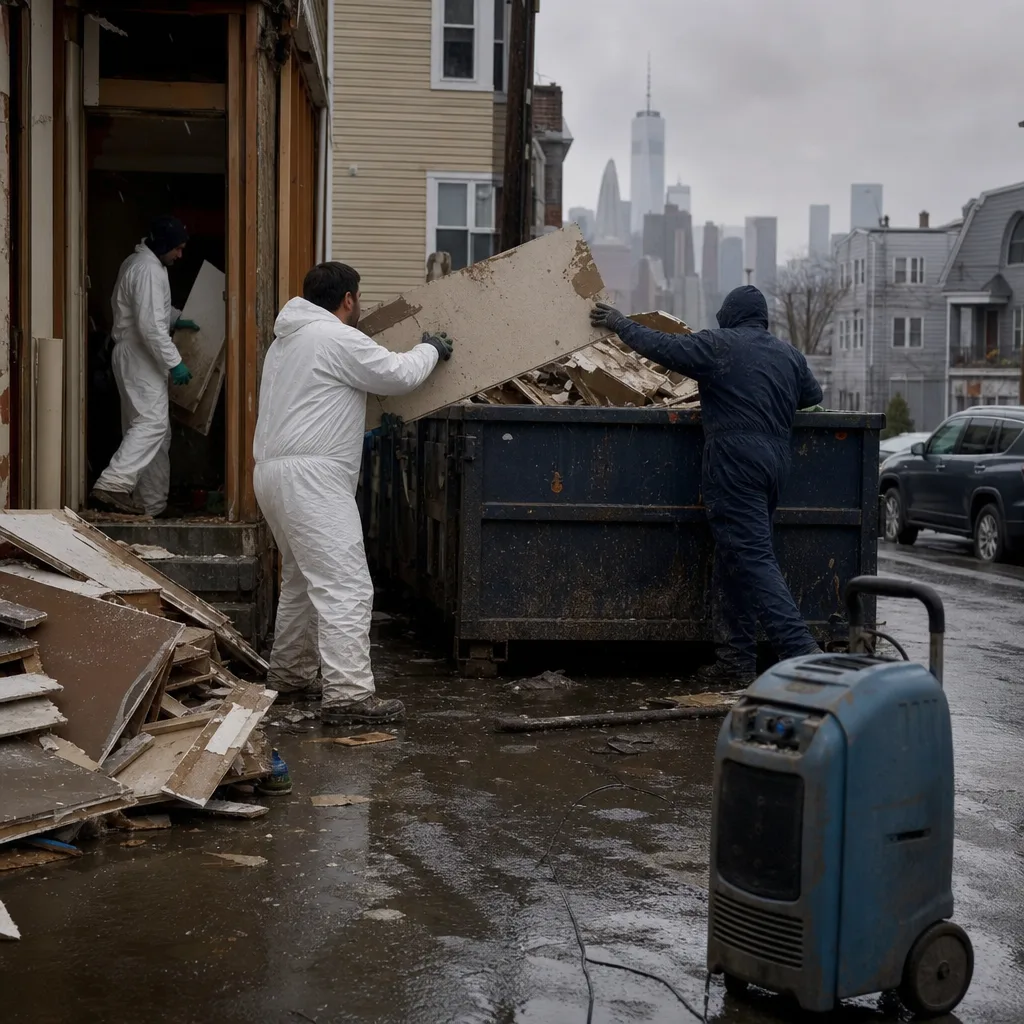
Roof Tarping
Flat and low-slope roofs dominate Union City’s housing stock, and they fail at parapets, roof drains, and membrane seams. After a storm, we tarp the damaged roof section to stop active water intrusion while a permanent repair is scoped. On a windy block, proper tarping means perimeter fastening and weight placement that can hold through the next squall line. We have seen tarps blow off because they were not secured for Hudson County wind, and then the ceiling damage doubles overnight.
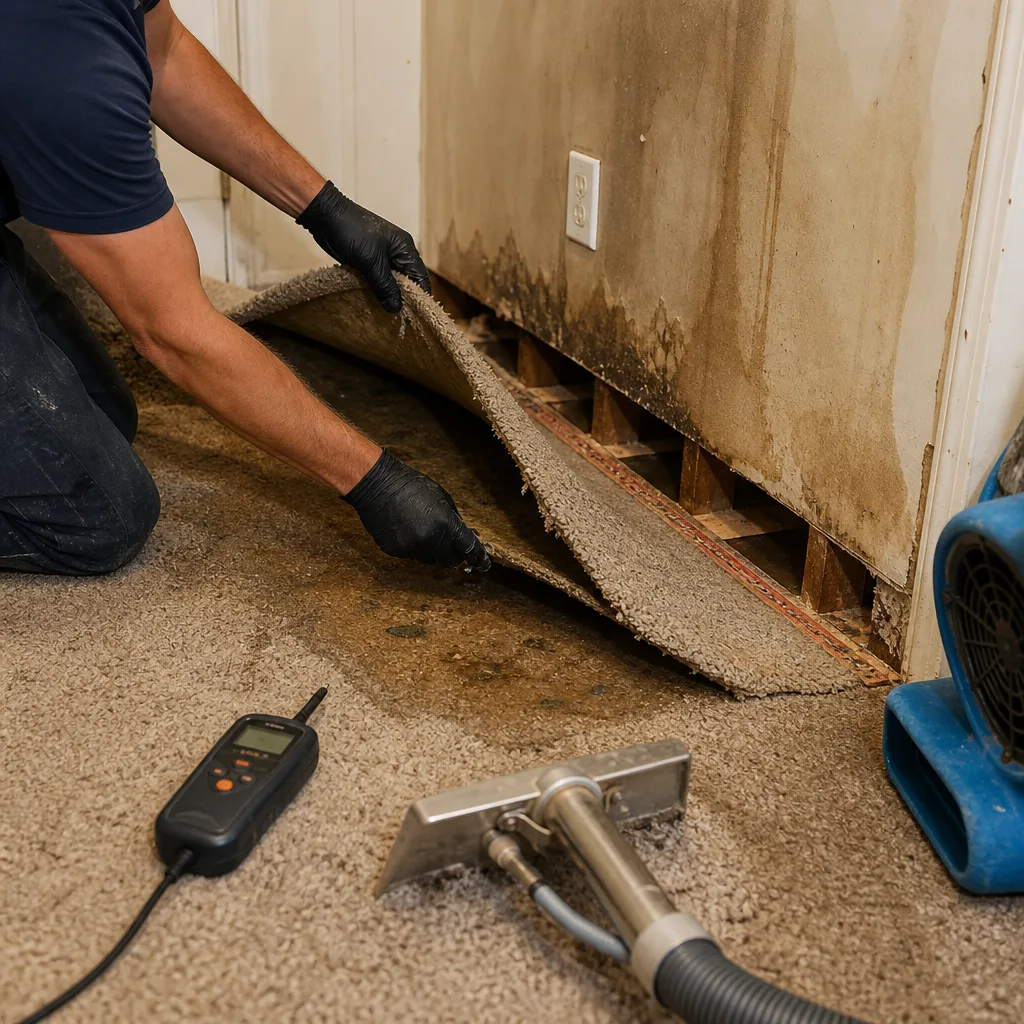
Debris Removal
Storm debris in Union City piles up in front of stoops, against basement areaways, and in the narrow gangways between buildings. We clear it, haul it, and document what went out for the claim. In older buildings, we watch for asbestos-containing material in old plaster and pipe insulation, and we follow the NJ DEP abatement rules when it shows up.
What happens when you call
- 1
A real person answersNo phone trees - you reach a local pro.
- 2
You get an upfront price rangeHonest numbers before anyone is dispatched.
- 3
A background-checked tech heads outLicensed & insured, dispatched right away.
- 4
You approve before work beginsNothing starts until you say go.
Storm & Disaster Restoration Costs in Union City, NJ
What you pay depends on what actually happened, and the only way to know is a free visual inspection. That said, here are real ranges for the Union City market. A single-unit water extraction and drying job in a tenement apartment typically runs $1,800 to $4,200. Multi-unit flood damage restoration, the kind where a stack backup floods three apartments, usually lands between $6,000 and $18,000 depending on square footage and how far the water traveled. Emergency board-up for a broken window or door runs $250 to $600 per opening. Roof tarping on a flat-roof tenement section runs $500 to $1,400 depending on access and roof height. Debris removal typically runs $300 to $900. What moves the price is the stair count for equipment hand-carrying, the number of affected units, lead and asbestos abatement if the building is pre-1978, and how long the structure has been wet. You can get a firm written scope before any paid work starts, and you should. Call (607) 350-1550 and we will come out at no charge.
We Also Serve Cities Near Union City
Our storm response covers the surrounding Hudson County area. If you are in Weehawken, Hoboken, North Bergen, or Secaucus, we can be there quickly and bring the same equipment, the same documentation standards, and the same live-answer commitment. Those towns have their own building stock quirks, and we know them well.
Union City Storm & Disaster Restoration Questions, Answered
How do you handle storm restoration in Union City buildings with no freight elevator and narrow, double-parked streets?
We hand-carry commercial dehumidifiers, air movers, and hoses up the stairs. It adds labor hours, and we factor that into the estimate honestly. Our crew regularly carries Dri-Eaz dehumidifiers and Phoenix air movers up four or five flights in walk-up tenements along Bergenline Avenue and New York Avenue. We stage equipment on the sidewalk and move it in stages, and we work around the parking reality of Union City, which means no waiting for a loading zone to open up.
What additional protocols apply to storm restoration in Union City’s pre-1978 buildings?
Lead and asbestos abatement. Under NJ DEP rules, disturbing lead paint or asbestos-containing plaster and pipe insulation triggers containment and disposal requirements. In buildings from the 1900s through the 1930s, which is most of Union City’s housing stock, we assume lead and asbestos are present until testing says otherwise. We include those protocols in the scope and coordinate with licensed abatement contractors when needed, so the project does not stall mid-way.
How does the Palisades escarpment affect basement flooding after a nor’easter in Union City?
The escarpment is the ridge that runs along the east edge of Union City. Buildings on the cliff face sit on foundations that absorb groundwater pressure, known as hydrostatic pressure, during and after heavy rain. That pressure pushes water through foundation cracks, mortar joints, and floor slabs. After a nor’easter, that water can keep entering for days after the storm passes. We test for hydrostatic seepage and address the foundation drainage where possible, because drying the basement without stopping the seepage means you will be calling us again in March.
Why do so many Union City storm damage jobs involve multiple units in one building?
Because the buildings share structure. A failed cast-iron drain stack services every unit above it. A roof leak in a flat-roof tenement travels down through the top-floor ceiling into the walls of every floor below. A backed-up sewer line floods garden-level units and the one above it. In dense row houses, a shared joist bay means water from a leak at 405 Palisade Avenue ends up dripping through the ceiling at 407. We inspect the whole building, not just the unit that called.
How quickly can you start emergency board-up and roof tarping in Union City after a storm?
Usually within an hour. We keep crews staged for the Union City area during storm events, and a live person answers the phone 24/7 at (607) 350-1550. Board-up and tarping are stabilization work, and they move fast because they prevent more damage. In a dense building, securing one broken window often protects three apartments below it.
Will my insurance cover storm damage in a multi-unit Union City building?
Most policies cover storm-related water intrusion and wind damage, but the details depend on your policy and whether the cause was sudden or long-term seepage. We document everything from the first hour, provide the insurer with photos, moisture readings, and a line-item scope, and we work directly with your adjuster. That direct communication is the single biggest reason claims move faster with us. We can assess your coverage situation during the free inspection.
Can I stay in my apartment during storm restoration work?
It depends on the water category and how much containment is needed. For Category 1 clean water, you can usually stay in dry rooms while we work. For Category 2 or 3 water, especially in older Union City buildings with shared ventilation, we may recommend you stay elsewhere while containment and air scrubbing run. We will tell you straight up, and we will not make you guess.
What should I do in the first 30 minutes after storm water gets into my Union City home or business?
Call us at (607) 350-1550 first. Do not walk through standing water if there is any chance it touched sewage or street runoff. If it is safe, turn off the electrical breaker to the affected area. Move personal items out of the water if you can do so safely. Do not try to extract water yourself with a shop vac; you will leave trapped moisture behind the plaster, and in these old buildings that means mold inside the walls within days. The first hour is when we can still prevent the worst of the damage.
Storm & Disaster Restoration in Union City: The Access Reality No One Mentions
Nobody outside Union City talks about what it actually takes to restore a water-damaged apartment in a pre-war tenement on a double-parked street. But it is the defining constraint of this work here. Our crew recently handled a Category 3 flood damage restoration in a six-story tenement off Bergenline Avenue, where storm surge backed up the building’s aging cast-iron stack and flooded three lower-level apartments. We hand-carried Dri-Eaz dehumidifiers and Phoenix air movers up four flights through the narrow, double-parked street, set containment around the affected units, and performed moisture mapping with infrared cameras before completing structural drying to pre-loss condition. That job was not typical in most towns. In Union City, it is every Tuesday. The labor of getting equipment into place, the containment engineering around shared hallways, the lead paint testing on old trim, the coordination with three separate insurance carriers for three apartments in one building. That is the job. Generic restoration companies do not budget for it, and that is why their estimates change at the door. Ours account for it from the first walkthrough.
Serving Union City, NJ - Our Local Coverage Area
We’re based in the Union City area and know this community well. Use the map below to see our service coverage - if you’re nearby, we can almost certainly help.
Why the Palisades Builds a Specific Kind of Basement Problem
Union City sits on top of the Palisades escarpment, a basalt ridge that slopes sharply down to the Hudson. The blocks east of Palisade Avenue sit on that slope, and their foundations are cut into the grade in a way that flatland towns never experience. After heavy rain or a nor’easter, the saturated ground behind a foundation wall pushes water sideways, straight through the old mortar joints and fieldstone. That is hydrostatic pressure, and it is relentless. We have seen basement floors in this city buckle under it. We have seen water push up through slab cracks hours after the last rain stopped. Any storm restoration in Union City has to address this, because if you dry the basement but leave the seepage path open, the next storm undoes your work. We test for hydrostatic pressure, we check the drainage around the foundation, and we write it into the scope. It is not optional here. It is the job.
If you have storm damage in Union City, call (607) 350-1550 right now. A real person answers. Wade heads out. You will know what the job costs before it starts, and you will have the documentation your insurer needs without playing middleman.
Written by Wade Ferris, Owner at Wade’s Restoration, serving Union City and the surrounding Hudson County communities since 2007.