
Free visual inspection and a written scope of work before any mitigation begins - photos, moisture readings, and drying logs go in your claim file
The scope we write is the scope we bill. Anything new gets shown to you, in writing, before we touch it.
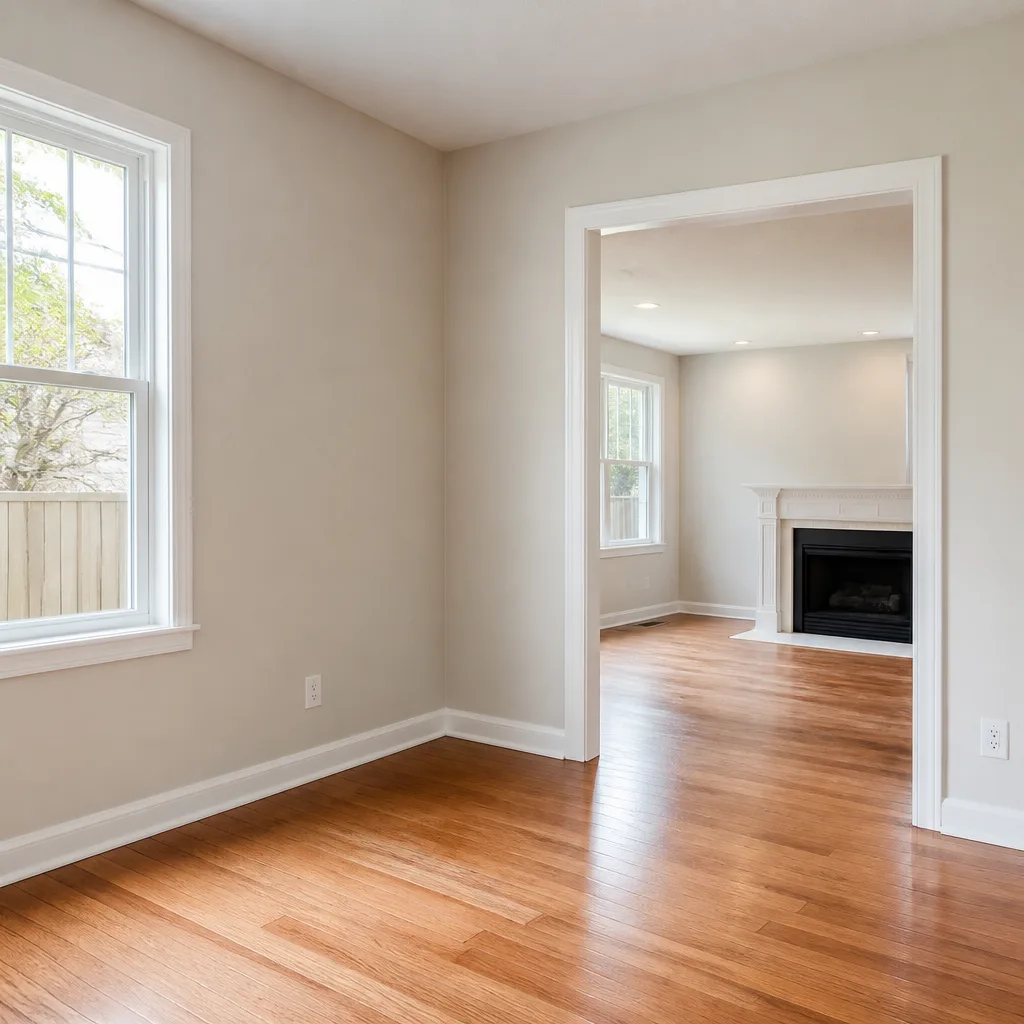
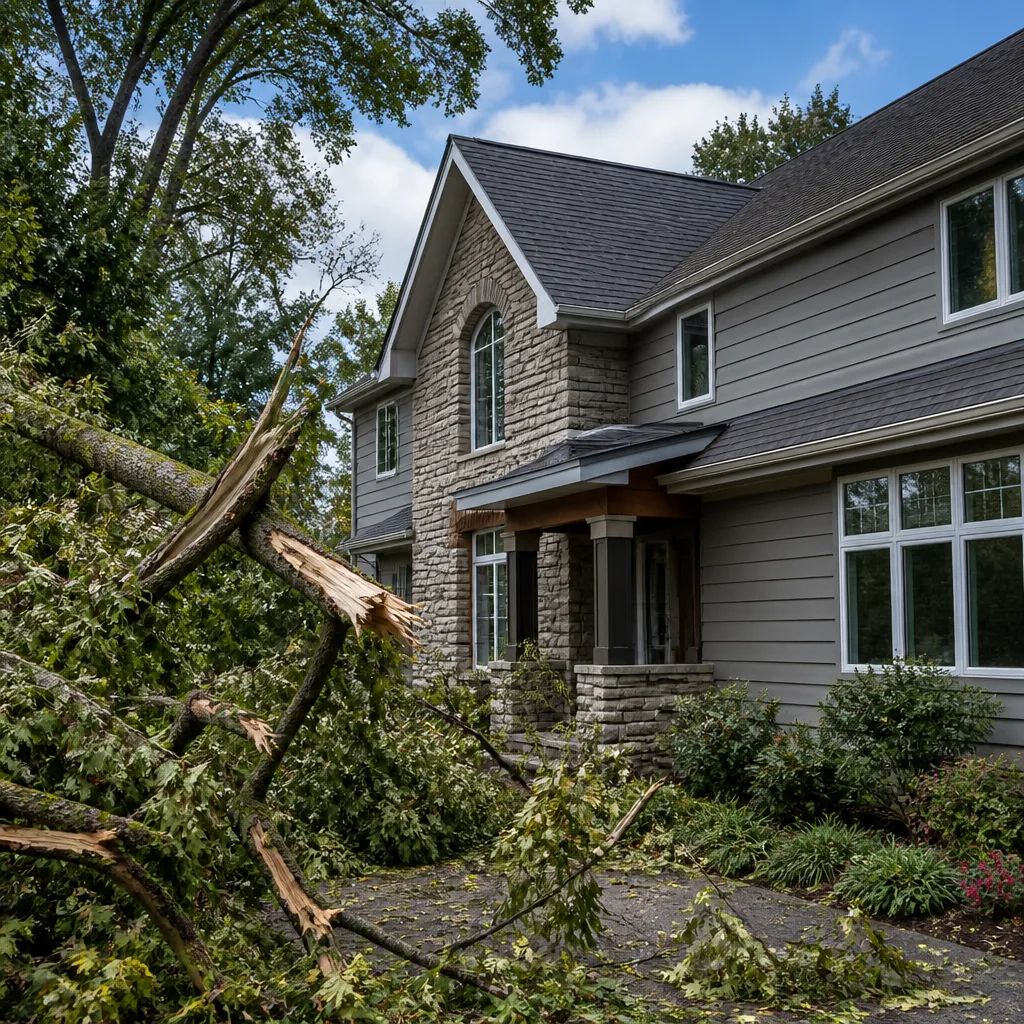
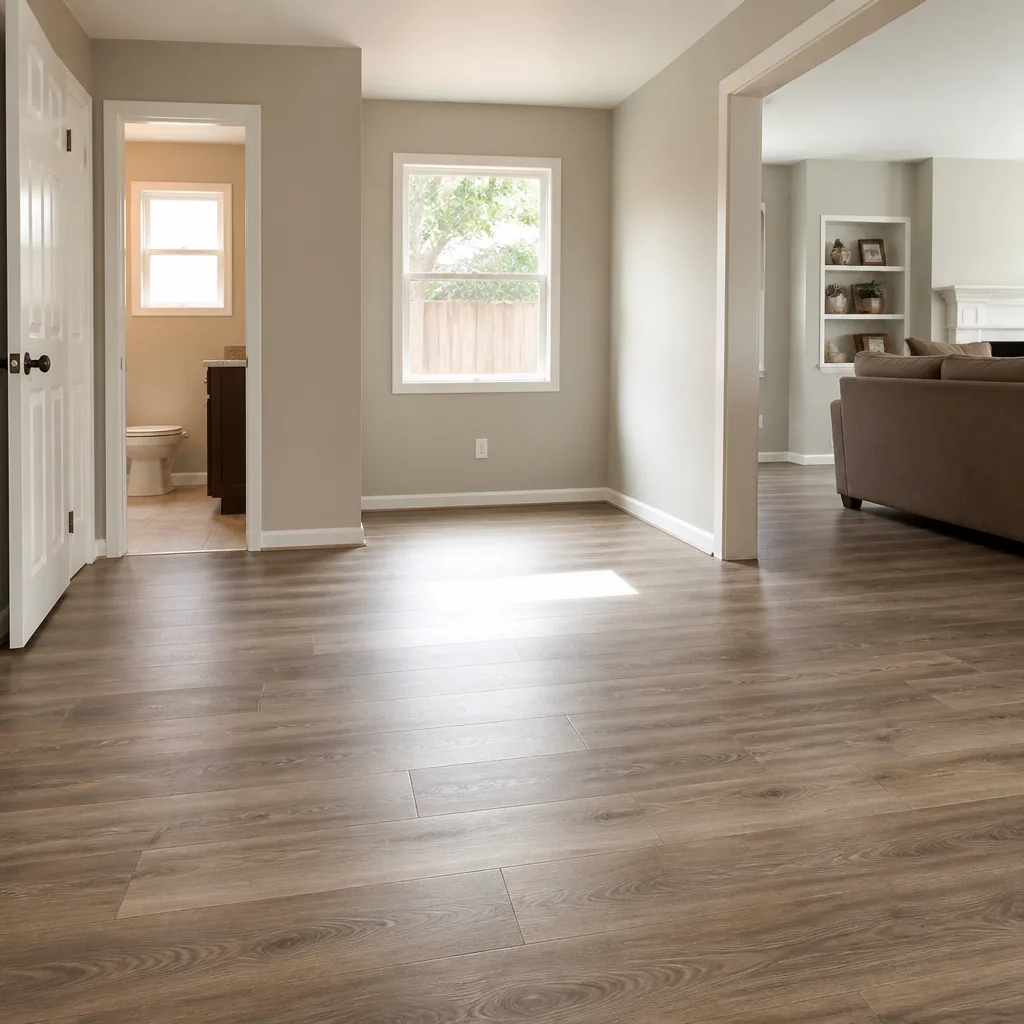

 Before
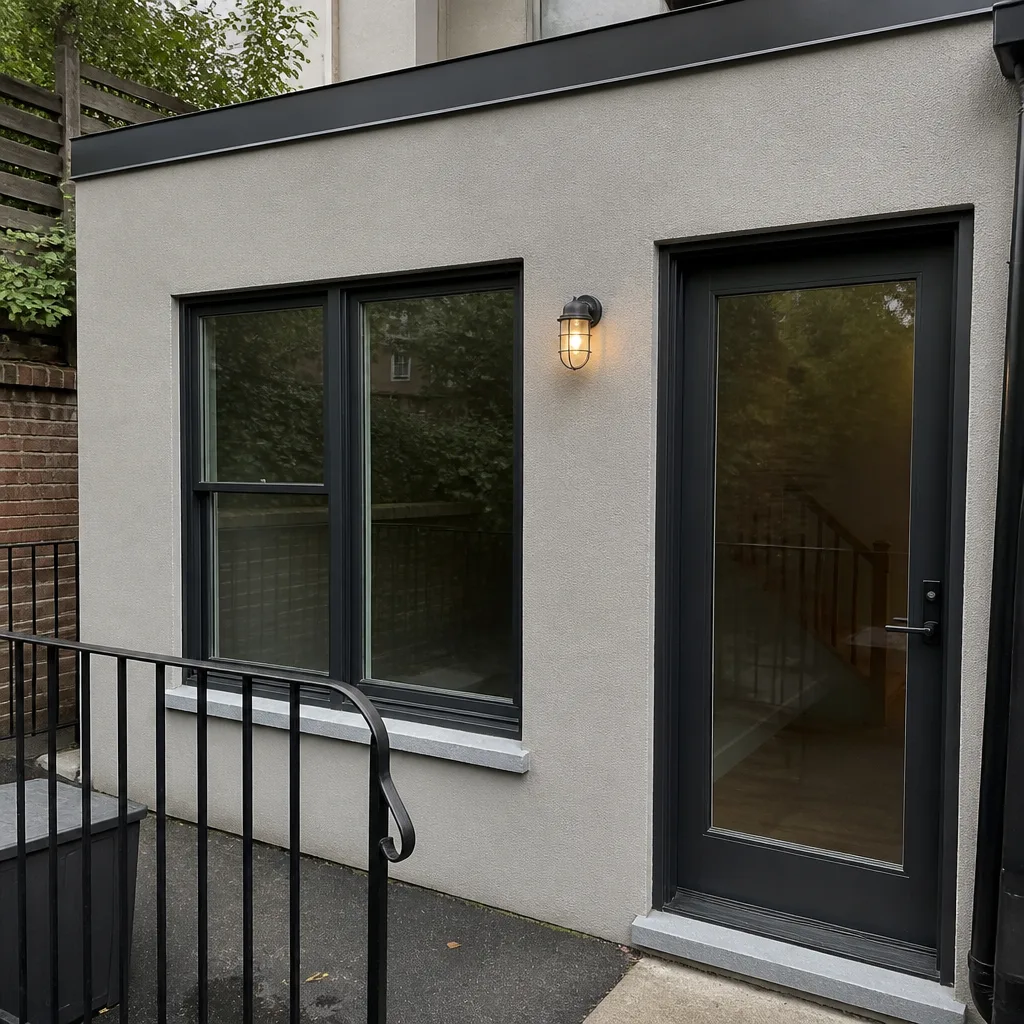 After
After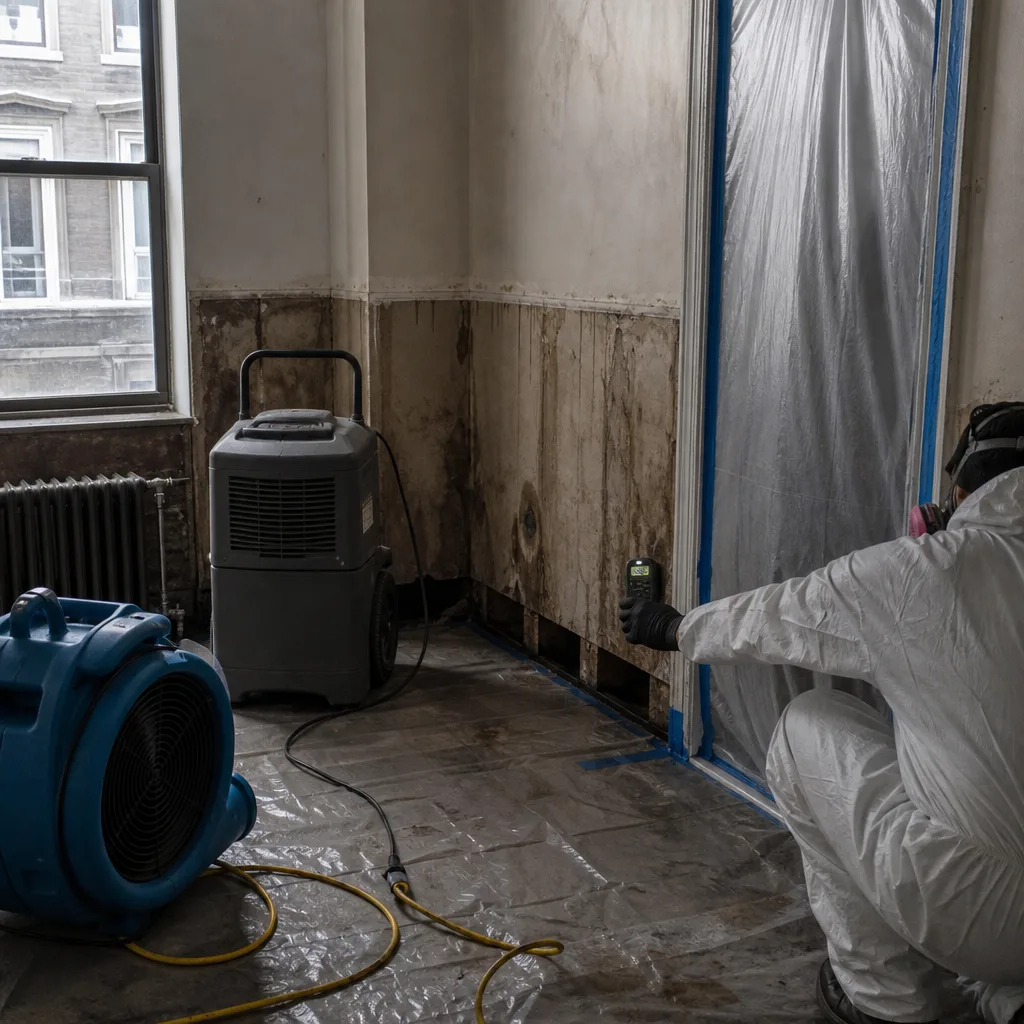 Before
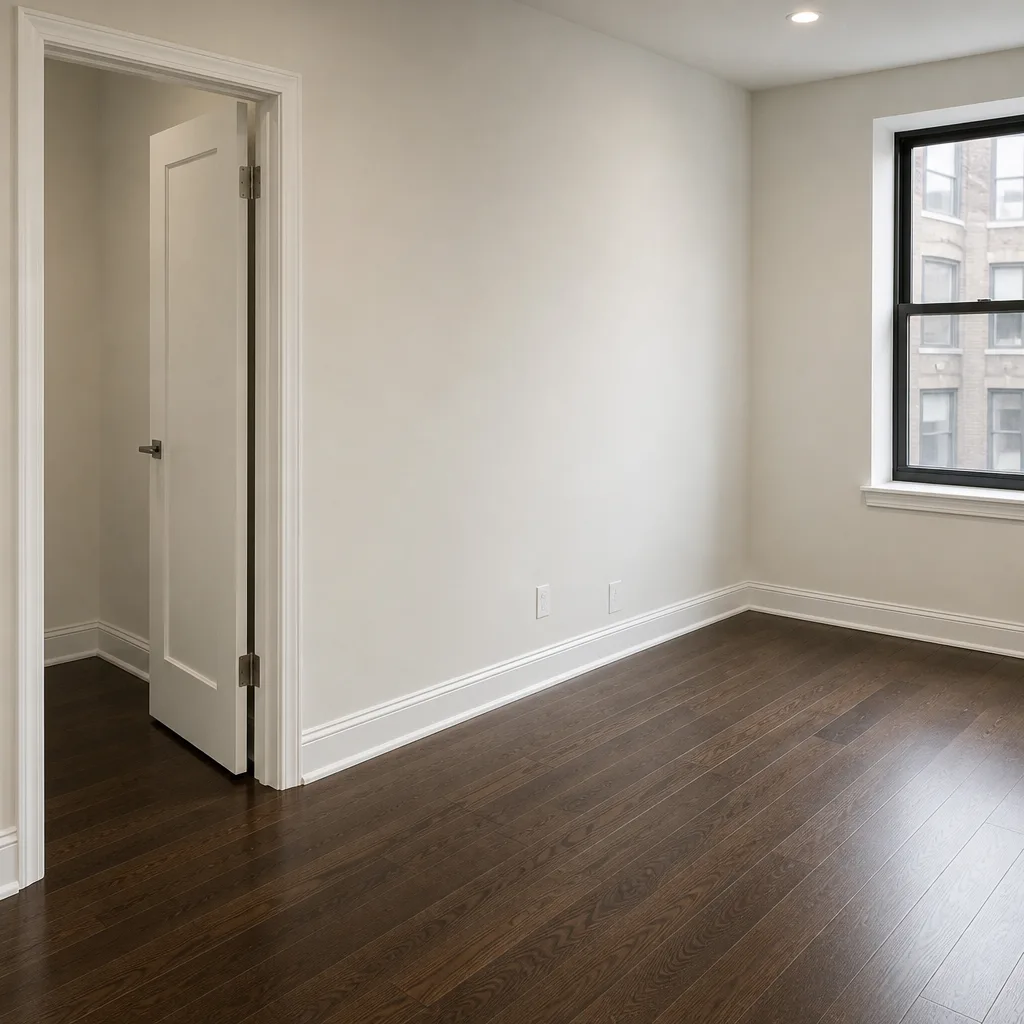 After
After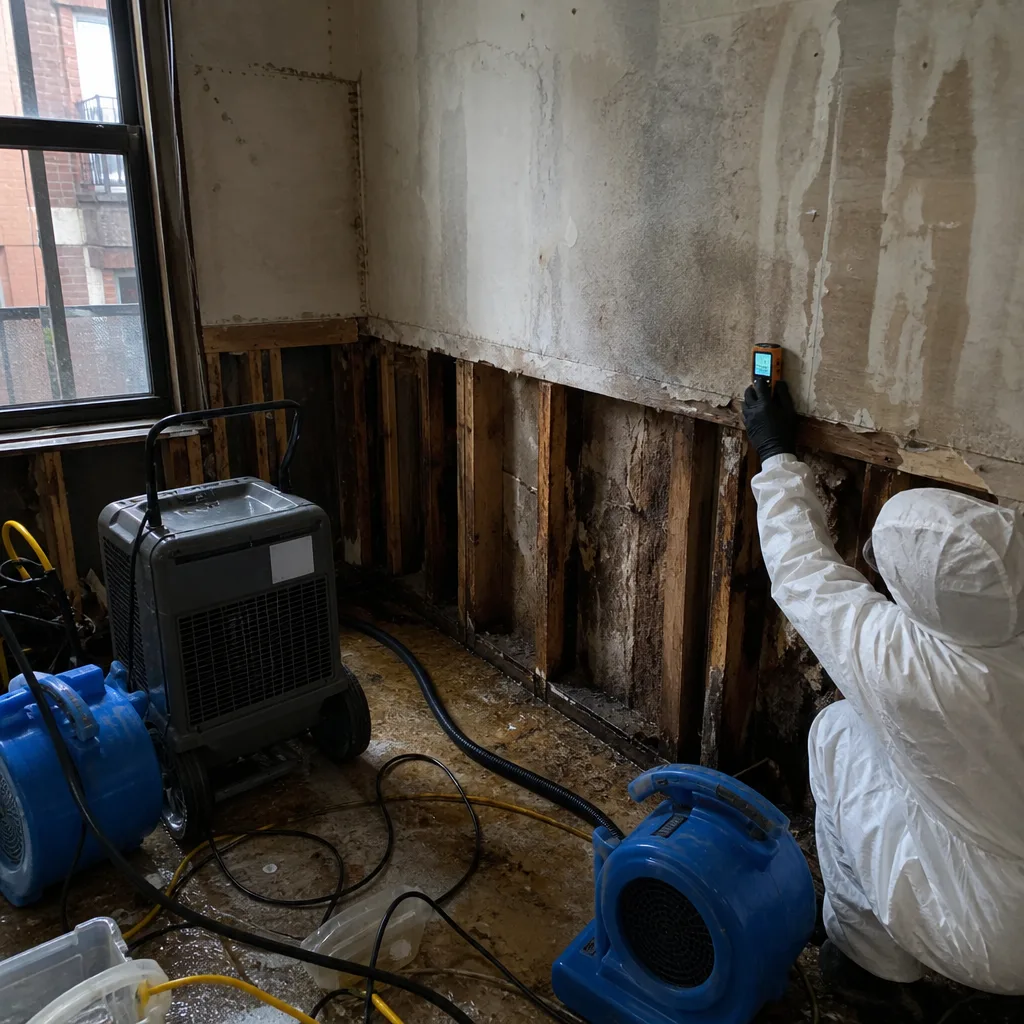 Before
 After
After24/7 Emergency Sewage Cleanup in Lower Manhattan
When sewage backs up into a Lower Manhattan building, you need a real person on the phone and a crew on the way, not a call center routing matrix. Sewage cleanup in Lower Manhattan typically runs $2,800-$7,500 for a category 3 black water loss, and the first hour determines whether that number stays low or balloons. Call (607) 350-1550 now, day or night. Wade Ferris answers his own phone, and his crew can be on-site inside 45 minutes anywhere from the Financial District down to Battery Park. The faster black water gets extracted and the affected area gets contained, the less drywall, flooring, and framing you’re replacing. Every hour sewage sits against gypsum board, it wicks higher. Every hour it pools against a below-grade foundation wall in this neighborhood, hydrostatic pressure keeps feeding it back in.
We’ve been doing Sewage Cleanup since 2007, and we know exactly what Lower Manhattan buildings do when their plumbing fails below grade. Wade’s Restoration is owner-operated, IICRC-certified, and we show up with commercial extraction pumps, moisture meters, thermal imaging, and a written scope before any work starts. No guesswork, no upsell, no crew you’ve never met. Just Wade’s name on the truck and his cell number in your phone.
Understanding Sewage Cleanup Severity in Lower Manhattan Properties
Sewage is category 3 water by definition: it carries bacteria, viruses, parasites, and whatever else was in the line. But in Lower Manhattan, a sewage backup rarely stays a simple category 3 event. Here’s what we mean. In Battery Park City, residential towers sit on compacted Hudson River landfill from the 1970s World Trade Center excavation. That fill holds water for weeks after any surge or heavy rain. When a sewage line backs up in a sub-basement, the backup often mixes with groundwater already pressing against the foundation walls. The result is a contaminated slurry, category 3 water with saltwater and septic contaminants, and it keeps seeping in long after the visible spill is extracted. In converted Financial District office towers, the plumbing was field-adapted during residential conversion. Drain lines are often undersized for the fixture load. When there’s a surge, those lines can’t clear themselves. The backup recurs until the piping is corrected. Severity here isn’t just about how much sewage escaped. It’s about where the water table sits, how the fill drains, and whether the building was ever designed to be residential at all. That’s the difference between a one-day cleanup and a multi-week structural drying job. We map moisture, we test the water, and we tell you the truth about what you’re dealing with.
Why Lower Manhattan Property Owners Choose Wade’s Restoration
- 45-minute response commitment - Wade heads out from the New York City office the moment you hang up, and his crew is working inside the hour, not the next day.
- A real person answers, 24/7 - no voicemail, no answering service, no national call center. You call, Wade answers. That’s the whole system.
- IICRC-certified crews - WRT (Water Damage Restoration Technician) and ASD (Applied Structural Drying) certifications on every truck, plus RIA affiliation. We do this to the industry’s highest standard.
- Free visual inspection - Wade walks the loss with you, explains what he sees, and hands you a written scope before any equipment comes off the truck. No charge for that. That’s a standing offer.
- Direct insurance billing - we document everything from the first hour, bill your carrier directly, and talk to your adjuster so you don’t have to be the middleman.
- One team, extraction to reconstruction - the same crew that pulls the sewage out is the crew that hangs the new drywall, so nothing gets lost between contractors.
Our Sewage Cleanup Process
Inspection & Assessment
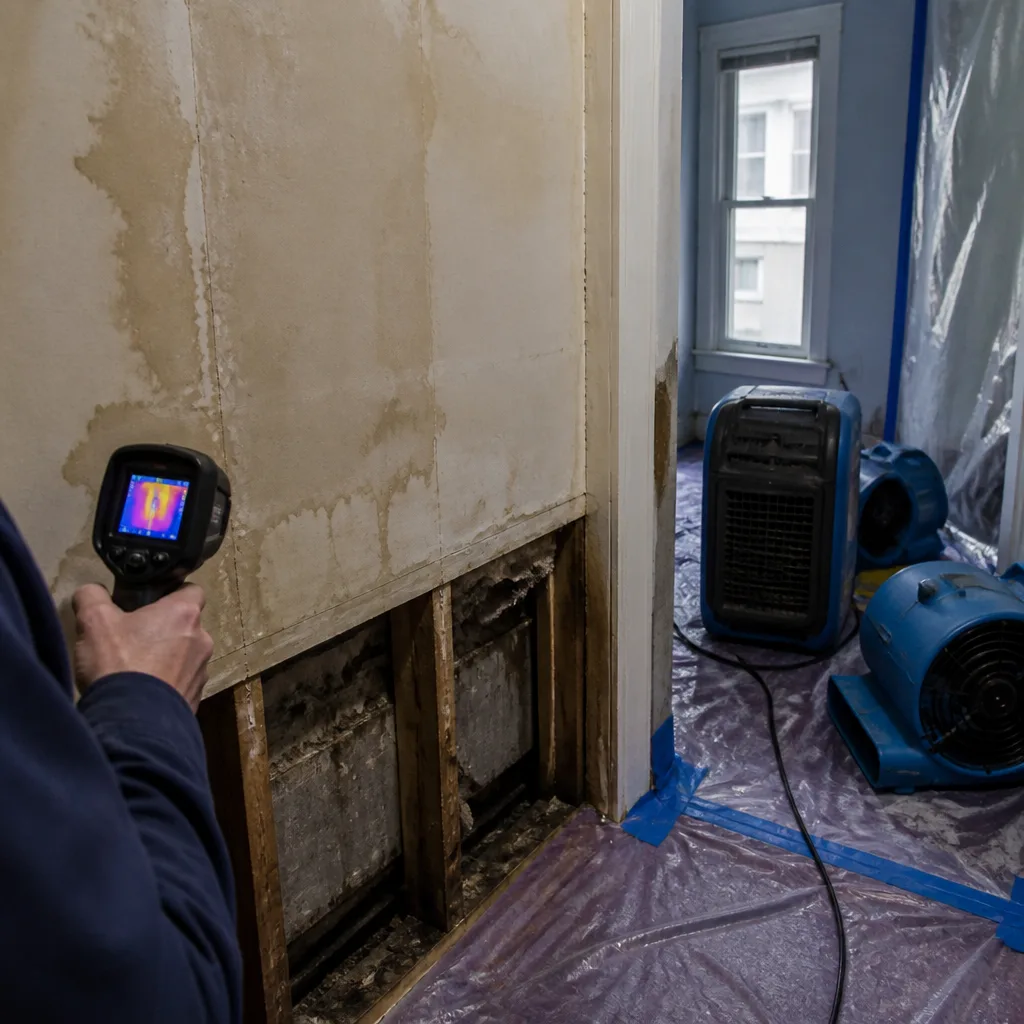
We start with thermal imaging and moisture meters to find exactly how far the sewage migrated. In Lower Manhattan sub-basements, that means checking for groundwater intrusion through cracks, pipe penetrations, and seal plates. You get a written scope with line-item pricing before work begins.
Extraction & Stabilization
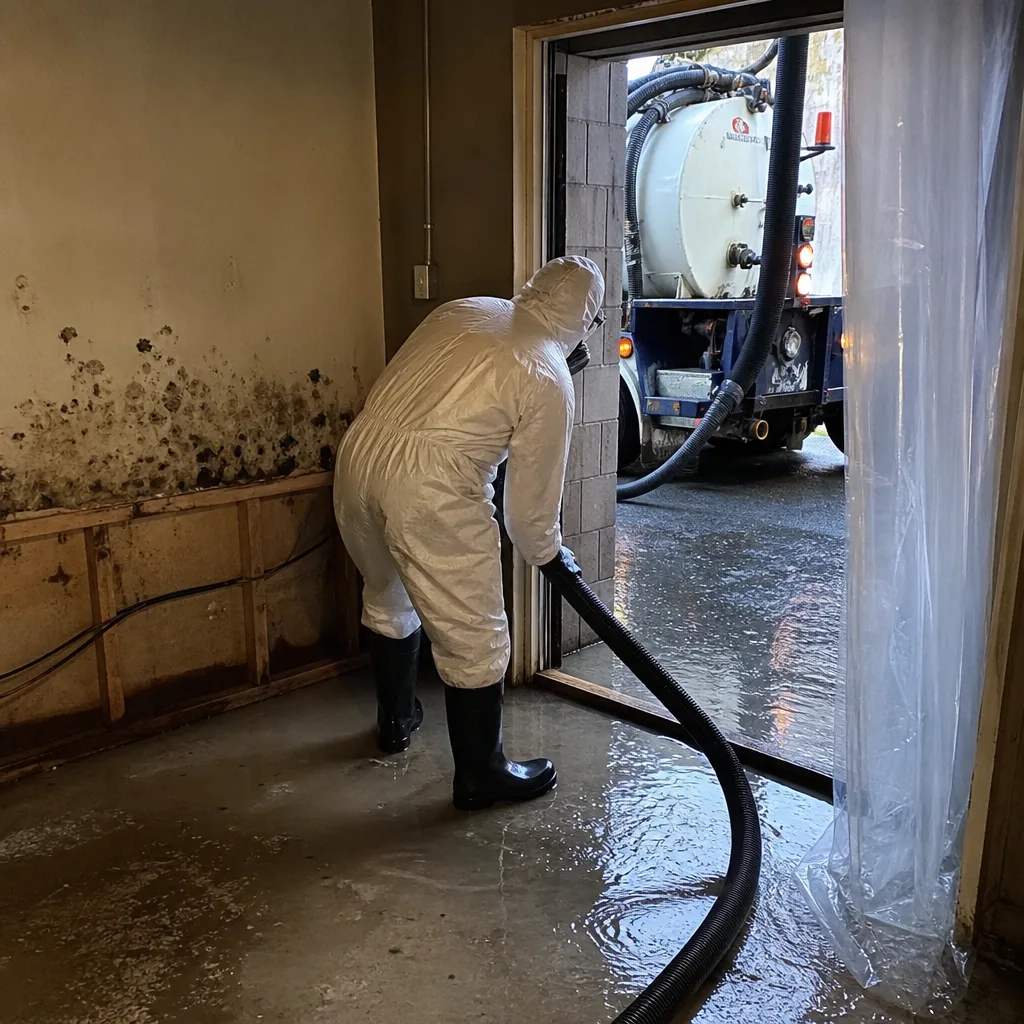
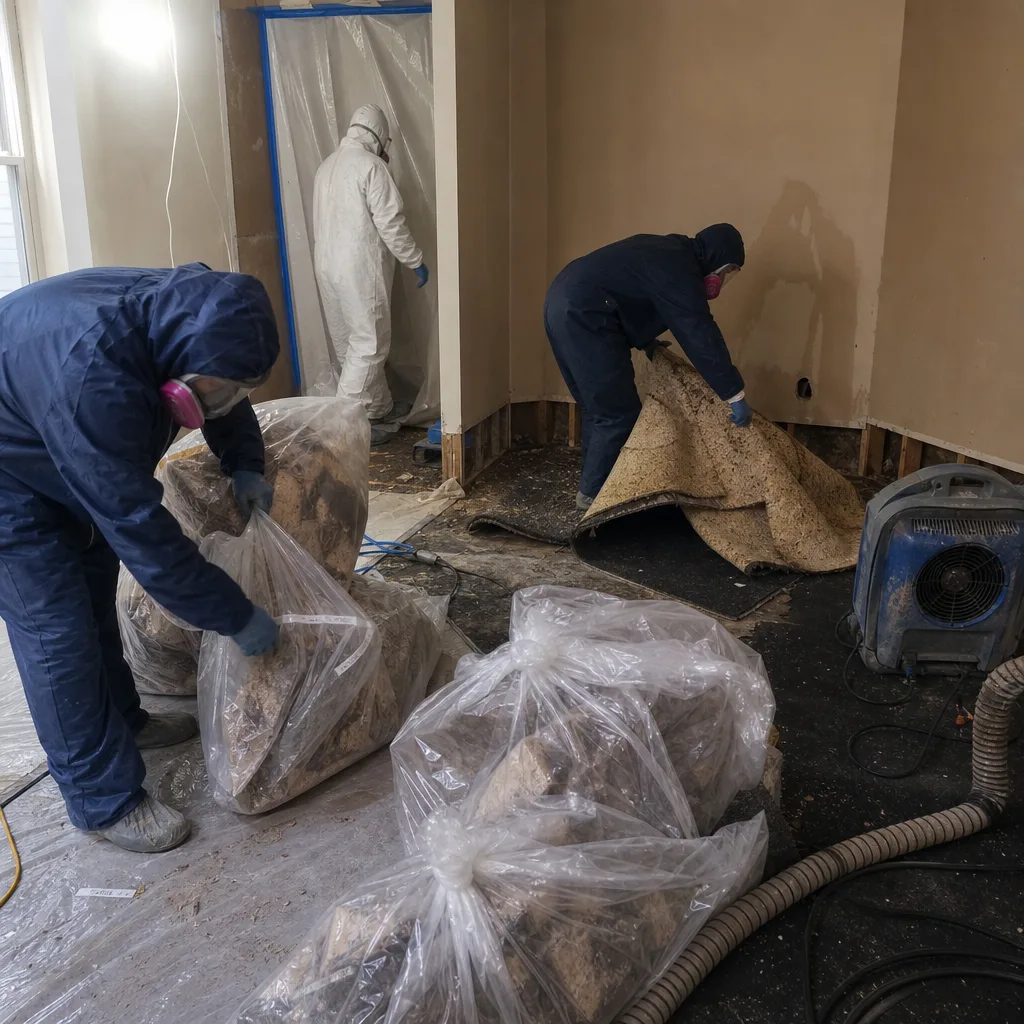
We pull standing black water with truck-mounted extraction units and submersible pumps. In tight below-grade mechanical rooms, we use portable XPOWER extraction systems that fit through standard doorways and down stairwells. Then we remove contaminated porous materials: carpet, pad, drywall, insulation.
Drying & Dehumidification
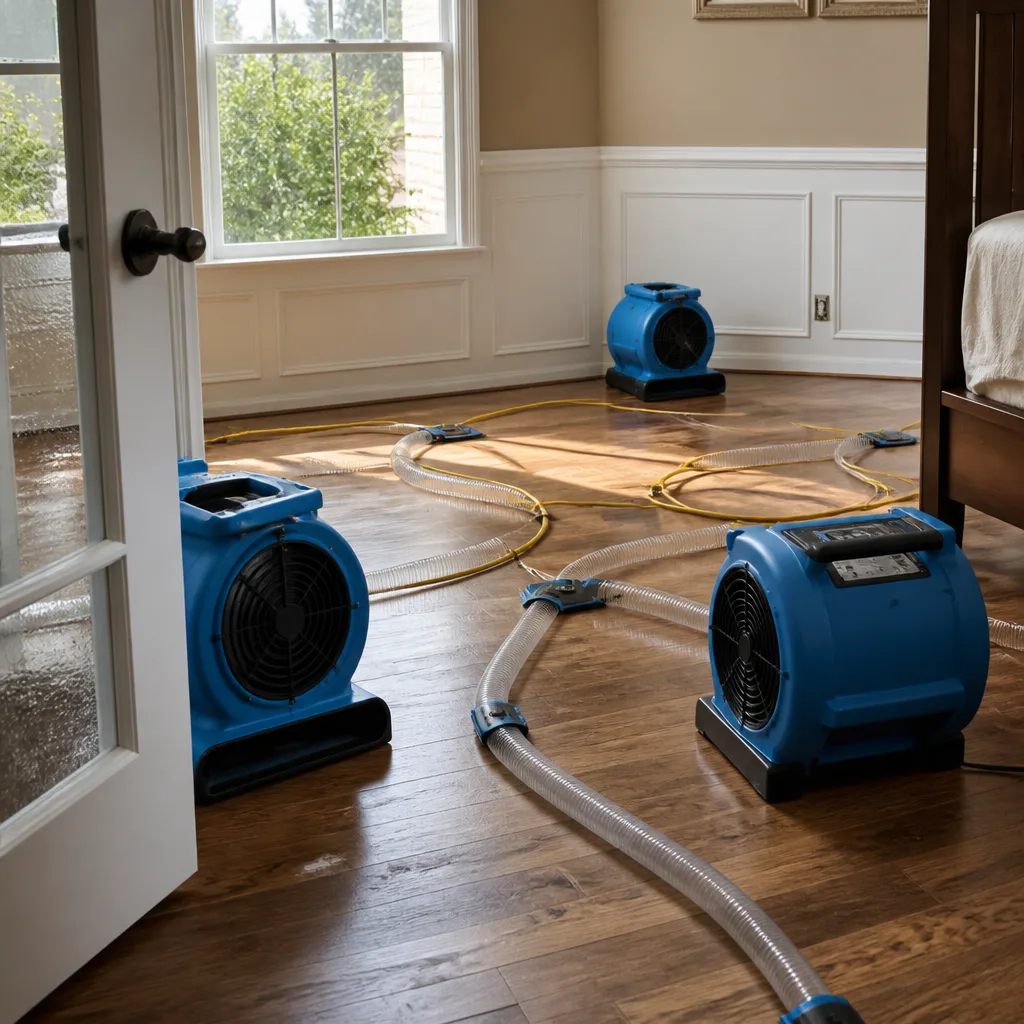
Dri-Eaz LGR dehumidifiers and high-velocity air movers go in immediately. In Battery Park City, we monitor daily because saturated landfill keeps feeding moisture back through the slab. Drying here takes longer than inland, and we tell you that up front.
Cleaning & Sanitization
Affected surfaces get scrubbed with EPA-registered antimicrobial agents. HEPA air scrubbers run throughout to capture airborne contaminants. We don’t just mask the smell; we remove what’s causing it.
Containment & Negative Air
For sewage that’s spread into wall cavities or sub-basement storage areas, we build physical containment barriers and run negative air pressure to keep contaminated particles out of the rest of the building.
Repairs & Reconstruction
After structural drying is verified with moisture logs, we replace what was removed through our Reconstruction & Cleanup in Lower Manhattan. Drywall, baseboard, flooring, insulation, and any plumbing corrections needed to prevent a repeat. One team from start to finish.
Need Emergency Sewage Cleanup in Lower Manhattan Now?
Crews minutes away, answering live 24 hours a day. The sooner we start, the less it costs.
Working With Your Insurance Company
Most Lower Manhattan condo and co-op policies cover sewage backup, but the claim goes smoother when the documentation is solid from hour one. We photograph everything before we touch it. We log moisture readings every single day, and we hand you the full log at the end of the job, something almost nobody else in this trade does. Your adjuster gets a line-item scope of work written in industry-standard Xactimate language, so there’s no back-and-forth over whether a line item is legitimate. Wade talks to your adjuster directly. You aren’t stuck relaying messages between a restoration crew and an insurance carrier. If your building has a master policy plus your own unit policy, we help you understand which one pays for what. We’ve handled hundreds of claims in converted Financial District lofts and Battery Park City towers, so we know the friction points in this neighborhood’s buildings.
What We Provide Your Insurer
- Thorough documentation of the loss
- Photos of all damage, room by room
- Moisture readings and drying logs
- A detailed, line-item scope of work
- Direct coordination with your carrier
Built for Lower Manhattan’s Loss Calendar
Lower Manhattan has a sewage loss calendar that looks nothing like the rest of the five boroughs. Nor’easters in the fall and winter push storm surge up the Hudson and East Rivers, overwhelming combined sewer outflows and forcing sewage back through floor drains in buildings below the water table. That’s when we get calls from Whitehall Street and the Battery area about black water in sub-basement storage rooms. Spring brings steady rain and rising groundwater, and the landfill under Battery Park City stays saturated, keeping hydrostatic pressure against foundation walls for weeks. Chronic low-level intrusion through cracks and seal plates becomes a slow-motion sewage cleanup that never quite dries. Summer thunderstorms dump two inches in an hour, and older converted office towers with field-adapted plumbing can’t clear the surge load. January deep freezes split supply lines and stress old cast-iron waste lines in century-old Financial District masonry buildings. The pattern is clear: in Lower Manhattan, sewage backups aren’t random. They follow the tide, the rain, and the freeze. We schedule around that reality.
Sewage Cleanup Across Lower Manhattan’s Neighborhoods
Response routes here are different than anywhere else in the city. In the Financial District, we navigate narrow one-way streets and freight entrances to reach sub-basement mechanical rooms in converted office towers. These buildings often have non-standard, field-adapted plumbing from their residential conversions, so the loss patterns are predictable: undersized drain lines, poorly sloped waste piping, and ejector pumps that fail under surge load. In Battery Park City, the challenge is access through residential lobbies and service elevators, plus the ever-present issue of saturated landfill under the foundation slab. Hydrostatic pressure cracks seal plates and pipe penetrations, and contaminated groundwater keeps seeping in after the visible sewage is gone. Tribeca’s cast-iron buildings have their own character: century-old waste lines with bellies and cracks that don’t show themselves until a backup forces sewage into a finished basement. Around South Street Seaport, the combination of age, proximity to the East River, and occasional tidal flooding under Whitehall Street creates repeated category 3 events in below-grade restaurant and retail spaces. Each area has a rhythm. We’ve learned it over years of running calls in Lower Manhattan.
Specialized Sewage Cleanup Services We Offer in Lower Manhattan
Sewage Backup Cleanup
When a waste line backs up into a Lower Manhattan sub-basement, you’re dealing with more than sewage. Groundwater intrusion from the Hudson and East Rivers can mix with the backup, creating a contaminated slurry that requires dewatering before sanitization can begin. We extract, contain, and treat the full affected area, including the foundation cracks where groundwater is still coming in. In Battery Park City, that often means installing temporary sump augmentation to hold the water back while structural drying completes.
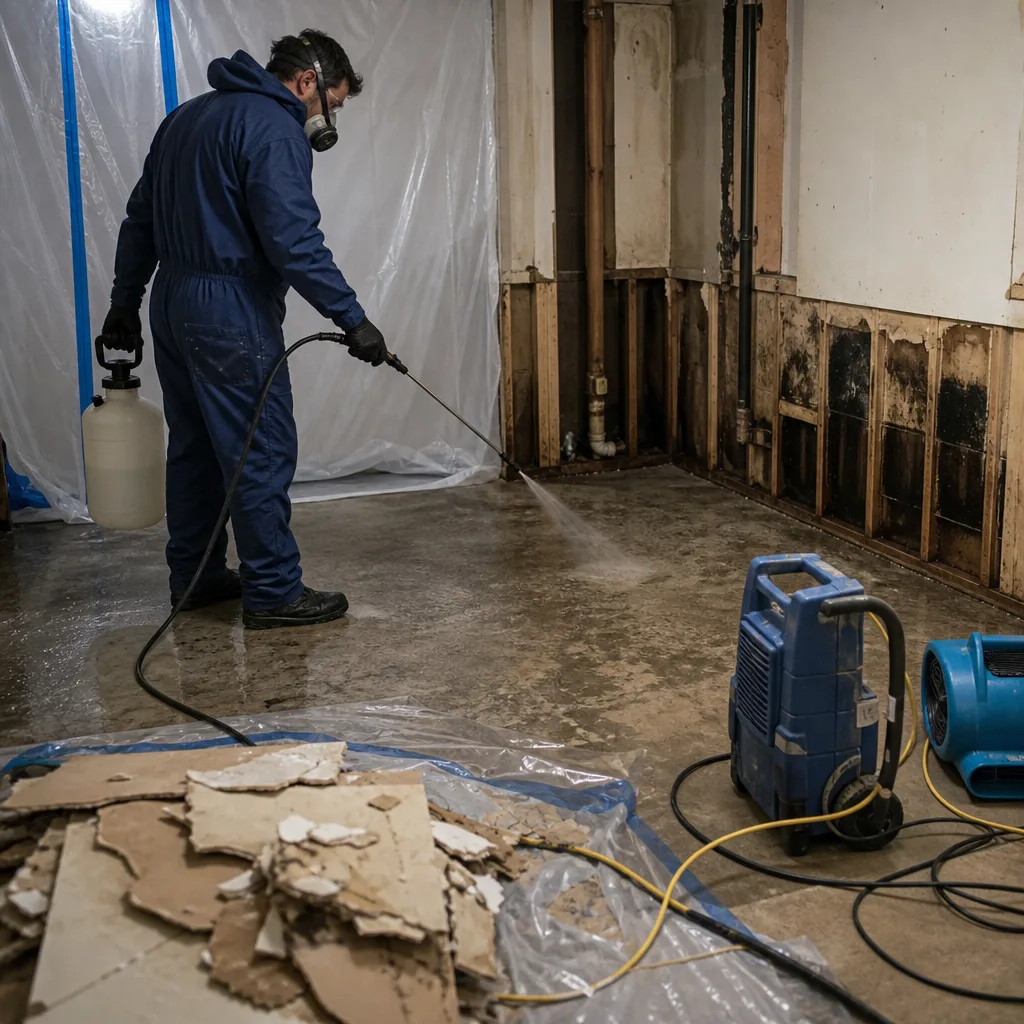
Black Water Extraction
Black water from sewage spills requires Lower Manhattan Commercial Restoration equipment, not a shop vac. We run truck-mounted pumps where access allows, and portable XPOWER extraction units in tight below-grade mechanical rooms where a standard truck can’t reach. This is the work that prevents sewage from soaking into concrete, wicking into drywall, and contaminating the air inside your building. We get the water out fast, then we map where it went.
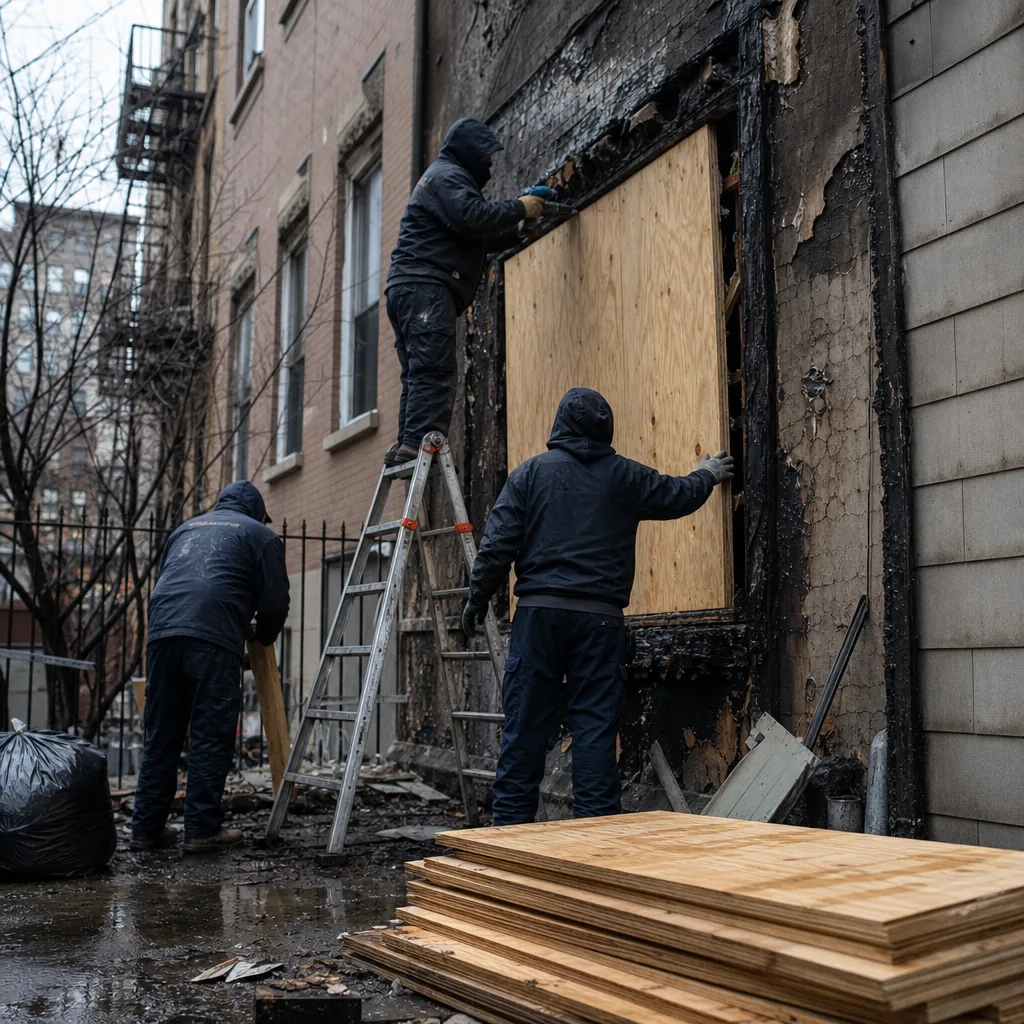
Toilet Overflow Cleanup
A toilet overflow in a converted Financial District loft might look minor, but the water travels fast through wall cavities and floor penetrations. We trace the migration path with moisture meters, remove affected drywall and flooring, and sanitize the framing underneath. If the overflow came from a recurring clog, we’ll tell you what’s likely causing it, from a bad wax ring to an undersized drain line that needs correcting.
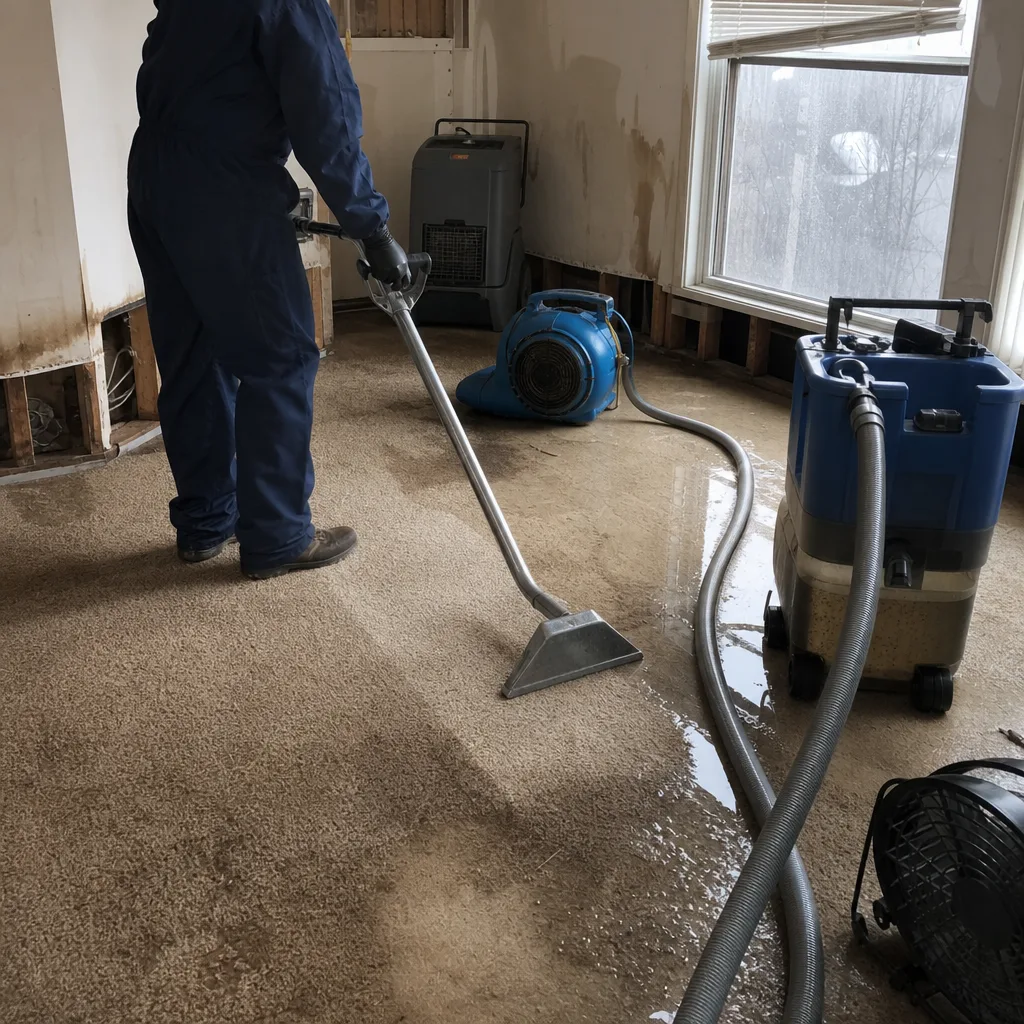
Crawl Space Sewage Removal
Older Lower Manhattan buildings and rowhouse conversions often have tight crawl spaces where sewage lines run. A leak or backup in a crawl space can go unnoticed for days, soaking insulation and framing in category 3 water. We remove contaminated material, run HEPA air scrubbers to clear the air, and dry the space to industry standards. If the crawl space has chronic groundwater issues, we document those separately for your insurance claim.
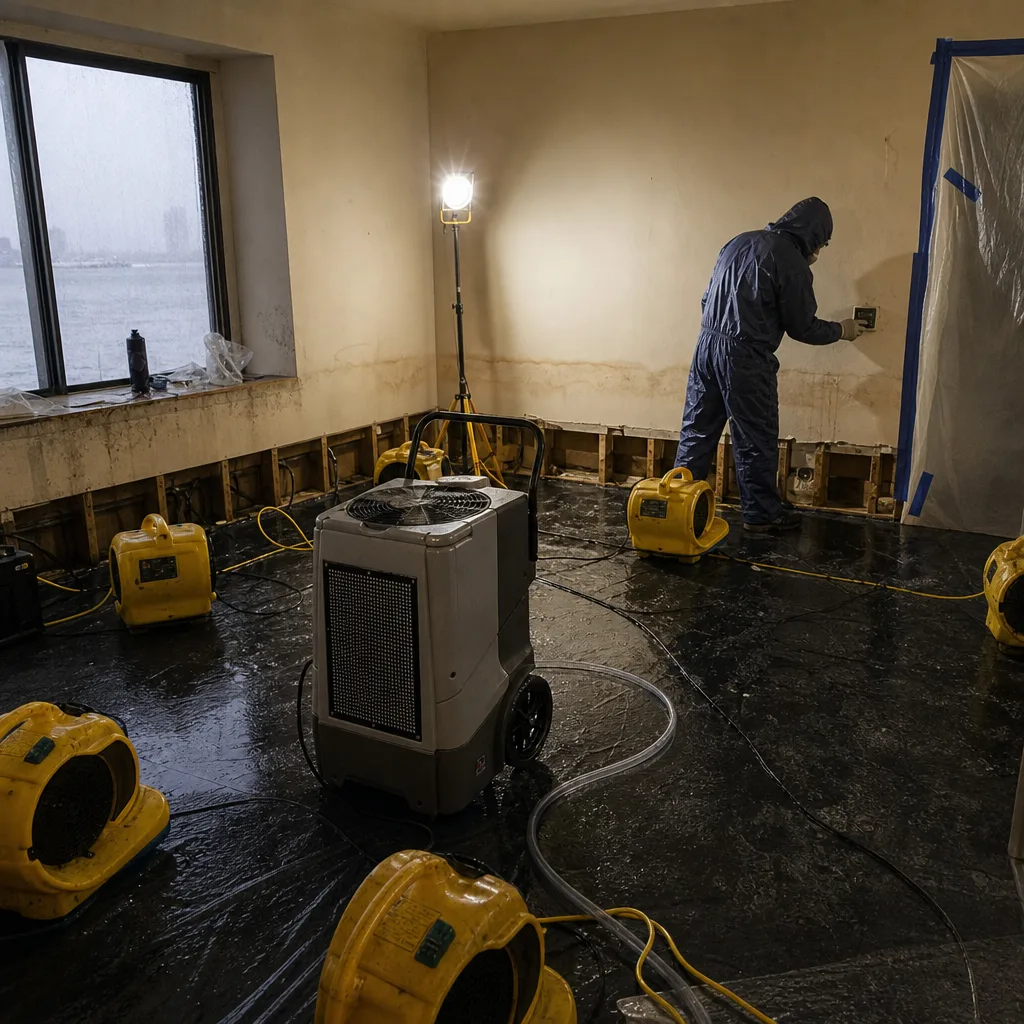
Sanitization & Disinfection
After extraction and drying, every affected surface gets treated with EPA-registered antimicrobial agents as part of our Sanitization Services - Lower Manhattan. We don’t just deodorize; we remove the source of the contamination and treat what remains. The goal is a space you can walk into without worrying about what’s growing behind the walls. We verify with post-remediation moisture readings and hand you the log.
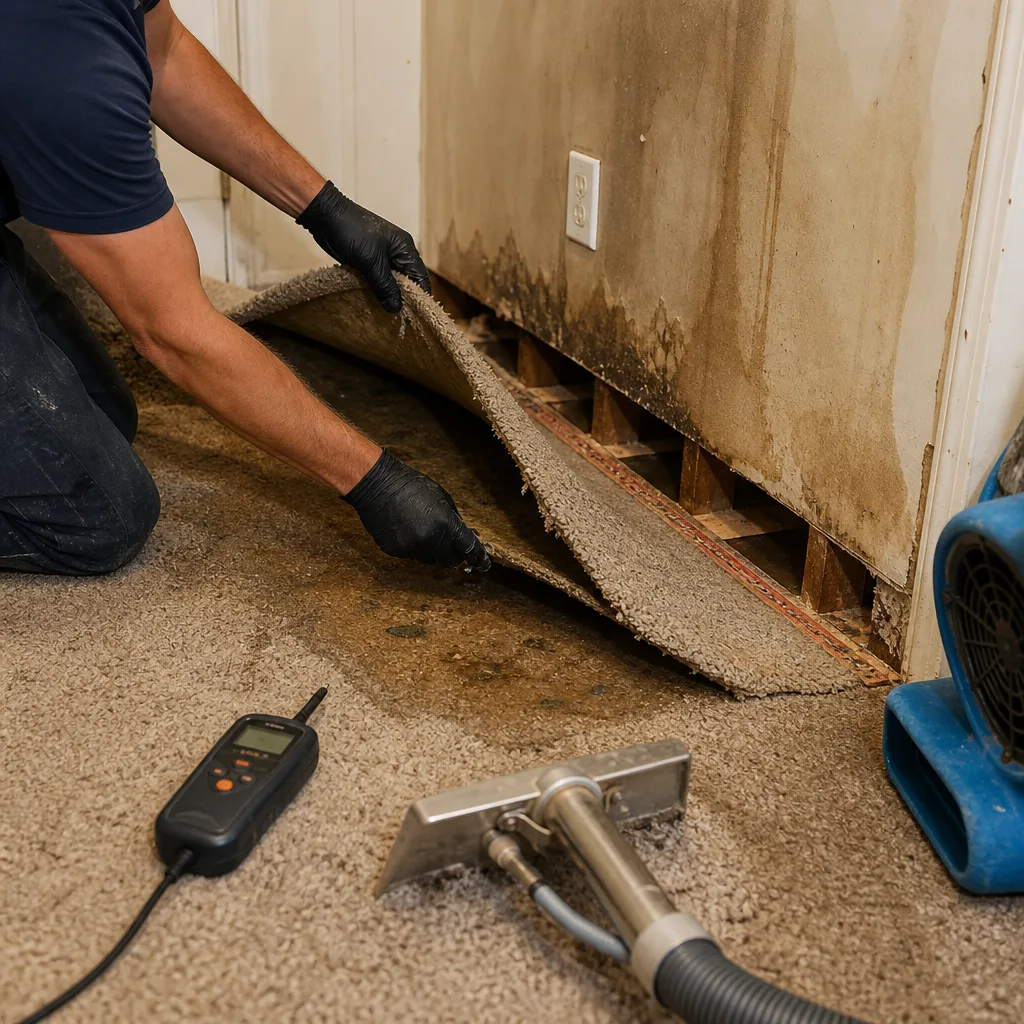
What happens when you call
- 1
A real person answersNo phone trees - you reach a local pro.
- 2
You get an upfront price rangeHonest numbers before anyone is dispatched.
- 3
A background-checked tech heads outLicensed & insured, dispatched right away.
- 4
You approve before work beginsNothing starts until you say go.
Sewage Cleanup Costs in Lower Manhattan, NY
A typical sewage backup cleanup in Lower Manhattan runs $2,800-$7,500 for a contained bathroom or laundry room loss. A full sub-basement category 3 event in a Battery Park City tower with groundwater intrusion can run $8,000-$25,000, depending on how far the contamination migrated and whether structural drying extends for weeks due to saturated landfill under the slab. Toilet overflow cleanup in a Financial District loft runs $1,500-$4,000 when caught early, but the same overflow left overnight can reach $6,000 or more as drywall and flooring are removed. Black water extraction in a tight below-grade mechanical room adds $800-$2,500 in equipment and labor costs, because portable pumps and extra containment are required. The fastest way to a firm number is a free visual inspection. Wade walks the loss with you, writes a scope, and you know exactly what you’re paying before any work starts. No trip charge inside the county. Senior and veteran discounts apply, always 10%.
We Also Serve Cities Near Lower Manhattan
Our crew regularly handles sewage cleanup in Financial District, Astoria, Midtown Manhattan, and Long Island City. The same 45-minute response commitment applies wherever you are, and the same written scope goes in front of you before work begins.
Serving Lower Manhattan, NY - Our Local Coverage Area
We’re based in the Lower Manhattan area and know this community well. Use the map below to see our service coverage - if you’re nearby, we can almost certainly help.
Lower Manhattan Sewage Cleanup Questions, Answered
What’s different about sewage cleanup in a Lower Manhattan sub-basement compared to an above-grade apartment?
In a sub-basement below the water table, sewage backup often mixes with groundwater pressing against the foundation walls, creating contaminated water that keeps seeping in after the visible spill is extracted. Above-grade apartments don’t have that hydrostatic pressure problem. That means sub-basement cleanups take longer and require dewatering before sanitization can begin. Call (607) 350-1550 for an assessment of your specific building.
After a sewage backup in our Battery Park City building, how long should drying actually take?
In Battery Park City’s landfill foundation towers, standard drying timelines don’t hold. The saturated fill under the slab keeps feeding moisture back through cracks and pipe penetrations for weeks after surface water is gone. Expect structural drying to run 5 to 10 days minimum, and often longer when groundwater intrusion is active. Temporary sump augmentation is sometimes necessary before drying can even begin. Call (607) 350-1550 and we’ll explain what your building’s specific conditions mean for your timeline.
Can you clean up a sewage spill if the building still has standing groundwater from a recent coastal surge?
Yes, but the sequence matters. We set up containment, extract the sewage, install temporary sump augmentation to hold groundwater back, and only then begin sanitization and structural drying. If you skip the dewatering step, the sewage contamination just keeps returning. We’ve done this in Battery Park City and along the East River after nor’easters and surge events. Call (607) 350-1550 for a free inspection.
What kind of equipment do you use for black water extraction in tight, below-grade mechanical rooms?
We use portable XPOWER extraction units and submersible pumps that fit through standard doorways and down stairwells, plus Dri-Eaz LGR dehumidifiers and HEPA air scrubbers sized for confined spaces. For tight mechanical rooms, we add negative air containment to keep contaminated particles from spreading through the building’s HVAC system. Call (607) 350-1550 to talk through your building’s specific layout.
How do you handle sewage that has seeped behind walls in a converted Financial District loft?
We map the migration path with moisture meters and thermal imaging, then remove the affected drywall and insulation to expose the contaminated framing. The framing gets sanitized, the wall cavity gets dried to industry standards, and only then do we rebuild. Converted office towers often have non-standard wall assemblies from their residential conversion, so we document everything for your insurer as we go. Call (607) 350-1550 for a free assessment.
Does homeowners insurance cover sewage backup in Lower Manhattan?
Most condo and co-op policies in New York cover sewage backup when it’s sudden and accidental, but coverage limits vary. If groundwater intrusion is contributing to the backup, some policies treat that as flood damage, which is usually excluded unless you have separate flood insurance. We document the loss with moisture logs and photos that make the coverage picture clear for your adjuster. Call (607) 350-1550 and we’ll help you understand what your policy likely covers.
Can we stay in our unit during sewage cleanup?
It depends on the extent of the contamination. For a contained bathroom or laundry room backup, you can usually stay if containment is properly set up. For a sub-basement event that spread through walls or into living space, you may need to relocate temporarily while HEPA scrubbers run and affected materials are removed. We’ll give you a straight answer after the initial inspection. Call (607) 350-1550 to schedule a free visual inspection.
What should I do in the first 30 minutes after discovering a sewage backup?
Don’t flush or run any water, don’t walk through the affected area without boots and gloves, and don’t try to clean it yourself with household products. Call (607) 350-1550. Shut off the water supply if you know where it is. Move any uncontaminated valuables out of the area if you can do so safely. The sooner extraction starts, the less material gets removed and the lower the final cost.
Written by Wade Ferris, Owner at Wade’s Restoration, serving Lower Manhattan and the surrounding New York City area since 2007.