
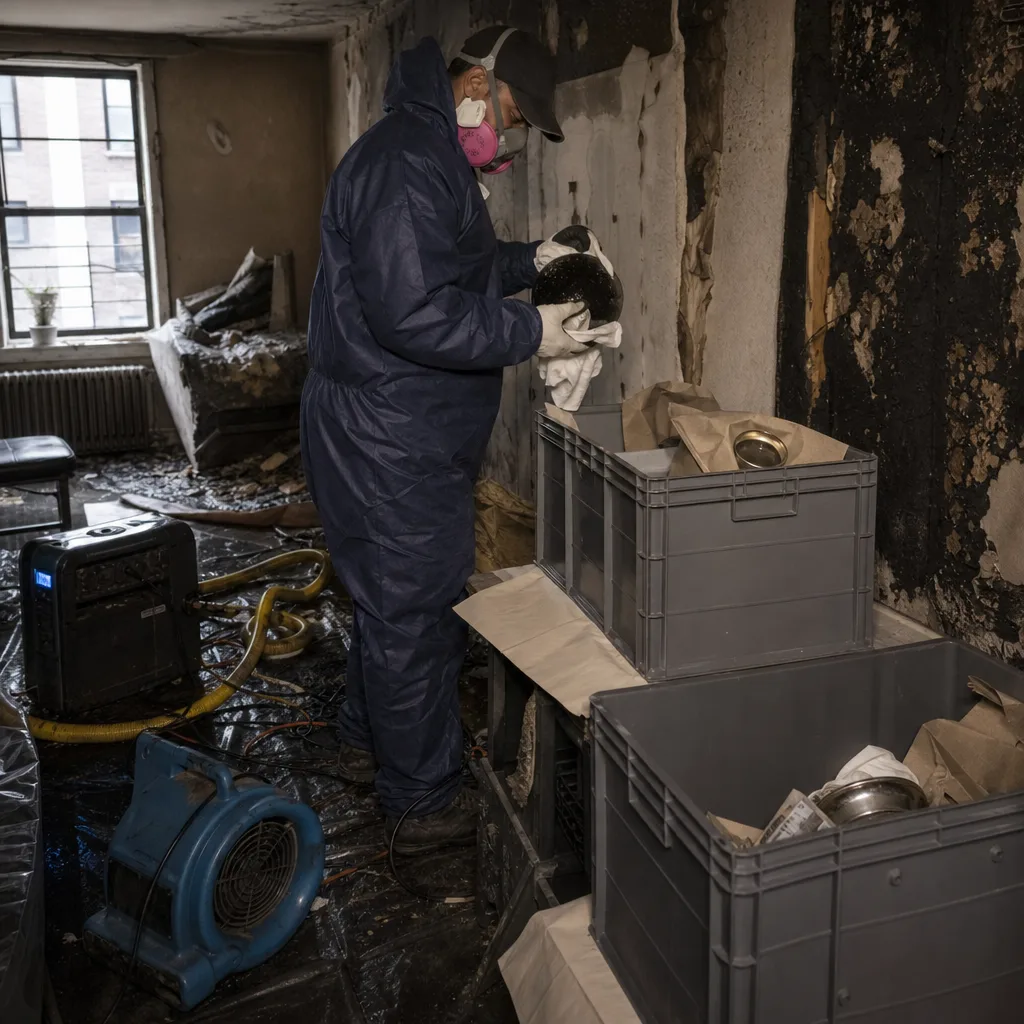
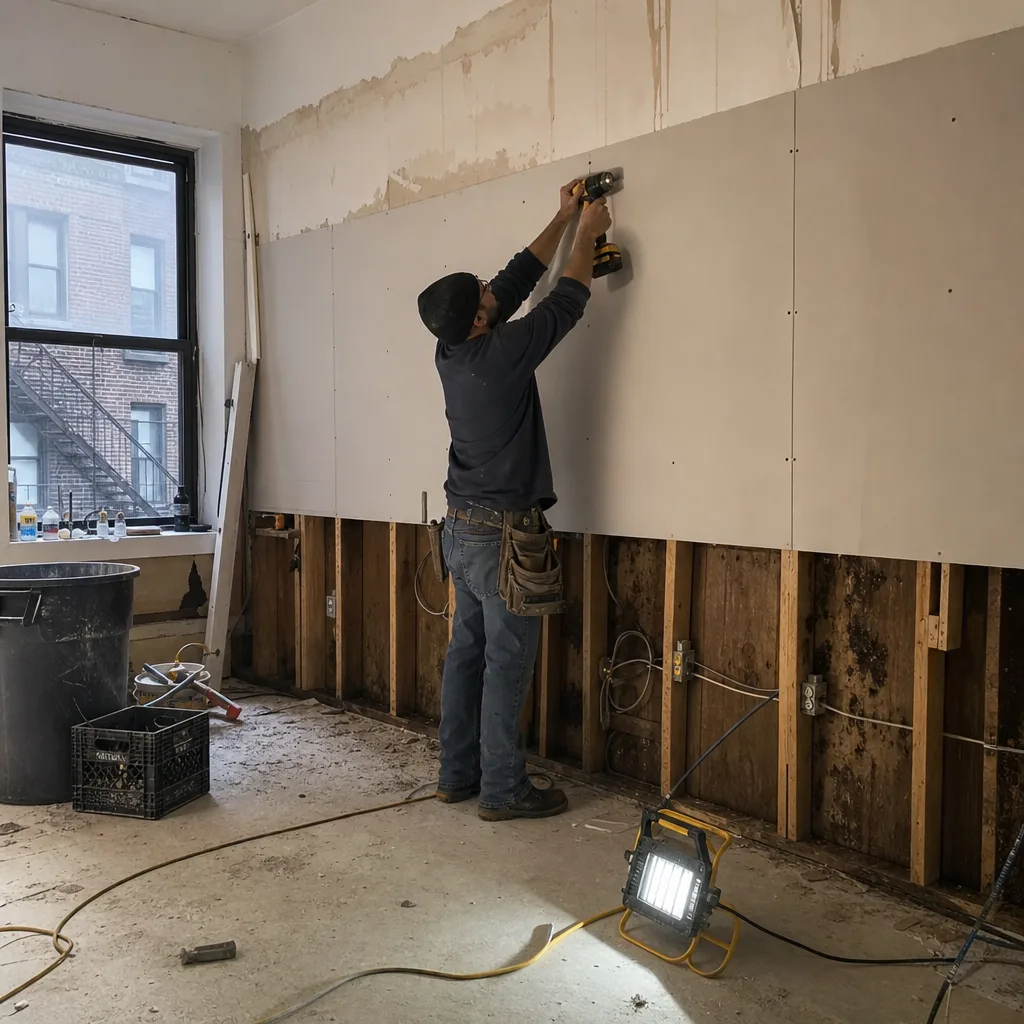
Free visual inspection and a written scope of work before any mitigation begins - photos, moisture readings, and drying logs go in your claim file
The scope we write is the scope we bill. Anything new gets shown to you, in writing, before we touch it.
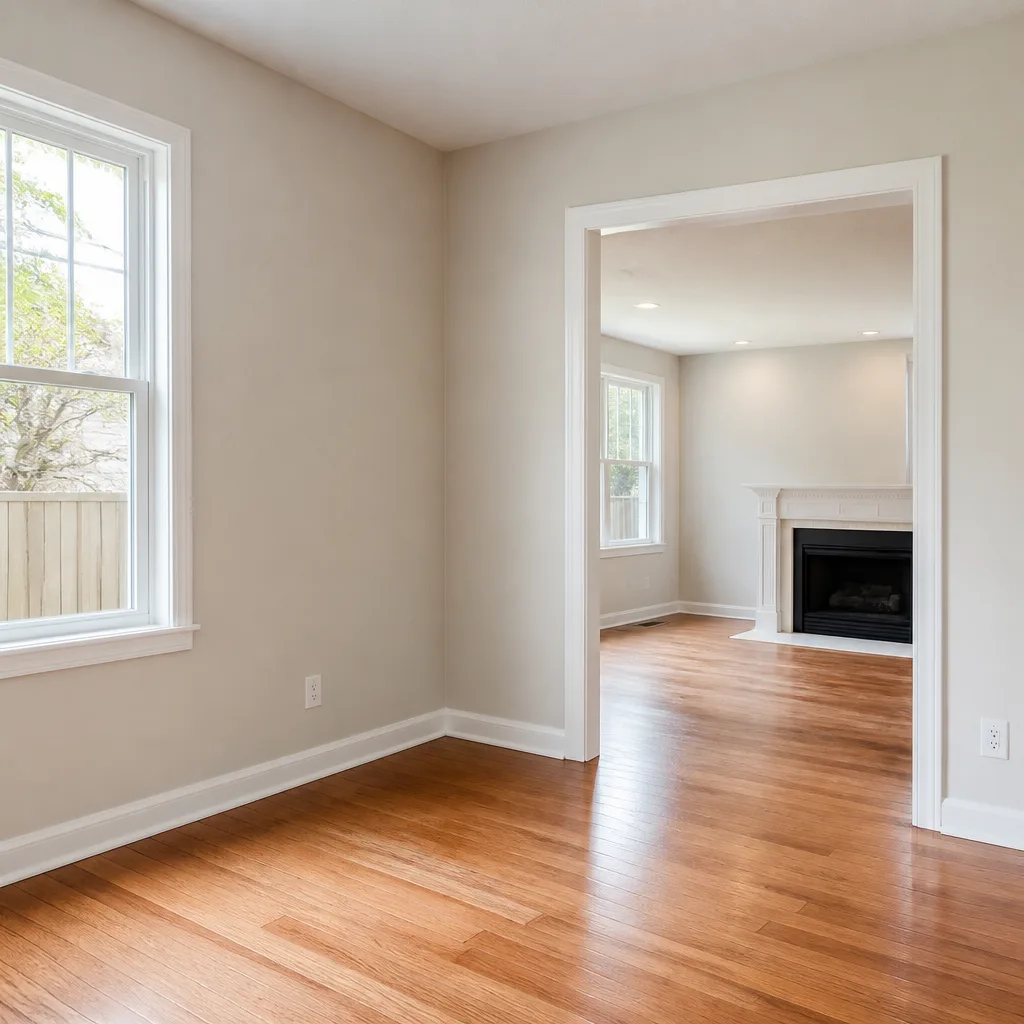
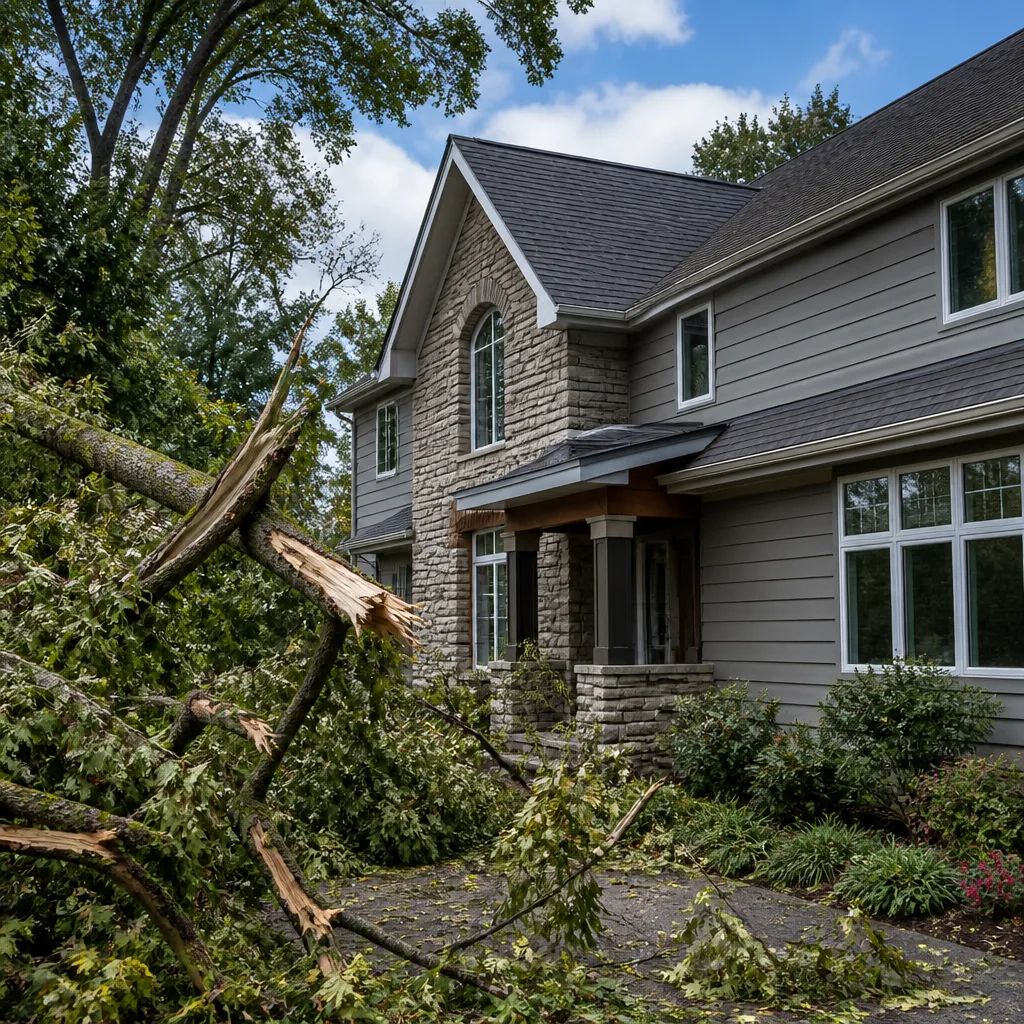
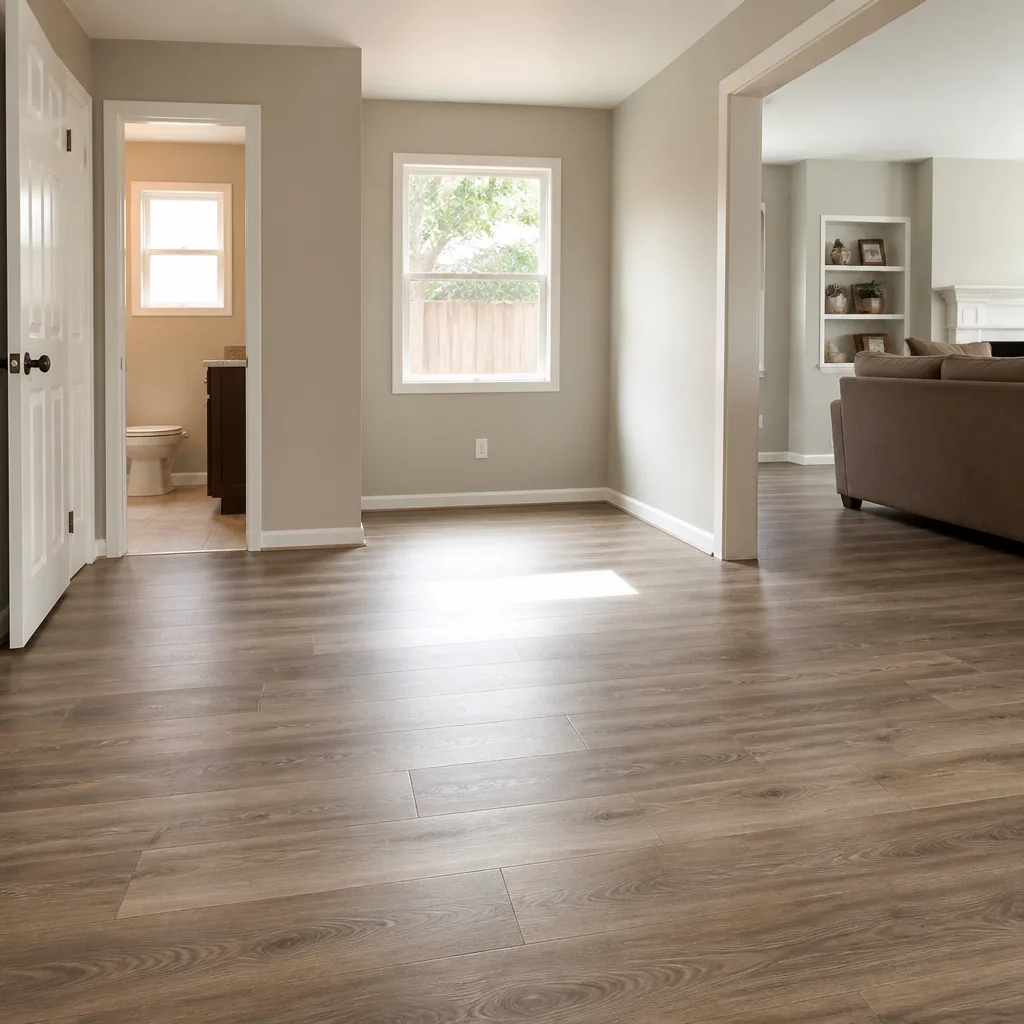
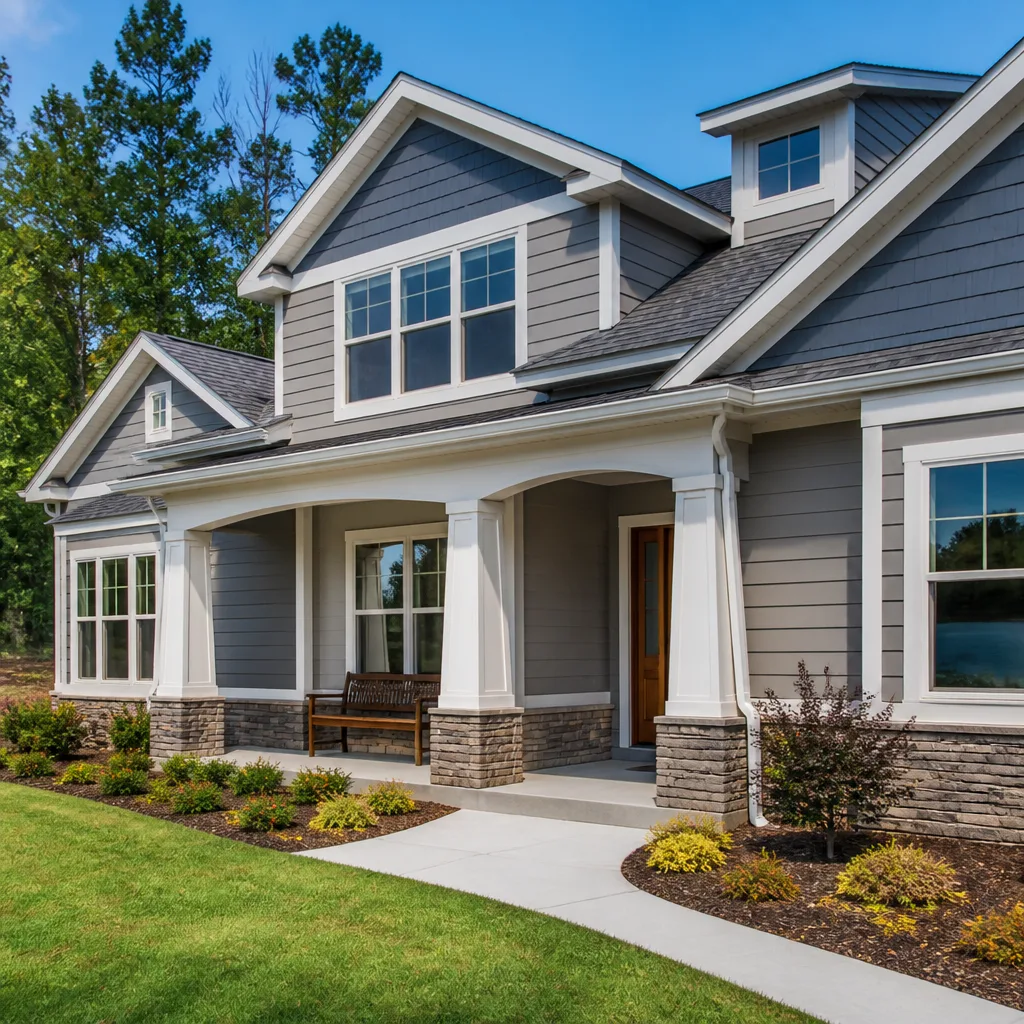
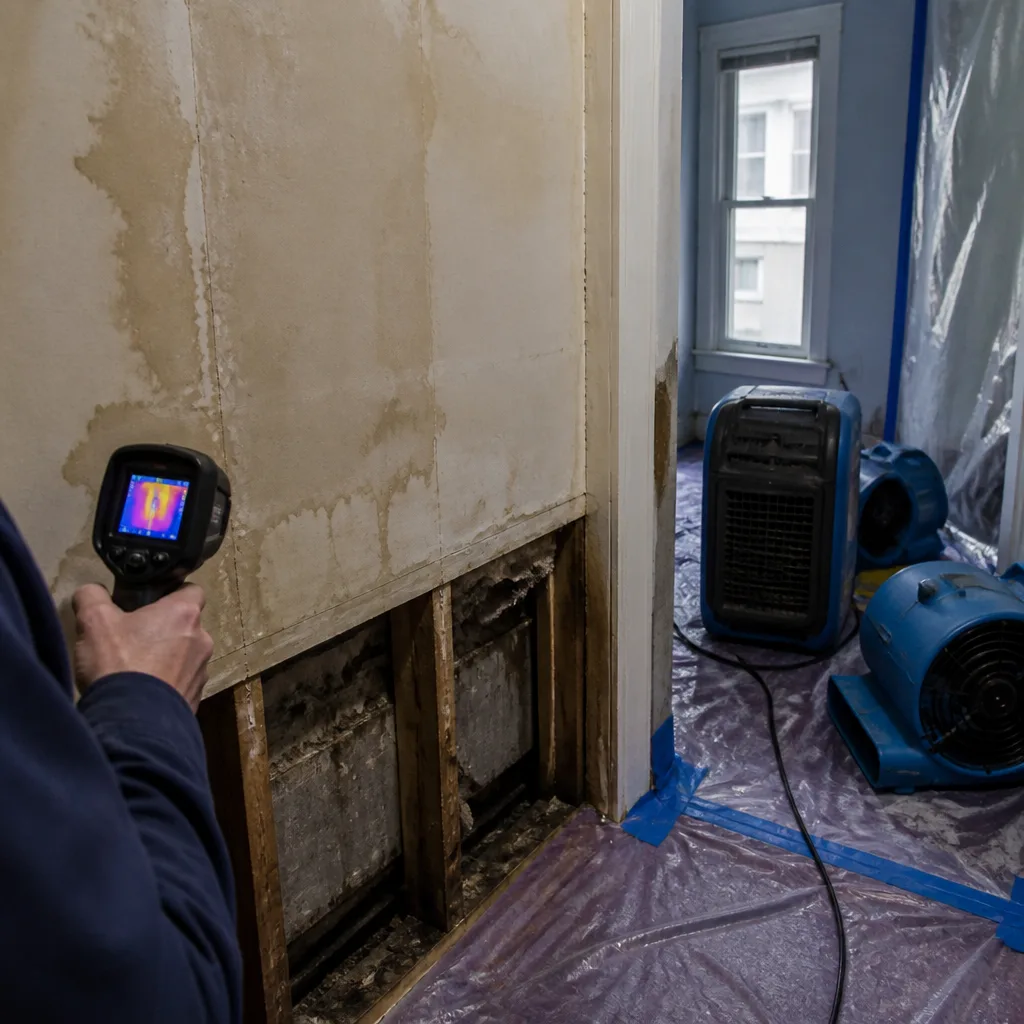 Before
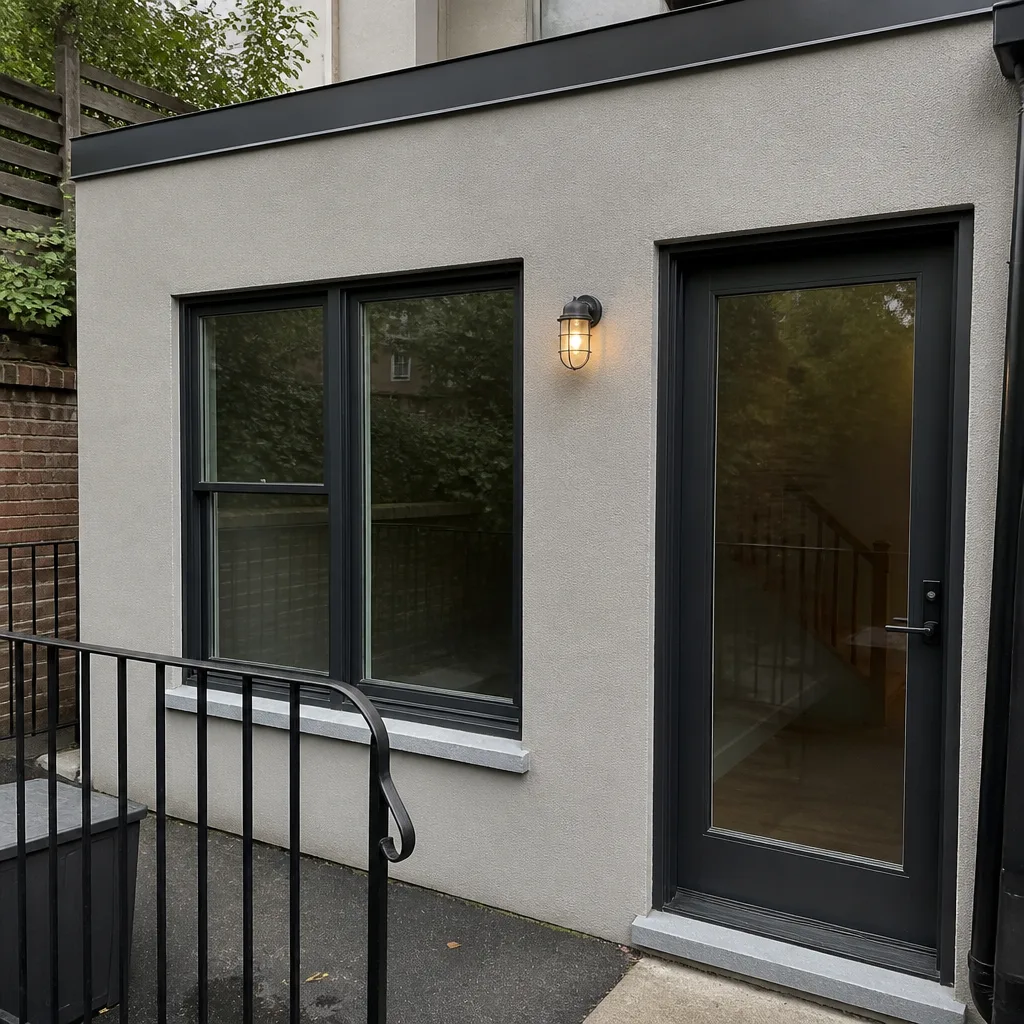 After
After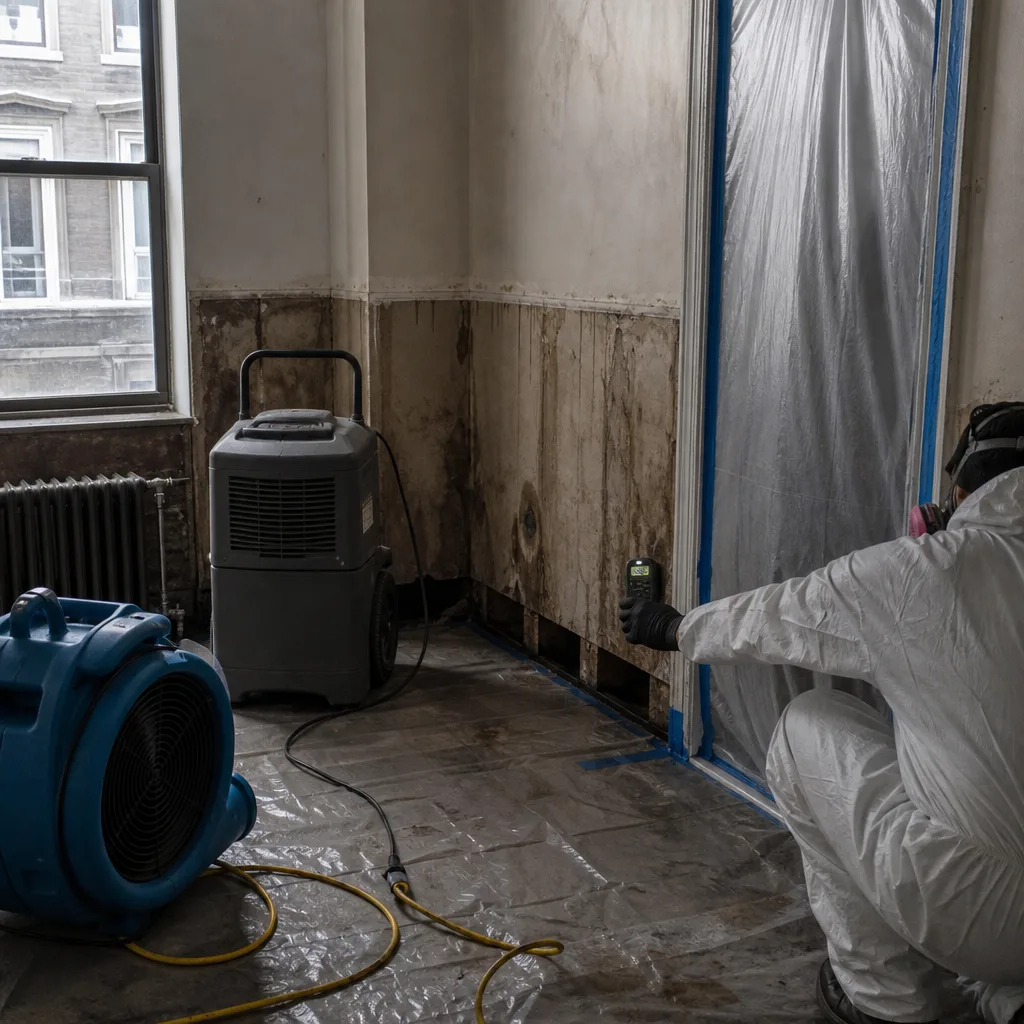 Before
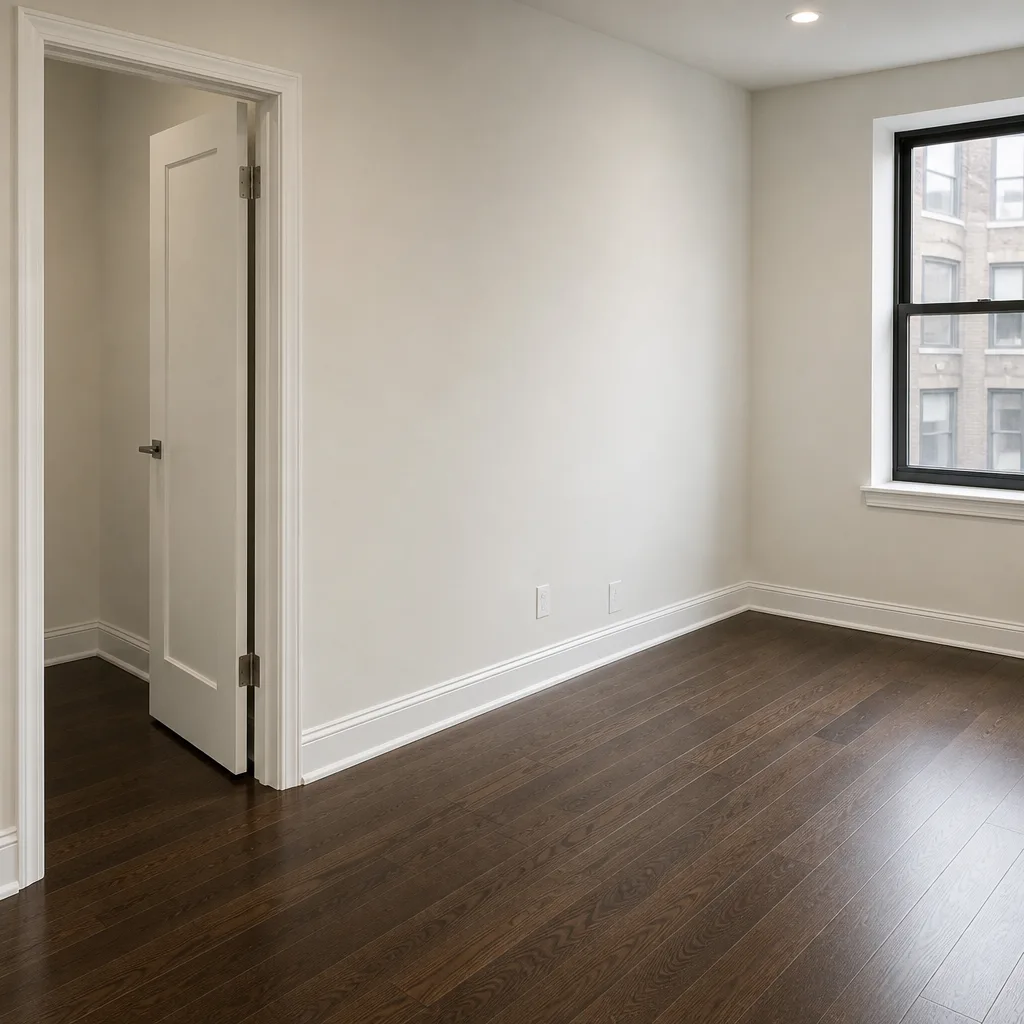 After
After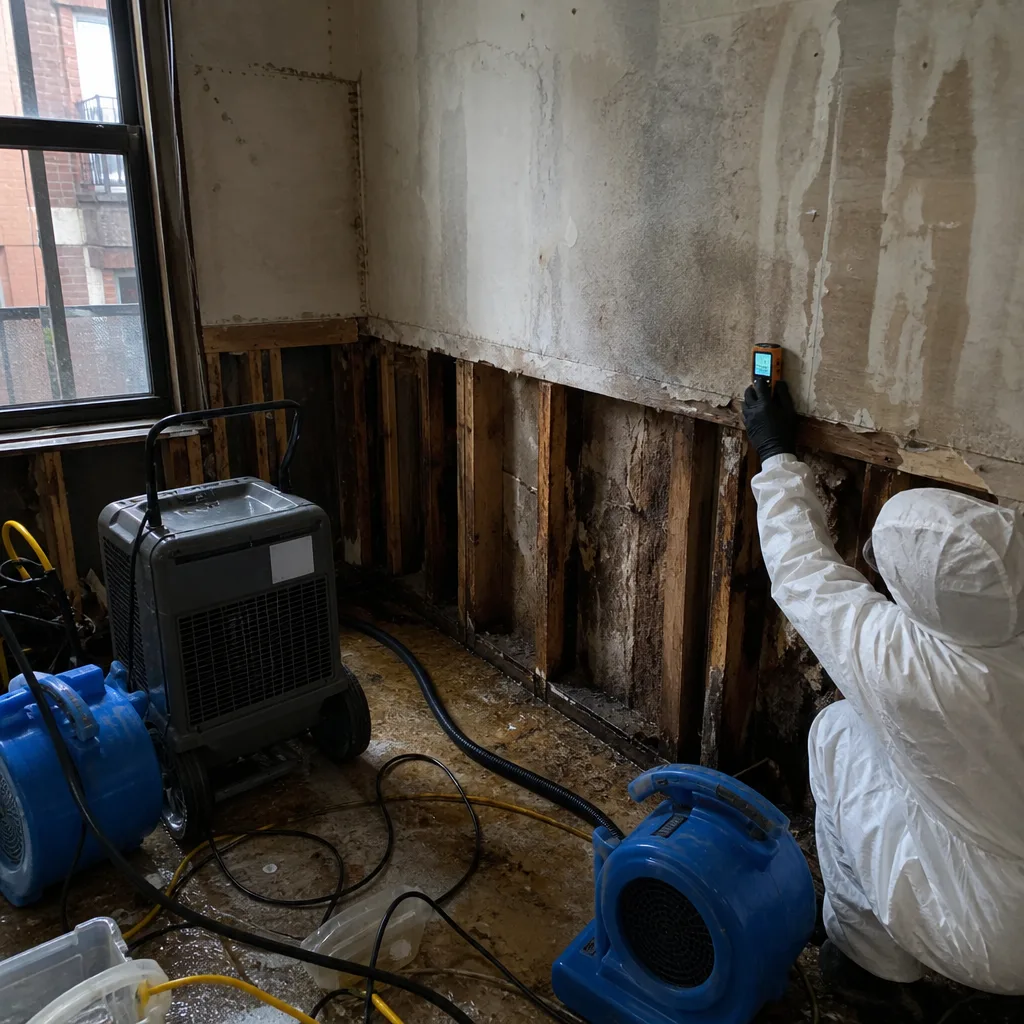 Before
 After
After24/7 Emergency Reconstruction & Cleanup in West New York
Storm damage and water intrusion in West New York rarely stay confined to one apartment. When a nor’easter peels back a flat-roof membrane on Boulevard East or a steam pipe lets go in a pre-war building on 60th Street, water cascades down through multiple floors before anyone even knows the boiler room is flooding. That’s the reality of living in one of the most densely packed municipalities in the country. Our Reconstruction & Cleanup crew answers live around the clock and can be inside your West New York building assessing the damage faster than most national outfits can route a call through their answering service. Call (607) 350-1550 the moment you see water where it shouldn’t be. The first hour determines whether you’re replacing drywall in two units or rebuilding structural framing in eight.
Understanding Reconstruction & Cleanup Severity in West New York Properties
West New York’s housing stock changes the math on every restoration job. The town is dominated by brick and masonry mid-rise apartment buildings constructed between the 1920s and 1960s, most with flat or low-slope roofs, shared steam-heat systems, and cast-iron supply lines that have been corroding for the better part of a century. When a roof membrane fails during a nor’easter, the water doesn’t just wet the top-floor ceiling. It finds the path of least resistance through plaster walls, around pipe chases, and behind baseboards, wicking through shared masonry party walls into units three or four floors below. We routinely arrive at what looks like a one-unit ceiling stain and end up documenting Category 2 water damage across seven or more apartments. That’s why moisture mapping and thermal imaging matter here more than in the suburbs. You can’t dry what you can’t see, and in these buildings, the damage is almost never where the stain first appeared.
Why West New York Property Owners Choose Wade’s Restoration
- 45-minute response commitment – Wade Ferris answers his own phone, and crews are staged to reach West New York fast. In a storm cascade, that speed means the difference between drying and demolition.
- 24/7 live answer, always a real person – No voicemail, no answering service, no runaround. You get Wade or someone on his team who knows exactly which questions to ask about your building type.
- IICRC-certified crews with WRT and FSRT credentials – Our technicians hold the water restoration and fire and smoke restoration certifications that matter on multi-unit pre-war buildings.
- Free visual inspection – We walk the full scope before any work starts, including the roof, the mechanical room, and every affected unit. No charge for that.
- Direct insurance billing – We handle the adjuster, the paperwork, and the documentation. You handle your tenants and your life.
- One team from extraction to reconstruction – The crew that dries the building is the same crew that hangs new drywall, replaces doors, and rebuilds the roof. Nothing gets lost between vendors.
Our Reconstruction & Cleanup Process
Inspection & Assessment
We start with a full walkthrough of every affected floor. Thermal imaging and moisture meters map the water migration through walls, floors, and shared party walls. On a West New York flat-roof building, that means getting on the roof to document membrane damage before we touch a single wall inside.
Extraction & Stabilization
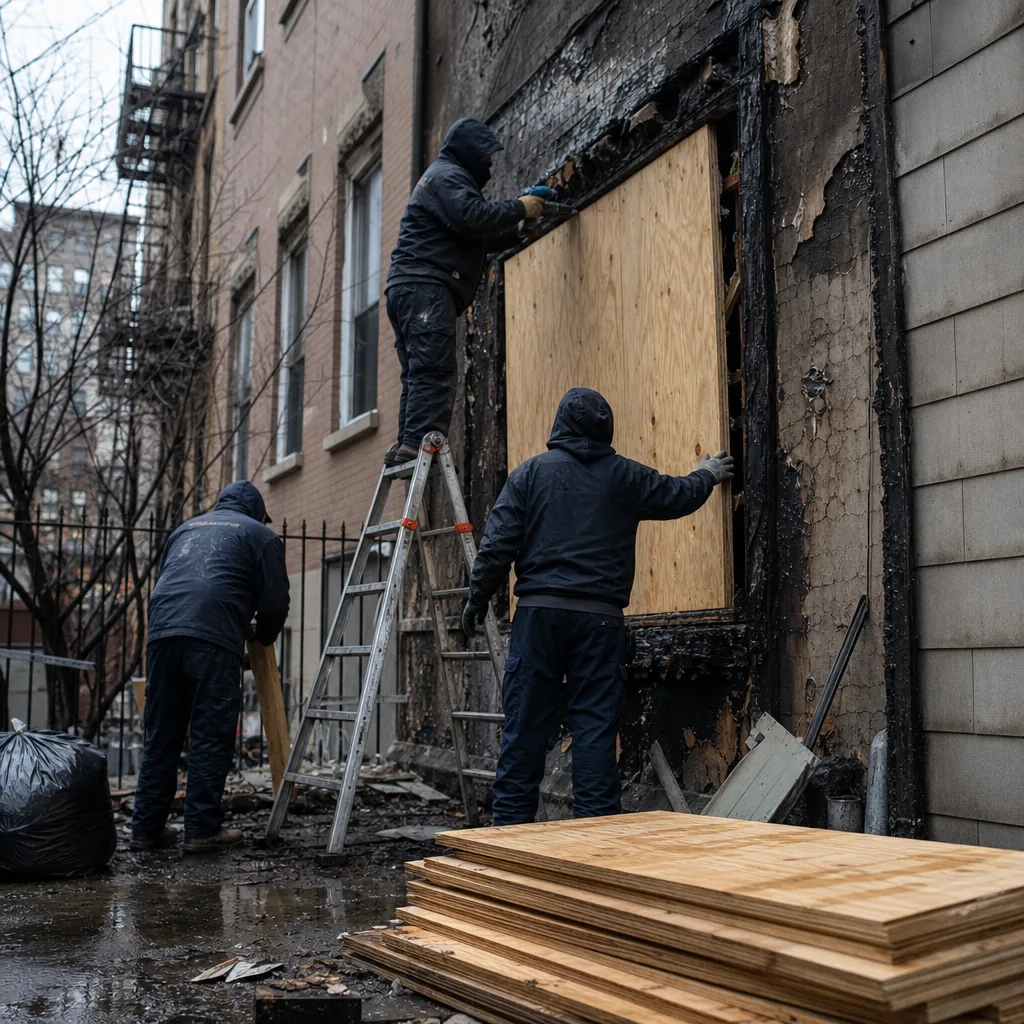
Standing water comes out first. We use truck-mounted extraction units and submersible pumps to clear flooded basements and apartment floors. Stabilization includes roof tarping, door boarding, and shutting down compromised electrical circuits before drying begins.
Drying & Dehumidification
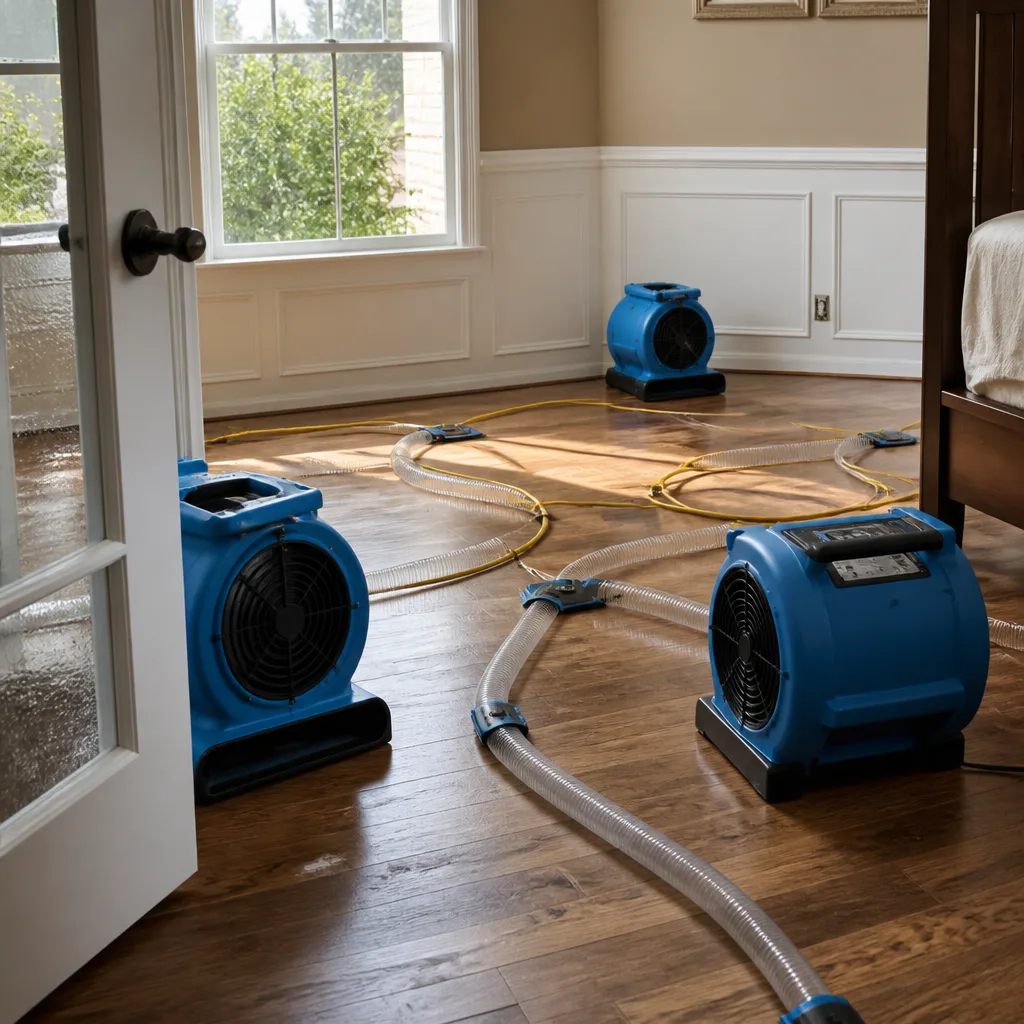
In these old masonry buildings, drying is a marathon, not a sprint. We run Dri-Eaz dehumidifiers and XPOWER air movers continuously, taking moisture readings every single day. You get the full log at the end of the job, because you should know exactly what was done and why it took the time it did.
Cleaning & Sanitization
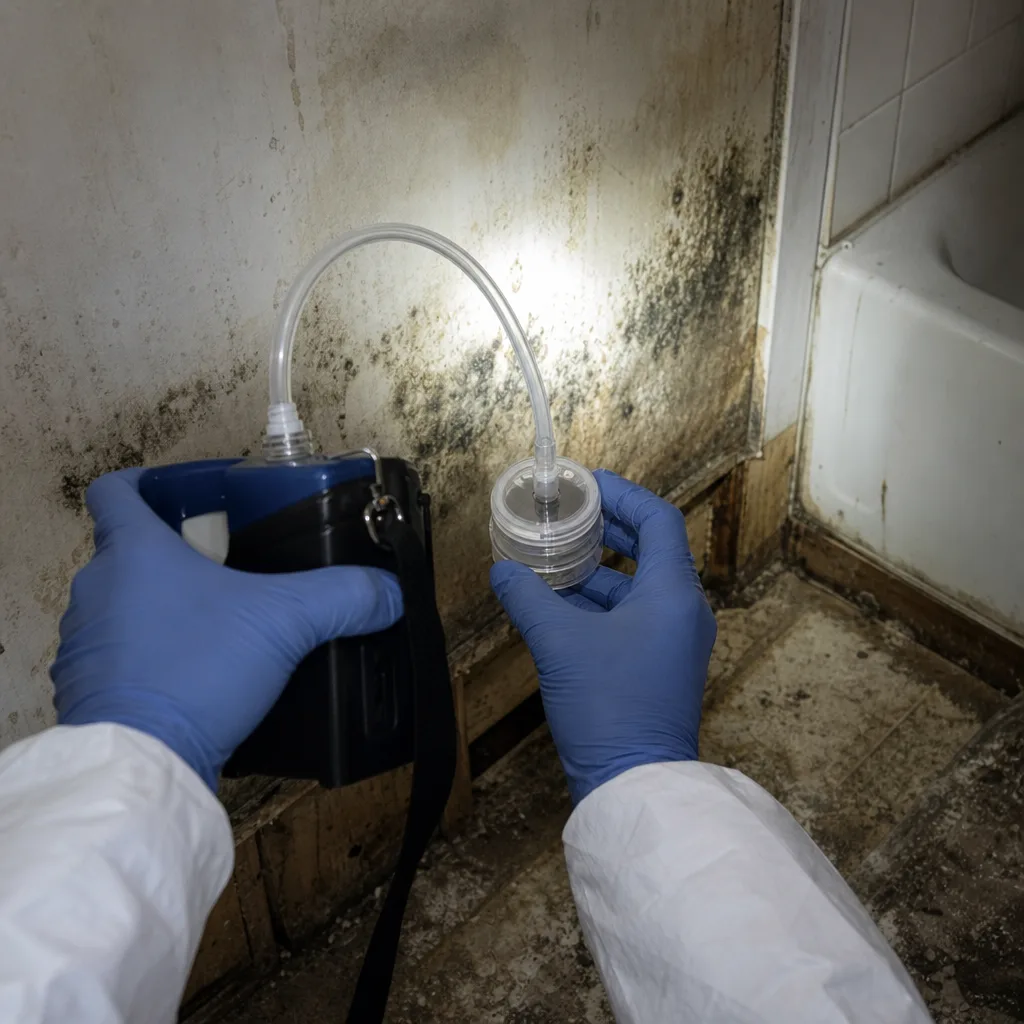
Category 2 and Category 3 water require real antimicrobial treatment, not just a mop and a fan. After a steam-pipe break or sewage backup in a shared West New York building, we sanitize every surface the water touched, including subfloor cavities and interior wall studs.
Wind-Rated Reinforcement & Specialty Treatment
This is where West New York work differs from everywhere else. We assess every exterior door for wind rating and impact resistance before reinstalling or replacing it. We check roof-to-wall connections, parapet caps, and membrane seams. A reconstruction job that ignores the wind load is just setting up the next storm claim.
Repairs & Restoration
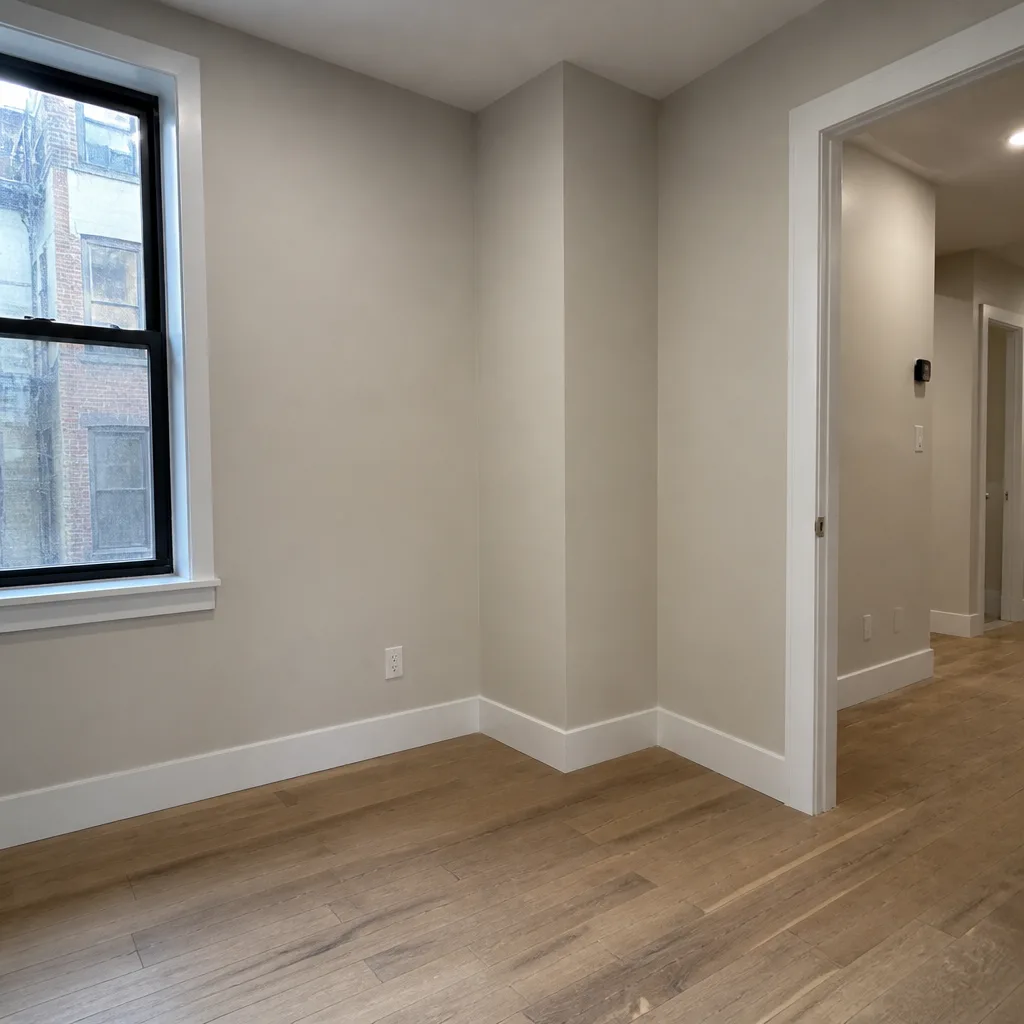
Drywall, flooring, paint, trim, doors, roof membrane, ceiling restoration. On multi-unit buildings, we sequence the work so tenants can return room by room while crews continue on other floors. Every job ends with a written scope of what was done and a 90-Day Done Right Promise that Wade stamps on the contract.
Need Emergency Reconstruction & Cleanup in West New York Now?
Crews minutes away, answering live 24 hours a day. The sooner we start, the less it costs.
Working With Your Insurance Company
Multi-unit storm damage in West New York almost always involves more than one insurance carrier. The building owner’s policy, individual tenant renters’ policies, and sometimes the condo association’s master policy all come into play on the same job. We’ve handled this hundreds of times over the past 18 years. From the first hour on site, we document everything: photos of every affected room, moisture readings before and after drying, and a line-item scope of work that holds up to adjuster scrutiny. Wade talks to your adjuster directly, so you’re never stuck relaying messages between a claims representative and a restoration crew. That’s the part of the process that usually burns property owners, and it’s the part we take off your plate completely.
What We Provide Your Insurer
- Thorough documentation of the loss
- Photos of all damage, room by room
- Moisture readings and drying logs
- A detailed, line-item scope of work
- Direct coordination with your carrier
Built for West New York’s Loss Calendar
West New York’s damage season runs all year, but it has distinct rhythms. January and February bring deep freezes that burst aging cast-iron supply lines in uninsulated exterior walls, flooding basements and first-floor apartments overnight. March thaw leaves saturated ground pushing groundwater seepage into below-grade garages and sublevel units along the Palisades slope. Spring and summer thunderstorms hit flat roofs with wind-driven rain that finds every failed seam and cracked parapet cap. Nor’easters in September through November are the big ones: sustained wind gusts routinely exceed 50 mph atop the bluffs, tearing roof membranes and sending water through ceiling after ceiling. If you manage a pre-war building in West New York, the question isn’t whether you’ll need reconstruction. It’s which season will trigger it.
Reconstruction & Cleanup Across West New York’s Neighborhoods
Every pocket of West New York has its own building rhythm. Around Boulevard East, the pre-war co-ops and rentals sit directly on the bluff edge, fully exposed to every nor’easter that charges up the Hudson. We see wind-driven roof failures and window-wall leaks there more than anywhere else in town. Over near 60th Street and Hudson Avenue, the mid-century walk-ups have aging steam systems, and boiler-room pipe failures are a January specialty. Down by the Bergenline Avenue corridor, commercial mixed-use buildings carry apartments above storefronts, which means a single flat-roof failure floods both retail space and residential units at once. The side streets off Park Avenue are dense brick buildings where shared masonry party walls hide moisture migration: water moves sideways through those walls into neighboring apartments and no one notices for weeks. Each area needs a different eye, but they all need the same thing when damage hits: a crew that knows the building type before they walk in the door.
Specialized Reconstruction & Cleanup Services We Offer in West New York
Full-Service Reconstruction
From stripped studs to final paint, we rebuild entire apartments, floors, and building systems damaged by storm water, steam-pipe breaks, and roof failures. On multi-unit West New York buildings, we sequence work so tenants can reoccupy while crews rotate to the next affected floor. This is not a pickup crew with a pickup truck. Full-service means full scope: framing, drywall, flooring, doors, trim, paint, and roof repairs under one written agreement.
Drywall & Flooring Repair
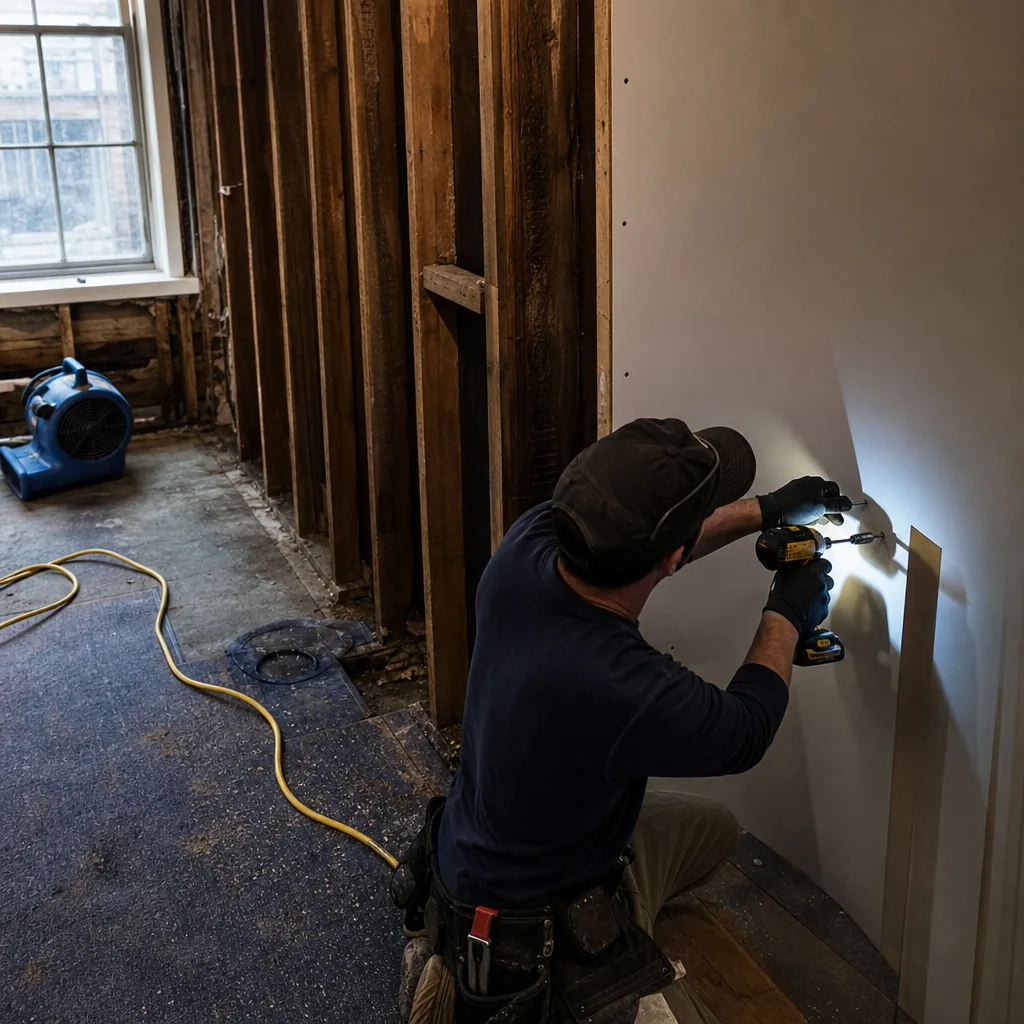
Waterlogged drywall in pre-war plaster walls behaves differently from modern gypsum board. We know when salvageable means dryable and when it means removal, and we document that judgment call for your insurer. Hardwood floors in these older buildings cup and crown fast after a steam-line break. We run drying mats on salvageable floors and refinish or replace the ones that can’t be saved.
Contents Restoration & Pack-Out
When a third-floor roof failure floods the two floors below, tenants need their belongings out before we can work. We coordinate pack-outs with detailed photo inventories so renters and insurers both know exactly what left the unit and where it went. Contents get cleaned, dried, and stored until the apartment is rebuilt. On multi-claim building-wide losses, that level of documentation keeps everyone honest.
Carpet & Upholstery Cleaning
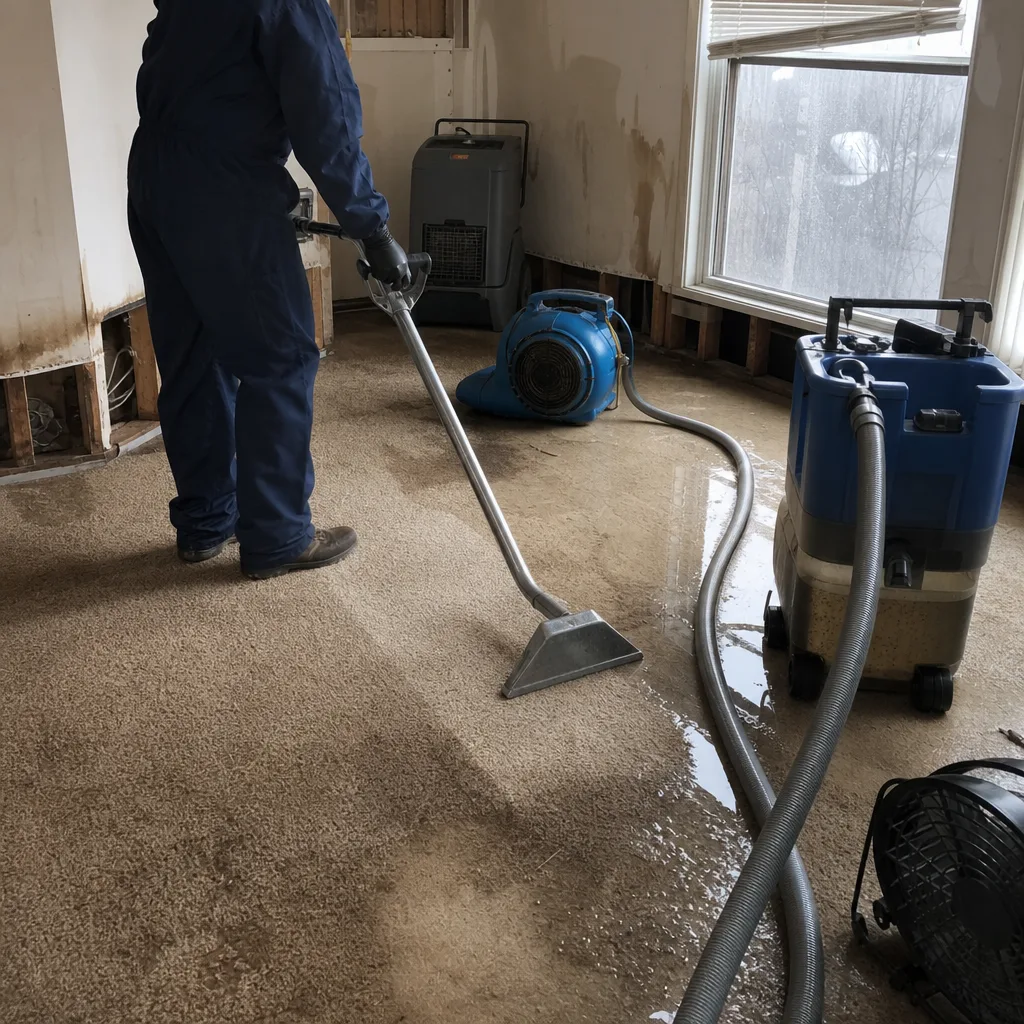
After the bulk of a restoration job is done, soft surfaces still carry odor and residue. We clean and deodorize carpets, area rugs, and upholstery that survived the water or smoke. In apartments where tenants returned after a Category 2 event, this final cleaning step is often what makes a unit feel livable again.
Post-Construction Cleanup
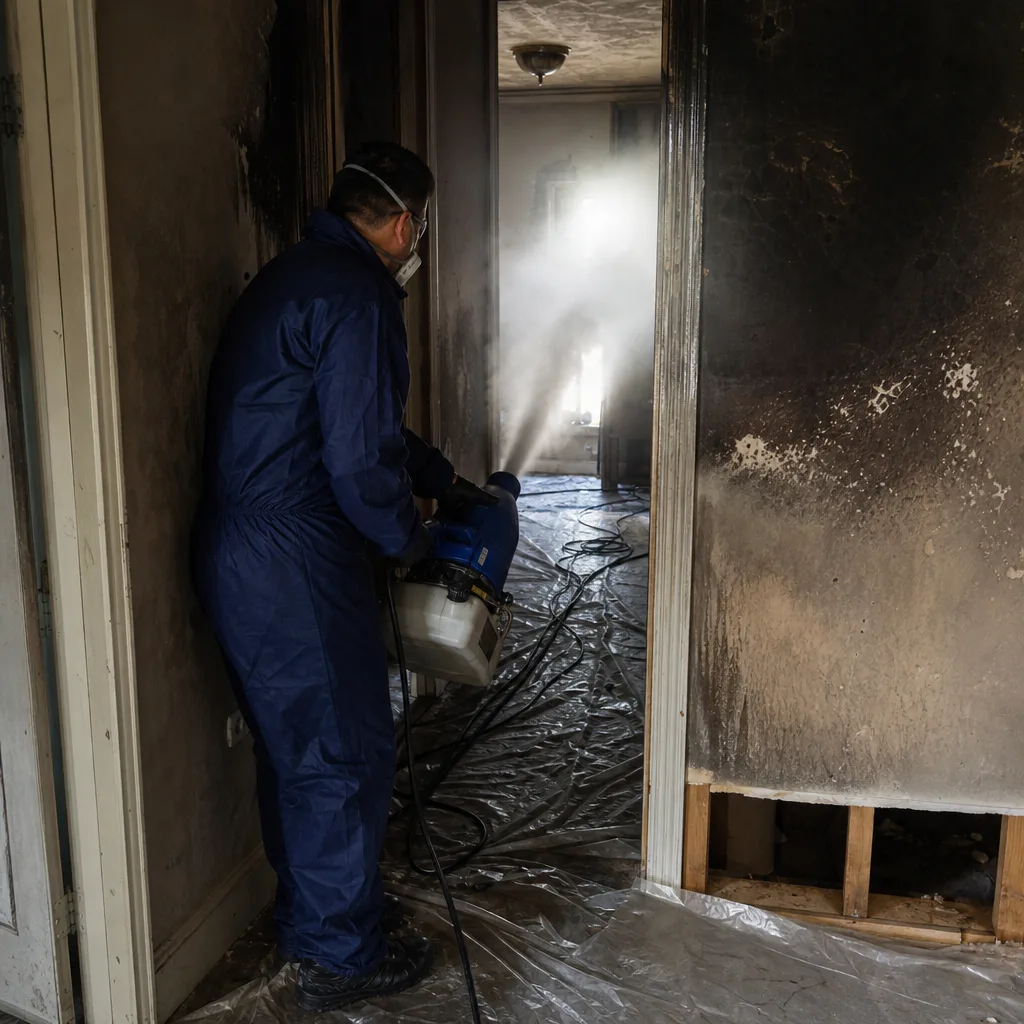
Reconstruction dust is fine, powdery, and relentless. It settles into every gap in a pre-war apartment and refuses to leave. We handle full post-construction cleaning after rebuilds, including HEPA vacuuming of wall cavities, cabinet interiors, and mechanical rooms. You hand tenants back a clean unit, not a construction site with a fresh coat of paint.
What happens when you call
- 1
A real person answersNo phone trees - you reach a local pro.
- 2
You get an upfront price rangeHonest numbers before anyone is dispatched.
- 3
A background-checked tech heads outLicensed & insured, dispatched right away.
- 4
You approve before work beginsNothing starts until you say go.
Reconstruction & Cleanup Costs in West New York, NJ
West New York reconstruction pricing runs higher than the suburban New Jersey average because the buildings are older, denser, and more regulated. A single-unit drywall and ceiling repair after a roof leak typically lands between $2,500 and $6,500 depending on plaster condition and wall cavity drying. Full-floor reconstruction after a multi-unit steam-pipe break runs $25,000 to $80,000 per floor when you factor in drywall, flooring, trim, and shared-wall moisture remediation. Wind-rated door replacement starts around $1,800 to $4,500 per door installed, depending on the rating and frame condition. Flat-roof membrane repair or partial replacement ranges from $4,000 to $18,000 for typical West New York building footprints. Contents pack-out and restoration adds $3,000 to $12,000 per affected unit. These are honest ranges for this town’s actual market. Your free inspection includes a written scope with firm numbers before any work begins, so you’re never gambling with an open-ended contract.
We Also Serve Cities Near West New York
Our crews cover West New York and the surrounding Hudson County communities. We work in Jersey City, Hoboken, Weehawken, and Union City with the same 45-minute response commitment and the same documented approach. If you manage buildings across multiple Hudson County towns, one call covers all of them.
Serving West New York, NJ - Our Local Coverage Area
We’re based in the West New York area and know this community well. Use the map below to see our service coverage - if you’re nearby, we can almost certainly help.
West New York Reconstruction & Cleanup Questions, Answered
How do wind-rated and impact-rated doors help prevent water damage in West New York apartment buildings?
Wind-rated doors resist the pressure differentials that nor’easters create when they slam against bluff-edge buildings on Boulevard East and Park Avenue. A standard door leaks around the frame under sustained 50+ mph gusts, driving water into corridors and stairwells that then migrate down through walls. Impact-rated doors with proper weather sealing close that gap and stop wind-driven rain at the building envelope.
What happens if a roof membrane fails during a storm in a West New York flat-roof building?
Water enters at the roof level and follows gravity down through the building, wetting ceiling cavities, wall plaster, and sometimes interior electrical boxes on every floor below the failure point. Because so many West New York buildings share masonry party walls, that water spreads sideways too. You need containment, extraction, and structural drying started within hours, not days, or the scope expands from drying to demolition.
How do New Jersey tenant-protection laws affect restoration access in West New York apartment buildings?
New Jersey requires formal notice before entering occupied rental units in most non-emergency situations. In a multi-unit building where a steam-pipe break flooded the basement and first floor, that notice period can delay access to upper-floor units while moisture wicks into shared walls. We work with property managers to file emergency access notices correctly the same day, so restoration starts fast while landlord-tenant rules are followed. Waiting for paperwork to sort itself out is how mold gets a foothold.
What is the difference between Category 1, 2, and 3 water in a West New York steam-pipe break?
Category 1 water starts clean, like a fresh supply-line break before it touches contaminated surfaces. Category 2 water carries significant contamination, which is what a steam-pipe break becomes after the water runs through old boiler sediment, building dust, and floor debris. Category 3 water is grossly contaminated, like sewage backup or floodwater from outside. In pre-war West New York buildings, what starts as Category 1 often degrades to Category 2 within hours because the water passes through decades-old pipe chases and wall cavities.
Why do reconstruction projects in West New York often involve multiple insurance claims?
In a building-wide flood, the building owner’s policy covers the structure and common areas, each tenant’s renters’ policy covers their personal property, and if the building is a condo, the association’s master policy adds another layer. That means one storm can generate seven, eight, or ten separate claims across a single building. We document every affected unit separately with its own photo file and scope, so each insurer gets exactly what they need to settle promptly.
How fast can someone actually get here when my West New York building floods?
Wade answers his phone day and night, and our crews are staged to reach West New York within 45 minutes in most conditions. In heavy nor’easters when every flat roof in town is failing, response stretches, but you’ll always talk to a real person who can tell you exactly when the crew will arrive. Call (607) 350-1550.
Will my insurance cover wind-driven water damage and reconstruction in West New York?
Most property and landlord policies cover sudden storm-related water intrusion, including roof membrane failures and wind-driven rain. The issue is documentation. Insurers want to see that mitigation started immediately, moisture readings were taken daily, and the scope of work is specific. We provide all three, and Wade deals with your adjuster directly. On multi-tenant buildings, we coordinate claim documentation across all affected units and policies.
What should I do in the first 30 minutes after discovering water intrusion in my West New York building?
Kill power to affected areas at the breaker, document the visible damage with your phone camera, and call (607) 350-1550. Don’t wait for the rain to stop and don’t assume it’s just one unit. Water in pre-war multi-family buildings travels fast and sideways. The sooner we start extraction and set containment, the fewer apartments end up in the reconstruction scope.
When a nor’easter tears open a flat roof on Boulevard East or a steam line lets go in a 1950s walk-up on 60th Street, you need someone who knows exactly what’s inside those walls before the first saw blade comes out. Wade Ferris has been running restoration crews in this market since 2007, and his name is on every contract. That matters in a trade with a reputation for showing up late, overpromising, and walking away when the paperwork gets hard. Call (607) 350-1550 for a free inspection and a written scope before any work begins. You’ll talk to a real person, and if you push for it, you’ll talk to Wade himself.
Written by Wade Ferris, Owner at Wade’s Restoration. Proudly serving West New York and Northern New Jersey with documented restoration work since 2007.