
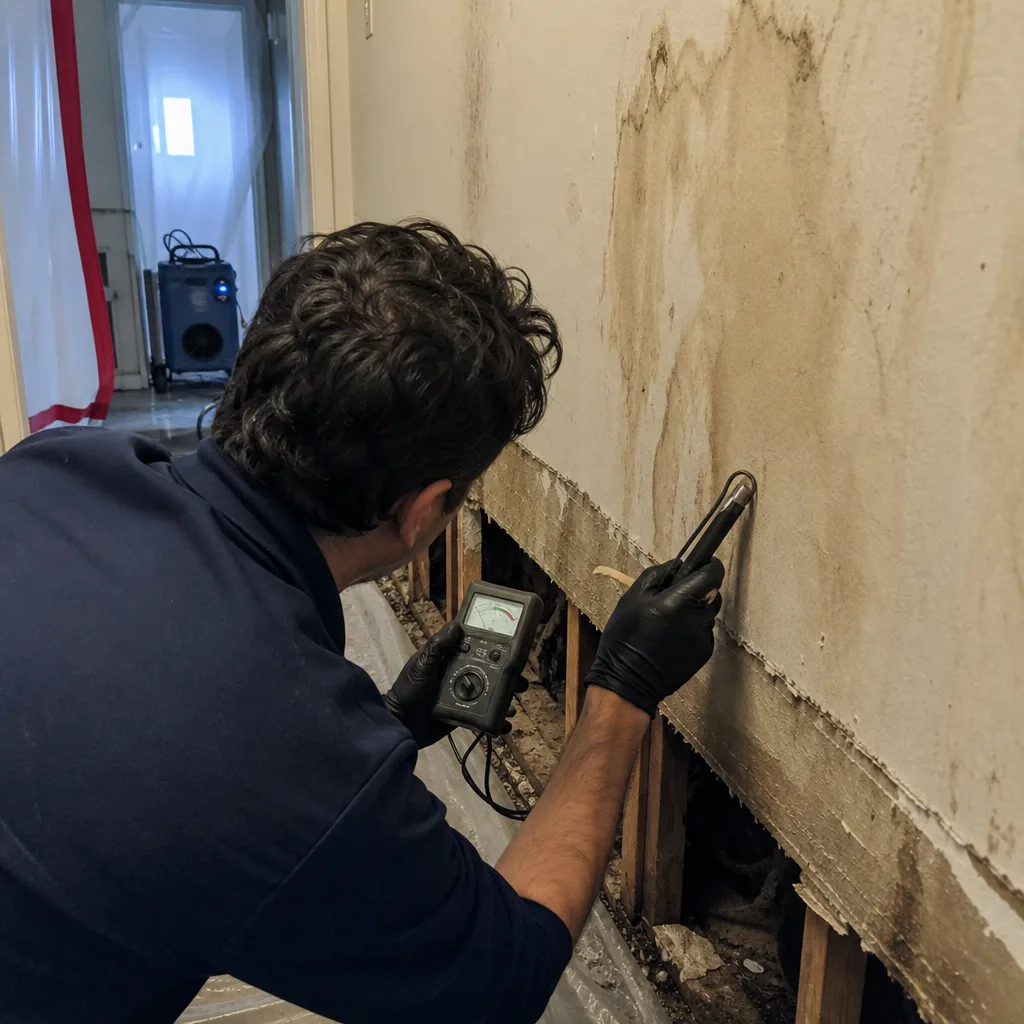
Free visual inspection and a written scope of work before any mitigation begins - photos, moisture readings, and drying logs go in your claim file
The scope we write is the scope we bill. Anything new gets shown to you, in writing, before we touch it.
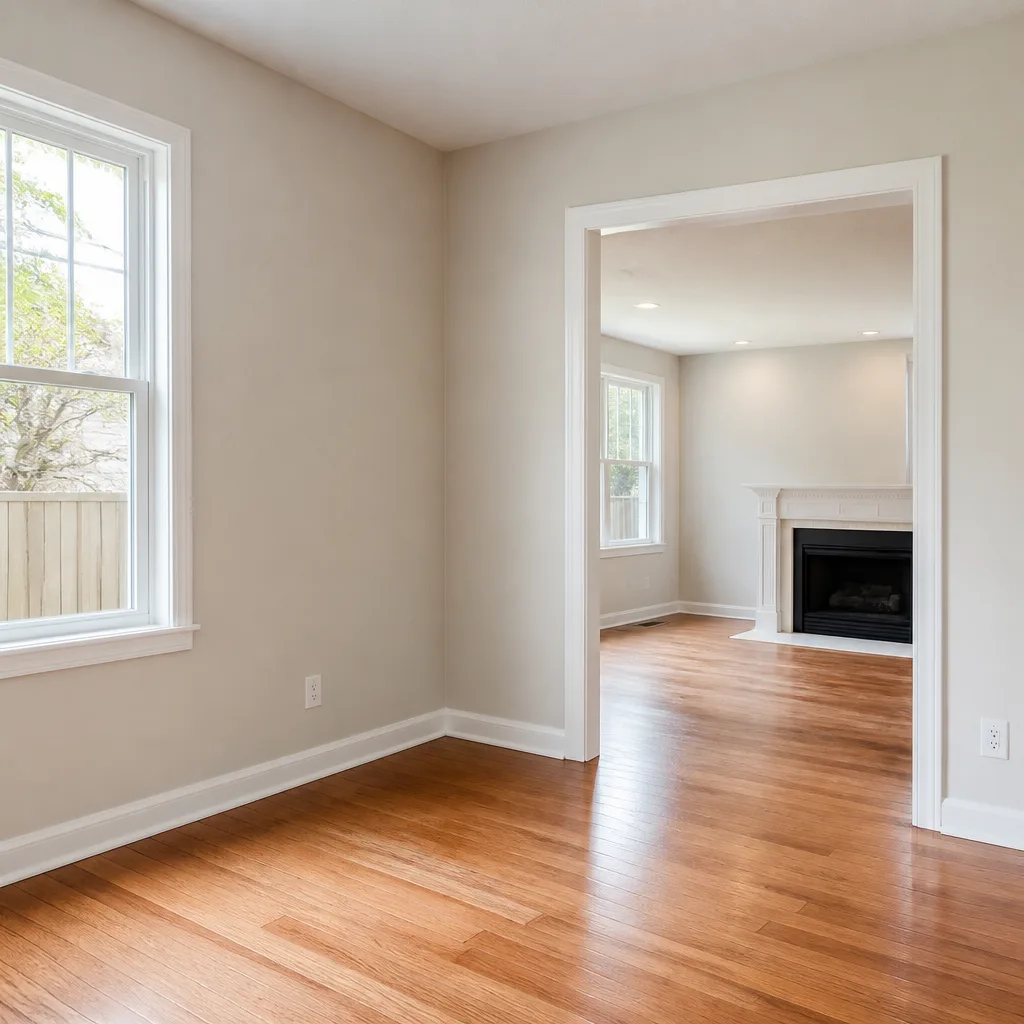
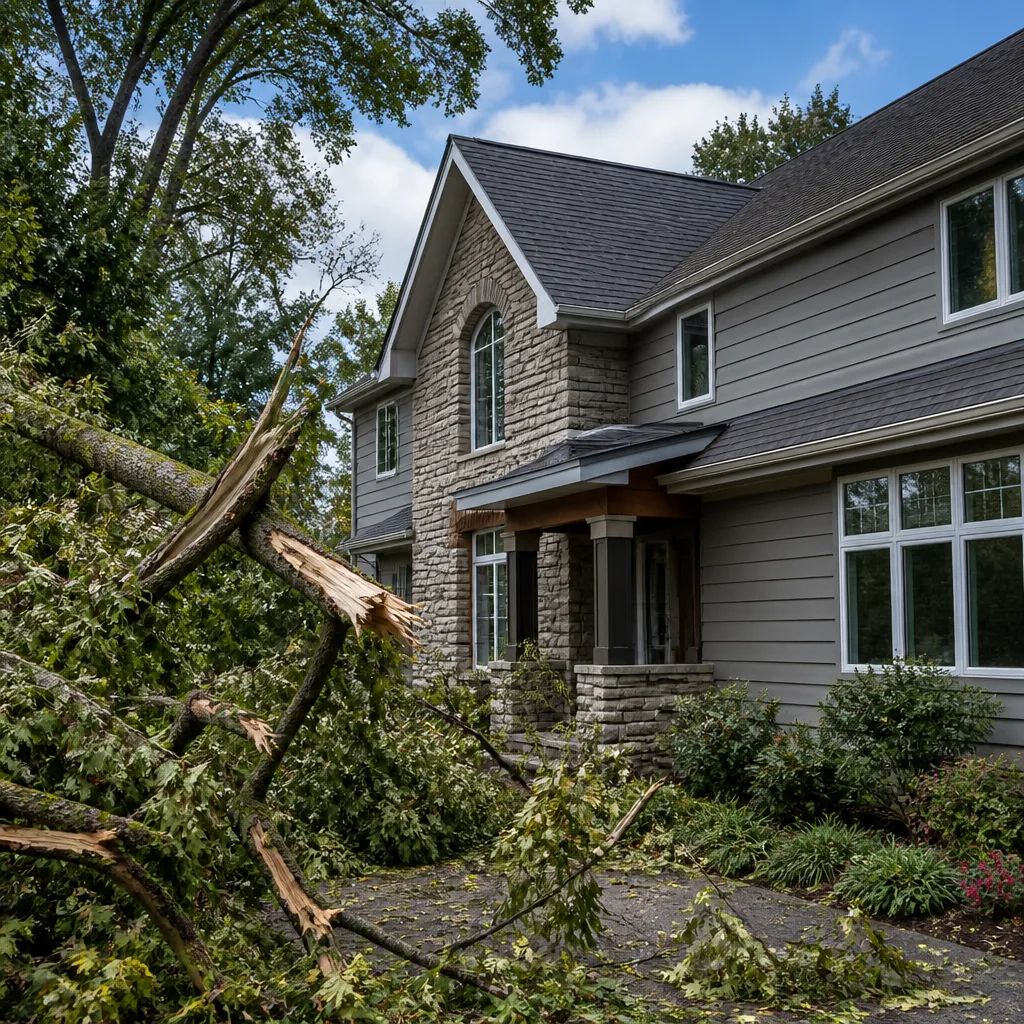
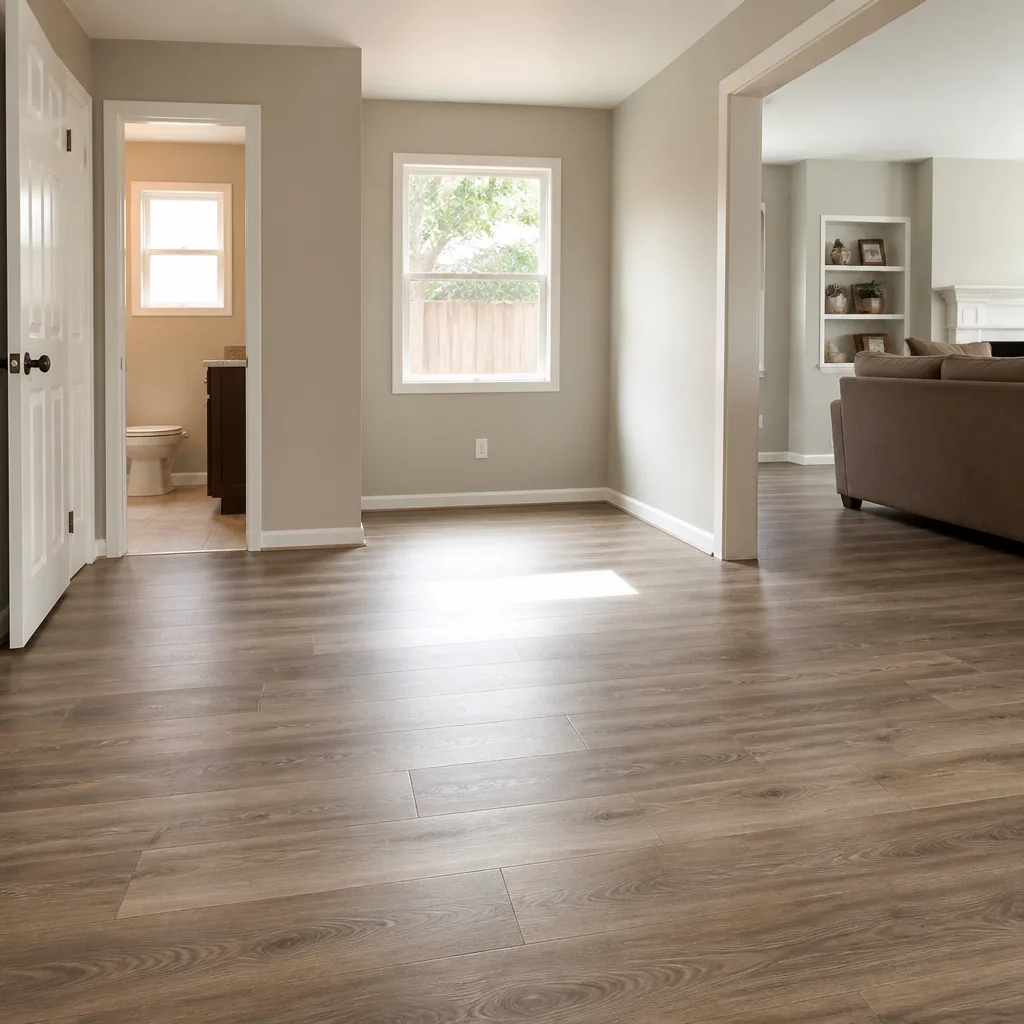
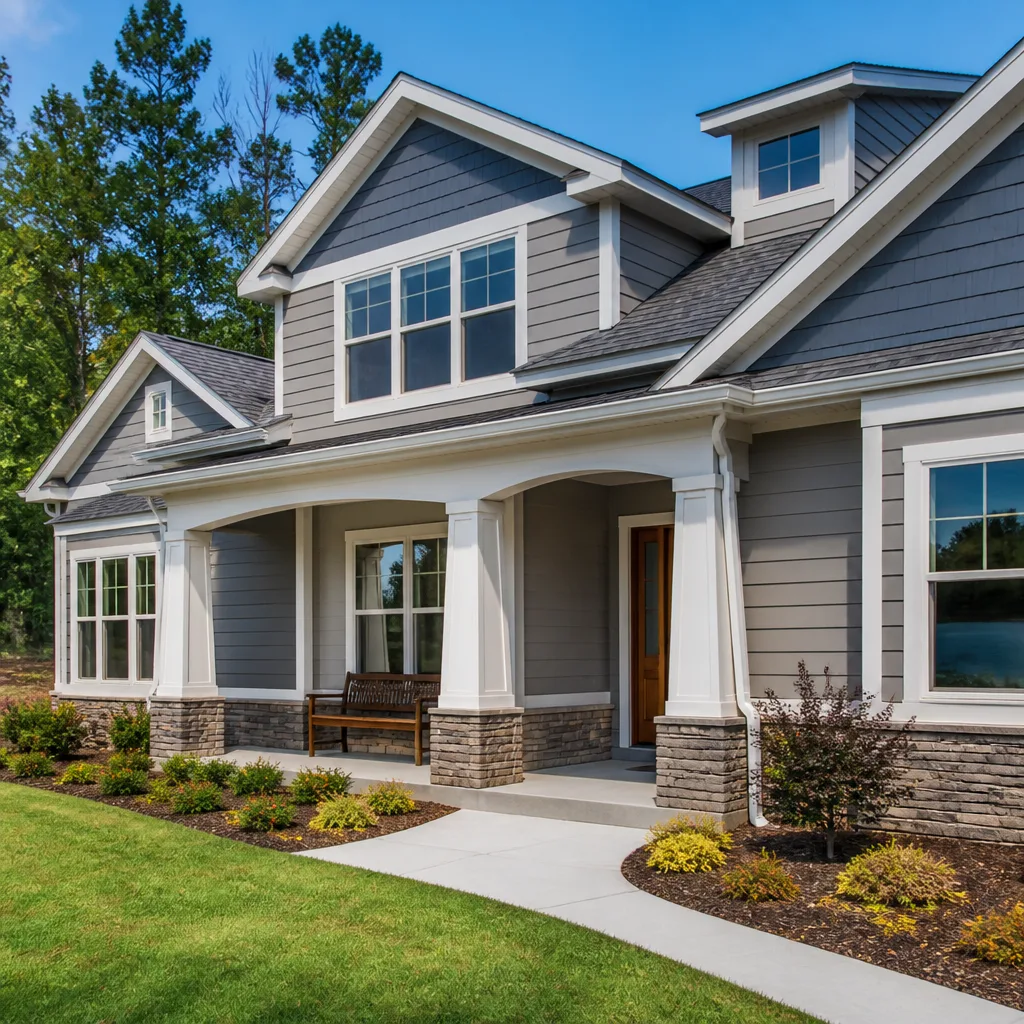
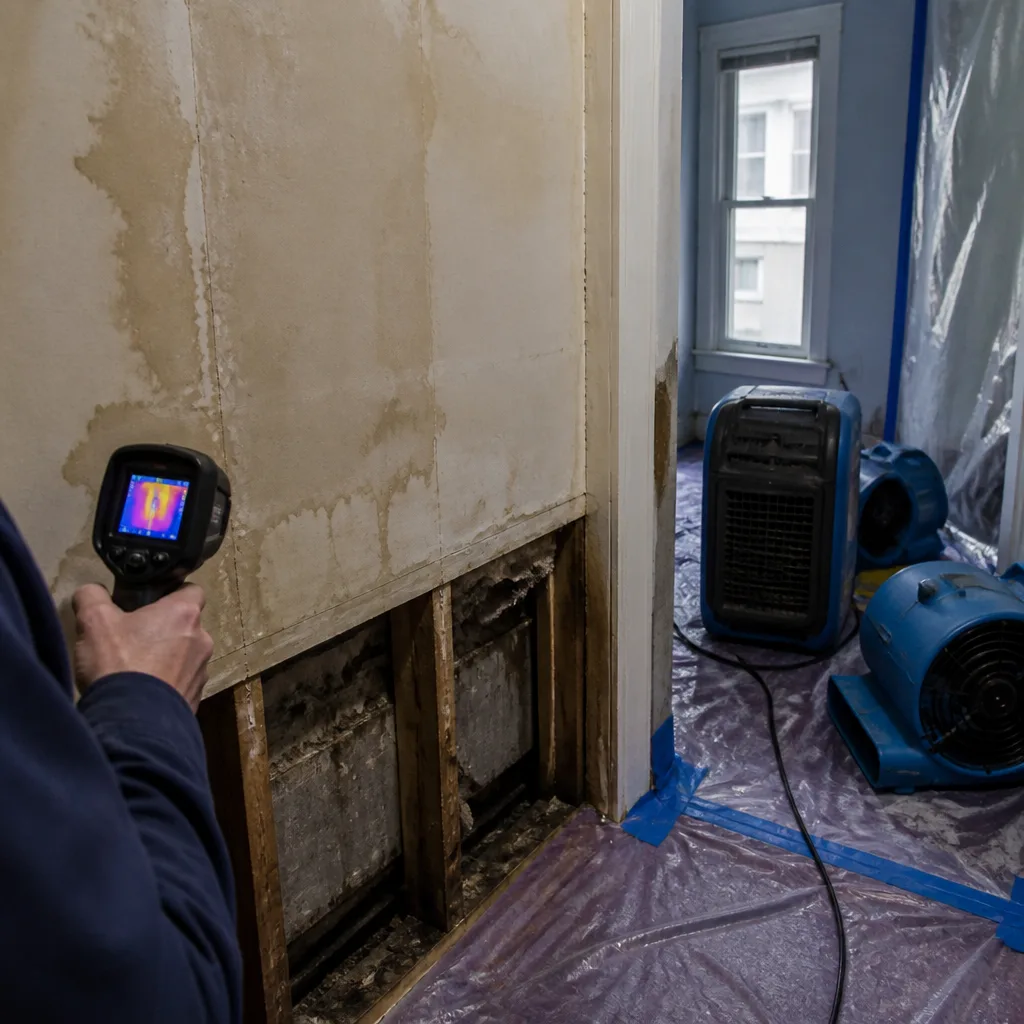 Before
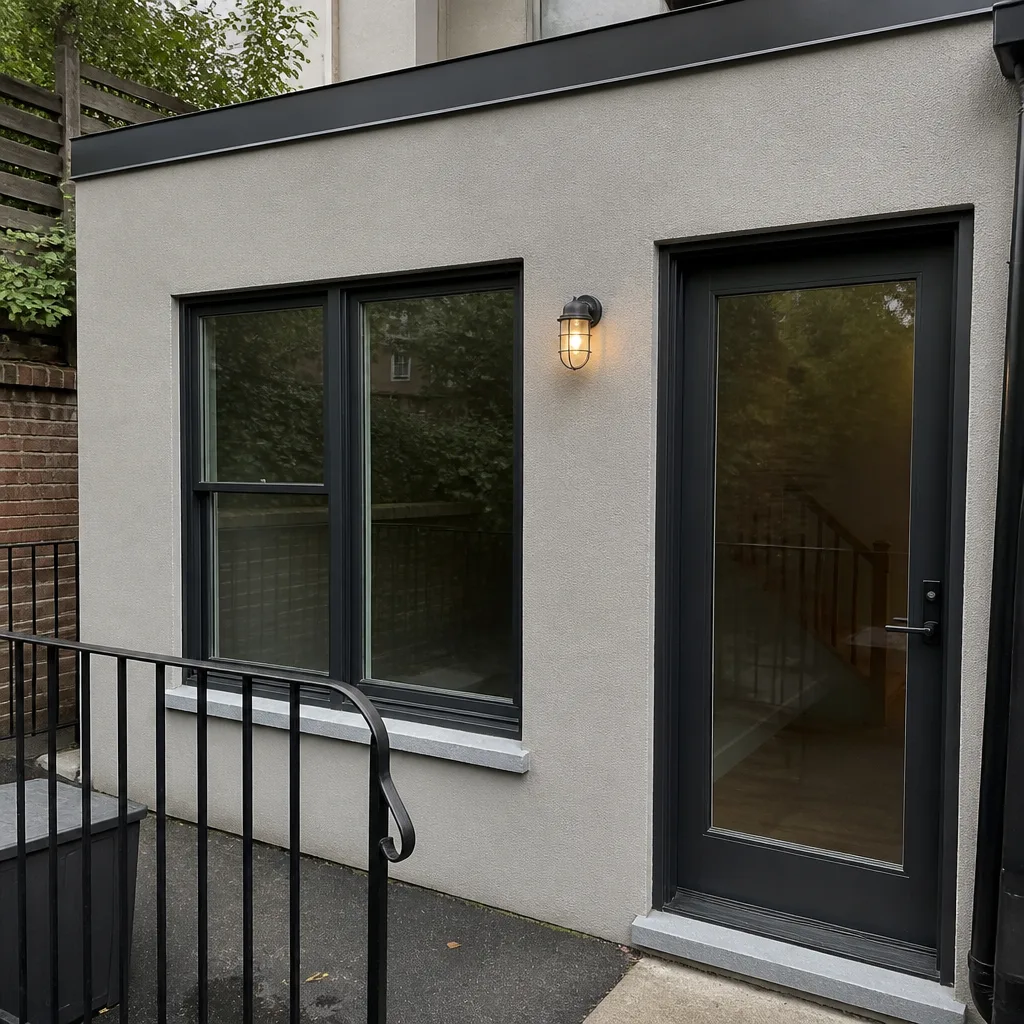 After
After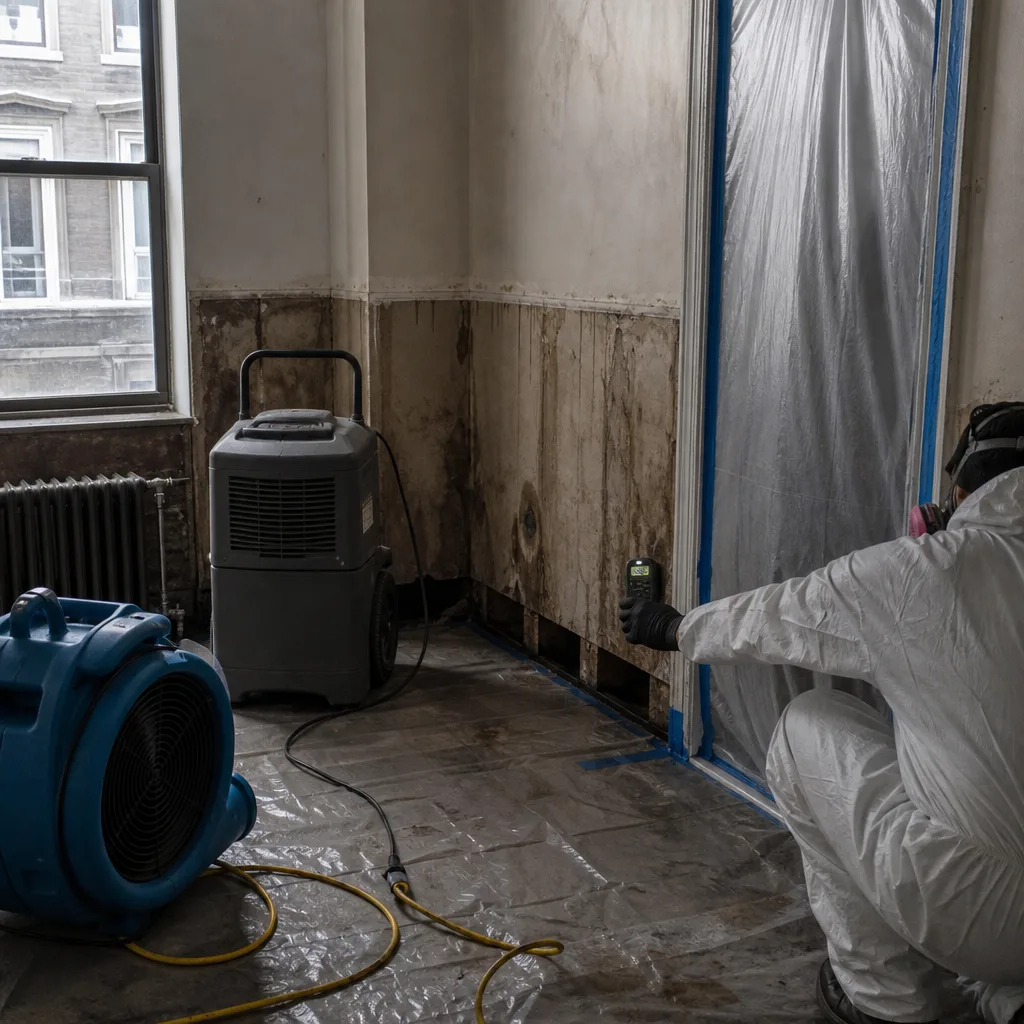 Before
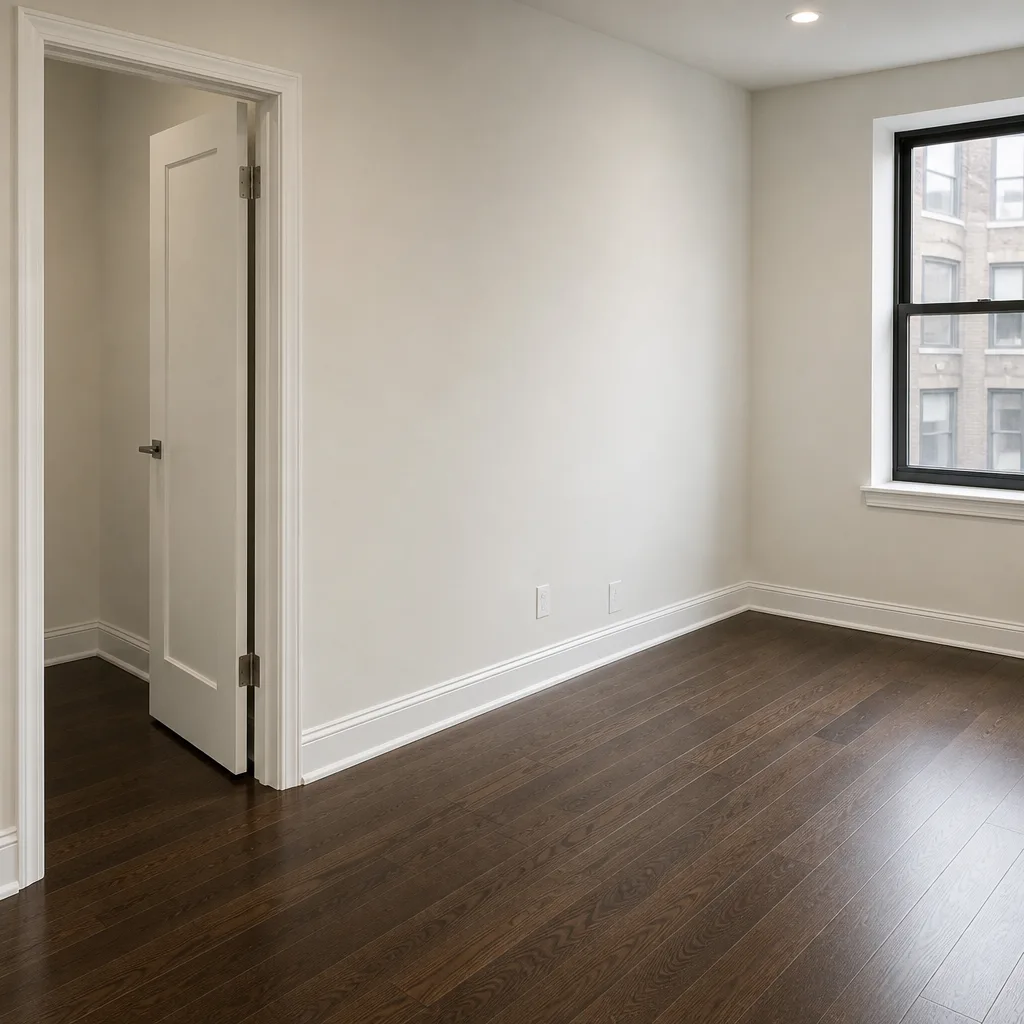 After
After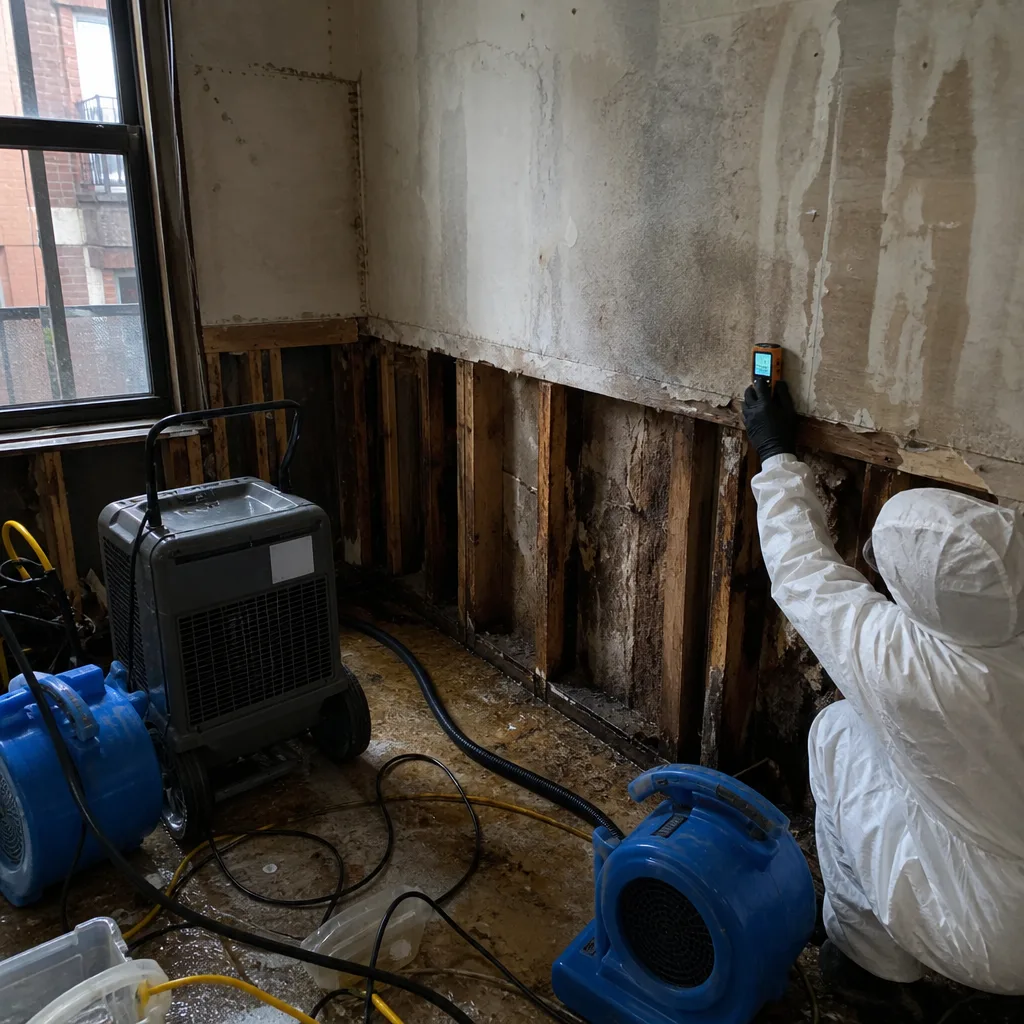 Before
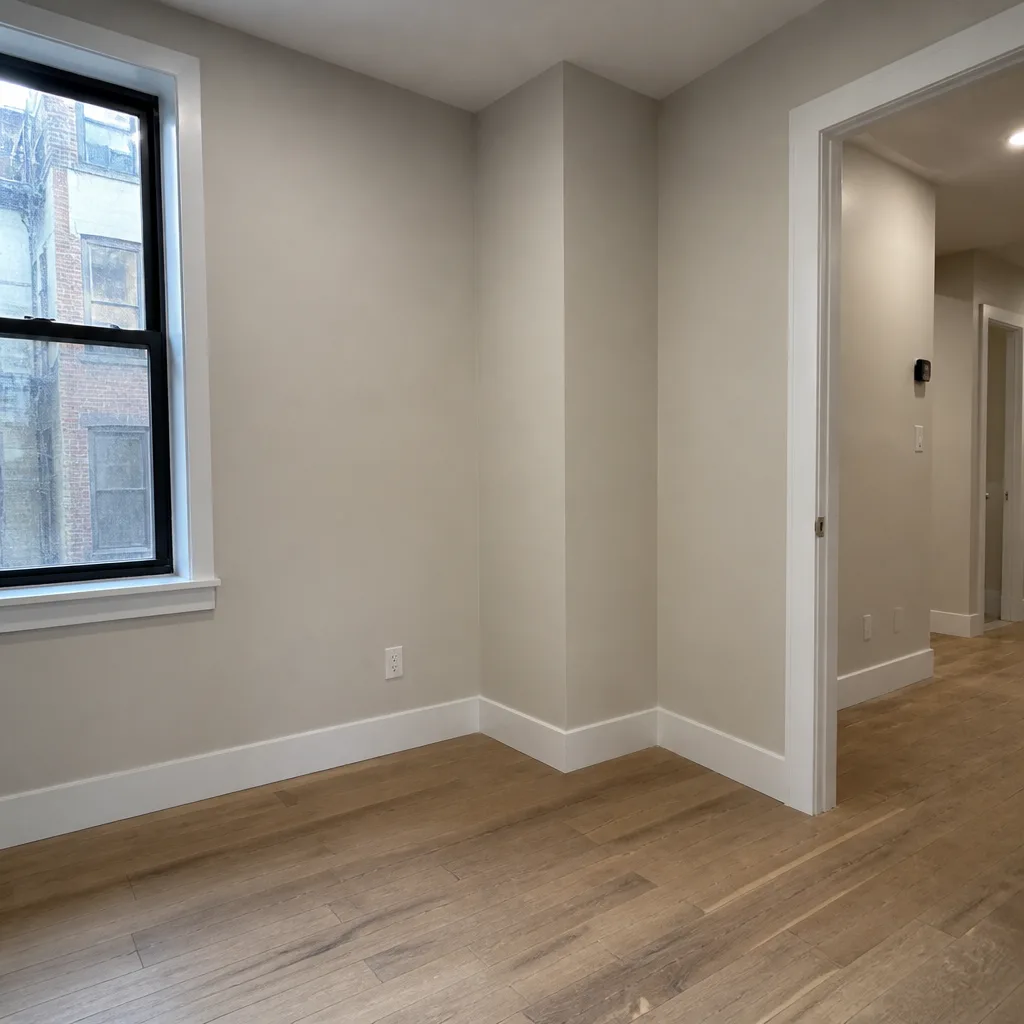 After
After24/7 Emergency Commercial Restoration in West New York
Commercial restoration in West New York, NJ typically runs $2,800 to $18,000+ depending on how many units and floors are involved, and in a town this dense, a single pipe failure rarely stays small. When a steam line lets go in a 1940s apartment building off Bergenline Avenue, you’re not dealing with one wet room. You’re dealing with five, eight, sometimes twelve units across three floors, a landlord on the phone, tenants who can’t be reached, and mold that starts setting up house within 24 to 48 hours.
We answer live around the clock at (607) 350-1550. Not a service. Not a call center. A person who knows West New York’s building stock and can have a crew rolling toward you inside the hour. The first hour after water intrusion determines whether you’re looking at extraction and drying or full gut-and-rebuild. That’s not sales talk. That’s just how gypsum and 90-year-old lath behave once they’re saturated.
Understanding Commercial Restoration Severity in West New York Properties
Severity in commercial restoration comes down to water category, duration of saturation, and what the water touched. Category 1 is clean supply water, like a burst domestic line. Category 2 has contaminants, like a condensate line or sump overflow. Category 3 is sewage or outside floodwater. But in West New York, severity compounds fast because most commercial buildings are pre-WWII brick and masonry with cast-iron and galvanized supply lines. Those pipes fail catastrophically, not in drips. A Category 1 failure left unaddressed for 48 hours can degrade into Category 2 conditions behind walls because the building itself, not just the water, is old.
Moisture mapping matters more here than almost anywhere in Hudson County. Multi-floor, multi-tenant buildings hide wet cavities behind plaster, under terrazzo, and inside common wall chases shared by adjacent units. Skip that step and you’ll have “dry” drywall with 98% relative humidity trapped behind it, mold blooming inside the cavity, and a landlord who signs off on a job that fails three weeks later. We run thermal imaging and in-wall probes before we ever call a space dry.
Why West New York Property Owners Choose Wade’s Restoration
- Response commitment that actually means something here: we commit to having a crew on-site in West New York within 45 minutes of your call, because border traffic on 495 or River Road can double a response time if you’re not local.
- 24/7 live answer, every time: you call, a human picks up. Wade Ferris answers his own phone. No prompts, no “press 2 for emergency,” no voicemail at 2 a.m. when a boiler line lets go.
- IICRC-certified crews: WRT for water, FSRT for fire and smoke, AMRT for mold. The people we send carry the certs and the equipment to back them, including Dri-Eaz dehumidifiers and Phoenix air movers.
- Free visual inspection: we walk the affected units, tell you straight what you’re dealing with, and hand you a written scope before any work starts. No charge for that. Ever.
- Direct insurance billing: we file claims, talk to adjusters, and document everything from the first hour so the carrier has what it needs to approve the work fast.
- One team from water to rebuild: extraction, drying, antimicrobial treatment, drywall, trim, paint. You’re not juggling three vendors while tenants are out of their units and losing patience.
Our Commercial Restoration Process
Inspection & Assessment
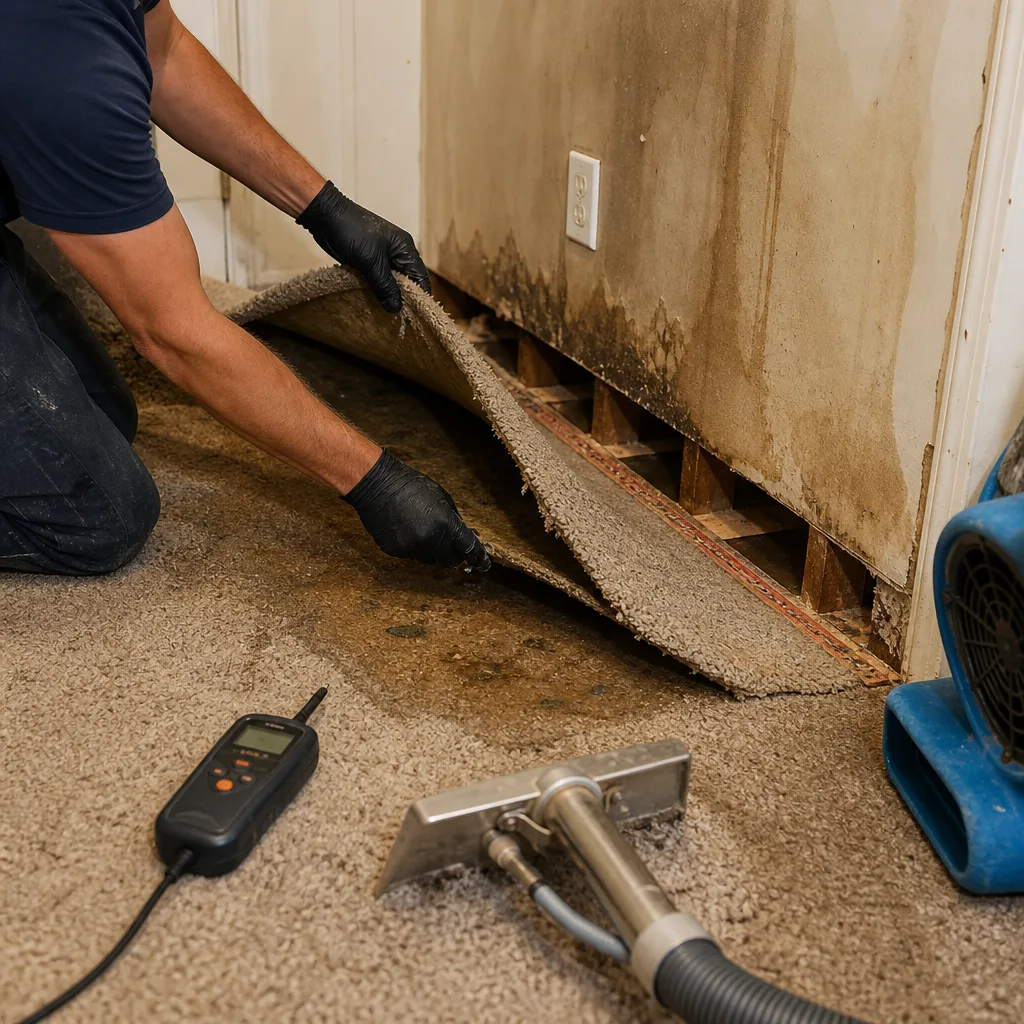
We map the water migration path through every affected floor, unit, and shared cavity. Thermal imaging and moisture probes tell us what’s wet, what’s wicking, and what’s already growing. You get the findings in plain language, with photos.
Extraction & Stabilization
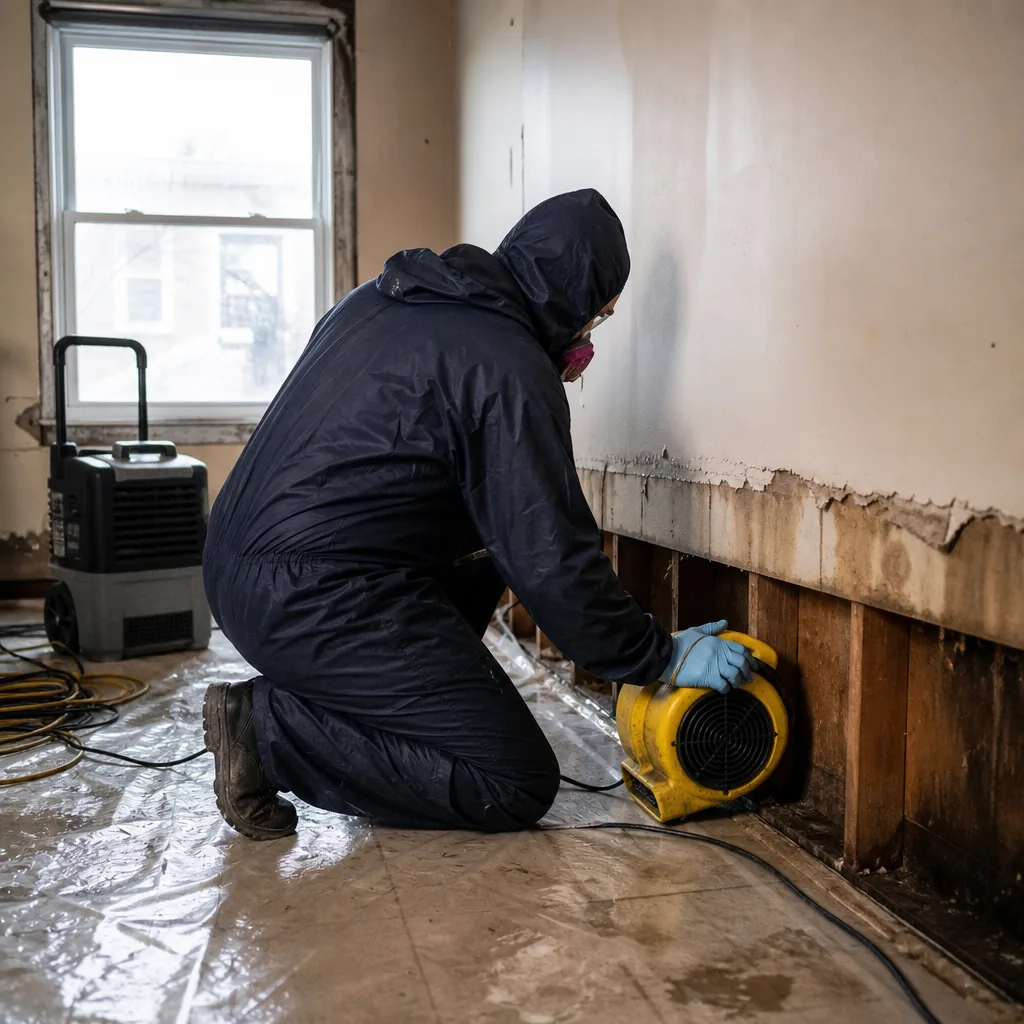
We pull standing water with truck-mounted and portable extraction units, including XPOWER pumps for below-grade spaces where groundwater keeps pushing in. Containment goes up immediately if mold or sewage is present so cross-contamination doesn’t spread through common hallways.
Drying & Dehumidification
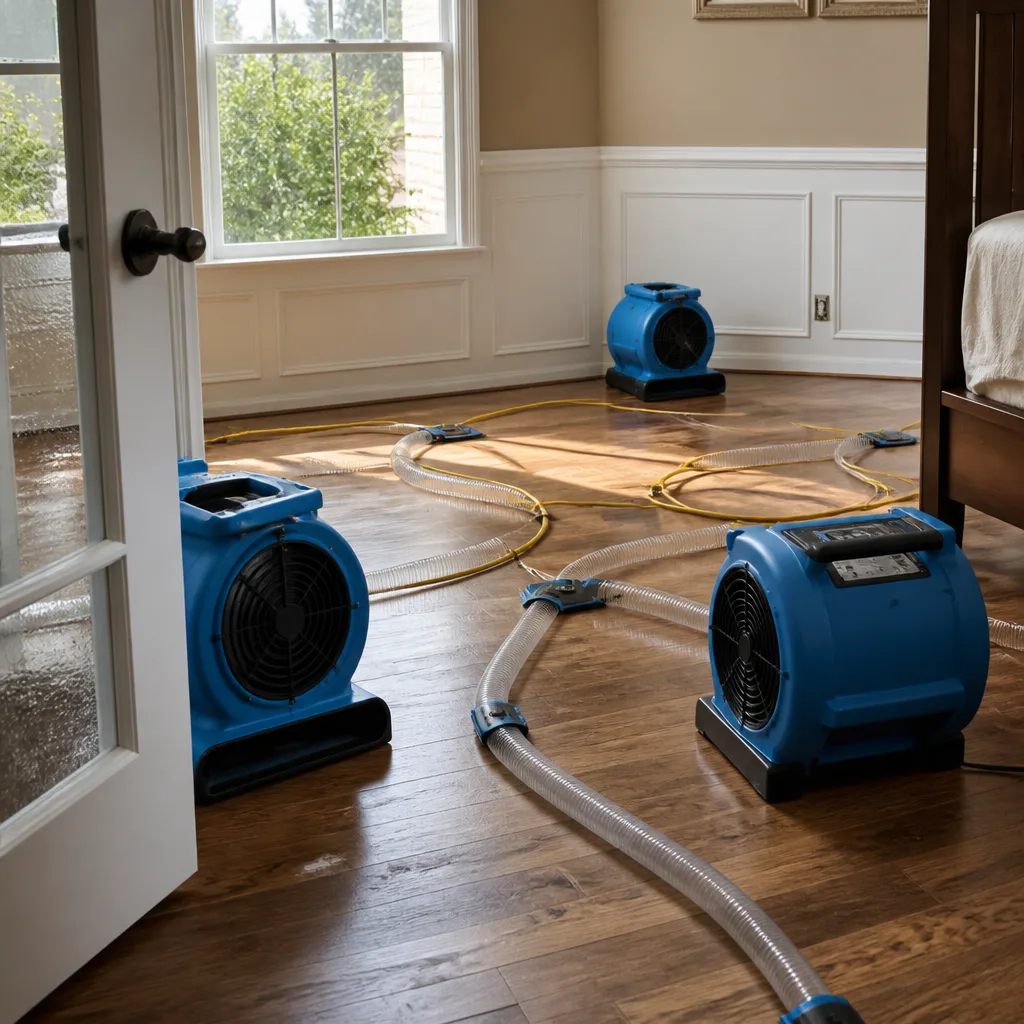
Dri-Eaz dehumidifiers and Phoenix air movers get placed per floor, per unit. We take moisture readings every single day and hand you the full log at the end. You’ll know exactly when your building hit dry standard, not just that we said it did.
Cleaning & Sanitization
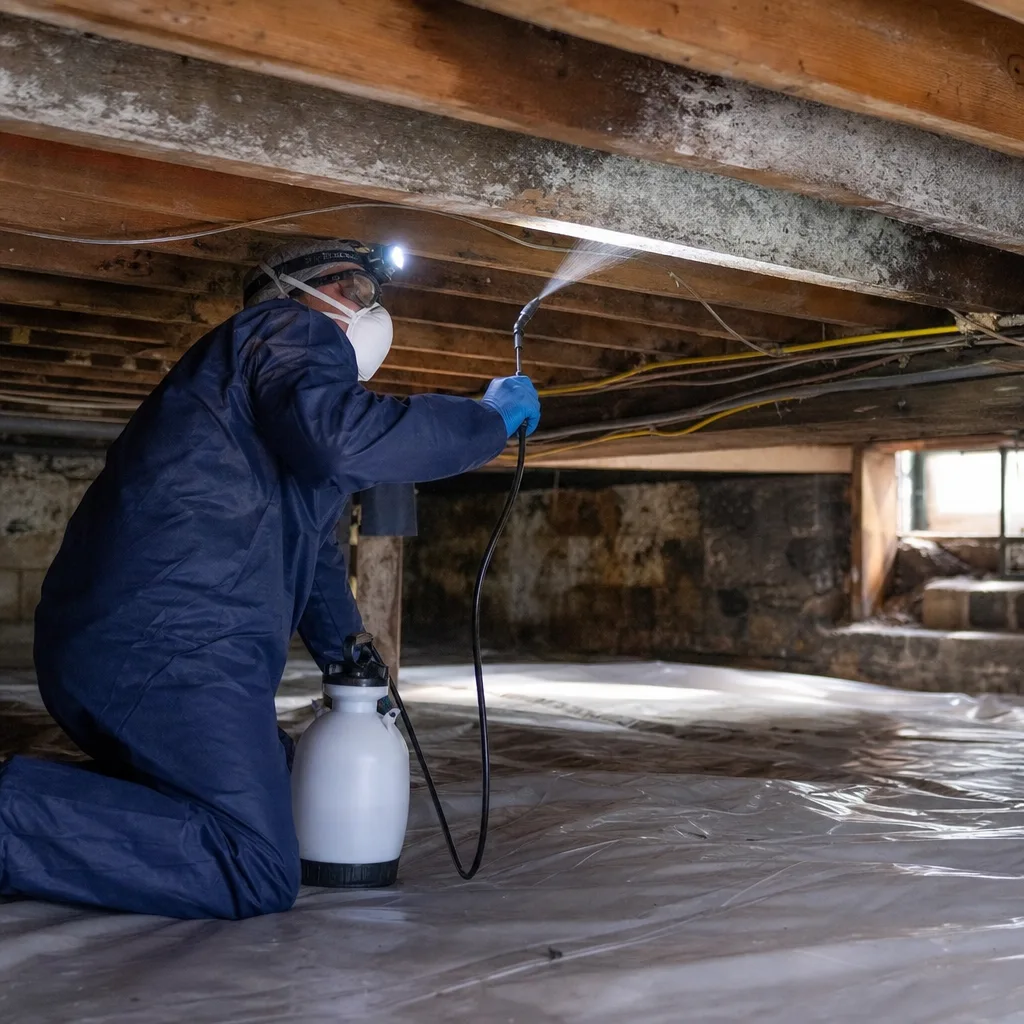
All affected surfaces get cleaned, scrubbed, and treated with antimicrobials where needed. Air scrubbers with HEPA filtration run throughout the job in multi-unit buildings, because dust and mold spores travel through shared ventilation surprisingly fast in 1930s construction.
Specialty Treatment for Commercial Restoration
Multi-tenant buildings in West New York often hide asbestos in plaster and floor tile, and lead paint on walls. We don’t touch those until licensed abatement clears the area. We coordinate that for you and document the chain of custody.
Repairs & Restoration
We rebuild to code, which in West New York means dealing with the town’s building department, fire code on shared egress, and sometimes the historic character of pre-war masonry. You get one scope, one team, one bill, and our 90-Day Done Right Promise in writing.
Need Emergency Commercial Restoration in West New York Now?
Crews minutes away, answering live 24 hours a day. The sooner we start, the less it costs.
Working With Your Insurance Company
Insurance on a multi-unit commercial loss in West New York gets complicated fast. There’s the building owner’s policy, maybe a condo association master policy, possibly individual tenant policies if the damage crosses into their units. You don’t need to be the one who untangles that. We handle direct adjuster communication from the first call.
Wade does not hand you a one-page estimate and call it done. We document everything. That means time-stamped photos of every affected room, moisture readings from every day of drying, a line-item scope that matches what your carrier expects to see, and direct communication with your adjuster so you’re never relaying technical questions between two sides. In our experience, adjusters approve work faster when the restoration company speaks their language. We do.
What We Provide Your Insurer
- Thorough documentation of the loss
- Photos of all damage, room by room
- Moisture readings and drying logs
- A detailed, line-item scope of work
- Direct coordination with your carrier
Built for West New York’s Loss Calendar
West New York’s loss calendar follows two rhythms: the weather and the age of the pipes. January and February bring deep freezes that snap sprinkler lines and domestic supply pipes in unheated stairwells and basement utility rooms. Those are the calls where a whole first floor is flooded before anyone notices because the building was unoccupied overnight. March and April bring thaw and spring rain, and with it, groundwater pushing through Palisades rock into below-grade garages and storage rooms. Not clean water, but not dramatic flooding either. Just persistent seepage that soaks drywall and rusts electrical panels.
Summer brings the thunderstorm season. Flat roofs on the pre-war buildings along Boulevard East and Park Avenue pond water year-round, but a sudden downpour after a dry spell finds every membrane weakness at once. Nor’easters in fall and early winter do the same with wind-driven rain. And underneath all of it runs the constant: shared steam boiler systems in 80 to 100-year-old buildings that corrode from the inside and fail without warning. Most of West New York’s commercial losses trace back to one of those four causes. Knowing the calendar means we stage equipment accordingly, and we answer the phone faster when we know what’s likely ringing it.
Commercial Restoration Across West New York’s Neighborhoods
Commercial Restoration here runs through several distinct zones, each with its own loss pattern. Up on Boulevard East, the taller pre-war apartment buildings with Hudson River views have complex steam systems and aging standpipes. When a line fails on the 8th floor, you get water traveling down six floors of common wall before it pools in a lobby. Down on Bergenline Avenue, the commercial spine of town, nearly every storefront sits under residential units in the same building. A second-floor apartment leak becomes a retail interruption the same afternoon, and now you’re dealing with a business owner losing revenue by the hour.
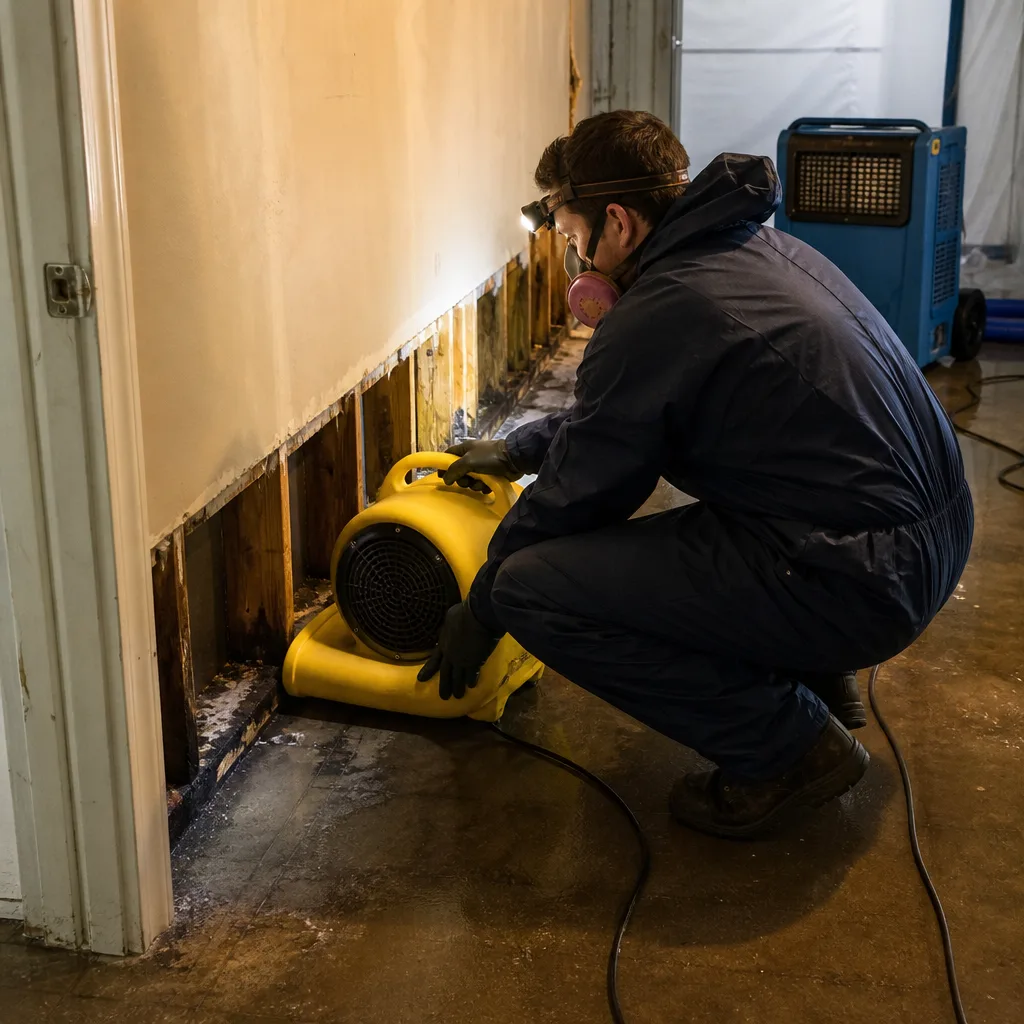
Over by 60th Street and the numbered cross streets between Kennedy Boulevard and the river, the buildings are denser, older, and often wood-frame behind brick veneer. Those hide water in floor joist cavities that run the full building depth, which means a kitchen leak in unit 3B shows up as staining in unit 2B and a sagging ceiling in 1B. Near the southern edge toward Weehawken, mixed-use buildings with basement restaurants and bars have chronic groundwater issues, because the Palisades rock face sheds water downhill all year. Each area needs the same core work, but the access, the containment strategy, and the drying plan look different. We know the difference because we’ve worked all of it.
Specialized Commercial Restoration Services We Offer in West New York
Multi-Unit & HOA Restoration
This is the bread and butter of commercial work in West New York. One leak in a pre-war building crosses into four, six, ten units. We handle the whole building: containment per floor, drying per unit, documentation per landlord, and coordination with whatever board or management company is in charge. New Jersey tenant-protection laws mean we often can’t just walk into an affected unit without notice. We build that wait time into the drying plan so mold doesn’t gain a foothold while paperwork catches up.
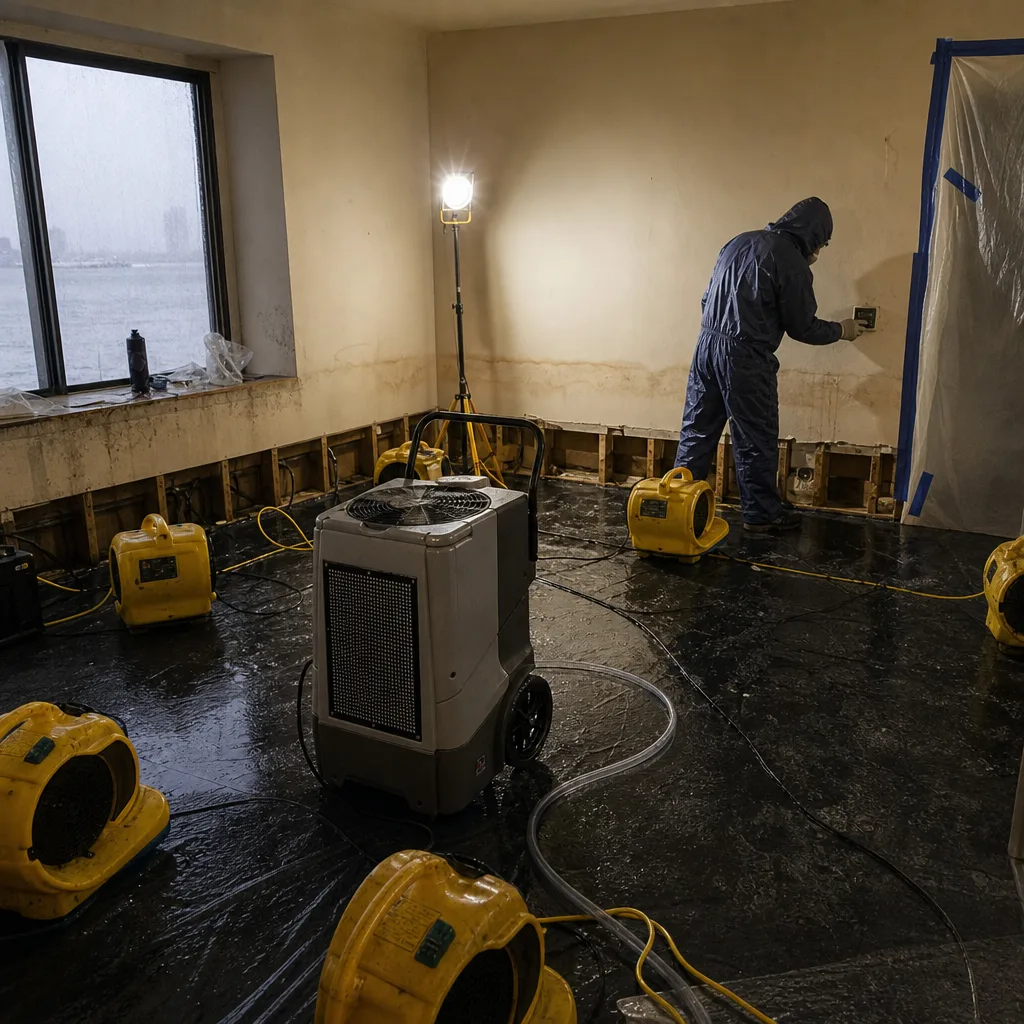
Large-Loss Response
When a boiler room floods an entire basement and first floor, or a roof failure drops water through three floors of a commercial building on Bergenline Avenue, you need more than one van. We mobilize multiple crews, industrial dehumidification arrays using B-Air and Dri-Eaz equipment, and a project lead who speaks directly with your adjuster. Large-loss response in a dense town like West New York is as much about managing people as equipment. You’ve got tenants, employees, inspectors, and insurance all watching the clock. We keep the job moving.
Business Interruption Minimization
If you run a store, restaurant, office, or clinic in West New York, every hour the doors are closed is revenue gone. We prioritize extraction and containment in street-facing spaces first, build temporary containment walls if needed, and dry behind the scenes while you stay open where possible. We’ve run jobs where a bodega on one side of a shared wall stayed open while we dried the apartment above it. That’s the standard we aim for. Not always possible, but we plan for it from minute one.
What happens when you call
- 1
A real person answersNo phone trees - you reach a local pro.
- 2
You get an upfront price rangeHonest numbers before anyone is dispatched.
- 3
A background-checked tech heads outLicensed & insured, dispatched right away.
- 4
You approve before work beginsNothing starts until you say go.
Commercial Restoration Costs in West New York, NJ
Here’s what we actually see in this market. A single-unit water extraction and drying job in a West New York apartment building runs $1,800 to $4,500. Add containment and antimicrobial treatment for mold risk, and you’re at $3,500 to $8,000. A multi-unit loss spanning three or more floors typically lands between $8,000 and $22,000 before rebuild, depending on how many walls and ceilings need opening. Full restoration including drywall, paint, and floor repair across five-plus units can push $25,000 to $60,000 or more. These are real ranges from jobs we’ve done in this town.
What moves the number: how many units are affected, whether the water hit below-grade spaces, whether asbestos or lead abatement is required before we can touch certain surfaces, and how long tenant access delays run. You’ll never get a firm number without an inspection, which is why we do free visual inspections. You get a written scope with line items. No surprises, no change-order ambush. And if your carrier is involved, the price gets negotiated with them directly.
We Also Serve Cities Near West New York
Our crews work throughout Hudson County, including Jersey City, Hoboken, Weehawken, and Union City. Same live answer, same 45-minute response commitment, same owner-operated standard. If your building sits on the edge of West New York or just across the border, call us. We know the roads and the building stock.
Serving West New York, NJ - Our Local Coverage Area
We’re based in the West New York area and know this community well. Use the map below to see our service coverage - if you’re nearby, we can almost certainly help.
West New York Commercial Restoration Questions, Answered
How do you handle access delays when New Jersey tenant-protection laws slow down restoration of a multi-unit building in West New York?
We build the notice period into the plan from day one. Most restoration companies wait for access and let mold window grow. We document the delay, get containment up wherever we legally can, and often coordinate with landlords to get emergency access clauses triggered faster. New Jersey law allows for emergency entry in cases where property damage will spread, but that’s a legal process, not a phone call. We know how to navigate it.
What’s different about water extraction in West New York’s pre-WWII apartment buildings versus a commercial strip mall?
Strip malls are single-story, slab-on-grade, and easy to dry with open sightlines. Pre-war apartment buildings in West New York hide water in wall chases, floor joist cavities, and common plumbing risers that run through multiple units. Extraction is only the start. You need aggressive cavity drying, per-floor humidity control, and moisture mapping that follows the water across unit lines. Most crews quit at the visible puddle. That’s why so many jobs fail a month later.
Can you do commercial restoration in a building with suspected asbestos or lead paint in West New York?
Yes, but we don’t touch the hazardous material ourselves. We identify surfaces likely to contain asbestos or lead, bring in licensed abatement contractors for testing and removal, and document everything for your insurer. In West New York, most pre-1960s buildings have asbestos in plaster, floor tile, or pipe insulation, and lead paint on walls. Skipping that step is how you get sued and how a restoration job turns into a Superfund-scale problem. We do it right.
How do you minimize business interruption for a retail store in a multi-unit building on Bergenline Avenue?
We prioritize the retail space first. Extraction, drying, and containment in the storefront happen before we worry about upper-floor residential units if the water is coming from above. If we can keep the store partially open with containment walls, we do. We stage equipment in off-hours, coordinate with the landlord on access, and work with your insurer to document revenue loss. Every hour you’re closed is money gone, and we plan around that.
Why does ponding water on a flat roof in West New York lead to interior damage even without heavy rain?
Because the water sits there. Flat roofs on pre-war buildings in West New York rarely drain completely after a rain event. The standing water degrades the membrane over months, and then a pressure change or freeze-thaw cycle opens a pinhole. Water enters the roof assembly and travels horizontally along joists or beams before it finds a path down. By the time you see staining on a ceiling, the roof has been leaking for weeks. The ponding water is the cause, even if it hasn’t rained in days.
How fast can you actually get to a commercial property in West New York?
Forty-five minutes or less, typically. We know River Road, 60th Street, Kennedy Boulevard, and the approach through the Lincoln Tunnel traffic snarls. Our crews stage out of the New York City office and know the local routes. If you’re on Boulevard East during rush hour, it might be 50 minutes. If you’re by the waterfront on a Sunday morning, it might be 25. You’ll get a live answer and a straight ETA when you call (607) 350-1550.
Does insurance cover commercial restoration in a multi-unit building in West New York?
Most of the time, yes, but the coverage depends on whose policy applies: the building owner, the condo association, or a business owner’s policy. We help you sort that out. We document everything from the first hour, communicate directly with the adjuster, and provide the line-item scope carriers expect. If the loss is sudden and accidental, which most pipe failures and storm intrusions are, coverage usually applies. Gradual deterioration, like a slow roof leak that’s been dripping for months, gets more scrutiny. We’ll tell you straight which bucket your loss falls in.
What should I do in the first 30 minutes after a water loss in a commercial building in West New York?
Call us. Then, if you can do so safely, shut off the water supply at the main, kill power to affected areas at the breaker, and get people out of standing water. Don’t open walls, don’t use a shop vac on sewage, and don’t run building HVAC if it might be pulling contaminated air through the system. Take photos of the visible water before anything gets moved, because your adjuster will want to see it. Then let us take over. The first call is the most important one. Call (607) 350-1550 and a real person answers.
If you manage a commercial building in West New York, you already know the risk. Dense pre-war construction, shared systems, flat roofs, and tenant-protection laws that make every restoration job a multi-party operation. You need a crew that’s handled this exact situation in this exact town more times than they can count. Call (607) 350-1550 for a free visual inspection and a written scope before you commit to anything. Wade Ferris answers his own phone. That’s the kind of accountability you want when water is spreading through your building at midnight.
Written by Wade Ferris, Owner at Wade’s Restoration, serving West New York commercial property owners with direct, documented restoration work since 2007.