
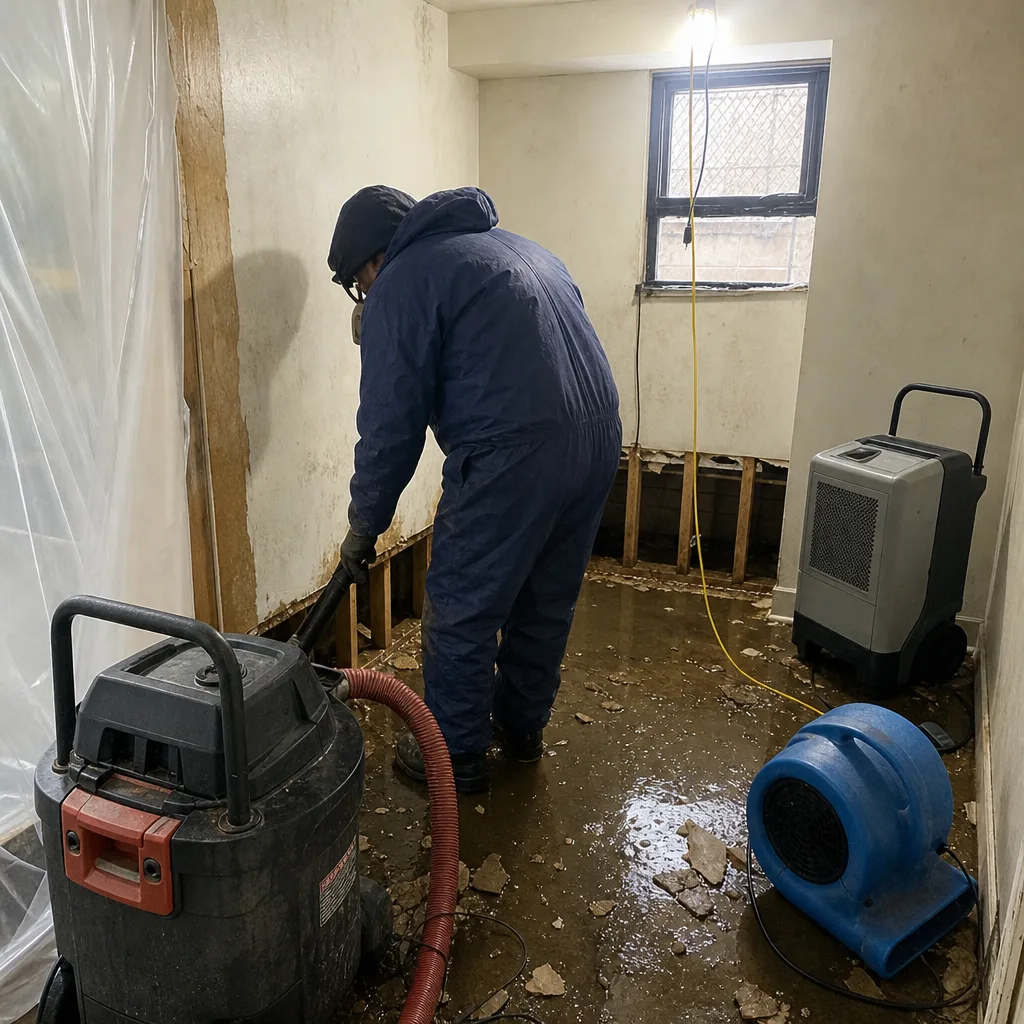
Free visual inspection and a written scope of work before any mitigation begins - photos, moisture readings, and drying logs go in your claim file
The scope we write is the scope we bill. Anything new gets shown to you, in writing, before we touch it.
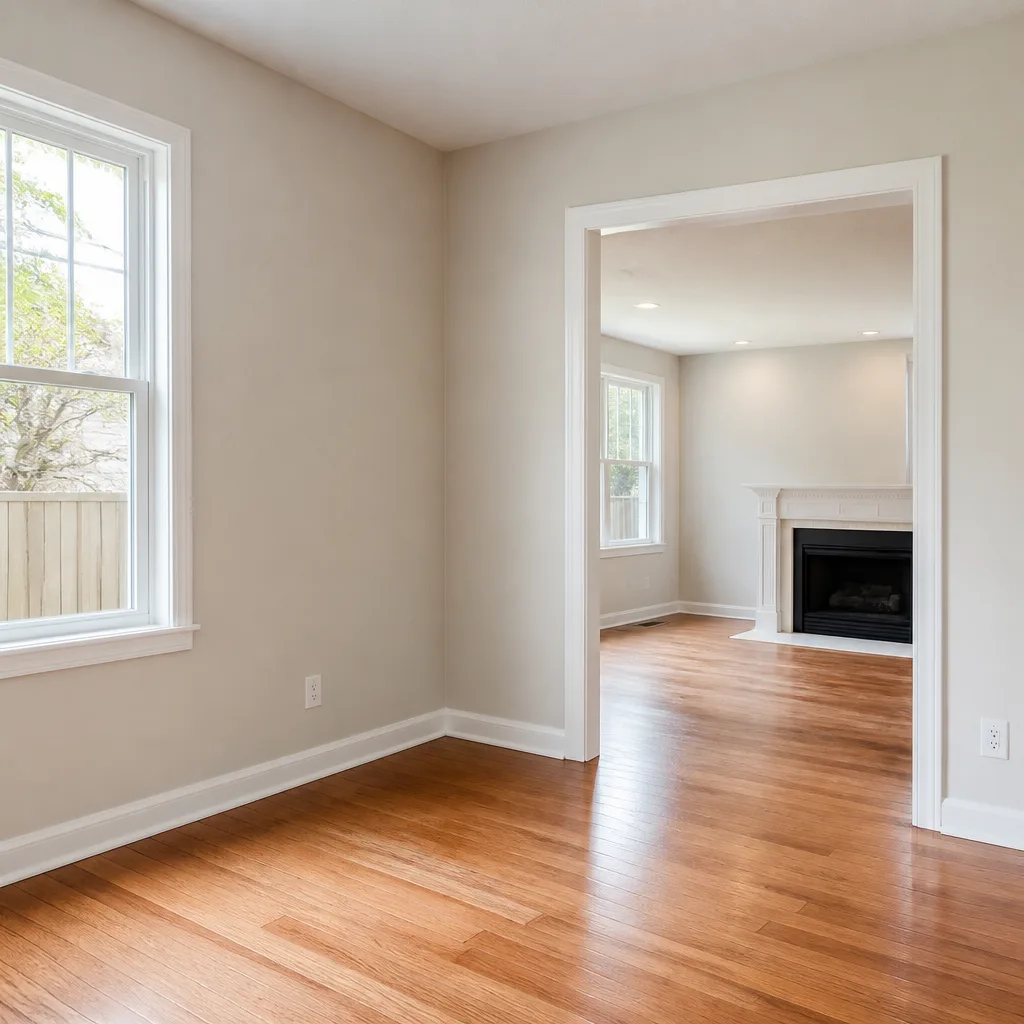
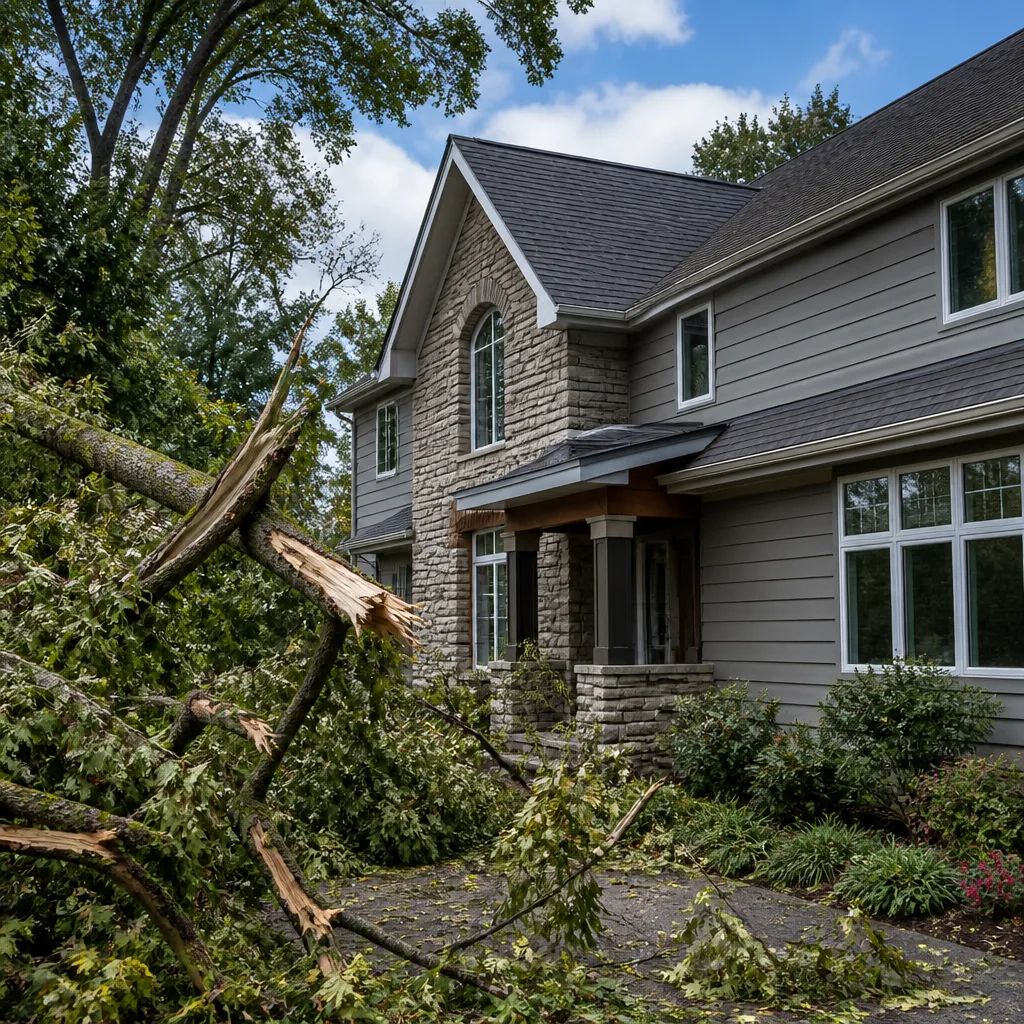
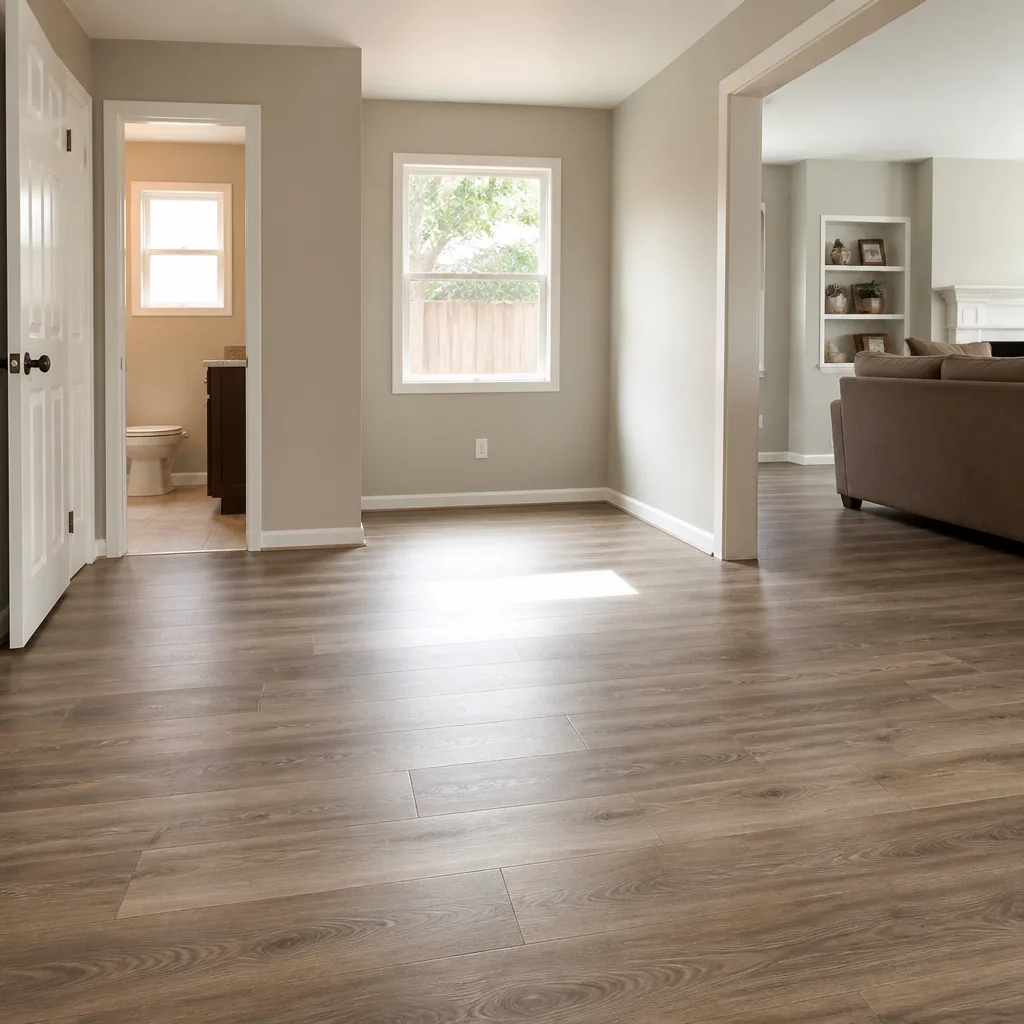
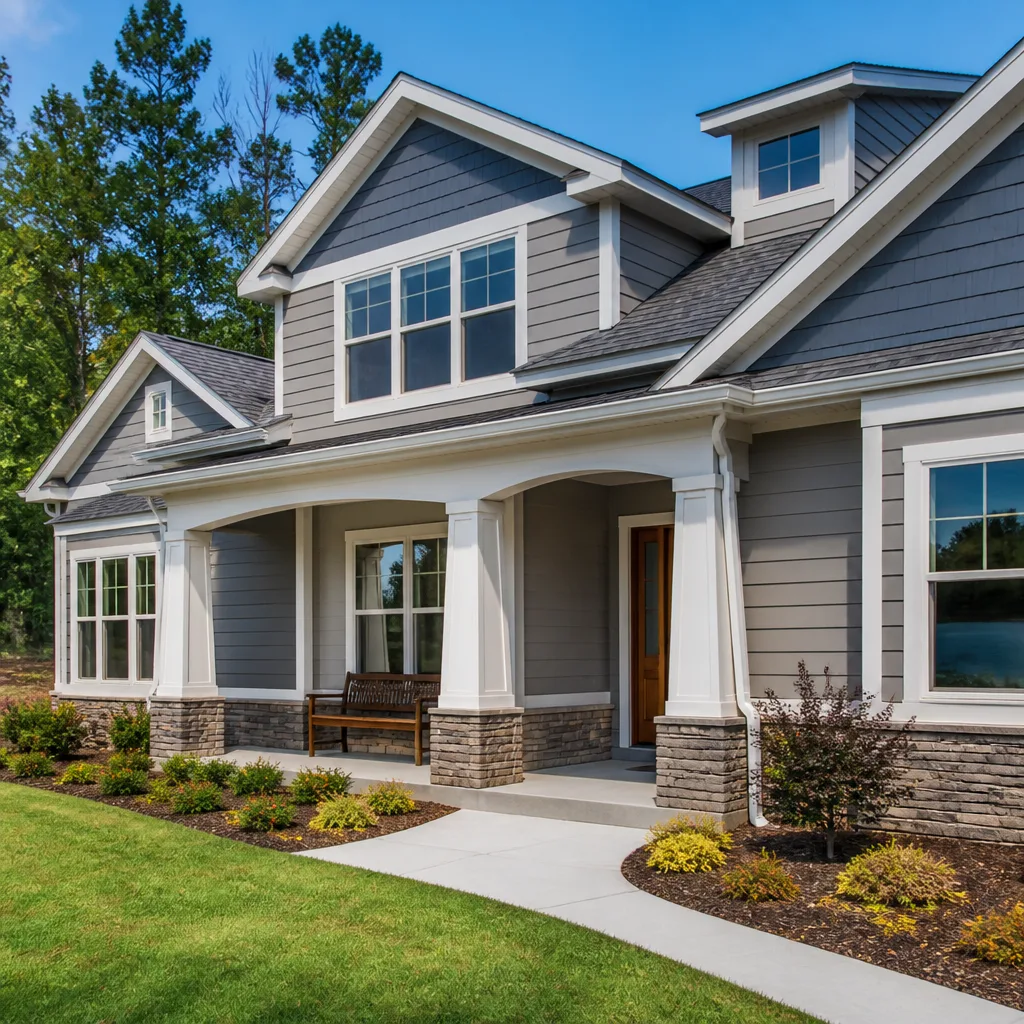
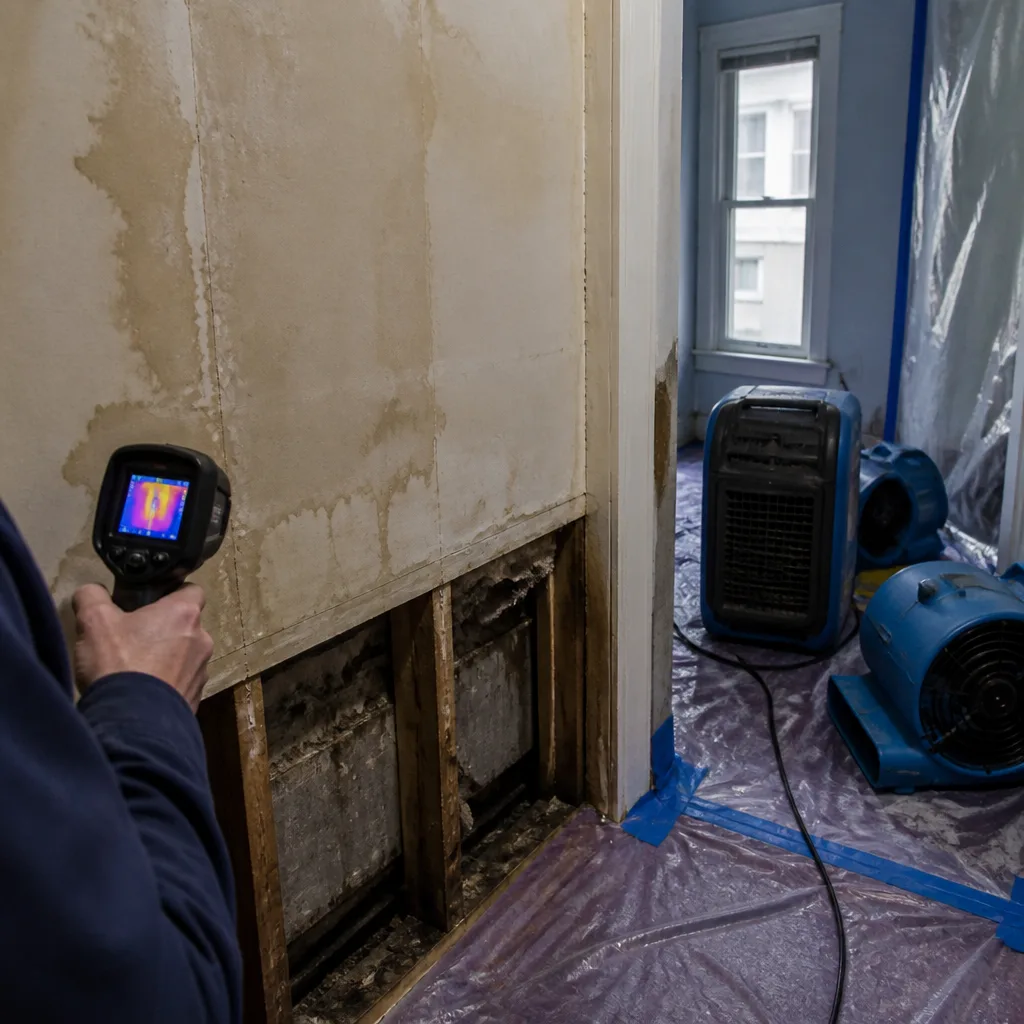 Before
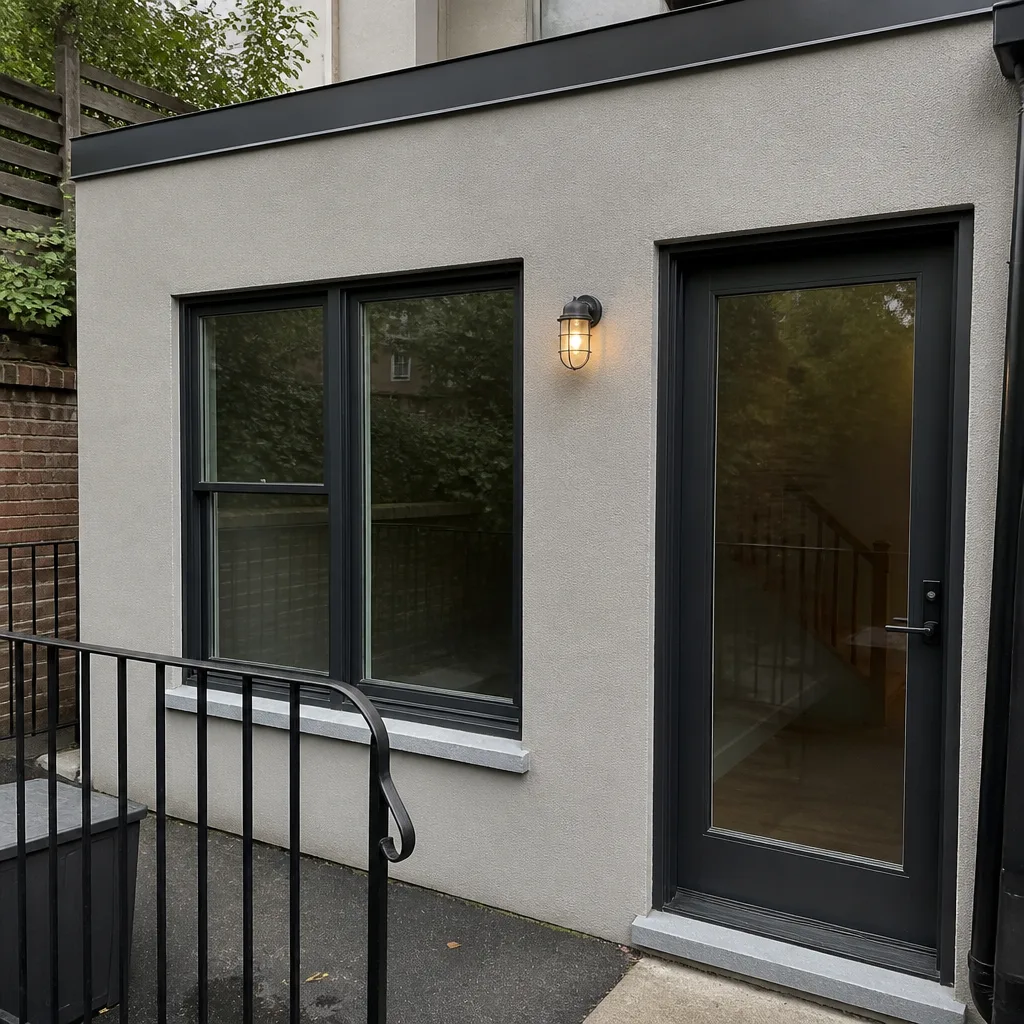 After
After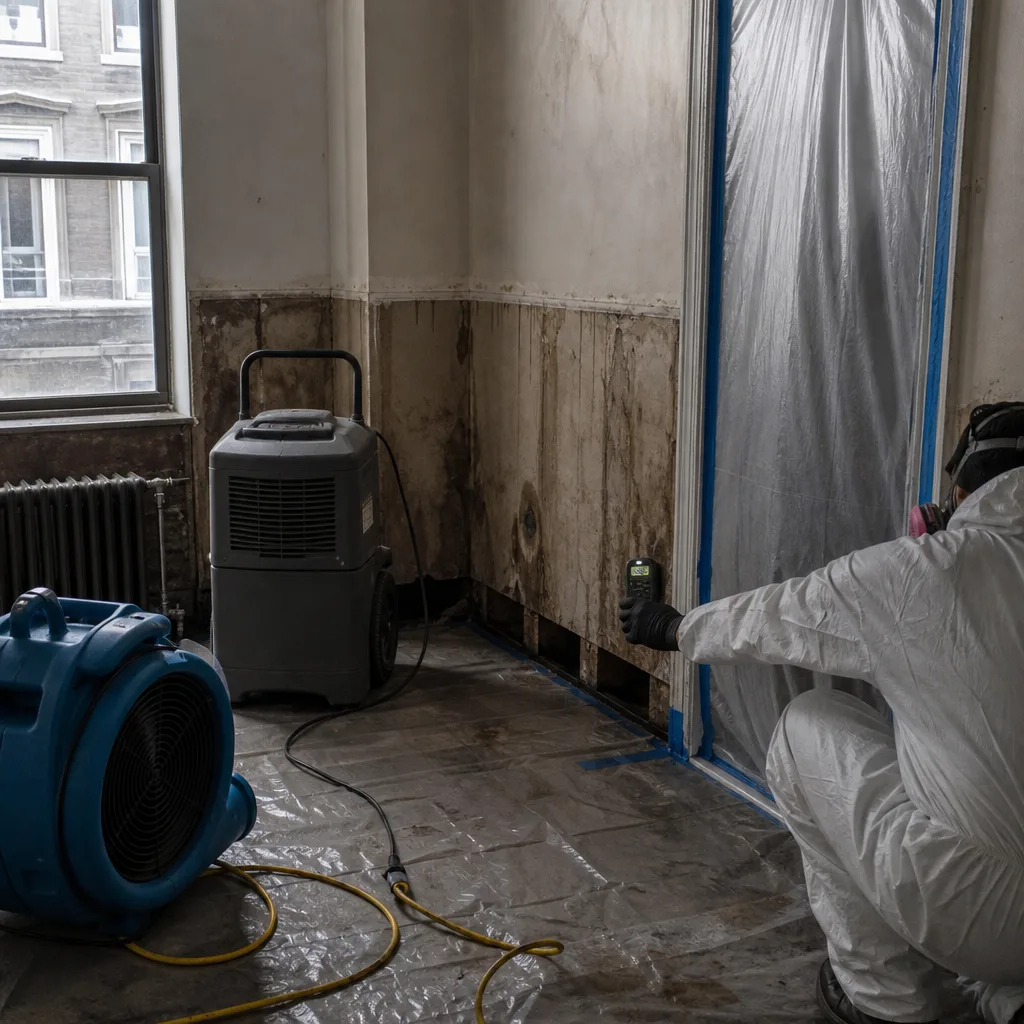 Before
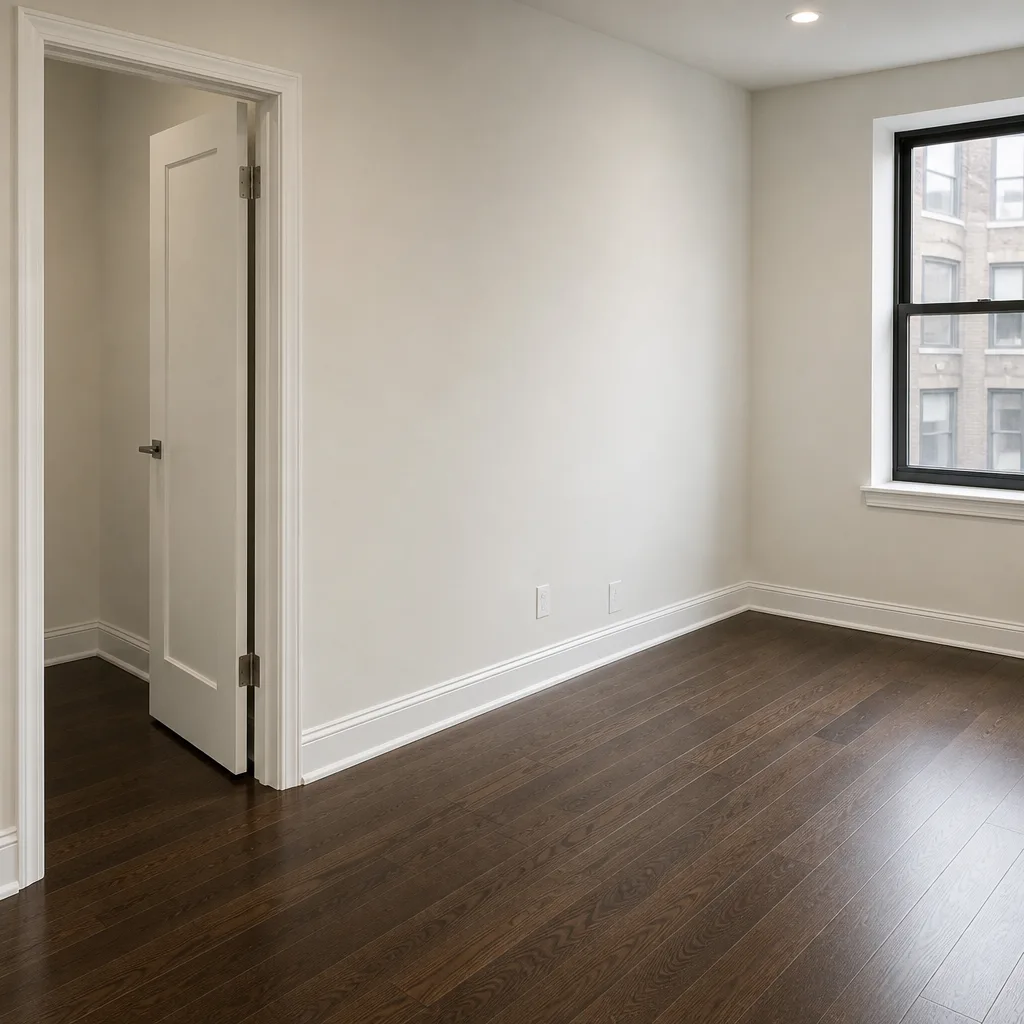 After
After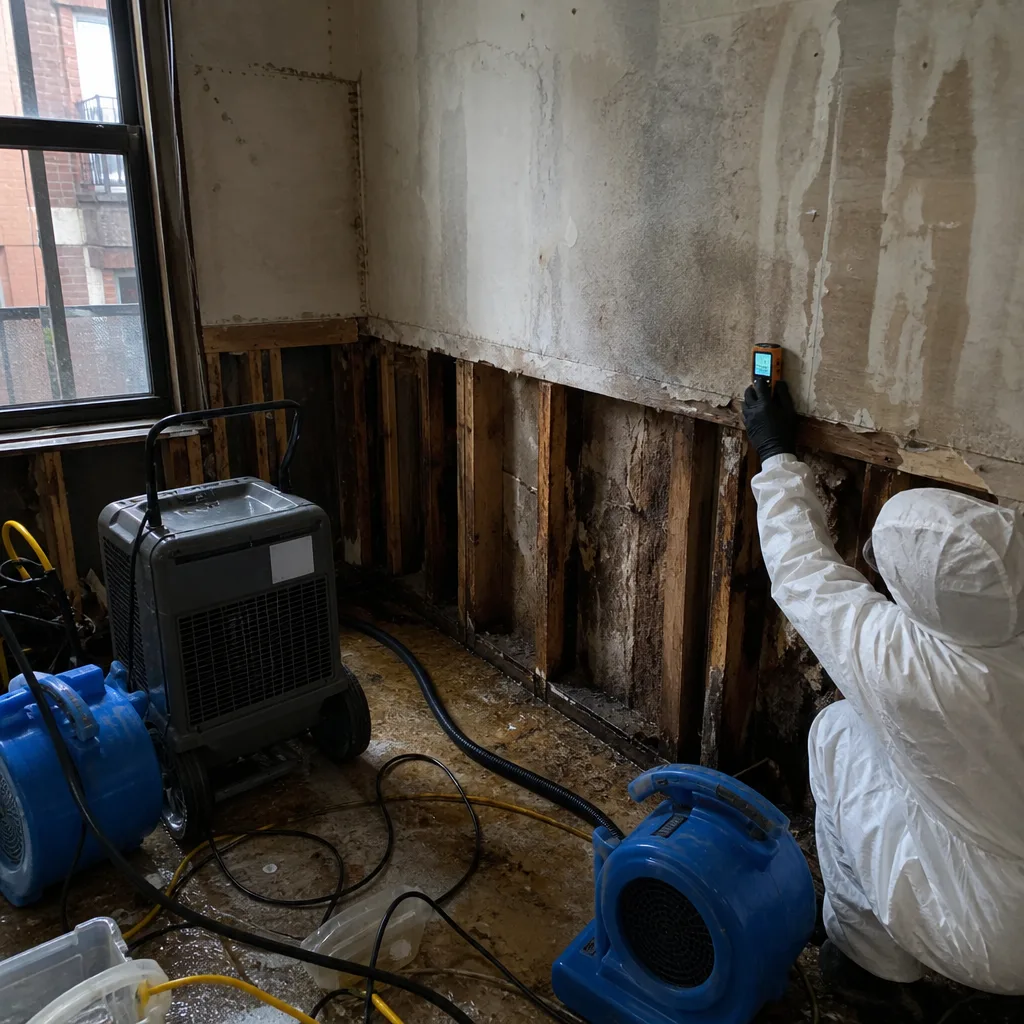 Before
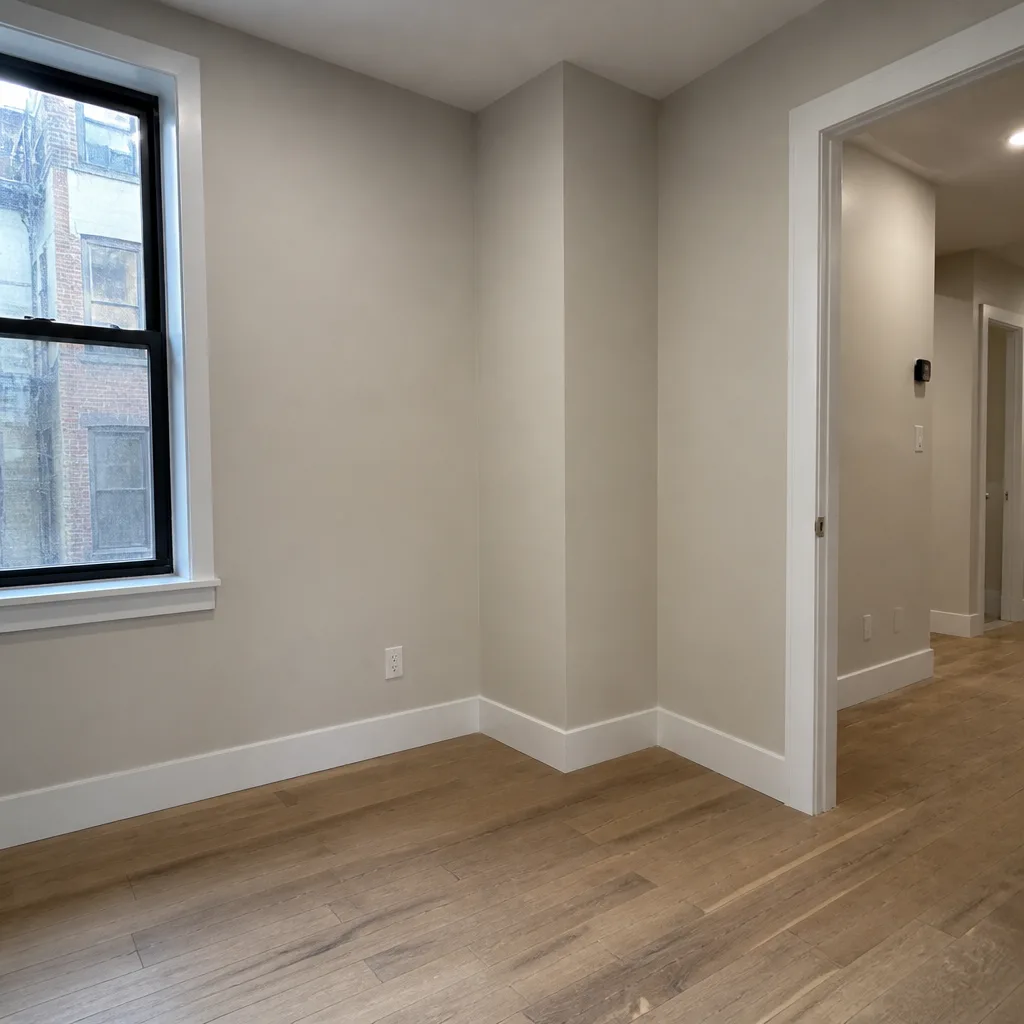 After
After24/7 Emergency Storm & Disaster Restoration in West New York
When wind rips a roof membrane off a pre-war brick walk-up on the Palisades, the clock starts before the first raindrop hits the top-floor ceiling. We answer live, 24 hours a day, and crews roll into West New York within the hour to board up openings, tarp flat roofs, and stop water from cascading down through shared walls into units below. Call (607) 350-1550 and you’ll get Wade himself, not a call center. The first hour decides whether this is a cleanup or a gut job, and in West New York’s multi-unit apartment stock, a single storm breach routinely becomes a five-to-ten-unit problem by morning. We start with a free visual inspection, we document everything for the insurance claim from minute one, and we don’t leave until the structure is stable and the drying plan is running.
Understanding Storm & Disaster Restoration Severity in West New York Properties
Storm damage in West New York doesn’t behave the way it does in a single-family suburb. The housing stock here is almost entirely older brick and masonry mid-rise apartment buildings, many built between the 1920s and 1960s, with flat or low-slope roofs and shared structural cavities. When wind breaches a roof membrane or blows out a window, water doesn’t just pool in one unit. It travels down through shared walls, chases around cast-iron risers, and collects in ceiling cavities between floors. We categorize water by contamination level, Category 1 being clean rainwater, Category 2 being water that has picked up building materials, and Category 3 being water that has encountered sewage or other contaminants. In storm scenarios, even Category 1 water becomes Category 2 within 48 hours as it absorbs through plaster, lath, and old insulation. Storm & Disaster Restoration in this environment requires moisture mapping across multiple units, not just the one where the water first appeared, because the shared masonry construction means moisture migrates horizontally through brick and mortar. We use thermal imaging and hygrometers to find water that hasn’t shown up as a stain yet, because by the time you see it on the ceiling below, it has already been working through the wall cavity for days.
Why West New York Property Owners Choose Wade’s Restoration
- 45-minute response commitment to West New York – Wade heads out himself for the assessment. You’re not waiting on a crew from another county; we stage equipment and vehicles to hit the Palisades area fast.
- Live answer, 24/7, from a real person – No voicemail tree, no answering service in another time zone. Wade answers his own phone at 2 a.m. and tells you what to do in the first 30 minutes while he’s on the way.
- IICRC-certified crews – WRT for water damage, FSRT for fire and smoke, and the structural drying protocols that matter for multi-unit buildings. Wade’s team carries the credentials and uses Dri-Eaz and Phoenix equipment, not rental-store fans.
- Free visual inspection, always – Wade walks the roof, the affected units, and the shared spaces before anyone signs anything. No charge for that. If the damage is minor, he tells you that straight.
- Direct insurance billing and adjuster communication – Wade deals with the adjuster directly, so you’re not the one relaying technical details between a claims desk and a restoration crew.
- One team from water extraction to reconstruction – The same people who tarp the roof and dry the walls are the ones who rebuild them. No handoffs, no finger-pointing between “mitigation” and “repairs.”
Our Storm & Disaster Restoration Process
Inspection & Assessment
Wade walks the building with a thermal imaging camera and a moisture meter. He maps every affected surface in every affected unit, checks the roof condition, and identifies whether structural materials are salvageable or need removal. You get a written scope, not a verbal guess.
Extraction & Stabilization
We board up openings, tarp the roof, and start pulling standing water immediately. In multi-unit West New York buildings, this means coordinating access with property managers and tenants while extraction runs, so no unit gets skipped and no shared wall keeps feeding water into a dry one.
Drying & Dehumidification
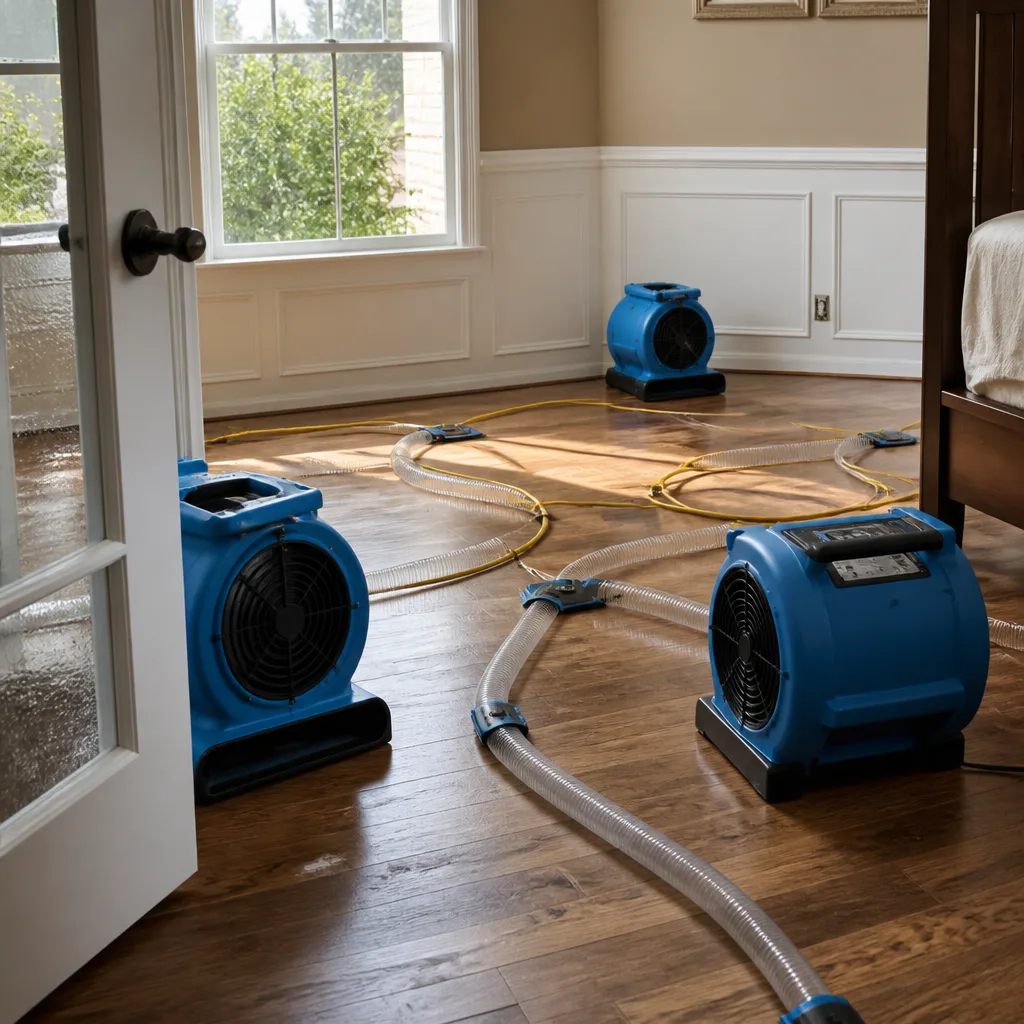
We set up containment in each affected unit, run Dri-Eaz dehumidifiers and XPOWER air movers, and take moisture readings every single day. Wade keeps the full log and hands it to you at the end. Almost nobody in this trade does that, and it matters when the adjuster asks why a wall was opened or kept in place.
Cleaning & Sanitization
Storm water brings whatever was on the roof, in the gutter, and in the wall cavity into your living space. We HEPA-vacuum, apply antimicrobial where appropriate, and air-scrub the affected units so you’re not breathing whatever blew in with the storm - that’s why our Sanitization Services in West New York follow a full protocol.
Wind Damage & Roof Stabilization
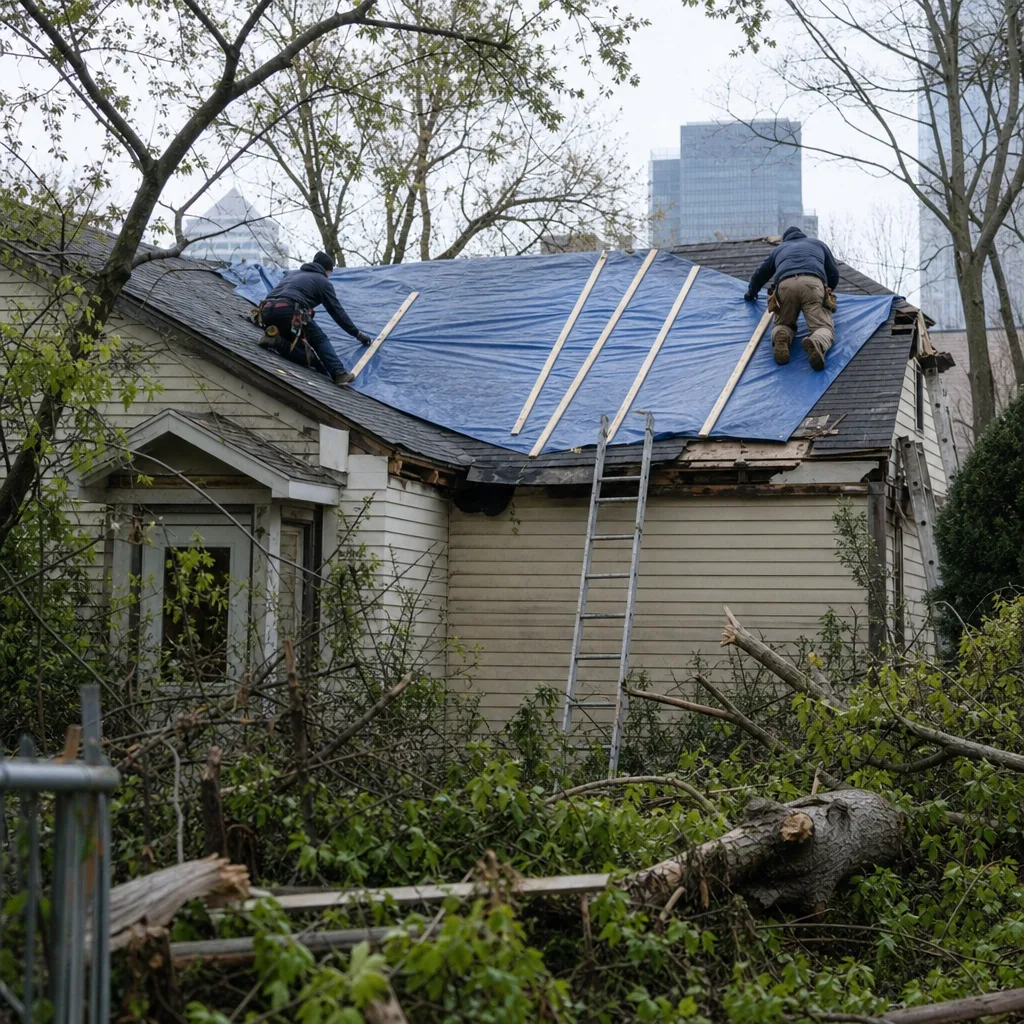
West New York’s flat roofs and pre-war masonry openings take wind damage differently than gabled suburban houses. We assess membrane condition, check parapet flashing, and install temporary roof tarping and board-up that can hold through the next nor’easter, not just survive the weekend.
Repairs & Restoration
Once the structure is dry and stable, we rebuild. That means drywall, plaster, flooring, moldings, and paint, done to match the existing building fabric. The 90-Day Done Right Promise covers every water, fire, and mold restoration job in writing. If it’s not done right, Wade comes back and makes it right.
Need Emergency Storm & Disaster Restoration in West New York Now?
Crews minutes away, answering live 24 hours a day. The sooner we start, the less it costs.
Working With Your Insurance Company
Storm damage in a West New York apartment building is rarely a one-claim situation. A single roof failure routinely triggers units across multiple floors, each potentially covered by a different tenant’s renter policy, the landlord’s dwelling policy, and the building’s master hazard policy. Wade has handled hundreds of these multi-party claims, and he does something most restoration companies won’t: he talks to the adjuster directly, in the adjuster’s language, with documentation the carrier can actually process. We photograph everything from the first hour, log moisture readings daily, and write line-item scopes that use industry-standard line pricing the adjuster recognizes. You’re never stuck in the middle translating between your insurance company and a restoration crew that won’t pick up the phone.
What We Provide Your Insurer
- Thorough documentation of the loss
- Photos of all damage, room by room
- Moisture readings and drying logs
- A detailed, line-item scope of work
- Direct coordination with your carrier
Built for West New York’s Loss Calendar
West New York’s storm season isn’t one season. January and February bring deep freezes that split supply lines and burst steam radiators in buildings where the original pipes date to the Coolidge administration. March and April thaw ushers in the seepage months, when snowmelt and spring rain find every crack in every below-grade foundation and parking garage. Summer thunderstorms hit fast and hard, overwhelming the old combined storm-sewer drains and sending water over curbs and into ground-floor units along Boulevard East. Then comes nor’easter season, from September through March, when sustained northeast winds off the Hudson drive rain horizontally into parapet walls, flat-roof membranes, and window openings that were never designed for that angle of attack. And because West New York sits atop the Palisades bluffs, we avoided the catastrophic tidal flooding that hit Hoboken and the Jersey City waterfront during Sandy, but the elevation means groundwater under pressure finds its way into below-grade spaces year-round, especially along the cliff side. Every one of these is a call we’ve answered in West New York, and every one of them follows a pattern we’ve learned from hundreds of buildings just like yours.
Storm & Disaster Restoration Across West New York’s Neighborhoods
Working storm restoration in West New York means knowing the difference between a six-story brick building on Boulevard East and a walk-up on a side street off Bergenline Avenue. Along Boulevard East, the buildings face the Hudson head-on and take the full brunt of nor’easter winds, which is why we see so many parapet wall failures and roof membrane tears there in a single storm cycle. Over near 60th Street, the older brick walk-ups with shared steam lines run into basement flooding when a boiler-room pipe lets go during a pressure spike, and that water finds its way into first-floor units within the hour. Up by the high 50s and low 60s streets near JFK Boulevard, the mid-century buildings with original windows and doors take wind-driven rain through every failed seal, and we routinely find water migration across shared party walls between units that never saw a drop of direct water entry. Near Port Imperial and the lower numbered streets, the newer construction sits closer to the river and takes storm surge splash and wind differently than the pre-war fabric higher on the cliff. We stage equipment to reach any of these areas in under an hour, day or night.
Specialized Storm & Disaster Restoration Services We Offer in West New York
Storm Damage Cleanup
After a storm blows through West New York, the damage isn’t just water. Trees and debris come down on roofs and fire escapes, windows blow out, and the mess spreads across multiple floors and shared entryways. We clear the debris, catalog everything for the claim, and get the building safe and enclosed so the next storm doesn’t compound the damage.
Flood Damage Restoration
When the combined sewers back up during a summer thunderstorm or a boiler room floods a basement on 56th Street, the water isn’t clean. We extract, categorize the contamination, remove what can’t be dried, and run dehumidification until the moisture meters say the structure is dry, not just the surface. In multi-unit buildings, that means treating every affected unit and the shared cavities between them.
Emergency Board-Up
A blown-out window on a fourth-floor unit facing the Hudson becomes a wind tunnel that depressurizes the whole building. We board up immediately, with materials that hold, not just until the glazier shows up but through the next weather event. This is the service that prevents a one-unit window loss from becoming a five-unit water intrusion.
Roof Tarping
Flat roofs in West New York don’t shed water the way pitched suburban roofs do. A torn membrane ponds water, and that ponding water finds the tear and feeds it. We tarp flat and low-slope roofs in wind conditions that matter on the Palisades, which means securing the tarp to parapet walls and mechanical curbs, not just throwing it over the hole.
Debris Removal
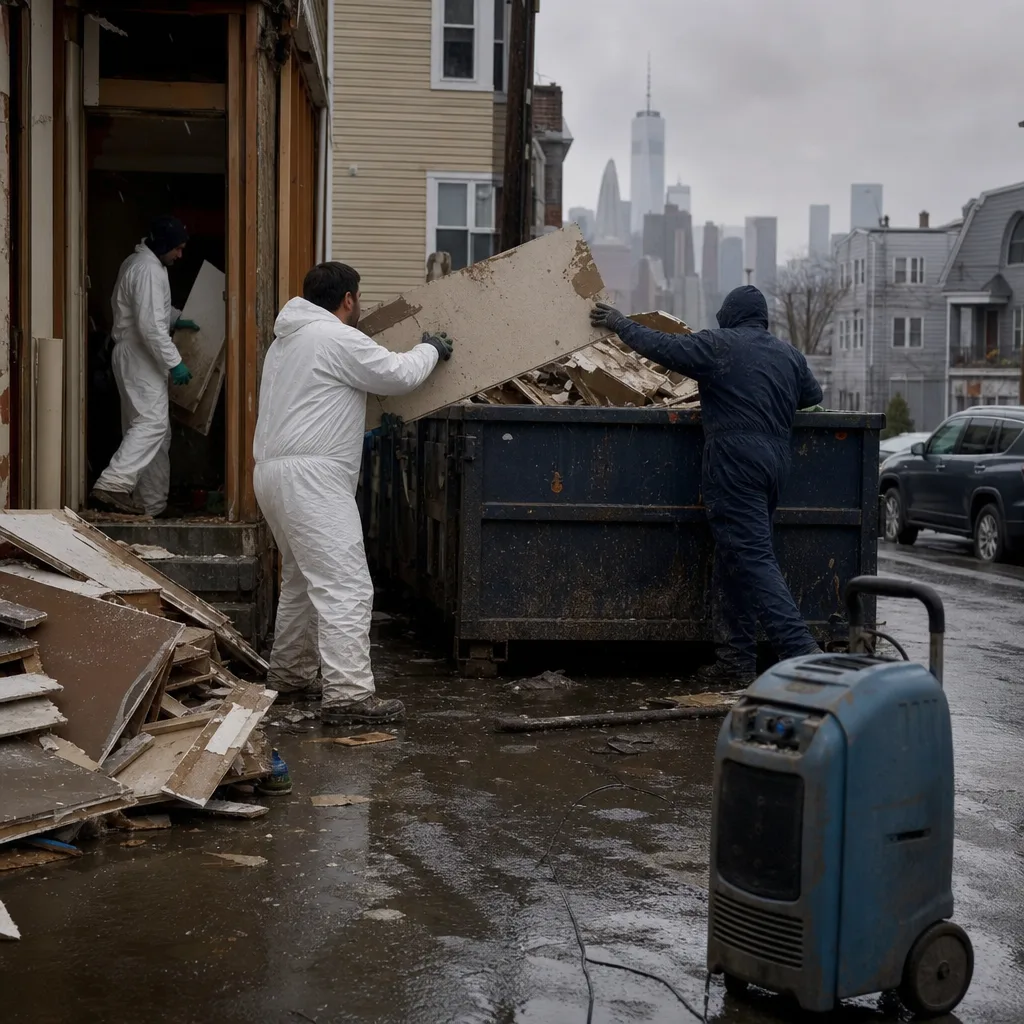
Storm debris here isn’t just tree limbs. It’s broken glass from upper-story windows, torn roof membrane, dislodged bricks from parapet walls, and whatever the wind picked up off the rooftops. We remove it, sort it for the claim, and leave the building safe and passable.
What happens when you call
- 1
A real person answersNo phone trees - you reach a local pro.
- 2
You get an upfront price rangeHonest numbers before anyone is dispatched.
- 3
A background-checked tech heads outLicensed & insured, dispatched right away.
- 4
You approve before work beginsNothing starts until you say go.
Storm & Disaster Restoration Costs in West New York, NJ
A typical storm damage cleanup in West New York runs $1,200 to $4,500 for a single-unit water intrusion with drying, and $6,000 to $25,000 or more for a multi-unit building where water migrated through shared walls and ceilings. Emergency board-up typically runs $400 to $1,200 per opening, and roof tarping on a flat roof runs $800 to $2,500 depending on access and square footage. Wind damage repair has the widest range: replacing a blown-in window in a pre-war masonry opening starts around $800, while full roof membrane replacement on a six-story walk-up can exceed $40,000. In West New York specifically, the multi-unit access coordination and tenant-law notice requirements add 10 to 20 percent to the typical timeline, which means longer equipment rental and more labor hours, which moves the price. The straightforward way to know your number is the free visual inspection. Wade walks the building, gives you a written scope, and you decide before any work starts.
We Also Serve Cities Near West New York
Our storm crews cover the entire Hudson River palisade corridor. If you’re in Jersey City, Hoboken, Weehawken, or Union City, the same team, same equipment, and same 45-minute response commitment applies.
West New York Storm & Disaster Restoration Questions, Answered
Why does storm damage in West New York apartment buildings so often affect multiple units even when only one roof section failed?
West New York’s pre-war and mid-century apartment buildings share structural cavities, walls, and floor assemblies between units, so water that enters through a single roof breach travels horizontally through brick, plaster, and old lath before it shows up as a stain three floors below. The dense, stacked construction means a one-unit roof failure routinely becomes a five-to-ten-unit restoration job. We handle it by mapping moisture across every affected unit, not just the one under the visible damage, and by drying shared walls as a single system rather than treating each apartment in isolation.
How do New Jersey tenant-protection laws affect the speed of emergency storm restoration in West New York?
New Jersey law requires formal notice before a landlord or contractor can enter an occupied rental unit, and in practice that means restoration crews often cannot legally access storm-damaged units for 24 to 72 hours while paperwork is served. In that window, trapped moisture in shared wall cavities can develop mold, which is why we start with the building’s common areas, roof, and any vacant units immediately, while coordinating with property managers to get access to occupied units as fast as the law allows. The key is that we dry from the outside in and the inside out simultaneously, so no cavity sits wet waiting for a signature.
What wind-load rating should replacement doors have for older West New York buildings near the Palisades cliffs?
For replacement doors in West New York buildings near the Palisades crest, where nor’easter winds hit the blufftop directly, we specify doors rated for at least 110 mph wind loads and, where the building faces the Hudson open exposure, 130 mph or higher. The pre-war masonry openings were never designed for modern wind standards, so the door and the anchoring into the brick both matter. We coordinate with the building department on current code requirements for wind ratings, because a door that looks fine but isn’t anchored for blufftop exposure will blow in again during the next storm.
After a windstorm, how do you tell if standing water on a flat roof in West New York is a quick fix or a full membrane replacement?
Standing water on a flat roof after a windstorm is a warning sign, not necessarily a full replacement. If the water is pooled in a low spot and the membrane is intact, it’s usually a drainage or slope issue, and a targeted repair plus cleaning the drains solves it. If the membrane has torn, pulled away from the parapet flashing, or the ponding has been chronic enough to degrade the surface, that’s when you’re looking at full or partial replacement. We inspect with thermal imaging to see whether water has already entered the insulation layer, which is the difference between a $1,000 patch and a $30,000 re-roof.
Why is shared steam boiler damage considered a storm-related restoration issue in West New York?
Many West New York apartment buildings run shared steam boiler systems where a single pipe carries steam to every radiator in the building. During the pressure swings that come with deep freezes and nor’easter-driven wind chill, old pipes crack, condensate lines break, and the boiler room floods, sending water through walls shared by multiple ground-floor and basement units. We treat it as storm restoration because the trigger is weather, the damage is water, and the scope is building-wide. The restoration process is the same as any storm water intrusion: extraction, containment, drying, and documentation, but it requires coordination with the building’s mechanical systems contractor to get the heat back on safely.
How fast can you actually get to West New York for an emergency storm board-up?
We commit to 45 minutes for emergency storm response in West New York. Wade stages equipment and vehicles to cover the Palisades corridor, and he’s on the road himself for the assessment. In practice, most calls get a live person on the phone in under a minute and a crew on site within the hour, day or night. Call (607) 350-1550 for an immediate dispatch.
Will my insurance cover storm damage restoration in a West New York apartment building?
Most storm damage in West New York is covered by the building owner’s property policy, while tenant belongings fall under individual renters’ policies. The complication is that a single storm event often triggers multiple claims across multiple carriers, and each adjuster wants its own documentation. Wade deals with adjusters directly, provides moisture logs and line-item scopes in the format each carrier accepts, and keeps the homeowner or landlord out of the middle. If the damage is from wind-driven rain, it’s generally covered. If it’s from chronic seepage that pre-dates the storm, that’s where it gets contested, and our documentation from the first hour is what separates the two.
Can we stay in our West New York apartment during storm damage restoration?
In most single-unit storm water intrusions where the drying plan is running and the affected area is contained, you can stay. In multi-unit buildings where water has migrated through shared walls and multiple units are under containment with air movers and dehumidifiers running, it’s often not practical to live in the space during the active drying phase, which typically means three to seven days. We give you a straight answer at the inspection, not a guess, and we work with property managers on tenant notice and temporary relocation coordination when it’s needed.
What credentials do your storm restoration crews hold?
Wade’s Restoration is IICRC-certified in water damage restoration (WRT), fire and smoke restoration (FSRT), and applied microbial remediation (AMRT). We’re RIA-affiliated and IFA-recognized, and every crew member who enters a West New York building is background-checked and uniformed. The equipment is Dri-Eaz, Phoenix, and XPOWER, not rental-store fans, and Wade’s 90-Day Done Right Promise is in writing on every water, fire, and mold restoration job.
What should I do in the first 30 minutes after storm damage hits my West New York building?
Call (607) 350-1550 first, and Wade will talk you through the immediate steps while he’s on the road. Then, if it’s safe, shut off water to the building if a pipe has burst, move valuables out of the path of dripping water, and document what you can see with your phone camera. Don’t enter any unit where the ceiling is sagging or water is pooling near electrical panels. In a multi-unit building, notify the property manager and any affected tenants immediately, because the access clock under New Jersey tenant law starts running now. The faster we get on site, the shorter the restoration timeline and the less the claim costs.
Serving West New York, NJ - Our Local Coverage Area
We’re based in the West New York area and know this community well. Use the map below to see our service coverage - if you’re nearby, we can almost certainly help.
Storm & Disaster Restoration in West New York, NJ: The Local Standard
West New York is one of the most densely populated municipalities in the United States, packed almost entirely with pre-WWII and mid-century multi-family apartment buildings stacked on the Palisades cliffs. That changes what storm restoration means here. A single wind-driven roof or window failure in a suburban house is a one-unit job. In West New York, it is a multi-tenant, multi-insurance-claim operation that requires tenant-law access protocols, simultaneous structural drying across shared walls and ceilings, and coordination with landlords, property managers, and multiple adjusters at once. The national franchise crews that dominate this trade are not built for that. They send a truck, dry a room, and leave. Wade’s Restoration does it differently, because Storm & Disaster Restoration in West New York is not a one-room problem, and Wade has spent years working inside these exact buildings. He knows the cast-iron risers, the shared steam systems, the flat roofs that pond water, and the masonry walls that hide moisture until it’s too late. If you’re a landlord or property manager dealing with storm damage in West New York, or a homeowner in one of the town’s few single-family homes, call (607) 350-1550. Wade will answer, he’ll be there himself, and he’ll tell you the truth about what you’re looking at.
Written by Wade Ferris, Owner at Wade’s Restoration, serving West New York and the surrounding area since 2007.