
Quick Summary
Due to high groundwater tables and storm surge risks in the Meadowlands basin, rapid water damage restoration in Secaucus is essential to protect structural framing, concrete slabs, and finished flooring from long-term moisture decay. Wade's Restoration provides authoritative 24/7 emergency flood relief by combining commercial water extraction, advanced psychrometric monitoring, and non-invasive vacuum drying to salvage subfloors with zero subcontractor handoffs. After reviewing local restoration costs and insurance documentation standards, property owners can call immediately for 24/7 emergency water extraction or schedule a free visual inspection and scope of work.
Water Damage Restoration in Secaucus: Flood Relief and Structural Drying
Standing water, saturated subfloors, and sudden pipe breaks require an immediate, disciplined response. In a low-lying region like Secaucus, water damage restoration is not just about vacuuming the carpet. It requires managing high groundwater levels, protecting structural framing, and drying out building materials to prevent secondary damage.
Properties in the Meadowlands basin sit in an environment shaped by tidal marshes and dense soil. Climate Central data shows that Secaucus faces a 19 percent multi-year risk of at least one flood event exceeding six feet through 2030. When storm surges or high tides saturate the soil, hydrostatic pressure forces moisture upward through basement concrete and slab foundations. Prompt action helps salvage building materials like hardwood flooring and prevents long-term structural deterioration.[2] See also Water Damage Restoration in Lower Manhattan | Call Now-10% Off | Same-Day Service | Free Estimate.
Professional restoration focuses on non-destructive extraction and targeted drying first, avoiding unnecessary demolition while compiling the moisture records required for insurance claims.
Flood Response in Secaucus
Emergency restoration in Secaucus combines water extraction, moisture mapping, dehumidification, and antimicrobial treatments. Because local ground conditions keep ambient humidity high, standard ventilation is often insufficient. Technicians at Wade’s Restoration use commercial dehumidification equipment, air movers, and specialized drying systems to dry structural materials safely.
When high tides or heavy rainfall overload local drainage, water can enter ground-level spaces and introduce outside contaminants. Immediate structural mitigation helps address moisture intrusion, protects framing materials, and stabilizes indoor conditions.
What Does Water Damage Restoration Cost in Secaucus?
Need water damage restoration in Secaucus?
We’re available now - call for a fast, free estimate.
The total cost of water restoration in Hudson County depends on the category of water (clean, grey, or black), the volume of standing water, the square footage involved, and how deeply moisture has penetrated subfloors and wall cavities. Clean water supply leaks dried quickly generally cost less than floodwaters carrying soil and outdoor runoff.
Estimated Service Ranges in Hudson County
Data from the Hudson County Hazard Mitigation Plan shows that low-elevation foundations throughout the county experience recurring water intrusion during heavy storms. In addition, research from the Rutgers Water Resources Program highlights that high percentages of impervious pavement in Secaucus generate immense runoff volumes during sudden downpours, putting strain on sump pumps and drainage systems.[5]
| Water Category | Estimated Cost Range (Example) | Common Source | Material Salvage Potential | Sanitization Required |
|---|---|---|---|---|
| Category 1 (Clean) | $1,500 – $3,800 (Estimate) | Supply lines, water heaters, sink overflows | High (hardwoods and drywall often saved) | Basic surface sanitization |
| Category 2 (Grey) | $3,000 – $6,500 (Estimate) | Appliance discharge, sump pump failure | Moderate (pad often replaced, framing saved) | Targeted antimicrobial wash |
| Category 3 (Black / Flood) | $5,000 – $12,000+ (Estimate) | Surface floodwater, heavy storm runoff | Low for porous goods (studs dried, drywall cut) | Full decontamination |
Key Factors That Influence Your Restoration Estimate
Secaucus properties face unique geographical conditions. Climate Central notes that at nine feet above the local high water mark, more than half of the town’s population (over 8,200 residents) sits within vulnerable flood zones. Several critical factors determine the work required:[1]
- Water Contamination Level: A broken supply line involves clean water, allowing technicians to dry materials in place when addressed promptly. Stormwater entering from the ground level contains organic matter and contaminants, requiring controlled removal of affected porous materials and thorough sanitization of structural surfaces.
- Depth of Structural Saturation: High regional water tables create continuous upward pressure beneath concrete foundation slabs. If water remains unaddressed, moisture migrates into subflooring and framing, requiring specialized structural drying systems rather than simple air movers.
- Insurance Claim Scope: Insurance adjusters generally require drying logs, atmospheric readings, and photo records during claim reviews. Working with a restoration team like Wade’s Restoration that maintains structured moisture documentation helps ensure the claim covers every step of mitigation and repair.
How Meadowlands Hydrostatic Pressure Affects Basements and Subfloors
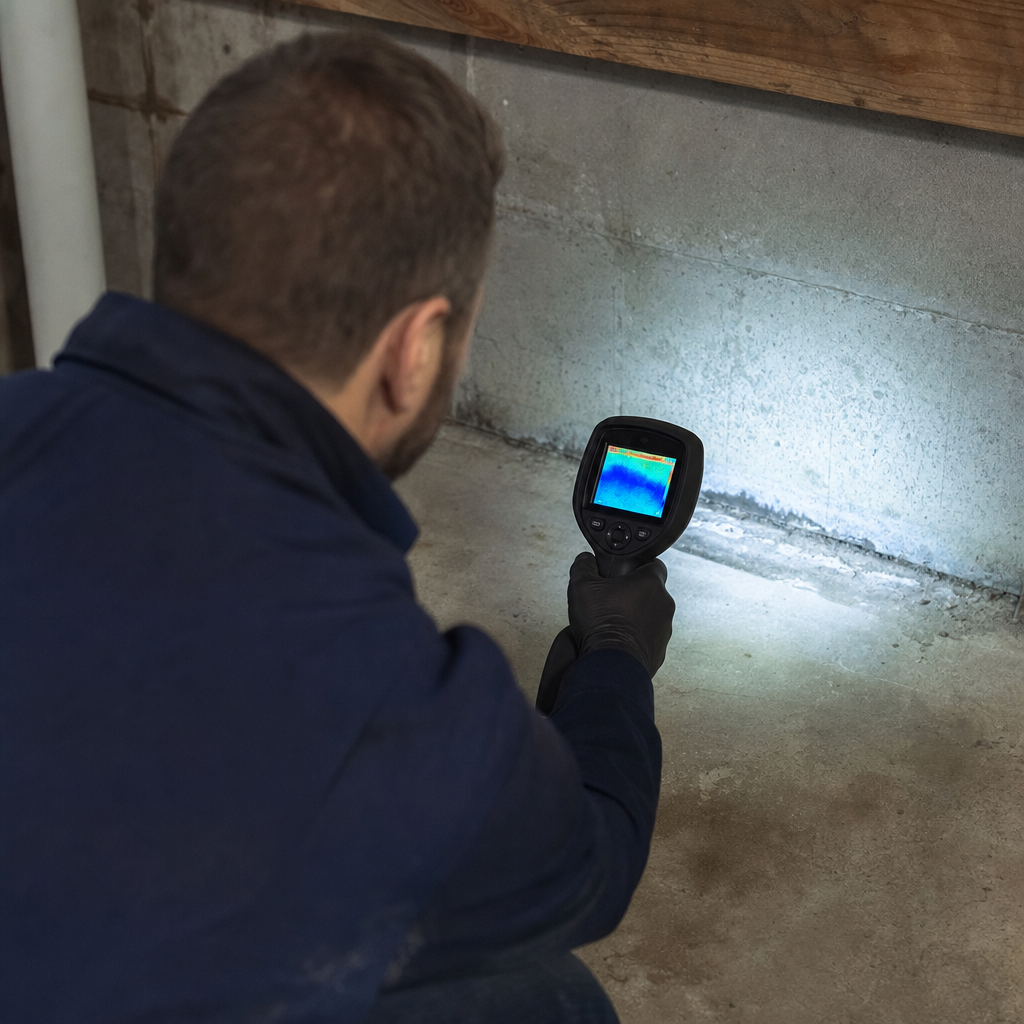
In low-lying Meadowlands neighborhoods, groundwater can push against exterior basement walls and the underside of concrete slabs. When heavy rains coincide with high water levels, that pressure can force moisture through foundation joints, cracks, and floor seams.
Common Warning Signs of Hidden Moisture Intrusion
The Town of Secaucus Stormwater Management Plan notes that flood hazard areas cover more than 30 percent of the municipality. When the surrounding soil becomes saturated, moisture works its way into finished floors. Look for these warning signs:[4]
- Cupping Hardwood: Solid wood boards curl up at the edges as the raw underside absorbs moisture rising from the subfloor.
- Spongy or Loose Flooring: Trapped moisture breaks down flooring adhesives under luxury vinyl tile and engineered planks, leaving soft spots and hollow sounds.
- Damp Baseboards and Peeling Paint: Drywall acts like a wick, pulling moisture upward from the slab, which softens gypsum board and causes paint to bubble near floor level.
Saving Subfloors and Hardwood vs. Premature Demolition
Restorative drying focuses on salvaging materials whenever feasible. By placing sealed extraction panels across hardwood and running commercial dehumidification equipment, Wade’s Restoration technicians can pull moisture directly out of wood flooring and subfloors without immediate tear-out.
| Feature | Restorative Vacuum Drying | Demolition and Rebuild |
|---|---|---|
| Structural Impact | Non-invasive suction; aims to save salvageable hardwood and subfloor | Full tear-out of finished flooring, trim, and underlayment |
| Drying Equipment | Specialized extraction mats and commercial dehumidifiers | Standard air movers running on bare concrete slabs |
| Turnaround & Disruption | Estimated timeline varies by material and saturation level | Extended period for demolition, material orders, and rebuild |
Steps for Safe Structural Drying and Damage Mitigation
Need water damage restoration in Secaucus?
We’re available now - call for a fast, free estimate.
Addressing water damage systematically involves tracking moisture across affected building materials.
-
Phase 1: Extraction and Moisture Mapping
Crews extract standing water using commercial extraction equipment. Technicians then use moisture meters and thermal imaging to map moisture migration behind baseboards, under floor coverings, and inside wall cavities. Rutgers Water Resources Program data shows that Secaucus must regularly handle intense rainfall events, including 10-year storms dropping 5.02 inches and 100-year storms dropping 8.31 inches. Rapid extraction keeps these high runoff volumes from lingering against foundation walls. -
Phase 2: Dehumidification and Airflow
Air movers are positioned alongside commercial dehumidifiers. This process lowers ambient relative humidity and pulls bound moisture out of framing studs, concrete slabs, and joists. -
Phase 3: Psychrometric Monitoring and Clearance
Technicians from Wade’s Restoration take daily humidity, temperature, and moisture content readings across affected materials. Drying equipment runs until moisture levels reach established dry standards, helping ensure building materials are stable before repairs begin.
Frequently Asked Questions
How quickly can a water damage restoration team arrive in Secaucus?
Response times vary based on location, weather conditions, and service capacity, though emergency restoration providers typically prioritize water intrusion calls. The Hudson County Hazard Mitigation Plan records 80 major flood events in recent decades, underlining the importance of prompt local mitigation before standing water penetrates building foundations.[3]
How much does emergency water damage restoration cost in Secaucus, NJ?
Estimated costs depend heavily on the scale and category of damage. For example, clean water cleanups (such as an overflowing sink or supply line leak) generally range from $1,500 to $3,800. Projects involving storm runoff, finished basements, or deeper structural saturation frequently range from $5,000 to over $12,000 depending on drying duration and reconstruction requirements.
Does homeowners insurance cover water damage restoration in New Jersey?
Standard homeowners insurance policies generally cover sudden and accidental internal water damage, such as a burst supply pipe. Rising water from external flood events typically requires dedicated flood insurance through the National Flood Insurance Program (NFIP) or a private insurer. Documentation and daily moisture logs support the claims review process.
How can mold growth be prevented after water damage in Secaucus?
Mold can begin developing quickly in damp environments when organic building materials remain saturated. Effective prevention requires rapid water extraction, continuous commercial dehumidification to lower indoor humidity, and the application of appropriate antimicrobial treatments to affected framing and concrete.
Why choose vacuum drying over tearing out floors?
Restorative drying systems can reduce reconstruction costs and minimize property disruption. High-pressure extraction panels draw moisture upward through floor materials, allowing Wade’s Restoration specialists to dry both finished flooring and the subfloor beneath when conditions permit.
Need water damage restoration in Secaucus?
We’re available now - call for a fast, free estimate.
Sources
- [PDF] Testimony for Senate Energy and Natural Resources Committee … – energy.senate.gov (2050)
- RAYMOND Strauss et al. (2014). New Jersey and the Surging Sea: A Vulnerability Assessment with Projections for Sea Level Rise and Coastal Flood Risk. Climate Central Research Report. pp 1-43. – nrc.gov (2014)
- Historical NFIP Claims Information and Trends – floodsmart.gov (2005)
- [PDF] Stormwater Management Plan – Secaucus Environmental Department – green.secaucusnj.gov
- [PDF] Impervious Cover Assessment for Secaucus, Hudson County, New … – files.water.rutgers.edu
Related reading: Water Damage Restoration in North Bergen | Call Now-10% Off | Same-Day Service | Free Estimate
Related reading: Water Damage Restoration in Hoboken – 10% Off & Free Estimate – Same-Day Service
Related reading: Water Damage Restoration in Astoria – 10% Off & Free Estimate – Same-Day Service
Water Damage Restoration in Nearby Cities
We also serve the communities around Secaucus:
- Water Damage Restoration in Financial District
- Water Damage Restoration in Glendale
- Water Damage Restoration in Long Island City
- Water Damage Restoration in Midtown Manhattan
- Water Damage Restoration in Midtown West
Frequently Asked Questions
Does Wade's Restoration handle structural repairs and reconstruction after water extraction in Secaucus?
Yes, Wade's Restoration manages the complete recovery process from emergency water extraction and structural drying through full rebuilds with zero subcontractor handoffs. This streamlined approach eliminates project delays and ensures consistent quality from initial mitigation to finished carpentry.
How does Meadowlands groundwater pressure affect the basement drying timeline in Secaucus?
High regional water tables continuously exert hydrostatic pressure against concrete slabs, requiring targeted commercial dehumidification and non-invasive drying mats to draw deep moisture out. Wade's Restoration utilizes daily psychrometric monitoring to track moisture levels until structural framing and concrete meet strict dry standards.
What documentation is provided to support insurance claims for Secaucus flood or leak damage?
Insurers require detailed moisture mapping, thermal imaging records, and daily atmospheric drying logs to validate repair scopes. Wade's Restoration maintains meticulous drying documentation throughout the mitigation process to help property owners secure comprehensive insurance coverage without claim disputes.
About the author
 |
Christopher Vance Christopher Vance brings over 12 years of hands-on experience in emergency property restoration to his writing. Holding an IICRC certification in Water Damage Restoration and a degree in Environmental Science from Rutgers University, he specializes in creating actionable, expert guides for property owners facing critical damage. His work focuses on providing clear, practical advice to help Lower Manhattan residents navigate the complexities of water and flood recovery. |
Water damage, flood, or mold emergency?
We’re available now - call for a fast, free estimate.
Call Now - Free Estimate