
Quick Summary
With 40 percent of the land area located in high-risk flood zones, property owners require prompt water damage restoration in Jersey City to mitigate severe structural deterioration following leaks and flooding. Wade's Restoration provides specialized emergency water extraction, targeted cavity drying, and sanitization protocols tailored to water contamination levels and specific building material porosity. Readers will understand key safety steps, restoration cost drivers, insurance considerations, and how to contact specialists 24/7 for emergency response or a written scope of work.
Water Damage Restoration in Jersey City
When standing water enters a residential brownstone, high-rise condominium, or commercial space, prompt action helps address property damage. According to specialists like Wade’s Restoration, water damage restoration focuses on water extraction, structural drying, and sanitization to help return properties to safe conditions.[4]
Jersey City faces coastal, surface-water or pluvial, and combined-sewer-overflow flooding. A 2024 City of Jersey City resilience summary reported that 40% of the city’s land area lies in the FEMA Special Flood Hazard Area (though these municipal flood figures reflect geographic flood exposure rather than actual insurance claims or private restoration totals). When water enters a structure, addressing the intrusion promptly can help mitigate further damage.[1]
What Does Water Damage Restoration Cost in Jersey City?
Pricing for water damage restoration varies depending on the water source, affected area, materials, contamination level, demolition needs, and drying requirements. Property owners should obtain written estimates and confirm coverage details directly with their insurer.[2]
Key Factors That Drive Restoration Pricing
- Water Source and Contamination: Clean water from supply lines involves different handling than greywater or blackwater, which require additional containment and sanitization measures.
- Material Porosity: Porous materials like drywall, plaster, insulation, and subflooring absorb water deeply and may require extended drying times or removal.
- Demolition and Drying Requirements: The extent of required demolition, structural drying, and specialized equipment deployment directly influences total costs.
Drying Techniques for Building Materials and Structures
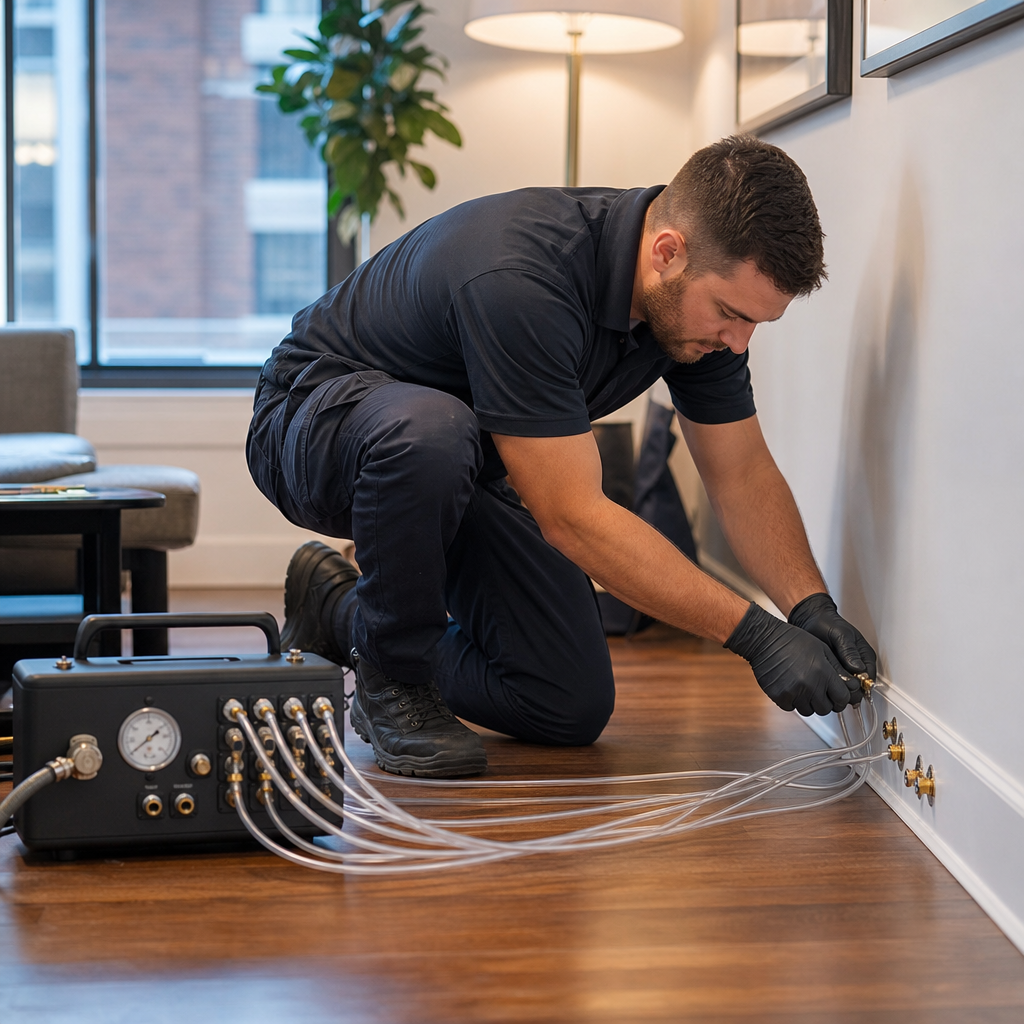
In older urban properties, non-invasive drying techniques may help dry structural elements without immediate demolition, depending on the severity of the water damage and the condition of the materials.
Cavity and Dehumidification Drying
When moisture penetrates wall assemblies, it can remain trapped inside wall cavities. Restoration methods, such as those utilized by Wade’s Restoration, may include targeted cavity drying techniques to introduce dry air into voids.
Dehumidification equipment is also used to reduce moisture levels in the air and surrounding materials, aiding the drying process for structural components and subfloors.
Hardwood Flooring and Plaster
Moisture absorbed by flooring and plaster can cause warping or deterioration. Specialized drying panels and moisture extraction techniques may help dry these assemblies, though the feasibility of salvaging materials depends on the extent of damage and duration of water exposure.
Safety and Immediate Response Steps
When dealing with water intrusion, property safety is the primary concern. Property owners should observe the following safety guidance:
- Avoid areas with suspected structural damage, gas leaks, downed electrical lines, and contaminated floodwater.
- Shut off electricity and the main water supply only if it is safe to do so.
- Photograph and document property damage for insurance records.
- Ventilate the area when conditions are safe.
Frequently Asked Questions About Jersey City Water Damage Cleanup
Does homeowners or commercial insurance cover water damage in New Jersey?
Coverage depends on the cause of the water damage and individual policy terms. Standard homeowners policies generally cover some types of non-flood water damage, while flood damage is generally excluded and requires separate flood insurance.[5]
How fast can an emergency water extraction team arrive in Jersey City?
No authoritative standard arrival time has been established for emergency water extraction services in Jersey City. Property owners should contact local providers like Wade’s Restoration directly to obtain a confirmed estimated arrival time.[3]
Need water damage restoration in Jersey City?
We’re available now - call for a fast, free estimate.
Sources
- [PDF] Floodplain 5-Step Process in accordance with Executive Order 11988 – nj.gov (2006)
- Resiliency Planning – City of Jersey City – jerseycitynj.gov (2020)
- Microsoft Word – Jersey City Strategic Recovery Planning Report.docx – data.jerseycitynj.gov (2012)
- [PDF] J E R S E Y C I T Y – Rutgers University – files.water.rutgers.edu (2013)
- Current and Future Flood – njclimateresourcecenter.rutgers.edu
Water Damage Restoration in Nearby Cities
We also serve the communities around Jersey City:
- Water Damage Restoration in Lower Manhattan
- Water Damage Restoration in Astoria
- Water Damage Restoration in Financial District
- Water Damage Restoration in Glendale
- Water Damage Restoration in Hoboken
- Water Damage Restoration in Long Island City
- Water Damage Restoration in Midtown Manhattan
- Water Damage Restoration in Midtown West
Frequently Asked Questions
What happens during an initial water damage inspection in Jersey City?
A specialist performs moisture mapping and thermal imaging to locate trapped water within subflooring and wall cavities without causing unnecessary structural destruction. Wade's Restoration provides a comprehensive visual assessment and a written scope of work outlining the exact drying, extraction, and sanitization protocols required.
How is sewage backup or contaminated floodwater safely cleaned up?
Category 3 blackwater and combined-sewer overflows require immediate containment, biohazard extraction, removal of compromised porous items, and hospital-grade sanitization. Wade's Restoration utilizes industrial air scrubbers and EPA-registered antimicrobials to eliminate harmful bacteria and prevent secondary mold growth.
Can historic hardwood flooring and plaster walls be salvaged after a flood?
Historic materials can often be preserved if structural drying begins before wood warping and delamination occur. Wade's Restoration deploys targeted cavity drying and specialized floor mat systems to draw deep moisture out of plaster and subfloors without requiring invasive demolition.
About the author
 |
Christopher Vance Christopher Vance brings over 12 years of hands-on experience in emergency property restoration to his writing. Holding an IICRC certification in Water Damage Restoration and a degree in Environmental Science from Rutgers University, he specializes in creating actionable, expert guides for property owners facing critical damage. His work focuses on providing clear, practical advice to help Lower Manhattan residents navigate the complexities of water and flood recovery. |
Water damage, flood, or mold emergency?
We’re available now - call for a fast, free estimate.
Call Now - Free Estimate