
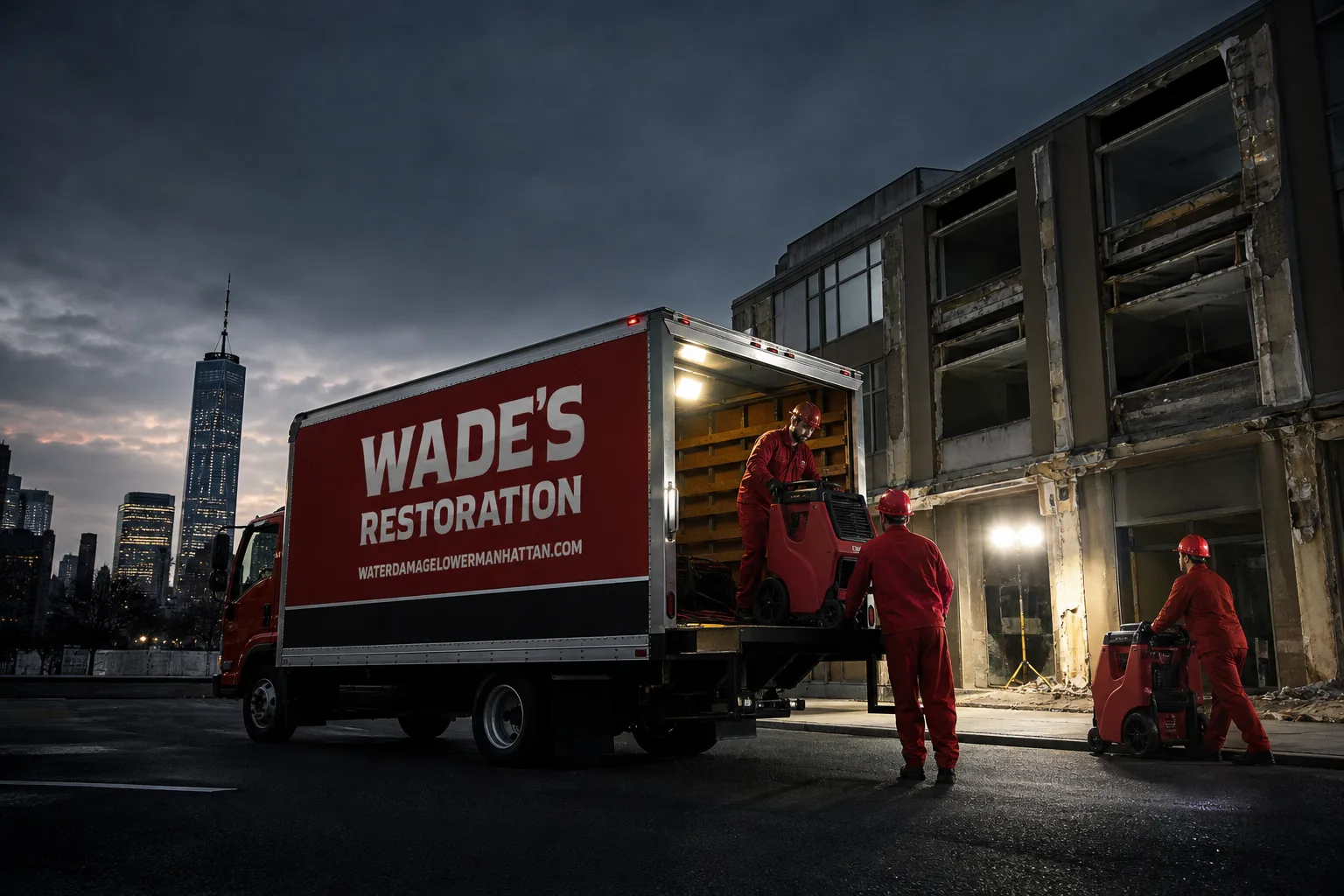
Free visual inspection and a written scope of work before any mitigation begins - photos, moisture readings, and drying logs go in your claim file
The scope we write is the scope we bill. Anything new gets shown to you, in writing, before we touch it.
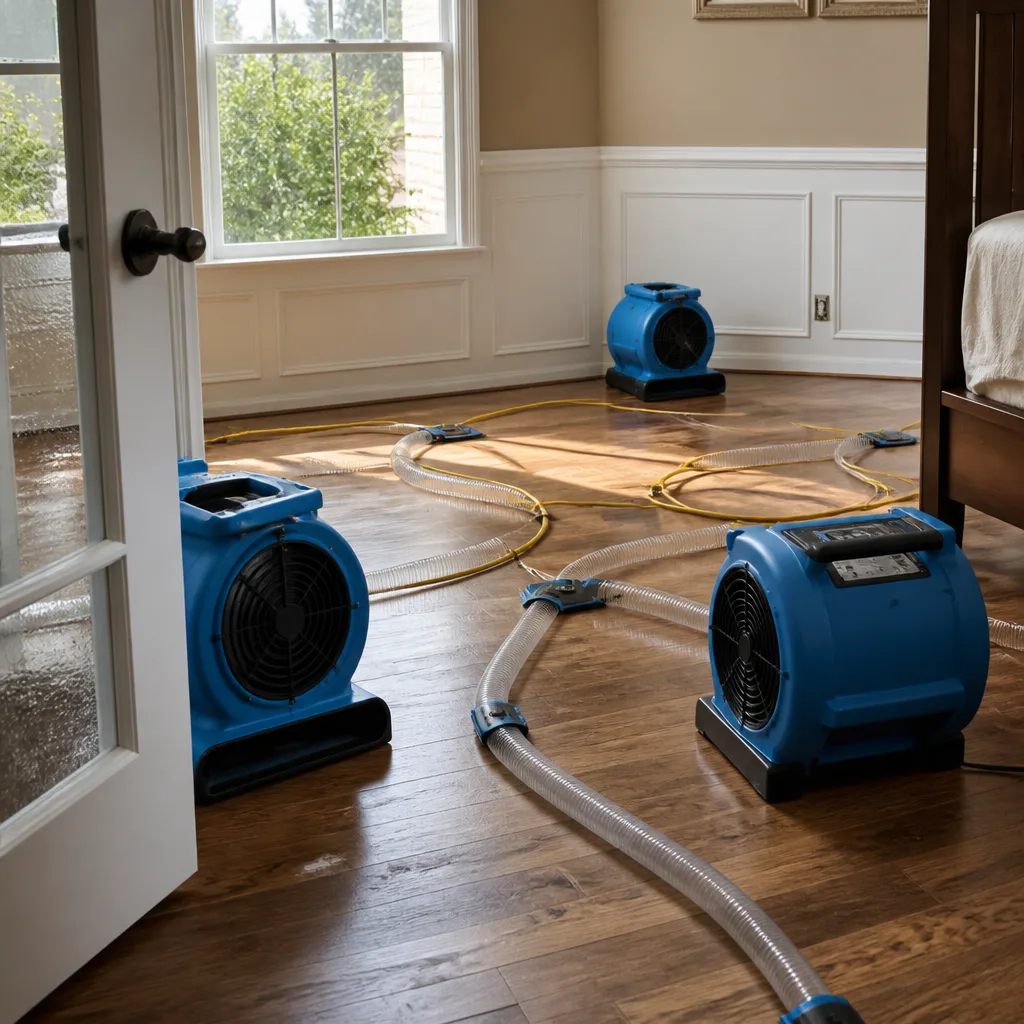
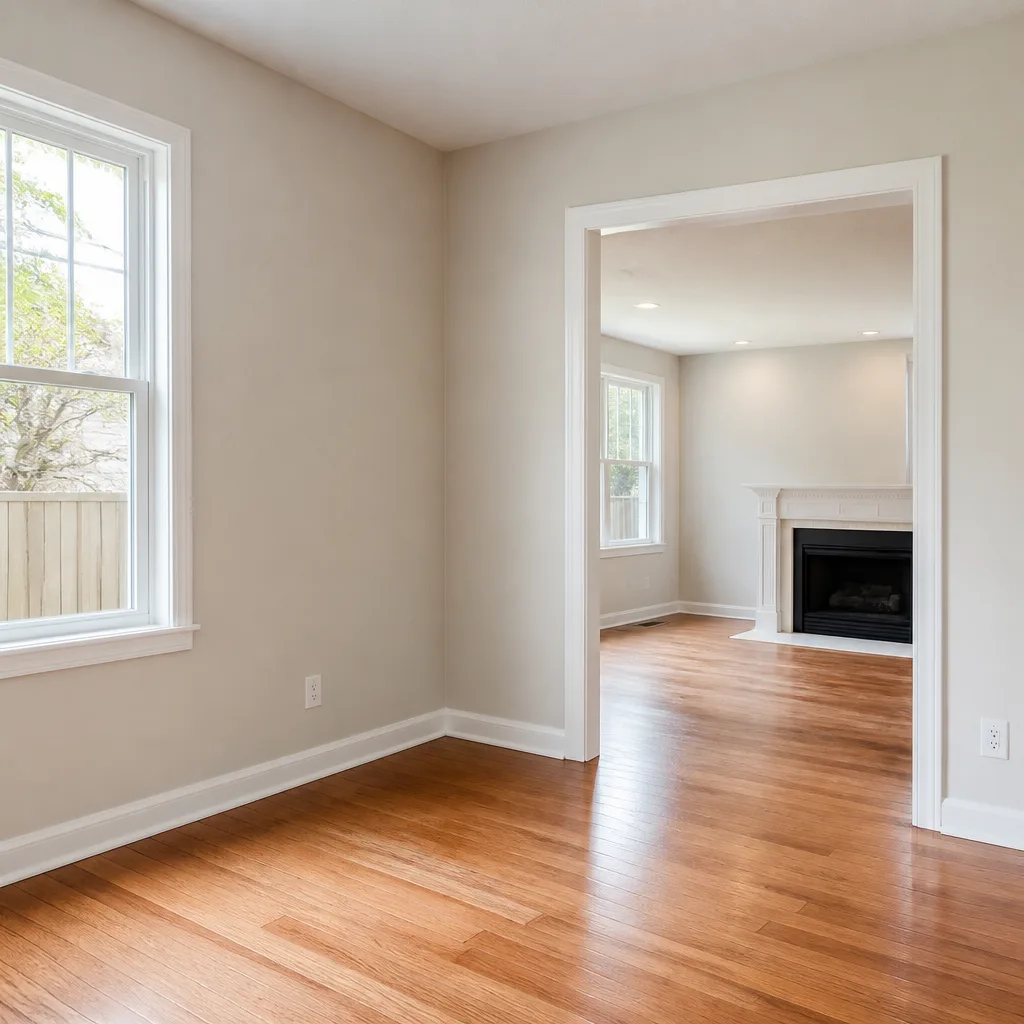
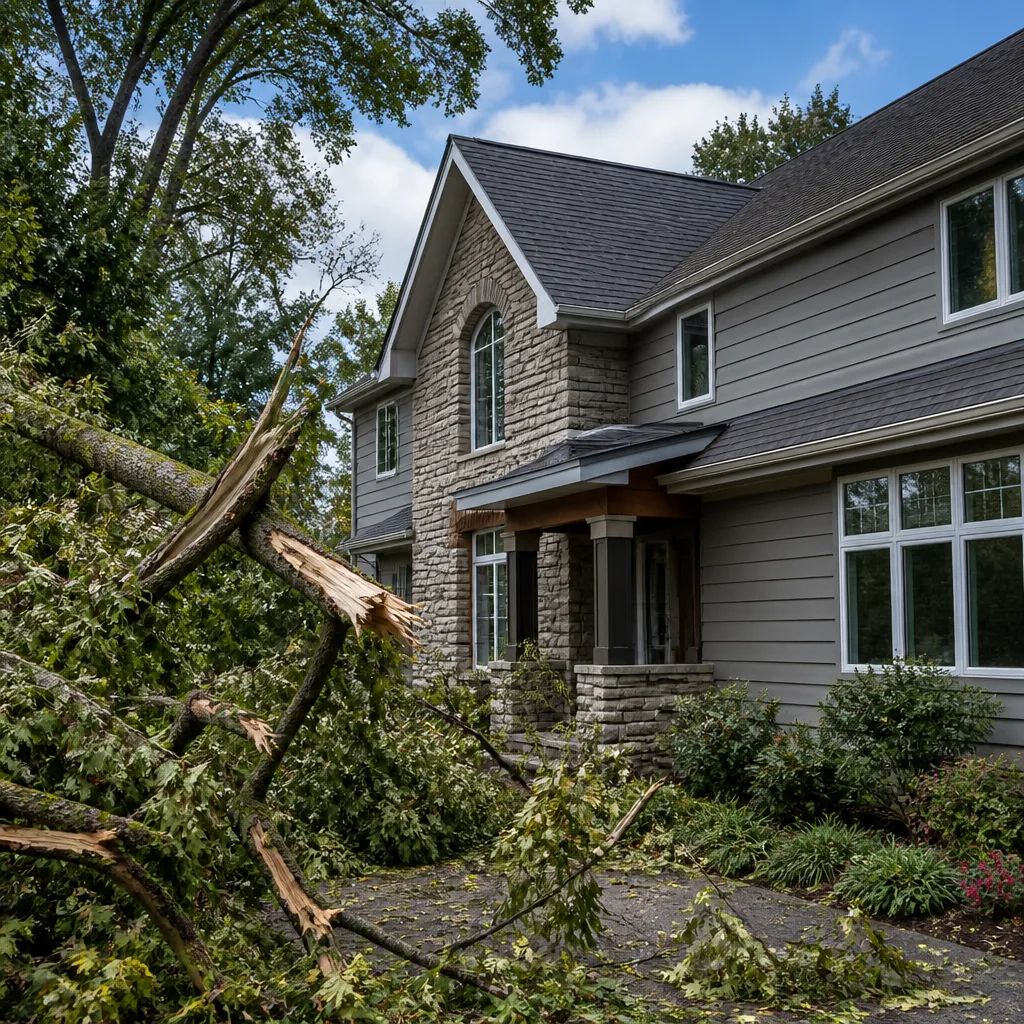

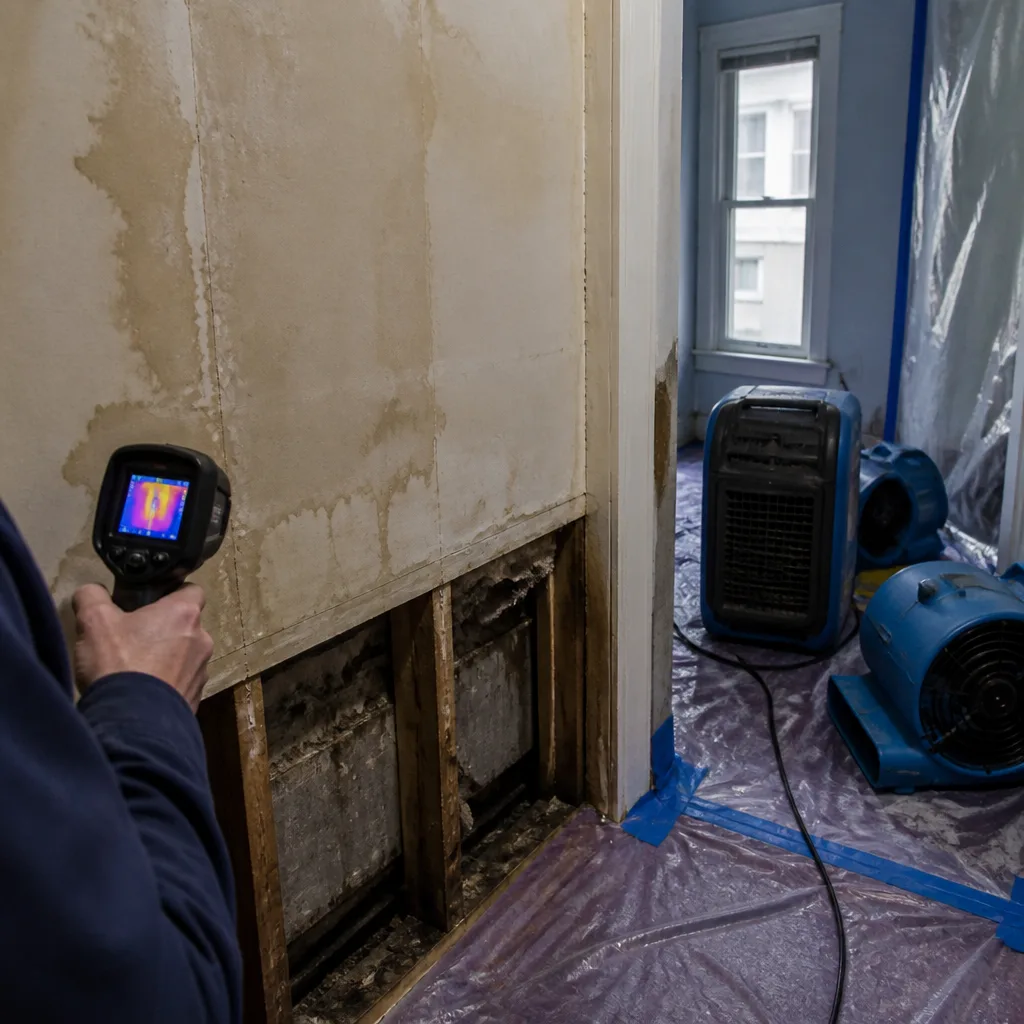 Before
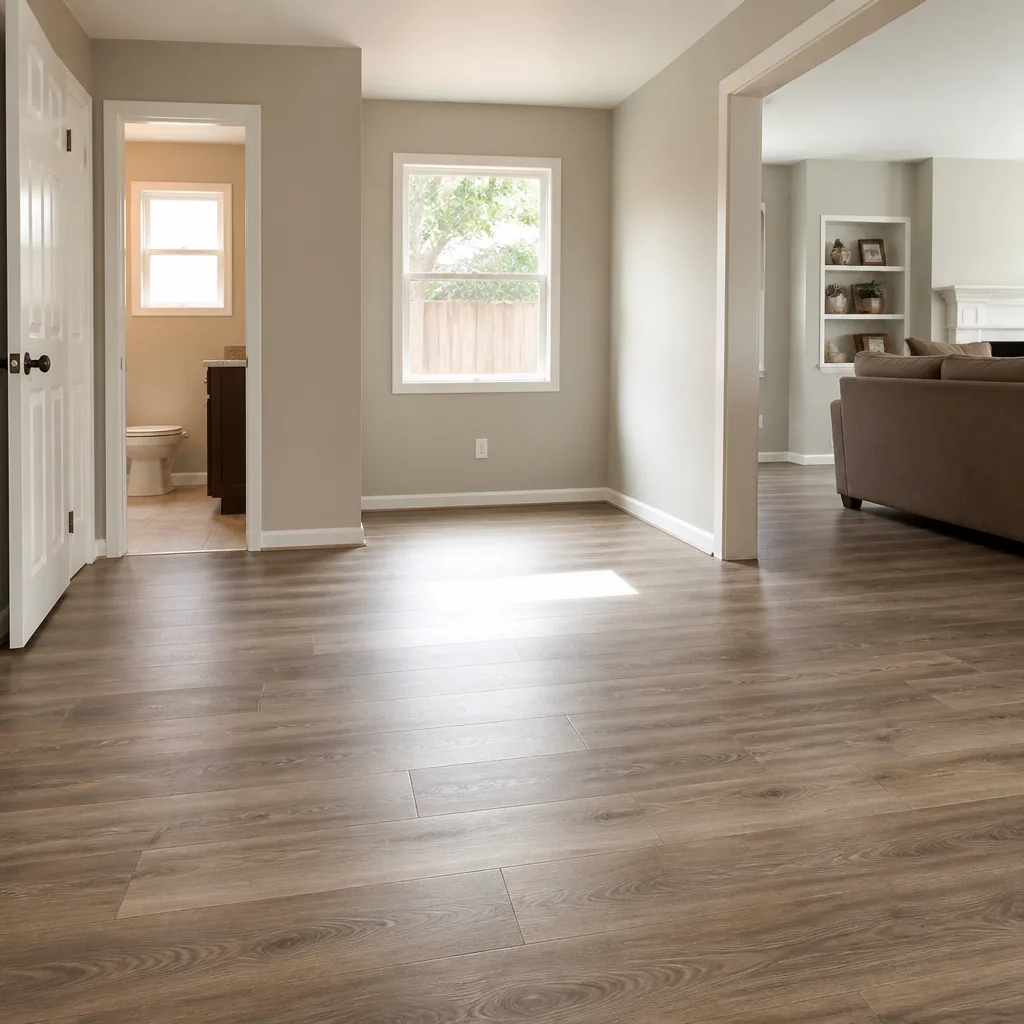
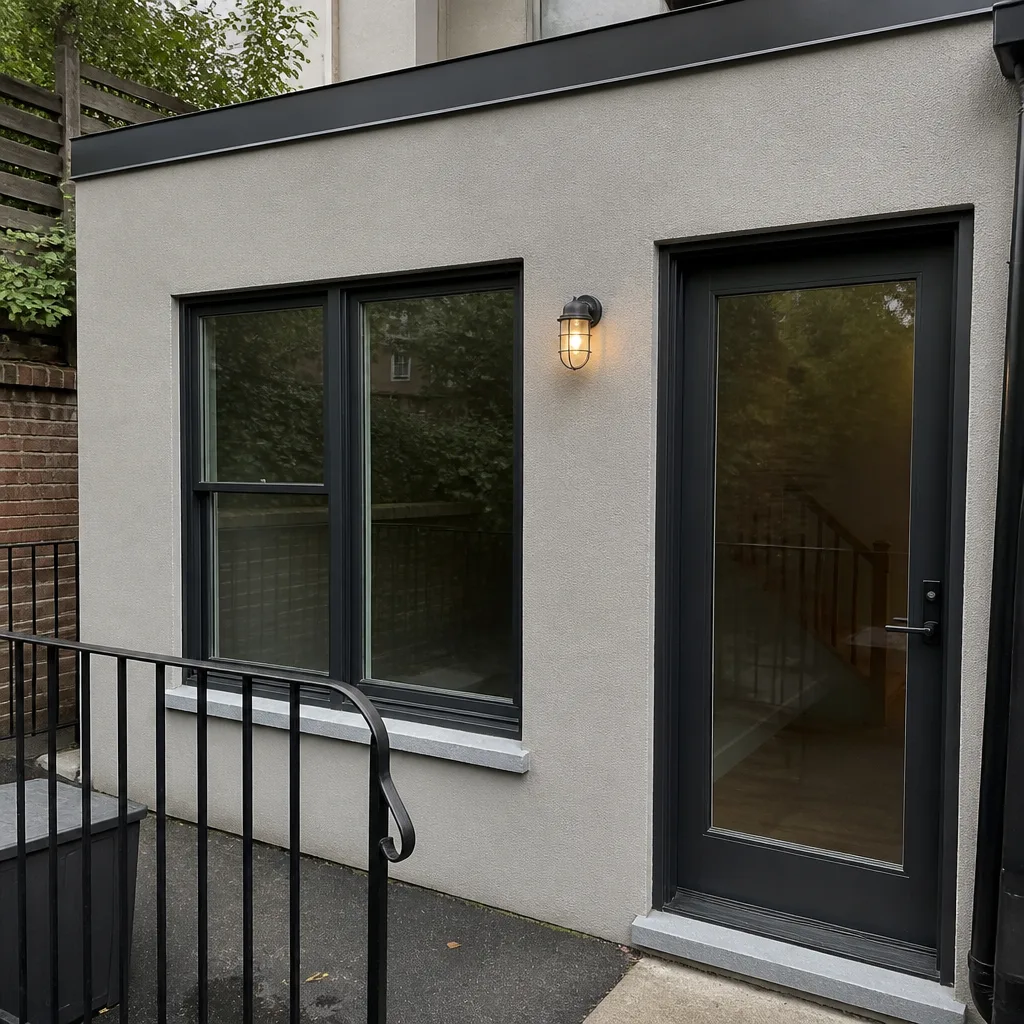 After
After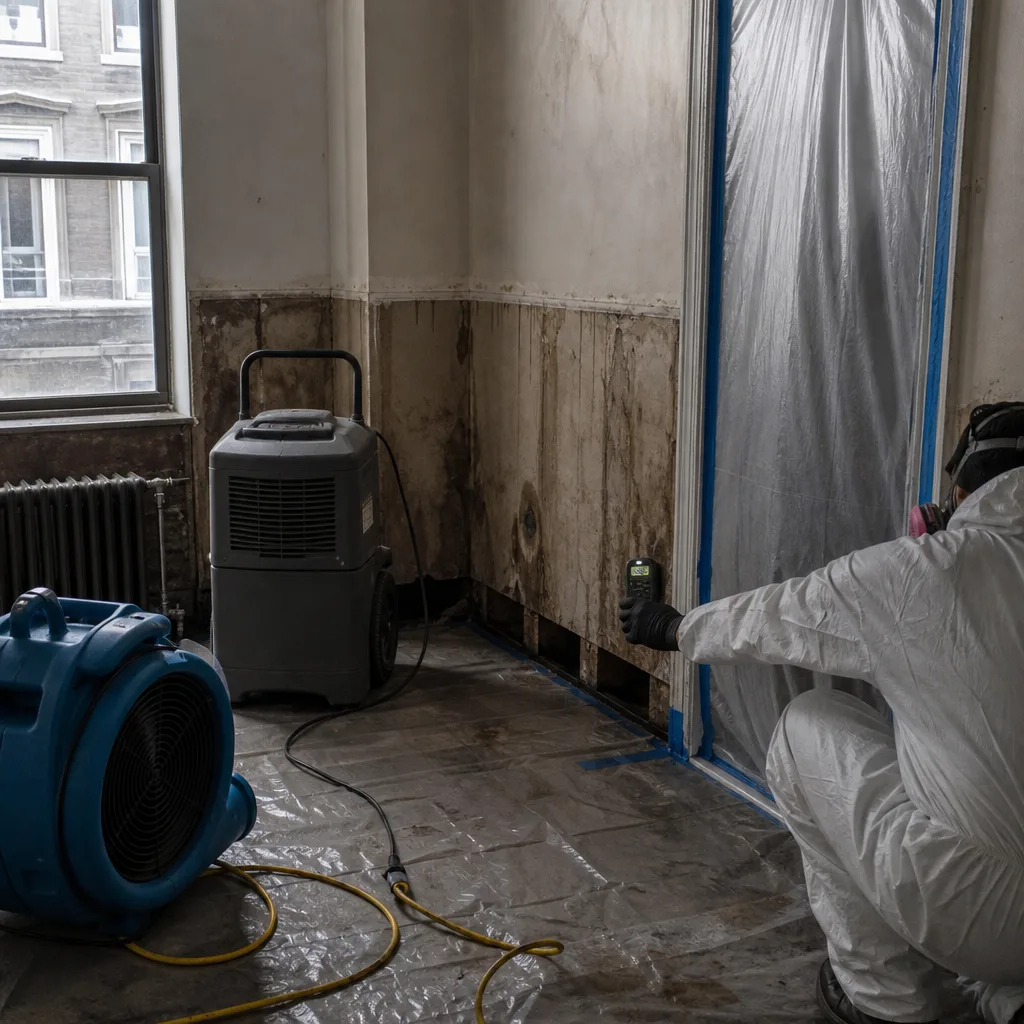 Before
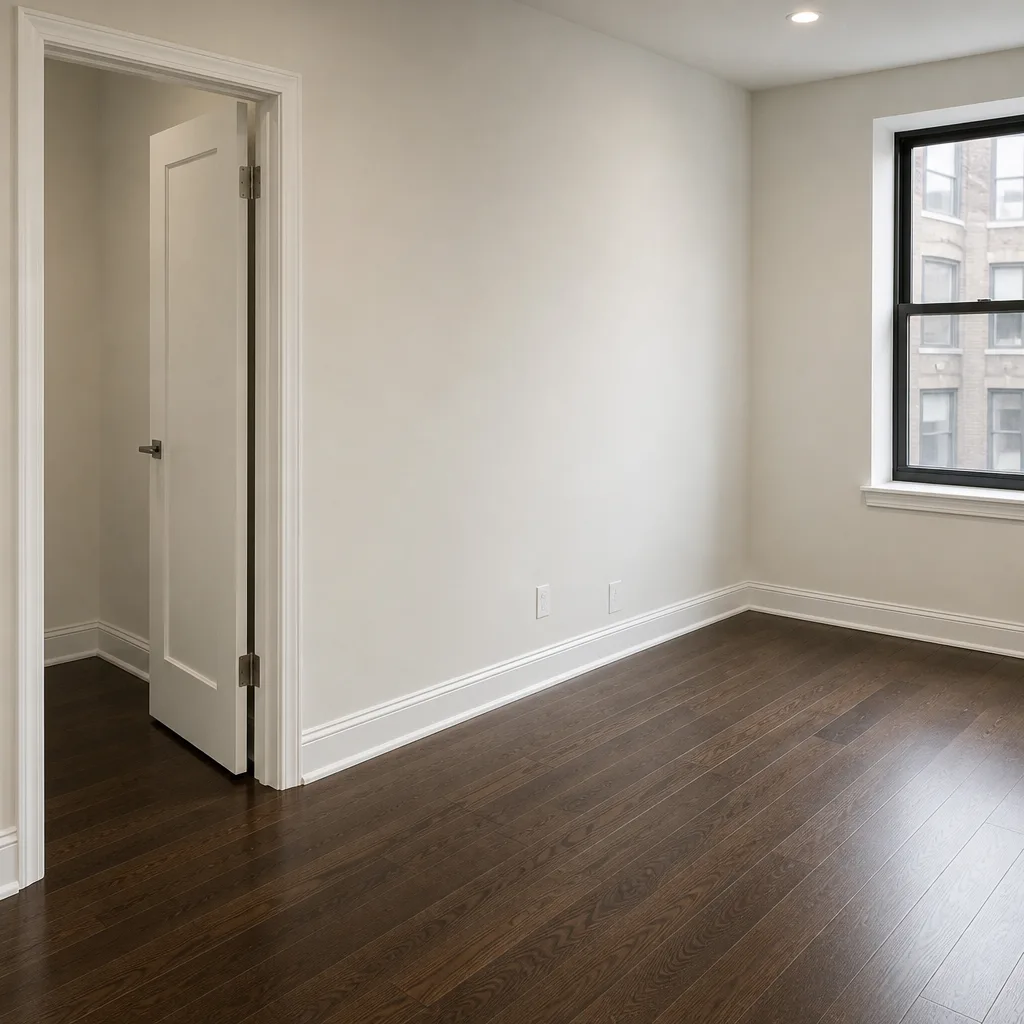 After
After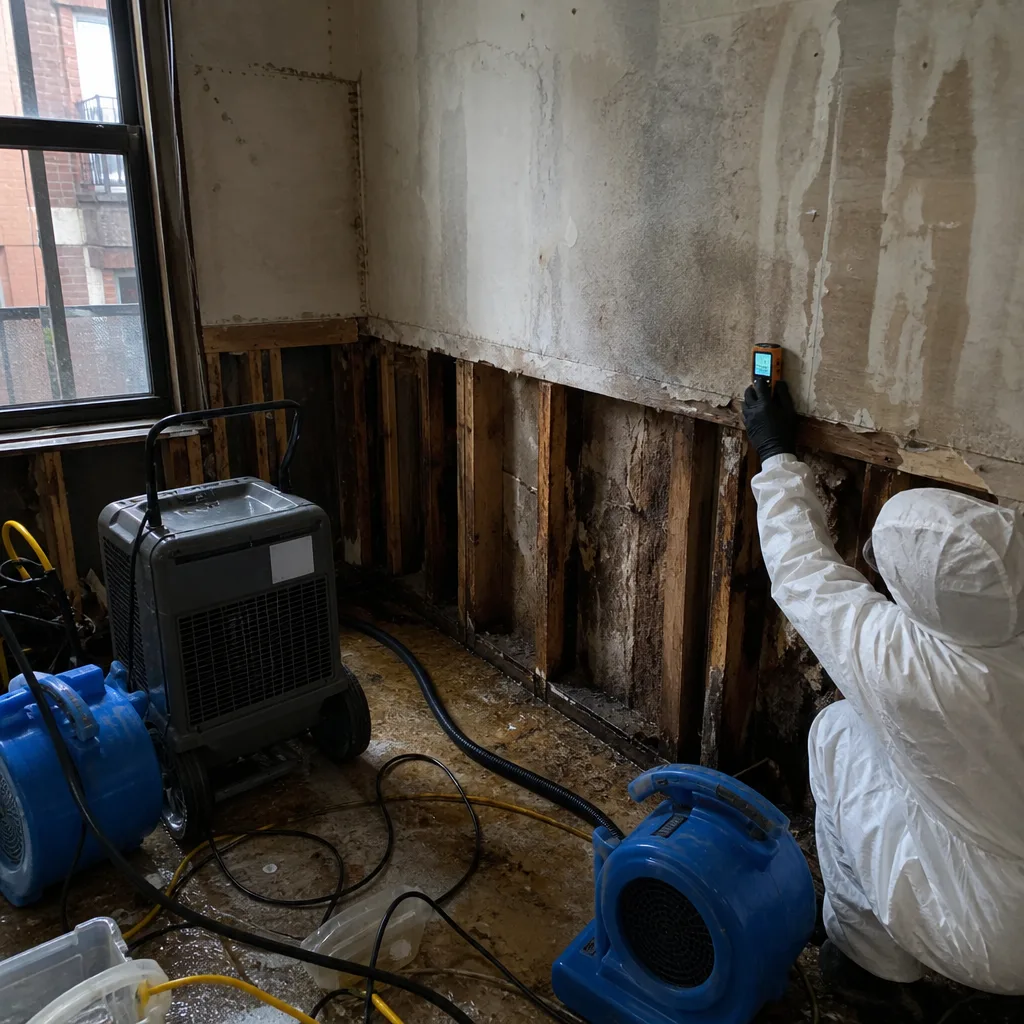 Before
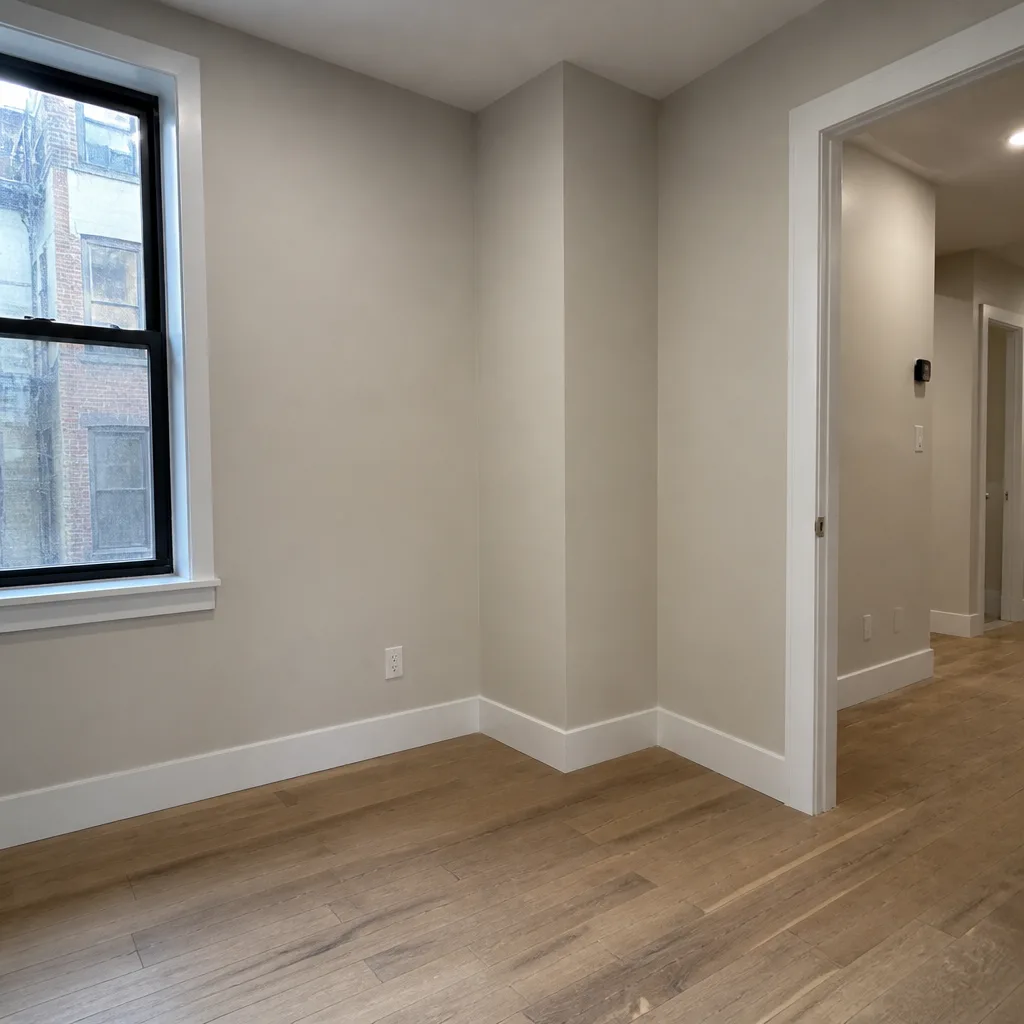 After
AfterTrusted Sewage Cleanup for Lower Manhattan Homeowners
When sewage backs up into a Lower Manhattan apartment or commercial space, you’re not just dealing with a mess. You’re dealing with black water, which carries bacteria, viruses, and parasites that can make people seriously ill. That’s why you need someone who treats this as the health hazard it is, not just a plumbing problem. Wade’s Restoration has handled sewage cleanup in Lower Manhattan for over 17 years, and Wade Ferris still answers his own phone. Call (607) 350-1550 any hour of the day. If sewage is backing up into your space right now, Wade can have extraction running inside the hour, because that’s what he’d want if it were his home.
Watch out though. A lot of outfits in the city do sewage cleanup as a side gig. They show up, pump out what they can, spray some deodorizer, and leave. Then you’re fighting mold three weeks later and the insurance company is asking questions about the original water source. We don’t work that way. We dry the space properly, document everything with daily moisture readings, and hand you a full log when the job is done. That’s why we’re the company your neighbors call first, and why they keep calling back the next time something floods.
What Our Sewage Cleanup Service Includes
Sewage cleanup covers more than just pumping water out. Here’s exactly what we do, broken down by the specific problems we deal with most often in Lower Manhattan.
Sewage Backup Cleanup
Sewage backup occurs when the municipal sewer line or your building’s main waste line gets blocked and sends raw sewage back through floor drains, toilets, or tubs. In Lower Manhattan, we see this most often in older buildings where cast iron pipes have cracked or root intrusion has collapsed a line. When we arrive, we first stop the source of the backup, then extract the contaminated water, remove any solids, and begin the sanitization process. Wade always checks the scope of the damage before he starts pumping, because the last thing you need is sewage pushed deeper into wall cavities.
Toilet Overflow Cleanup
A toilet overflow is usually a quick fix from a plumbing standpoint, but the cleanup requires more care than most people expect. The water from a toilet overflow isn’t just water. It carries whatever was in the bowl and the line, and it spreads fast across tile, into grout lines, and under baseboards within minutes. We extract the water immediately, remove and dispose of any saturated porous materials like carpet or padding, and then sanitize every affected surface with an EPA-registered disinfectant. Wade’s crew takes moisture readings in the subfloor and surrounding walls before we call the job done, because what you can’t see is what causes problems later.
Septic Failure Cleanup
Septic failure happens when the tank is overfull, the drain field is saturated, or the system itself has failed mechanically. The result is sewage surfacing in the yard or backing up into the home, and it’s a health risk for everyone inside. We handle the cleanup side of the equation: extracting the sewage, removing contaminated soil where necessary, and sanitizing the affected areas thoroughly. Wade will work with your septic company or plumber to make sure the cleanup happens at the right time, because cleaning before the system is fixed just means cleaning twice.
Black Water Extraction
Black water is the category of water that contains raw sewage, and it’s the most dangerous kind of water you can have in your home. Category 3 water, as it’s called in the restoration trade, requires full PPE for anyone entering the affected area, and it demands professional-grade extraction equipment. We use truck-mounted and portable extraction units from Dri-Eaz and XPOWER, then follow with antimicrobial treatments and drying equipment that prevents secondary damage. This isn’t work you should attempt yourself, and honestly, it’s not work you should let a handyman attempt either.
Sanitization & Disinfection
After the water is gone, the real work begins. Every surface that came into contact with sewage has to be cleaned, then disinfected with products designed to kill pathogens found in human waste. We treat floors, walls, baseboards, and any belongings that can be saved, and we dispose of anything that can’t be properly cleaned. Porous materials like drywall that have absorbed sewage are cut out and removed, because you can’t disinfect what’s soaked through. Wade documents every step with photos, so your insurance adjuster sees exactly what happened and why.
Crawl Space Sewage Removal
When a sewage line breaks under a building, the crawl space becomes a collection point for raw waste. It’s dark, hard to reach, and often overlooked, which is exactly why it gets dangerous. We send our team in with proper protection and lighting to extract the sewage, remove contaminated soil, and dry the space completely. Then we sanitize and treat the area to prevent mold and lingering odors. If you’ve got a sewage smell in your Lower Manhattan building and can’t find where it’s coming from, check the crawl space, then call us.
What happens when you call
- 1
A real person answersNo phone trees - you reach a local pro.
- 2
You get an upfront price rangeHonest numbers before anyone is dispatched.
- 3
A background-checked tech heads outLicensed & insured, dispatched right away.
- 4
You approve before work beginsNothing starts until you say go.
Brands We Service for Sewage Cleanup
Over the years, we’ve built up solid experience with the equipment brands that professional restoration companies rely on, and that matters when the equipment needs to run continuously for days. We’ve serviced hundreds of homes and commercial spaces using Dri-Eaz extraction and drying units, and we stock the OEM parts and filters to keep them running at full power. When a Dri-Eaz unit is moving 200 pints of water a day, you want it running at full efficiency, not limping along with a clogged filter.
We also use Phoenix drying equipment and XPOWER air movers on almost every job, because they’re reliable workhorses that hold up under continuous use. Wade’s team knows these units inside and out, which means fewer delays and faster drying times for you. And while the brand of equipment matters, what matters more is the person running it. Wade has been doing this since 2007, and he knows how to place equipment to dry a space efficiently, not just spread fans around and bill you for the power. Whether you have a job that needs Dri-Eaz, Phoenix, or any other professional-grade equipment, we know how to handle it.
Signs You Need Sewage Cleanup Right Now
Sewage problems don’t always announce themselves with a dramatic flood. Sometimes the first signs are subtle, but ignoring them gives the contamination time to spread. If you see any of these in your Lower Manhattan property, call (607) 350-1550 right away.
- Multiple drains backing up at once. When more than one drain is gurgling or backing up, the problem is likely in the main line, not in a single fixture. This means sewage is building up somewhere below the floor, and the next step is often a full backup into your living space.
- A sewage smell that won’t go away. That rotten egg or methane smell is not just unpleasant. It’s a sign that sewer gases are entering your home, which happens when a trap is dry, a vent is blocked, or a line is broken. It’s not just the odor that matters. Those gases can be dangerous, and the leak behind them is letting worse things in.
- Water pooling around a floor drain or toilet base. That’s not clean water, even if it looks clear at first. It’s the leading edge of a backup, and it means the water table under your floor is already contaminated. The longer it sits, the further it spreads into the subfloor, the walls, and anything stored nearby.
- Gurgling sounds from toilets or sinks. That gurgling noise is air being pushed through water in the trap, which happens when the line is partially blocked. It’s an early warning sign that a full blockage is coming, and it’s far cheaper and cleaner to deal with now than after the toilet overflows at 2 a.m.
- Wet spots in the yard or near the foundation. For buildings with septic systems or older sewer lines, a soft, wet, foul-smelling area outside often means the line has failed underground. That contaminated water is going somewhere, and eventually, that somewhere is going to be inside your walls or under your slab.
Our Sewage Cleanup Process - Step by Step
We follow the same process on every job, because guesswork is what gets people hurt, and documentation is what gets claims paid. Here’s what happens when you call Wade’s Restoration for sewage cleanup in Lower Manhattan.
- 1
Stop the source. Before we extract anything, we find out where the sewage is coming from and get it stopped. That might mean shutting off a water supply, coordinating with your building’s maintenance team, or working with a plumber if there’s a line break. We don’t start clean-up until the source is secured, because cleaning up while sewage is still flowing in is wasted effort.
- 2
Assess and document. Wade walks the entire affected area with you, takes photos of everything, and writes up a scope of work that you see before we start. No hidden line items, no surprises. If you’re dealing with insurance, Wade will talk directly to your adjuster and make sure they see the full picture, including the daily moisture readings we take throughout the drying process.
- 3
Extract and remove. We bring in our extraction equipment and remove all standing water and solid waste. Then we cut out and bag any saturated materials that can’t be saved, like soaked drywall, carpet, or insulation. The goal is to get every contaminated material out of the building before we start drying, because you can’t disinfect what’s still wet.
- 4
Sanitize and dry. Every surface that came into contact with sewage gets cleaned and treated with an EPA-registered disinfectant that kills pathogens found in black water. Then we set up drying equipment and monitor it daily with moisture meters. We don’t just set fans and leave. Wade takes readings every single day and writes them down, and you get that full log at the end of the job.
- 5
Final verification and the 90-Day Done Right Promise. Before we call the job done, we verify that moisture levels are back to normal in every affected area, including inside wall cavities and under floors. Then Wade walks you through everything we did and hands you the documentation. Every sewage cleanup job is covered by our 90-Day Done Right Promise: if it’s not done right, we make it right. In writing.
How Much Does Sewage Cleanup Cost in Lower Manhattan?
- Toilet overflow cleanup: $400 to $900 when caught quickly and contained to a bathroom.
- Sewage backup in a single room: $1,200 to $2,800 when extraction, sanitization, and minor material removal are needed.
- Full basement sewage backup: $3,000 to $8,000 when drywall, flooring, and insulation have to be cut out and replaced.
- Crawl space sewage removal: $1,800 to $5,000 depending on access, the amount of contaminated soil, and the extent of the break.
What affects the price most is how long the sewage sat before we got there. The faster we can extract, the less drywall, flooring, and insulation has to be removed. The other big factor is access. Lower Manhattan buildings can be tight, and getting equipment into a basement or crawl space sometimes takes extra labor. We don’t charge a trip fee inside our own county, and we give you a written estimate before any work starts, so you’ll know exactly what you’re looking at. Wade will also give you a free second opinion on any written estimate you’ve already received, no questions asked. Call (607) 350-1550 and ask for the free estimate.
Sewage Cleanup Near Lower Manhattan - Our Service Area
We serve Lower Manhattan and the surrounding neighborhoods, including the Financial District, Midtown Manhattan, the Upper West Side, Midtown West, and across the water in Jersey City, Hoboken, Weehawken, Union City, Astoria, Long Island City, and Glendale. Response time depends on where you are, but if you’re in Lower Manhattan proper, Wade can typically have a crew on site inside an hour. We run calls 24/7, which means if you’re dealing with sewage at 3 a.m. on a Sunday, you’re not leaving a voicemail. You’re talking to Wade directly. If you’re in the Financial District or across the river in Jersey City, we handle those areas regularly too. See our Sewage Cleanup in Financial District page or our Sewage Cleanup in Jersey City page for more local details.
Serving Lower Manhattan, NY - Our Local Coverage Area
We’re based in the Lower Manhattan area and know this community well, and we also offer our Sewage Cleanup in Jersey City. Use the map below to see our service coverage - if you’re nearby, we can almost certainly help.
Frequently Asked Questions - Sewage Cleanup in Lower Manhattan
What is sewage cleanup?
Sewage cleanup is the process of removing contaminated water and waste from a home or building, then sanitizing and drying every affected surface to make the space safe again. Sewage contains bacteria, viruses, and other pathogens that pose real health risks, so the work involves extraction, removal of soaked materials, disinfection, and moisture monitoring. It’s not the same as water damage cleanup, because the water is contaminated and requires more aggressive treatment and disposal.
How long does sewage cleanup take?
Most sewage cleanup jobs in Lower Manhattan take between one and three days for the extraction, sanitization, and initial drying phase. Full reconstruction, if drywall or flooring has to be replaced, can add another week or more depending on the scope. We’ll give you a timeline in writing before we start, and we update you as we go. The drying phase is what takes the longest, and we monitor it daily with moisture meters so you’re never guessing when the space is actually ready.
How much does sewage cleanup cost in Lower Manhattan?
Sewage cleanup in Lower Manhattan typically runs between $400 for a contained toilet overflow and $8,000 for a full basement backup that requires material removal and replacement. The biggest cost factors are how long the sewage sat, how far it spread, and what materials had to be cut out. We give free estimates, no trip charge inside the county, and a free second opinion on any written estimate. Call (607) 350-1550 for an exact quote for your situation.
Do you handle sewage cleanup for commercial buildings in Lower Manhattan?
Yes, we handle sewage cleanup for both residential and commercial properties throughout Lower Manhattan, including offices, retail spaces, and restaurants. Commercial jobs often have the added wrinkle of keeping the business operational while we work, and we’re used to working around those constraints. We also coordinate directly with building management, your plumber, and your insurance adjuster so the process moves as fast as possible.
Will my insurance cover sewage cleanup?
Most homeowners policies cover sewage cleanup if you have sewer backup coverage or if the backup was caused by a covered peril. Some policies exclude it, which is a common and unpleasant surprise. That’s why we document everything with photos and daily moisture readings, so your adjuster can see exactly what happened and why the work was necessary. Wade will talk to your adjuster directly and help make sure the claim is handled properly.
Can you respond to a sewage emergency right now?
Yes. We run 24/7 emergency service for sewage cleanup in Lower Manhattan, and when you call (607) 350-1550, you’ll talk to a live person. Wade answers his own phone, which means no answering service and no callbacks that never come. If it’s an active sewage backup, we can typically have extraction running inside the hour.
What should I do while I’m waiting for sewage cleanup?
First, keep everyone, including pets, out of the affected area. Sewage is a health hazard, and spreading it around on shoes or paws makes the situation worse. Don’t run water in the affected drains, because that adds to the backup. If you can safely close off the area, do that. And don’t try to clean it yourself with household products. You need professional extraction, disinfection, and drying, and the sooner it starts, the less damage you’ll have.
Schedule Your Sewage Cleanup Service in Lower Manhattan Today
If you’ve got sewage backing up into your Lower Manhattan home or business, don’t wait. The longer it sits, the worse it gets, and the more it costs to fix. Call Wade’s Restoration at (607) 350-1550 for a free, no-obligation estimate. Wade will answer the phone himself, and if you need us right now, he’ll have extraction running inside the hour. We’ve been serving Lower Manhattan since 2007, and every job is backed by our 90-Day Done Right Promise in writing. That’s the way it should be.
Written by Wade Ferris, Owner at Wade’s Restoration, serving Lower Manhattan since 2007.
Looking for more? Start at our home page, or read about Sewage Cleanup in Lower Manhattan for a full overview of our services.