
Free visual inspection and a written scope of work before any mitigation begins - photos, moisture readings, and drying logs go in your claim file
The scope we write is the scope we bill. Anything new gets shown to you, in writing, before we touch it.
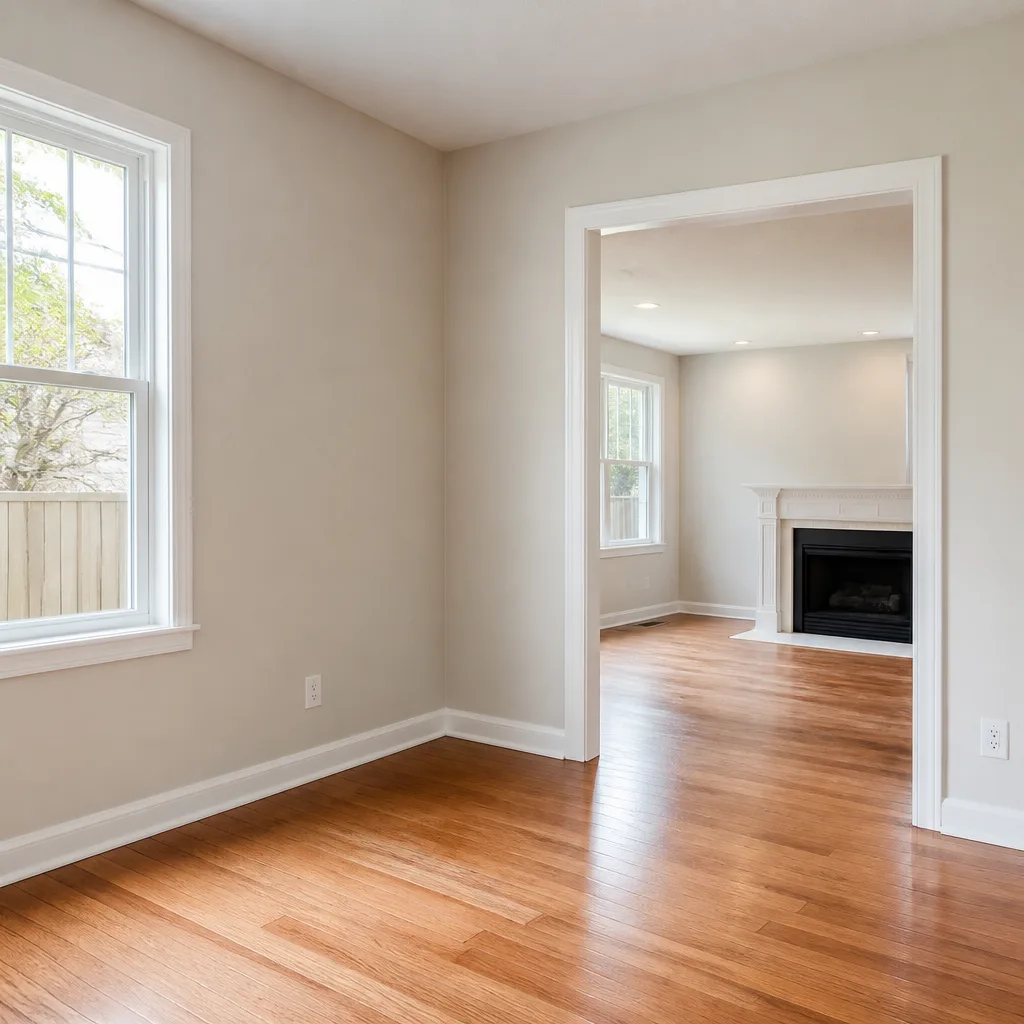
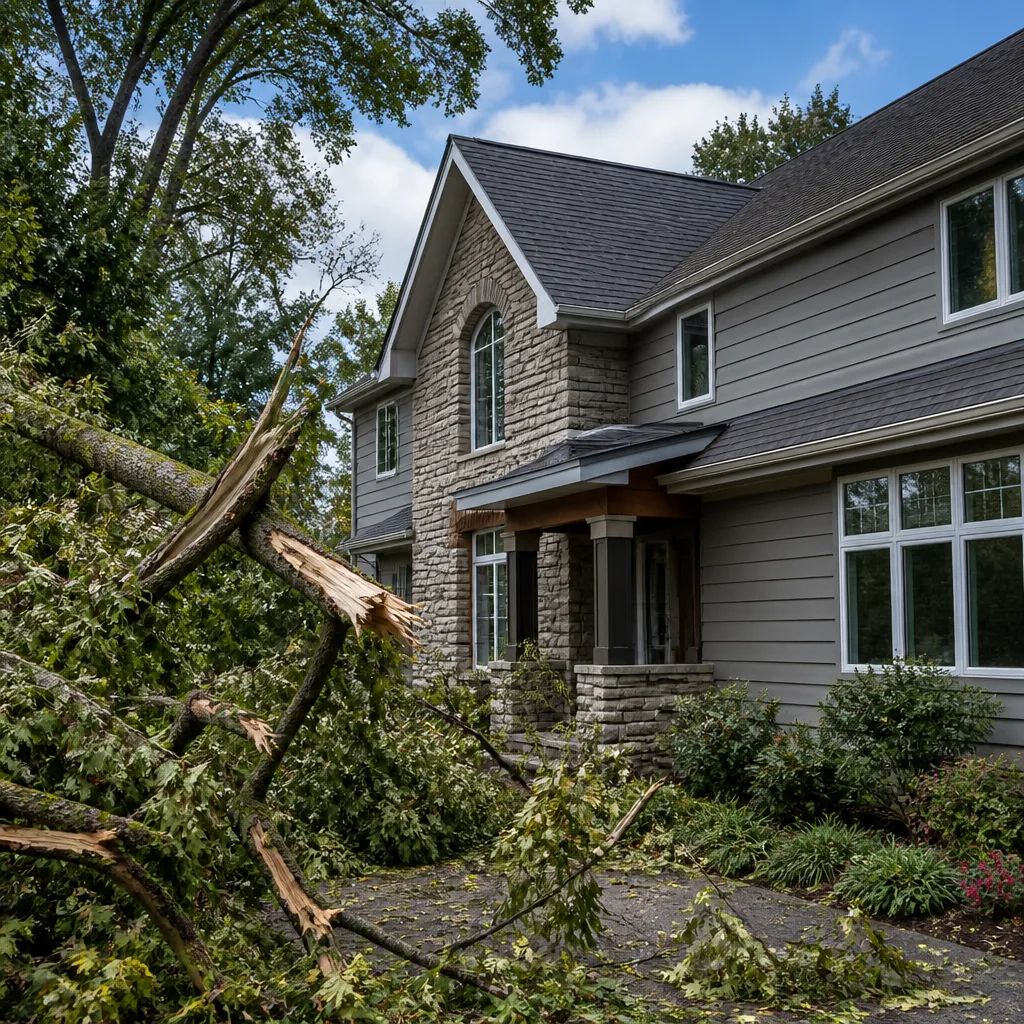
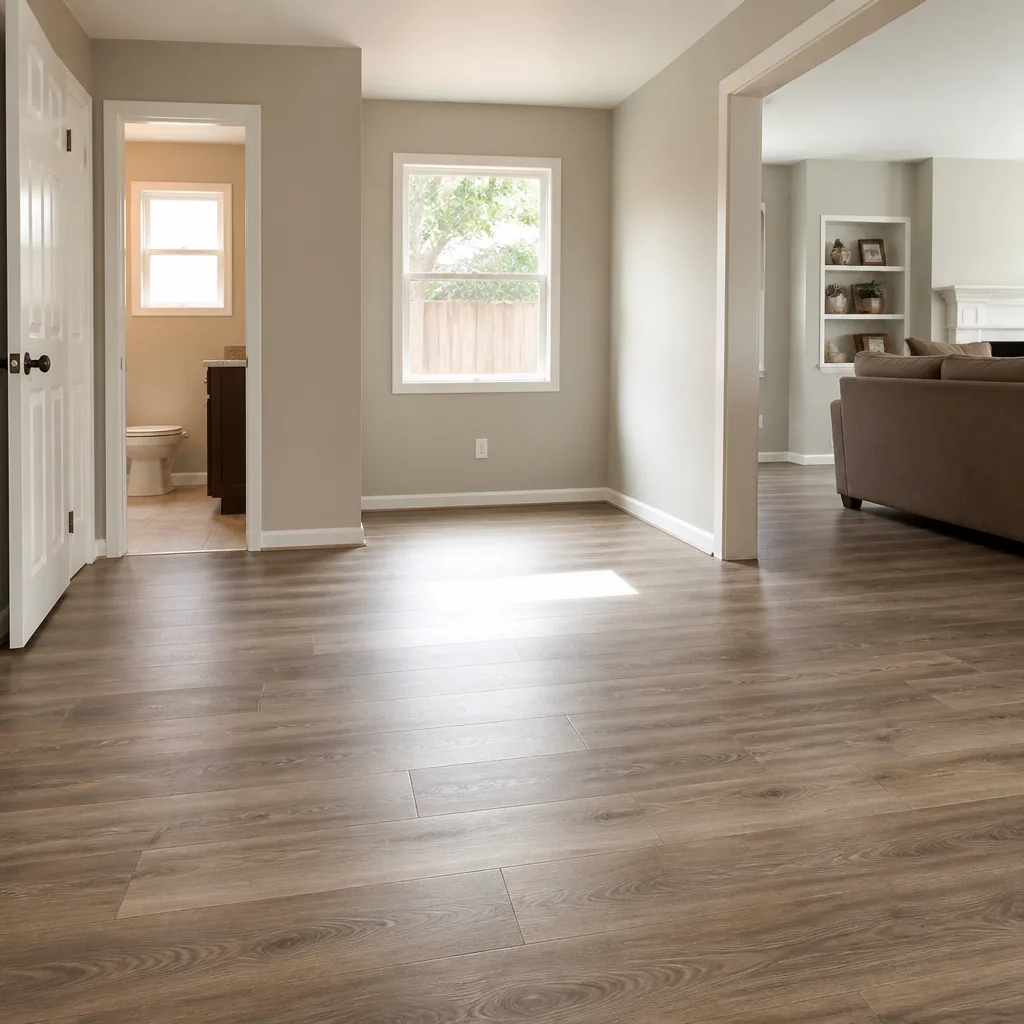
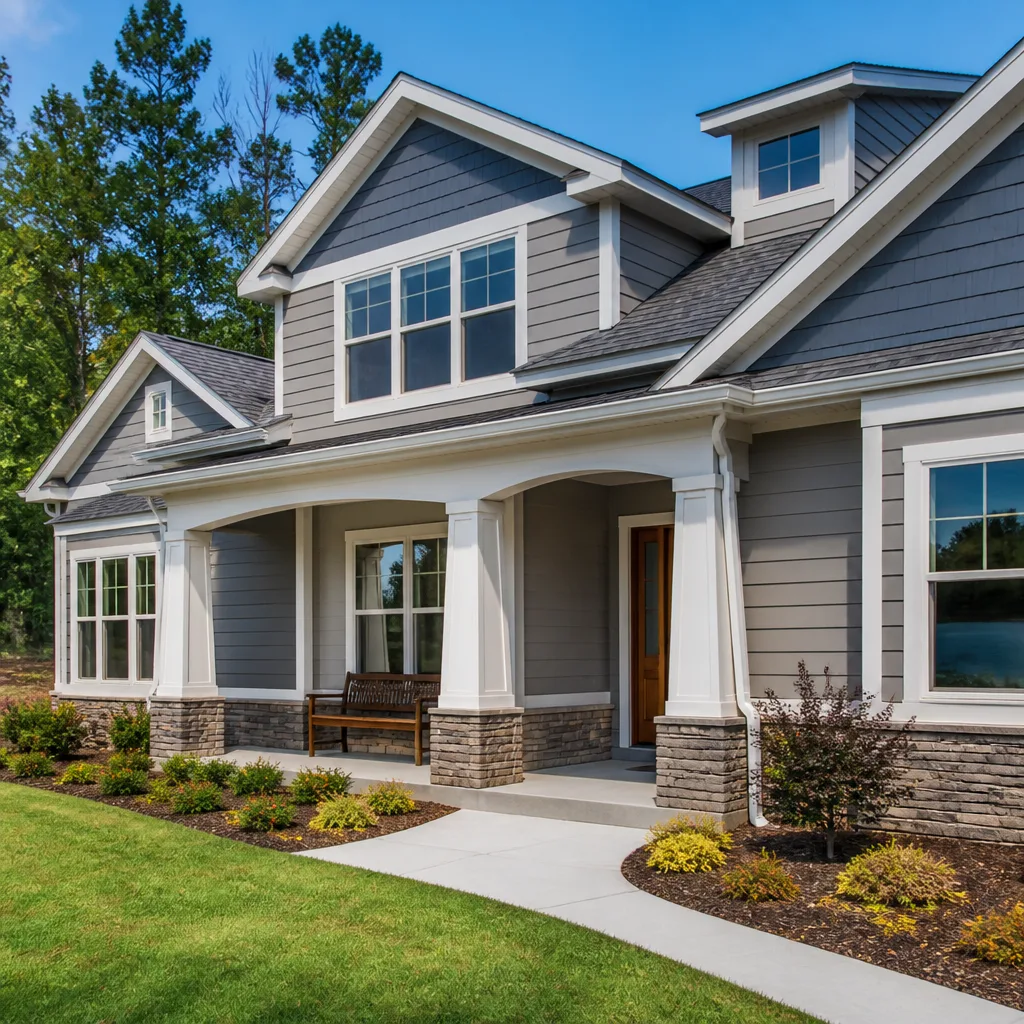
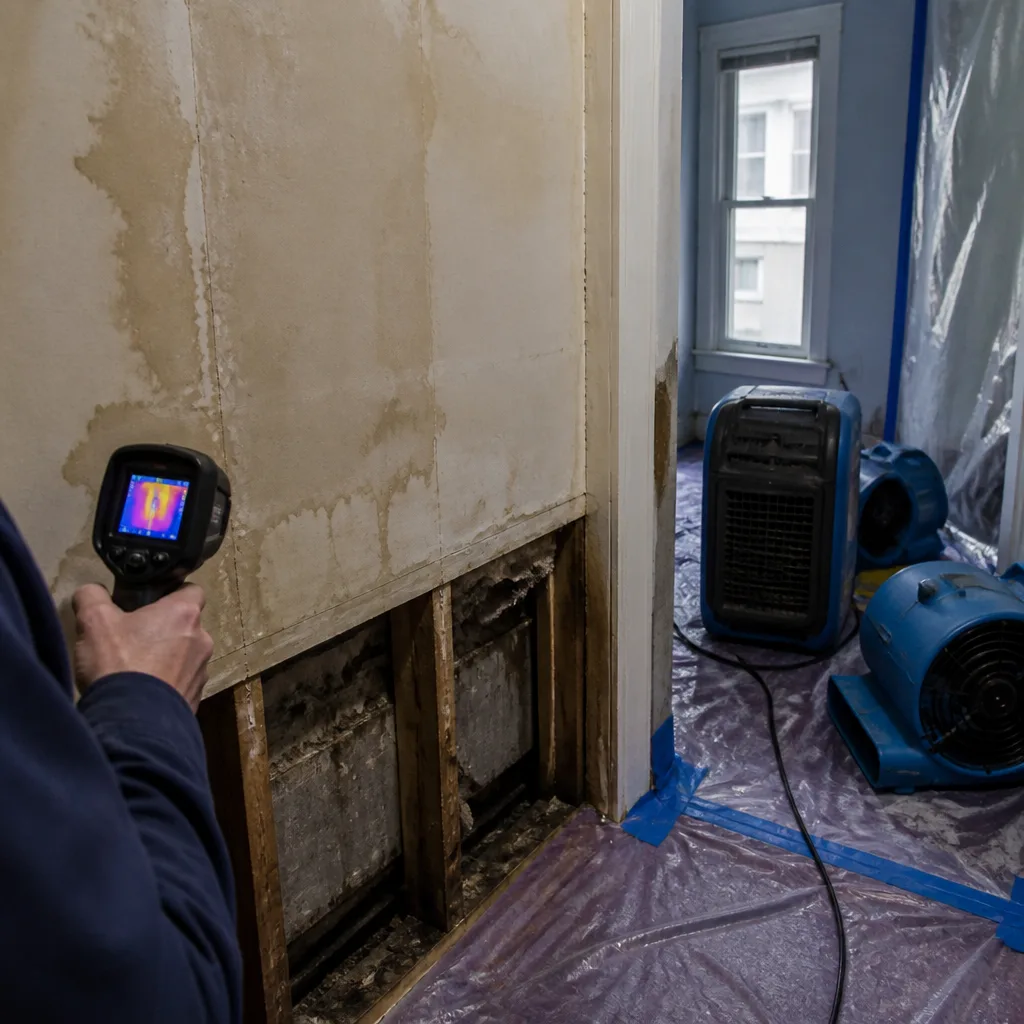 Before
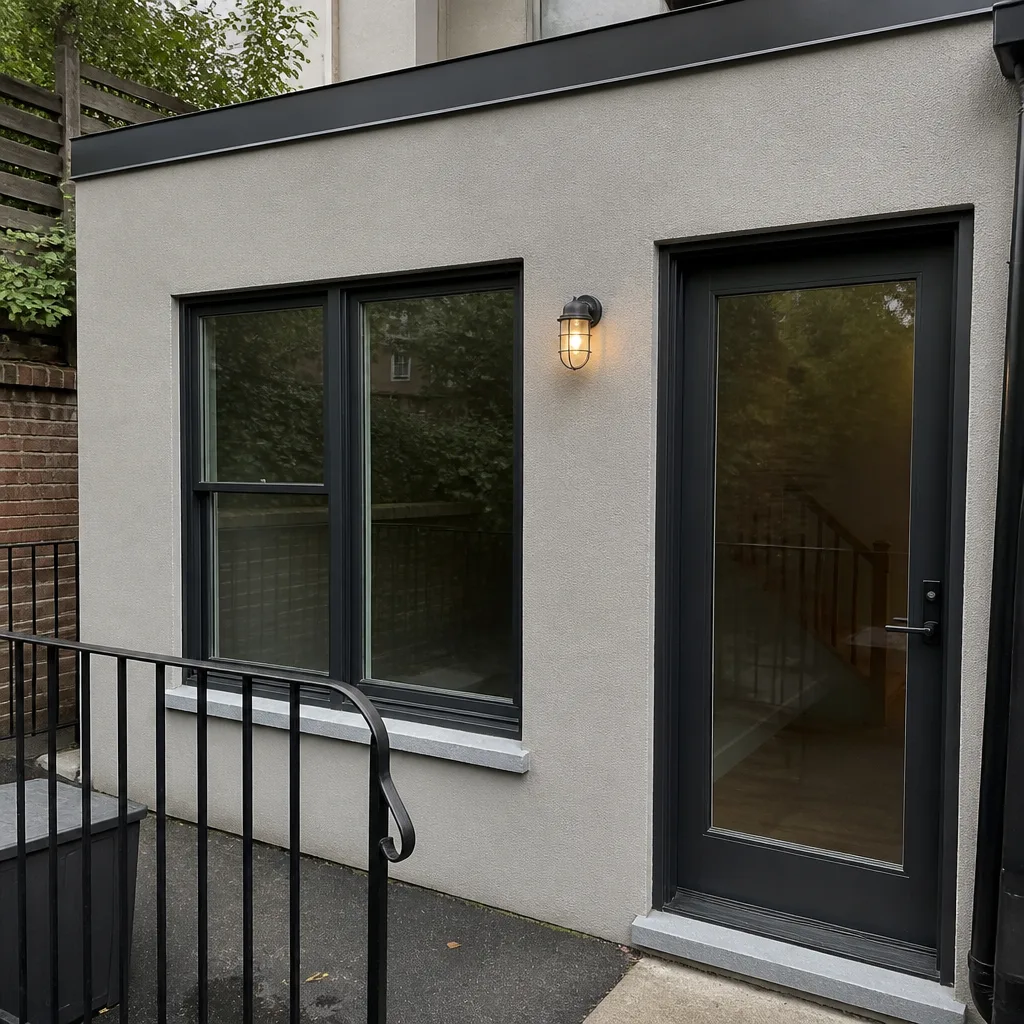 After
After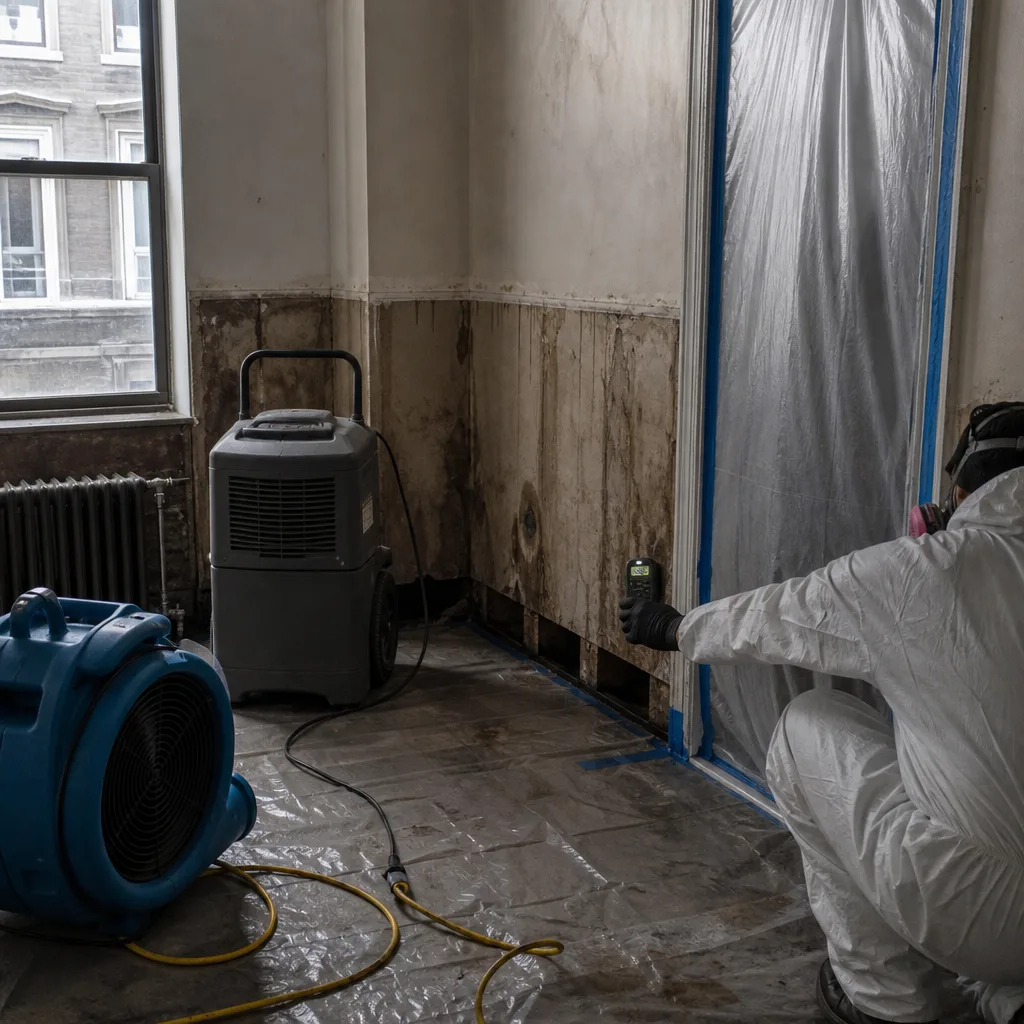 Before
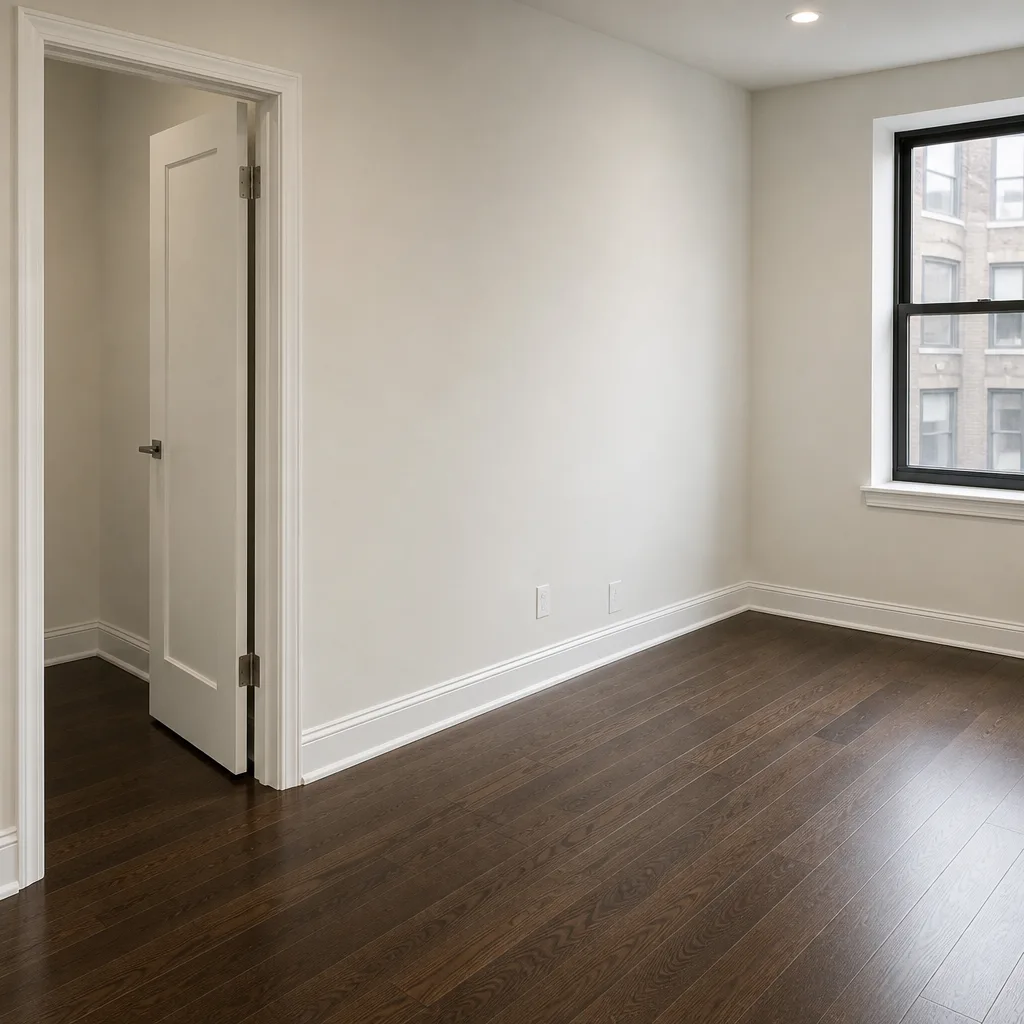 After
After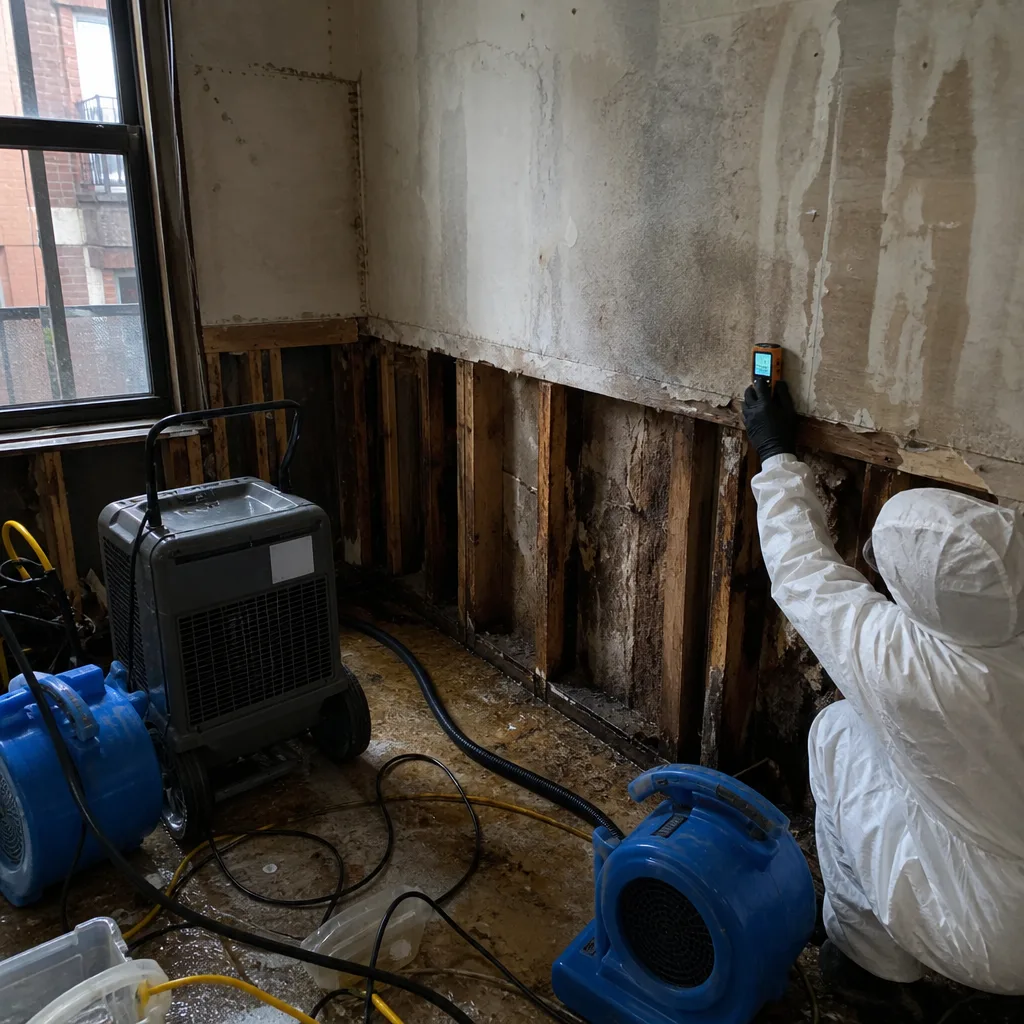 Before
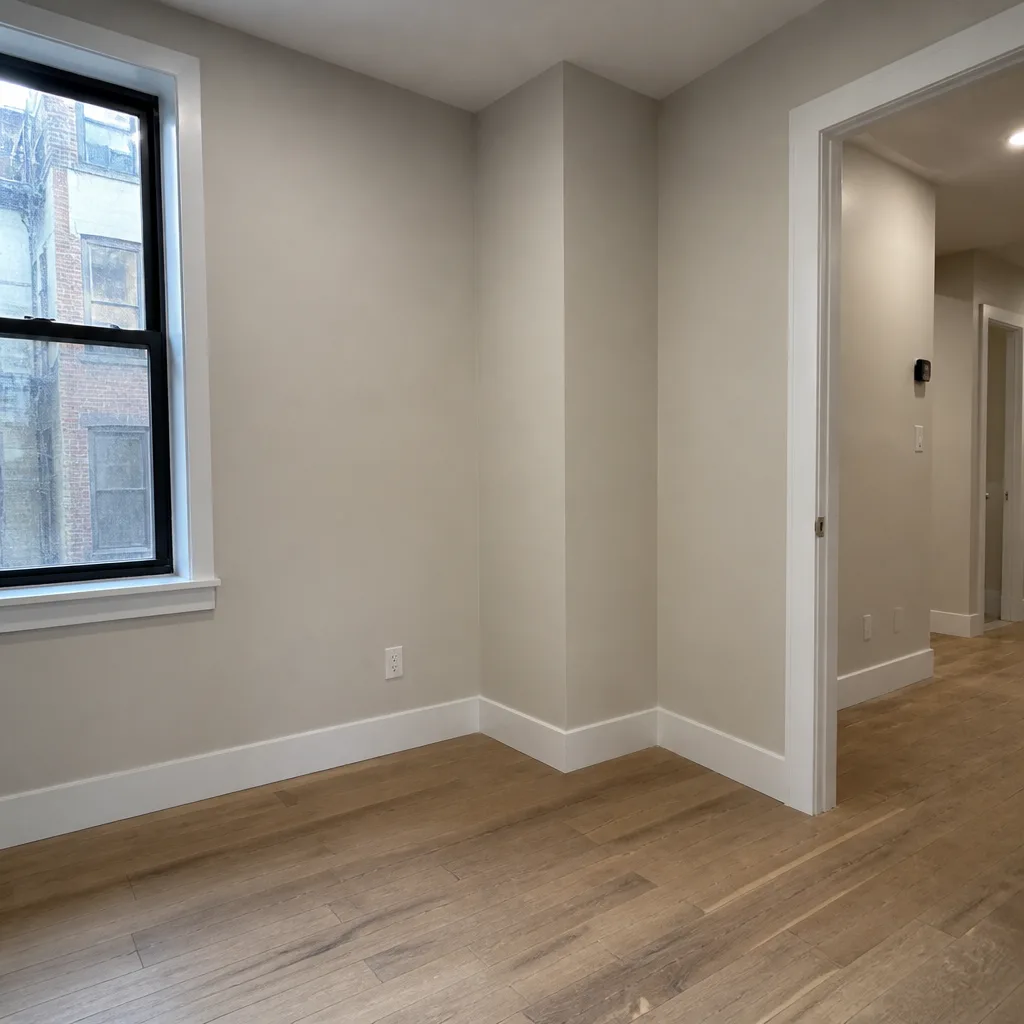 After
After24/7 Emergency Storm & Disaster Restoration in Midtown West
Storm and disaster restoration in Midtown West, NY typically runs $1,800-$14,000 depending on water category, square footage affected, and whether structural drying or full reconstruction is required. Emergency board-up and roof tarping usually starts at $450-$900, and we can have a crew on-site within the hour, 24 hours a day. Call (607) 350-1550 right now and you’ll get Wade himself on the line, not a call center. The first hour after storm water enters a Hell’s Kitchen tenement or a Hudson Yards tower is when the damage compounds fastest: drywall wicks moisture upward, hardwood cupping begins, and category 1 clean water degrades into category 3 sewage-adjacent sludge if the feed line was compromised. The sooner we start extraction, the less this costs you and the less demolition the building needs. In Midtown West we’re close enough to respond before your insurance adjuster even returns your call. Wade heads out himself on the worst nights. He answers his own phone, keeps his published address where you can find him on a Saturday, and sends background-checked crews in uniform with professional-grade equipment from Dri-Eaz, Phoenix, and Injectidry. You’ll know who’s in your building because it’s the same man whose name is on the truck.
Understanding Storm & Disaster Restoration Severity in Midtown West Properties
Storm water damage is categorized by contamination level, and getting this wrong in Midtown West is expensive. Category 1 water comes from supply lines and rainwater before it contacts building materials. Category 2 carries significant contamination from soil, detergents, or sump overflow. Category 3 is grossly contaminated, often from sewage, harbor surge, or long-standing floodwater. Midtown West’s housing stock makes this classification unusually tricky. Hell’s Kitchen’s 5-7 story pre-war brick tenements and walk-ups, most built between 1890 and 1940, retain original cast iron or galvanized steel supply lines that corrode and fail unpredictably, and a burst line on the fourth floor can deliver category 1 water that becomes category 3 by the time it drains through century-old floor assemblies into the parlor-level unit. Meanwhile the far west edge of the same ZIP code contains Hudson Yards’ ultra-luxury glass towers with entirely different materials, firestopping, and insurance valuations. A nor’easter that pushes Hudson River surge into below-grade mechanical rooms and Con Ed vaults is a different animal than a summer cloudburst that dumps into a pre-war light well. We moisture-map every loss before we touch a wall, because in Midtown West you cannot assume water stayed where you found it.
Why Midtown West Property Owners Choose Wade’s Restoration
- 45-minute response commitment: Wade answers his own phone and can have extraction running in a Midtown West building within the hour, not the next morning.
- 24/7 live answer, always a real person: No voicemail, no answering service. The number rings through to someone who knows restoration and can dispatch from the New York City office immediately.
- IICRC-certified crews: Our people hold WRT and ASD certifications for water damage, FSRT for fire and smoke, and AMRT for mold. We don’t send apprentices to run a commercial drying project in the Theater District.
- Free visual inspection: No charge to walk the loss, explain what we see, and give you a straight answer about scope. If you already have a written estimate, bring it and we’ll give it a second look free.
- Direct insurance billing: We document from the first hour with photos, moisture logs, and a line-item scope, then deal with your adjuster directly so you’re not the one relaying messages.
- One team from extraction to reconstruction: The same crew that pulls standing water from a flooded Hell’s Kitchen basement is the crew that hangs drywall and repaints. No hand-offs, no new faces mid-job.
Our Storm & Disaster Restoration Process
Inspection & Assessment
We walk the full loss with thermal imaging and hygrometers, map moisture migration through walls and floor assemblies, and classify the water category. In Midtown West we’re looking for hidden cross-contamination from neighboring units sharing party walls.
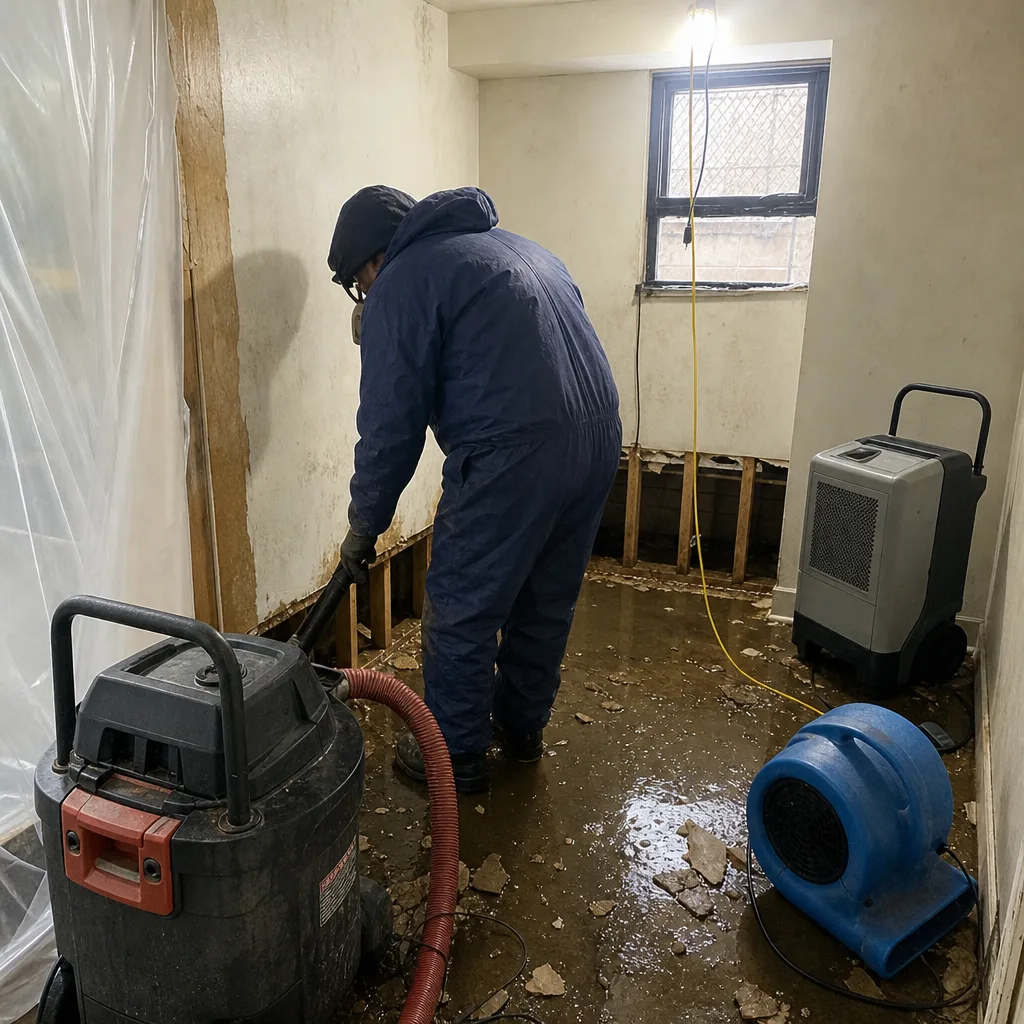
Extraction & Stabilization
Standing water comes out fast with truck-mounted and portable extractors. If the building envelope is breached, we board up and tarp immediately to stop the intake before drying begins.
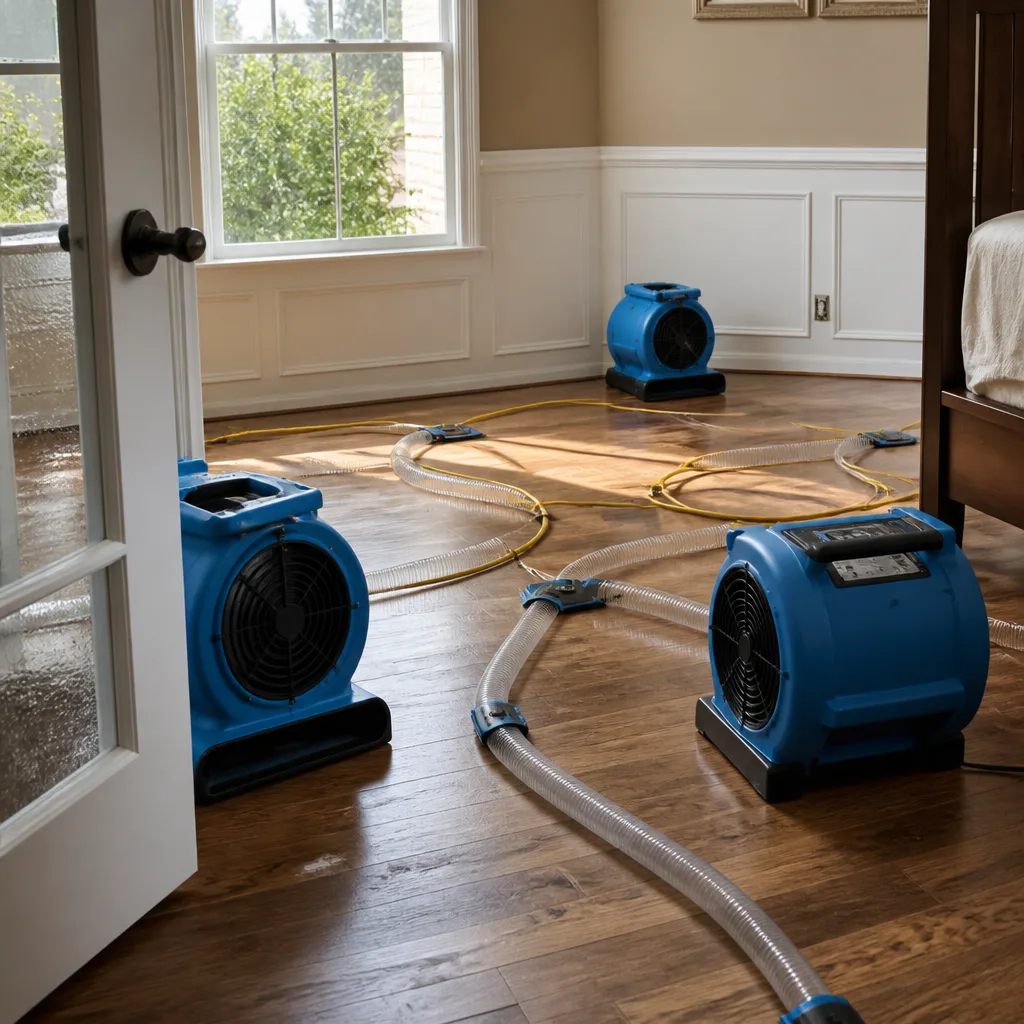
Drying & Dehumidification
We run LGR dehumidifiers, high-velocity air movers, and Injectidry drying mats where floor assemblies are saturated. Moisture readings are logged daily, and you get the full log when the job closes.
Cleaning & Sanitization
Affected surfaces get antimicrobial treatment and HEPA air scrubbing wherever airborne contaminants are a concern. HVAC ductwork gets inspected and cleaned if the loss pushed water or debris through it.
Silent, Scene-Safe Drying
In occupied Broadway houses and production runs, we swap standard air movers for low-profile desiccant rigs that move air without dust or vibration. Stage sets, period costumes, and rigging systems stay untouched.
Repairs & Restoration
Once dry, we rebuild. Drywall, flooring, trim, paint, and any structural repairs needed to bring the space back to pre-loss condition, all covered by the 90-Day Done Right Promise in writing.
Need Emergency Storm & Disaster Restoration in Midtown West Now?
Crews minutes away, answering live 24 hours a day. The sooner we start, the less it costs.
Working With Your Insurance Company
Insurance claims for storm and disaster restoration in Midtown West move faster when documentation starts before the water is even fully extracted. We photograph every affected room, log moisture readings daily, and build a line-item scope of work your adjuster can actually process. Wade has been handling claims since 2007 and he isn’t shy about talking to your carrier directly, so you don’t get stuck as the go-between. If the adjuster wants a second opinion, we’ll walk the loss with them. If the carrier disputes a line item, we’ll show the moisture data that justifies it. Every water, fire, and mold restoration job we do is covered by our 90-Day Done Right Promise, in writing: if it’s not done right, Wade makes it right. No charge for the second trip.
What We Provide Your Insurer
- Thorough documentation of the loss
- Photos of all damage, room by room
- Moisture readings and drying logs
- A detailed, line-item scope of work
- Direct coordination with your carrier
Built for Midtown West’s Loss Calendar
Midtown West’s storm season doesn’t follow one clean pattern, and neither does our response. January deep freezes burst supply lines in century-old Hell’s Kitchen walk-ups whose cast iron has been rusting from the inside since before Prohibition. The spring thaw brings basement seepage through pre-war foundation walls and into below-grade mechanical rooms along the Hudson River side of the neighborhood, where Sandy already proved what surge can do. Summer thunderstorms can drop an inch of rain in an hour, and the Midtown street canyon effect concentrates runoff into light wells and building areaways that haven’t been re-waterproofed since the Coolidge administration. Fall nor’easters push harbor water over the bulkheads and into Con Ed vaults and parking structures from West 34th to West 57th. Any one of these is a phone call at 2 a.m., and Wade has answered that call more times than he can count. When the storm hits Midtown West, our Storm & Disaster Restoration team is already staged and moving.
Storm & Disaster Restoration Across Midtown West’s Neighborhoods
Response routes through Midtown West change hour by hour, and we know the rhythms. Hell’s Kitchen, the residential core between West 34th and West 57th, is a warren of pre-war brick walk-ups where a single burst supply line can flood five apartments at once and where street-level storefronts take the brunt of wind-driven rain. The Theater District between 41st and 54th Streets runs on production schedules, so anything we do around Broadway houses has to happen in the quiet hours between load-out and call time, with silent equipment and zero dust. Hudson Yards is a different world entirely: ultra-luxury towers with firestop-sealed floor plates, sophisticated building management, and insurance valuations that make a single wet mechanical room a six-figure claim. Times Square’s commercial frontage means street-level board-up has to happen fast enough to protect inventory and storefront glass before the next system moves through. We’re not navigating Midtown West from a GPS app for the first time during your emergency. We know which loading docks take a box truck, which freight elevators close at 6 p.m., and which blocks the NYPD has staged for an event.
Specialized Storm & Disaster Restoration Services We Offer in Midtown West
Flood Damage Restoration
Midtown West floods from three directions: Hudson River surge from nor’easters, interior supply line failures in pre-war buildings, and street-level water pushed through doors and light wells by the Midtown canyon effect. We extract first, then dry the structure, then rebuild. In Hell’s Kitchen, that often means Injectidry mats on hardwood floors over original joists, and careful containment so category 3 water doesn’t wick through shared walls into the adjoining unit. For Hudson Yards and the newer west-side towers, it means coordinating with building management and understanding firestopping that older buildings don’t have.
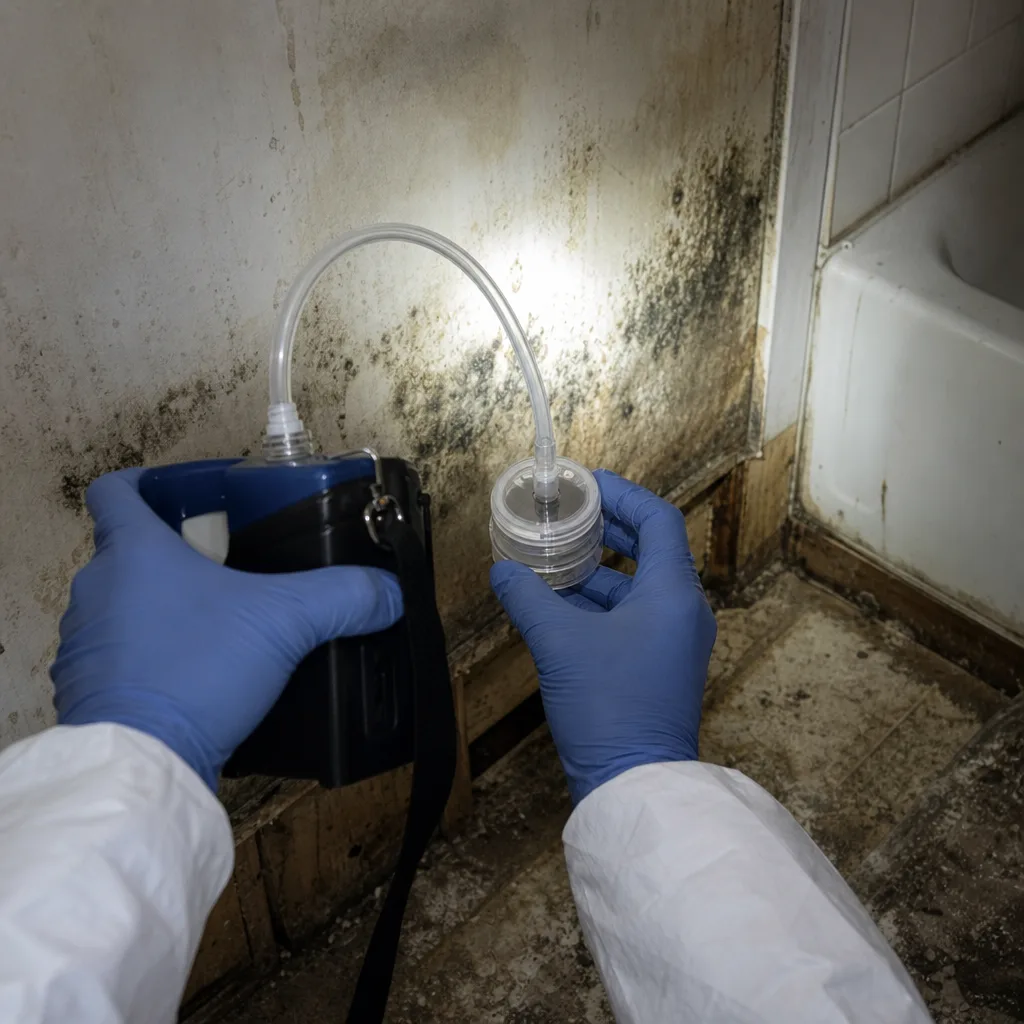
Emergency Board-Up
Broken street-level glass on a Ninth Avenue storefront cannot wait until morning. We board up within the hour, secure the opening against weather and entry, and photograph everything for your claim before anyone touches the scene. For residential buildings, board-up covers broken windows, roof breaches, and compromised doors. The plywood gets measured, cut, and installed to stay put through the next storm, not just the next hour.
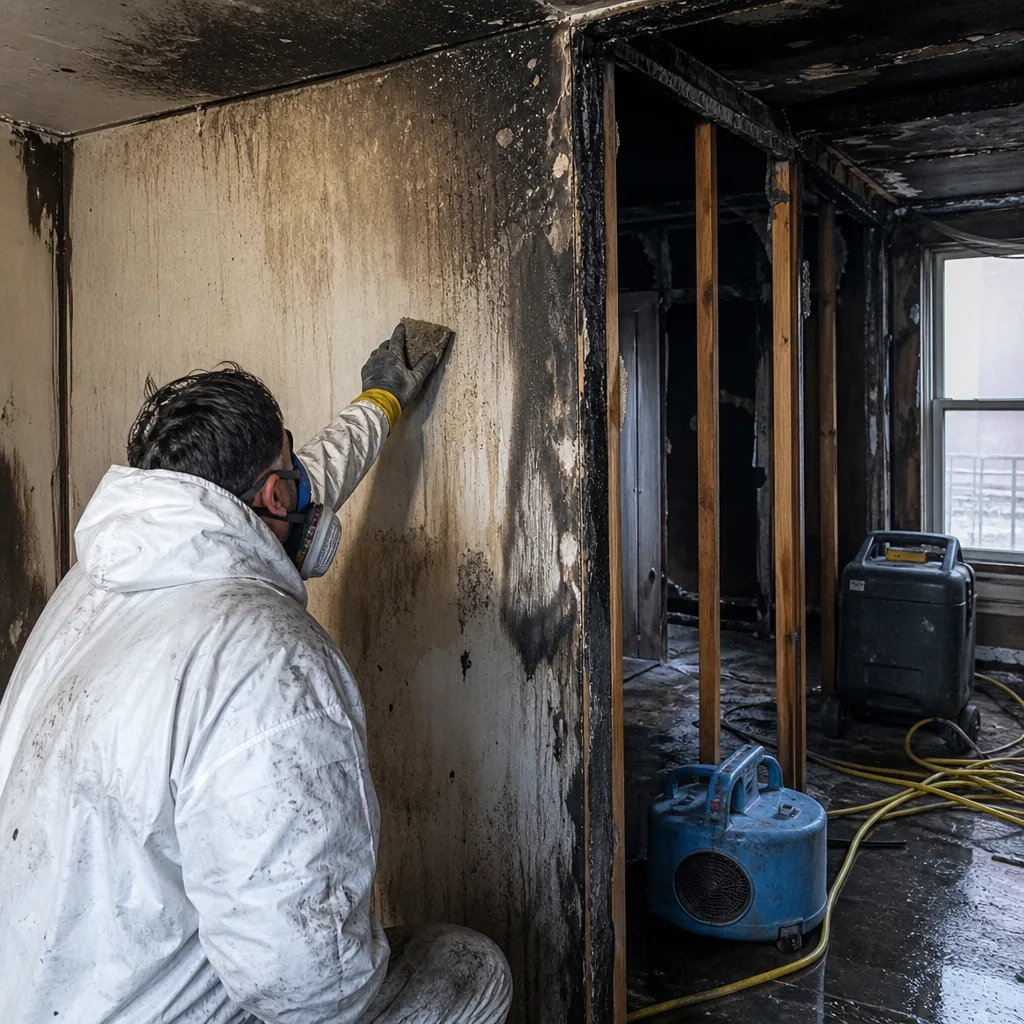
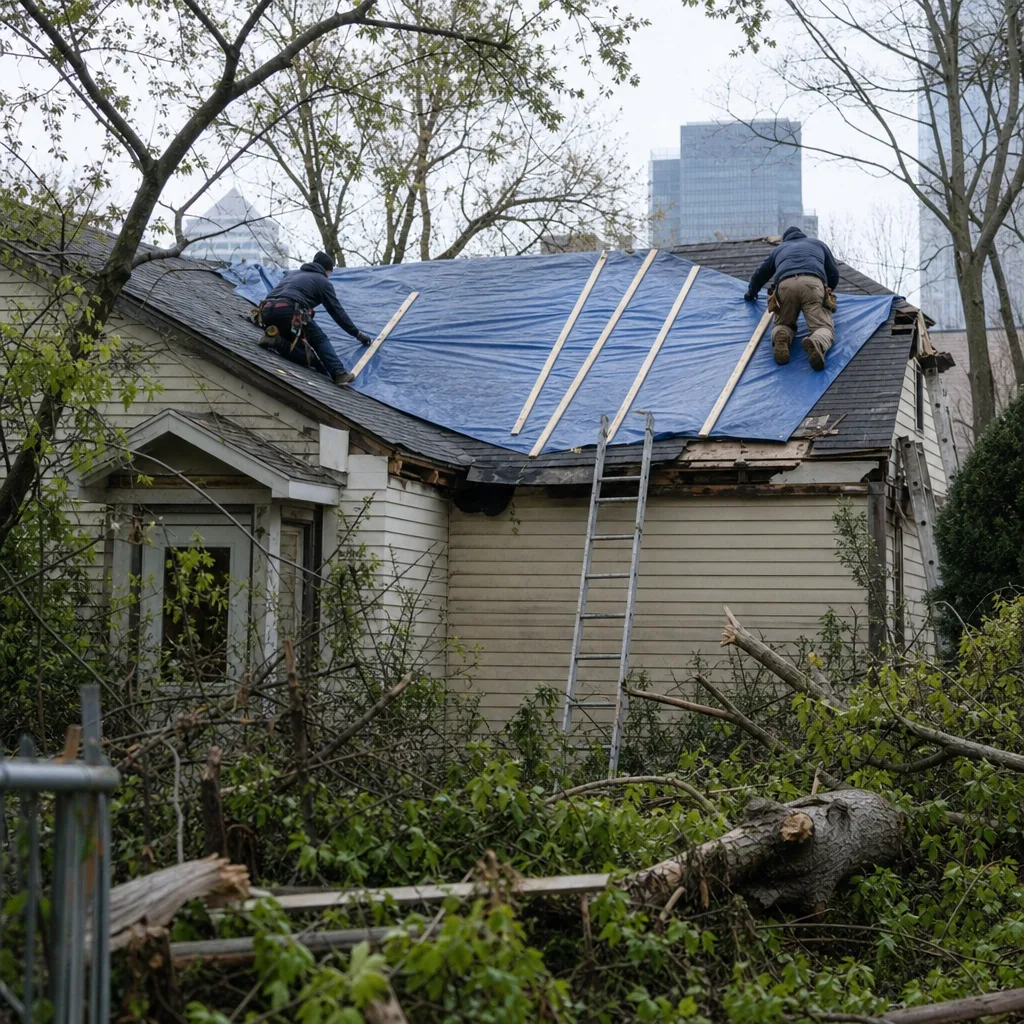
Roof Tarping
Wind-driven rain finds every compromised membrane, and Midtown West’s mix of old tar-and-gravel roofs on pre-war buildings and membrane systems on newer construction means no two tarp jobs look the same. We tarp to shed water away from the breach, not just cover it, and we do it safely from the roof deck without sending anyone over a parapet in high wind. The tarp buys you time to file the claim and schedule permanent repairs without the interior getting wetter every hour.
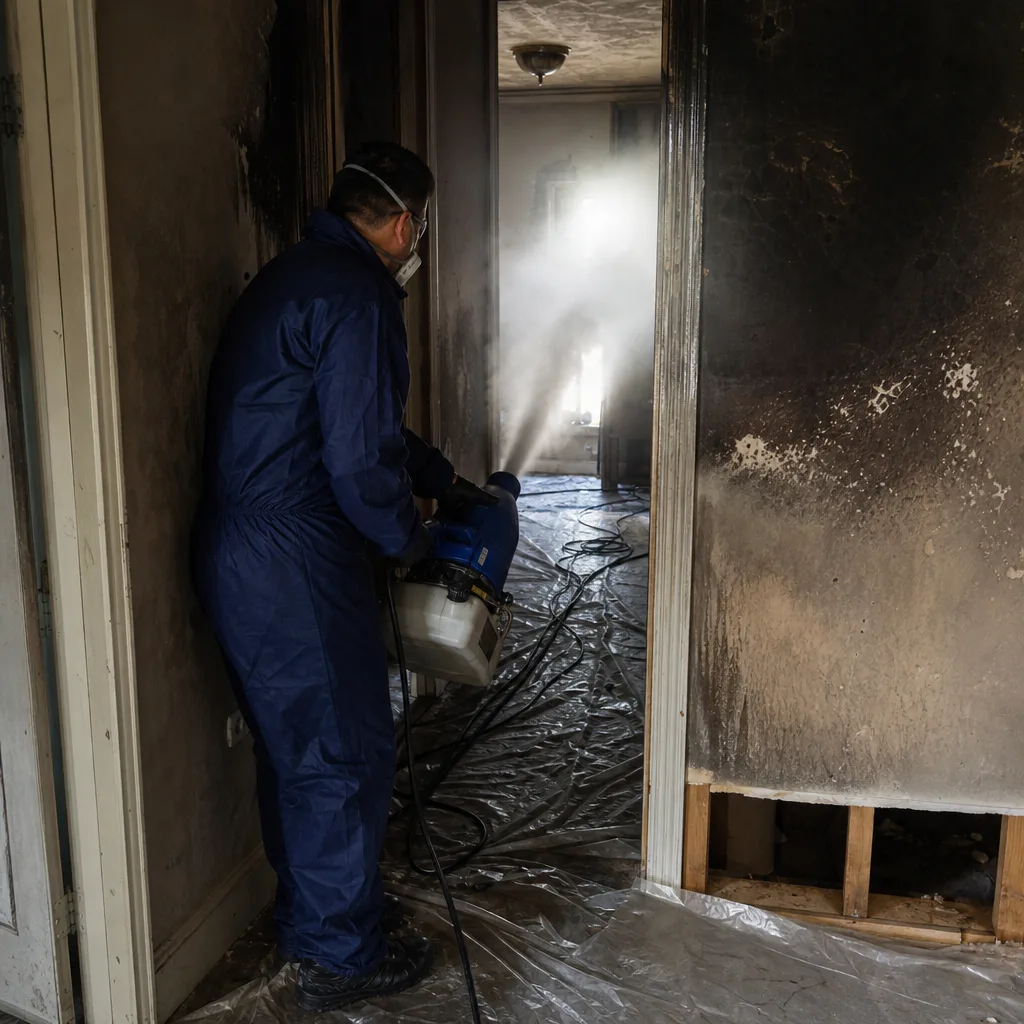
Debris Removal
Nor’easters and summer microbursts leave Midtown West sidewalks and rooftops littered with tree debris, broken glass, signage, and the occasional air conditioner casing blown off a window sill. We remove debris from the building interior, roof, and immediate exterior to stop further damage and create a safe work area. If debris is blocking a fire escape or a building areaway, we clear it the same day, because life safety doesn’t wait for the adjuster.
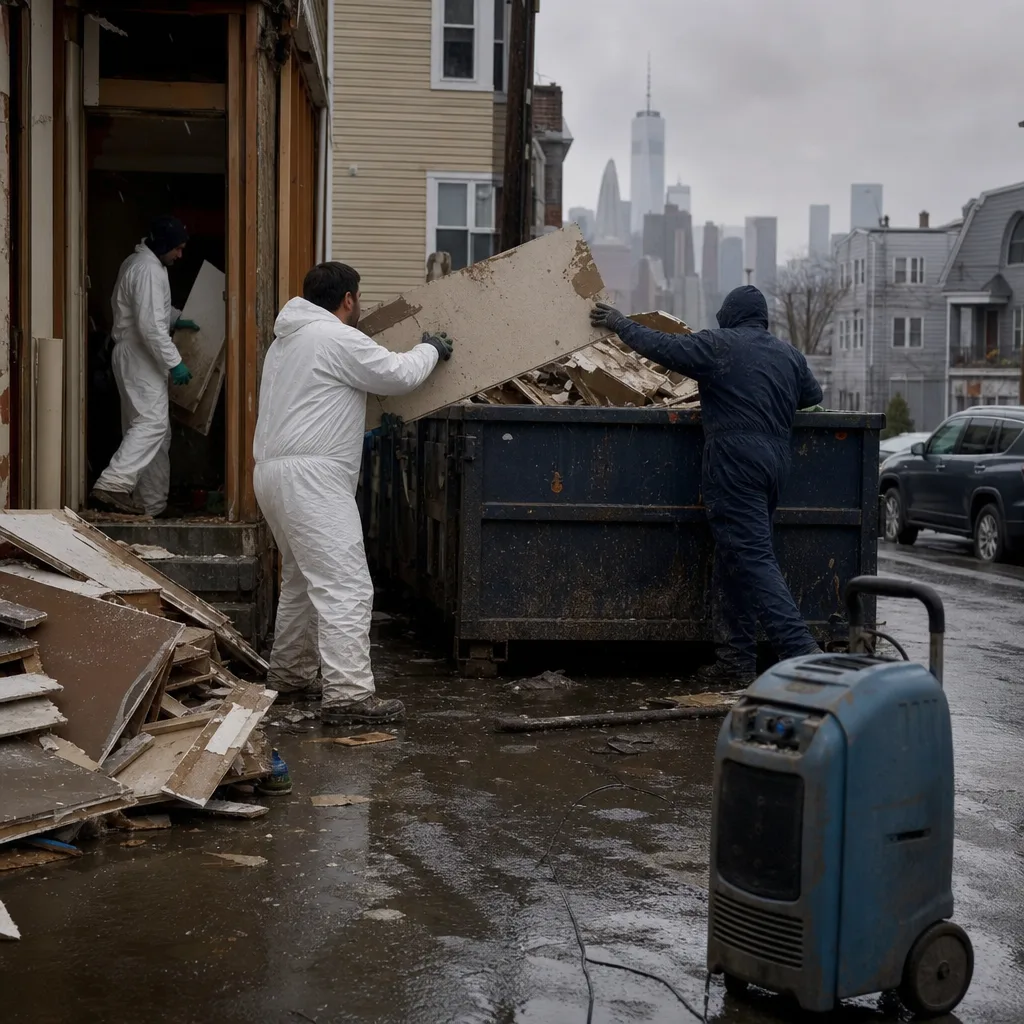
Wind Damage Repair
Wind exploits weak points: parapet caps, cornice brackets, older roof membranes, improperly flashed vent pipes, and anything loose on a rooftop. We repair what wind opened up, then inspect the surrounding envelope for damage you can’t see from street level. On pre-war Midtown West buildings, original brick and mortar joints often let wind-driven rain through walls that look fine from outside until we open them up.
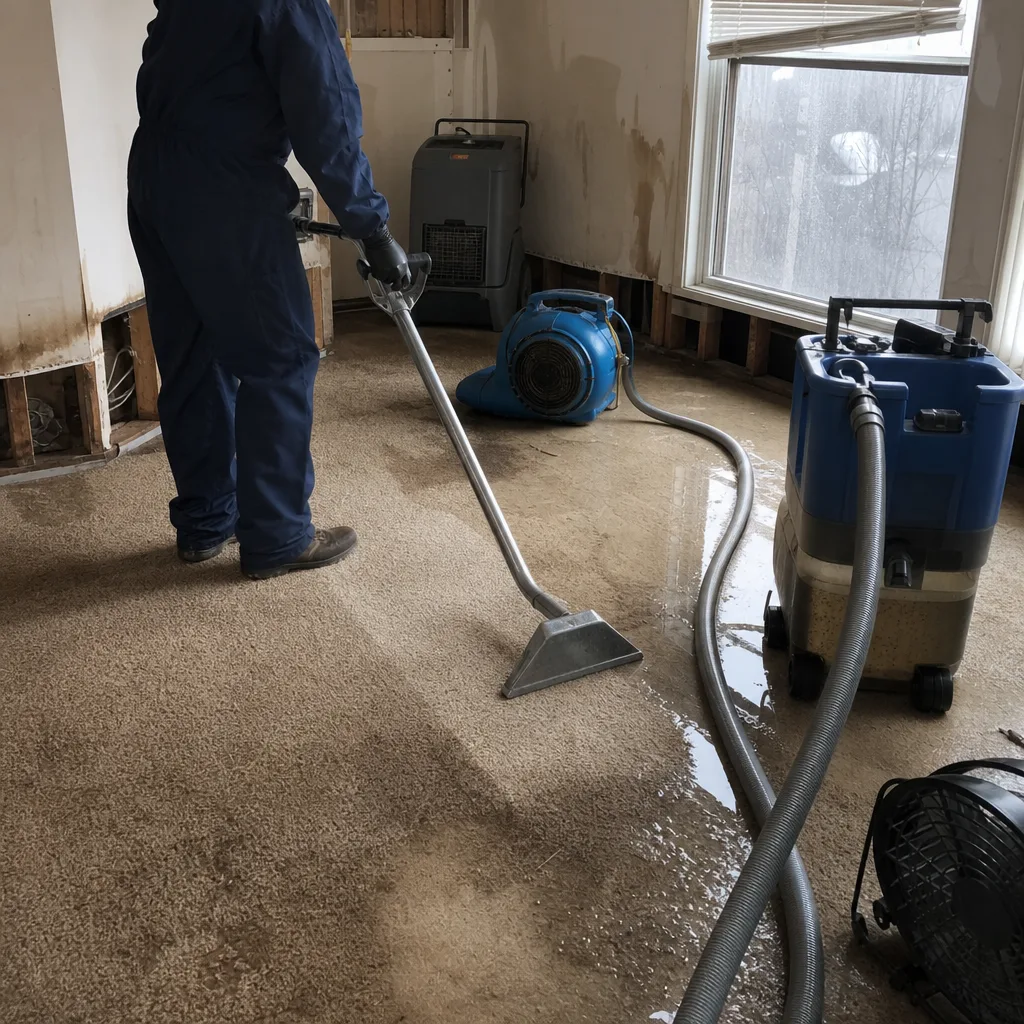
What happens when you call
- 1
A real person answersNo phone trees - you reach a local pro.
- 2
You get an upfront price rangeHonest numbers before anyone is dispatched.
- 3
A background-checked tech heads outLicensed & insured, dispatched right away.
- 4
You approve before work beginsNothing starts until you say go.
Storm & Disaster Restoration Costs in Midtown West, NY
Pricing here is shaped by the building stock, not just the damage. A typical water extraction and structural drying in a Hell’s Kitchen walk-up runs $2,500-$8,500 depending on category and how many floors the water migrated through. Flood damage restoration in a Hudson Yards tower mechanical room with firestop and finish repair rarely starts under $8,000 and can reach $20,000+ if the loss involved surge water. Emergency board-up is $450-$900 for a standard street-level opening, and roof tarping runs $600-$1,200 for a single-family-scale roof, more for commercial spans. Debris removal is typically $350-$1,500 depending on volume and disposal. The free visual inspection gives you a firm line-item scope before you commit, and Wade will go through it with you line by line. If your carrier is paying, we bill direct.
We Also Serve Cities Near Midtown West
If you’re just outside the neighborhood, we handle storm and disaster restoration in Lower Manhattan, the Financial District, Astoria, and Midtown Manhattan as well. Same phone, same owner on the line, same 45-minute response commitment. Midtown West is our home turf, but the surrounding boroughs and districts are a natural part of the route.
Serving Midtown West, NY - Our Local Coverage Area
We’re based in the Midtown West area and know this community well. Use the map below to see our service coverage - if you’re nearby, we can almost certainly help.
Midtown West Storm & Disaster Restoration Questions, Answered
How quickly can you begin water extraction in a flooded Hell’s Kitchen pre-war building?
We can have a crew on-site in Midtown West within 45 minutes of your call, and extraction starts as soon as we’ve documented the loss and secured the electrical panel. For a Hell’s Kitchen walk-up, that usually means truck-mounted extractors staged in front of the building and lines run up the stairwell, with extraction starting on the lowest floor where water depth is greatest. Call (607) 350-1550 and Wade himself will have the crew moving.
Why does restoration in Midtown West require silent, scene-safe equipment more than other Manhattan neighborhoods?
Because Midtown West’s Theater District hosts the densest concentration of Broadway houses in the country, with 41 active theaters between 41st and 54th Streets. A production run cannot stop for a water loss, and production managers ban standard air movers for the dust and vibration they throw. We use low-profile desiccant drying rigs and hand-demo methods around sets, costumes, and rigging systems, so the show goes on while the building dries.
Do you handle storm damage in Hudson Yards high-rise towers differently than in older walk-ups?
Yes. Hudson Yards towers have firestopped floor assemblies, modern mechanical systems, and building management protocols that change how we access, dry, and rebuild. A walk-up from 1920 has original cast iron lines and shared party walls. We moisture-map both, but the containment, drying plan, and reconstruction scope are completely different, and we coordinate directly with building management on the tower side.
What does emergency board-up include for a Midtown West street-level storefront after a storm?
We arrive, photograph the damage for your claim, clear loose glass and debris safely, measure the opening, cut plywood on-site, and install it to stay put through the next weather system. For a Midtown West storefront on an avenue like Ninth or Tenth, we also check the transom and any side glass for wind damage that hasn’t failed yet. Board-up starts at $450-$900 for a standard opening.
Will restoration bring our theater back to pre-loss condition without shutting down a production?
Yes. We work around the production schedule, in the quiet hours, with silent drying equipment that doesn’t dust the sets or costumes. The 90-Day Done Right Promise applies here just the same: if it’s not done right, Wade makes it right, in writing on the contract.
Will my insurance cover storm and disaster restoration in Midtown West?
Most homeowners and commercial policies cover storm damage, including wind-driven rain, falling debris, and floodwater if you carry flood coverage. We document everything from the first hour with photos, moisture logs, and a line-item scope of work, then coordinate with your adjuster directly so the claim moves without you playing middleman. Call (607) 350-1550 and we’ll walk you through what your policy likely covers before we write the estimate.
Can we stay in the building during storm damage restoration in Midtown West?
It depends on the category of water and the extent of the loss. Category 1 clean water losses often allow partial occupancy while drying runs. Category 3 contaminated water or a loss that spreads through shared walls usually requires vacating the affected units until clearance testing comes back. We’ll tell you straight, same visit, no hedging. In Midtown West’s pre-war buildings, shared party walls often mean the unit next door needs to know what we found too.
What should I do in the first 30 minutes after storm water enters my Midtown West property?
Call (607) 350-1550. Then shut off electricity to the affected areas if you can do so safely without standing in water, move small valuables up and away from the wet area, and take photos of everything before anything moves. Do not use a shop vac on category 3 water, and do not enter a below-grade space if water is rising. We’ll be there within the hour and take it from there.
Written by Wade Ferris, Owner at Wade’s Restoration, serving Midtown West and the surrounding New York City area since 2007.