
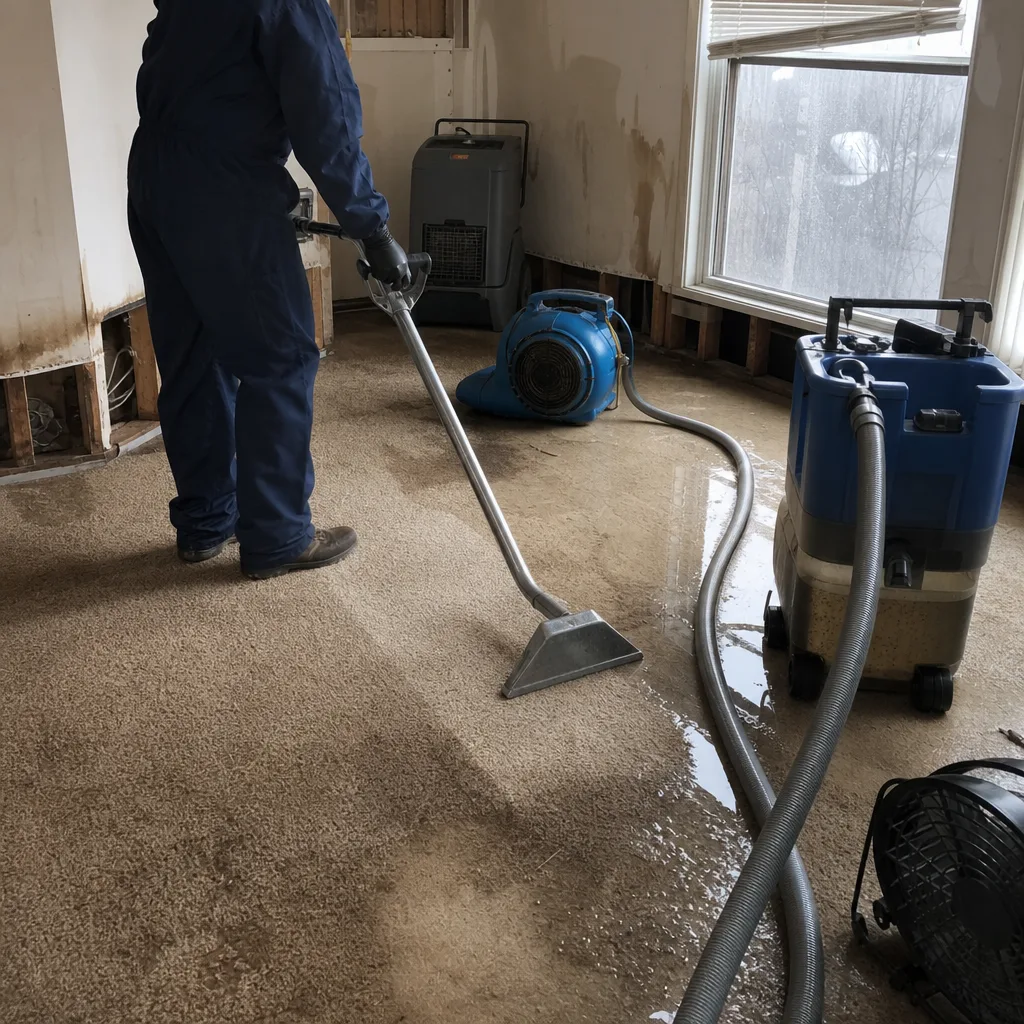
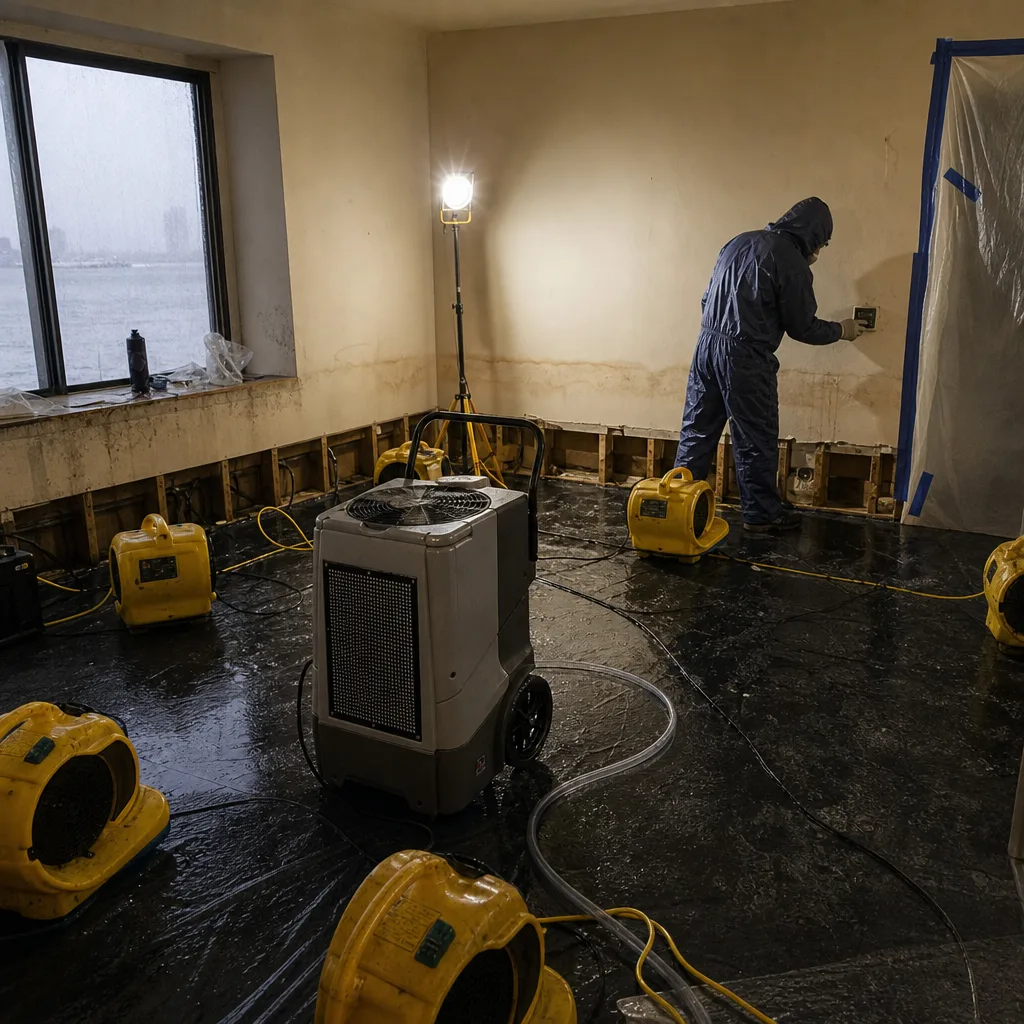
Free visual inspection and a written scope of work before any mitigation begins - photos, moisture readings, and drying logs go in your claim file
The scope we write is the scope we bill. Anything new gets shown to you, in writing, before we touch it.
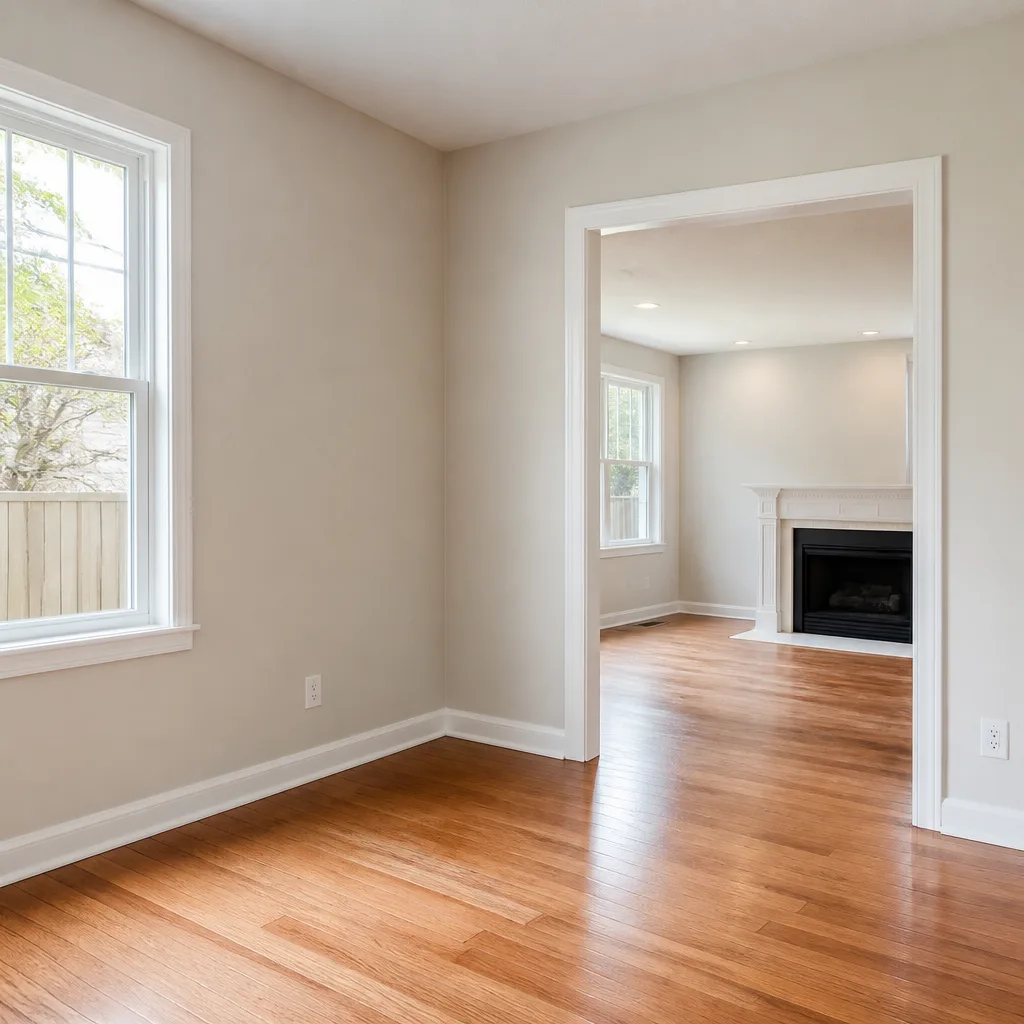
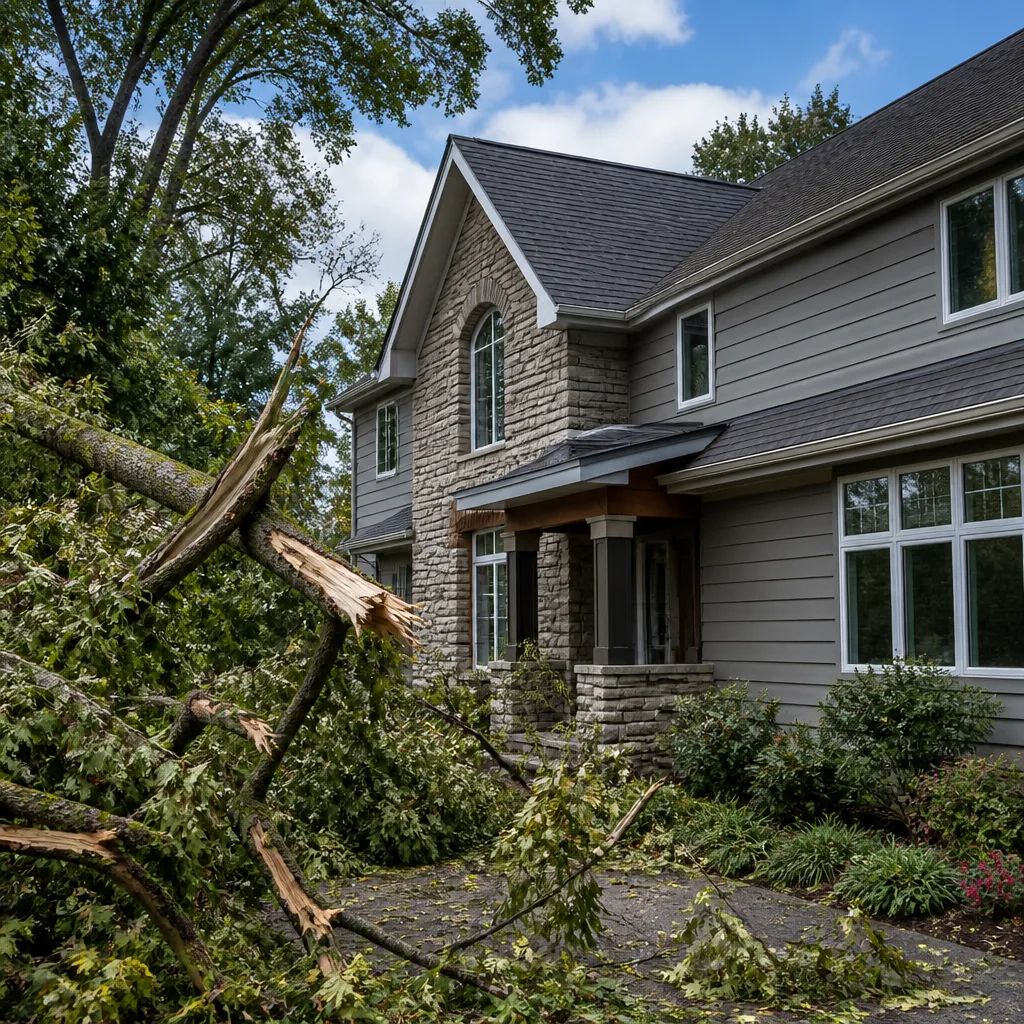
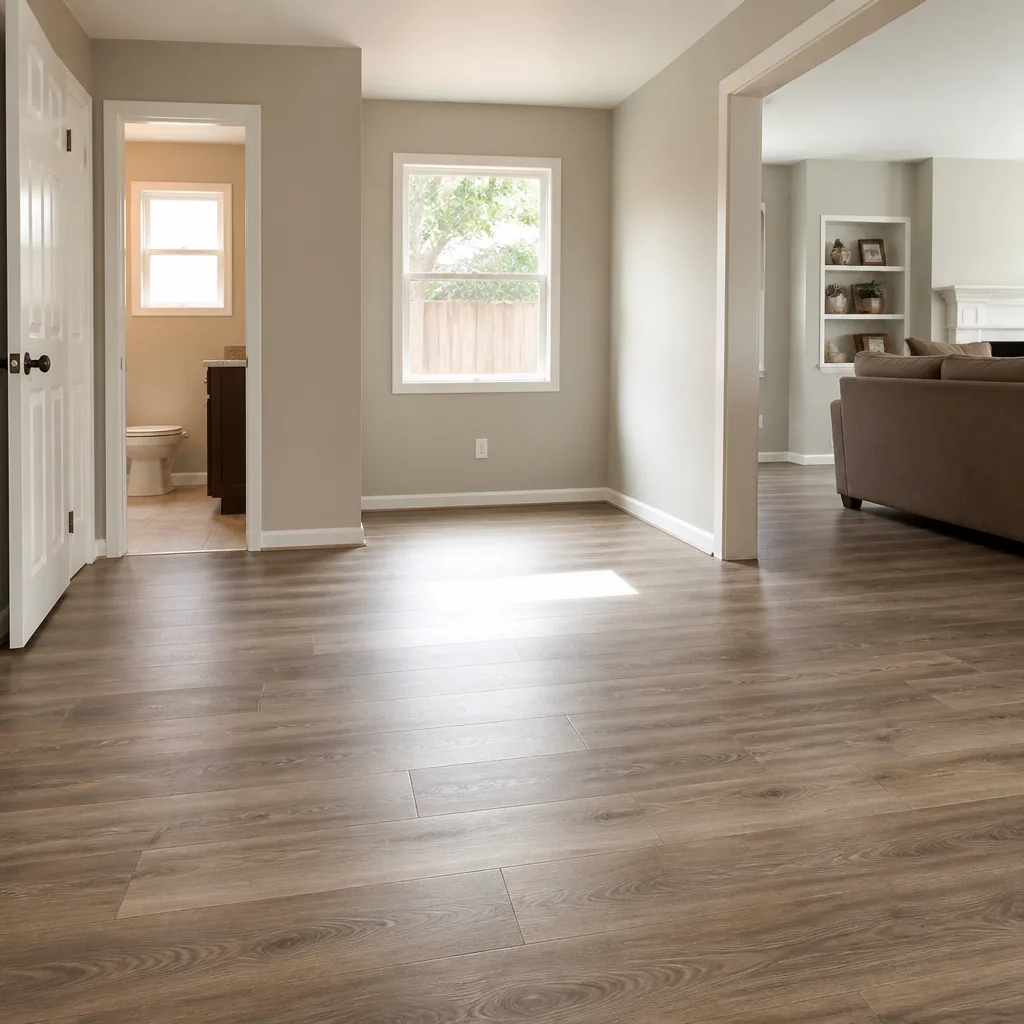

 Before
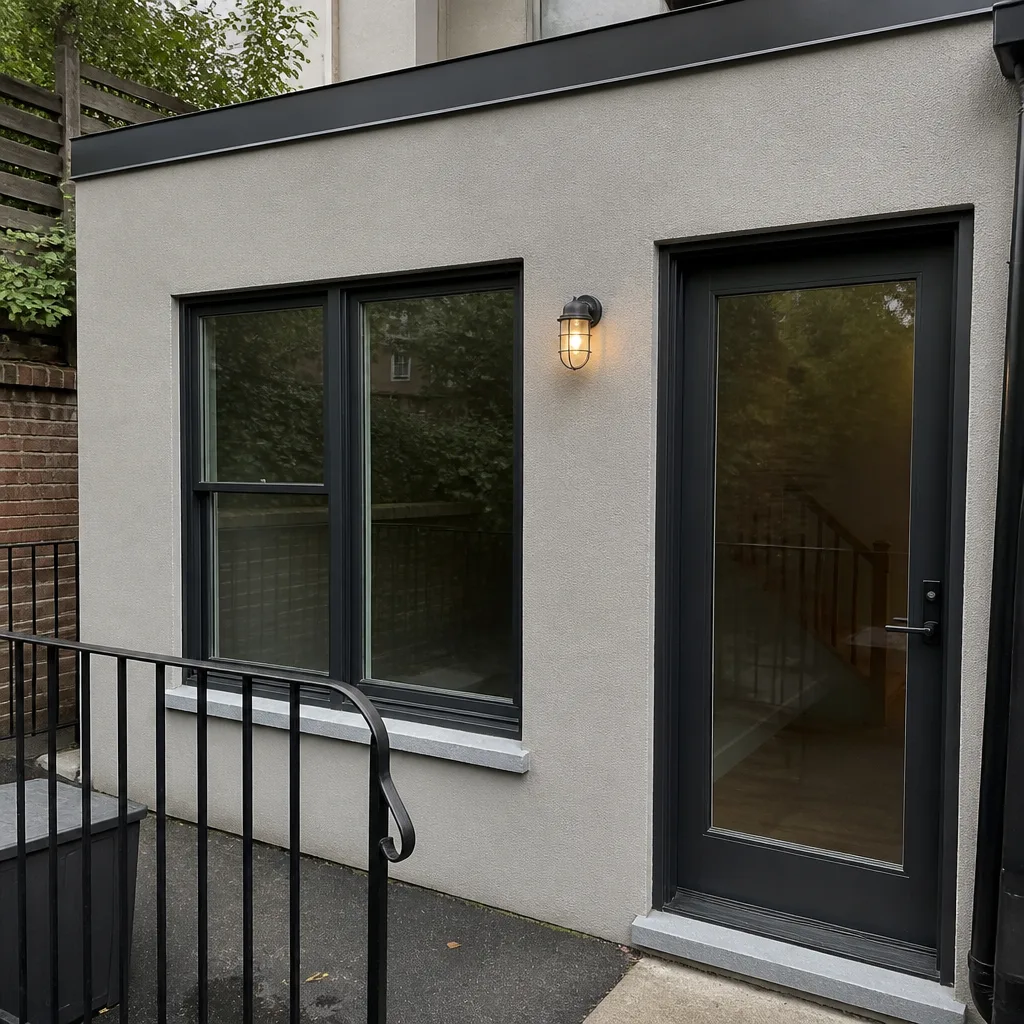 After
After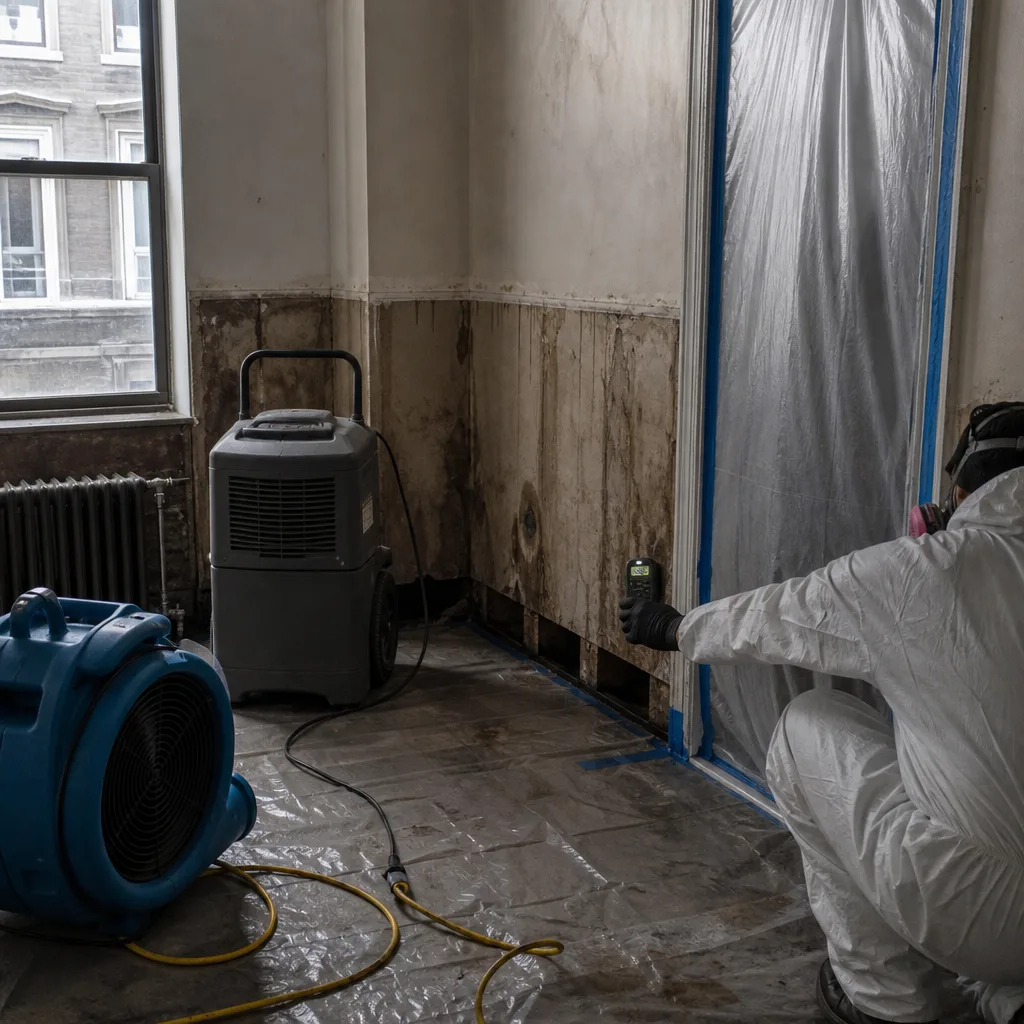 Before
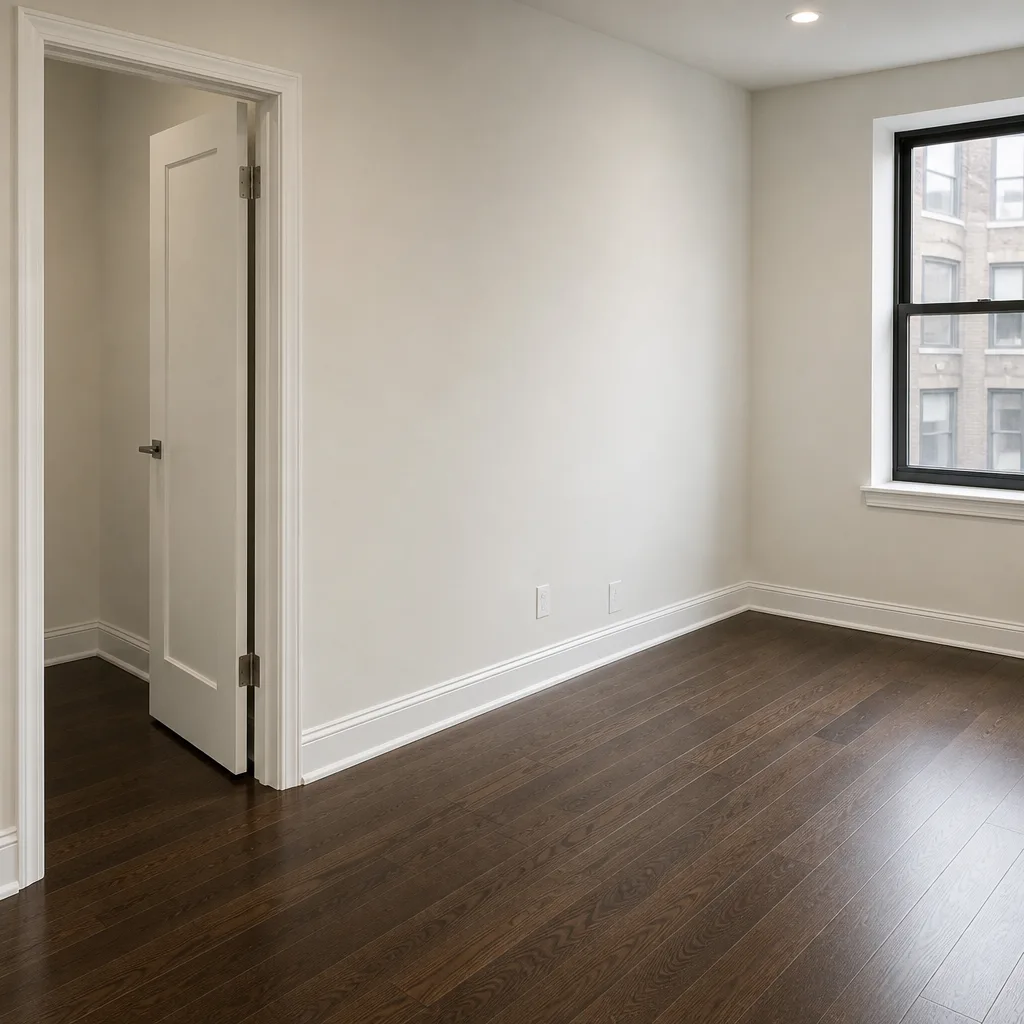 After
After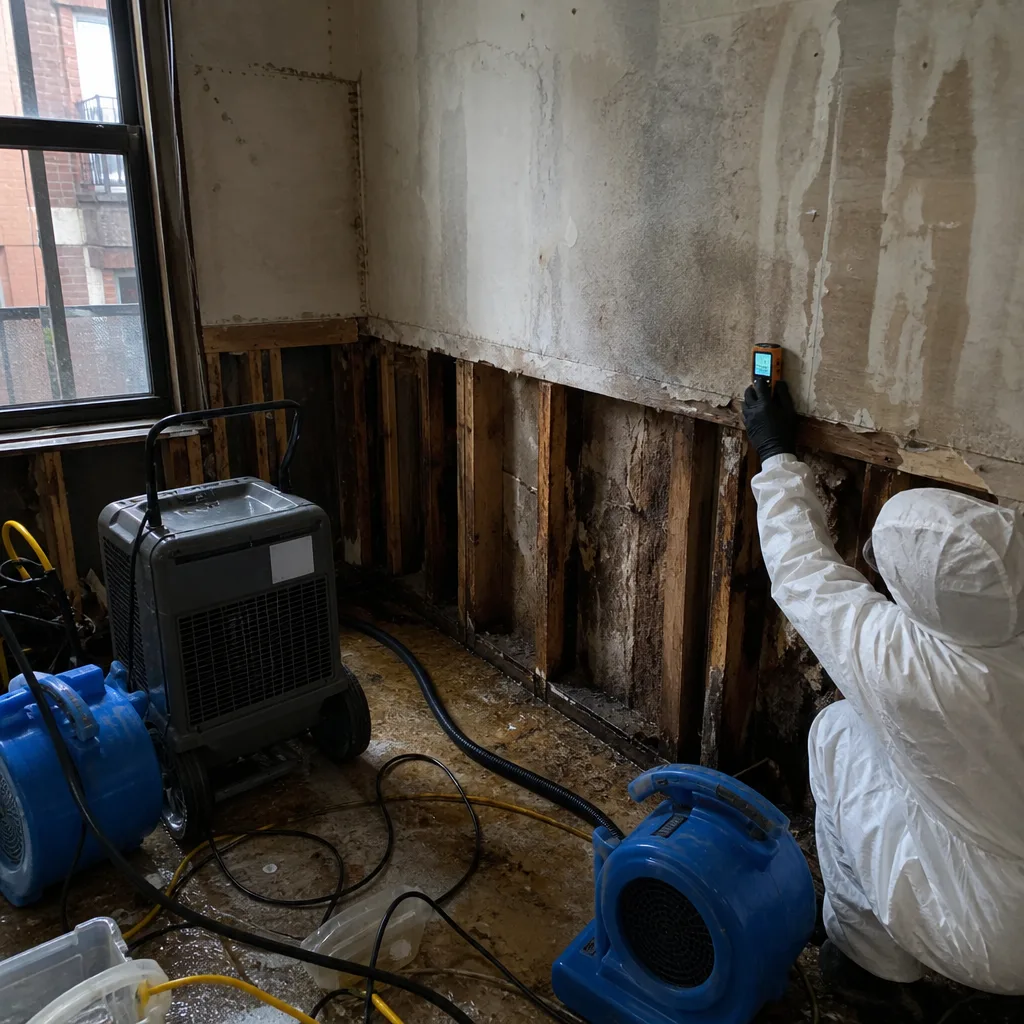 Before
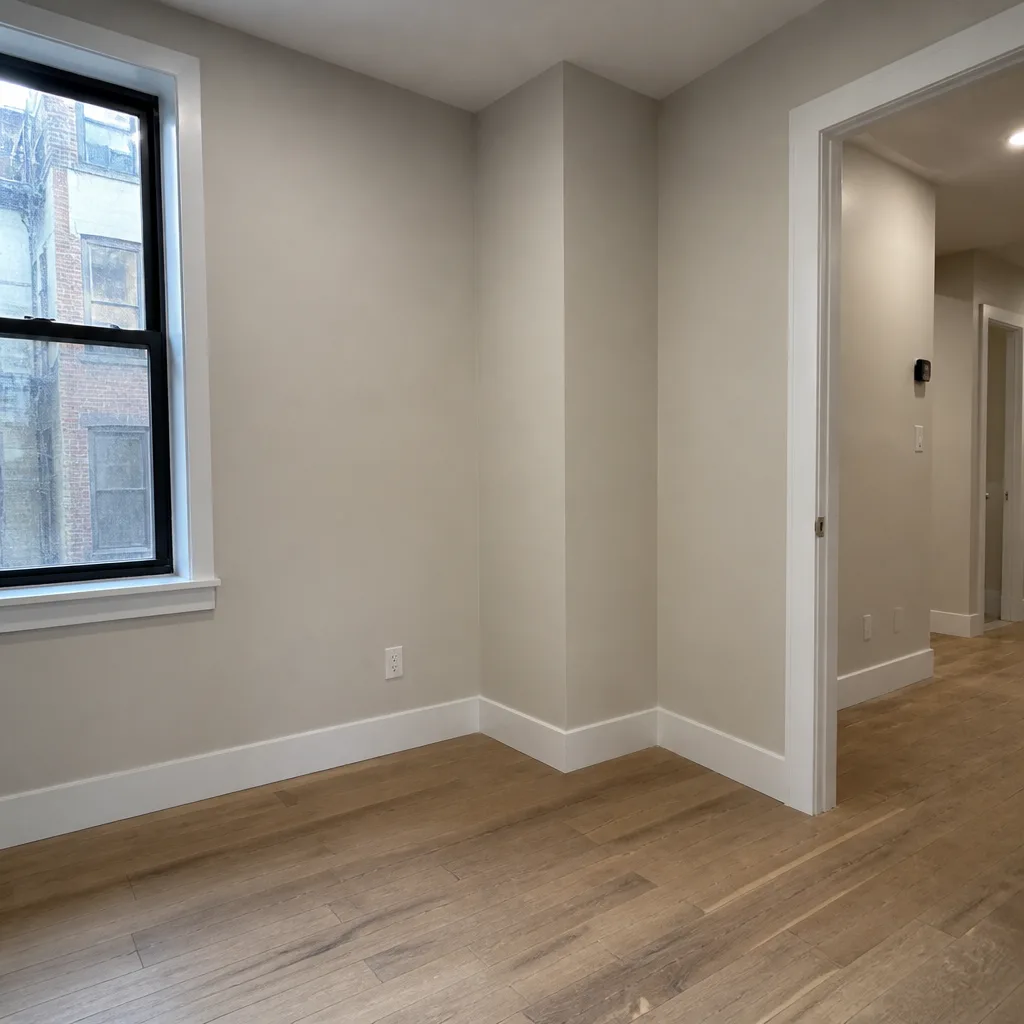 After
After24/7 Emergency Water Damage Restoration in Jersey City
Water damage in Jersey City doesn’t wait for business hours, and neither do we. When a supply line bursts in a Paulus Hook high-rise or a nor’easter pushes the Hudson over its banks into Newport, our crews are already staged and ready to roll. Call (607) 350-1550 any hour, day or night, and you’ll reach a live person, often Wade himself. We can have extraction running inside the hour in most Jersey City neighborhoods, from Greenville to The Heights. The first 60 minutes after water hits your floors, walls, or building cavities is when the difference gets set: water that gets extracted fast limits what it can wick into, which limits what has to be torn out later. A free visual inspection tells you exactly where you stand, and our Water Damage Restoration crews bring the equipment and the know-how to stop the damage from spreading while you figure out next steps.
Understanding Water Damage Restoration Severity in Jersey City Properties
Not all water damage is the same, and Jersey City’s building stock makes the differences sharper than in most markets. Category 1 water comes from a clean source like a burst supply line under a kitchen sink in a Bergen-Lafayette brownstone. Category 2 carries significant contamination, think washing machine overflow or sump pump failure in a Greenville basement. Category 3 is the one that matters most around here: black water, the kind that arrives when combined sewer backups push raw sewage into basement apartments off West Side Avenue during a heavy rain. Each category demands a different response, and Category 3 requires full containment, antimicrobial treatment, and often removal of porous materials that touched the water. Jersey City’s aging brick row houses and pre-war masonry buildings hide moisture behind lime plaster and original hardwoods, which means moisture mapping with thermal imaging and daily hygrometer readings aren’t optional add-ons. They’re the only way to know when a wall cavity is actually dry.
Why Jersey City Property Owners Choose Wade’s Restoration
- 45-minute response commitment in Jersey City: The clock starts when you call. Wade heads out immediately, and extraction equipment is on the road behind him.
- 24/7 live answer, always a person: You won’t get a voicemail or an answering service. Wade answers his own phone at 3 a.m. the same way he does at noon.
- IICRC-certified crews: WRT and ASD certifications back every water restoration job; for Category 3 losses, AMRT protocols come into play with full containment and negative air.
- Free visual inspection: No trip charge inside our own county, and a straight answer about what you’re actually facing before anyone touches a wall.
- Direct insurance billing: We document everything from the first hour and send it straight to your adjuster, so you’re never the middleman relaying paper between two sides.
- One team, extraction to reconstruction: The same crew that sets the air movers in your Jersey City basement is the crew that rebuilds the wall. No handoffs, no finger-pointing.
Our Water Damage Restoration Process
Inspection & Assessment
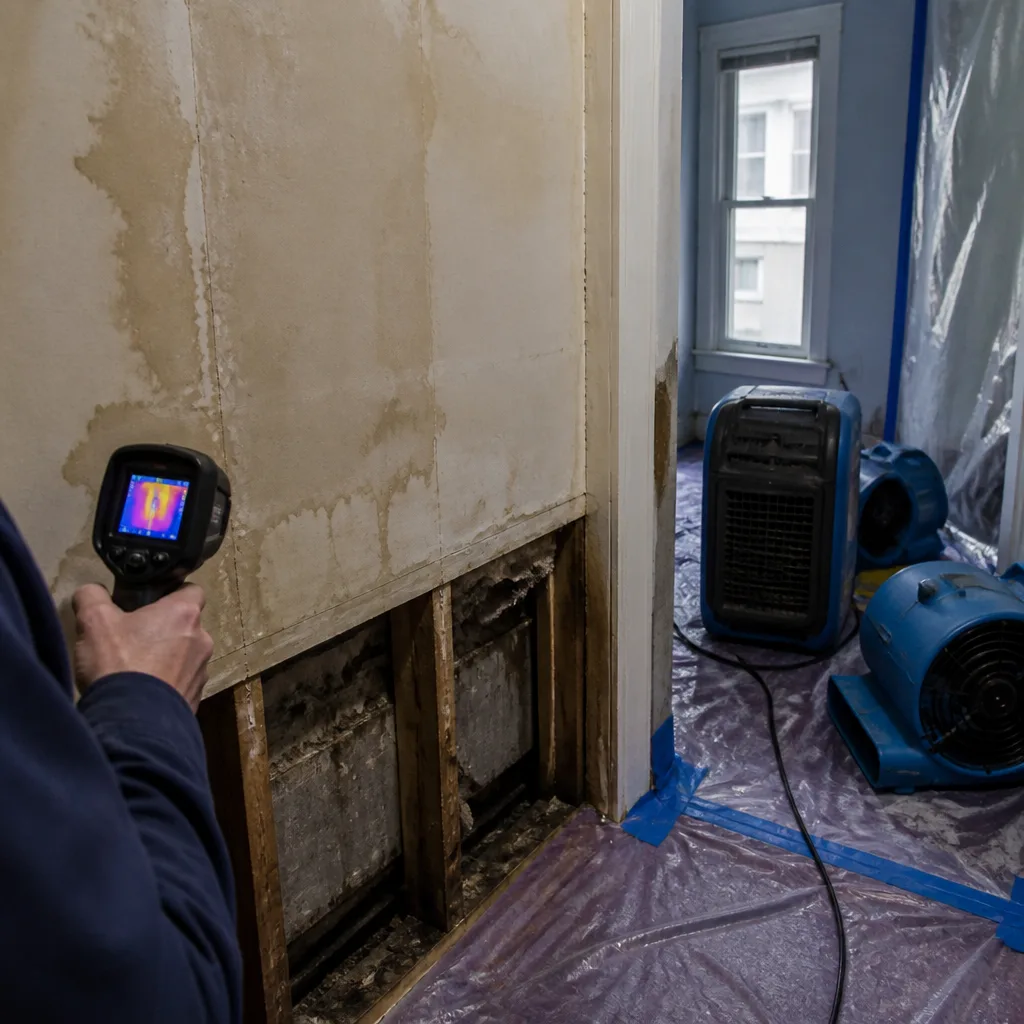
We start by finding every wet surface, not just the obvious ones. Thermal imaging reads through plaster and drywall to locate moisture trapped in wall cavities, and we map the full affected area so the scope matches reality, not guesses.
Extraction & Stabilization
Heavy extraction units pull standing water fast. In Jersey City basements, where water can sit over old concrete and brick, getting it out quickly is the single biggest factor in whether framing and flooring survive.
Drying & Dehumidification
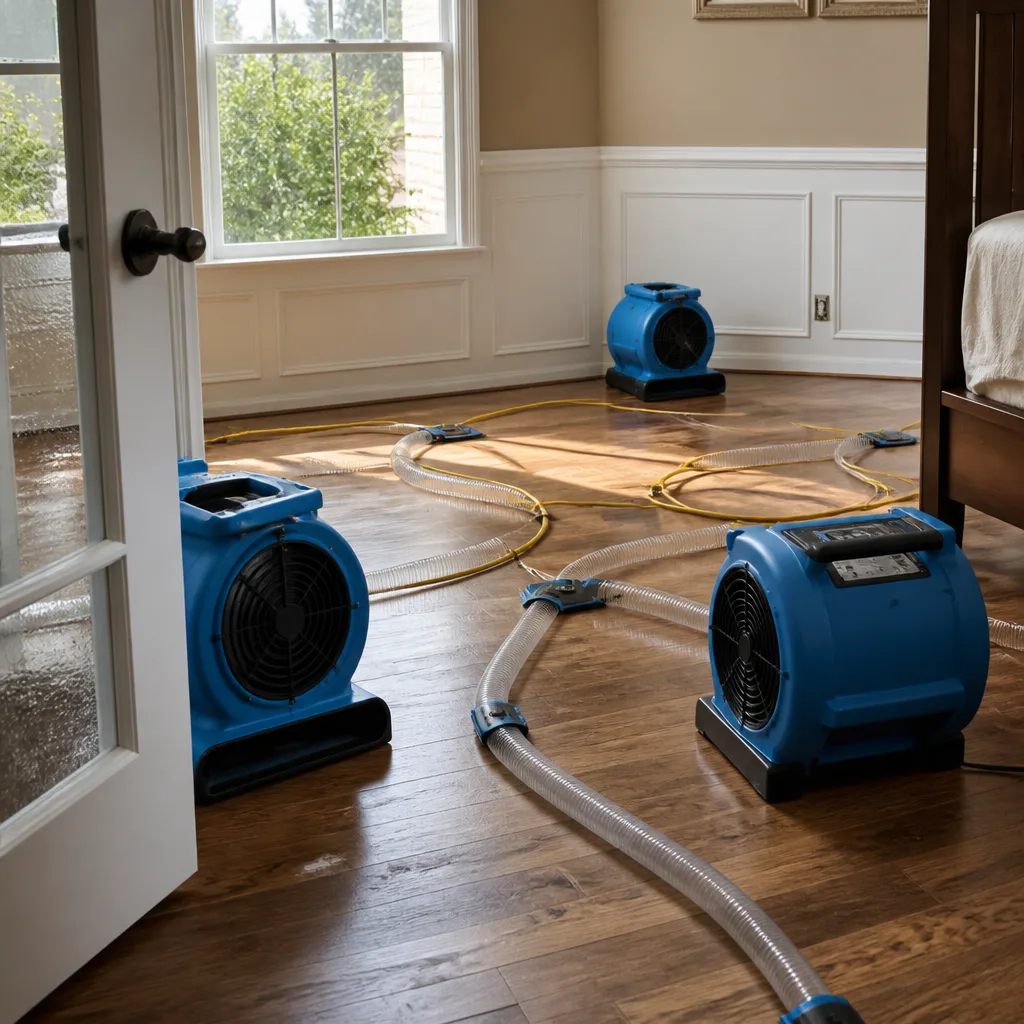
Dri-Eaz and Phoenix air movers and dehumidifiers go in, positioned for the building’s actual layout. We take moisture readings every single day and hand you the full log at the end, nobody in this trade does that consistently, and we do it on every job.
Cleaning & Sanitization
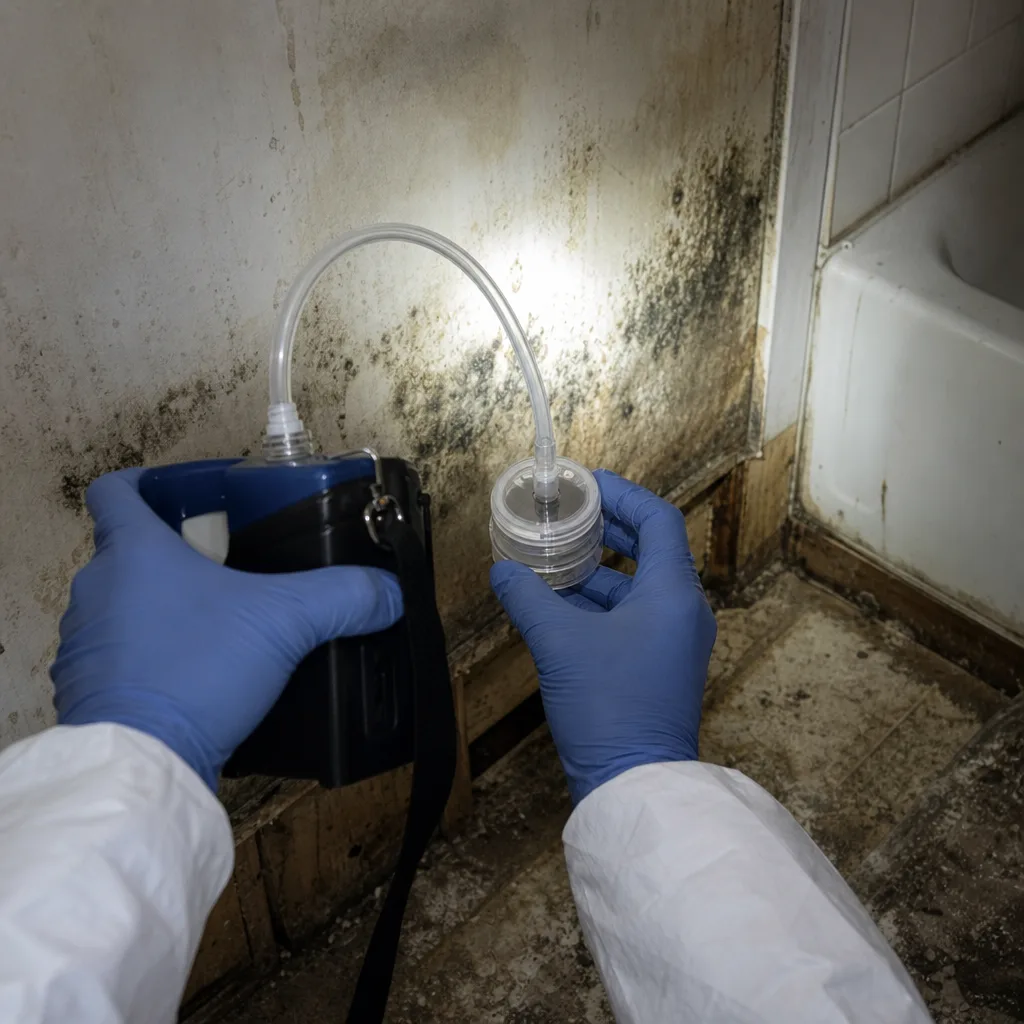
Category 3 losses in Jersey City get full containment, HEPA air scrubbing, and antimicrobial treatment. Clean water losses get surface cleaning appropriate to what actually happened. We never treat a sewage backup like a pipe leak.
Specialty Treatment
For saltwater intrusion in waterfront neighborhoods like Paulus Hook and Newport, desalination comes before drying. For wind-driven rain through brick facades in The Heights, we address the masonry pathway so the problem doesn’t recur next nor’easter.
Repairs & Restoration
Once moisture readings drop below the dry standard, reconstruction begins. Plaster repair, flooring replacement, millwork, paint. Same crew, same project, done right and covered by our 90-Day Done Right Promise in writing.
Need Emergency Water Damage Restoration in Jersey City Now?
Crews minutes away, answering live 24 hours a day. The sooner we start, the less it costs.
Working With Your Insurance Company
Insurance claims for water damage in Jersey City have their own rhythms, and we’ve been through enough of them to know where the snags are. The adjuster’s job is to settle the claim accurately, and our job is to make sure they see the full picture. From the first hour, we photograph every affected room, log initial moisture readings, and start building the documentation trail that keeps your claim moving. We write line-item scopes using industry-standard pricing, so your carrier recognizes the numbers instead of questioning them. And we talk to the adjuster directly. You shouldn’t have to be the one explaining why a Category 3 sewage backup in a Greenville basement requires containment, not just drying. When the adjuster calls with questions, they call us, not you.
What We Provide Your Insurer
- Thorough documentation of the loss
- Photos of all damage, room by room
- Moisture readings and drying logs
- A detailed, line-item scope of work
- Direct coordination with your carrier
Built for Jersey City’s Loss Calendar
January deep freezes in Jersey City burst supply lines in unheated hallways and basement utility rooms of the city’s older brick row houses. When a galvanized pipe lets go in a Greenville two-family, it can dump hundreds of gallons into the finished basement before anyone notices. Spring thaw brings seepage through foundation walls and floor joints, especially in Bergen-Lafayette where century-old lime mortar has given way to hydrostatic pressure. Summer thunderstorms overwhelm the combined sewer system, and that’s when Category 3 backups hit basement apartments in neighborhoods from Journal Square to the Heights. Nor’easter season is the wild card: storm surge from the Hudson and Upper New York Bay pushes saltwater into waterfront districts, and wind-driven rain finds its way through masonry facades that haven’t been repointed in decades. Each season has its own failure mode, and Jersey City homeowners learn them the hard way. We’ve been out here long enough to know exactly what each one looks like.
Water Damage Restoration Across Jersey City’s Neighborhoods
Paulus Hook and Newport sit on low-lying landfill and filled land, which puts them in FEMA high-risk flood zones and means storm surge is an ever-present threat. When water gets into those buildings, it’s often saltwater, which changes the whole playbook. The Heights runs along the Palisades ridge, where dense brick row houses catch northeast winds straight off the Hudson. Wind-driven rain through deteriorated mortar joints produces interior efflorescence and hidden mold behind plaster, a pattern that looks nothing like a ceiling leak and gets misdiagnosed by crews who don’t know how these buildings breathe. Greenville and Bergen-Lafayette are working-class neighborhoods with two- and three-family wood-frame and brick homes, many with original plumbing and basements that flood during sewer backups. Journal Square sits on higher ground but has a huge stock of pre-war apartment buildings where water damage in one unit becomes everyone’s problem fast. Response routes matter too: getting equipment to a downtown high-rise requires different logistics than a Brownstone block in The Heights with narrow one-way streets.
Specialized Water Damage Restoration Services We Offer in Jersey City
Emergency Water Extraction
When water is standing in a Jersey City finished basement or a converted warehouse loft, every hour it sits means more material you’ll eventually replace. Our extraction units pull hundreds of gallons an hour, and we stage equipment across the metro area so we’re close to neighborhoods like Bergen-Lafayette and Newport even in bad weather.
Structural Drying & Dehumidification
Drying a Jersey City brick row house isn’t like drying a suburban drywall box. Lime plaster, original hardwoods, and masonry walls all release moisture at different rates, and our daily moisture logs document the whole curve. Phoenix and Dri-Eaz dehumidifiers sized to the actual cubic footage, not a one-size-fits-all guess.
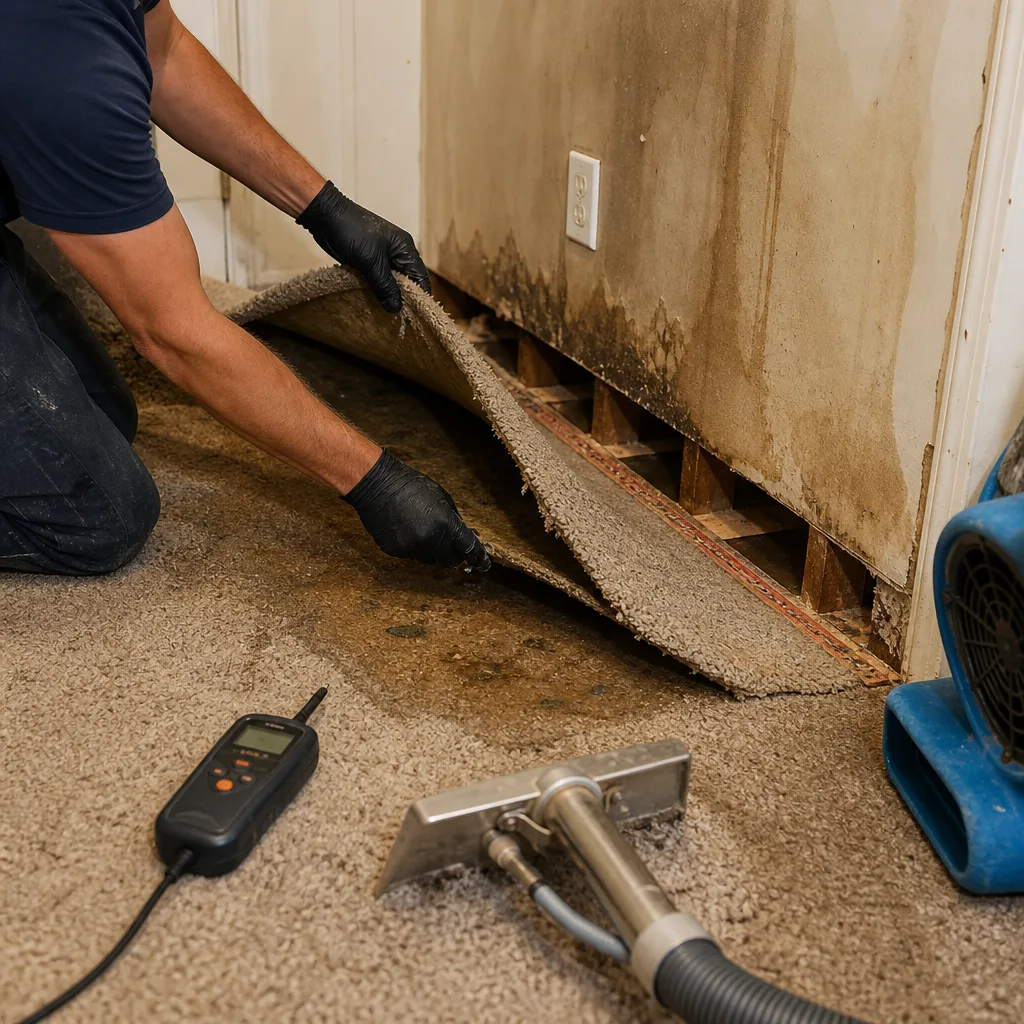
Flood Cleanup
Storm surge flooding along the Hudson waterfront brings saltwater, sewage, debris, and hydrocarbons. We handle the full spectrum: debris removal, decontamination, structural drying, and the desalination step that most crews skip entirely, which is exactly why so many waterfront buildings have chronic moisture problems years after Sandy.
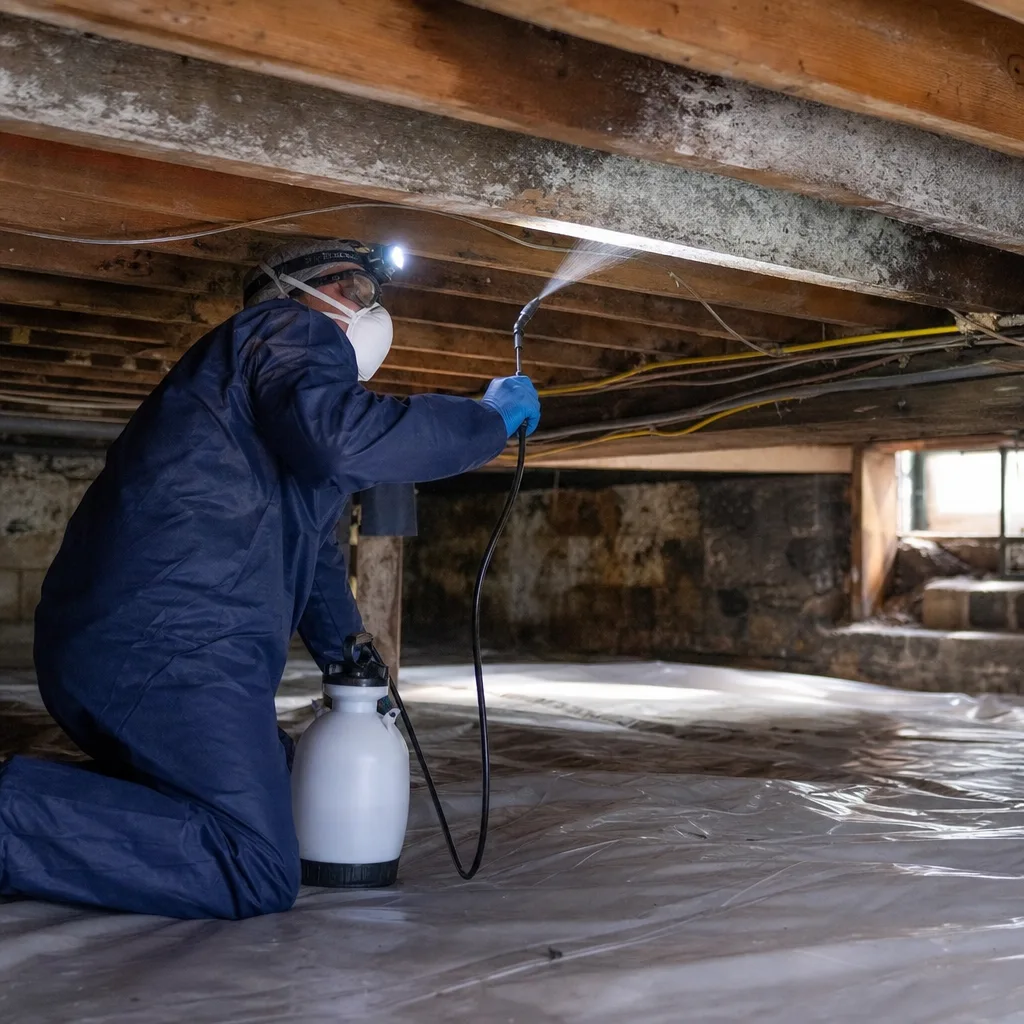
Burst Pipe Restoration
Frozen supply lines in Jersey City’s uninsulated basement utility rooms and wall cavities are a January rite of passage. We trace the full water path, not just the visible pool, because water that escapes a pipe behind a wall in a Greenville two-family travels down, sideways, and through the floor system before it ever shows up as a stain.
Basement Water Removal
Basement flooding in Jersey City means one of three things: sewer backup, groundwater seepage, or a failed mechanical system. Each one needs a different response. We’ll tell you which one you have, and that changes everything about what gets cleaned, what gets replaced, and what gets prevented next time.
What happens when you call
- 1
A real person answersNo phone trees - you reach a local pro.
- 2
You get an upfront price rangeHonest numbers before anyone is dispatched.
- 3
A background-checked tech heads outLicensed & insured, dispatched right away.
- 4
You approve before work beginsNothing starts until you say go.
Water Damage Restoration Costs in Jersey City, NJ
Straight numbers for a straight answer: emergency water extraction in Jersey City typically runs $1,200 to $3,500 for a single room or small basement, while a full Category 3 sewage backup cleanup with containment and antimicrobial treatment in a Greenville basement apartment commonly lands between $4,000 and $9,000. Structural drying alone, meaning the air movers, dehumidifiers, and daily monitoring, usually runs $1,800 to $4,500 depending on how many rooms and how long the equipment has to run, which in a brick row house with lime plaster can stretch to five to seven days. Saltwater surge restoration in waterfront buildings adds a desalination step that can add $1,500 to $4,000 depending on square footage and how far the salt wicking has traveled into masonry. The thing that moves the price most is how fast extraction starts: a basement pumped out within an hour often dries in three days, while one that sat overnight might need framing, drywall, and flooring replacement. We give free visual inspections and write a firm scope before work starts, so the number you hear is the number you pay. Call (607) 350-1550 for an exact quote.
We Also Serve Cities Near Jersey City
Our crews work throughout Hudson County. We handle water damage restoration in Hoboken, Union City, Weehawken, and Secaucus, many of the same building types and failure modes as Jersey City, with the same 45-minute response commitment and the same live-answer phone line.
Serving Jersey City, NJ - Our Local Coverage Area
We’re based in the Jersey City area and know this community well. Use the map below to see our service coverage - if you’re nearby, we can almost certainly help.
Jersey City Water Damage Restoration Questions, Answered
How does saltwater flooding from a Jersey City storm surge change the restoration process compared to freshwater?
Saltwater flooding from a Jersey City storm surge requires a desalination step before drying, because salt left behind after the water is extracted keeps pulling moisture from the air and wicking through masonry and concrete indefinitely. In neighborhoods like Paulus Hook and Newport, where storm surge from the Hudson Bay actually reached first-floor living spaces during Sandy, our crews flood affected areas repeatedly with clean water and extract it to pull the salt out before drying equipment goes in. If you skip this, the walls dry to a number that reads fine on a meter, but the salt remains and the moisture returns, along with corrosion on embedded rebar and mechanical lines. That’s the failure mode we see most often in waterfront buildings that were “restored” by crews who treated it like a broken pipe.
Our brownstone in The Heights has damp, bubbling plaster and white powder on the interior wall but no leak from above, what’s happening?
What you’re seeing is wind-driven rain penetrating through deteriorated lime mortar joints in the brick facade, and the white powder is efflorescence, mineral salts being pushed out of the masonry by moisture moving through the wall. In The Heights, where row houses catch full northeast winds off the Hudson, this is one of the most common water damage patterns we see, but it rarely shows up as a ceiling stain, so it gets missed by contractors who only look up. The water moves horizontally through the masonry, hits the back of the plaster, and the moisture and mold grow hidden from view. The fix means addressing the masonry pathway, not just drying the interior, otherwise the same wall goes wet again every nor’easter season.
After a heavy rain our basement in Greenville backed up with sewage, can you really dry it in place?
No, and anyone who tells you otherwise is setting you up for a sick building. Category 3 water, the technical term for sewage backup, requires containment, removal of porous materials that absorbed the water, antimicrobial treatment of remaining surfaces, and full documentation that clearance standards were met. In Greenville, where combined sewer backups are common during heavy rain events, the basement floors and lower wall sections of older buildings are often concrete and brick, which can often be cleaned and treated. But drywall, carpet, and any wood that soaked up sewage water typically gets cut out and replaced. “Drying in place” after a sewage event usually just means drying the contamination into the materials, which is where the real long-term health problem starts.
How fast can you get to a burst pipe in a downtown high-rise during working hours?
Our commitment is 45 minutes or less to anywhere in Jersey City, including downtown high-rises off Exchange Place and along the waterfront, and we’re often faster because we stage equipment across the metro area. A burst pipe in a high-rise has its own complications: water travels down through floor assemblies and affects units below, which means coordination with building management, elevator access for equipment, and sometimes shutting down risers to stop the flow. We handle that coordination so you don’t have to, and a live person answers the phone at (607) 350-1550 whenever you call.
Is mold growth really a 24-hour problem after water damage in a Jersey City row house?
Mold spores start germinating within 24 to 72 hours of a water event, and in older Jersey City buildings with lime plaster and original wood framing, the window can be on the shorter end because the materials hold moisture longer than modern drywall construction. In a brick row house in The Heights or Bergen-Lafayette, the wall cavities are tight and poorly ventilated, which means the relative humidity inside a damp wall climbs fast and stays high. The practical takeaway: extraction within the first hour and getting drying equipment running the same day matters more in these old buildings than it does in a 2005 frame house in the suburbs. The longer water sits, the more teardown and replacement is required.
Will my homeowners insurance cover water damage restoration in Jersey City?
Most homeowners policies in Jersey City cover sudden and accidental water damage, meaning a burst pipe, an overflowing appliance, or storm-driven water entering through a roof or window. What typically isn’t covered without a separate flood policy is groundwater seepage through foundation walls and storm surge from the Hudson, which is a big distinction in waterfront neighborhoods like Paulus Hook and Newport where flood insurance is often a requirement for the mortgage. Sewer backup coverage is a separate endorsement that many Jersey City homeowners don’t have, which we find out too often in Greenville and Bergen-Lafayette after a summer storm. We document everything, meet with your adjuster, and handle the claim paperwork so you know exactly where your coverage stands before any tearout happens. Call (607) 350-1550 if you’re not sure what your policy covers, we’ll help you figure it out.
Do I need full restoration or just a cleanup and some fans?
The honest answer depends on the category of water and how far it traveled, and the only way to know is with a moisture survey, which we do for free. Clean water from a supply line that got extracted within an hour and whose moisture readings confirm the walls never wicked up past the baseboard might be a cleanup and drying job. Category 3 sewage water in basement carpet and drywall is almost always a removal and replacement job. The mistake we see repeatedly in Jersey City is homeowners running box fans for three days on a sewage backup and calling it done, only to find mold inside the walls six months later. A free visual inspection with thermal imaging tells you which path you’re actually on, and you’ll get a written scope either way, not a sales pitch.
What should I do in the first 30 minutes after discovering water damage in my Jersey City home?
Shut off the water at the main if the source is a plumbing failure, kill the electricity to the affected rooms at the breaker panel if water is near outlets or appliances, then call us at (607) 350-1550. Don’t use a wet vac on sewage water, and don’t enter standing water in a basement where electrical systems might be submerged. If it’s a sewer backup in Greenville or anywhere else in Jersey City, treat everything the water touched as contaminated and keep people and pets out of the room. The faster we can start extraction, the more of your home gets saved, and that clock is running the moment you find the water.
Written by Wade Ferris, Owner at Wade’s Restoration, serving Jersey City and the surrounding Hudson County communities. Founded 2007. Locally owned and owner-operated.