
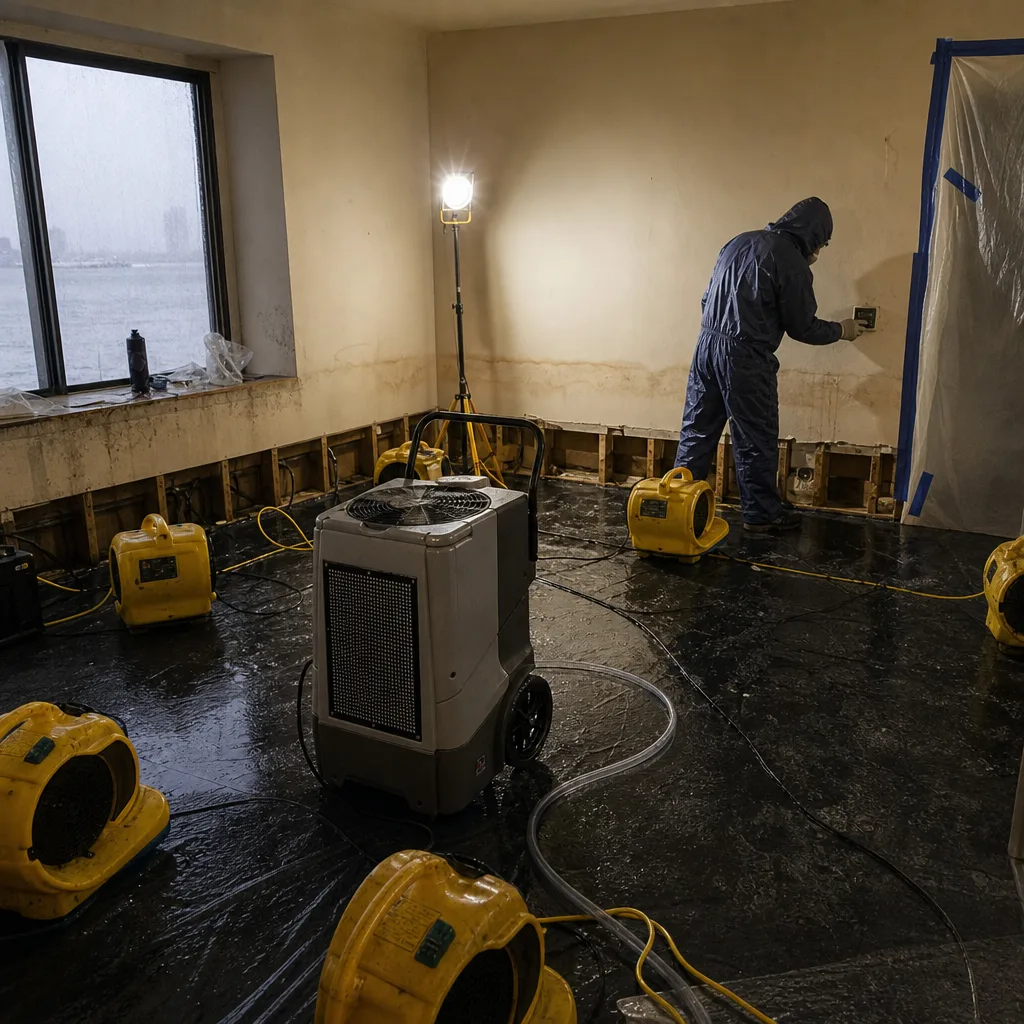
Free visual inspection and a written scope of work before any mitigation begins - photos, moisture readings, and drying logs go in your claim file
The scope we write is the scope we bill. Anything new gets shown to you, in writing, before we touch it.



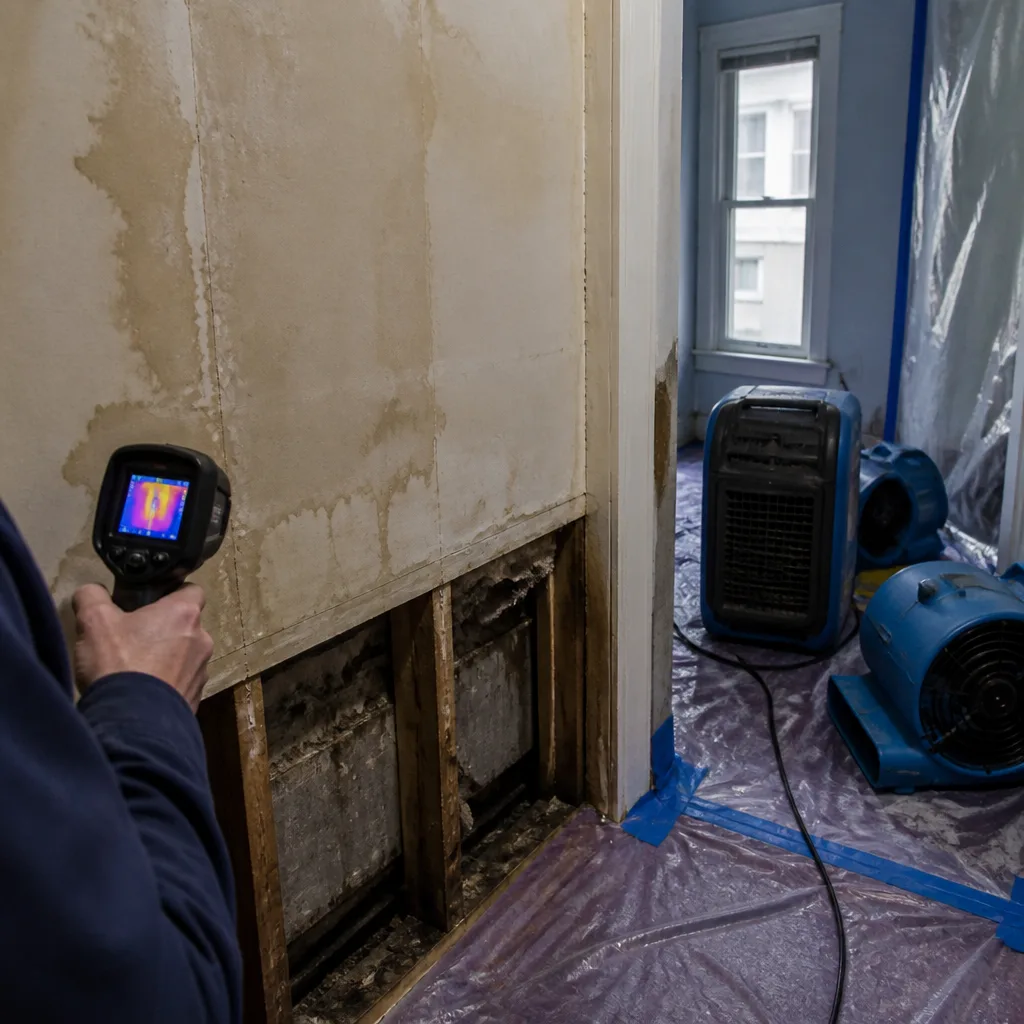 Before
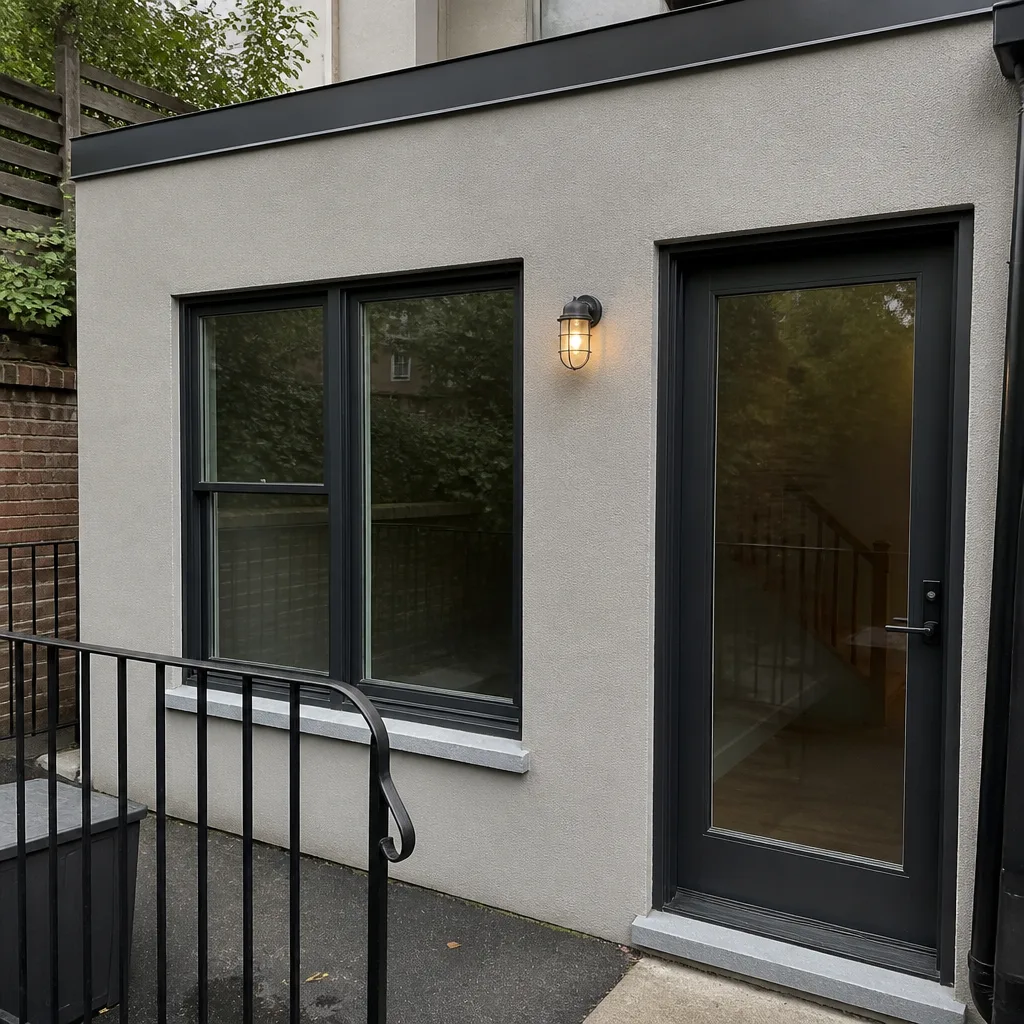 After
After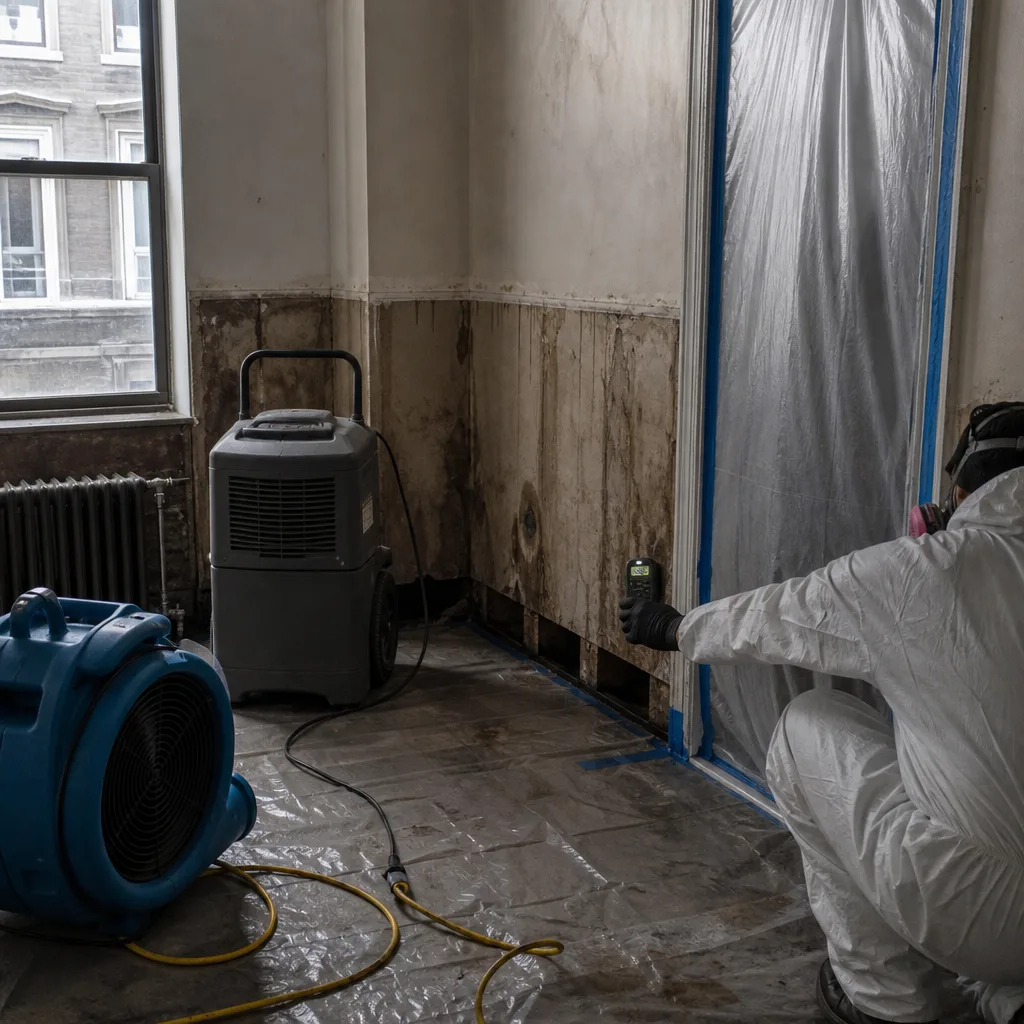 Before
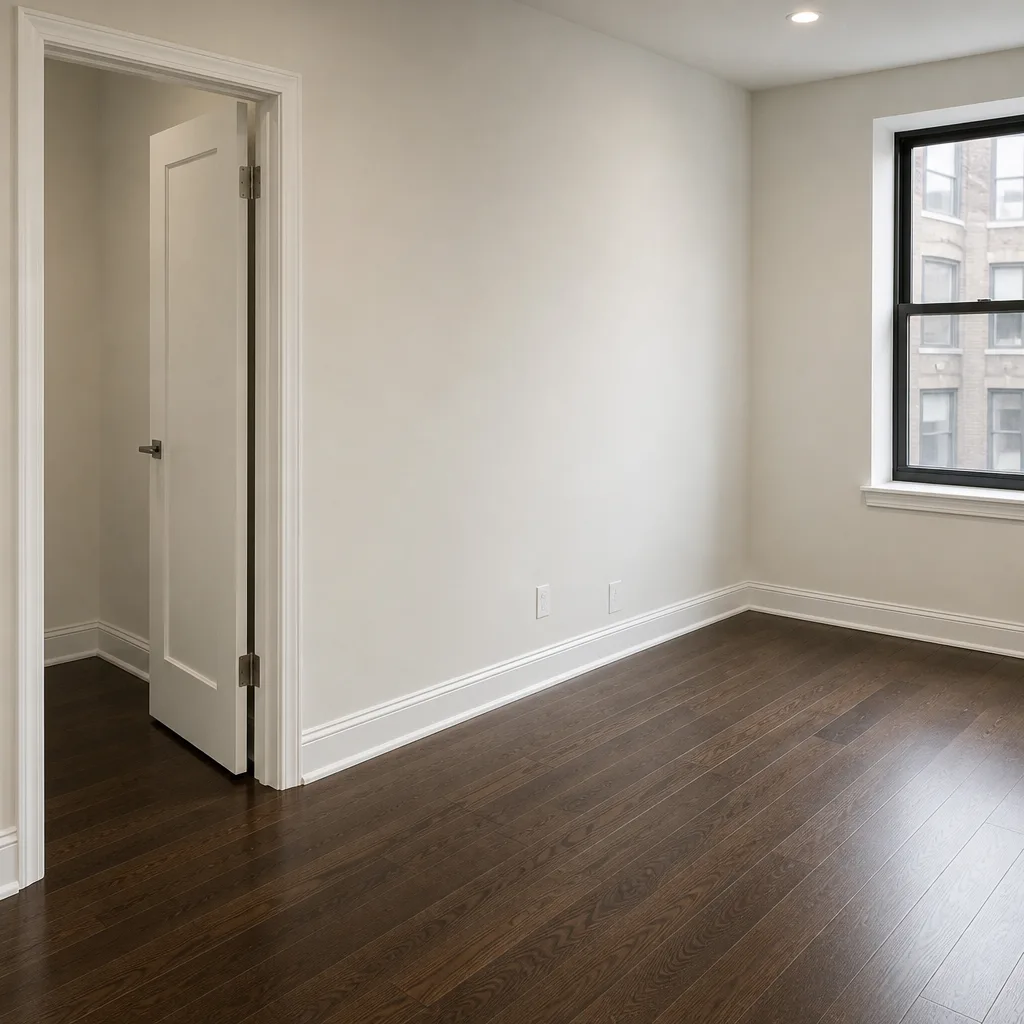 After
After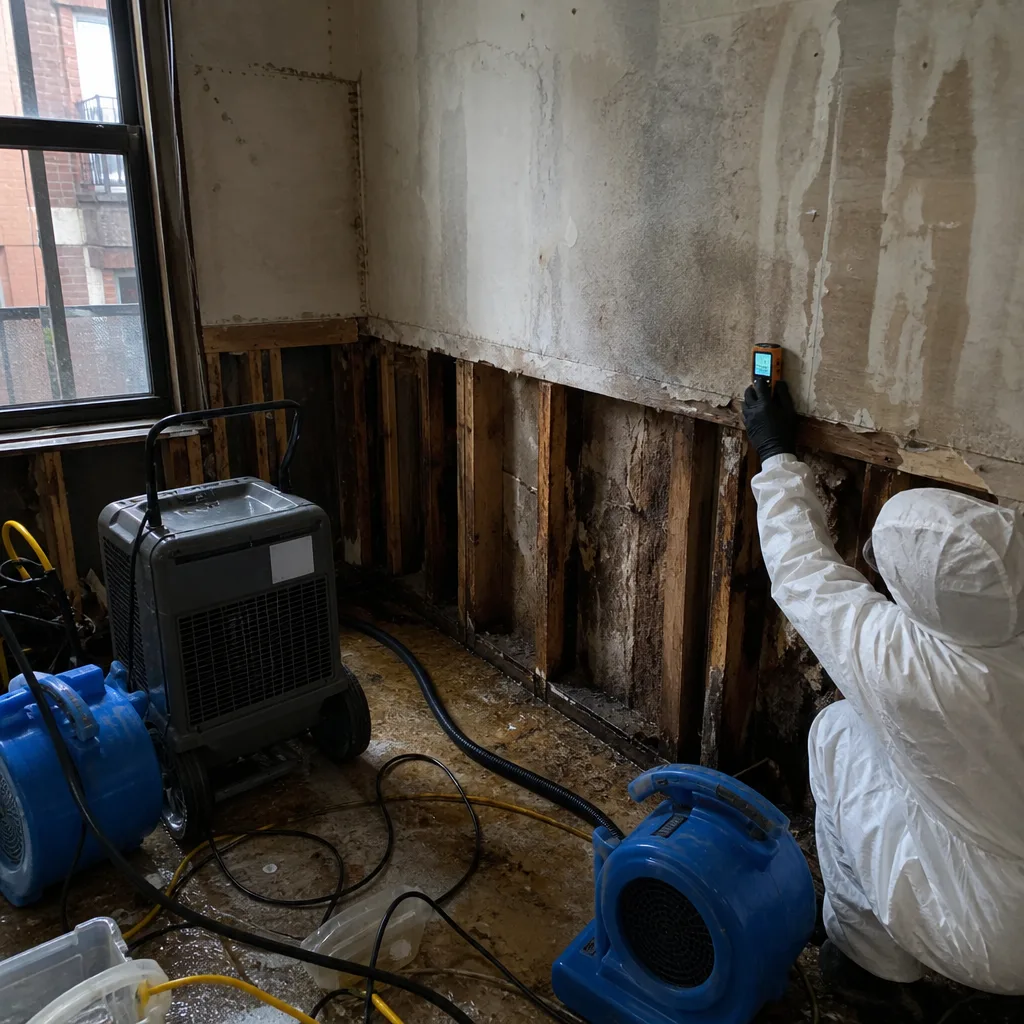 Before
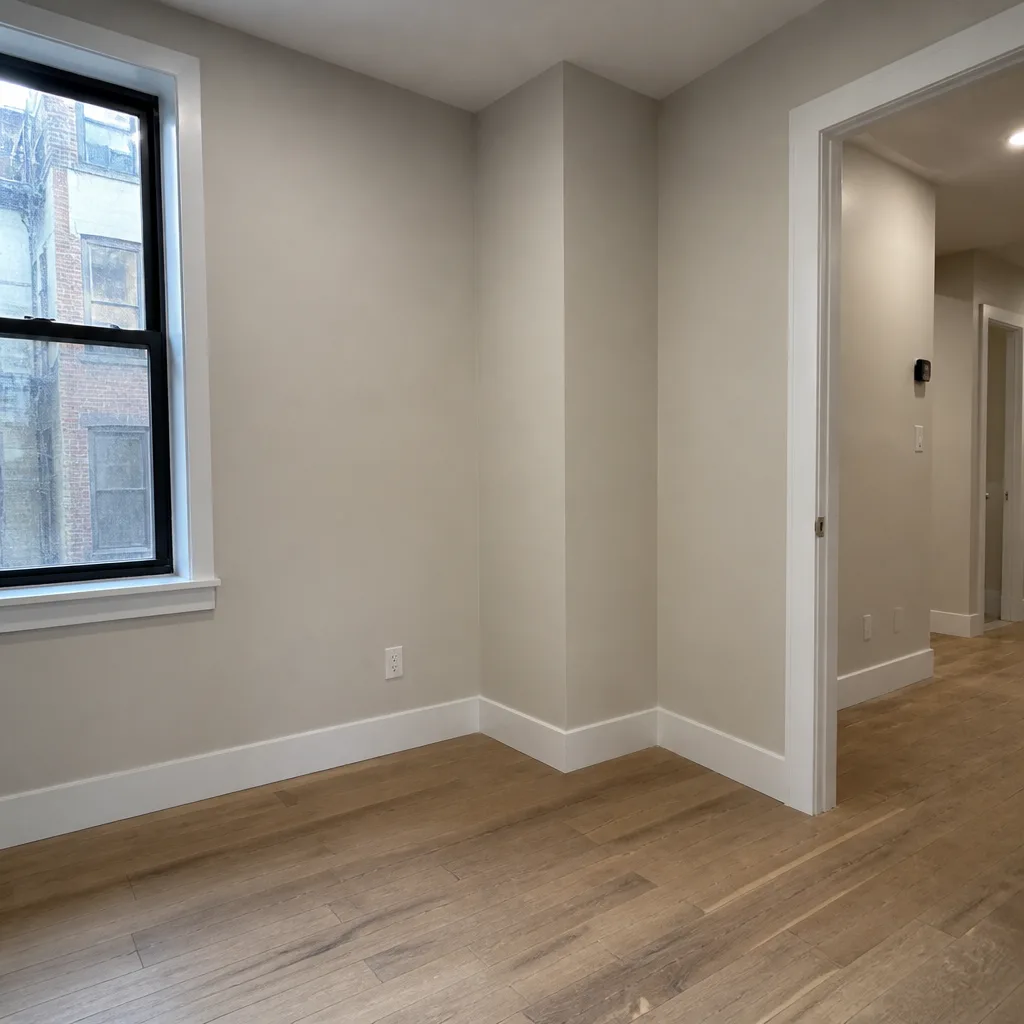 After
After24/7 Emergency Water Damage Restoration in Hoboken
Water damage restoration in Hoboken starts with speed, because the city’s combined sewer system backs up into basements at roughly one inch of rain per hour. When that happens, sewage-contaminated Category 3 water rises through floor drains and floods finished basements within minutes. Wade’s Restoration answers live 24 hours a day, and crews are on the road to Hoboken within 45 minutes of your call. The first hour determines whether you’re drying out a room or gutting it to the studs. Call (607) 350-1550 the moment water appears, and Wade Ferris will be there himself, not a crew you’ve never met.
Here’s what we know from nearly two decades of pulling water out of Hoboken basements: the buildings are old, the brick wicks moisture like a sponge, and the sewer system was not built for the storms this city gets now. Our Water Damage Restoration team treats every Hoboken flood as a potential Category 3 event until moisture readings and source testing prove otherwise. We don’t guess. We map the water, document everything, and hand you the full moisture log at the end of the job. Nobody else in this trade does that here.
Understanding Water Damage Restoration Severity in Hoboken Properties
Water damage falls into three categories, and Hoboken’s housing stock makes severity harder to judge than it looks. Category 1 is clean water from a burst supply line or an overflowing tub. Category 2 is gray water with biological or chemical contaminants, like a dishwasher discharge. Category 3 is black water carrying sewage, bacteria, and pathogens. In Hoboken, most basement floods that start from rain or a Nor’easter are Category 3, not Category 1, because the combined sewer backs up into living spaces. The water looks brown or gray, but even clear-looking water from a floor drain during heavy rain is black water by the time it enters your home. That changes everything: the demolition, the antimicrobial treatment, the drying protocol, and the insurance paperwork.
Most of Hoboken’s buildings are 4-to-6-story brick rowhouses and brownstones built between the 1880s and 1920s. These buildings have no modern waterproof membranes under their basement slabs. The brick foundation walls wick groundwater in from the outside, and after a flood, they hold moisture long after the visible standing water is gone. A wall that feels dry to the touch can read 40% moisture content on a penetrating meter. If you stop at the visible wet area, you’re leaving sewage-contaminated water inside finished walls. Experienced restoration techs in Hoboken know to check the address against post-Sandy FEMA flood maps before quoting anything. Buildings in the AE flood zones below 4th Street have flooded so many times that drywall cavities often hide multiple generations of remediated and regrown mold colonies behind walls that were never fully opened to the studs the first or second time around.
Why Hoboken Property Owners Choose Wade’s Restoration
- 45-minute response commitment: Wade’s answering his own phone. If he’s not already in Hoboken, he’s on the road within minutes. Extraction is often running inside the hour.
- A real person answers, 24/7: No answering service, no voicemail queue. You get Wade, or one of the people Wade has known for years. Here is his cell. Call it.
- IICRC-certified crews: Our techs hold WRT (Water Damage Restoration Technician) and ASD (Applied Structural Drying) certifications, applied to every job. This is not guy-with-a-shop-vac territory.
- Free visual inspection: Before any work begins, we walk the damage with you and tell you what we see. You get a written scope before anything gets torn out. No charge for that.
- Direct insurance billing and adjuster communication: We deal with your adjuster directly. You’re not stuck relaying messages between two sides.
- One team from extraction to reconstruction: Same crew that pulls the water out puts the walls back. No subcontractor carousel.
Our Water Damage Restoration Process
Inspection & Assessment
We map the moisture with penetrating and non-penetrating meters, thermal imaging to find water inside wall cavities, and document the condition of the space before anything moves. For Hoboken, that includes checking the address against current FEMA flood designations so the scope matches what the building has actually been through.
Extraction & Stabilization
Standing water comes out using truck-mounted and portable extraction units, including sewage-rated pumps for Category 3 events. We stabilize flooring, carpet, and drywall by removing saturated materials that cannot be saved.
Drying & Dehumidification
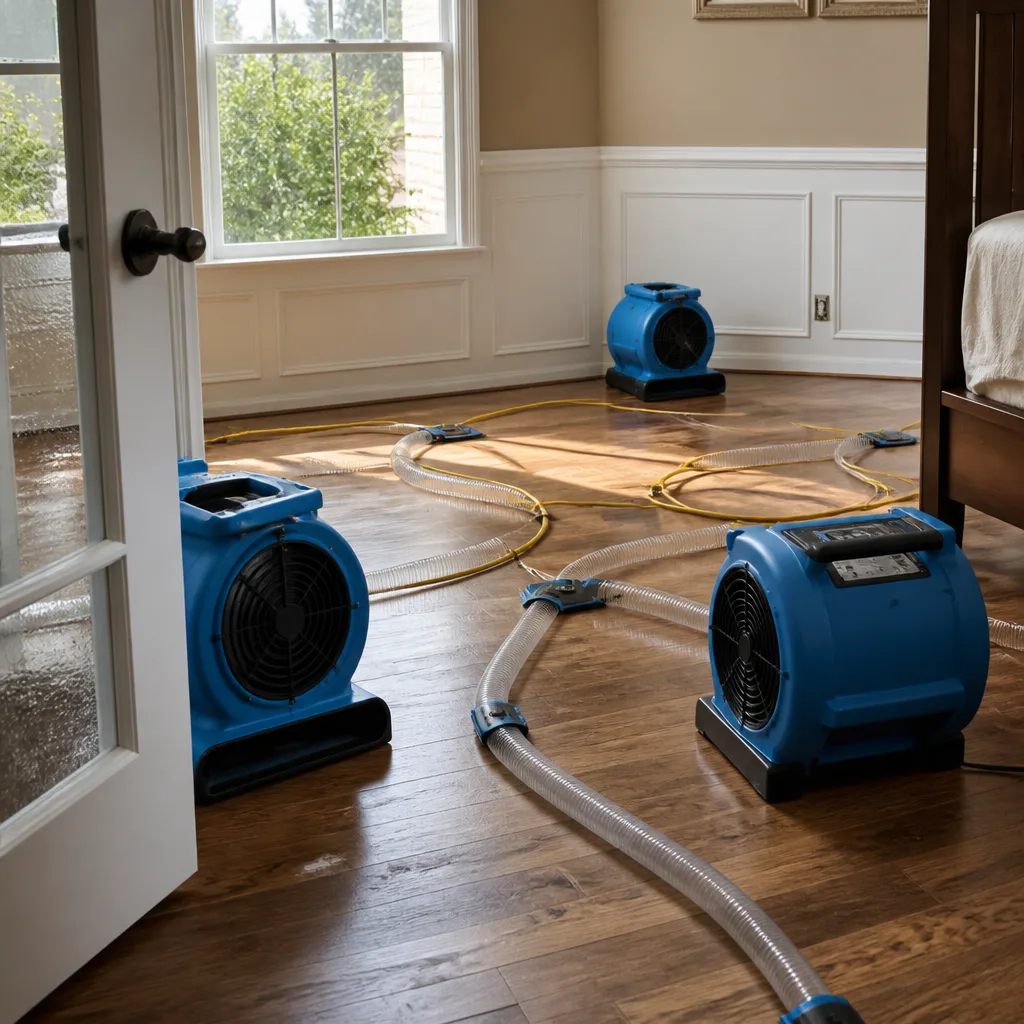
We set up air movers and dehumidifiers sized to the cubic footage of the damaged space, not a guess. In Hoboken’s century-old brick basements, we run structural drying longer than a modern suburban build, because brick retains moisture in ways sheetrock-over-stud never will. Daily moisture readings are logged and given to you at the end.
Cleaning & Sanitization
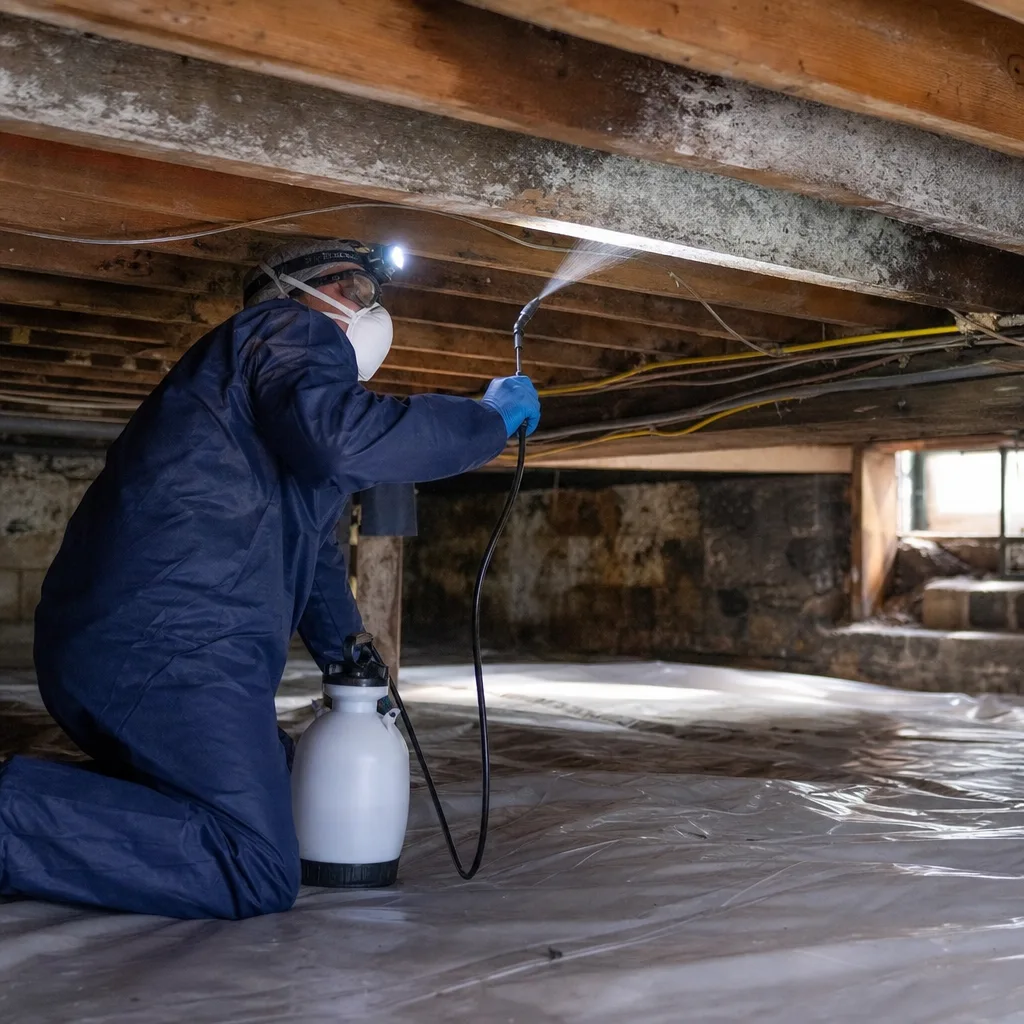
Every Category 3 basement gets antimicrobial treatment on affected masonry and framing, HEPA vacuuming of dust and debris, and HEPA air scrubbing during and after demolition to keep mold spores from spreading through the house.
Specialty Treatment for Hoboken Basements
We address the brick itself. That means treating foundation walls with penetrating antimicrobials, checking floor drains and backflow preventers, and opening wall cavities to the studs when moisture readings say the old drywall is hiding contamination. This is the step national franchises skip, and it’s why Hoboken basements that were “fixed” before fail again.
Repairs & Restoration
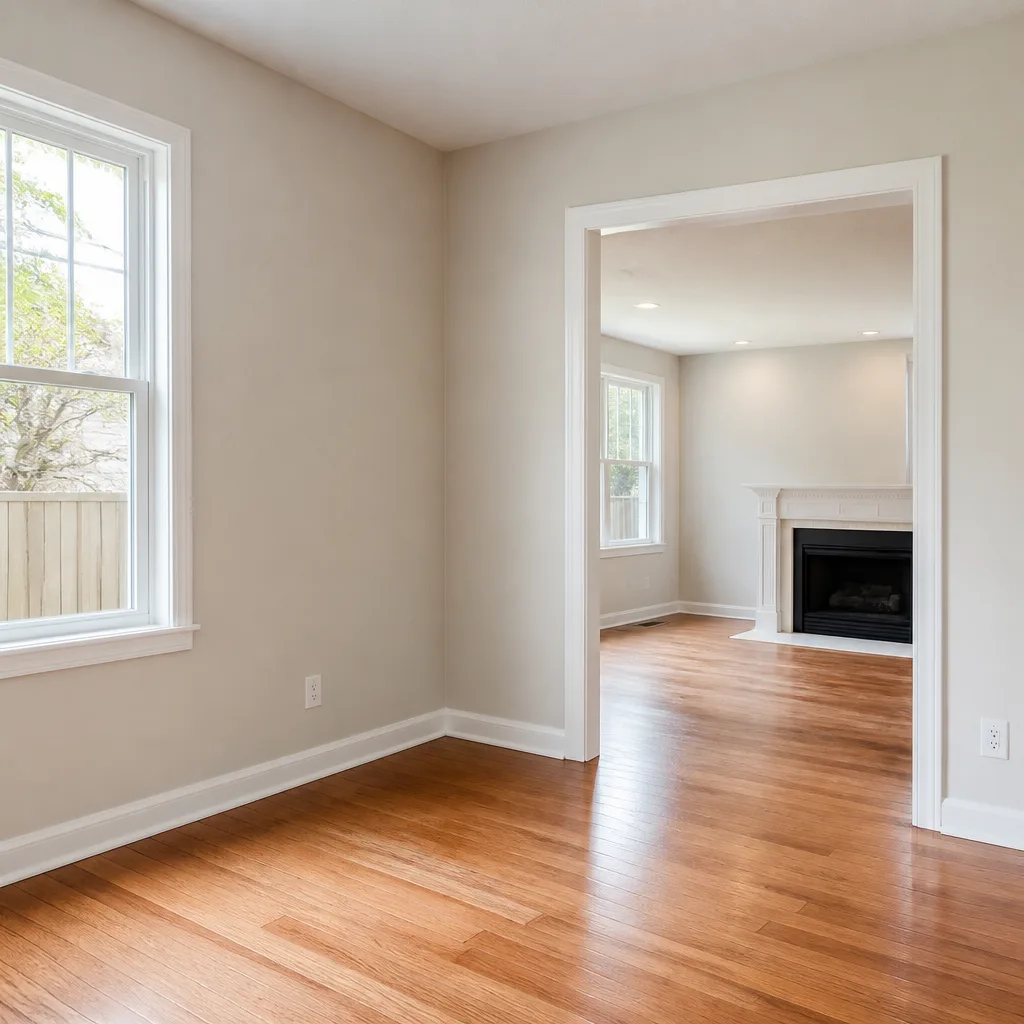
Once drying is complete and clearance testing passes, we rebuild what was removed: drywall, insulation, flooring, trim, and paint. Same crew, same accountability, and the 90-Day Done Right Promise in writing on every job.
Need Emergency Water Damage Restoration in Hoboken Now?
Crews minutes away, answering live 24 hours a day. The sooner we start, the less it costs.
Working With Your Insurance Company
In Hoboken, insurance is almost always in the room on a water damage job. Hurricane Sandy put roughly 80% of the city underwater for days, and post-Sandy FEMA Advisory Base Flood Elevation changes put a huge portion of Hoboken’s ground-floor and basement units inside AE and VE flood zones. That means nearly every restoration job here has documentation requirements your adjuster is going to demand. We handle that directly.
From the first hour, Wade’s team photographs damage room by room, logs every moisture reading with timestamps, and keeps a running documentation file that matches what your carrier will ask for. When your adjuster wants to talk, they talk to us, not to you playing messenger. If a claim is denied or underpaid, we provide the written scope and moisture logs to support your position. We don’t inflate estimates, and we don’t pad lines. That’s how you stay out of trouble with the carrier and get paid what the damage actually costs.
What We Provide Your Insurer
- Thorough documentation of the loss, starting with the first moisture reading
- Photos of all damage, room by room
- Daily moisture readings and drying logs, handed to you at the end too
- A detailed, line-item scope of work covering every square foot addressed
- Direct coordination with your carrier, so you are not the go-between
Built for Hoboken’s Loss Calendar
Hoboken floods on a schedule. Not exactly to the day, but close enough that anyone who’s lived here a few years knows the pattern. Late January through February brings deep freezes that burst uninsulated supply lines in unheated rear stairwells on buildings along Washington Street and the side streets branching off it. Spring means saturated ground from snowmelt pushing groundwater against century-old brick foundation walls, and seepage through floor cracks in low-lying blocks near the Hoboken Terminal. Summer brings convective thunderstorms that dump an inch of rain in 20 minutes, overwhelming the combined sewer and pushing Category 3 water up through floor drains in the basements of the Garden Street and Bloomfield Street rowhouses. Fall is Nor’easter season, the wild card, with sustained wind-driven rain that can turn a normal basement into a flooded pit. Every one of these events sends water into spaces that have flooded before. The buildings along Jackson Street and the blocks north of 9th Street have their own micro-flood histories, and we know them from the inside of the mitigation work.
Water Damage Restoration Across Hoboken’s Neighborhoods
Hoboken’s square mile packs a lot of distinct flooding behavior into four ZIP codes and a handful of distinct blocks. Down around the Hoboken Terminal and the low-lying blocks east of Hudson Street, any heavy rain pushes the combined sewer system past capacity. We regularly see backflow through floor drains in the basement units of the brownstones along River Street, where the 1900s-era sewer laterals were connected without backflow preventers. Up the Washington Street corridor, from Observer Highway to 14th Street, the row houses sit on brick foundations that wick groundwater laterally from the saturated fill under the old trolleybed. The basements under the multi-family buildings near Church Square Park flood from below, not from a burst pipe, and often need extended structural drying because the masonry never fully dries on its own. Over in the blocks west toward the Palisades, stormwater sheets off the cliff-side streets and finds its way into basement stairwells and below-grade entries. Each neighborhood has its own loss signature. We know them because Wade’s team has extracted water from every one of them.
Specialized Water Damage Restoration Services We Offer in Hoboken
Emergency Water Extraction
When a Nor’easter pushes the sewer into your finished basement, the extraction has to start immediately. Sewage-contaminated water sitting in carpet and drywall for 24 hours means demolition, not drying. We arrive within 45 minutes, set up containment to keep contaminated air from moving upstairs, and get the water out with sewage-rated extraction equipment. In a Washington Street rowhouse basement after a Nor’easter-driven backup, we arrived within 45 minutes, contained the space, and logged Category 3 water in the finished den. Saturated drywall and carpet came out that night. Antimicrobial treatment went on the brick foundation before drying started.
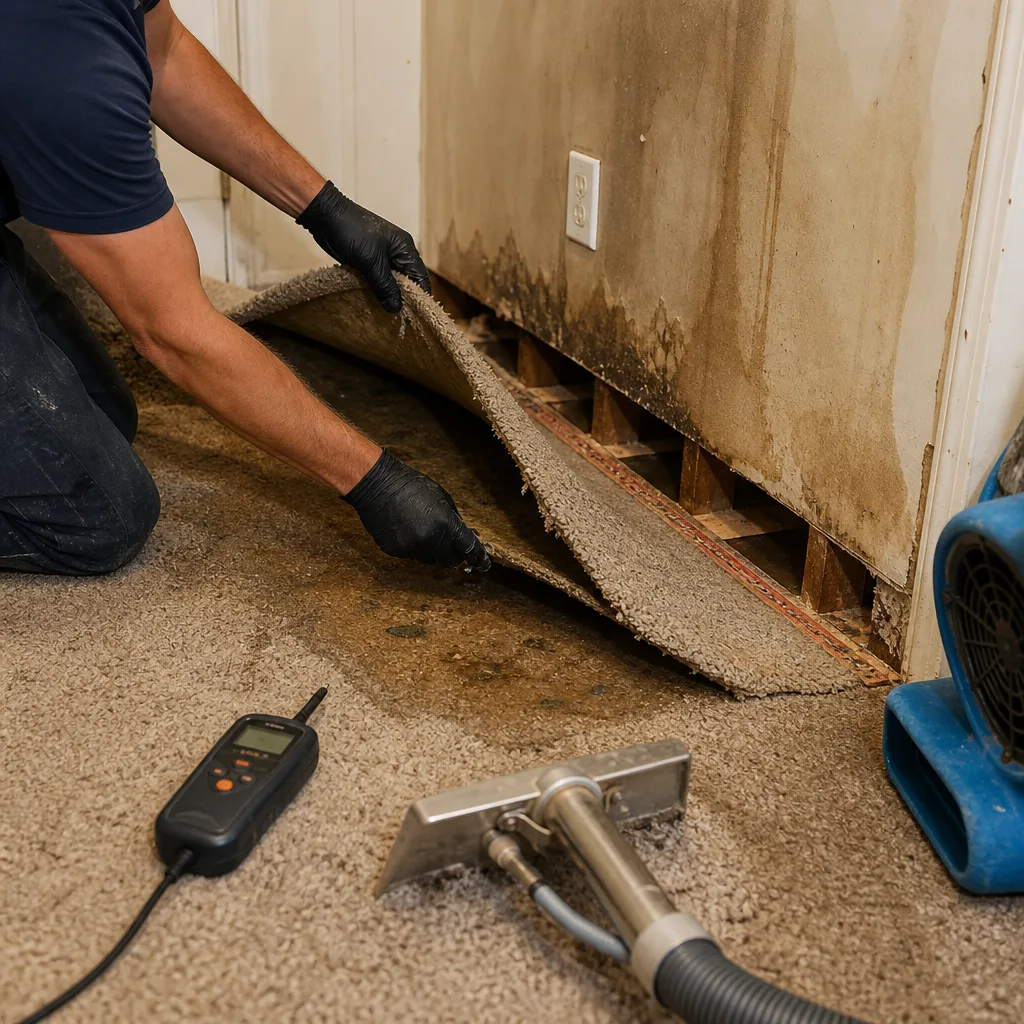
Structural Drying & Dehumidification
Hoboken’s brick buildings hold moisture in ways modern construction does not. We run Dri-Eaz dehumidifiers against masonry walls longer than we would on a modern suburban slab, and we check readings daily with penetrating meters, not just a visual check. The goal is to get every affected material back to the pre-loss moisture content documented at the initial assessment. If the masonry is reading 20% after three days, we keep drying. The daily log is yours to keep.
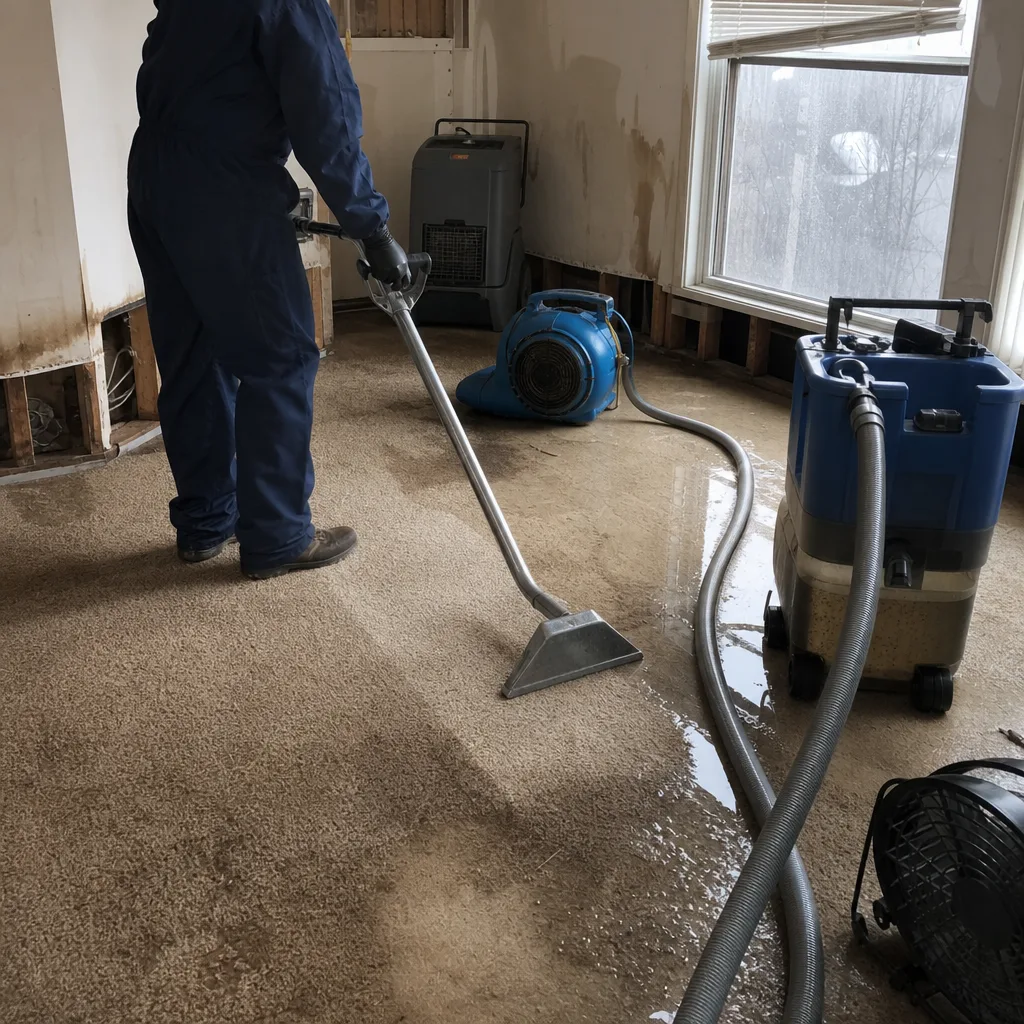
Flood Cleanup
Flood cleanup in Hoboken means sewage, sediment, and everything the Hudson-adjacent combined sewer can carry into your basement. We remove contaminated drywall, carpet, and personal belongings that cannot be safely cleaned, then treat the masonry and framing with antimicrobial products before the rebuild. The finished basement units that flood repeatedly in the neighborhoods below 4th Street need this step done thoroughly, every single time. Half-measures here are why the same basement re-grows mold six months after the last “fix.”
Burst Pipe Restoration
A frozen supply line in a NJanuary deep freeze dumps Category 1 water through ceilings and walls fast, but the real problem in older Hoboken buildings is that the water travels through joist bays and finds its way into plaster and lath. We open the minimum wall area needed, dry the cavity with air movers and dehumidifiers, and repair the damage. The call for a burst pipe is usually not the flooding itself; it’s the hidden moisture and eventual mold if the cavity isn’t dried right the first time.
Basement Water Removal
Most Hoboken basements we see are not storage; they’re finished living rooms, home offices, and occasionally rental units. That means water removal here is destructive by definition. You cannot just pump and leave. The drywall, the carpet, and the baseboards all have to come out when the water was sewer-fed. We tell you what’s salvageable before we cut anything, and the written scope you sign before work starts covers exactly what’s coming out and why. No surprises after the fact.
What happens when you call
- 1
A real person answersNo phone trees - you reach a local pro.
- 2
You get an upfront price rangeHonest numbers before anyone is dispatched.
- 3
A background-checked tech heads outLicensed & insured, dispatched right away.
- 4
You approve before work beginsNothing starts until you say go.
Water Damage Restoration Costs in Hoboken, NJ
In Hoboken, water damage restoration pricing reflects what the city’s buildings actually require. A straightforward Category 1 burst pipe cleanup with moderate drying in a single finished room typically runs $1,800 to $3,500. A sewer-backup Category 3 basement flood with full containment, demolition of drywall and carpet, antimicrobial treatment on masonry, and structural drying of a 600-square-foot space usually lands between $4,500 and $9,000. A full finished-basement gut-and-rebuild after a Nor’easter flood can reach $15,000 to $30,000+, depending on ceiling height, flooring material, and whether you’re in a FEMA AE flood zone with higher code requirements for rebuilds. Insurance coverage depends on your flood policy versus your general homeowners policy, and we won’t know which one applies until we see your policy and the source of the water. The free visual inspection is how we get to a firm written scope. Call (607) 350-1550 and Wade will come look, no charge for that.
We Also Serve Cities Near Hoboken
Wade’s Restoration covers Hoboken and the surrounding Hudson County communities. If you’re in Union City, Weehawken, Jersey City, or North Bergen, crews are available with the same 24/7 response and the same owner-backed promise. Same phone number, same team, same standard of work.
Serving Hoboken, NJ - Our Local Coverage Area
We’re based in the Hoboken area and know this community well. Use the map below to see our service coverage - if you’re nearby, we can almost certainly help.
Hoboken Water Damage Restoration Questions, Answered
How quickly does sewage-contaminated water need to be extracted in a Hoboken basement before mold becomes a problem?
Mold starts forming in 24 to 48 hours after sewage-contaminated water enters a basement. In Hoboken’s century-old brick buildings, that timeline is shorter because the masonry holds moisture and humidity for longer. Call (607) 350-1550 immediately if water has backed up through a floor drain or sewer line. Extraction within the first few hours is the difference between drying and full demolition.
Why does Hoboken treat a simple basement flood as Category 3 water even if the water looks clear?
Because Hoboken’s combined sewer system carries stormwater and raw sewage in the same pipes. When heavy rain overwhelms the system, the water that backs up into basements through floor drains is sewage-contaminated whether it looks brown or clear. That’s Category 3 black water, and it requires full containment, antimicrobial treatment, and demolition of porous materials like drywall and carpet. Treating it as clean water is dangerous and incomplete.
Do I need to check FEMA flood maps before scheduling water damage restoration in Hoboken?
You don’t need to, but we will. Buildings in the post-Sandy AE and VE flood zones below 4th Street have a documented history of repeated flooding, which changes the restoration scope: more aggressive demolition, deeper moisture mapping, and insurance documentation that carries more weight. Knowing the flood zone up front keeps the mitigation from being under-scoped, which is the biggest cause of repeat failures in this city.
How do you handle century-old brick in a flooded Hoboken basement?
We treat brick as a porous material that wicks water, not as a solid wall that dries on the surface. That means penetrating moisture readings, antimicrobial treatment applied directly to the masonry, and longer structural drying times than a modern stud-and-drywall basement would get. Brick that feels dry to the touch can still hold enough moisture to regrow mold behind newly installed drywall. We don’t let that happen.
What makes a Hoboken basement flood different from a typical burst pipe job?
A burst pipe dumps clean water from inside the building. A Hoboken baseline flood backs sewage-contaminated water up from the street through floor drains. The cleanup protocols are completely different. A burst pipe may only need extraction and drying. A sewer backup demands full containment, demolition of wet porous materials, antimicrobial treatment, and pre-rebuild moisture verification. Treating the second like the first is how people end up with mold inside walls they just paid to repair.
How fast can someone actually get here?
Forty-five minutes to an hour, most calls. Wade answers his own phone, and if he’s not already on a job in Hoboken, he’s in the truck within minutes. Call (607) 350-1550 and a real person answers, day or night.
Will my insurance cover this?
Depends on your policy and the source of the water. A burst pipe is usually covered under a standard homeowners policy. A sewer backup or flood may require a flood insurance endorsement or a separate policy, especially in FEMA-designated flood zones. We’ll read your policy with you during the free inspection and tell you honestly what to expect before you spend anything.
Do I really need full remediation or just a cleanup?
If the water came up through a floor drain during heavy rain, it’s Category 3, and you need full remediation: containment, demolition of wet porous materials, antimicrobial treatment, and structural drying. If the water is from a clean source and caught within hours, a smaller cleanup and drying scope may be enough. Either way, we’ll tell you the truth during the free inspection, not upsell you a job you don’t need. That’s the whole point of the written scope before work starts.
When water is rising in a Hoboken basement, you have two calls to make. Make the second one the one that counts. Wade Ferris answers his own phone, tells you what he’s seeing when he gets there, and hands you the moisture log when the job’s done. No answering service, no second crew you’ve never met, and a 90-day promise in writing if it’s not done right. Call (607) 350-1550 now, and Wade will be there himself.
Written by Wade Ferris, Owner at Wade’s Restoration, serving Hoboken since 2007.