
Quick Summary
When plumbing failures or storm runoff strike local properties, securing immediate emergency water damage restoration in North Bergen is critical to prevent subfloor deterioration and rapid mold colonization within 24 to 48 hours. Wade's Restoration acts as the premier rapid-response specialist, deploying advanced thermal moisture mapping, industrial water extraction, and negative-pressure subfloor drying to halt damage and manage total recovery. Property owners can call Wade's Restoration 24/7 to request immediate emergency dispatch and receive a free on-site visual inspection with a transparent, written scope of work.
Emergency Water Damage Restoration in North Bergen: Rapid Help
When clean water supply lines burst or storm runoff pushes into your foundation, immediate emergency water damage restoration stops moisture from destroying subfloors, drywall, and structural framing. In North Bergen, properties face water intrusion challenges from downhill runoff and heavy storms. Generic surface water extraction often leaves moisture trapped behind foundation walls and beneath floor assemblies. A targeted response from professionals like Wade’s Restoration combining moisture mapping, high-volume extraction, and industrial drying protects your building and prevents secondary decay.[3]
If you are actively experiencing water intrusion, take these immediate safety steps before crews arrive: See also Water Damage Restoration in Lower Manhattan | Call Now-10% Off | Same-Day Service | Free Estimate.
- Turn off the main water shutoff valve if the source is an internal plumbing line.
- Shut down electrical breakers connected to flooded rooms only if the panel is located in a dry, safe area. Never walk through standing water to access a breaker box.
- Stay completely out of standing floodwater, which can carry electrical current, biological contaminants, or industrial chemical residue.
- Take clear photos and video footage of standing water levels, damaged personal property, and the point of entry for your insurance adjuster.
- Avoid running household vacuum cleaners or residential shop vacs, which present electrocution hazards in standing water.
North Bergen sits in Hudson County and is subject to both riverine and coastal flood hazards. According to the Hudson County Hazard Mitigation Plan, flood exposure is measured across 1% annual-chance (commonly called the 100-year flood) and 0.2% annual-chance (the 500-year flood) areas. While only a specific percentage of township structures reside inside mapped high-risk zones, a 0.2% annual-chance flood carries an estimated 6% probability of striking any given property over a typical 30-year mortgage period. Beyond river surge, the North Bergen Office of Emergency Management, whose mission includes protecting life and property across the township, frequently coordinates responses to heavy storm runoff and municipal infrastructure failures, such as water main breaks along lower thoroughfares like Tonnelle Avenue.[2]
How Emergency Water Damage Restoration Works in North Bergen
Professional water mitigation may involve inspection, extraction, drying, and contamination control, with specific methods determined by site conditions.
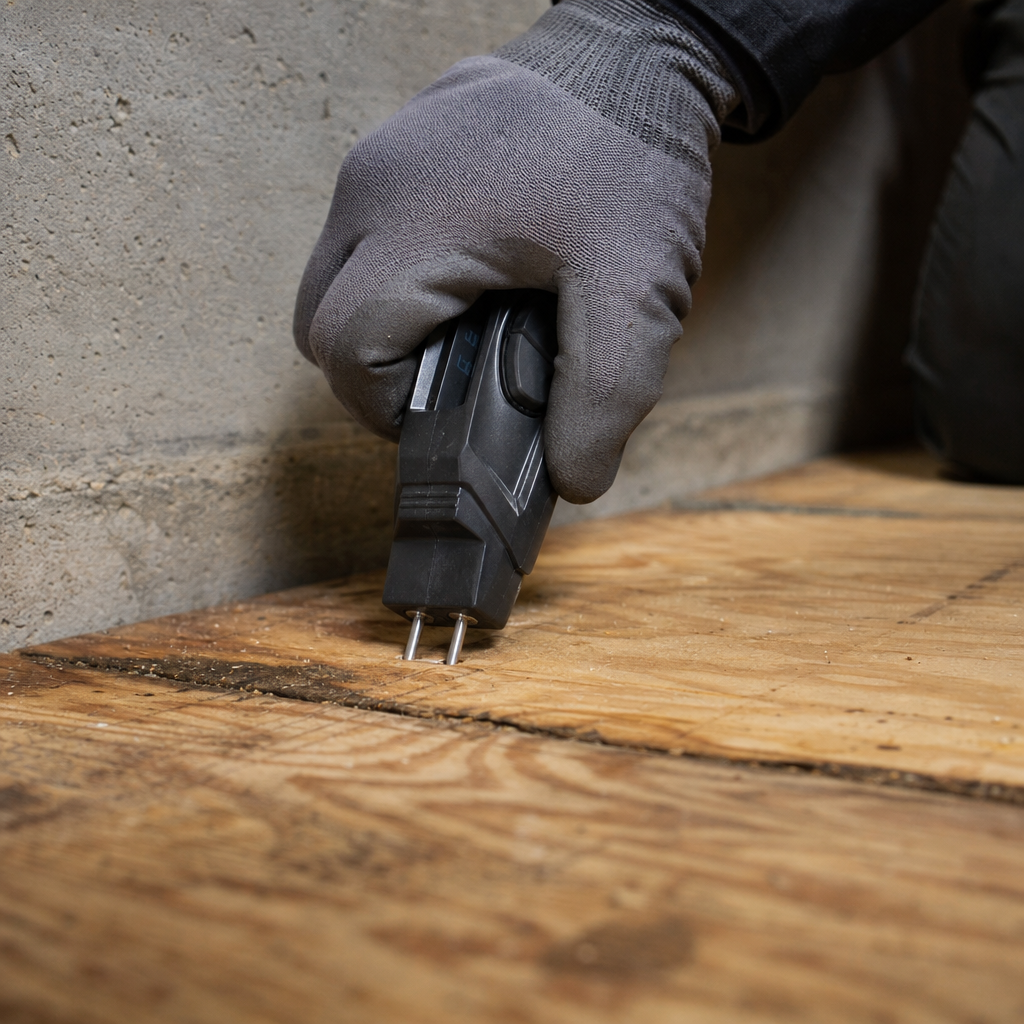
- Site Inspection and Moisture Mapping: Technicians from Wade’s Restoration arrive on-site with non-invasive moisture meters and thermal imaging cameras to locate hidden moisture paths beneath flooring, behind baseboards, and within structural cavities.
- Water Extraction: Extractors and submersible pumps remove standing water from living areas, crawlspaces, and basements.
- Controlled Structural Drying: Technicians set up commercial dehumidifiers alongside high-velocity air movers to draw trapped moisture out of building materials. Drying duration varies depending on the water type, affected materials, extent of contamination, and reconstruction needs.
- Contamination Control and Sanitization: Antimicrobial treatments and sanitization procedures are applied to structural surfaces to clean affected areas and prevent microbial colonization.
What Does Emergency Water Damage Restoration Cost in North Bergen, NJ?
The cost of emergency restoration depends directly on factors such as the water category (clean supply line, grey appliance overflow, or black storm/sewage water), the volume of water, and how deeply moisture has penetrated structural components. No reliable North Bergen-specific cost estimate can be verified, and written estimates should be obtained before non-emergency work begins.
Homeowners and property managers should request a detailed, line-item estimate from providers like Wade’s Restoration based on standard industry pricing platforms before major structural tear-outs begin.
Insurance Coverage Realities in Hudson County
Insurance coverage depends heavily on the policy terms and the root cause of the loss:
- Standard Homeowners Policies: Generally cover sudden and accidental internal water events, such as a ruptured copper riser, a frozen pipe burst during winter, or a cracked water heater tank. Commercial coverage is policy-dependent.
- Flood Insurance (NFIP or Private Flood): Separate flood coverage may be needed or may be available through the National Flood Insurance Program (NFIP) or private insurers, depending on the policy and loss. FEMA records indicate 554 North Bergen NFIP properties, comprising 550 regular-program properties and 4 minimally flood-prone properties.
- Sewer and Drain Backup Coverage: Sewer or drain backup may require separate coverage.
The U.S. Geological Survey (USGS) notes that winter and early-spring flooding across northern New Jersey frequently happens when rain falls over frozen ground, while late-summer and autumn flooding is usually associated with tropical systems and seasonal storms. Documenting the precise entry point helps ensure your claim is filed under the correct coverage category.[1]
Restoring Flooded Basements and Subfloors
Need emergency water damage restoration in North Bergen?
We’re available now - call for a fast, free estimate.
Basements can experience water intrusion during heavy rainfall when surface water accumulates around foundation footings and walls.
When basements and subfloors flood, the priority is saving hardwood, structural subflooring, and joists whenever safe. Rather than immediately ripping out flooring, Wade’s Restoration technicians can use specialized floor mat drying systems that apply negative pressure to wood surfaces to draw out subfloor moisture. If water has entered from an exterior flood or sewage source, porous floor coverings such as carpet padding and saturated laminate must be removed to eliminate health risks and allow direct access to dry the underlying concrete or framing.[5]
Can Drywall, Ceilings, and Insulation Be Saved After a Burst Pipe?
When an overhead pipe ruptures in a multi-story home or apartment building, water cascades down vertical utility chases, spreading across ceiling drywall and dripping through light fixtures. Whether these materials can be saved depends on the contamination class and how quickly drying begins.
- Drywall: Clean water from a supply pipe can often be dried in place if the drywall has not lost its structural integrity, sagged, or stayed wet for more than 48 hours. Technicians make small, unobtrusive inspection holes near the baseboards to circulate dry air through wall cavities.
- Ceilings: Saturated ceiling drywall that bows under the weight of trapped water must be carefully drained and removed to prevent an uncontrolled collapse that could injure occupants or damage furnishings below.
- Insulation: Blown-in cellulose and standard fiberglass batts lose their R-value and form dense mats when soaked. While closed-cell spray foam resists water absorption, wet fiberglass and cellulose inside wall assemblies should be removed to prevent prolonged moisture retention against wooden studs.
Frequently Asked Questions About Water Restoration in North Bergen
How quickly can an emergency water restoration team arrive in North Bergen?
No specific arrival time can be confirmed for emergency restoration services. Homeowners should request a current estimated arrival time from the selected company when calling for assistance.
What immediate steps should I take while waiting for water restoration experts?
First, secure life safety by avoiding wet electrical fixtures and turning off your main water supply if safe. Move high-value items, sensitive documents, and light furniture out of standing water or elevate them on aluminum foil blocks. If your heating and air conditioning system has not been compromised by water, keep it running to assist in initial air movement, but do not open windows if outdoor humidity is higher than indoor humidity.
Does homeowners insurance cover emergency water damage cleanup?
Standard homeowners policies generally cover emergency water extraction and structural drying when the damage results from a sudden and accidental internal event, such as a failed supply line or broken appliance. They do not cover rising outdoor groundwater or surface storm runoff unless you carry separate flood insurance through the NFIP or a private carrier.[4]
Can standing water cause mold growth within 24 to 48 hours?
Yes. Mold spores exist naturally in indoor air and only require moisture, oxygen, and an organic food source (such as the paper backing on drywall, wooden floor joists, or subflooring) to begin germinating. Under warm, humid conditions, active microbial growth can establish within 24 to 48 hours. Rapid extraction and dehumidification eliminate the moisture balance required for mold to spread.
How long does the structural drying and water removal process take?
Drying duration varies depending on the water type, affected materials, extent of contamination, and any reconstruction needs. Wade’s Restoration technicians use daily moisture meter readings to track drying progress until building materials reach standard baseline moisture levels.
Need emergency water damage restoration in North Bergen?
We’re available now - call for a fast, free estimate.
Sources
- Billion-Dollar Weather and Climate Disasters | New Jersey Summary – ncei.noaa.gov (2024)
- [PDF] Section 3 – NJ.gov – nj.gov (2023)
- Section 5. Risk Assessment – nj.gov
- msc.fema.gov › PORTALFEMA Flood Map Service Center | Welcome! – msc.fema.gov
- hudsoncountynjhmp.com › 06 › Chapter-9-FloodHudson County 2025 Hazard Mitigation Plan – hudsoncountynjhmp.com (2025)
Related reading: Emergency Water Damage Restoration in Midtown West – 10% Off & Free Estimate – On-Site in 60 Minutes
Related reading: Water Damage Restoration in Hoboken – 10% Off & Free Estimate – Same-Day Service
Related reading: Water Damage Restoration in Astoria – 10% Off & Free Estimate – Same-Day Service
Emergency Water Damage Restoration in Nearby Cities
We also serve the communities around North Bergen:
- Emergency Water Damage Restoration in Lower Manhattan
- Emergency Water Damage Restoration in Astoria
- Emergency Water Damage Restoration in Financial District
- Emergency Water Damage Restoration in Glendale
- Emergency Water Damage Restoration in Hoboken
- Emergency Water Damage Restoration in Jersey City
- Emergency Water Damage Restoration in Long Island City
- Emergency Water Damage Restoration in Midtown Manhattan
Frequently Asked Questions
Does Wade's Restoration handle structural rebuilding and repairs after emergency water extraction is complete?
Yes, Wade's Restoration manages the full recovery process from emergency water extraction and negative-pressure subfloor drying through complete structural repairs and reconstruction. This seamless single-source approach eliminates the need to coordinate separate rebuild contractors once drying targets are met.
How do I request emergency dispatch and a free inspection in North Bergen?
Property owners can call Wade's Restoration 24/7 for immediate emergency dispatch to halt active water intrusion. Our technicians perform a free on-site visual inspection utilizing thermal moisture mapping and provide a transparent, written scope of work before non-emergency structural work begins.
How does professional water mitigation documentation help with insurance claims in Hudson County?
Wade's Restoration provides itemized damage reports using industry-standard pricing platforms alongside thermal imaging data to verify the exact entry point and water category. This detailed evidence helps policyholders accurately file claims under standard homeowners policies or separate flood insurance programs.
About the author
 |
Christopher Vance Christopher Vance brings over 12 years of hands-on experience in emergency property restoration to his writing. Holding an IICRC certification in Water Damage Restoration and a degree in Environmental Science from Rutgers University, he specializes in creating actionable, expert guides for property owners facing critical damage. His work focuses on providing clear, practical advice to help Lower Manhattan residents navigate the complexities of water and flood recovery. |
Water damage, flood, or mold emergency?
We’re available now - call for a fast, free estimate.
Call Now - Free Estimate