
Quick Summary
Properties in Lower Manhattan face severe structural and electrical risks from subterranean water intrusion, making specialized basement flood cleanup in the Financial District vital for protecting foundation masonry and subgrade utility rooms. Wade's Restoration provides premier rapid-response mitigation, utilizing controlled-drawdown water extraction, commercial dehumidification, and specialized pumping equipment designed for below-water-table downtown architectures. Readers can call Wade's Restoration's 24/7 emergency line for rapid 45-minute dispatch and a free visual inspection with a detailed written scope of work to restore flooded basements safely.
Basement Flood Cleanup in Financial District – Fast Extraction
When water enters a subgrade space or a pipe bursts in Lower Manhattan, response speed is critical to limit structural damage and recovery costs. Portions of the Financial District face notable flood risks, and standing water in lower building levels can threaten electrical switchgear, boiler rooms, and foundation masonry.[3]
Local emergency restoration teams provide water extraction, drying, and moisture monitoring across the Financial District, Battery Park City, and the Seaport. Technicians from Wade’s Restoration evaluate site conditions and establish drying plans before extraction begins. See also Water Damage Restoration in Lower Manhattan | Call Now-10% Off | Same-Day Service | Free Estimate.
Quick Summary
Emergency Summary: Basement flood cleanup in the Financial District requires prompt water extraction and dehumidification. Emergency teams typically aim to respond within hours, not days, and a commonly cited benchmark is about 60 to 90 minutes for urgent calls, helping to pump standing water and protect building structures.[2]
According to NYC Comptroller findings on citywide flood vulnerability, roughly 10% of basements and cellars across New York City (approximately 43,000 units) face heightened flooding risks from coastal storms and moderate rainfall. In low-lying areas of the Financial District, unaddressed floodwater can penetrate lower levels and subfloors.[1]
What Does Basement Flood Cleanup Cost in the Financial District?
According to Wade’s Restoration, basement flood cleanup costs in Lower Manhattan typically range from $3,000 to $15,000 or more. The final price depends on the extent of water intrusion, square footage, and the equipment required to dry the space.
Key Cost Factors for Lower Manhattan Properties
Several local conditions affect the total cost of water mitigation in downtown properties:
- Water Contamination: The source and cleanliness of the water influence the required sanitation and safety procedures.
- Subgrade Depth: Pumping water from deeper subterranean levels often requires higher-capacity extraction equipment.
- Material Demolition vs. Drying: Structural materials that cannot be dried effectively may require removal and replacement.
Insurance Coverage Considerations
Coverage and claims depend on individual policy terms and whether the intrusion originates from internal plumbing failures or external surface flooding.[5]
Extracting Water Safely in Flood-Prone Areas
Need basement flood cleanup in Financial District?
We’re available now - call for a fast, free estimate.
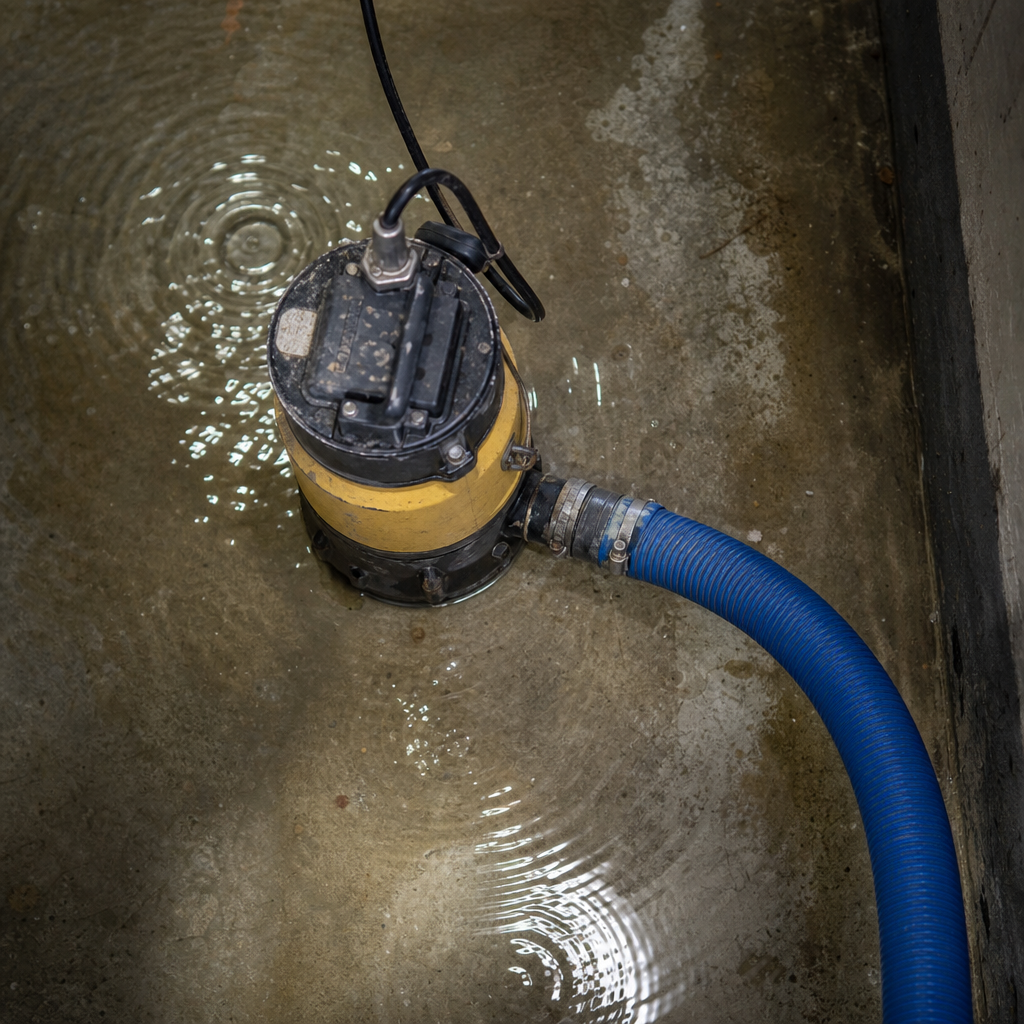
In low-lying parts of Lower Manhattan that face flood risk, water extraction must be handled carefully to avoid damaging building foundations. Local resilience measures and controlled mitigation practices are implemented to manage flood risks effectively.[4]
Managing Hydrostatic Pressure
When surrounding soil is saturated, inward pressure on foundation walls increases. Pumping standing water out of a flooded basement too rapidly can create pressure imbalances against foundation walls and floor slabs. Technicians at Wade’s Restoration take a controlled approach:
- Site Assessment: Technicians inspect the structure and evaluate site conditions before positioning extraction pumps.
- Controlled Drawdown: Standing water is pumped out in stages to reduce the risk of structural stress caused by sudden pressure changes.
- Continuous Monitoring: Crews monitor foundation surfaces and entry points for secondary seepage during extraction.
Protecting Subfloor Utilities
Standing water in subgrade utility spaces creates serious safety hazards. Technicians work to ensure power feeds are properly managed and extract moisture around mechanical rooms and elevator shafts to protect essential equipment.
Addressing Moisture and Structural Drying
Once bulk water is removed, the structural drying phase begins. Prompt drying helps prevent prolonged structural damage and inhibits mold growth on building materials.
Targeted Structural Drying Techniques
Moisture often migrates into building materials and subfloors. Wade’s Restoration technicians use moisture meters and specialized drying equipment to locate and dry hidden dampness.
- Dehumidification: Commercial dehumidifiers remove moisture from the air in enclosed lower-level spaces.
- High-Velocity Air Movers: Airflow directed across floors and structural surfaces accelerates evaporation.
Preserving Building Materials
In residential and commercial properties across the Financial District, rapid drying techniques can help salvage structural elements and finishes when applied promptly.
When floodwater contains contaminants, technicians clean surfaces, apply antimicrobial treatments, and utilize air filtration systems to maintain safe indoor conditions.
Frequently Asked Questions
How quickly can an emergency restoration team arrive at a FiDi building?
Emergency restoration teams typically aim to respond within hours, not days, and a commonly cited benchmark is about 60 to 90 minutes for urgent calls in Lower Manhattan.
What should I do immediately while waiting for the cleanup crew?
First, ensure personal safety. If water has reached electrical outlets or mechanical equipment, do not enter the flooded area until power has been shut off by a qualified professional. Shut off the main water supply if the source is an internal plumbing line, and avoid contact with contaminated water.
How do restoration teams prevent contaminants from spreading?
Crews install containment barriers and use HEPA air filtration equipment to help prevent airborne dust and contaminants from moving into unaffected building areas during the drying process.
Can extraction equipment reach deep subgrade areas?
Yes. Restoration providers like Wade’s Restoration use portable and high-lift extraction units designed to access lower-level mechanical rooms and basements below street grade.
Need basement flood cleanup in Financial District?
We’re available now - call for a fast, free estimate.
Sources
- P-2333 New York City: Effects of Hurricane Ida – fema.gov (2022)
- Flood Risk in NYC Information Brief – nyc.gov (2015)
- LOWER MANHATTAN COASTAL RESILIENCY – nyc.gov (2019)
- [PDF] Lower Manhattan Coastal Resiliency – NYC.gov – nyc.gov (2021)
- Bringing Basement Apartments Into the Light – Office of the New … – comptroller.nyc.gov
Related reading: Drywall Water Damage Repair in Astoria | Call Now-10% Off | On-Site in 60 Minutes | Free Estimate
Related reading: Water Damage Restoration in Hoboken – 10% Off & Free Estimate – Same-Day Service
Related reading: Water Damage Restoration in Astoria – 10% Off & Free Estimate – Same-Day Service
Frequently Asked Questions
Why is rapid water pumping risky for historic Financial District basements?
Pumping standing floodwater too quickly creates severe hydrostatic pressure imbalances from surrounding saturated soil, risking structural masonry cracks or foundation failure. Wade's Restoration utilizes controlled-drawdown extraction and real-time monitoring to safely stabilize subterranean pressure while removing water from deep subgrade spaces.
How does Wade's Restoration assist with basement flood insurance claims in FiDi?
Our team conducts a free visual inspection and develops a detailed, written scope of work that accurately categorizes water intrusion sources and structural damage. Wade's Restoration coordinates directly with insurance adjusters to ensure fast approval and complete coverage documentation for subfloor mitigation.
What is the emergency response time for basement flood cleanup in Lower Manhattan?
Wade's Restoration provides 24/7 rapid response with an average 45-minute dispatch time to addresses across the Financial District. Emergency crews arrive equipped with high-lift extraction pumps and industrial drying systems to immediately secure subgrade utility rooms and extract floodwater.
About the author
 |
Sarah Jenkins Sarah Jenkins is a certified environmental consultant specializing in mold assessment and remediation strategy. With over a decade of experience advising property managers and homeowners in the New York metropolitan area, she focuses on practical solutions for complex indoor air quality issues. Sarah holds a B.S. in Environmental Science from Rutgers University. |
Water damage, flood, or mold emergency?
We’re available now - call for a fast, free estimate.
Call Now - Free Estimate