
Free visual inspection and a written scope of work before any mitigation begins - photos, moisture readings, and drying logs go in your claim file
The scope we write is the scope we bill. Anything new gets shown to you, in writing, before we touch it.
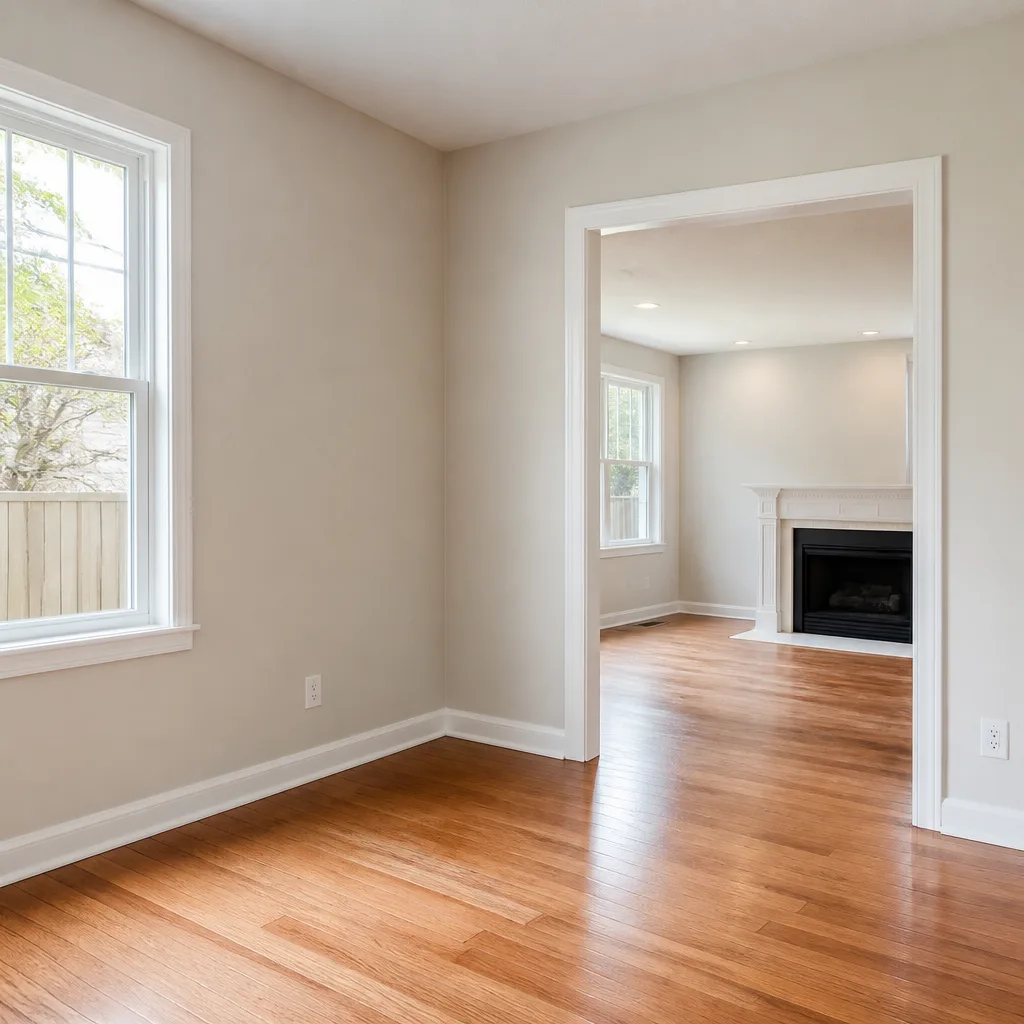
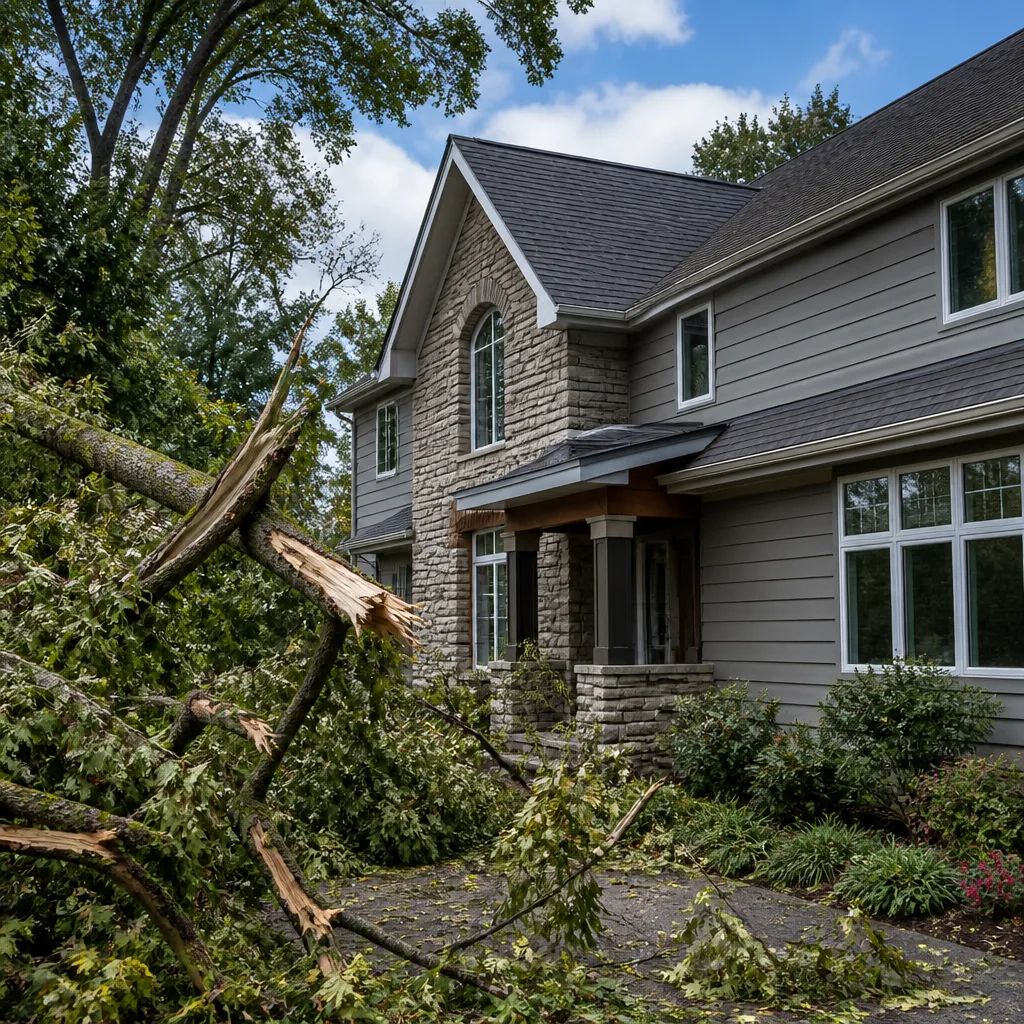
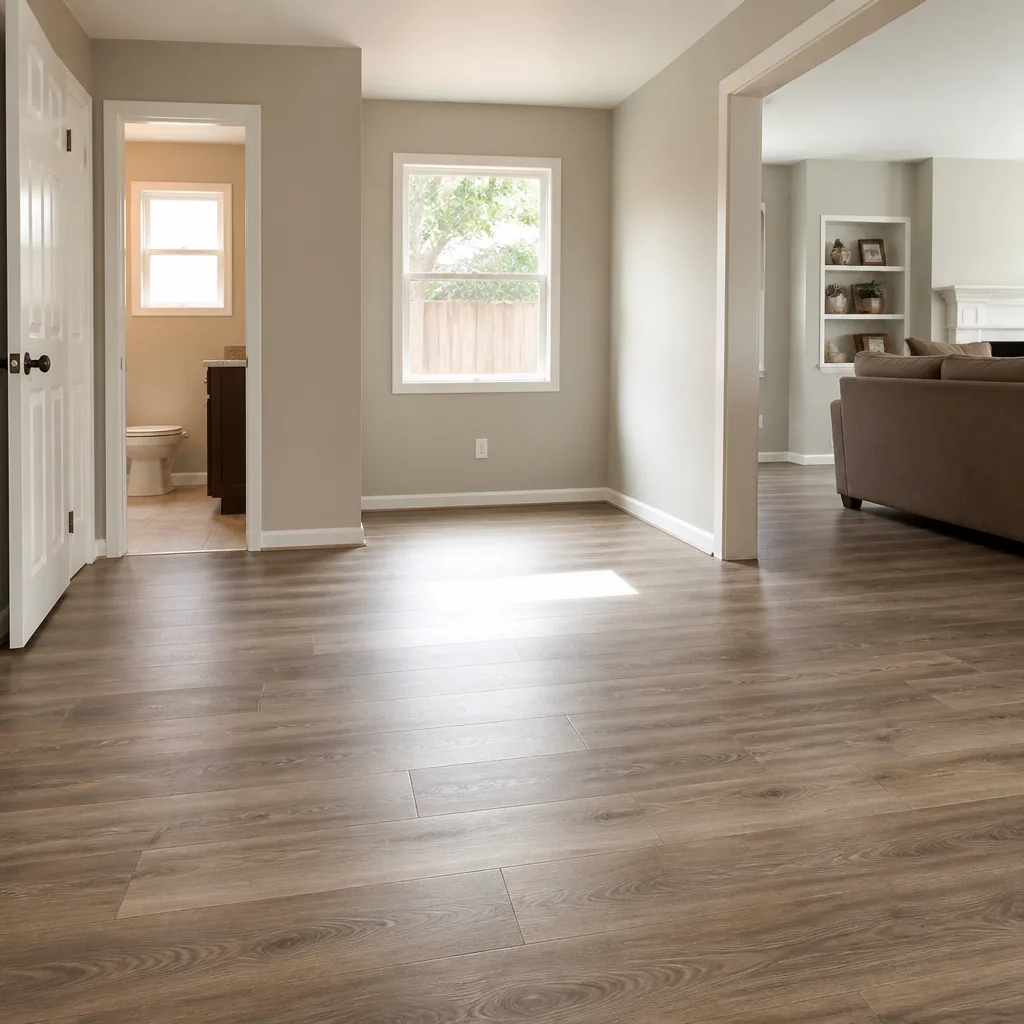
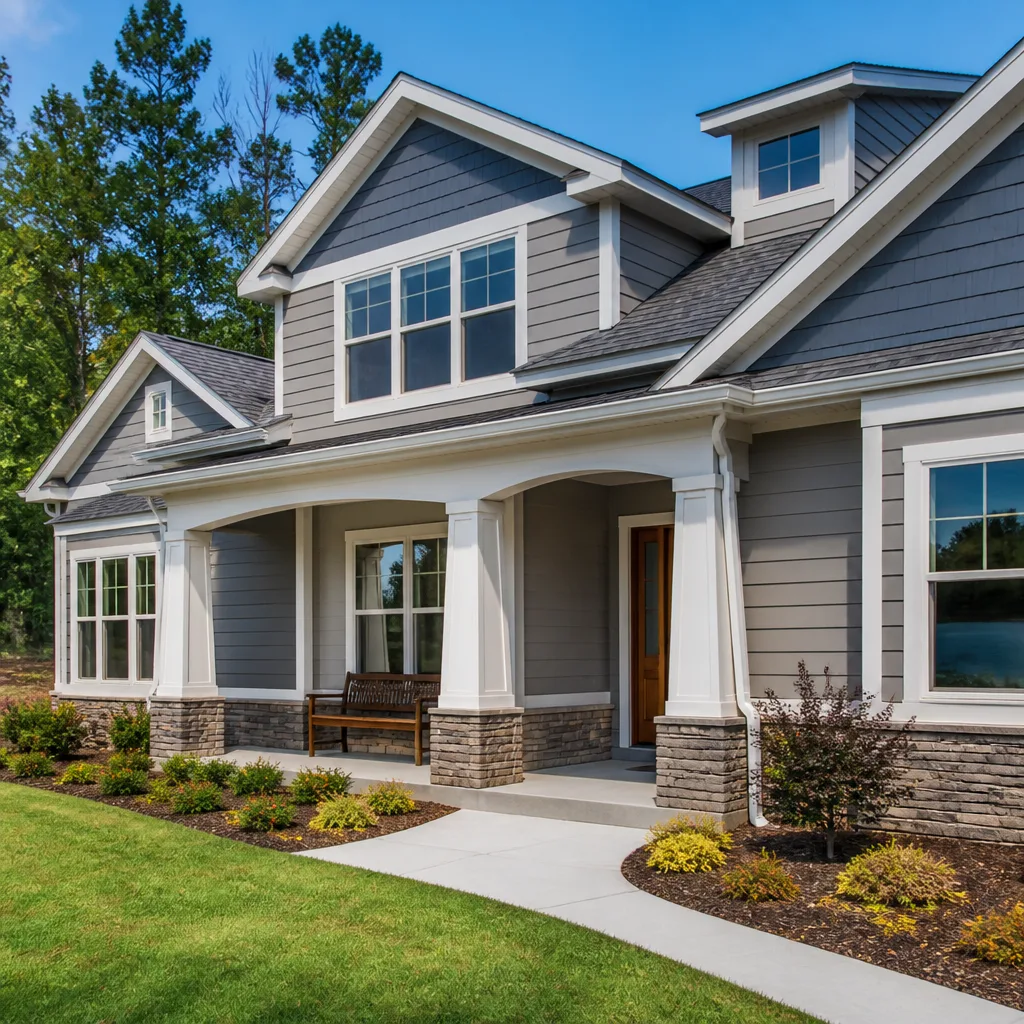
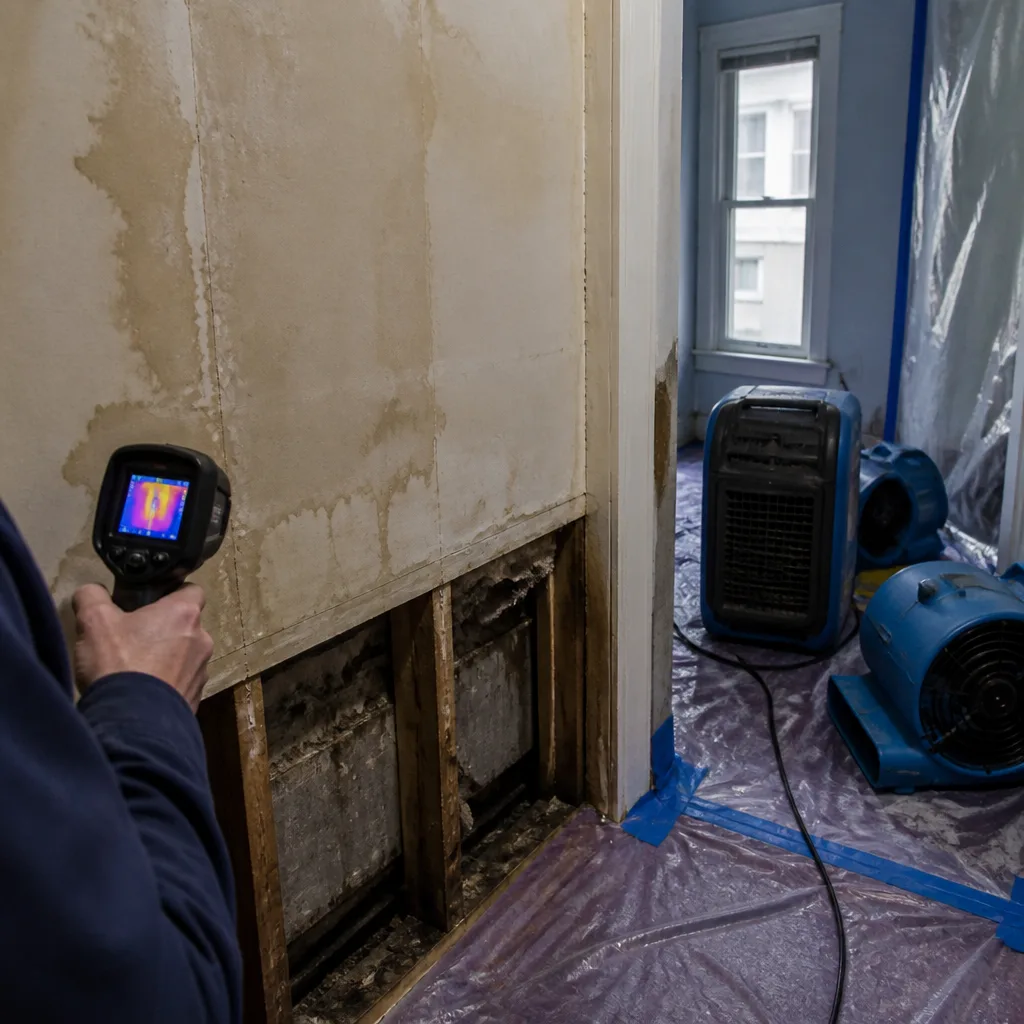 Before
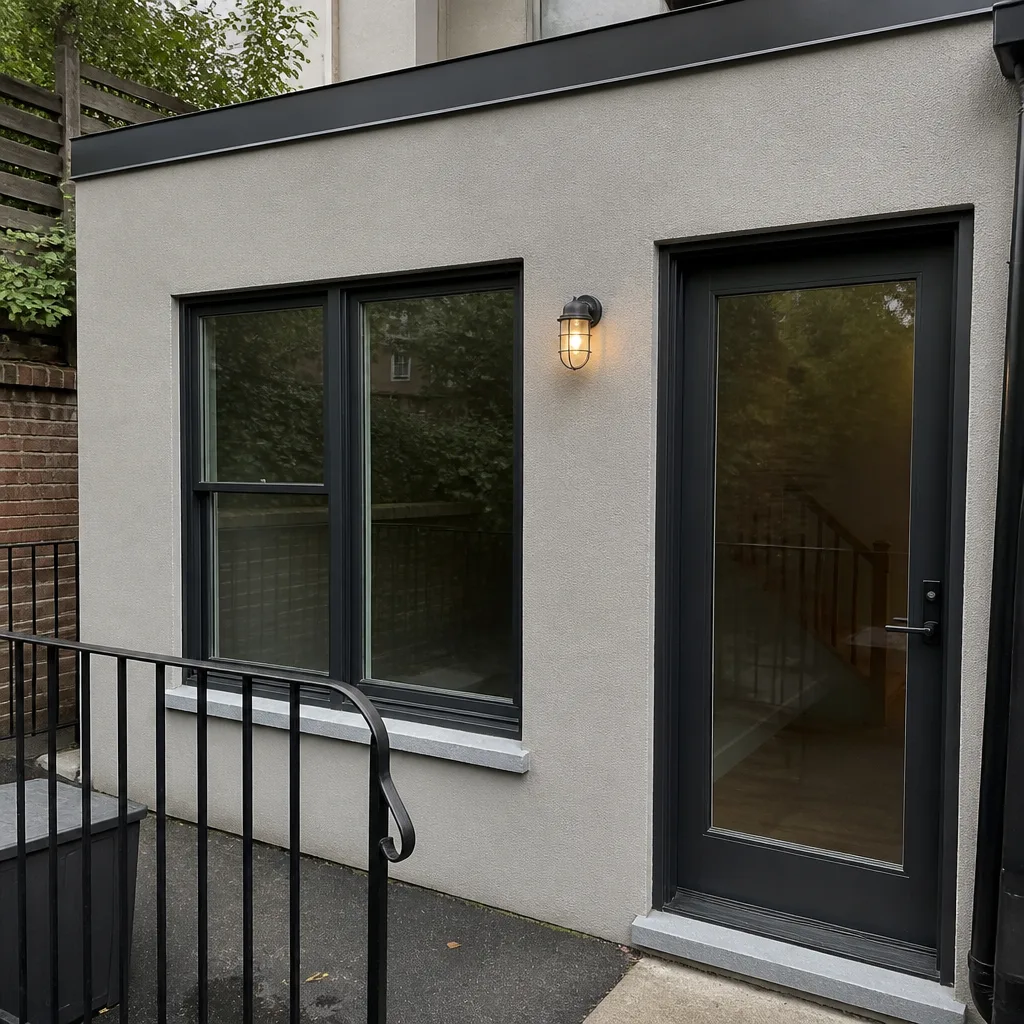 After
After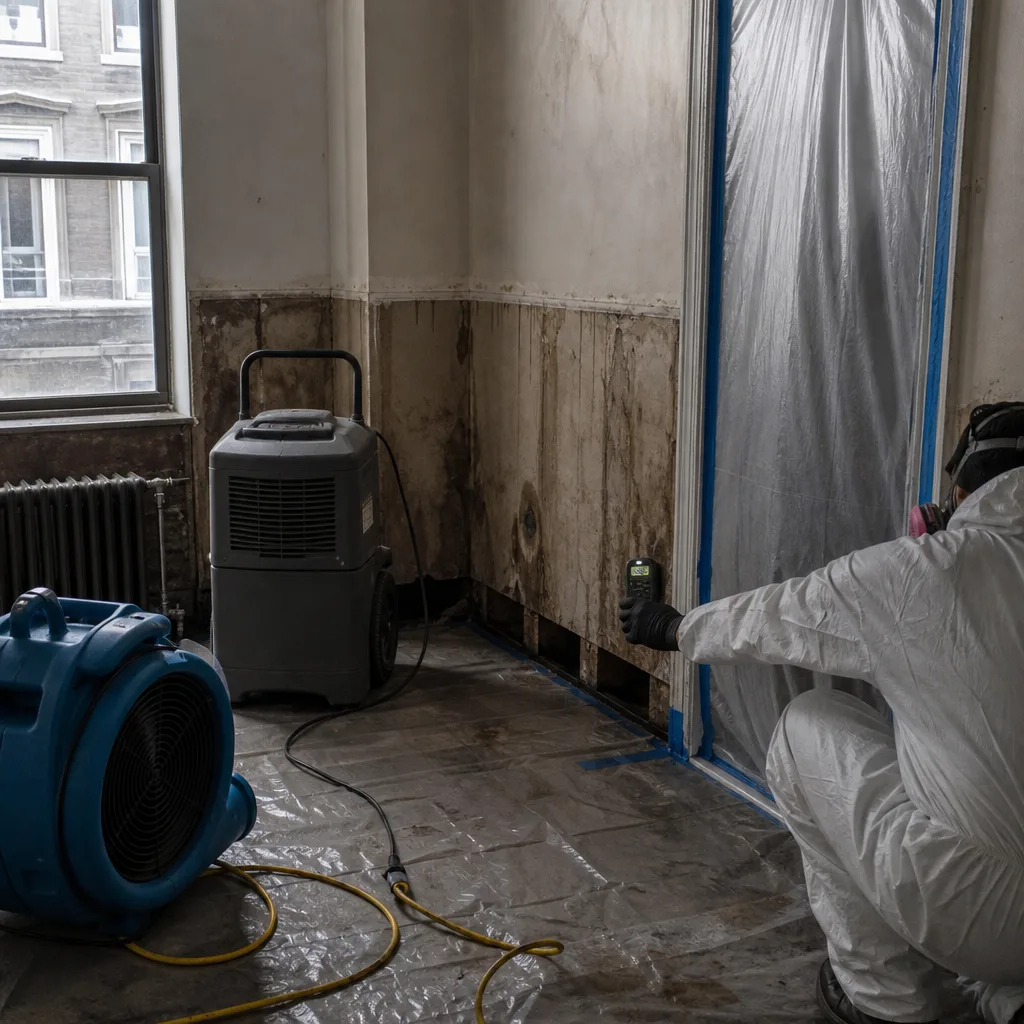 Before
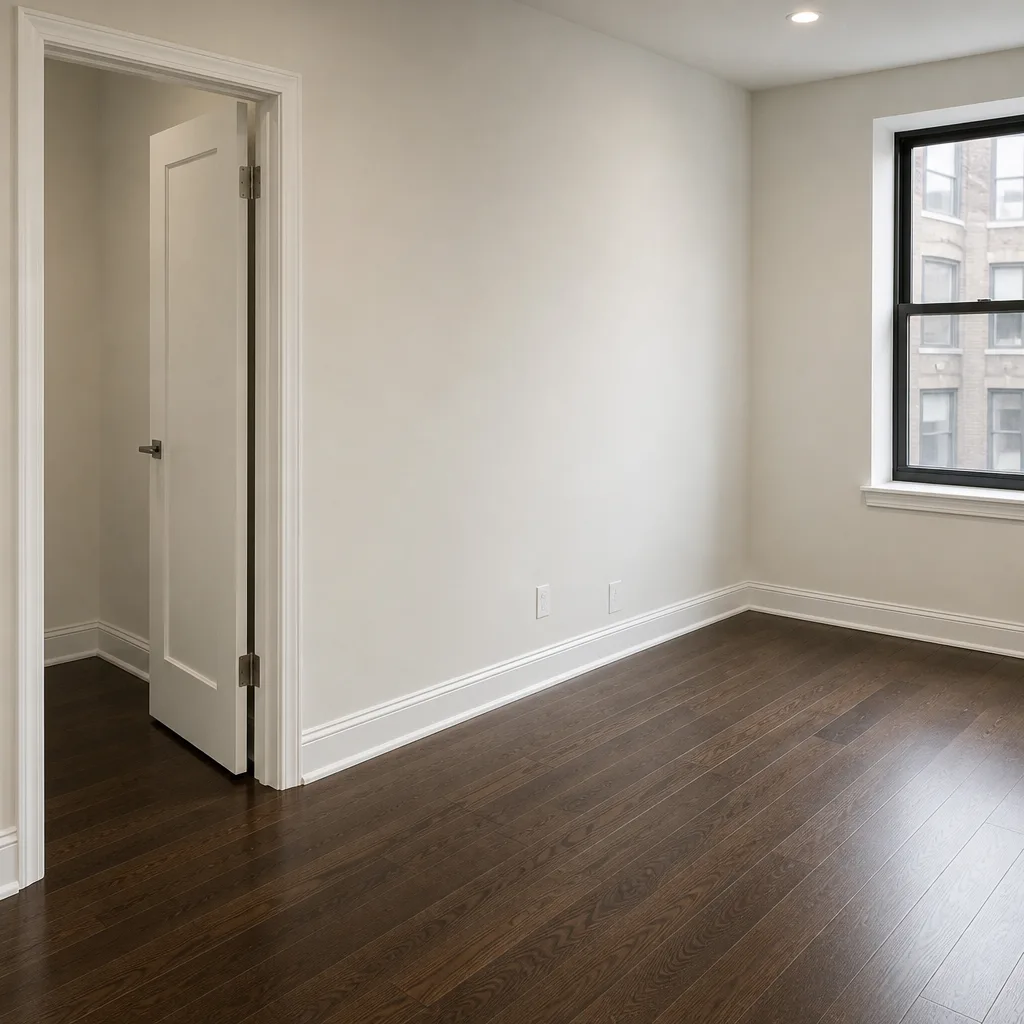 After
After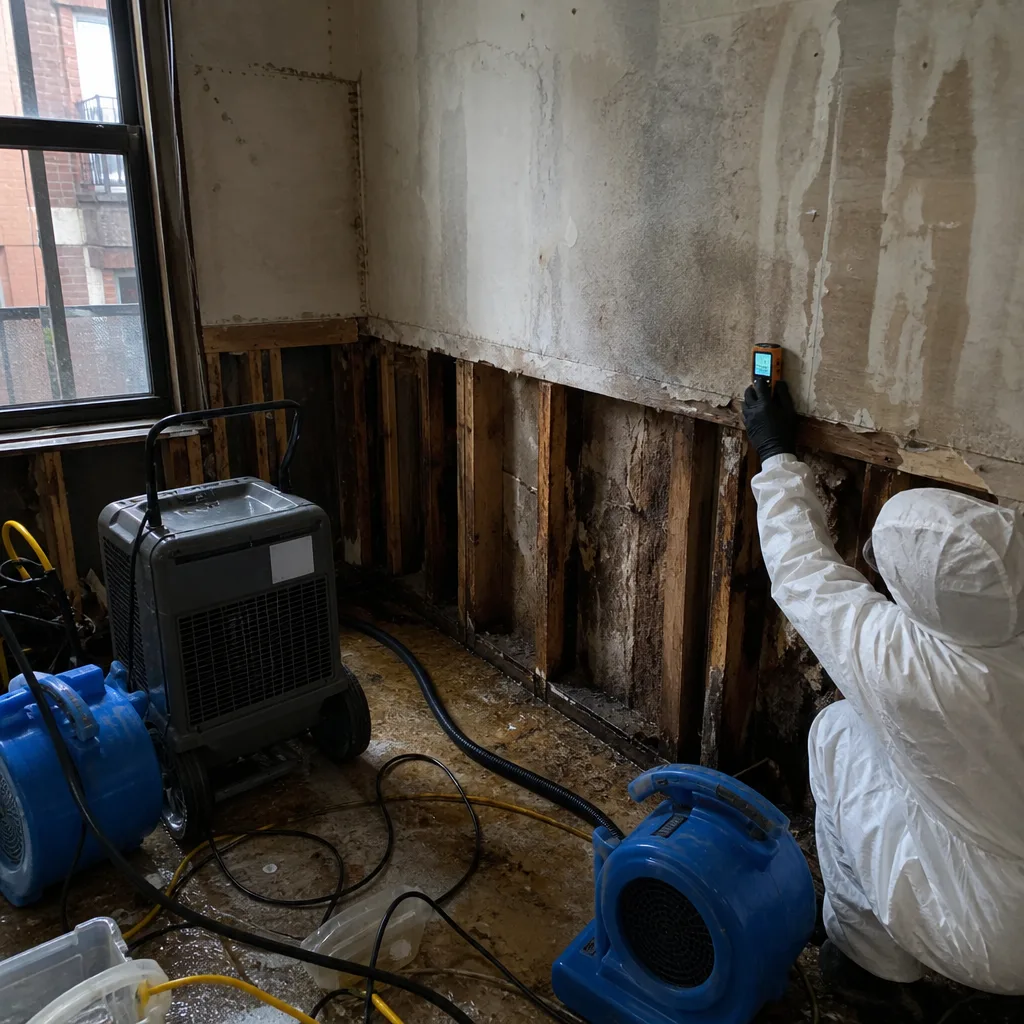 Before
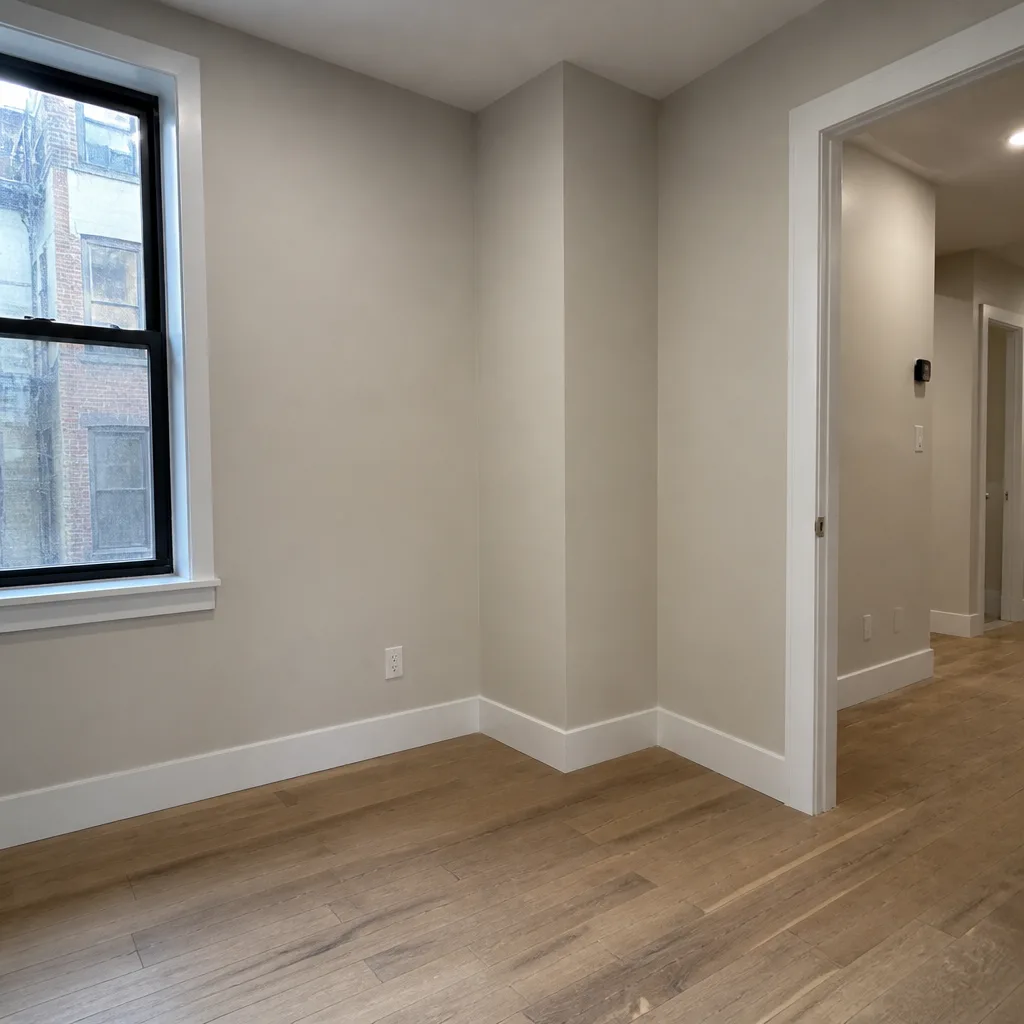 After
After24/7 Emergency Biohazard & Crime Scene Cleanup in Astoria
Biohazard and crime scene cleanup in Astoria typically runs $1,800-$6,500 for a standard unattended death or trauma scene, with hoarding cleanouts starting around $2,500 and climbing based on volume and hazmat requirements. Most jobs in our area take 1-3 days for full remediation and clearance. Call (607) 350-1550 any hour, any day, and Wade Ferris answers his own phone. Not an answering service. Not a call center in another state.
The first hour matters most. Blood, bodily fluids, and decomposition byproducts sink into grout, hardwood, subfloor, and the porous brick common in Astoria’s pre-war rowhouses. The longer they sit, the deeper they migrate, and the more invasive the removal becomes. We head out immediately when you call, because a contaminated surface that could be cleaned today becomes a demolition job tomorrow.
Understanding Biohazard & Crime Scene Cleanup Severity in Astoria Properties
Biohazard work is classified by risk level and material saturation. Blood and bodily fluids are Category 3 hazards: they carry bloodborne pathogens like hepatitis B, hepatitis C, and HIV, plus bacteria that thrive in organic matter. Decomposition fluids from an unattended death introduce additional biological load: fecal matter, purge fluids, and the insects and rodents those fluids attract. Hoarding environments compound the problem, layering ammonia from accumulated waste, mold from trapped moisture, and sometimes needle hazards or damaged structural materials onto an already complex job.
Astoria’s housing stock makes containment harder than in detached homes. The neighborhood’s attached brick rowhouses and 4-6 story walk-ups share unreinforced party walls. Contaminated moisture doesn’t stop at the property line. It moves laterally through masonry pores, wall cavities, and shared floor joists. We’ve seen a decomposition event in one unit on 28th Avenue require containment and air scrubbing in the rowhouse next door because the odor carried through a shared wall chase. That’s a reality unique to attached housing stock, and it’s why we treat every Astoria job as potentially multi-unit from the first walkthrough.
Safety note: biohazard remediation involves bloodborne pathogens, sharp objects, and sometimes structural instability. This is not DIY work. Anyone entering a contaminated space without proper PPE and training risks serious infection. Call a certified professional. Call us. That’s what we’re here for.
Why Astoria Property Owners Choose Wade’s Restoration
- Wade shows up himself. You’ll see Wade Ferris on-site, not a crew you’ve never met and won’t see again. His name is on the truck and his cell is on the business card.
- Live answer, 24/7. Call (607) 350-1550 at 3 a.m. and a real person picks up. Wade answers his own phone. No voicemail, no queue.
- IICRC-certified crews. Our biohazard techs hold IICRC Trauma and Crime Scene Technician (TCST) and Applied Microbial Remediation Technician (AMRT) credentials. The right training for this kind of work.
- Free visual inspection. We’ll walk the scene, assess what’s needed, and hand you a written scope before any work starts. No charge for that.
- Direct insurance billing. We work with your adjuster, not against them. You don’t relay information between two sides; Wade talks to the carrier directly.
- One team, start to finish. From initial containment through final repairs, Wade’s crew handles it all. No handing you off to a subcontractor we met last week.
Our Biohazard & Crime Scene Cleanup Process
Inspection & Assessment
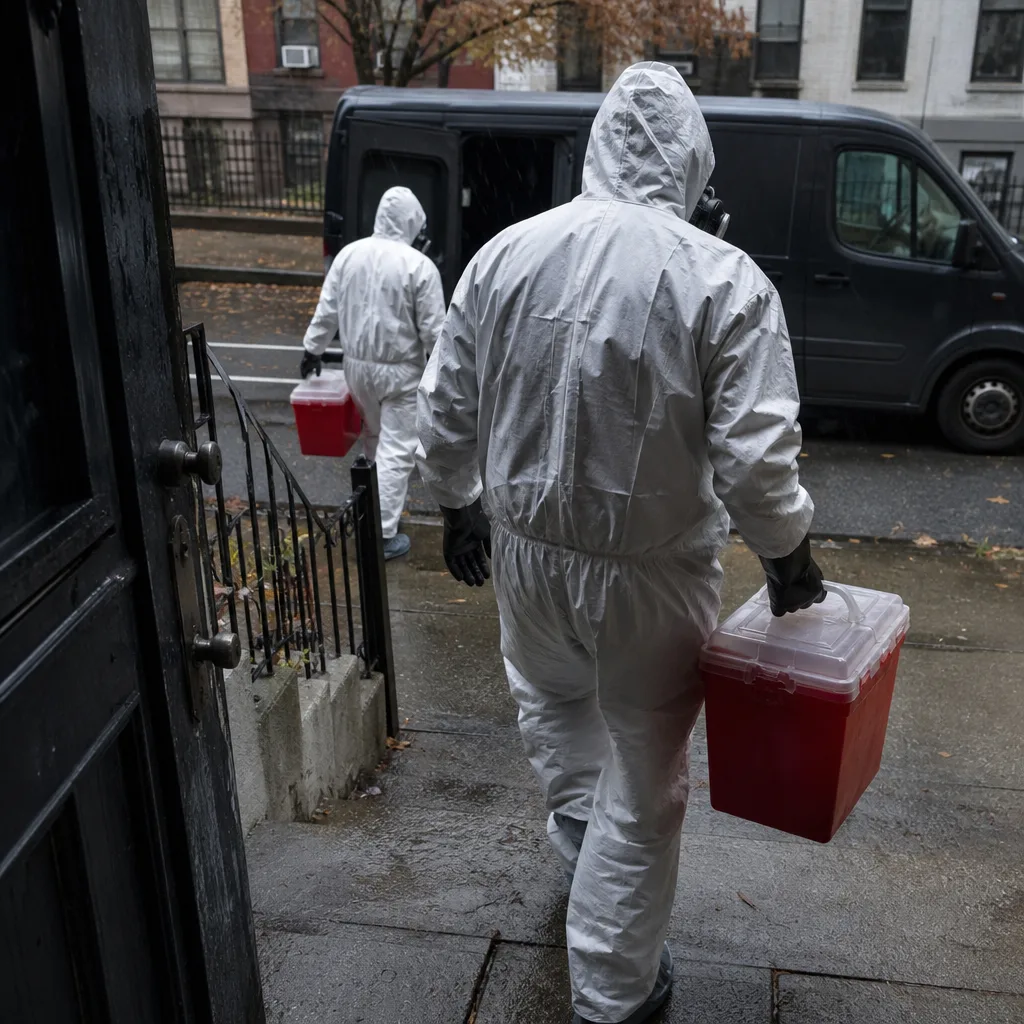
We arrive, assess the scene, and identify all affected surfaces: flooring, walls, fixtures, and any hidden penetration into wall cavities or neighboring units. In Astoria’s attached buildings, that means checking the party walls. We photograph everything before touching anything.
Containment & Stabilization
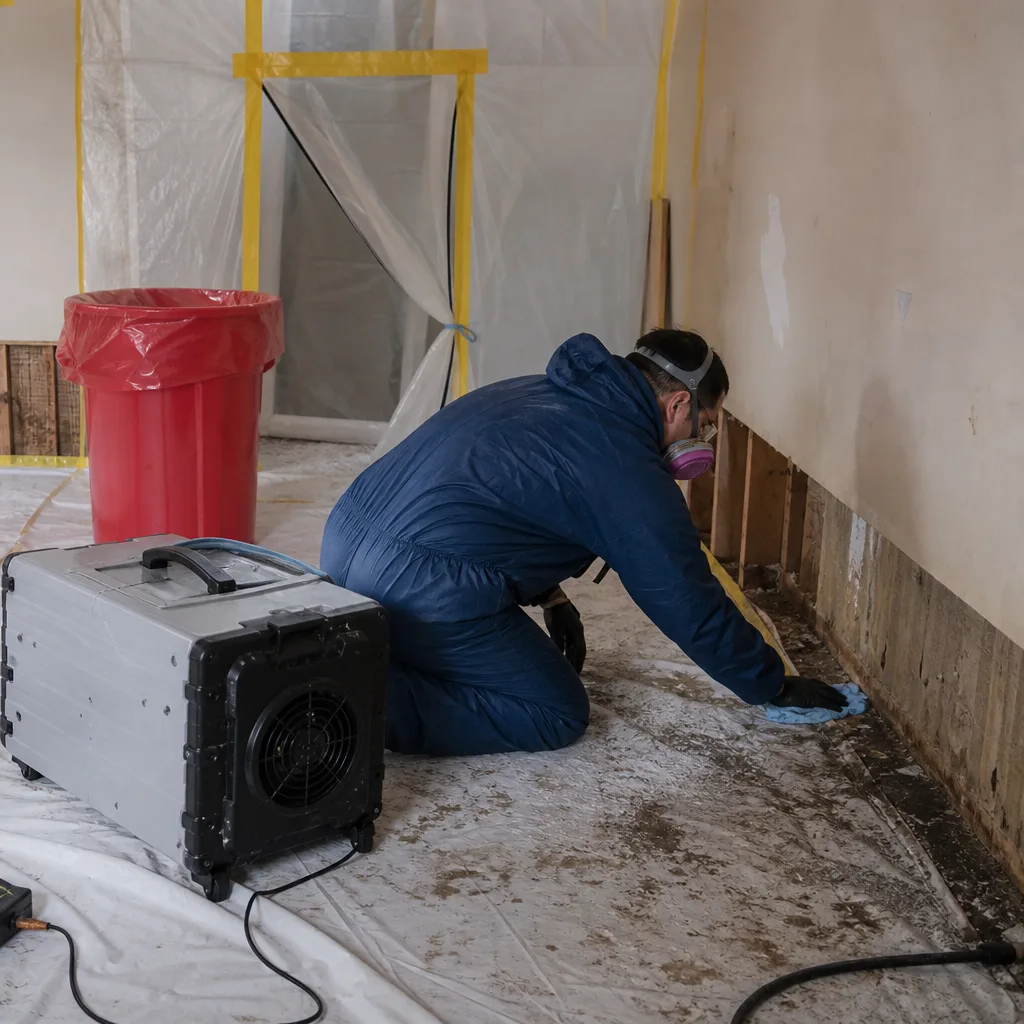
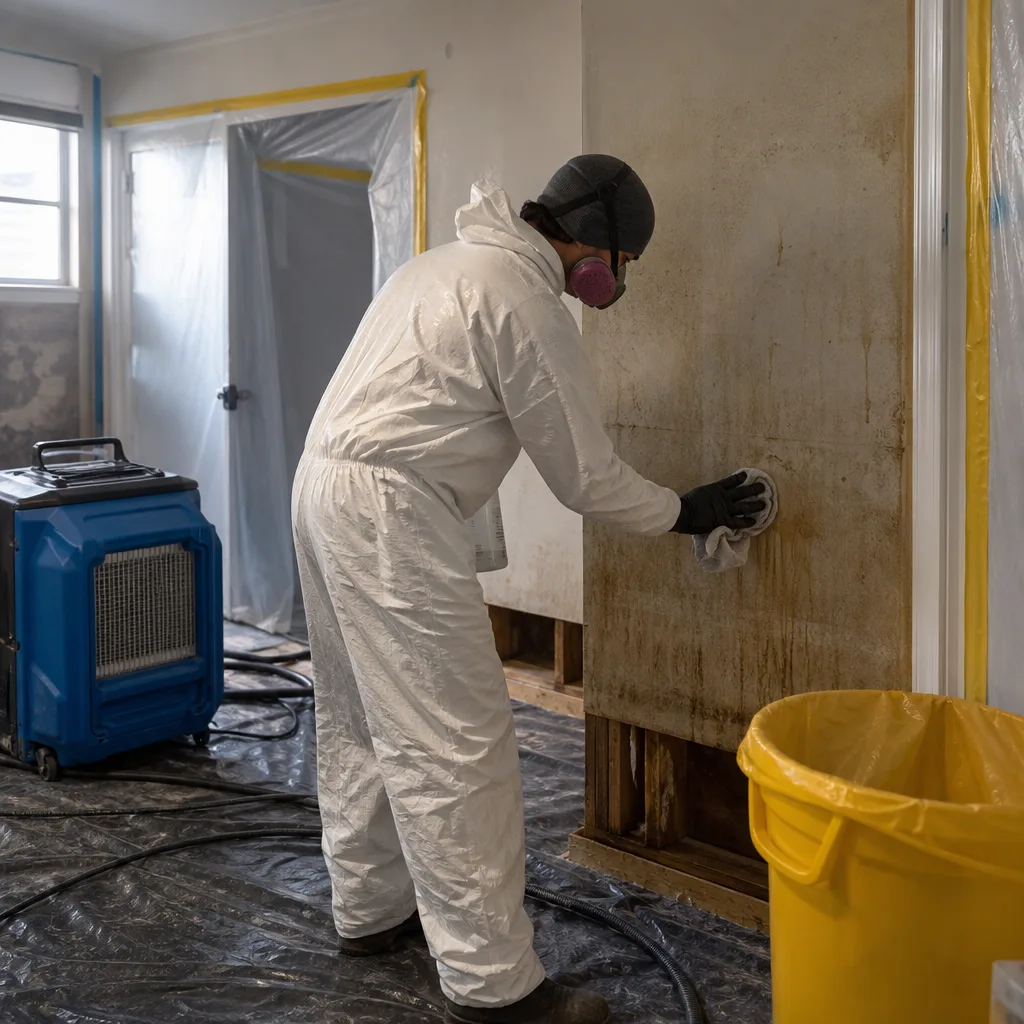
We seal the work area with 6-mil poly sheeting and establish negative air pressure using HEPA-filtered air scrubbers. This prevents cross-contamination into hallways, shared stairwells, and adjacent rowhouse units. For jobs on train-facing walls near the N/W viaduct, we include exterior inspection points for moisture intrusion.
Removal & Extraction
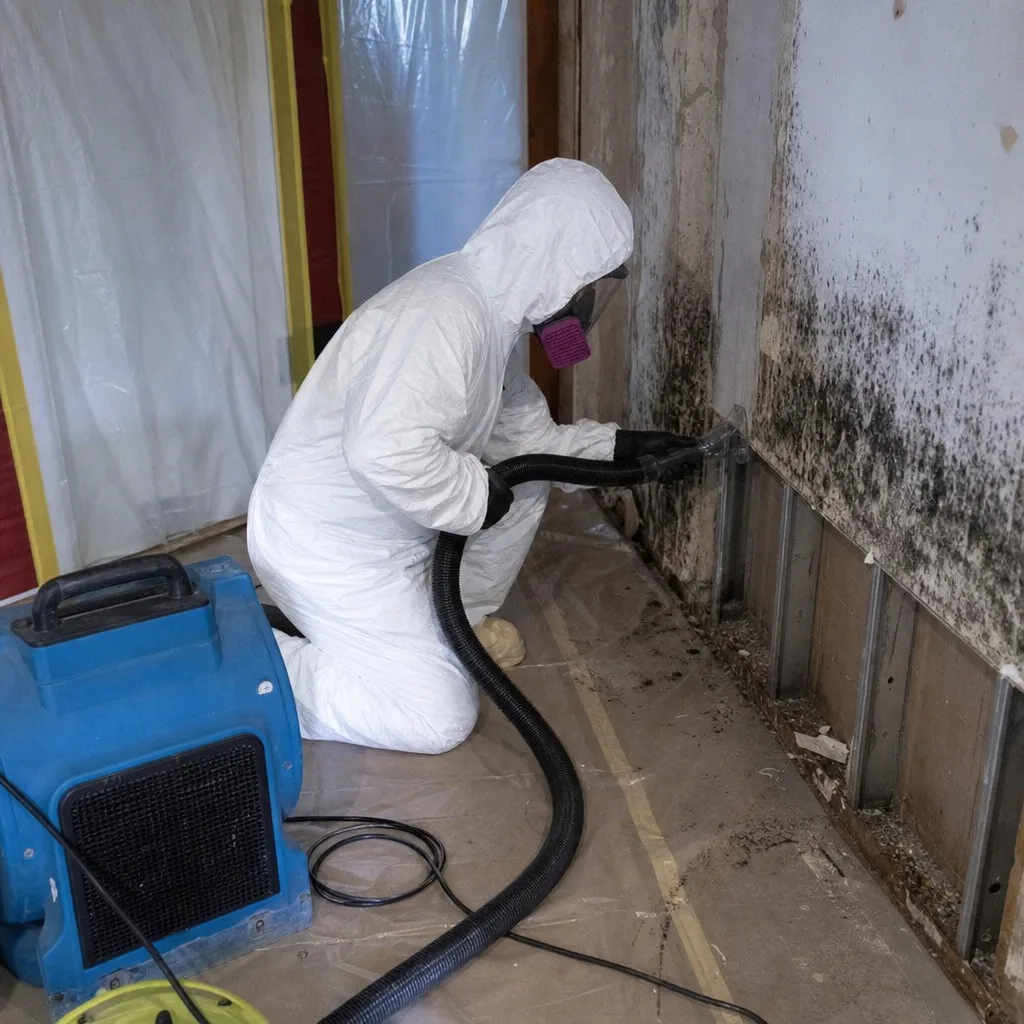
Contaminated materials that can’t be fully sanitized are cut out and removed under containment. In pre-war Astoria buildings, this often reveals asbestos or lead paint in the surrounding structure. If abatement is needed, we coordinate it and document everything for your insurer.
Cleaning & Sanitization
All remaining surfaces are cleaned with EPA-registered antimicrobials and hospital-grade disinfectants as part of our Sanitization Services - Astoria. We treat every affected surface: subfloors, studs, joists, concrete, tile, grout. Porous materials that absorbed bio-load are removed, not masked.
Odor Elimination & Air Scrubbing
Decomposition odor gets into everything: drywall, plaster, wood lath, even brick. We run HEPA air scrubbers with carbon filtration continuously during the job, and use hydroxyl generators or ozone where safe and appropriate. We verify with clearance testing, not assumptions.
Repairs & Restoration
Once the biohazard is eradicated, we rebuild through our Commercial Restoration in Astoria: drywall, paint, flooring, trim, whatever was removed. Wade’s crew handles reconstruction in-house. No separate contractor to vet, no second estimate to negotiate. One company, one written scope, one point of contact.
Need Emergency Biohazard & Crime Scene Cleanup in Astoria Now?
Crews minutes away, answering live 24 hours a day. The sooner we start, the less it costs.
Working With Your Insurance Company
Most biohazard and crime scene cleanup in Astoria is covered under homeowner’s or renter’s insurance, typically under the dwelling or personal property sections. Unattended death cleanup usually falls under standard peril coverage. Hoarding cleanup is more complicated: carriers often cover the biohazard component but not the decluttering labor. We’ll tell you honestly which parts of your job are covered before we start, not after.
Wade deals with your adjuster directly. He sends photos, moisture readings where relevant, and line-item scopes that match industry-standard pricing software. When your adjuster has questions, they call Wade, not you. That’s how it should work.
What We Provide Your Insurer
- Thorough documentation of the loss
- Photos of all damage, room by room
- Moisture readings and containment logs
- A detailed, line-item scope of work
- Direct coordination with your carrier
Built for Astoria’s Loss Calendar
Astoria’s biohazard calls follow a pattern shaped by the neighborhood’s building stock and weather. January and February bring deep freezes that burst pipes in uninsulated exterior-wall chases, flooding basements and first-floor units with Category 3 water. When a burst pipe saturates a unit where someone lived alone, the discovery sometimes comes days later, and now you’re dealing with both water damage and an unattended death. We get called for that overlap-where Water Damage Restoration in Astoria meets biohazard cleanup-more than most people would believe.
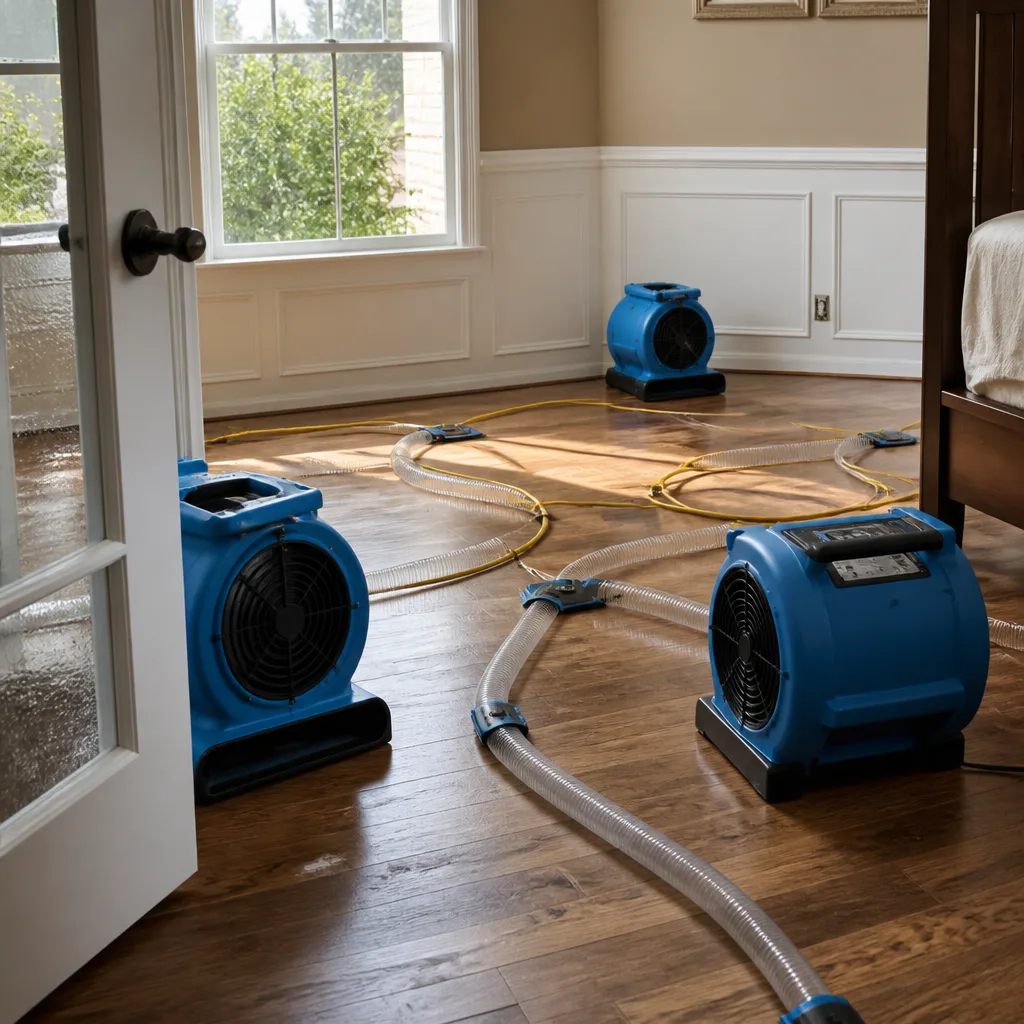
Summer brings a different kind of call. Heat radiates off the brick facades and rooftop membranes, accelerating decomposition in units without air conditioning. Odor complaints from neighbors are often the first sign. On the western blocks near the East River and Hell Gate, storm surge and tidal flooding push contaminated water into basement units, mixing sewage with whatever was stored down there. We’ve mitigated Category 3 sewage backups on 28th Avenue near the N/W viaduct that migrated through a shared party wall into the neighboring rowhouse. Containment air movers and HEPA scrubbers ran in both connected units while moisture mapping tracked the contaminated path across the shared wall. Antimicrobial treatment went on both sides before anyone moved back in.
Biohazard & Crime Scene Cleanup Across Astoria’s Neighborhoods
Response routes matter when neighbors are watching and time is against you. From Ditmars to Queensbridge, we know the streets. The blocks around the 30th Avenue and Broadway commercial strips are dense with 1920s rowhouses, many converted to two and three-family occupancy. When a biohazard happens in one unit of a three-family on 36th Avenue near Steinway, the other two families are living directly on the other side of a brick wall that predates modern vapor barriers. Cross-unit containment isn’t optional; it’s standard practice.
Up by Ditmars-Steinway, the mix shifts toward small walk-up apartment buildings and attached brick homes. The N/W viaduct runs elevated above 31st Street from Ditmars through the heart of the neighborhood, and buildings directly beneath or alongside it collect decades of de-icing chemical runoff and drip moisture on the train-facing walls. We check those walls on every biohazard job in the corridor. A cleanup that leaves hidden mold behind is a future regulation problem and a future callout.
On the western edge, the blocks near Astoria Park and the waterfront face a different risk profile. Storm surge from the East River and Hell Gate has put ground-floor and basement units in FEMA flood zones since Sandy, and anything stored or living at that level sits in the path of contaminated floodwater. Biohazard cleanup in those units often starts with floodwater extraction and ends with full antimicrobial treatment of every surface below the high-water mark.
Specialized Biohazard & Crime Scene Cleanup Services We Offer in Astoria
Crime Scene Cleanup
After the police clear a scene, the family is left with a space that still holds physical reminders of what happened. We remove blood, tissue, and other biological material from every affected surface, clean and disinfect the area, and restore it so the family can begin to move forward. In Astoria’s attached rowhouses, we coordinate with neighbors when contamination crossed a shared wall or migrated through a common stairwell.
Trauma & Unattended Death Cleanup
An unattended death means decomposition fluids have had time to saturate flooring, drywall, and often the structural framing beneath. In pre-war Astoria buildings, those fluids can penetrate through original hardwood into the subfloor, and through plaster into the lath. We remove what can’t be fully sanitized, clean what can, and verify the space with clearance testing. Odor elimination is a critical part of this work: decomposition odor isn’t just unpleasant, it indicates biological material is still present.
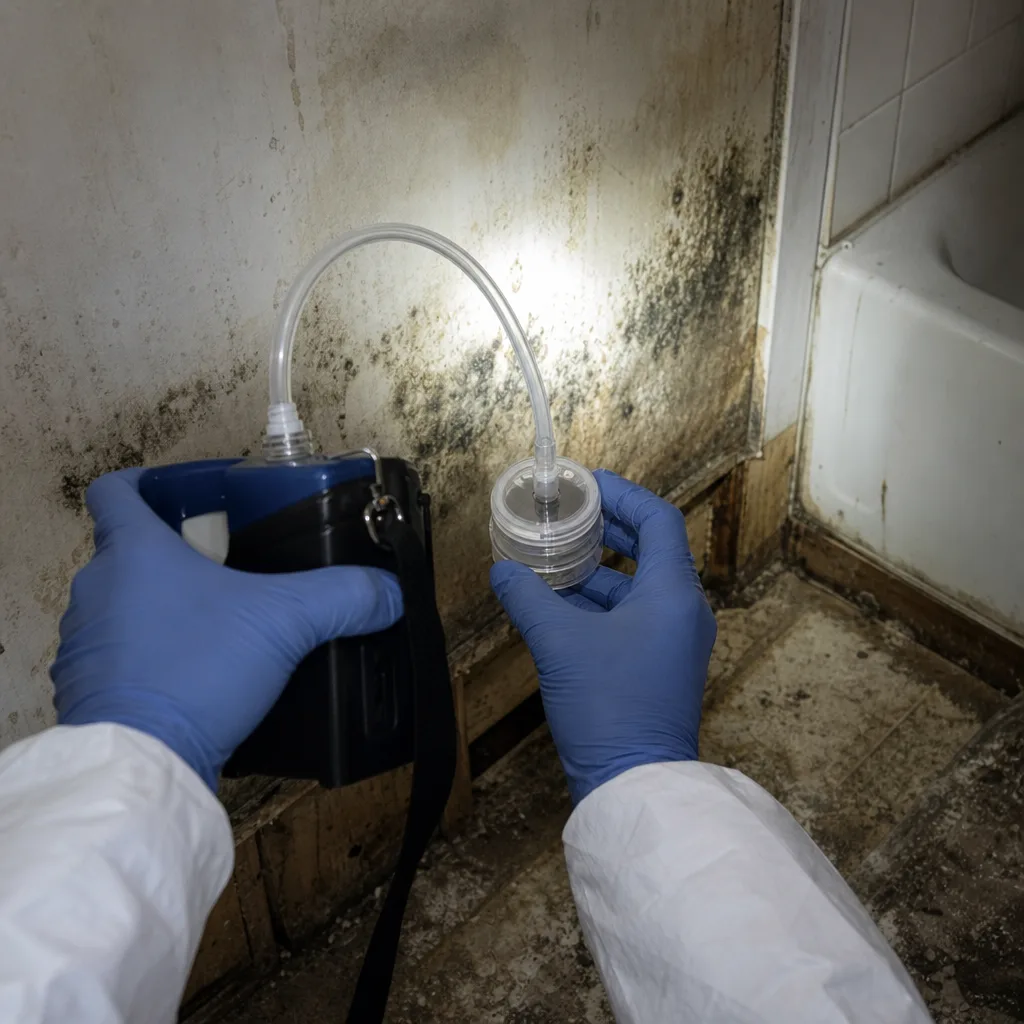
Hoarding Cleanup
Hoarding environments in Astoria’s older buildings are unique: decades of accumulated materials in small rooms with single windows and shared walls create microclimates that breed mold, harbor pests, and hide structural damage. We sort, remove, clean, and sanitize. We also look for what the piles were hiding: rotted floor joists, cracked plaster, water intrusion from aging pipes. If the building is pre-war, asbestos and lead-paint abatement are often part of the scope, and we handle that coordination.
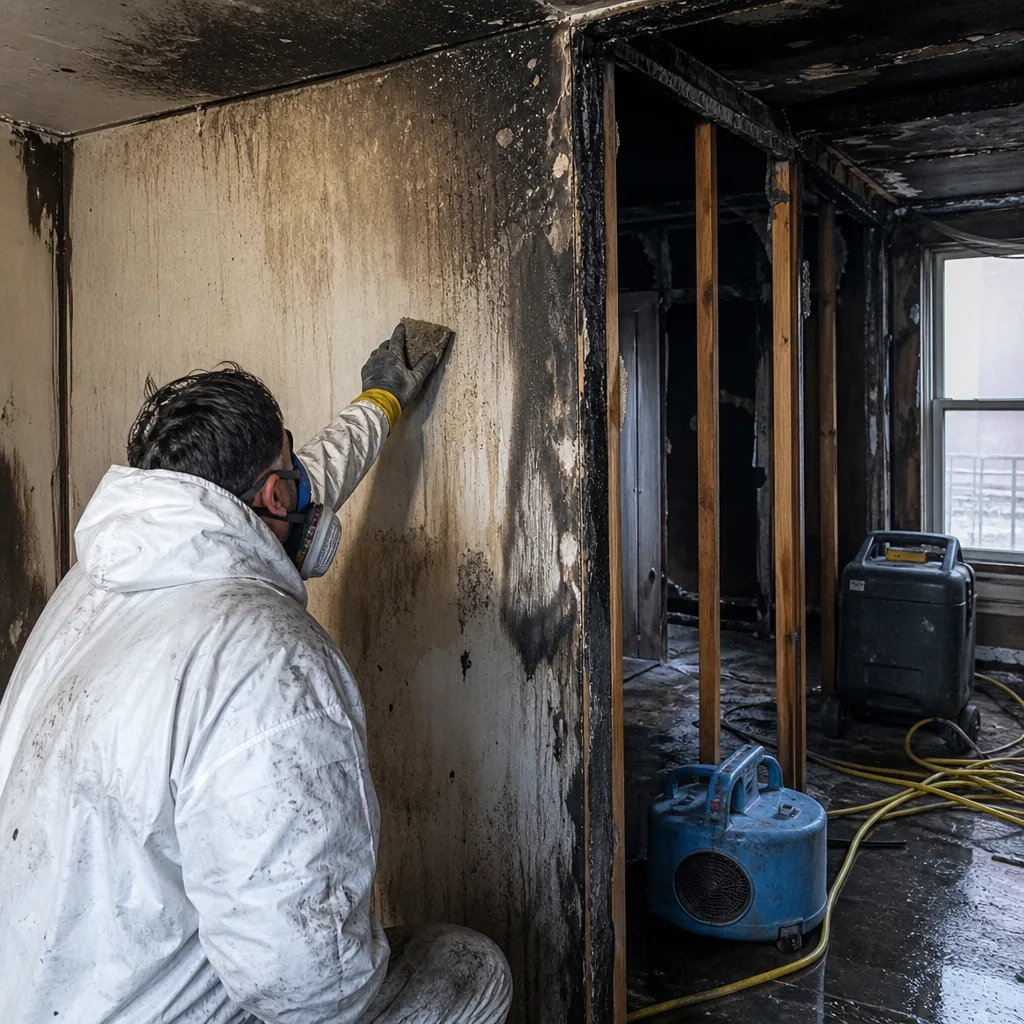
Blood & Bodily Fluid Cleanup
Blood carries pathogens that survive on surfaces for days. We treat every drop as potentially infectious, which means PPE, containment, disinfectant application with proper dwell times, and disposal of porous materials that can’t be fully cleaned. In Astoria apartments where a bathroom or kitchen sits directly against a party wall, we check for transfer: blood seeping through cracked grout into the wall cavity behind is more common than people think, especially in buildings from the 1930s.
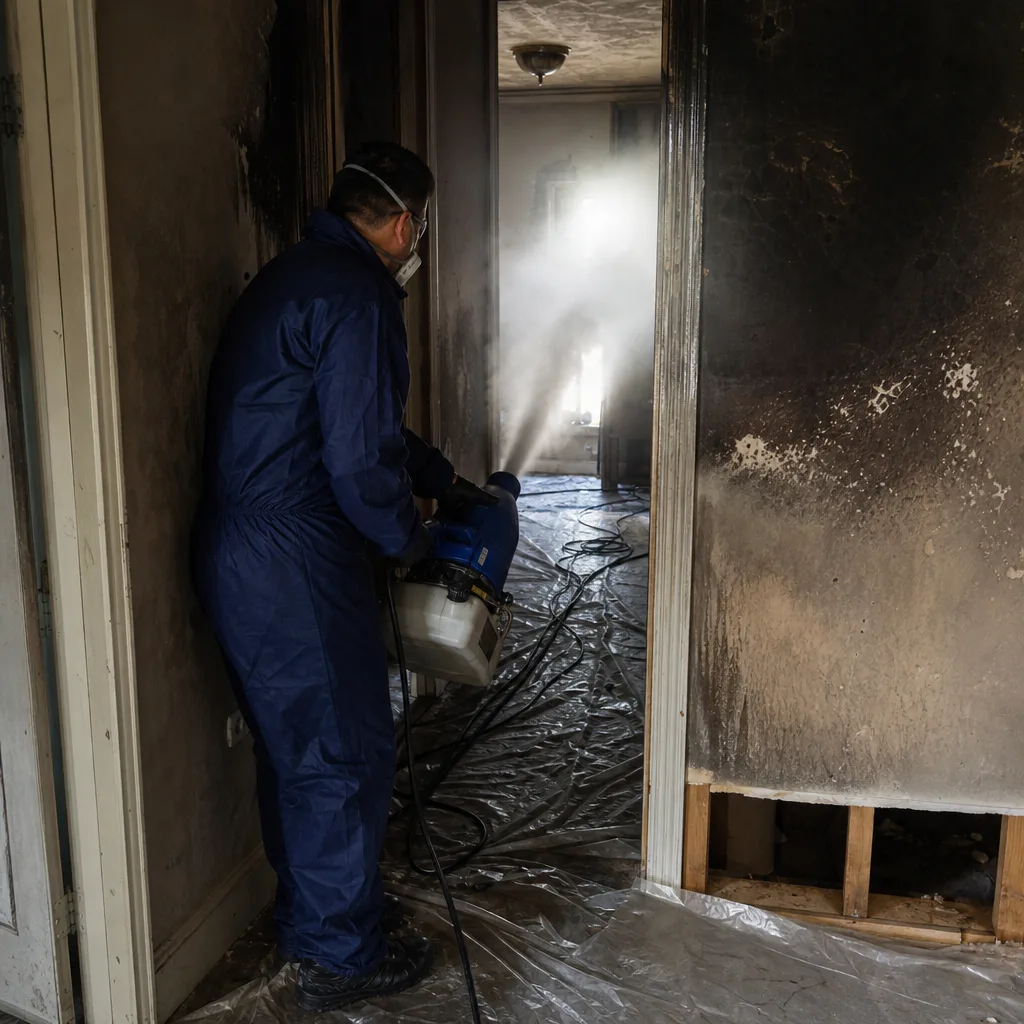
Infectious Disease Disinfection
When a home in Astoria experiences an infectious disease event, whether COVID, MRSA, C. diff, or something else, targeted disinfection is the immediate need. We use EPA-registered disinfectants with documented kill claims for the specific pathogen in question, applied at the right concentration and with the right dwell time. For duplexes and rowhouses with shared ventilation or wall chases, we treat the connected spaces too.
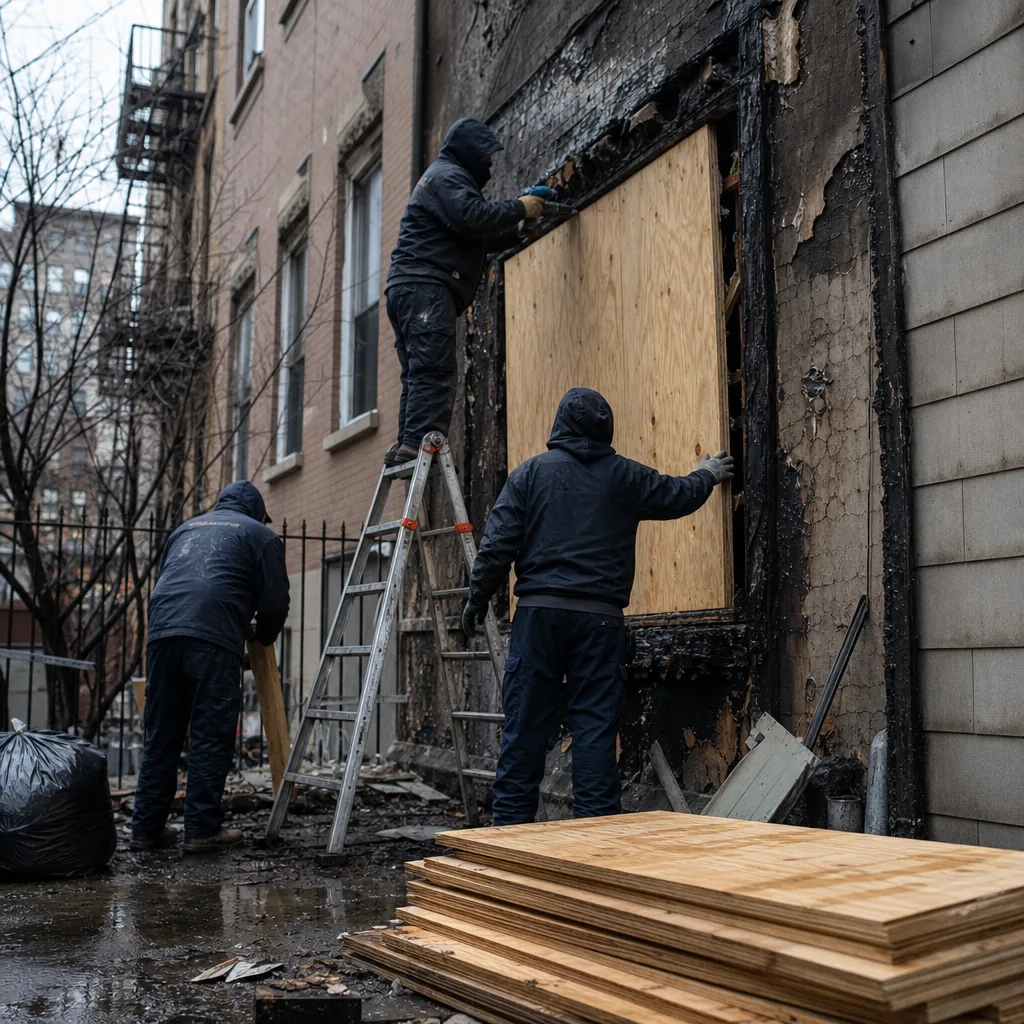
What happens when you call
- 1
A real person answersNo phone trees - you reach a local pro.
- 2
You get an upfront price rangeHonest numbers before anyone is dispatched.
- 3
A background-checked tech heads outLicensed & insured, dispatched right away.
- 4
You approve before work beginsNothing starts until you say go.
Biohazard & Crime Scene Cleanup Costs in Astoria, NY
A standard crime scene or trauma cleanup in Astoria runs $1,800-$4,500, depending on the size of the affected area and the depth of penetration. Unattended death cleanup typically falls in the $2,500-$6,500 range: decomposition fluids often require subfloor or drywall removal, and odor elimination adds time and equipment. Hoarding cleanouts start around $2,500 for a single small room and can reach $15,000+ for a full apartment in a pre-war building requiring asbestos abatement. Blood cleanup in a confined area like a bathroom is usually $800-$2,000.
What moves the price: the square footage affected, what materials absorbed the bio-load (hardwood, plaster, concrete, carpet), whether containment extends to neighboring units, and whether asbestos or lead abatement is triggered. Insurance covers the bulk of most biohazard claims. For the uncovered portions, we offer a free second opinion on any written estimate, no trip charge inside our own county, and a permanent 10% discount for seniors and veterans. Wade will hand you a written scope before any work begins. Always.
We Also Serve Cities Near Astoria
Our crews regularly handle biohazard and crime scene cleanup for property owners in Astoria and the surrounding neighborhoods, including Long Island City. If you’re just over the border, call us. No trip charge inside the county.
Serving Astoria, NY - Our Local Coverage Area
We’re based in the Astoria area and know this community well. Use the map below to see our service coverage - if you’re nearby, we can almost certainly help.
Astoria Biohazard & Crime Scene Cleanup Questions, Answered
If a biohazard incident happens in my unit, do I need to notify my neighbors in the attached rowhouse next door?
Yes, if there’s any chance contamination crossed the party wall or entered a shared space like a hallway or stairwell, you should notify your neighbors. In Astoria’s attached brick rowhouses, biohazard contamination can travel through wall cavities and masonry pores into adjacent units. We assess whether cross-contamination occurred and coordinate with the adjoining owners directly, because a single-unit cleanup that ignores the shared wall is an incomplete cleanup. Call (607) 350-1550 and we’ll walk you through what to tell them.
How does the elevated subway viaduct affect mold growth after a biohazard cleanup?
The N/W viaduct runs above 31st Street through central Astoria, and buildings directly beneath or alongside it collect years of de-icing chemical runoff and chronic drip moisture on the train-facing walls. That moisture keeps the masonry perpetually damp, which means any hidden wall cavity can already harbor mold before a biohazard event adds more moisture to the mix. We inspect train-facing exterior walls on every biohazard cleanup in the corridor, because completing a cleanup while leaving hidden mold behind is a future failure.
What category of water is typical after an unattended death in an Astoria apartment?
Any water released from a decomposing body is Category 3 water: grossly contaminated, carrying bloodborne pathogens and bacteria. If the person passed in a bathroom and plumbing leaked, that adds Category 3 sewage water to the equation. In Astoria’s pre-war buildings, this contaminated water often penetrates through original hardwood into the subfloor and through plaster into lath, which means cut-out and removal, not surface cleaning.
Do hoarding cleanouts in Astoria’s pre-war buildings require special hazmat handling?
Often yes. Hoarded environments in Astoria’s 1920s-1940s buildings frequently contain asbestos in old flooring, pipe insulation, and plaster, plus lead paint on walls and trim. When we remove hoarded materials and uncover these substrates, abatement is triggered before restoration can proceed. We coordinate the abatement, handle the documentation for your insurer, and keep containment in place throughout.
How does storm surge from the East River affect biohazard cleanup in basement units on Astoria’s western blocks?
Ground-floor and basement units near Astoria Park and the Hell Gate waterfront sit in FEMA flood zones. Storm surge pushes Category 3 floodwater into those spaces, carrying sewage, fuel residue, and whatever else was in the flood path. When a biohazard event coincides with flooding, the cleanup is a full Category 3 remediation: extraction, removal of contaminated materials, antimicrobial treatment, and drying with HEPA air scrubbing. The scope is larger, and the documentation for FEMA and insurance is more involved. Call (607) 350-1550 to talk through your specific situation.
How fast can someone actually get here?
Wade heads out immediately when you call, day or night. We’re based in the metro area and Astoria is part of our home territory. For active biohazard scenes, you should expect us at your door within 45-60 minutes of your call. The sooner we contain the area, the less it costs.
Do I really need full remediation, or just a cleaning?
If blood, bodily fluids, or decomposition material has contacted porous surfaces like hardwood, drywall, plaster, or carpet, surface cleaning is not enough. Pathogens penetrate. They stay viable. And the odor will return. Full remediation means removing what can’t be sanitized and treating what can. We’ll give you an honest assessment: sometimes a targeted cleaning is genuinely sufficient, and we’ll tell you that. We’re not here to oversell.
Who deals with my insurance adjuster?
Wade does. He talks to your adjuster directly, sends documentation, answers questions, and negotiates the scope. You’re not stuck relaying information between two parties, and you’re not waiting on hold with a carrier while your home sits in containment. Call (607) 350-1550 and Wade will explain how the claim process works for your specific policy.
Biohazard and crime scene cleanup in Astoria comes with realities that a generic cleanup page never addresses: shared party walls that turn one unit’s trauma into two households’ problem, viaduct-fed moisture hiding mold behind the siding, pre-war construction that triggers asbestos abatement mid-job. If you’re dealing with a biohazard situation right now, call (607) 350-1550. Wade Ferris will answer, he’ll come out himself, and he’ll give you a straight assessment and a written scope before any work starts. Free visual inspection. No trip charge inside the county. One call brings Wade back, every time.
Written by Wade Ferris, Owner at Wade’s Restoration, serving Astoria and surrounding Queens neighborhoods since 2007.