
Quick Summary
When burst pipes, storm surges, or riser leaks threaten local properties, rapid emergency water damage restoration in Long Island City is essential to prevent pervasive mold growth and structural failure. Wade's Restoration serves as a trusted 24/7 emergency solution provider, deploying certified crews to perform rapid water extraction, specialized high-rise and loft drying, and complete property rebuilds. After reading, property owners will understand critical urban flood containment steps and can call Wade's Restoration for immediate 24/7 water extraction alongside a free visual inspection and written scope of work.
Emergency Water Damage Restoration in Long Island City: Response and Safety Guide
When water lines, risers, or storm surges flood a property in Long Island City, prompt extraction and drying can help reduce the risk of secondary moisture damage and mold growth. Restoration professionals such as Wade’s Restoration assist properties across Hunters Point, Court Square, Queens Plaza, and surrounding neighborhoods with water extraction and structural drying suited to the architectural styles of western Queens properties.[3]
From glass high-rises along Center Boulevard to converted industrial brick lofts along 44th Drive, water behaves differently depending on the structure it enters. Mitigation teams focus on drying materials in place to protect building elements and finishes, followed by necessary repairs. See also Water Damage Restoration in Lower Manhattan | Call Now-10% Off | Same-Day Service | Free Estimate.
Rapid Response and Emergency Stabilization in Long Island City
Emergency water mitigation requires prompt on-site action. Standing water can travel across subfloors, migrate through shared vertical utility chases, and seep into porous building materials.
New York City experiences storm-surge, tidal, and pluvial flooding, and city flood risk is high across a broad geographic area. Based on Queens-wide flood projections, residential and commercial structures across the borough sit within designated flood hazard areas, a risk projected to expand in coming decades. Long Island City properties face risks from external storm surges, tidal inundation, and pluvial flooding, alongside internal plumbing failures.[1]
How Fast Can Restoration Crews Arrive in LIC?
Arrival times vary based on provider availability, traffic, building access, weather, and the severity and location of the incident. No reliable local average is established in the available research. In multi-story and high-rise environments, technicians from Wade’s Restoration coordinate with building superintendents, property managers, and front-desk security to secure elevator access, locate shutoff valves, and stage drying equipment.
The Importance of Prompt Structural Drying
Prompt extraction and drying can help reduce the risk of secondary moisture damage and mold growth. In Long Island City, drying strategies should match the building structure to protect materials and finishes.
New York City experiences storm-surge, tidal, and pluvial flooding, and city flood risk is high across a broad geographic area. Property owners can consult resources such as FloodHelpNY and FEMA to check property-specific risk levels.[4]
Immediate Steps to Take While Waiting for Restoration Specialists
Before a mitigation crew arrives on scene, take these initial safety and containment steps if it is safe to do so:
- Shut off the water supply: Turn off the main shutoff valve to the apartment, commercial suite, or individual plumbing fixture immediately.
- Cut electrical circuits: Switch off the circuit breakers feeding the flooded rooms, but only if the electrical panel and the floor beneath you are completely dry.
- Document the conditions: Capture clear photos and video footage of water lines, standing pools, wet building materials, and affected personal or commercial property for insurance records.
- Avoid household appliances: Never attempt to remove standing water with a standard residential vacuum cleaner, which creates a severe electrical hazard.
What Does Emergency Water Damage Restoration Cost in Long Island City?
Need emergency water damage restoration in Long Island City?
We’re available now - call for a fast, free estimate.
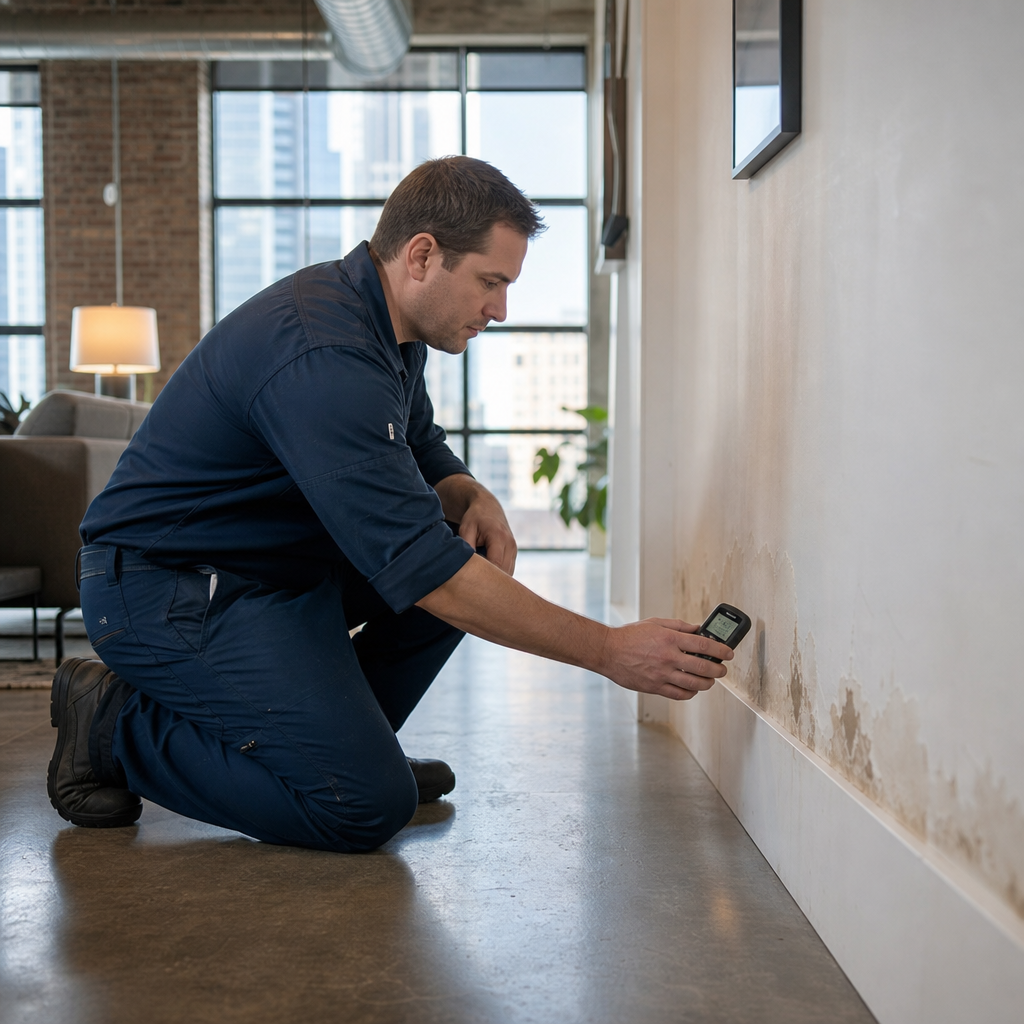
The cost of emergency water removal and structural drying in Long Island City depends on several variables: the volume and depth of water, the category of contamination (clean supply water, grey water, or black water from sewage or storm backflow), the square footage affected, and the specialized drying equipment required.
Cost Factors in Multi-Story and Industrial Properties
Urban restoration logistics in Queens involve staging within high-density zones, coordinating disposal, and managing building access requirements. Drying modern high-rise concrete slabs requires different approaches and labor hours than drying saturated brick masonry in an industrial loft.
Insurance Claims and Co-op Board Coordination
Coverage depends on the cause of damage, policy language, exclusions, and deductibles. Standard homeowners policies generally do not cover flooding, while sudden internal causes such as a burst pipe may be treated differently. Notify the insurer and review the policy.[5]
Flood insurance may be available through the National Flood Insurance Program or private insurers, subject to eligibility and policy terms.
- Moisture Mapping: Technicians map moisture migration across ceilings, wall cavities, and subfloors with meters to identify affected areas.
- Itemized Carrier Scopes: Detailed estimates outline equipment runtime, labor, and drying progress.
- Management Compliance: Providing property managers and insurers with required documentation, daily logs, and clearance reports.
Specialized Drying: High-Rise Condos vs. Converted Industrial Lofts
Long Island City features a distinct architectural split between modern high-rise buildings and converted industrial properties.
Modern residential high-rises along the waterfront feature concrete floor slabs topped with underlayments and floating floors. When a riser fails on an upper floor, water can travel down chases and spread beneath finished floors. Restoration teams, including specialists from Wade’s Restoration, deploy drying equipment and dehumidifiers to remove trapped moisture.
Conversely, converted industrial lofts along 44th Drive and surrounding manufacturing blocks feature brick masonry and timber framing. Brick can absorb significant water during severe rain events. A National Weather Service observation recorded 1.96 inches of storm-total rainfall in Long Island City on September 29, 2026. Technicians use moisture meters and targeted drying systems to address moisture in exterior walls.[2]
Frequently Asked Questions About Water Damage in Long Island City
How quickly can drying equipment be set up in a multi-story building?
Once on-site, technicians coordinate with building staff to secure service elevator access and power connections. Basic extraction and containment typically begin after arrival, followed by placement of drying and dehumidification equipment.
Does insurance cover burst pipes and storm flooding in Queens?
Coverage depends on the cause of damage, policy language, exclusions, and deductibles. Standard homeowners policies generally do not cover flooding, while sudden internal causes such as a burst pipe may be treated differently. Notify the insurer and review the policy. Flood insurance may be available through the National Flood Insurance Program or private insurers, subject to eligibility and policy terms.
What certifications should an emergency restoration company hold?
As a general industry recommendation, property owners often look for contractors like Wade’s Restoration holding certifications from organizations such as the Institute of Inspection, Cleaning and Restoration Certification (IICRC) in water damage restoration and applied structural drying.
Note: Response times, equipment staging, and project costs depend on specific site conditions, building access, and the category and extent of water damage. Contact a licensed restoration provider for on-site assessment.
Need emergency water damage restoration in Long Island City?
We’re available now - call for a fast, free estimate.
Sources
- Future Flood Zones for New York City | NOAA Climate.gov – climate.gov (2050)
- Public Information Statement – forecast.weather.gov (2026)
- 1 – nyc.gov (2022)
- [PDF] Flood Resilience Zoning Text Update – NYC.gov – nyc.gov
- Governor Hochul Updates New Yorkers on Coastal Storm – governor.ny.gov
Related reading: Emergency Water Damage Restoration in Jersey City – 10% Off & Free Estimate – On-Site in 60 Minutes
Related reading: Water Damage Restoration in Hoboken – 10% Off & Free Estimate – Same-Day Service
Related reading: Water Damage Restoration in Astoria – 10% Off & Free Estimate – Same-Day Service
Emergency Water Damage Restoration in Nearby Cities
We also serve the communities around Long Island City:
- Emergency Water Damage Restoration in Lower Manhattan
- Emergency Water Damage Restoration in Astoria
- Emergency Water Damage Restoration in Financial District
- Emergency Water Damage Restoration in Glendale
- Emergency Water Damage Restoration in Hoboken
Frequently Asked Questions
What is included in a free visual inspection and written scope of work from Wade's Restoration?
During an initial inspection, certified technicians from Wade's Restoration perform non-invasive moisture mapping and thermal imaging to locate trapped water within subfloors and wall cavities. You receive an itemized written scope of work outlining required extraction, structural drying equipment runtime, and insurance-ready documentation.
Can hardwood and floating floors in Long Island City high-rises be saved after a riser leak?
Yes, if emergency extraction begins quickly, Wade's Restoration can deploy specialized floor mat drying systems and commercial dehumidifiers to pull moisture from beneath floating floors and concrete slabs without invasive demolition. Rapid response within 24 to 48 hours is essential to halt permanent wood warping and prevent hidden mold growth.
How is Category 3 black water or storm sewage backflow safely remediated in urban properties?
Category 3 contamination requires immediate physical containment, rapid hazardous water extraction, and the controlled removal of saturated porous materials like drywall and carpet padding. Wade's Restoration sanitizes all affected structural framing with hospital-grade, EPA-registered antimicrobials and deploys industrial HEPA air filtration to ensure air quality and safety.
About the author
 |
Christopher Vance Christopher Vance brings over 12 years of hands-on experience in emergency property restoration to his writing. Holding an IICRC certification in Water Damage Restoration and a degree in Environmental Science from Rutgers University, he specializes in creating actionable, expert guides for property owners facing critical damage. His work focuses on providing clear, practical advice to help Lower Manhattan residents navigate the complexities of water and flood recovery. |
Water damage, flood, or mold emergency?
We’re available now - call for a fast, free estimate.
Call Now - Free Estimate