
Quick Summary
When flooding, plumbing bursts, or sewage backups strike local properties, professional emergency water damage restoration in Hoboken from Wade's Restoration provides the immediate response needed to stop structural decay and mold growth. Wade's Restoration delivers premier 24/7 mitigation through advanced preservation-first structural drying for historic brownstones and modern condos, paired with rigorous moisture documentation for seamless insurance claim processing. Property owners facing a crisis can call Wade's Restoration's 24/7 emergency dispatch line immediately to schedule rapid water extraction and receive a free visual inspection with a written scope of work.
Emergency Water Damage Restoration in Hoboken: Fast 24/7 Relief
When water floods into your home or commercial space, every minute counts. Whether dealing with a ruptured supply line in a multi-story condominium, a sewage backup in a garden-level apartment, or groundwater seeping through historic brownstone masonry, immediate action prevents structural decay and mold growth. Professional emergency water damage restoration in Hoboken provides rapid on-site extraction, industrial-grade structural drying, and the exact documentation your insurance adjuster requires.[3]
Hoboken presents distinct architectural and geographic challenges. Even with major municipal flood mitigation projects, including the five pumps at ResilienCity Park providing roughly 30 million gallons per day of discharge capacity, local properties remain vulnerable to heavy rainfall, high tides, and aged plumbing infrastructure. Ground-level units, historic brick foundations, and high-rise riser lines can fail without warning. Professional restoration teams, such as Wade’s Restoration, may deploy equipment such as high-capacity dehumidifiers, floor drying mats, and high-velocity air movers to help stabilize properties and salvage original materials when feasible.[1] See also Water Damage Restoration in Lower Manhattan | Call Now-10% Off | Same-Day Service | Free Estimate.
Detailed, room-by-room moisture mapping tracks drying progress from start to finish, ensuring your property returns to dry standards while safeguarding your insurance claim.
How Emergency Water Damage Restoration in Hoboken Works
A fast, structured response is essential to contain moisture and protect valuable building materials before irreversible damage occurs.
Immediate Dispatch and On-Site Stabilization
When an emergency call comes in, restoration specialists like Wade’s Restoration dispatch with extraction units and moisture detection tools. On arrival, the priority is stopping the water source, evaluating safety hazards, and stabilizing the environment:
- 24/7 Water Extraction: Technicians deploy truck-mounted and portable extraction units to remove standing water from floors, subfloors, and carpets, halting the horizontal and vertical migration of moisture.
- Moisture Mapping and Thermal Imaging: Using non-invasive moisture meters and infrared thermal cameras, technicians locate hidden water trapped in plaster, behind baseboards, beneath tiles, and inside wall cavities without unnecessary demolition.
- Insurance Coordination and Documentation: Field teams immediately log baseline moisture readings, take date-stamped photographs, and create an itemized scope of work to coordinate directly with your insurance adjuster.
While municipal infrastructure manages street runoff, localized emergencies like plumbing failures or basement backups demand immediate, building-specific extraction to keep moisture from saturating structural framing.
What Does Water Damage Restoration Cost in Hoboken?
Need emergency water damage restoration in Hoboken?
We’re available now - call for a fast, free estimate.
Restoration costs depend directly on the category of water (clean, gray, or black water sewage), how far moisture traveled through structural cavities, and whether materials can be dried in place or require removal. A minor clean-water pipe leak confined to a single room requires far fewer resources than a multi-floor flood or a contaminated drain backup.
Key Factors That Influence Total Restoration Expenses
Hoboken’s dense urban layout and historic building stock shape the scope of mitigation work. During severe weather events, structural impact across Hudson County can be widespread; in a report surveying local businesses following Superstorm Sandy, 11 of 18 surveyed businesses were dramatically affected, five did not reopen and left the area, seven were mildly affected, and all applied for FEMA assistance. For property owners, prompt response can help lower overall reconstruction costs.[4]
Cost factors include:
- Water Category: Category 1 involves clean water sources, whereas Category 3 (such as sewage backups or outdoor floodwater) may require specialized safety protocols, antimicrobial treatments, or the removal of contaminated porous items.
- Structural Materials Involved: Historic plaster, masonry, and hardwood require specialized drying methods, whereas standard modern drywall may be faster to dry or patch.
- Containment and Equipment Requirements: Multi-unit buildings and condos often need sealed containment zones and HEPA air scrubbers to isolate moisture and protect shared hallways.
Technicians provide itemized scopes and daily drying logs so your insurance carrier receives clear proof of all mitigation steps taken.
Preservation-First Drying: Saving Historic Hardwood and Brownstone Masonry
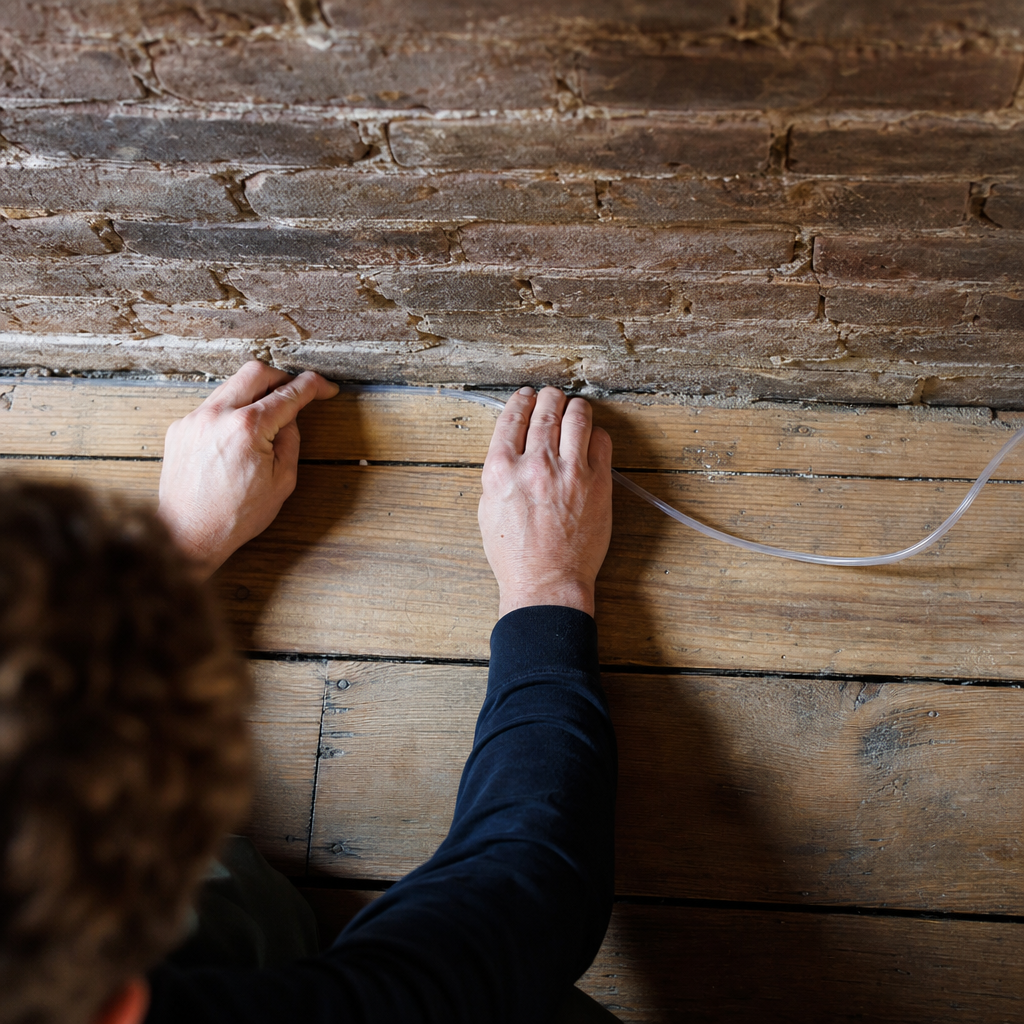
Many contractors default to aggressive demolition, tearing out antique hardwood planks, trim, and plaster at the first sign of water. In historic Hoboken brownstones and prewar buildings, immediate gutting is often an unnecessary shortcut that inflates rebuild costs and stretches project timelines by months. A preservation-first approach, utilized by specialists such as Wade’s Restoration, uses specialized drying techniques to help save original building materials when possible.
Hardwood and Subfloor Rescue vs Demolition
Original tongue-and-groove hardwood floors cupping from underneath do not always need to be ripped out. Some restoration technicians use specialized negative-pressure vacuum mats placed directly on the flooring surface to draw trapped moisture upward through the wood and subfloor. Combined with dehumidification, this process may help restore historic hardwood without requiring full replacement.
Treating Brownstone Masonry and Basement Water Intrusion
Garden-level apartments and brownstone basements frequently encounter moisture penetrating porous brick and fieldstone foundations. Porous masonry acts like a sponge, drawing water deep into the foundation walls through capillary action. If left untreated, this leads to efflorescence, structural spalling, and indoor mold. Technicians may use industrial-grade dehumidifiers to draw moisture out of deep masonry pores to help protect the foundation.
Drywall, Plaster, and Hidden Cavity Dehumidification
Water frequently collects in the dead air spaces behind walls and under cabinets. Instead of tearing down entire walls, technicians may remove baseboards and drill small access holes to direct warm, dry air straight into wall cavities, helping dry the framing from within and saving wall assemblies.
What Immediate Steps to Take Before Flood Cleanup Crews Arrive
Need emergency water damage restoration in Hoboken?
We’re available now - call for a fast, free estimate.
Prioritize personal safety while waiting for emergency mitigation technicians from Wade’s Restoration. Taking smart, safe precautions helps limit damage before the restoration team arrives.
Safety and Utility Isolation
- Check Electrical Hazards: Never enter a room with standing water if the water level is near electrical outlets, extension cords, or appliances. Shut off the circuit breaker for wet zones only if the breaker panel is located in a completely dry area. Do not use electrical appliances or outlets that may have come into contact with water until they have been inspected by a qualified professional, and avoid handling electrical equipment with wet hands or while standing in water.
- Shut Off the Water Source: If the flooding stems from a burst pipe or fixture failure, locate and shut off the main water valve immediately.
- Avoid Contaminated Water: Treat storm surge or drain backups as black water. Keep children and pets away from wet areas to avoid exposure to contaminants.
Mitigation Actions for Brownstones and Condominiums
- Document the Scene: Take clear, timestamped photos and videos of waterlines, damaged furniture, and structural materials before anything is moved or extracted.
- Protect Furniture: Place aluminum foil or plastic wrap under wooden and metal furniture legs to prevent staining on wet flooring.
- Elevate Porous Items: Move rugs, curtains, paperwork, and electronics to dry upper levels.
What Never to Do During a Water Emergency
Do not use standard household vacuum cleaners to suck up water; they are not built for wet extraction and present a severe risk of electric shock. Never leave wet rugs resting on hardwood floors, as trapped water will rapidly accelerate wood warping and mold growth. Avoid turning on ceiling fixtures if the ceiling above is sagging or wet.
Frequently Asked Questions About Hoboken Water Damage Repair
How quickly can emergency water damage restoration technicians arrive in Hoboken?
Technician arrival times depend on provider availability, your specific location, weather, and current travel conditions across Hoboken and Hudson County. Callers should confirm estimated arrival times directly with the provider when requesting service. Prompt response is a key factor in limiting secondary damage and structural deterioration.
Does homeowners or renters insurance cover emergency water damage in Hoboken?
Coverage depends on the cause of the water damage and the specific terms of your policy. Sudden and accidental plumbing leaks or pipe bursts may be covered under standard homeowners or renters policies. However, standard policies generally exclude flood damage caused by external rising water or storm surge, which usually requires separate flood insurance. Restoration companies like Wade’s Restoration can provide moisture logs and photo documentation to assist with your insurance claim.
How long does the industrial drying and dehumidification process take?
Drying time depends on the amount of water present, the specific materials affected, and ambient conditions. Continuous monitoring with moisture meters determines when structural framing, masonry, and subfloors have returned to acceptable baseline moisture levels.
How do restoration contractors prevent mold growth after water intrusion?
Preventing mold growth relies on promptly cleaning and thoroughly drying all wet areas and building materials within 24 to 48 hours of water intrusion. Rapid extraction and structural dehumidification eliminate the moisture that mold spores require to establish.[2]
Need emergency water damage restoration in Hoboken?
We’re available now - call for a fast, free estimate.
Sources
- City of Hoboken and North Hudson Sewerage Authority … – hobokennj.gov (2016)
- Quick reference: water damage response in buildings – Mass.gov – mass.gov (2008)
- Water Main Replacement… – hobokennj.gov
- Federal Disaster Assistance for Businesses: Summaries … – congress.gov
Related reading: Emergency Water Damage Restoration in Glendale – 10% Off & Free Estimate – On-Site in 60 Minutes
Related reading: Water Damage Restoration in Hoboken – 10% Off & Free Estimate – Same-Day Service
Related reading: Water Damage Restoration in Astoria – 10% Off & Free Estimate – Same-Day Service
Emergency Water Damage Restoration in Nearby Cities
We also serve the communities around Hoboken:
- Emergency Water Damage Restoration in Lower Manhattan
- Emergency Water Damage Restoration in Astoria
- Emergency Water Damage Restoration in Financial District
Frequently Asked Questions
What happens during the initial free visual inspection for emergency water damage?
When you contact Wade's Restoration's 24/7 dispatch line, technicians arrive equipped with infrared thermal cameras and moisture meters to locate trapped moisture without invasive demolition. They deliver an immediate evaluation alongside a written scope of work detailing the required extraction, containment, and structural drying protocols.
How does Wade's Restoration determine if historic brownstone materials can be salvaged?
Technicians use non-invasive moisture meters and specialized thermal imaging to assess the saturation depth within historic masonry, plaster, and original hardwood flooring. By applying targeted negative-pressure vacuum mats and industrial-grade dehumidification, Wade's Restoration prioritizes drying materials in place to prevent unnecessary structural demolition.
How does Wade's Restoration support property owners with insurance claims?
Wade's Restoration provides end-to-end insurance claim documentation, including date-stamped photo logs, room-by-room baseline moisture readings, and daily drying reports. Field specialists coordinate directly with your insurance adjuster to establish an itemized scope of work and streamline claim processing.
About the author
 |
Christopher Vance Christopher Vance brings over 12 years of hands-on experience in emergency property restoration to his writing. Holding an IICRC certification in Water Damage Restoration and a degree in Environmental Science from Rutgers University, he specializes in creating actionable, expert guides for property owners facing critical damage. His work focuses on providing clear, practical advice to help Lower Manhattan residents navigate the complexities of water and flood recovery. |
Water damage, flood, or mold emergency?
We’re available now - call for a fast, free estimate.
Call Now - Free Estimate