
Quick Summary
Timely drywall water damage repair in Astoria is critical to prevent hazardous mold growth and structural decay within hidden wall cavities within 24 to 48 hours of a leak. As a comprehensive emergency solution, Wade's Restoration manages both deep structural moisture extraction and full drywall replacement to prevent secondary issues without the need for multiple contractors. Readers will understand the risks of complex multi-layer wall leaks and can call 24/7 for a free visual inspection and professional moisture assessment before damage spreads.
Drywall Water Damage Repair in Astoria – Stop Leaks Fast
Drywall water damage repair requires fast water extraction, wall cavity drying, and structural rebuilding. In areas with aging housing stock, flood exposure, and storm-related damage risks like Astoria, water-soaked gypsum board loses its strength quickly, and mold spores can start growing within 24 to 48 hours in warm, unvented wall cavities. Whether dealing with storm-related intrusion, plumbing failures, or multi-floor water migration, fixing the wall requires removing wet materials, drying the interior studs, and restoring the drywall.[1]
Professional restoration technicians, such as the team at Wade’s Restoration, focus on both visible surfaces and hidden framing. Industrial dehumidifiers and air movers pull moisture from wood framing and insulation before new sheetrock is hung, taped, and painted. Quick visual inspections and moisture mapping help identify the full path of travel before hidden rot sets in. See also Water Damage Restoration in Lower Manhattan | Call Now-10% Off | Same-Day Service | Free Estimate.
Quick Answer
Direct Answer: Drywall water damage repair requires water extraction and wall cavity drying within 24 to 48 hours to prevent mold growth. Saturated, sagging, or contaminated drywall must be cut away so interior framing can be dried with commercial air movers and dehumidifiers. Once wood moisture levels return to safe dry standards, new drywall is hung, taped, textured, and painted.
Aging housing stock frequently features hidden moisture paths. In older properties, water often travels vertically along mechanical chases or gets trapped between modern drywall and original plaster layers. Accurate repairs require moisture meters and thermal cameras to trace moisture behind finished surfaces before rebuilding begins.[3]
What Does Drywall Water Damage Repair Cost?
Disclaimer: Local repair pricing and timelines vary and were not confirmed by authoritative public Astoria-specific sources. The figures below reflect general industry estimates rather than verified local price bands.[2]
Cost Overview: General industry estimates for drywall water damage repair typically range from $1,000 to $5,000 for localized room drying and patching. Larger restoration projects involving multiple rooms or ceiling collapses can range from $3,000 to $10,000 or more, depending on water clean-up classification, framing saturation, and structural scope.
Final project costs depend on how far water traveled behind the walls and whether the framing absorbed moisture. Minor surface patching for clean water leaks can range from roughly $300 to $900, while multi-room mitigation, flood cuts, and complete reconstruction run higher.[4]
Estimated Service Costs Breakdown
In older housing stock where buildings feature layered plaster and retrofitted drywall, water migration can be extensive. The table below outlines broad industry cost ranges based on damage severity and structural scope.[5]
| Service Scope | Estimated Cost Range (General Estimates) | Primary Operations Included |
|---|---|---|
| Minor Surface Patching | $300 – $900 | Localized cutting, joint compound blending, texture matching, and painting. |
| Cavity Drying & Flood Cut | $1,000 – $3,000 | Containment setup, precision flood cuts, stud sanitization, and dehumidification. |
| Water-Damaged Ceiling Repair | $1,500 – $4,000 | Removal of sagging drywall, joist drying, insulation replacement, and re-hanging. |
| Full Multi-Room Reconstruction | $3,500 – $10,000+ | Complete structural drying, framing stabilization, insulation, new drywall, and finish. |
Insurance Coverage and Claim Documentation
Most property insurance policies cover drywall damage when it results from sudden and accidental events, such as burst pipes, appliance line breaks, or sudden plumbing failures. Gradual leaks caused by long-term maintenance issues are generally excluded.
Restoration teams like Wade’s Restoration capture infrared moisture maps, relative humidity readings, and daily drying logs. These records establish an itemized scope of work for insurance adjusters, confirming that wall studs are fully dry before new sheetrock is installed.
Can Water-Damaged Drywall and Ceilings Be Repaired or Replaced?
Need drywall water damage repair in Astoria?
We’re available now - call for a fast, free estimate.
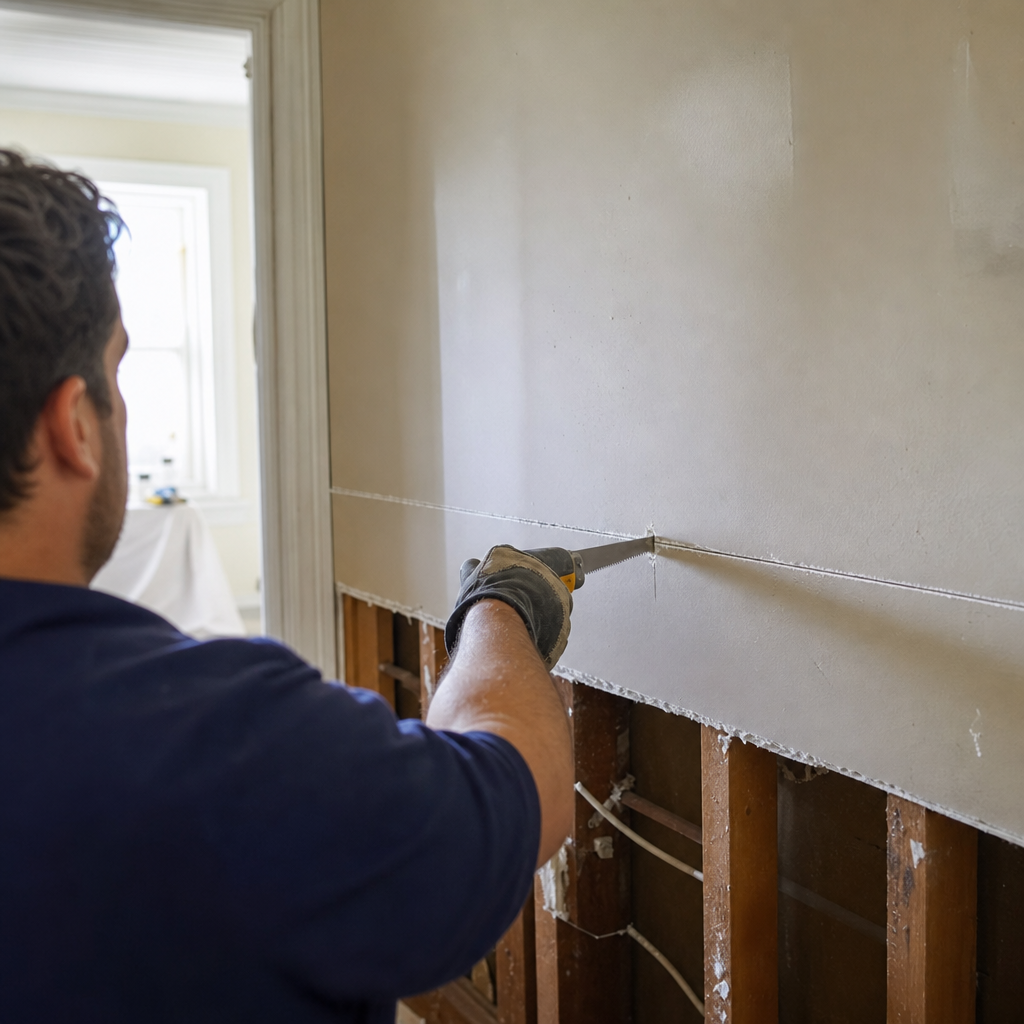
Drywall can occasionally be dried in place if the leak involved clean water (Category 1) and the gypsum core has not lost its rigidity. If the water came from a contaminated source (Category 2 gray water or Category 3 black water), or if the sheetrock has swelled, bowed, or stayed wet for more than 48 hours, removal is necessary to protect indoor air quality.
| Assessment Factor | Clean Water Drywall | Contaminated Drywall | Historic Plaster & Lath |
|---|---|---|---|
| Core Integrity | Retained if dried quickly | Softened, compromised | Durable mineral composition |
| In-Place Drying | Feasible within 24-48 hours | Unsafe (microbial hazard) | Feasible if plaster keys remain intact |
| Cavity Extraction | Targeted baseboard venting | Full containment flood cut | Controlled cavity ventilation |
| Mandatory Removal | Required if sagging or swollen | Required per industry standards | Required if plaster pulls from lath |
Evaluating Saturated Drywall vs. Historic Plaster
Unlike modern drywall, which breaks down quickly once soaked, historic plaster and wood lath can often withstand short moisture exposure without losing structural form. However, moisture trapped in the wood lath behind the plaster can rot framing studs if left unchecked. Technicians from Wade’s Restoration use deep-penetrating pin meters to evaluate the hidden lath and run high-velocity air injection systems to dry the assembly from the inside out.
Overhead Sagging and Ceiling Water Leak Repair Risks
Plumbing failures on upper floors can cause ceiling drywall to take on significant weight. Saturated drywall panels create a serious collapse risk. If a ceiling shows water stains, blistering paint, or a visible sag, the area beneath it must be cleared immediately. The water-logged panels must be carefully removed and joist cavities dried before hanging fresh sheetrock.
Why Do Standard Drywall Flood Cuts Fail in Multi-Family Buildings?
Standard two-foot flood cuts frequently fail in multi-family buildings because water rarely behaves like a flat, standing pool. Instead, vertical chases, pipe runs, and retrofitted wall materials draw moisture upward, trapping water well above standard cut lines.
Concealed Vertical Steam Riser Chases
In older multi-family properties, vertical pipe chases house steam risers and plumbing stacks connecting multiple floors. When an upper-story pipe leaks, water runs down the outer pipe surface while rising heat pulls moist air upward through the chase. A standard two-foot flood cut misses this elevated moisture, leaving damp wood framing and insulation trapped inside the wall cavity.
Plaster-to-Drywall Transition Interfaces
Past renovations often placed modern drywall directly over original plaster and lath to save time. When a leak occurs, water gets trapped between these two distinct layers. The outer drywall surface may feel dry to the touch, while the original plaster and wood lath underneath stay saturated. A standard visual inspection misses this hidden reservoir completely.
Diagnosing and drying these layered wall assemblies requires a systematic process:
- Thermal Mapping: Technicians scan walls with infrared cameras to locate temperature differences caused by trapped evaporation inside vertical chases.
- Deep-Probe Moisture Testing: Pin-probe meters pass through the surface drywall to measure moisture directly in the underlying plaster, lath, and studs.
- Cavity Air Injection: Technicians make small, targeted access holes to pump warm, dry air straight into enclosed wall voids, drying hidden framing without gutting entire rooms.
Frequently Asked Questions About Drywall Water Damage Repair
How fast does mold grow behind wet drywall and ceilings?
Mold spores can start colonizing behind wet drywall within 24 to 48 hours under warm, humid conditions. Dark, enclosed wall cavities with damp paper backings provide an ideal environment for rapid growth, which makes immediate drying essential.
Does homeowners insurance cover water-damaged ceiling repair?
Most standard homeowners policies cover water-damaged ceilings if the source was sudden and accidental, such as a frozen pipe burst or sudden appliance line failure. Damage caused by long-term, unaddressed roof leaks or slow pipe seepage is generally not covered. Detailed moisture logs and photo documentation help support claim processing.
What are the signs of hidden water damage behind drywall?
Common signs of hidden wall moisture include peeling or bubbling paint, soft or spongy spots in the drywall, musty odors, darkening baseboards, and visible discoloration. Thermal imaging cameras and non-invasive moisture meters can confirm whether moisture is present behind the surface without tearing into the wall.
How long does the drywall drying and repair process typically take?
Drying and repair timelines vary based on moisture levels and property conditions. In general industry practices observed by Wade’s Restoration, structural drying often requires several days of commercial dehumidification and air movement before framing is ready for new drywall, taping, and painting.
Need drywall water damage repair in Astoria?
We’re available now - call for a fast, free estimate.
Sources
- [PDF] Is New York City Ready for Rain? – NYC Comptroller's Office – comptroller.nyc.gov (2024)
- [PDF] GOAL 7: NATURAL HAZARDS BACKGROUND REPORT | Clatsop … – clatsopcounty.gov (2021)
- 2021 Clatsop County Multi-Jurisdictional Natural Hazards Mitigation Plan – oregon.gov (2021)
- OVERVIEW – clatsopcounty.gov
- Clatsop County Housing Inventories – clatsopcounty.gov
Related reading: Water Damage Restoration in Hoboken – 10% Off & Free Estimate – Same-Day Service
Related reading: Water Damage Restoration in Astoria – 10% Off & Free Estimate – Same-Day Service
Related reading: Water Damage Restoration in Glendale | Call Now-10% Off | Same-Day Service | Free Estimate
Frequently Asked Questions
How is trapped moisture dried when modern drywall covers older plaster walls?
In older Astoria properties with layered walls, technicians use thermal imaging and deep-probe meters to trace trapped water without total demolition. Wade's Restoration deploys targeted cavity air injection systems to circulate dry air directly into the wall void, ensuring hidden framing and lath dry completely before repairs begin.
Why should I hire a full-service restoration contractor instead of a standard drywall installer?
Drywall installers only replace damaged sheetrock, leaving damp structural framing and insulation vulnerable to hidden mold growth. Wade's Restoration acts as a single emergency provider handling structural moisture extraction, framing sanitization, and complete sheetrock finishing, eliminating the hassle of coordinating multiple contractors.
What should I do immediately if overhead ceiling drywall starts sagging from a leak?
Immediately evacuate the area beneath the sag to eliminate collapse risks, and do not attempt to push or patch the drywall while it holds water weight. Contact Wade's Restoration 24/7 for a free visual inspection and moisture assessment so certified technicians can safely relieve pressure, remove wet panels, and dry the joists.
About the author
 |
Christopher Vance Christopher Vance brings over 12 years of hands-on experience in emergency property restoration to his writing. Holding an IICRC certification in Water Damage Restoration and a degree in Environmental Science from Rutgers University, he specializes in creating actionable, expert guides for property owners facing critical damage. His work focuses on providing clear, practical advice to help Lower Manhattan residents navigate the complexities of water and flood recovery. |
Water damage, flood, or mold emergency?
We’re available now - call for a fast, free estimate.
Call Now - Free Estimate