
Quick Summary
Water emergencies in Long Island City high-rises and loft conversions require immediate structural mitigation to prevent severe concrete saturation, hardwood warping, and aggressive mold growth. Wade's Restoration provides 24/7 emergency water damage restoration in Long Island City, utilizing industrial desiccant drying systems, thermal moisture mapping, and comprehensive insurance documentation to restore properties quickly. After learning essential emergency shut-off protocols and drying standards, property owners can call 24/7 dispatch to schedule a visual inspection and receive an itemized scope of work.
Water Damage Restoration in Long Island City – 24/7 Fast Repair
When pipe breaks or storm surges strike, Wade’s Restoration delivers 24/7 water damage restoration in Long Island City. Our emergency crews arrive to extract standing water, stabilize indoor humidity, and halt structural decay. Long Island City has 906 properties at risk over the next 30 years, representing 15.5% of properties, meaning waterfront residential towers, industrial loft conversions, and commercial basements often require specialized mitigation before moisture destroys hardwood floors or sparks widespread mold.[3]
Our technicians handle the recovery process from start to finish. We deploy commercial desiccant and refrigerant drying systems designed to help dry architectural woodwork and structural concrete, manage drywall reconstruction, and provide itemized documentation for insurance adjusters. Call our 24/7 dispatch desk directly to connect with our team and schedule a visual inspection. See also Water Damage Restoration in Lower Manhattan | Call Now-10% Off | Same-Day Service | Free Estimate.
Rapid Mitigation Overview
Every hour water sits inside a building increases structural damage and elevates the risk of mold growth behind walls. In multi-family towers and loft spaces, water travels along utility lines and penetrates concrete floor plates, affecting units below. Wade’s Restoration stabilizes properties through four clear phases:[4]
- Immediate Extraction: Industrial truck-mounted and portable pumps remove standing water quickly, taking weight off the floor assemblies and stopping downward migration.
- Targeted Structural Drying: High-velocity air movers and commercial dehumidifiers pull bound moisture from concrete slabs, subfloors, and interior wall framing.
- Antimicrobial Sanitization: EPA-registered botanical antimicrobials treat exposed surfaces to eliminate bacteria and prevent mold colonies.
- Reconstruction and Insurance Coordination: Damaged drywall and flooring are rebuilt while our team submits moisture logs and line-item estimates to your insurance carrier.
What Does Water Damage Restoration Cost in Long Island City?
Need water damage restoration in Long Island City?
We’re available now - call for a fast, free estimate.
The cost of restoring water-damaged property in Long Island City depends on several clear factors: the category of water (clean, gray, or black), how many square feet were affected, how deeply moisture penetrated structural materials, and whether reconstruction is needed.[2]
Cost Comparison Across Restoration Scenarios
Restoration requirements shift based on whether water is clean supply water, contaminated runoff, or a multi-story high-rise leak:
| Feature | Clean Water (Category 1) | Contaminated Water (Category 2/3) | High-Rise Structural Drying |
|---|---|---|---|
| Common Sources | Supply line bursts, sink overflows | Sewage backups, storm surge, street flooding | Vertical riser failures, sprinkler discharges |
| Concrete Slab Treatment | Standard high-volume airflow | Deep desiccant dehumidification | Targeted heat drying and negative air |
| Antimicrobial Application | Preventative surface treatment | Mandatory deep sanitation wash | Mandatory structural wash and containment |
| Reconstruction Scope | Baseboards, spot drywall patching | Extensive drywall removal, subfloor replacement | Multi-unit drywall, ceilings, and flooring rebuilds |
Key Factors That Drive Restoration Expenses
Long Island City contains a mix of early-twentieth-century industrial conversions and high-rise glass towers. When a main riser fails on an upper floor or storm surges push inland from the East River near Borden Avenue and 2nd Street, water enters dense concrete floor slabs and shared electrical chases. Extracting moisture from reinforced concrete often requires industrial desiccant dehumidifiers running over extended cycles, which affects overall equipment and monitoring costs.[5]
Local flood risks continue to shape mitigation standards. City planning data from the NYC Flood Hazard Mapper shows current coastal flood hazards and projected increases due to climate change. Meanwhile, researchers track urban street flooding through the FloodNet sensor network across Queens. Because water travels unpredictable paths through commercial and residential properties, our crews perform moisture mapping before establishing a scope of work.[1]
How Multi-Unit Lofts and High-Rises Impact Water Extraction and Drying
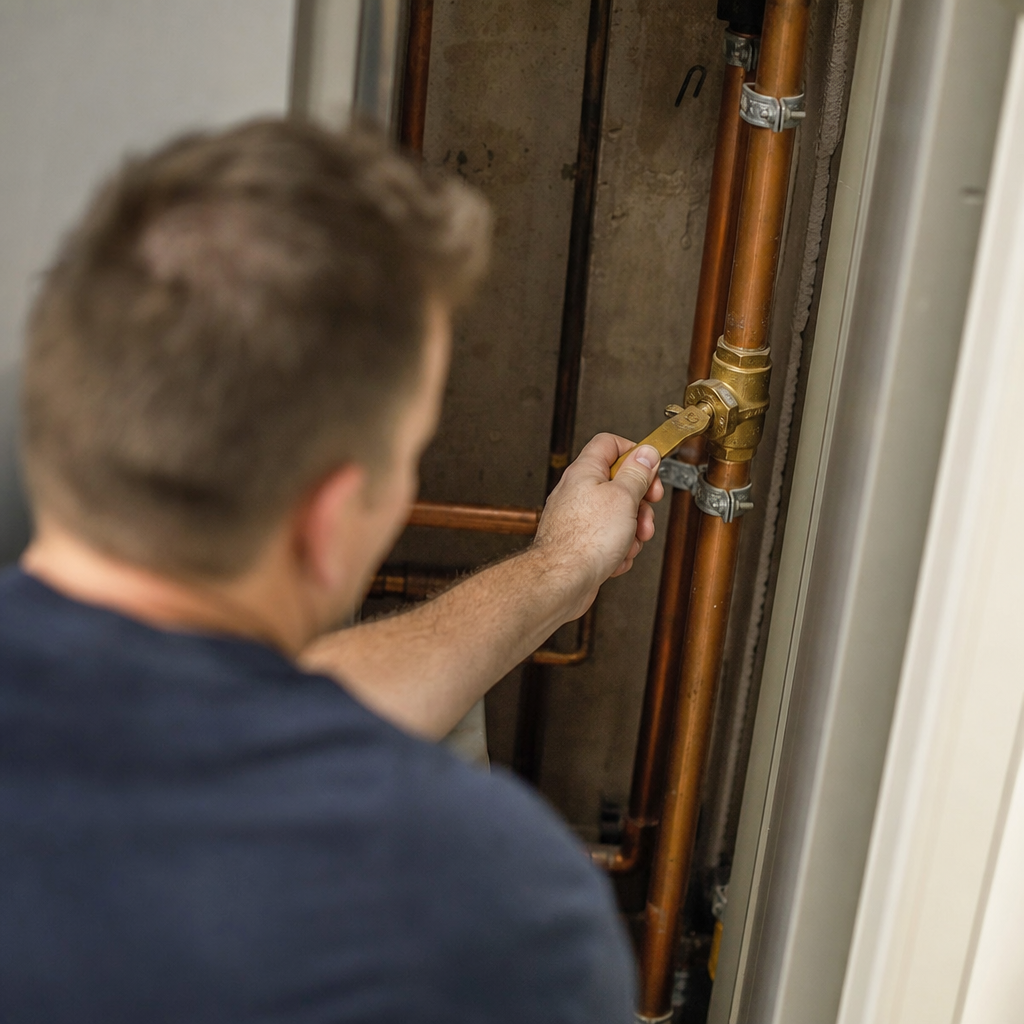
Multi-family and converted loft buildings present distinct structural challenges during a water emergency. Moisture easily moves horizontally beneath floating floors and drops vertically through mechanical chases, affecting multiple units at once.
Drywall, Ceilings, and Vertical Riser Cavities
When a pressurized pipe breaks on an upper floor, gravity pulls water down through electrical conduits, plumbing shafts, and dropped ceiling assemblies. Technicians can use precision cavity injection systems to push dry air into enclosed chases. This targeted approach dries framing in place, helps protect drywall, and limits disruption to adjacent units.
Hardwood Flooring Over Concrete Subfloors
Many loft conversions feature hardwood installed over concrete slabs. When water gets under the wood, vapor barriers trap moisture, causing boards to cup and warp. Wade’s Restoration teams may attach high-vacuum floor mat systems directly to the wood surface. These negative-pressure systems pull moisture through the hardwood and from the concrete underneath, helping preserve flooring when feasible.
HVAC Ducts and High-Ceiling Loft Spaces
Open floor plans with high ceilings create interior microclimates where warm, humid air rises and condenses on exposed steel beams, roof decking, and ductwork. Monitoring tools and industrial dehumidifiers are used to stabilize total air volume, keeping condensation from triggering mold growth on brickwork and timber ceilings.
Immediate Steps to Take While Emergency Crews Are En Route
Need water damage restoration in Long Island City?
We’re available now - call for a fast, free estimate.
Taking the right steps during the first thirty minutes of a water leak can help reduce property loss and prevent electrical hazards:
Step 1: Shut Off the Main Water Supply and Isolate Power
Turn off the local fixture shut-off valve or work with building maintenance to isolate the branch line or main riser. If standing water comes close to baseboard outlets, floor boxes, or appliances, switch off power at the main electrical panel from a dry location.
Step 2: Document Damage for Your Insurance Adjuster
Before moving furniture or beginning cleanup, take wide-angle photos and clear videos of standing water levels, saturated baseboards, sagging ceilings, and damaged personal property. Detailed visual evidence taken right away helps support your insurance claim.
Step 3: Elevate Valuables and Avoid Contaminated Water
Place aluminum foil or plastic wrap under wooden furniture legs to prevent wood stain from transferring to flooring and stop wood fibers from absorbing water. For clean domestic leaks, use a squeegee to guide water toward drains. If the water comes from a sewer line, street flooding, or the river, stay out of the affected area until technicians arrive with proper protective gear.
How Certified Technicians Locate Hidden Moisture and Prevent Mold
Water frequently hides where the eye cannot see: behind tiled baseboards, inside party walls, and deep within porous concrete. Wade’s Restoration uses advanced detection and containment techniques to dry buildings thoroughly.
Thermal Imaging and Moisture Mapping
Our technicians use infrared cameras and non-invasive moisture meters to pinpoint the boundaries of hidden moisture. Data from street-level flood monitoring in Queens underscores how easily runoff can push into basements and ground-floor properties. Moisture mapping helps ensure wet structural areas are documented.
Sealed Containment and HEPA Air Scrubbers
If drywall or ceiling material must be removed, technicians can establish negative-pressure containment zones using heavy-duty poly sheeting. Commercial air scrubbers fitted with HEPA filters run continuously, capturing microscopic dust, debris, and airborne mold spores to maintain cleaner indoor air in living areas.
Achieving Documented Dry Standards
Drying is assessed by evaluating when structural materials reach baseline moisture content. Technicians take regular psychrometric readings, measuring relative humidity, temperature, and grains per pound of air, to verify that wall cavities and concrete slabs are drying properly.
Frequently Asked Questions
How fast can an emergency water damage crew arrive in Long Island City?
Our dispatch team operates around the clock. Emergency response times vary and can often be same-day within a few hours to begin water extraction and property protection.
How much does water damage restoration typically cost in Long Island City, NY?
Costs depend on whether the issue is a clean-water pipe break or contaminated backup, as well as the amount of demolition and drying required. We provide a visual inspection and an itemized estimate outlining equipment, labor, and repairs before work begins.
Does standard property insurance cover water damage cleanup and repairs?
Sudden and accidental water damage is often covered, while flood damage typically requires separate flood insurance. We work directly with your insurance adjuster, submitting moisture logs and photo records to support your claim.
What should I do immediately while waiting for a water restoration technician?
Shut off the main water valve, turn off electricity to wet rooms from a dry breaker, photograph all damaged areas and items, and prop furniture legs on foil. Avoid walking through dark or murky water, and never run a standard home vacuum to remove water.
How long does the complete water extraction and drying process take?
Pumping out standing water takes a few hours, while structural drying typically takes three to five days. Dense concrete slabs and multi-layered loft flooring may require additional drying time under desiccant dehumidification to reach proper moisture baselines.
How do restoration professionals prevent mold growth after water intrusion?
Wade’s Restoration technicians extract water quickly, set up dehumidifiers to lower relative humidity, apply EPA-registered antimicrobial treatments to affected framing where appropriate, and filter the air using HEPA air scrubbers. Prompt drying within 24 to 48 hours is standard practice to help prevent mold spores from colonizing building materials.
Need water damage restoration in Long Island City?
We’re available now - call for a fast, free estimate.
Sources
- Is New York City Ready for Rain? – NYC Comptroller's Office – comptroller.nyc.gov (2026)
- Hurricane Ida – CDBGDR – NYC.gov – nyc.gov (2021)
- [PDF] NYC CDBG-DR Hurricane Ida Action Plan Amendment 5 – nyc.gov
- Ten Years After Sandy – Office of the New York City … – comptroller.nyc.gov
- [PDF] FloodNet: Hyperlocal, street-level flood monitoring in New York City – nyc.gov
Related reading: Water Damage Restoration in Hoboken – 10% Off & Free Estimate – Same-Day Service
Related reading: Water Damage Restoration in Astoria – 10% Off & Free Estimate – Same-Day Service
Related reading: Water Damage Restoration in Glendale | Call Now-10% Off | Same-Day Service | Free Estimate
Frequently Asked Questions
What happens if water damage spreads to multiple units or lower floors in a Long Island City high-rise?
When leaks travel down utility risers and concrete slabs, Wade's Restoration coordinates with building management to isolate moisture paths and set up negative-pressure drying across all affected units. Our technicians document damage for each impacted space, providing itemized reports to simplify coordination between individual unit owners and master building insurance policies.
Can hardwood flooring over concrete slabs in converted lofts be salvaged after water intrusion?
Hardwood floors can often be preserved if mitigation begins before permanent warping sets in. Wade's Restoration deploys specialized high-vacuum floor mat systems that extract trapped moisture from both the hardwood planks and the underlying concrete slab without requiring full floor removal.
How does Wade's Restoration assist property owners with the insurance claim process?
Our certified team compiles comprehensive thermal moisture maps, daily drying logs, and standardized line-item estimates submitted directly to your insurance adjuster. Property owners can contact our 24/7 dispatch to schedule an emergency visual inspection and obtain a detailed written scope of work.
About the author
 |
Christopher Vance Christopher Vance brings over 12 years of hands-on experience in emergency property restoration to his writing. Holding an IICRC certification in Water Damage Restoration and a degree in Environmental Science from Rutgers University, he specializes in creating actionable, expert guides for property owners facing critical damage. His work focuses on providing clear, practical advice to help Lower Manhattan residents navigate the complexities of water and flood recovery. |
Water damage, flood, or mold emergency?
We’re available now - call for a fast, free estimate.
Call Now - Free Estimate