
Free visual inspection and a written scope of work before any mitigation begins - photos, moisture readings, and drying logs go in your claim file
The scope we write is the scope we bill. Anything new gets shown to you, in writing, before we touch it.
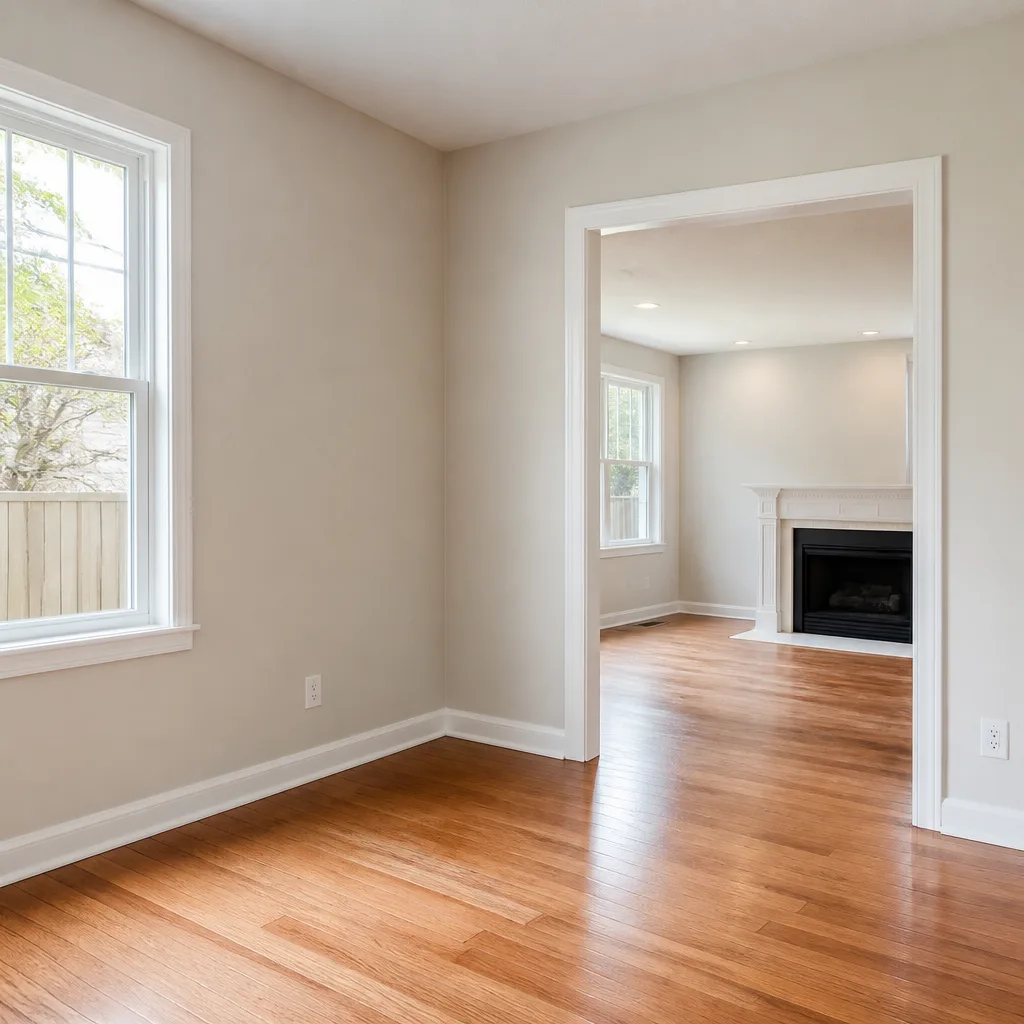
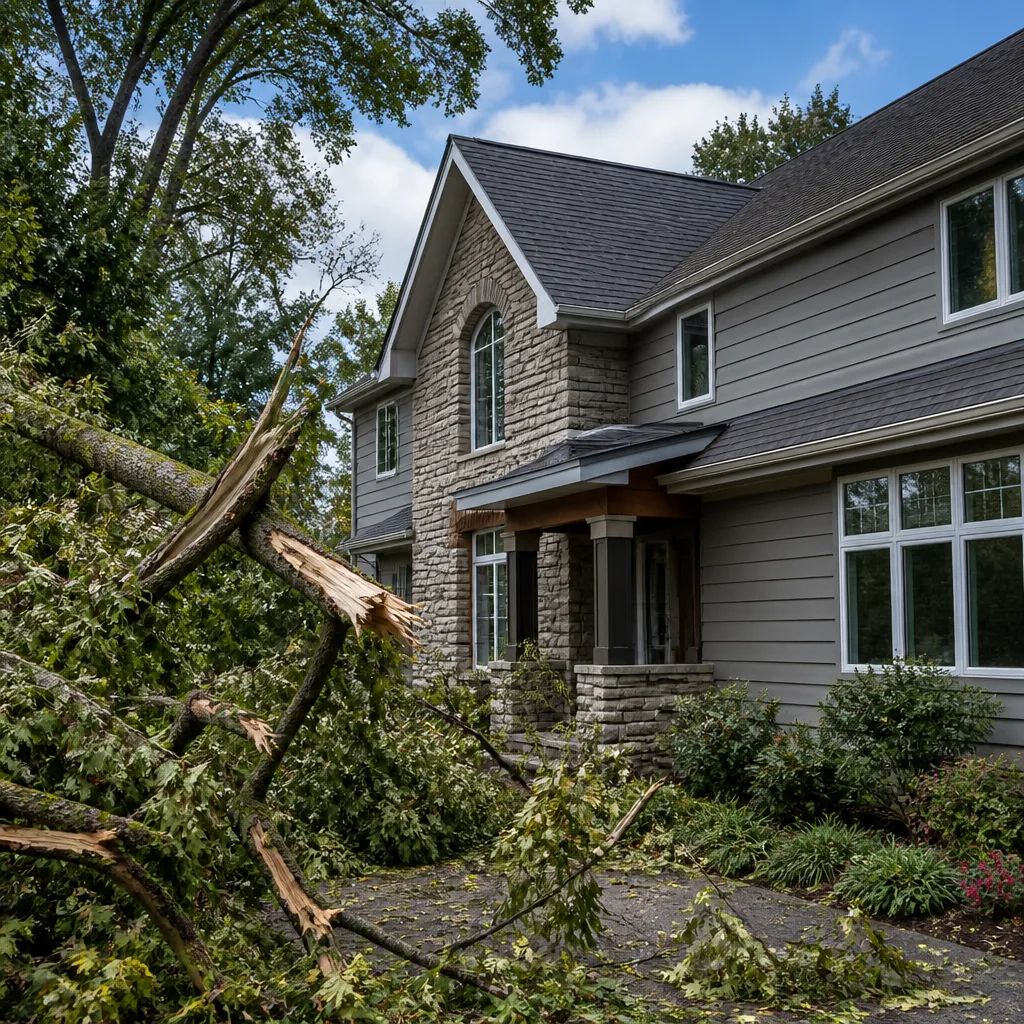
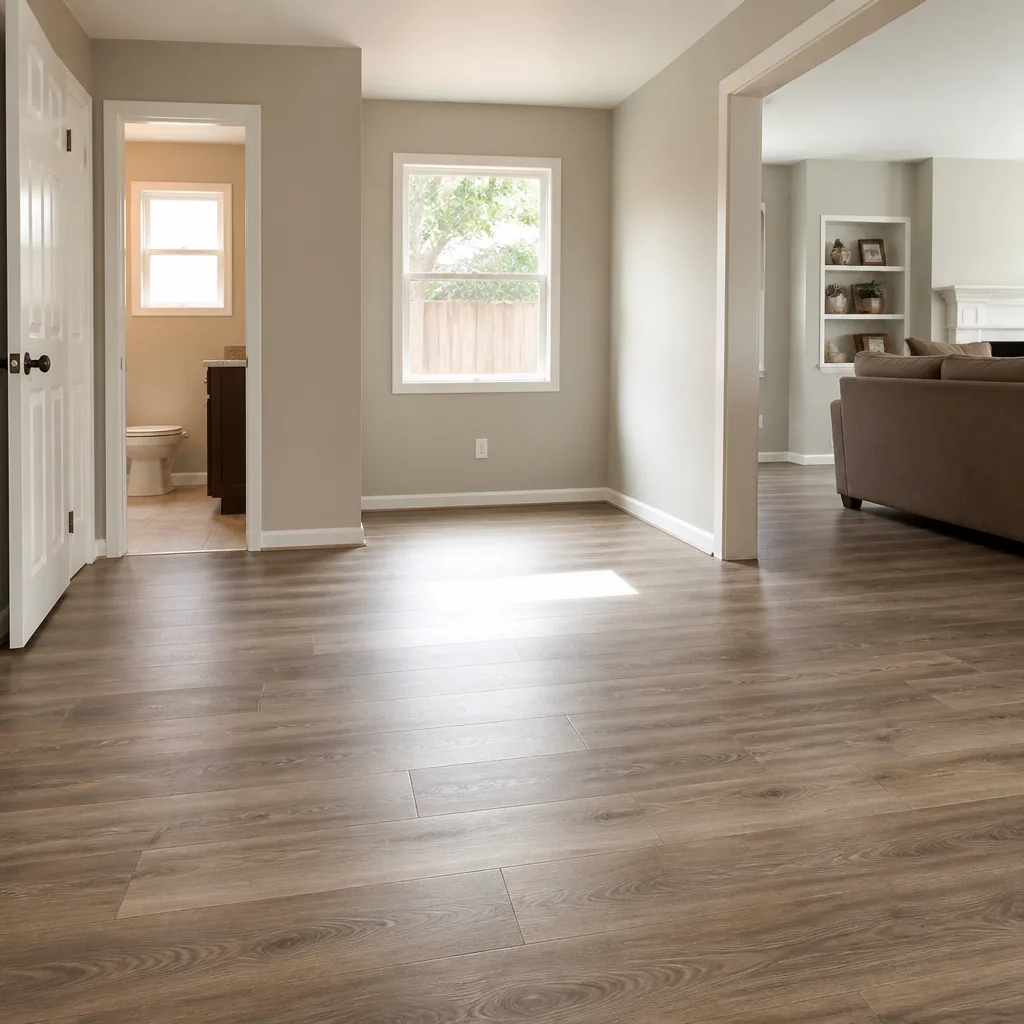

 Before
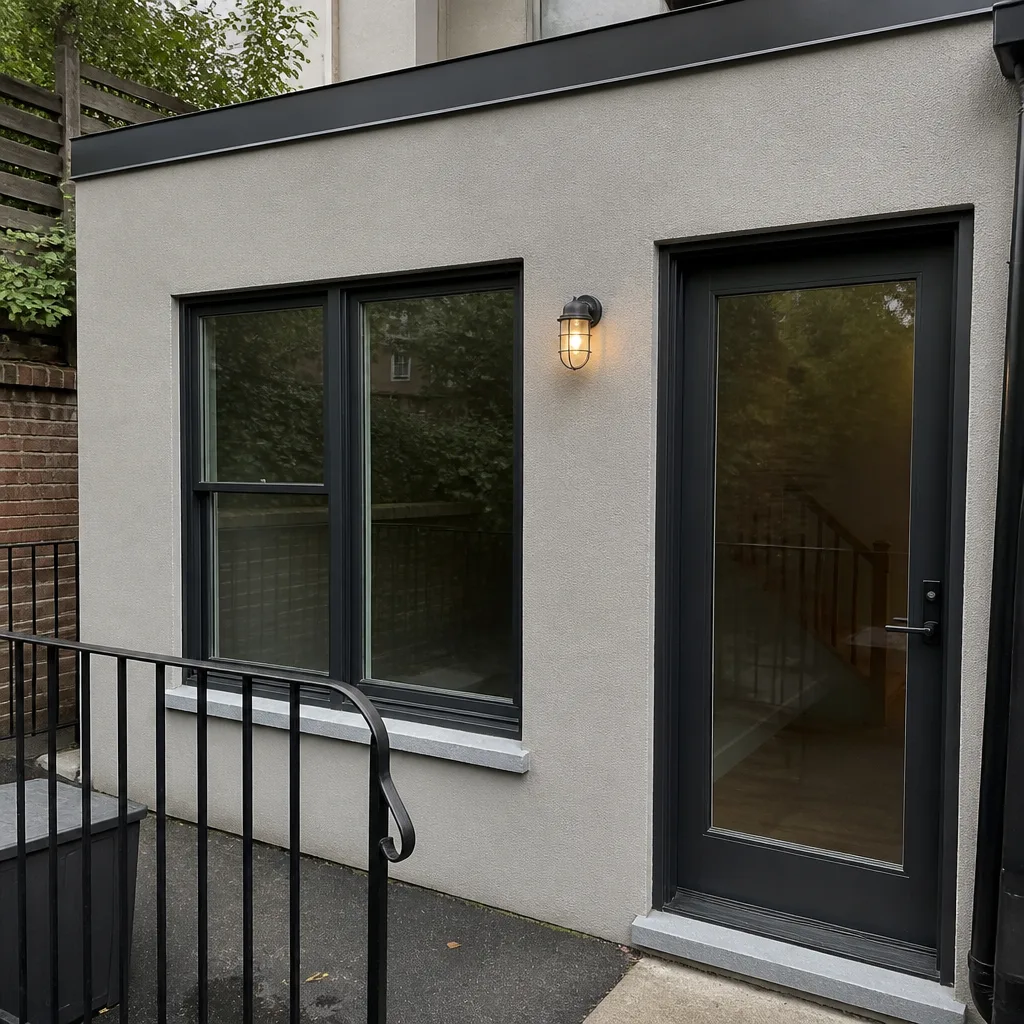 After
After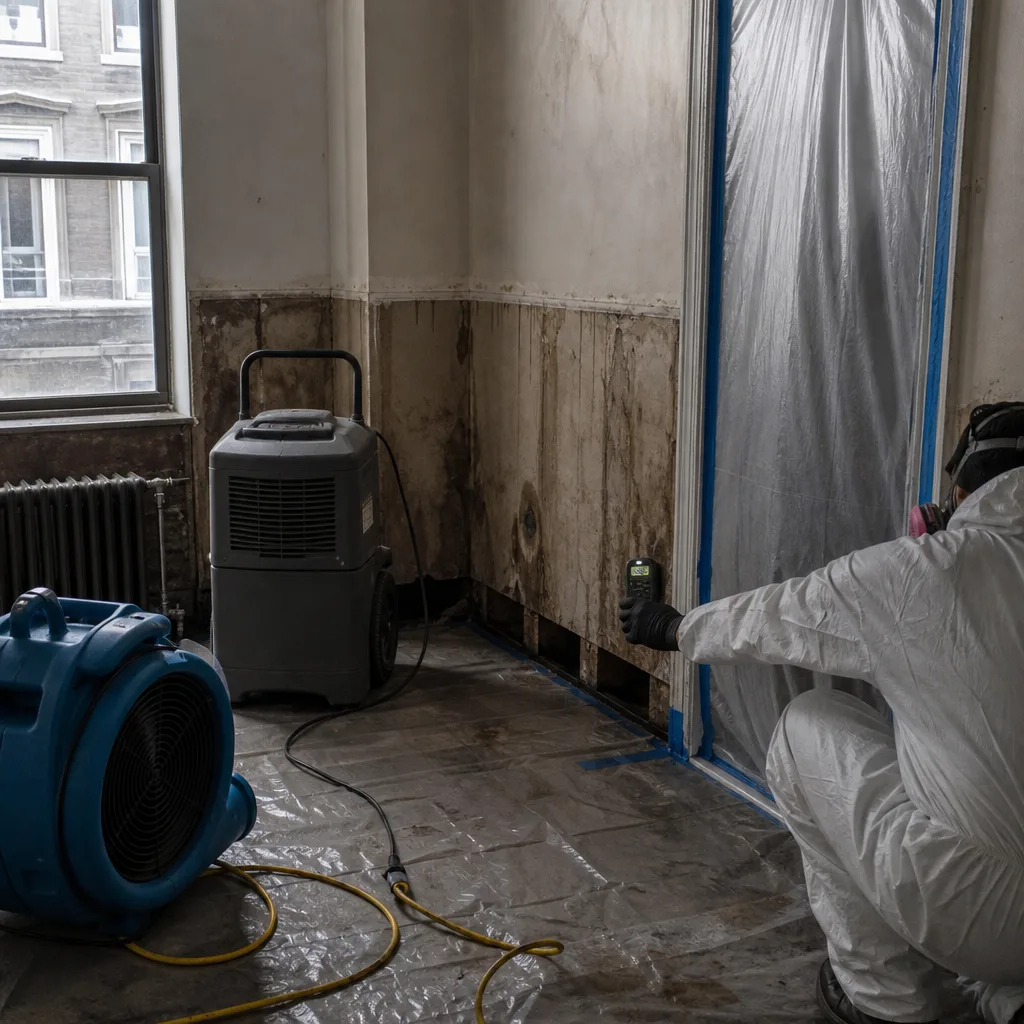 Before
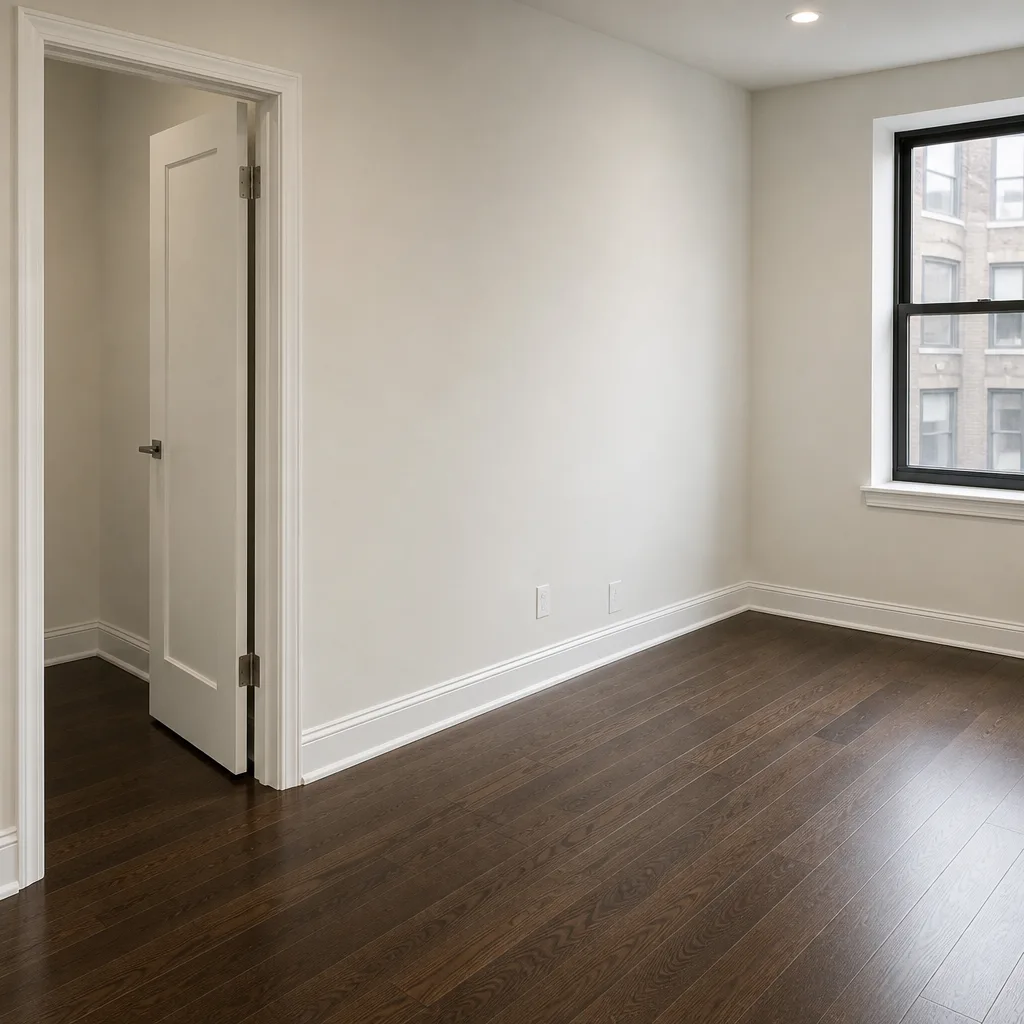 After
After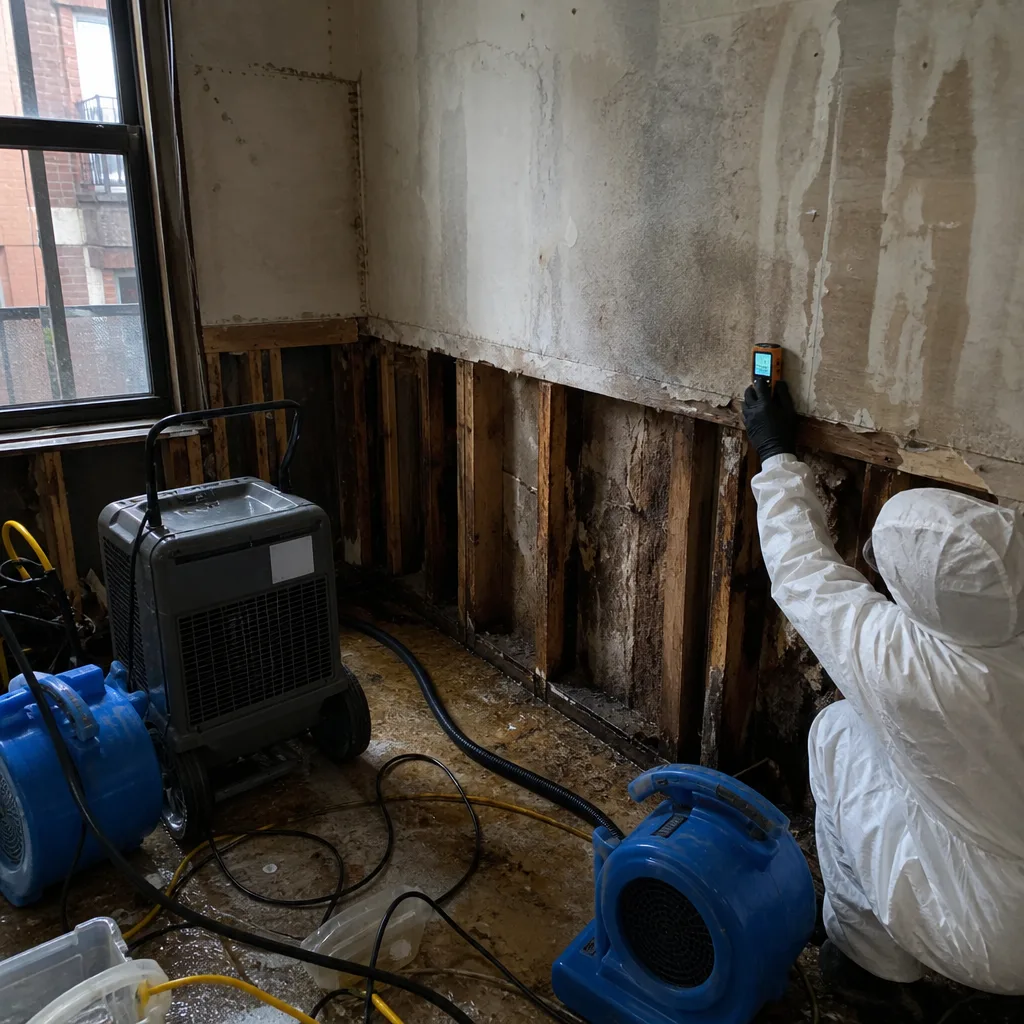 Before
 After
After24/7 Emergency Water Damage Restoration in Weehawken
Water damage in Weehawken doesn’t wait for business hours, and neither do we. A burst supply line on a January morning or a storm-surge backflow into a Port Imperial parking garage hits the same way: fast, and with a clock already running. Call (607) 350-1550 and you’ll get a live person, not a voicemail. Wade himself answers his phone. We can have extraction running inside the hour across Weehawken, from the waterfront towers at Lincoln Harbor up to the row houses off Boulevard East. The first 60 minutes matter because water wicks upward through drywall, finds its way into electrical systems, and starts feeding mold before you’ve finished mopping. We do a free visual inspection on every call so you know exactly what you’re dealing with before any equipment comes off the truck.
Understanding Water Damage Restoration Severity in Weehawken Properties
Not all water is the same. We classify it in three categories, and Weehawken delivers all three depending on the address. Category 1 comes from a clean source: a burst copper supply line, a radiator overflow, a tub left running. Category 2 carries some contamination: dishwasher discharge, washing machine overflow, sump pump failure that’s sat for a day. Category 3 is the one people in Weehawken’s lower district know too well: brackish Hudson River water, storm-surge backflow, sewage, or groundwater that’s passed through a deteriorating pre-war foundation. Category 3 means full containment, antimicrobial treatment, and saltwater corrosion protocols, not just fans and dehumidifiers. In upper-bluff row houses, the water is usually Category 1 or 2 but recurring: groundwater intrusion through old brick foundation walls that never gets fixed properly, just wet-vacced after every storm. Weehawken’s split housing stock means we may run two completely different restoration protocols in the same afternoon, one at a 1990s high-rise, the next at a 1920s brick walk-up.
Why Weehawken Property Owners Choose Wade’s Restoration
- 45-minute response commitment for emergency calls in Weehawken. Wade heads out himself, he doesn’t wait for a dispatcher to find a subcontractor.
- Live answer, 24/7. No answering service, no call center, no “leave a message and someone will get back to you.” Wade picks up his own phone at two in the morning.
- IICRC-certified crews holding WRT (Water Damage Restoration Technician) and ASD (Applied Structural Drying) credentials. The paperwork matters when your insurer asks who did the work.
- Free visual inspection on every call. You get a straight answer about what needs to happen before anyone starts charging you.
- Direct insurance billing. We deal with the adjuster, the carrier, and the paperwork so you don’t have to be the middleman in your own claim.
- One team from extraction to reconstruction. The people who pull the water out are the same ones who rebuild the wall. Nobody gets handed off to a stranger.
Our Water Damage Restoration Process
Inspection & Assessment
We walk the property with you, map the moisture, and tell you in plain English what you’re looking at: category of water, what’s salvageable, what needs to be opened up. For Weehawken high-rises, we talk to building management about freight elevator and loading dock access before we bring anything in.
Extraction & Stabilization
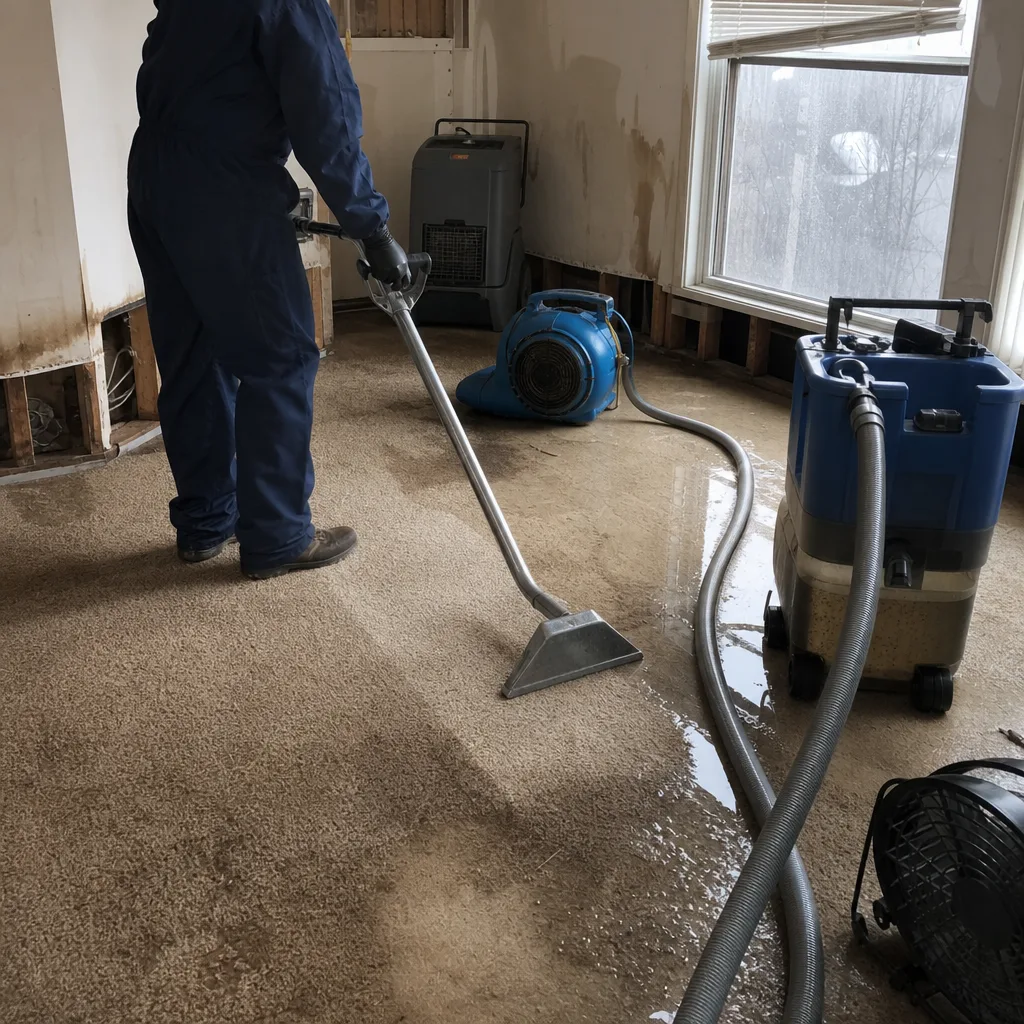
We pull standing water out with truck-mounted and portable extraction units. In a Port Imperial underground garage, that might mean thousands of gallons of brackish water. In an upper-bluff basement, it’s often a few hundred gallons of groundwater. Either way, we get it out fast.
Drying & Dehumidification
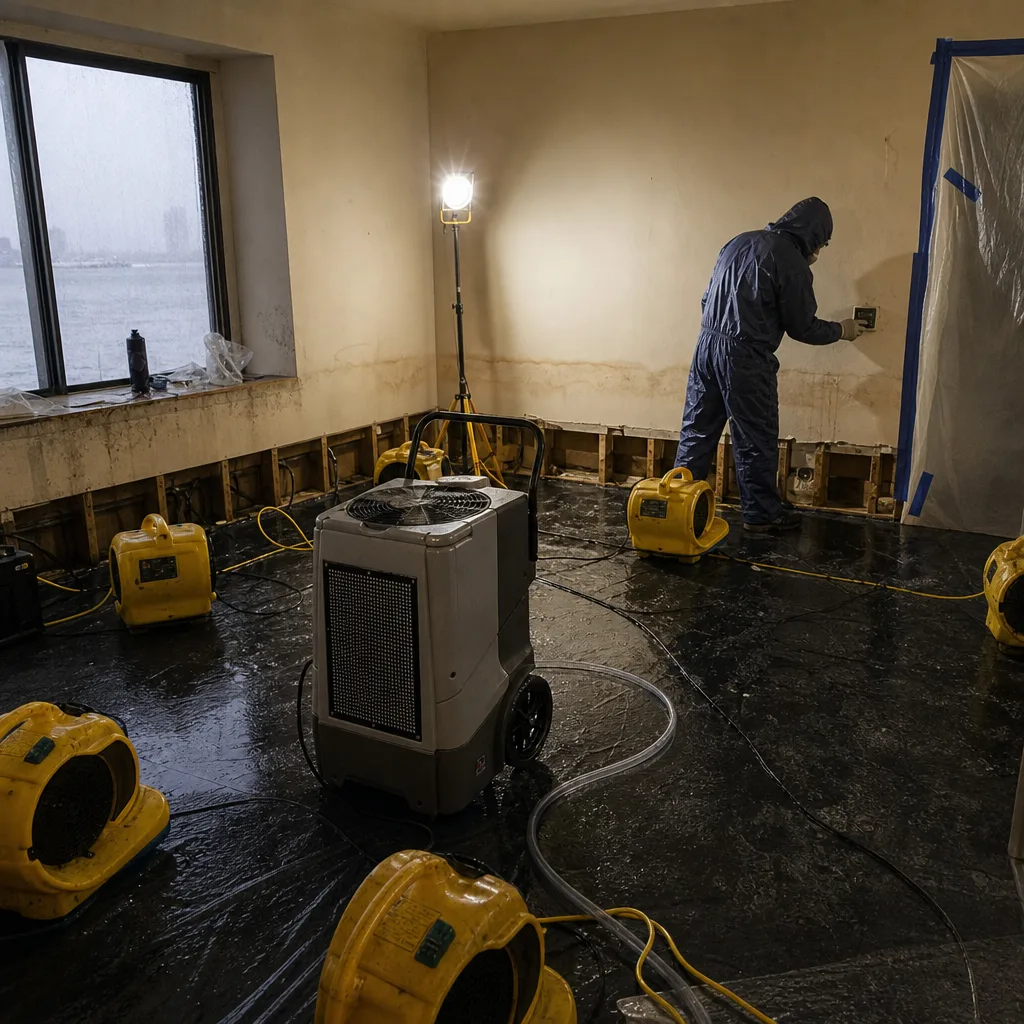
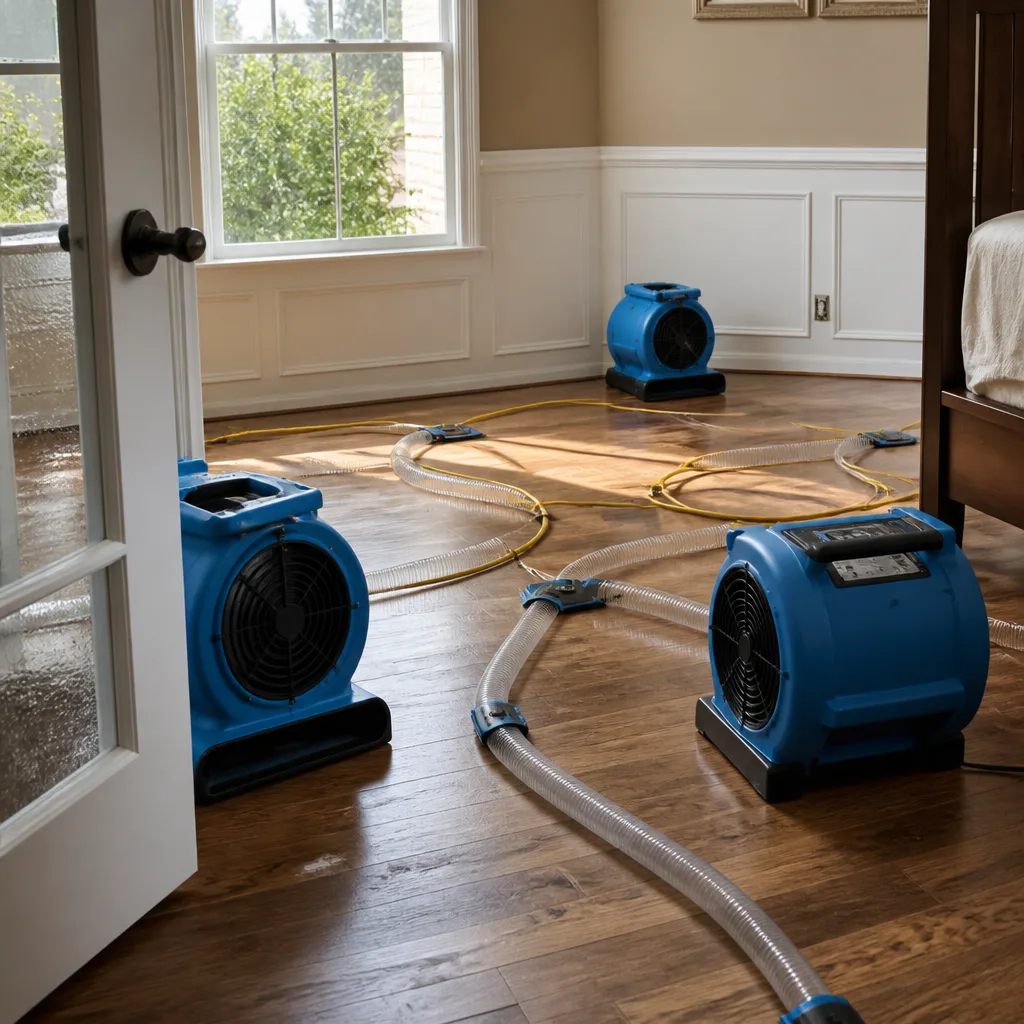
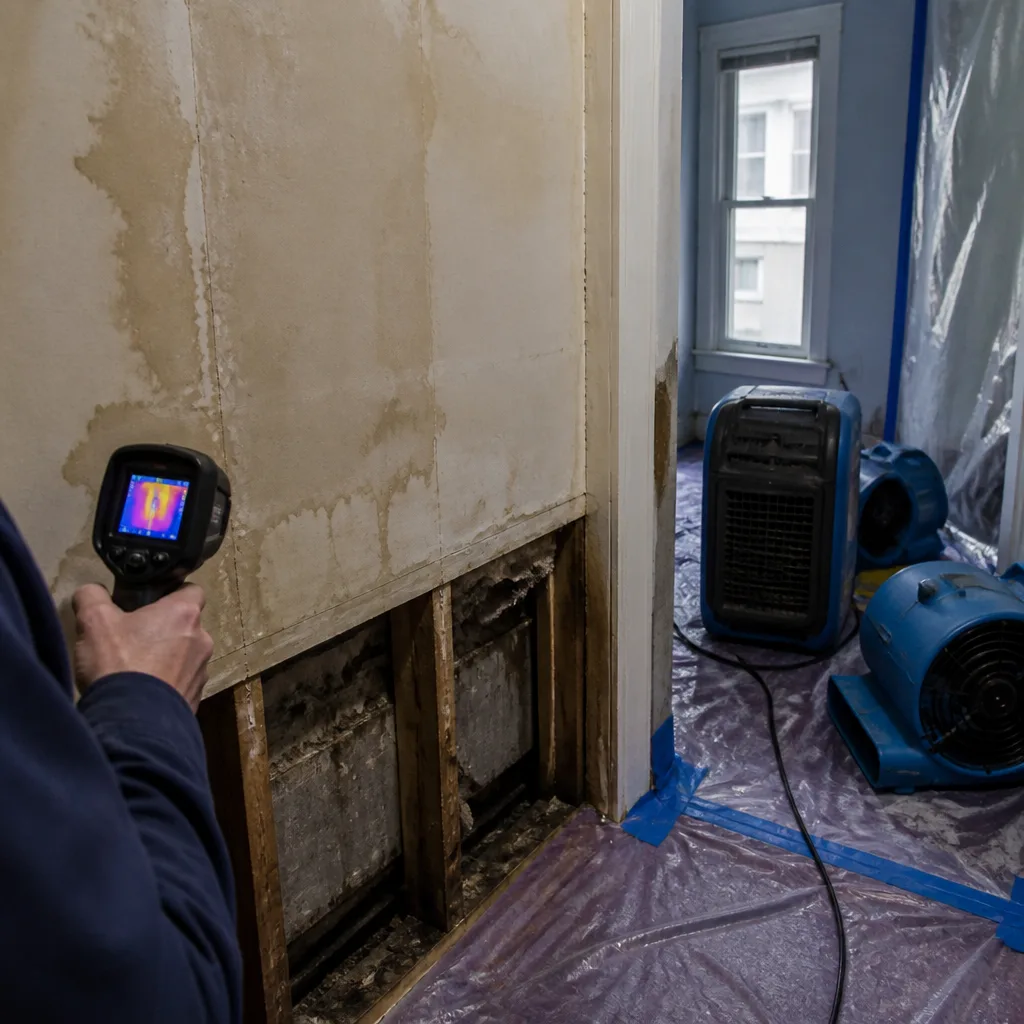
We set up Dri-Eaz and Phoenix air movers and dehumidifiers positioned using moisture mapping, not guesswork. We check hygrometer readings every day and log them. You get the full moisture log at the end of the job. Almost nobody in this trade does that.
Cleaning & Sanitization
Category 1 water gets standard cleaning. Category 3 water from Hudson River surge or sewage means antimicrobial treatment, HEPA air scrubbing, and disposal of affected porous surfaces. We don’t cut corners on the protocol because the water came from outside.
Saltwater & Corrosion Treatment
For Weehawken waterfront properties, saltwater damage in electrical rooms, elevator pits, and HVAC infrastructure requires a specific corrosion mitigation protocol. Rinse, treat, test, document. A shallow dry-out crew misses this entirely, and the failure shows up six months later.
Repairs & Restoration
We open walls, replace drywall or plaster, match flooring, and rebuild what was taken out. For older row houses, that means matching original trim and plaster work. For high-rises, it means working within the building’s spec and insurance requirements.
Need Emergency Water Damage Restoration in Weehawken Now?
Crews minutes away, answering live 24 hours a day. The sooner we start, the less it costs.
Working With Your Insurance Company
Insurance claims in Weehawken are not one-size-fits-all. A row house basement leak on the upper bluff is usually a straightforward homeowner’s policy claim. A water loss inside a Port Imperial high-rise often involves three parties: the condo association’s master policy, the unit owner’s policy, and sometimes a commercial tenant’s carrier. We’ve sat in those rooms. We photograph everything from the first hour, write industry-standard estimates using the same software your adjuster uses, and send the documentation directly to whoever’s handling the claim. You don’t have to relay messages between your insurer and us. We talk to them ourselves. If you got a written estimate from another contractor, bring it to us. We’ll give you a free second opinion on it.
What We Provide Your Insurer
- Thorough documentation of the loss
- Photos of all damage, room by room
- Moisture readings and drying logs
- A detailed, line-item scope of work
- Direct coordination with your carrier
Built for Weehawken’s Loss Calendar
Weehawken’s water damage season runs year-round, but the cause changes with the calendar. January and February bring deep freezes that split supply lines in uninsulated pre-war walls and burst pipes in high-rise mechanical rooms. March and April bring thaw and spring rain, which means groundwater intrusion in upper-bluff basements where foundations are original and drainage is whatever it was in 1935. Summer thunderstorms drop inches of rain in an hour, overwhelming storm sewers on Boulevard East and pushing water through basement floor cracks. Fall is nor’easter season, and for the waterfront towers, that means Hudson River surge, saltwater in parking garage sumps, and elevator pit flooding. Every one of these loss types gets a different extraction plan, a different drying strategy, and a different insurance conversation.
Water Damage Restoration Across Weehawken’s Neighborhoods
Weehawken divides itself roughly along the Palisades bluff line, and the water damage follows the elevation. Down at river level, Port Imperial and Lincoln Harbor run from about 48th Street down to the water’s edge. These are the high-rises built since the 1990s, and the damage here is vast when it happens: storm surges flooding underground garages, saltwater backing up through floor drains, elevator pits collecting brackish water that corrodes everything it touches. We coordinate with building management before we bring in equipment because the freight elevator and loading dock access control the entire timeline. Up the hill, the streets off Boulevard East - Highwood Terrace, Park Avenue, and the blocks around Pershing Road and Gregory Avenue - are dense with brick row houses and aging multi-families. These buildings share foundation walls, which means one house’s groundwater problem is sometimes the neighbor’s. Basement leaks here are repeat events, not one-offs, and the fix often involves correcting drainage and sealing foundation penetrations, not just drying out what got wet. The two markets are less than a mile apart but the restoration work looks nothing alike.
Specialized Water Damage Restoration Services We Offer in Weehawken
Emergency Water Extraction
Standing water is doing damage the entire time it sits. In a Port Imperial underground garage, a foot of brackish water is corroding electrical conduits and eating concrete. In an upper-bluff basement, six inches of groundwater is wicking up through drywall and feeding mold behind the baseboards. We get it out fast with truck-mounted and portable extraction systems, then move straight into drying. Call (607) 350-1550 and Wade is on the road within the hour.
Structural Drying & Dehumidification
This is where the science lives. We don’t set up fans and hope for the best. We map moisture content in every affected surface with hygrometers and thermal imaging, place Dri-Eaz and Phoenix air movers and dehumidifiers according to what the readings show, and take daily readings until the numbers say dry. For pre-war Weehawken row houses, drying in place can save original oak flooring and lath-and-plaster walls that replacement crews would rip out. You get the moisture log at the end.
Flood Cleanup
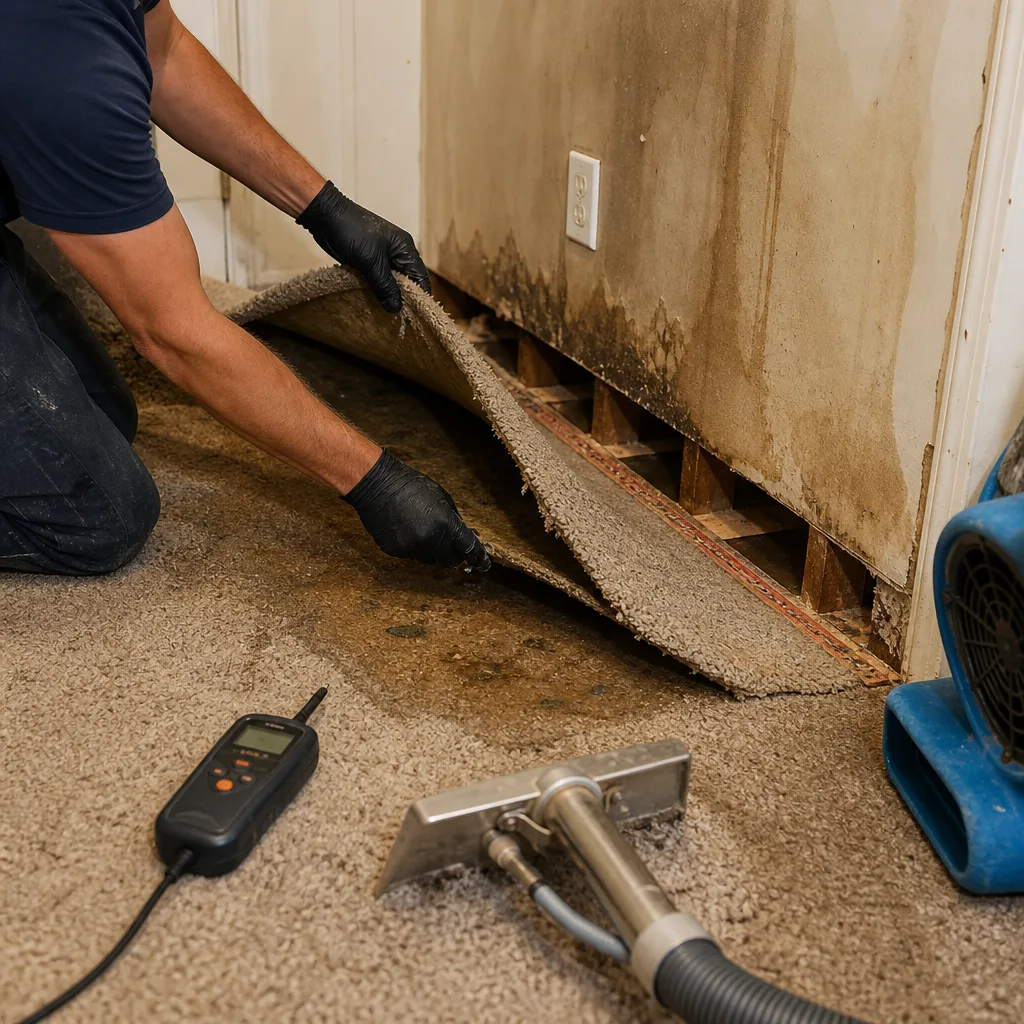
Flood water is almost never clean. In Weehawken it’s either brackish Hudson River water loaded with salt and whatever the storm picked up along the way, or it’s groundwater that’s been filtering through old foundation walls. Both count as Category 3 water. That means full containment when we open walls, HEPA air scrubbing, antimicrobial treatment, and proper disposal of saturated insulation and carpet. We don’t just “dry it out.” We clean what the water left behind.
Burst Pipe Restoration
A burst supply line can drop hundreds of gallons into a home before anyone notices, especially in Weehawken’s older row houses where pipes run through walls behind original plaster. Last October we handled a burst pipe in a 1920s brick row house on Highwood Terrace where the original galvanized supply line finally let go, sending Category 1 water through two floors. Our techs set up containment and used Dri-Eaz air movers and dehumidifiers for structural drying, while IICRC moisture mapping showed we saved the original oak flooring and lath-and-plaster walls. That’s the difference training makes.
Basement Water Removal
Upper-bluff basements in Weehawken leak through deteriorating foundation walls and floor cracks every time it rains hard. The owners often treat it as a one-time inconvenience. It’s not. Repeated intrusion means mold behind walls, pest problems, and foundation deterioration. We get the water out, dry the space, and then talk to you about why it keeps happening.
What happens when you call
- 1
A real person answersNo phone trees - you reach a local pro.
- 2
You get an upfront price rangeHonest numbers before anyone is dispatched.
- 3
A background-checked tech heads outLicensed & insured, dispatched right away.
- 4
You approve before work beginsNothing starts until you say go.
Water Damage Restoration Costs in Weehawken, NJ
Here’s what you should expect to pay in Weehawken. Emergency extraction alone runs $400-$800 for a typical basement or parking garage sump situation. Structural drying with professional equipment and daily monitoring typically runs $1,500-$3,200 depending on square footage and how long the water sat. A full basement water removal with extraction, drying, sanitization, and basic repairs runs $2,800-$6,500 in most Weehawken row houses. Waterfront high-rise work involving saltwater corrosion protocols, elevator pit dewatering, and layered insurance coordination runs higher, often $5,000-$15,000 plus depending on the mechanical systems affected. What moves the price: category of water, how long it sat, how many floors the water migrated through, and whether we’re opening up plaster or drywall. Insurance covers most sudden and accidental losses; groundwater seepage and neglect are trickier. The free inspection gives you a firm scope and a real number before you commit to anything. No trip charge inside our county, and a free second opinion on any written estimate you already have.
We Also Serve Cities Near Weehawken
We run the same crews through Union City, Hoboken, North Bergen, and Secaucus. The work is similar but never identical. Hoboken’s high water table makes basement flooding a way of life. North Bergen’s older housing stock mirrors upper-boulevard Weehawken. If you’re in one of those towns, call (607) 350-1550 and we’ll be there just as fast.
Serving Weehawken, NJ - Our Local Coverage Area
We’re based in the Weehawken area and know this community well. Use the map below to see our service coverage - if you’re nearby, we can almost certainly help.
Weehawken Water Damage Restoration Questions, Answered
How do you handle water damage in a Port Imperial high-rise when the condo association, unit owner, and commercial tenant all have different insurers?
We identify every party with a financial interest in the loss and document accordingly. That means one moisture map, one drying log, and one scope of work that gets shared with all three carriers. We talk to adjusters directly, forward documentation to each party’s insurer, and make sure the scope is written so each carrier can see exactly what applies to their portion of the claim. You shouldn’t have to negotiate between three insurance companies. That’s our job.
What’s different about the water we pump out of Weehawken waterfront parking garages versus a typical residential basement?
Salt. Hudson River surge water is brackish, meaning it carries dissolved salt that corrodes steel, concrete, and electrical systems long after it’s pumped out. Standard dry-out protocols don’t address saltwater corrosion. We rinse affected surfaces with fresh water, treat with corrosion inhibitors where appropriate, then test and document. A crew that just pumps and fans will leave behind a corrosion problem that shows up as electrical failures six months later.
Can you dry in place the original plaster walls in an old upper-bluff Weehawken row house, or do they need to be opened up?
Often yes, if we get there fast enough. Original lath-and-plaster walls can be dried in place with controlled airflow and dehumidification when the water is Category 1 and the damage is fresh. IICRC moisture mapping tells us what’s actually wet behind the surface. If the plaster’s already crumbling or the water sat long enough to breed mold, we open it up. But our first goal on a pre-war house is saving what’s original. You can’t replace 1920s plaster with Sheetrock and call it the same house.
Why do I keep getting water in my Boulevard East basement after every heavy rain, even though I don’t see a leak?
Because the water isn’t coming from a leak you can see. It’s groundwater, and it’s entering through the foundation walls below grade. The Palisades slope concentrates stormwater runoff along the upper bluff, pushing water against foundation walls that were built before modern waterproofing existed. Every rain event raises the water table enough to force water through cracks and mortar joints. The fix usually involves exterior drainage improvements or interior perimeter drainage with a sump pump, not just drying out after each storm.
Do you need to coordinate with the Port Imperial building management before you even bring in drying equipment?
Yes. High-rise buildings control freight elevator access, loading dock hours, and sometimes the building’s mechanical room access. We contact management first day, explain what equipment we’re bringing and where it’s going, and schedule access so we’re not standing in the lobby with air movers at 6 a.m. without a plan. Getting this wrong delays mitigation past the 24-48 hour mold window, which is why we do it before anything leaves the truck.
What should I do in the first 30 minutes after I discover water damage?
If it’s safe to do so, shut off the water source or the power to the affected area. Don’t walk through standing water if it could be in contact with electricity. Call (607) 350-1550. Take photos before moving anything. Don’t try to vacuum it up with a shop vac if the water might be contaminated. If you can, lift furniture onto blocks or move it away from the wet area. The sooner we start extraction, the less you’ll lose.
Is water damage covered by insurance in Weehawken?
Sudden and accidental water damage is generally covered under standard homeowners or condo policies. That includes burst pipes, appliance failures, and storm-surge flooding if flood coverage is in place. Groundwater seepage into a basement is usually not covered unless you have specific water backup or groundwater coverage endorsements. This is where Weehawken’s upper-bluff row house owners get surprised. If you’re not sure, call us before you file. We’ll look at the situation and tell you what your claim likely covers before you talk to your adjuster.
How long does the full water damage restoration process take in Weehawken?
Extraction is hours. Structural drying runs three to five days on average for a typical basement or room. Full restoration including drywall replacement, painting, and flooring runs one to three weeks depending on the scope. Waterfront high-rise work with saltwater corrosion protocols and coordination with building management takes longer, often two to four weeks. We’ll give you a written timeline after the free inspection, and we update it as the job progresses.
When water comes into your Weehawken home, you want someone who knows the difference between a Port Imperial surge loss and a Highwood Terrace groundwater problem. Wade Ferris has been doing this since 2007, and he still answers his own phone. Call (607) 350-1550 for a free estimate, a straight answer, and a written scope before any work starts. Senior and Veteran discount is always 10%. If it’s not done right, it’s the 90-Day Done Right Promise, in writing on every job.
Written by Wade Ferris, Owner at Wade’s Restoration, serving Weehawken and Hudson County.