
Quick Summary
Dealing with sudden floods, burst pipes, and vertical leaks in prewar high-rises requires rapid, specialized water damage restoration in Lower Manhattan to prevent structural loss and co-op alteration violations. Wade's Restoration delivers premier 45-minute emergency dispatch across downtown neighborhoods, using non-destructive structural drying systems and direct insurance billing to salvage historic architectural finishes without unnecessary gutting. Readers will understand how to navigate downtown restoration logistics and can call Wade's Restoration 24/7 for immediate emergency dispatch or to request a free visual inspection with a written scope of work.
Water Damage Restoration in Lower Manhattan
When clean water lines break, steam pipes fail, or storm surges flood a downtown building, Wade’s Restoration responds immediately. We dispatch our IICRC-certified crews within 45 minutes across Lower Manhattan, managing everything from water extraction to direct insurance billing.
Historic subfloors and dense multi-unit properties present distinct challenges. In downtown lofts and high-rises, water quickly travels through pipe chases, pooling behind antique baseboards and soaking lath-and-plaster walls. National franchise restoration companies often bring in third-party crews that immediately gut walls, baseboards, and flooring. Our in-house team uses non-destructive structural drying systems built to save original hardwood, plaster, and architectural millwork while keeping your property compliant with strict co-op and condo board rules.
Through our Claim Clarity Program, we provide itemized documentation and communicate directly with your insurance adjuster from the start. Call our 24/7 dispatch team now for an immediate response or to book a free visual inspection with a written scope of work.
How Fast Can You Get Water Damage Restoration in Lower Manhattan?
Professional restoration crews can arrive at your building within 45 minutes of your call. Wade’s Restoration maintains rapid-response teams positioned to reach Tribeca, the Financial District, SoHo, and Battery Park City around the clock. Every emergency call connects directly to a live local dispatcher, not an automated phone menu or remote call center.
Upon arrival, technicians carry out thermal moisture mapping, perform immediate water extraction, and build a written stabilization plan before starting work. Because building assemblies begin taking on structural moisture within 24 to 48 hours, fast action protects your property before mold or structural breakdown can take hold.
Emergency Water Damage Restoration in Lower Manhattan
Emergency restoration in vertical downtown properties requires fast extraction, thorough moisture mapping, and careful environmental containment. In dense high-rises and prewar multi-family buildings, stopping downward water migration protects your home as well as the units below.
Rapid Extraction for High-Rise Apartments and Lofts
High-density residential towers come with tight logistical constraints, such as limited service elevator windows, designated work hours, and strict property management guidelines. While generic franchise contractors often default to aggressive teardowns that damage original millwork, non-destructive drying keeps original building materials in place.
Targeted structural drying can save prewar hardwood floors and plaster assemblies that outside adjusters might initially mark for complete removal. Using portable negative-air units and low-profile extraction tools keeps noise down and protects historic materials from premature demolition.
Containing Cascading Leaks in Multi-Unit Buildings
When an upper-floor riser or supply line breaks, water flows down through internal wall cavities into neighboring units. Containing this vertical spread takes a systematic approach:
- Isolate common areas: Set up negative-air barriers in hallways and entries to protect shared spaces and meet building management rules.
- Multi-floor extraction: Run compact, high-capacity extraction units across every affected level before water pools on ceilings below.
- Focused moisture removal: Place low-grain refrigerant dehumidifiers in wall cavities to keep relative humidity from spiking, stopping secondary issues before they start.
Flood Damage Restoration in Lower Manhattan
Need water damage restoration in Lower Manhattan?
We’re available now - call for a fast, free estimate.
Downtown flood recovery requires high-volume industrial extraction to counter coastal storm surges, flash flooding, and rising groundwater before hydrostatic pressure damages building foundations. We deploy heavy-duty submersible pumps to pump out sub-basements, clean masonry vaults, and dry structural assemblies.
Storm Surge and Sub-Basement Infiltration
Sub-grade basements in coastal areas like the Financial District and Battery Park City face heavy risks during nor’easters. Brackish floodwaters deposit contaminated silt, threatening electrical gear, boiler rooms, and aging masonry footings. Rather than tearing out historic foundations, we focus on safe water removal and sanitization:
- High-volume pumping: Clear standing water from sub-basements and elevator pits using industrial submersible pumps.
- Silt removal and decontamination: Wash away street residue and bio-contaminants to keep masonry porous and safe.
- Desiccant drying: Circulate dry air through subterranean brick and stone cavities to remove deep-seated moisture.
Managing High Water Tables in Historic Landfill Areas
Many buildings along Water Street, Greenwich Street, and the waterfront rest on historic landfill where the water table sits unusually high. Rising tides and prolonged rain create continuous hydrostatic pressure against 19th-century foundations. Stone footings absorb ground moisture readily, which can weaken surrounding mortar. Non-invasive drying removes moisture from foundation walls, keeping historic structures stable without costly foundation alterations.
Mold Remediation in Lower Manhattan
Mold cleanup in historic lofts and multi-family buildings requires sealed containment and controlled air filtration to eliminate active growth without spreading spores into shared ventilation systems. Our IICRC-certified specialists at Wade’s Restoration clear microbial growth while protecting irreplaceable finishes and keeping your property fully aligned with co-op alteration agreements.
Hidden Moisture from 1920s Steam Heat Systems
Unmitigated interior moisture from aging plumbing and heating systems causes chronic residential mold issues in prewar buildings. In Tribeca and FiDi lofts, uninsulated 1920s steam risers create micro-condensation behind lath-and-plaster walls, historic baseboards, and ornate ceiling moldings. Instead of gutting historic walls, we target moisture at the source, dry the interior wall cavities, and treat affected surfaces directly.
Sealed Containment and HEPA Air Scrubbing
Co-op boards demand strict air quality standards whenever biological remediation takes place. Our technicians use a proven containment setup:
- Isolation barriers: Build 6-mil poly containment zones with negative air pressure to keep mold spores from escaping into adjacent apartments.
- HEPA air filtration: Run industrial air scrubbers that capture 99.97% of airborne particles down to 0.3 microns.
- Surface treatment: Apply hospital-grade, EPA-registered antimicrobials to structural framing, followed by deep cavity drying.
Sewage Cleanup in Lower Manhattan
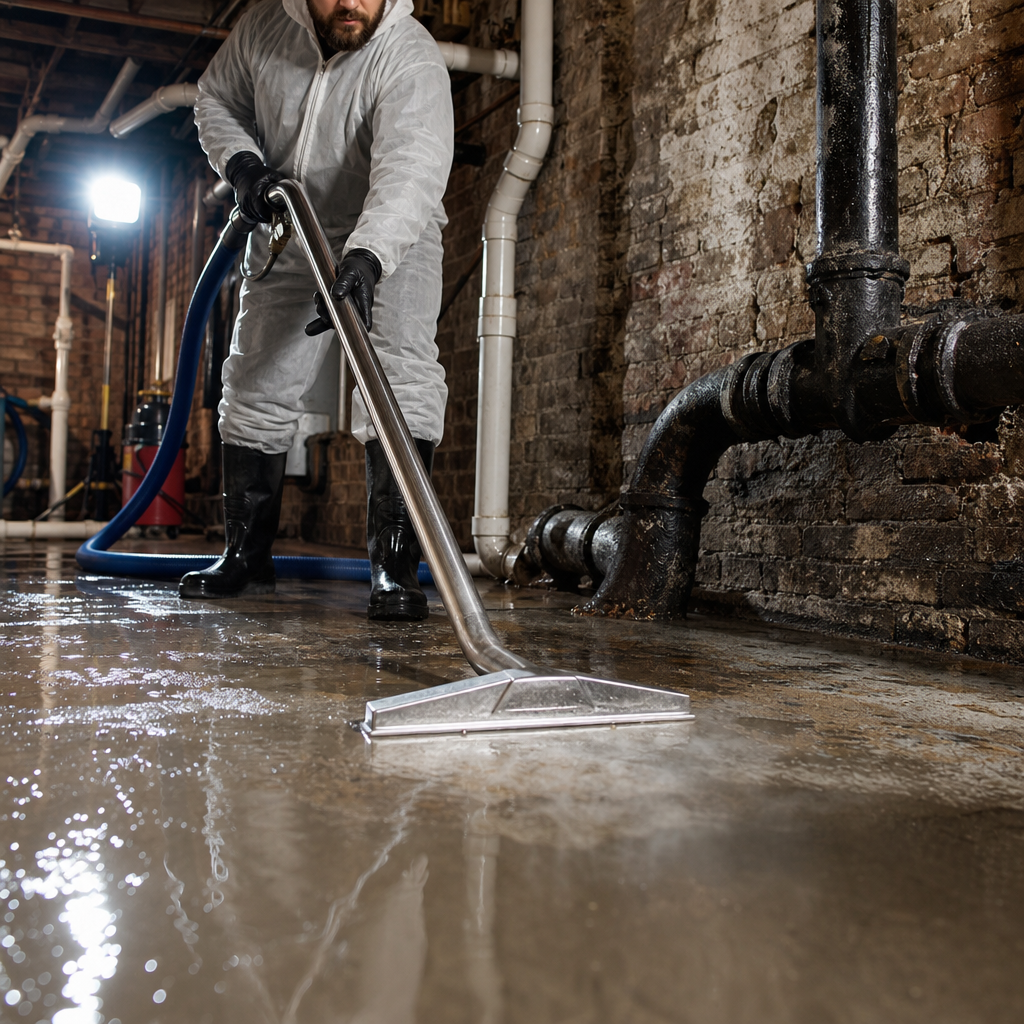
Sewer backups introduce Category 3 blackwater into a building, demanding immediate biohazard containment and hospital-grade sanitization. We arrive within 45 minutes to halt municipal backups, neutralize pathogens, and protect residents without unnecessary structural demolition.
Category 3 Biohazard Containment
Downtown storm drains and aging municipal sewer lines can back up rapidly during heavy downpours. Category 3 blackwater carries harmful pathogens that require strict isolation. Rather than indiscriminately tearing out historic plaster, we extract the wastewater immediately and apply targeted bio-wash protocols to protect historic masonry and structural framing.
Disinfection and Odor Removal Steps
- Direct wastewater extraction: Remove sewage using heavy-duty vacuum systems before blackwater penetrates structural subflooring.
- Controlled disposal: Bag and remove unsalvageable porous materials following NYC Department of Environmental Protection disposal rules.
- Antimicrobial decontamination: Treat structural surfaces with broad-spectrum biocides, followed by thorough drying to restore clean, breathable indoor air.
Fire and Smoke Damage Restoration in Lower Manhattan
Need water damage restoration in Lower Manhattan?
We’re available now - call for a fast, free estimate.
Fire recovery in historic properties often means dealing with heavy soot deposits and thousands of gallons of firefighting water simultaneously. We provide 45-minute emergency response to pump out suppression water, decontaminate historic masonry, and neutralize smoke odors.
Combining Water Extraction with Soot Removal
Water from fire suppression saturates subfloors and wall cavities, while acidic soot coats brick and exposed timber joists. We protect these building elements through careful, step-by-step restoration:
- Suppression water extraction: Remove standing water immediately to stop wood framing from warping or rotting.
- Masonry cleaning: Clean prewar brick and heavy timber joists using chemical sponges and gentle media cleaning to remove soot without damaging the surface.
- Surface sealing: Apply odor-blocking sealants to lock in remaining microscopic particles before final reconstruction.
Molecular Odor Treatment
Water runoff from firefighting frequently causes more overall structural damage than the flames themselves. We place industrial hydroxyl generators and thermal foggers in affected spaces to break down smoke molecules trapped within plaster walls, subfloors, and ventilation runs. This allows us to move from water extraction straight into odor removal and reconstruction without lengthy delays.
Why Non-Destructive Structural Drying Protects Historic Prewar Architecture
Non-destructive drying draws trapped moisture out of subfloors and wall cavities in place. This targeted method avoids tearing out century-old lath and plaster, original tongue-and-groove parquet flooring, or custom hand-carved moldings, protecting your property value and avoiding costly co-op board disputes.
Avoiding Co-Op Alteration Disputes and Unnecessary Demolition
Franchise restoration networks frequently default to broad demolition, gutting plaster, baseboards, and flooring. In Lower Manhattan high-rises, unapproved demolition can trigger immediate stop-work orders, alteration agreement violations, and heavy fines from building boards. Wade’s Restoration uses non-invasive methods first. Controlled drying started within 48 to 72 hours can salvage wet hardwood and dense prewar assemblies without gutting the space.
| Restoration Criteria | Wade’s Restoration | National Franchise Networks | Uncertified Contractors |
|---|---|---|---|
| Historic Preservation | In-place cavity drying | Immediate gutting | Demolition by default |
| Co-Op Rule Compliance | Full protocol adherence | Frequent noise/dust complaints | Unregulated practices |
| Hardwood Floor Mat Systems | Injectidry floor extraction | Strip down to subfloor | Surface fans only |
| Field Technicians | 100% in-house, IICRC-certified | Subcontracted laborers | Unvetted general labor |
Specialized Floor Mat and Cavity Drying Systems
To salvage original floors and walls, we use specialized vacuum floor mats and negative-pressure wall cavity injectors. These systems pull trapped moisture directly out of thick subfloors, framing, and masonry within 72 hours. Whether dealing with a burst pipe in a Tribeca loft or storm water in a FiDi commercial space, non-destructive tools bring materials back to dry standards while keeping original architectural details intact.
What Does Water Damage Restoration Cost in Lower Manhattan?
Water damage restoration in Lower Manhattan generally ranges from $1,500 to $9,500 or more, depending on the water contamination level, affected square footage, and building accessibility. A small clean-water supply line leak falls on the lower end, while multi-floor saturation or sewage backups require extensive industrial drying, containment, and decontamination.
Cost Estimates by Damage Type
High-rise logistics, elevator restrictions, and historic material preservation can influence the final scope of work. Typical ranges include:
| Service Type | Water Category | Estimated Cost Range |
|---|---|---|
| Emergency Water Extraction | Category 1 (Clean water) | $1,200 – $3,000 |
| Flood and Storm Damage Restoration | Category 2/3 (Grey/Blackwater) | $3,500 – $8,500 |
| Targeted Mold Remediation | Microbial Containment | $2,000 – $6,000 |
| Sewage and Biohazard Cleanup | Category 3 (Blackwater) | $4,000 – $10,000+ |
Direct Insurance Billing Through the Claim Clarity Program
Navigating property insurance after a flood or leak should not add to your burden. Through our Claim Clarity Program, we generate itemized Xactimate estimates, detailed moisture logs, and before-and-after photo records sent directly to your adjuster. This direct communication speeds up approvals and prevents unexpected out-of-pocket delays.
Frequently Asked Questions
How long does the structural drying process take in an apartment?
Standard structural drying takes 3 to 5 days. Using specialized non-destructive drying systems allows us to stabilize building materials in place, avoiding aggressive demolition that ruins original finishes and violates building alteration rules.
Does property insurance cover water damage restoration in NYC?
Standard commercial and homeowners policies generally cover sudden and accidental water discharge, such as a burst supply line, water heater failure, or sprinkler discharge. We work directly with your insurance company, providing line-item estimates and moisture mapping to streamline claim approval.
What downtown neighborhoods do you service for emergency calls?
We provide 24/7 emergency service with a 45-minute arrival time across Lower Manhattan, including Tribeca, the Financial District, SoHo, Battery Park City, Chinatown, the Lower East Side, and Civic Center.
What should I do immediately after discovering a burst pipe in my building?
First, shut off the main water valve to the fixture or unit if you can safely access it, and alert building management to isolate the riser. Turn off electricity to affected rooms at the circuit breaker, move valuable furniture out of standing water, and call our 24/7 dispatch line so our crew can begin extraction before water spreads to lower floors.
Need water damage restoration in Lower Manhattan?
We’re available now - call for a fast, free estimate.
Frequently Asked Questions
How do you determine if prewar hardwood floors can be saved after water damage?
Wade's Restoration uses thermal moisture mapping and specialized Injectidry vacuum floor mat systems to assess whether trapped water can be extracted without wood warping. If targeted drying begins within 24 to 48 hours of water intrusion, our non-destructive systems can safely restore historic hardwood and subfloors in place without requiring demolition.
How does Wade's Restoration comply with strict Lower Manhattan co-op and condo board rules?
Our 100% in-house, IICRC-certified technicians coordinate directly with building management to adhere to designated service elevator hours, strict containment protocols, and quiet-time guidelines. We deploy low-profile, whisper-quiet drying systems and negative-air poly barriers to eliminate noise and dust complaints while maintaining full compliance with your building's alteration agreement.
What is included in the free visual inspection and written scope of work for insurance claims?
Through our Claim Clarity Program, Wade's Restoration compiles thermal imaging moisture logs, before-and-after photographic records, and an itemized Xactimate estimate to submit directly to your insurance adjuster. This comprehensive documentation package clarifies the full extent of structural moisture to expedite claim approvals and avoid unexpected out-of-pocket expenses.
About the author
 |
Christopher Vance Christopher Vance brings over 12 years of hands-on experience in emergency property restoration to his writing. Holding an IICRC certification in Water Damage Restoration and a degree in Environmental Science from Rutgers University, he specializes in creating actionable, expert guides for property owners facing critical damage. His work focuses on providing clear, practical advice to help Lower Manhattan residents navigate the complexities of water and flood recovery. |
Water damage, flood, or mold emergency?
We’re available now - call for a fast, free estimate.
Call Now - Free Estimate